
Urinary System Urinary system Your body takes nutrients
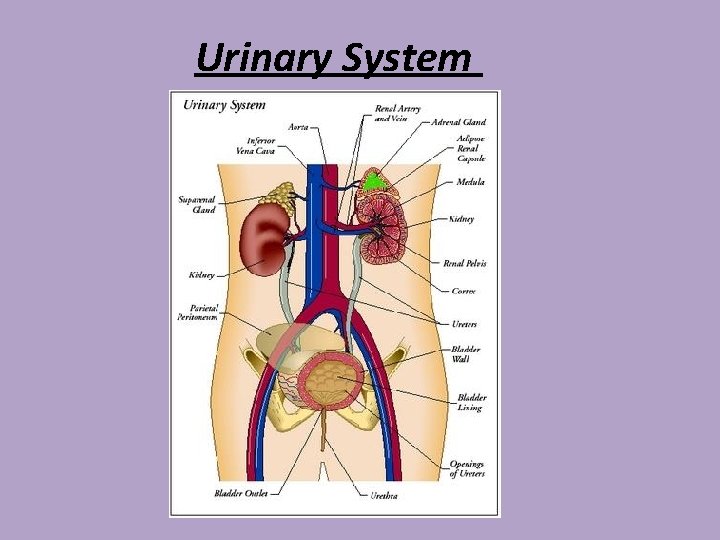
Urinary System
Urinary system • Your body takes nutrients from food and uses them to maintain all bodily functions including energy and self-repair • After your body has taken what it needs from the food, waste products are left behind in the blood and in the bowel
Urinary system • The urinary system works with the lungs, skin, and intestines—all of which also excrete wastes —to keep the chemicals and water in your body balanced • The urinary system removes a type of waste called urea from your blood. Urea is produced when foods containing protein, such as meat, poultry, and certain vegetables, are broken down in the body. Urea is carried in the bloodstream to the kidneys
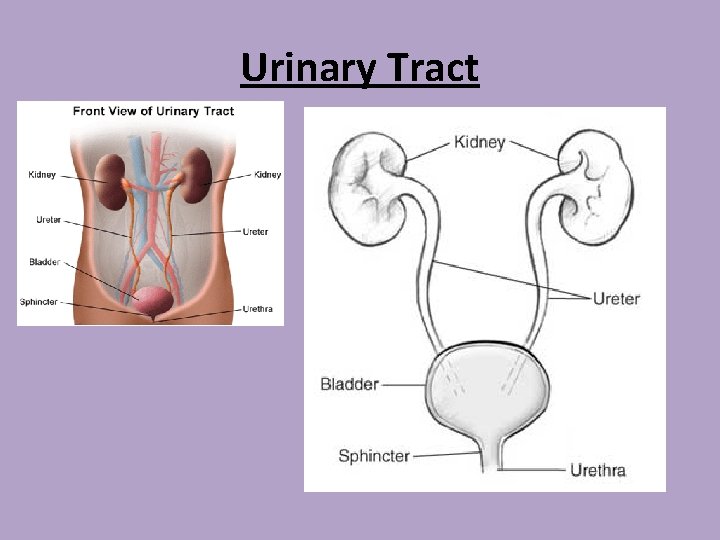
Urinary Tract
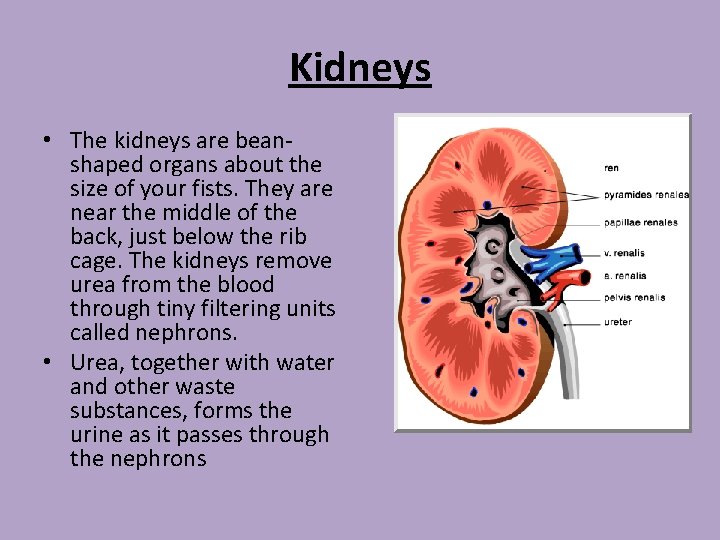
Kidneys • The kidneys are beanshaped organs about the size of your fists. They are near the middle of the back, just below the rib cage. The kidneys remove urea from the blood through tiny filtering units called nephrons. • Urea, together with water and other waste substances, forms the urine as it passes through the nephrons

Ureters • From the kidneys, urine travels down two thin tubes called ureters to the bladder. The ureters are about 8 to 10 inches long. Muscles in the ureter walls constantly tighten and relax to force urine downward away from the kidneys. • Small amounts of urine are emptied into the bladder from the ureters about every 10 to 15 seconds
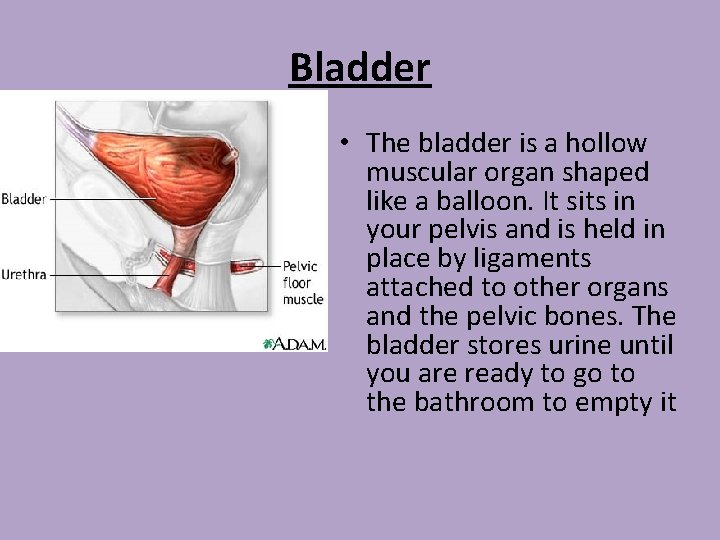
Bladder • The bladder is a hollow muscular organ shaped like a balloon. It sits in your pelvis and is held in place by ligaments attached to other organs and the pelvic bones. The bladder stores urine until you are ready to go to the bathroom to empty it
Sphincters • Circular muscles called sphincters help keep urine from leaking. • The sphincter muscles close tightly like a rubber band around the opening of the bladder into the urethra, the tube that allows urine to pass outside the body

Urethra • When you urinate, the brain signals the bladder muscles to tighten, squeezing urine out of the bladder. At the same time, the brain signals the sphincter muscles to relax. As these muscles relax, urine exits the bladder through the urethra
Components of urine • Approximately 95% of the volume of normal urine is water (salt water solution) • The major waste product in the urine is ammonia and is converted into a less hazardous form: urea • If you drink a lot, your urine will be more dilute and clearer, and if you get dehydrated, your urine will contain less water and be darker yellow
- Slides: 10