
Urinary System Chapter 17 Functions Filtration of blood
Urinary System Chapter 17
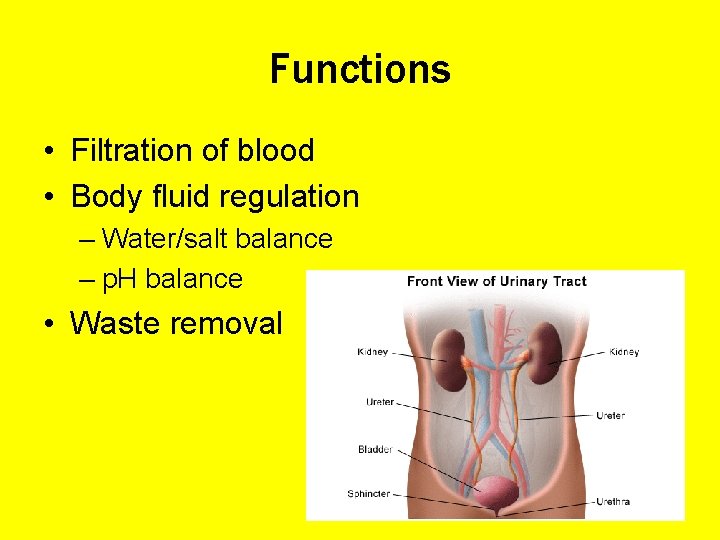
Functions • Filtration of blood • Body fluid regulation – Water/salt balance – p. H balance • Waste removal
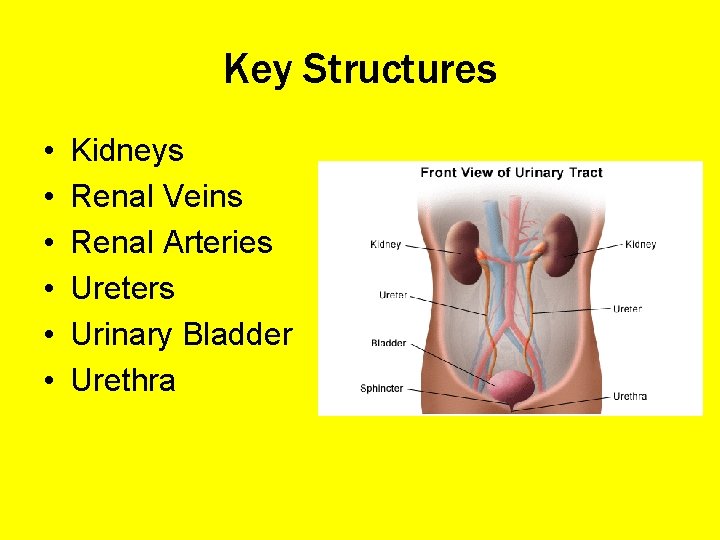
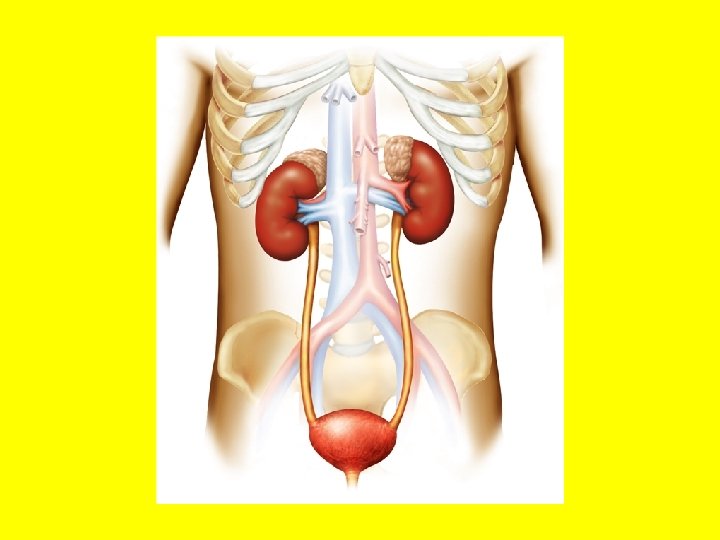
Key Structures • • • Kidneys Renal Veins Renal Arteries Ureters Urinary Bladder Urethra
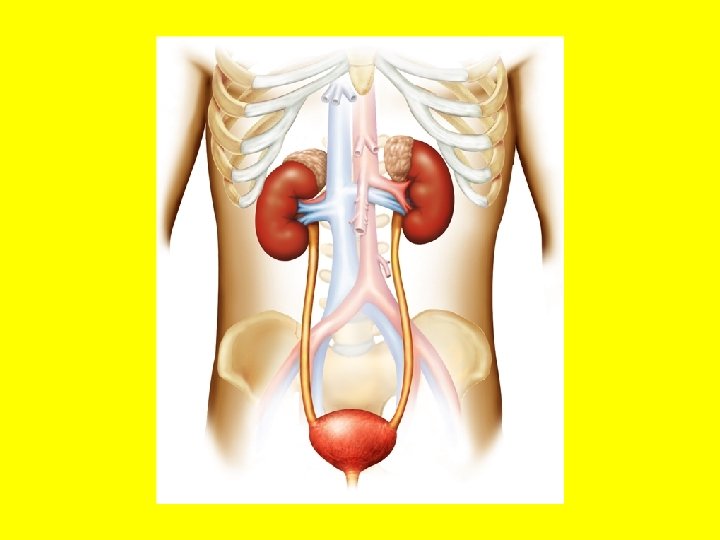
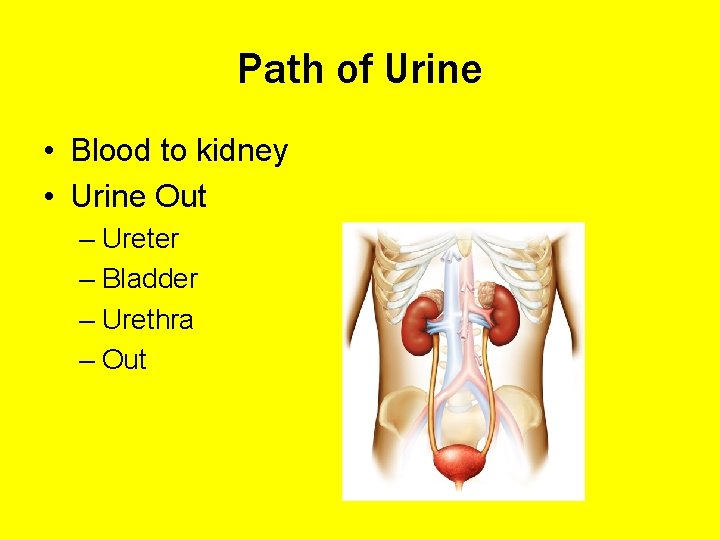
Path of Urine • Blood to kidney • Urine Out – Ureter – Bladder – Urethra – Out
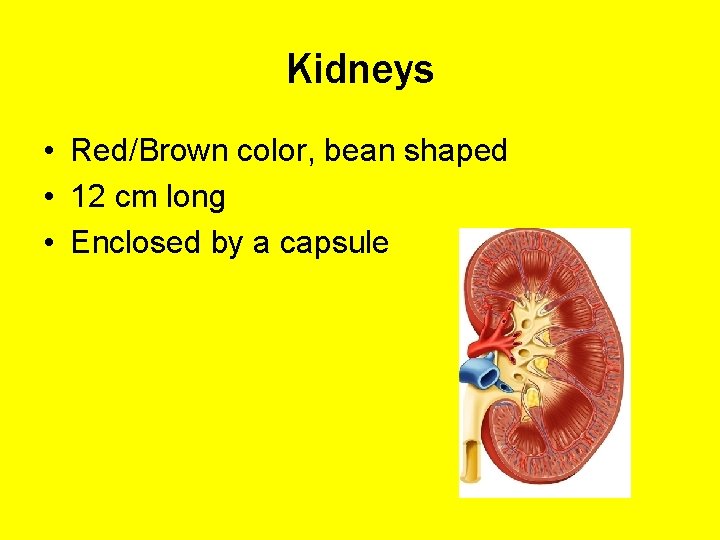
Kidneys • Red/Brown color, bean shaped • 12 cm long • Enclosed by a capsule
Functions of Kidneys • Filter blood – Keep what is needed; excrete what is not • Maintain content, volume, p. H of body fluid • Other functions – Maintain RBC production – Regulate blood volume and pressure
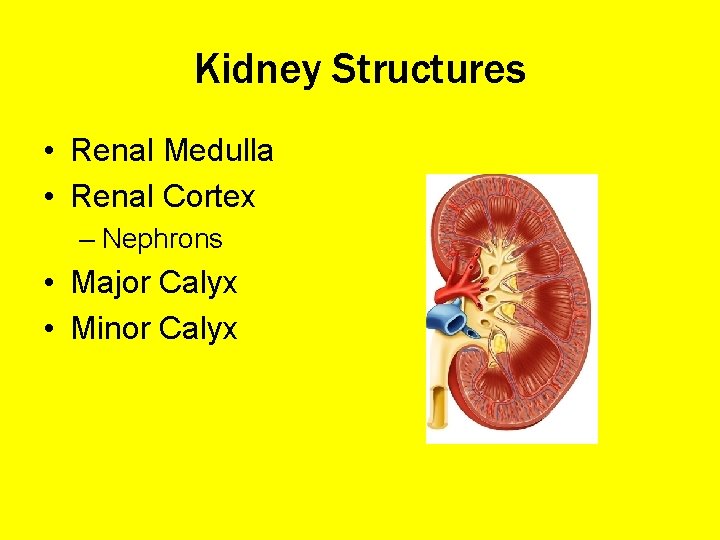
Kidney Structures • Renal Medulla • Renal Cortex – Nephrons • Major Calyx • Minor Calyx
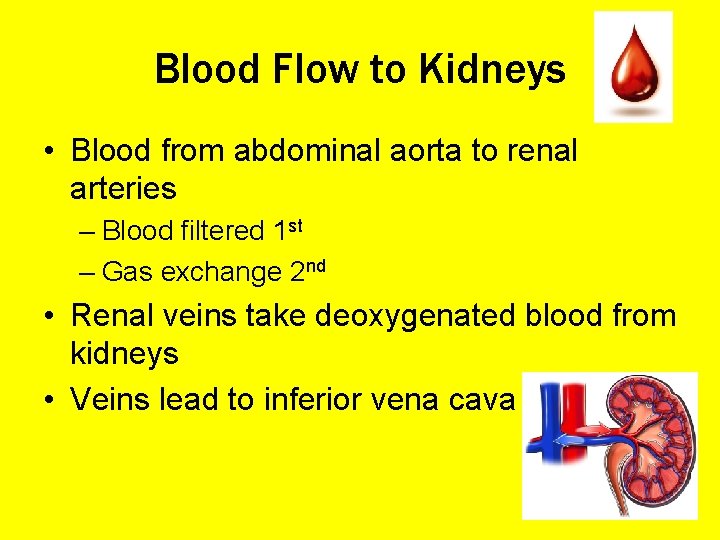
Blood Flow to Kidneys • Blood from abdominal aorta to renal arteries – Blood filtered 1 st – Gas exchange 2 nd • Renal veins take deoxygenated blood from kidneys • Veins lead to inferior vena cava
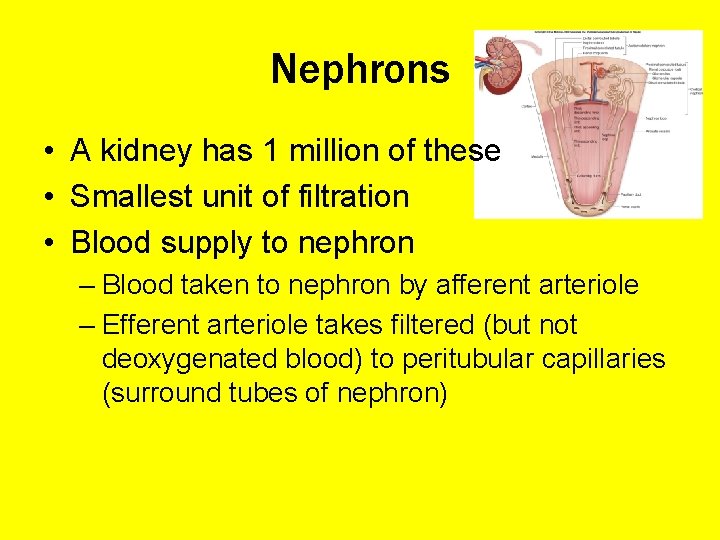
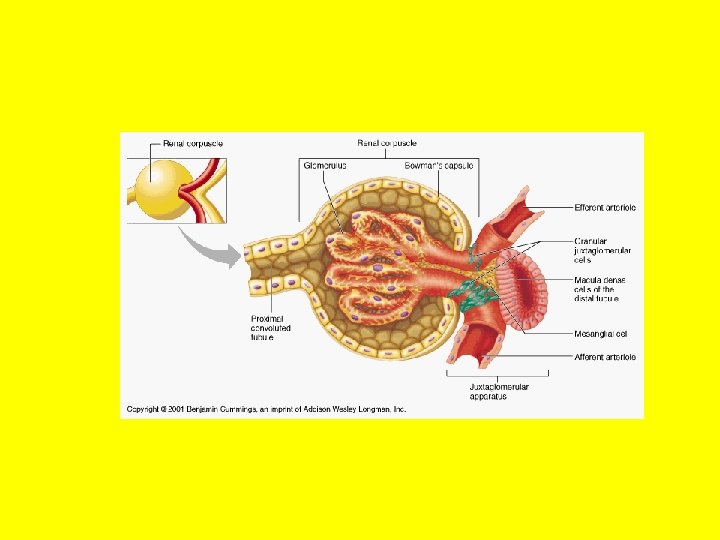
Nephrons • A kidney has 1 million of these • Smallest unit of filtration • Blood supply to nephron – Blood taken to nephron by afferent arteriole – Efferent arteriole takes filtered (but not deoxygenated blood) to peritubular capillaries (surround tubes of nephron)
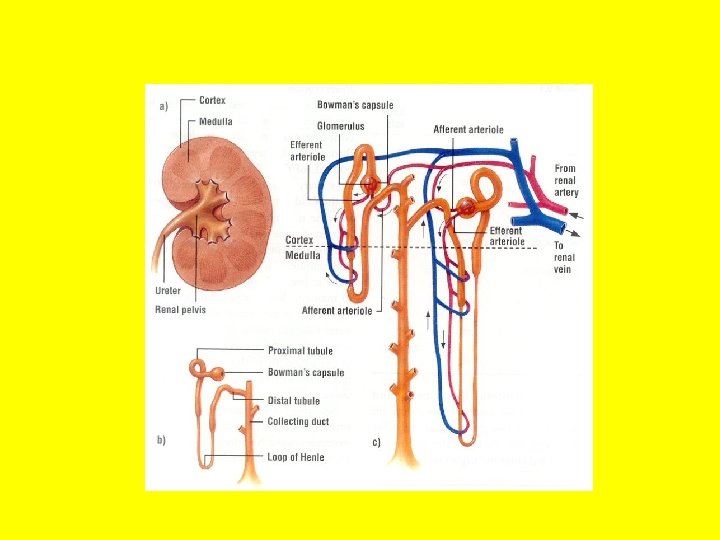
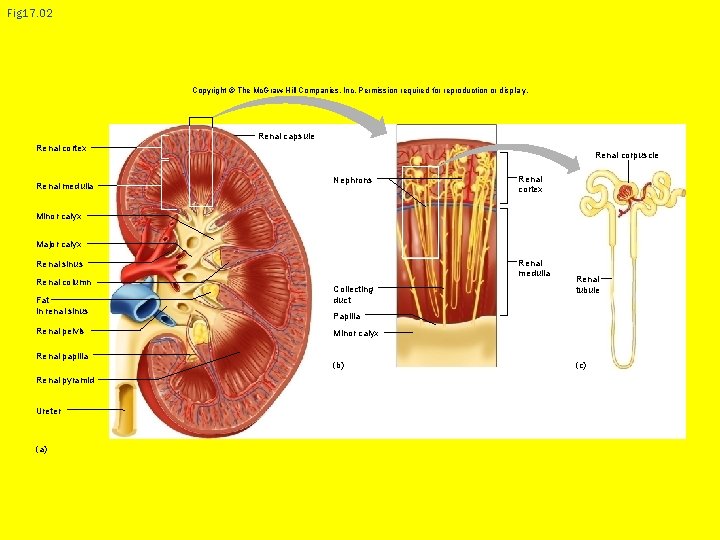
Fig 17. 02 Copyright © The Mc. Graw-Hill Companies, Inc. Permission required for reproduction or displa y. Renal capsule Renal cortex Renal medulla Renal corpuscle Nephrons Renal cortex Minor calyx Major calyx Renal medulla Renal sinus Renal column Fat in renal sinus Renal pelvis Renal papilla Renal pyramid Ureter (a) Collecting duct Renal tubule Papilla Minor calyx (b) (c)
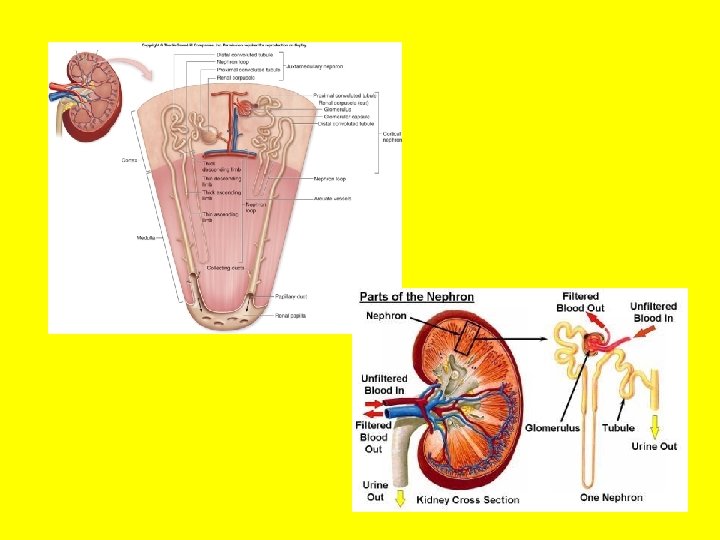
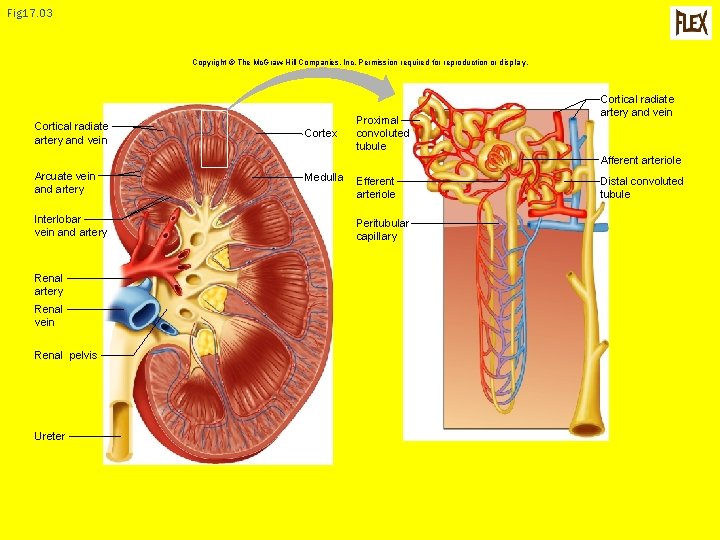
Fig 17. 03 Copyright © The Mc. Graw-Hill Companies, Inc. Permission required for reproduction or displa y. Cortical radiate artery and vein Cortex Proximal convoluted tubule Cortical radiate artery and vein Afferent arteriole Arcuate vein and artery Interlobar vein and artery Renal vein Renal pelvis Ureter Medulla Efferent arteriole Peritubular capillary Distal convoluted tubule
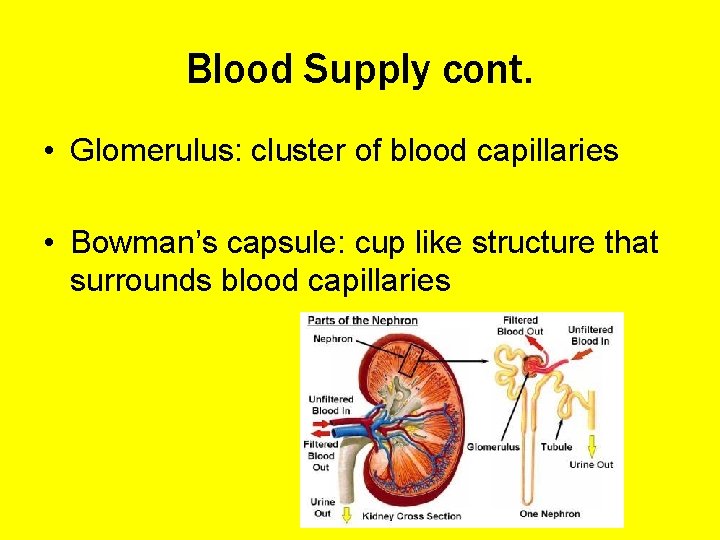
Blood Supply cont. • Glomerulus: cluster of blood capillaries • Bowman’s capsule: cup like structure that surrounds blood capillaries
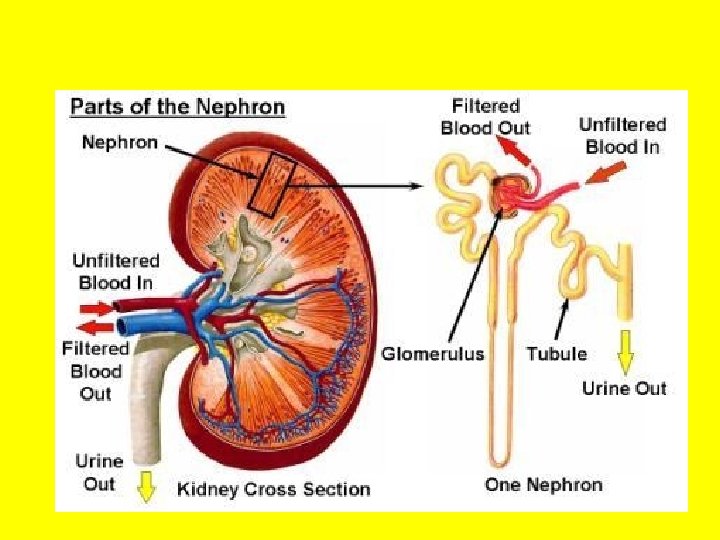
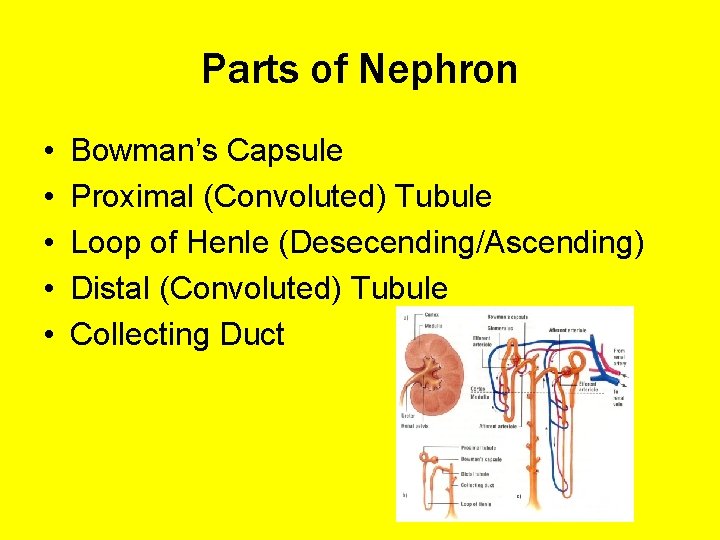
Parts of Nephron • • • Bowman’s Capsule Proximal (Convoluted) Tubule Loop of Henle (Desecending/Ascending) Distal (Convoluted) Tubule Collecting Duct
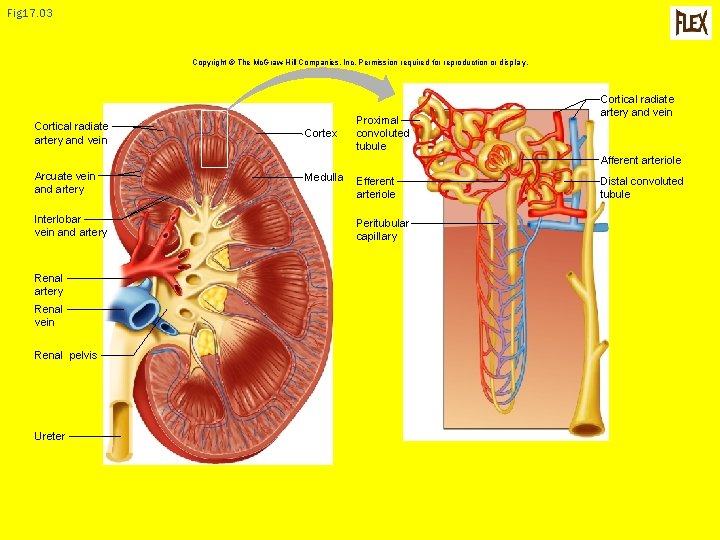
Fig 17. 03 Copyright © The Mc. Graw-Hill Companies, Inc. Permission required for reproduction or displa y. Cortical radiate artery and vein Cortex Proximal convoluted tubule Cortical radiate artery and vein Afferent arteriole Arcuate vein and artery Interlobar vein and artery Renal vein Renal pelvis Ureter Medulla Efferent arteriole Peritubular capillary Distal convoluted tubule
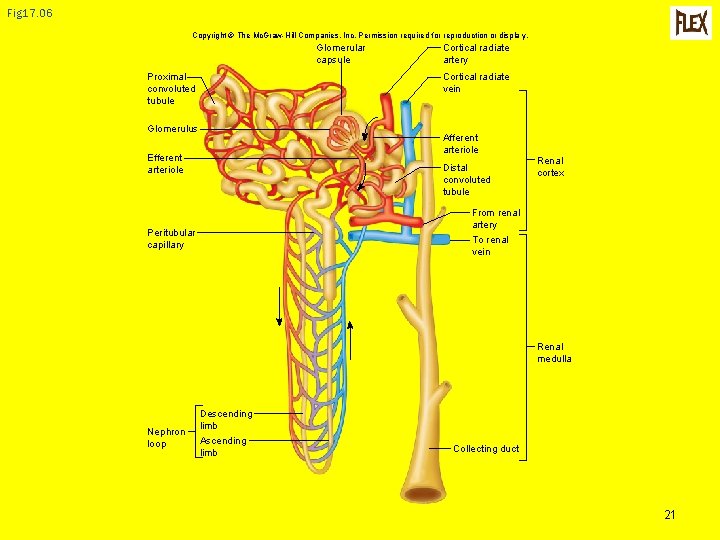
Fig 17. 06 Copyright © The Mc. Graw-Hill Companies, Inc. Permission required for reproduction or displa y. Glomerular capsule Proximal convoluted tubule Cortical radiate artery Cortical radiate vein Glomerulus Afferent arteriole Efferent arteriole Distal convoluted tubule Renal cortex From renal artery Peritubular capillary To renal vein Renal medulla Nephron loop Descending limb Ascending limb Collecting duct 21
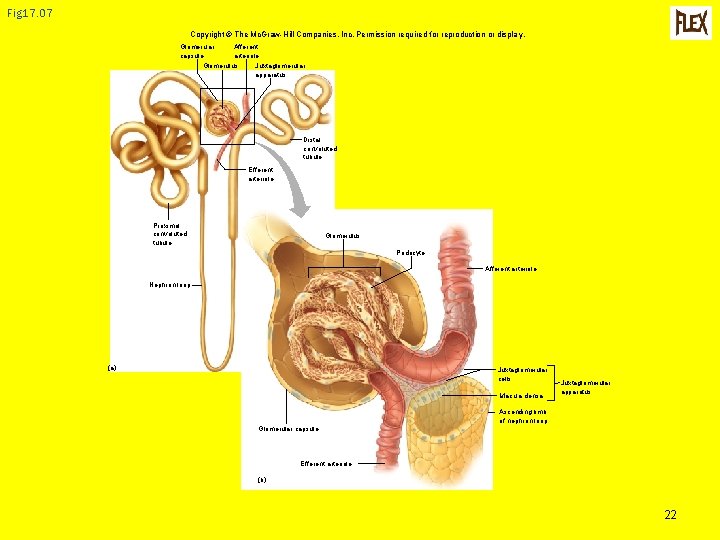
Fig 17. 07 Copyright © The Mc. Graw-Hill Companies, Inc. Permission required for reproduction or displa y. Glomerular capsule Afferent arteriole Glomerulus Juxtaglomerular apparatus Distal convoluted tubule Efferent arteriole Proximal convoluted tubule Glomerulus Podocyte Afferent arteriole Nephron loop (a) Juxtaglomerular cells Macula densa Juxtaglomerular apparatus Ascending limb of nephron loop Glomerular capsule Efferent arteriole (b) 22
Urine Formation • Three Stages 1. Filtration • Glomerulus/Bowman’s Capsule 2. Secretion 3. Reabsorption • 2 & 3 happen in rest of the nephron
Filtration • Glomerulus is leaky; so portion of the blood is filtered out of it and into the Bowman’s capsule • Filtration depends on pressure
Pressure • High Pressure – Forces small things from glomerulus to Bowman’s capsule – Anything that leaves blood and enters capsule is called filtrate
Pressures to Know • Hydrostatic pressure: pressure due to presence of water • Osmotic pressure: pressure due to high concentration of dissolved solutes – “Pulling pressure” – Water is pulled toward solutes
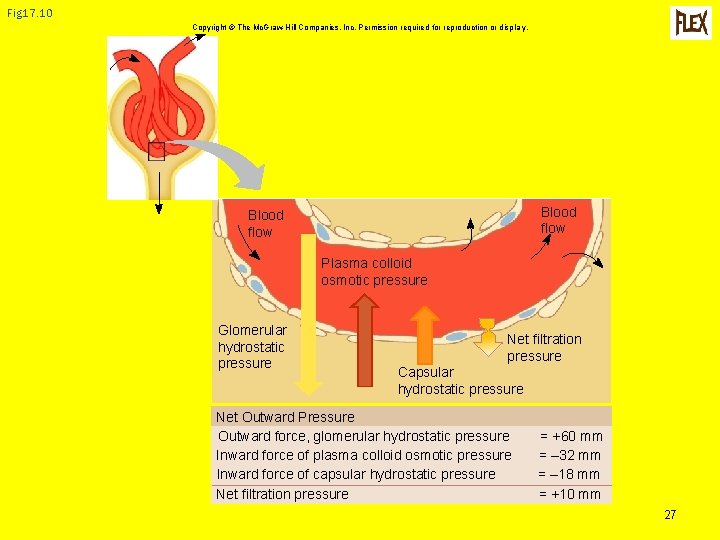
Fig 17. 10 Copyright © The Mc. Graw-Hill Companies, Inc. Permission required for reproduction or displa y. Blood flow Plasma colloid osmotic pressure Glomerular hydrostatic pressure Net filtration pressure Capsular hydrostatic pressure Net Outward Pressure Outward force, glomerular hydrostatic pressure Inward force of plasma colloid osmotic pressure Inward force of capsular hydrostatic pressure Net filtration pressure = +60 mm = – 32 mm = – 18 mm = +10 mm 27
Overall • Net filtration pressure forces substances out of glomerulus and into capsule
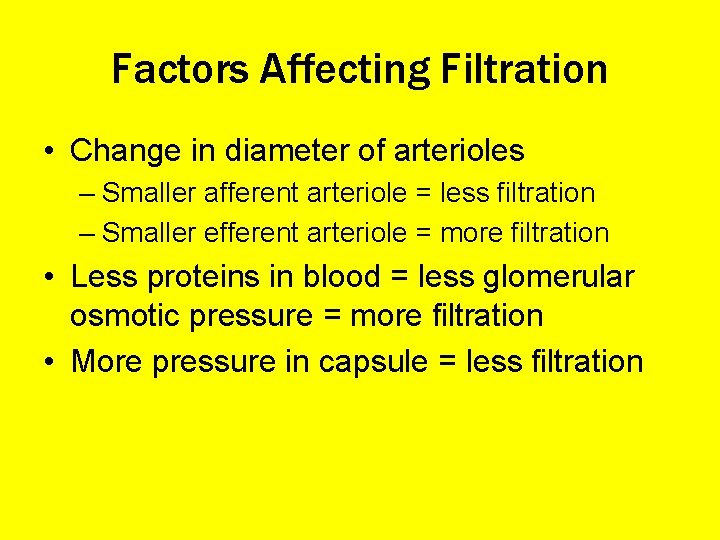
Factors Affecting Filtration • Change in diameter of arterioles – Smaller afferent arteriole = less filtration – Smaller efferent arteriole = more filtration • Less proteins in blood = less glomerular osmotic pressure = more filtration • More pressure in capsule = less filtration
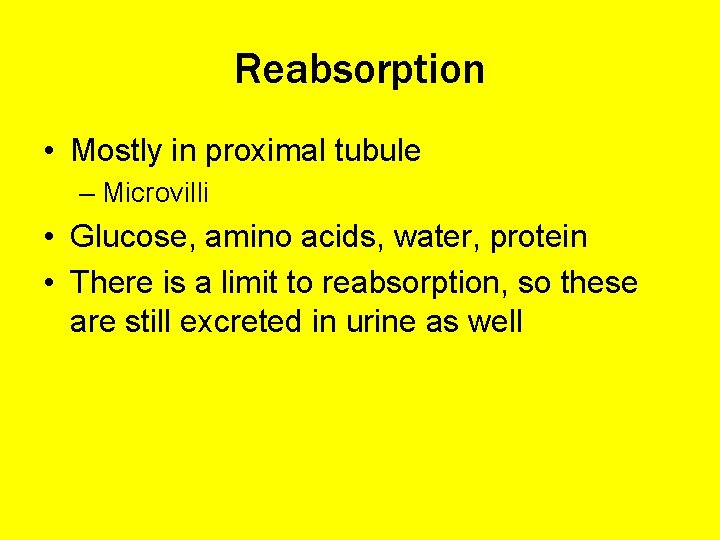
Reabsorption • Mostly in proximal tubule – Microvilli • Glucose, amino acids, water, protein • There is a limit to reabsorption, so these are still excreted in urine as well
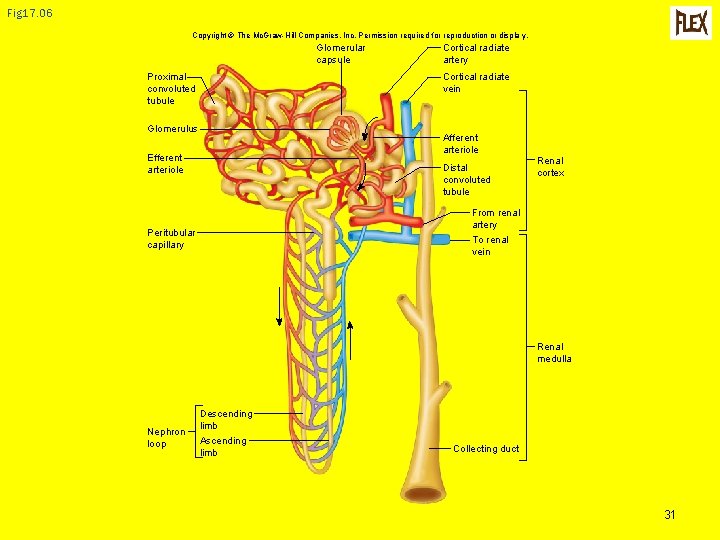
Fig 17. 06 Copyright © The Mc. Graw-Hill Companies, Inc. Permission required for reproduction or displa y. Glomerular capsule Proximal convoluted tubule Cortical radiate artery Cortical radiate vein Glomerulus Afferent arteriole Efferent arteriole Distal convoluted tubule Renal cortex From renal artery Peritubular capillary To renal vein Renal medulla Nephron loop Descending limb Ascending limb Collecting duct 31
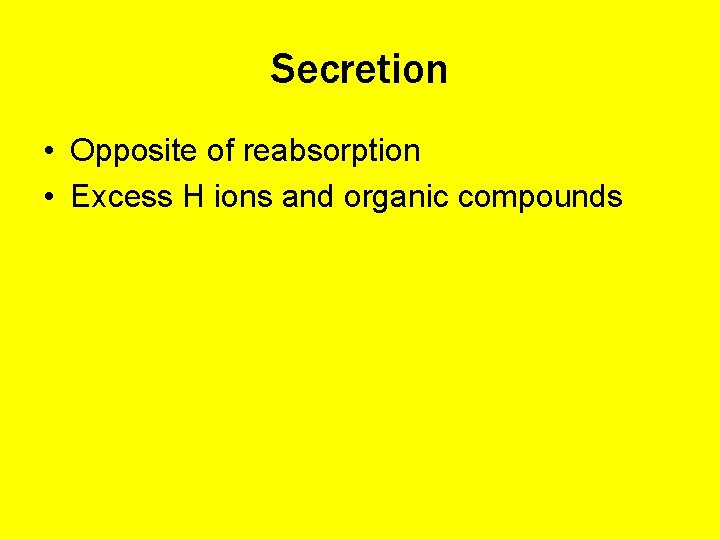
Secretion • Opposite of reabsorption • Excess H ions and organic compounds
Urine Composition • Varies from time to time; reflects the amounts of water/solutes that the kidneys eliminate to maintain homeostasis • 95% water, and also contains urea, uric acid, a trace of amino acids, and electrolytes
Urine Elimination • Pathway of urine after forming in nephron: – Collecting Duct – Minor calyces – Major calyces – Renal Pelvis – Ureter – Bladder – Urethra – OUT!
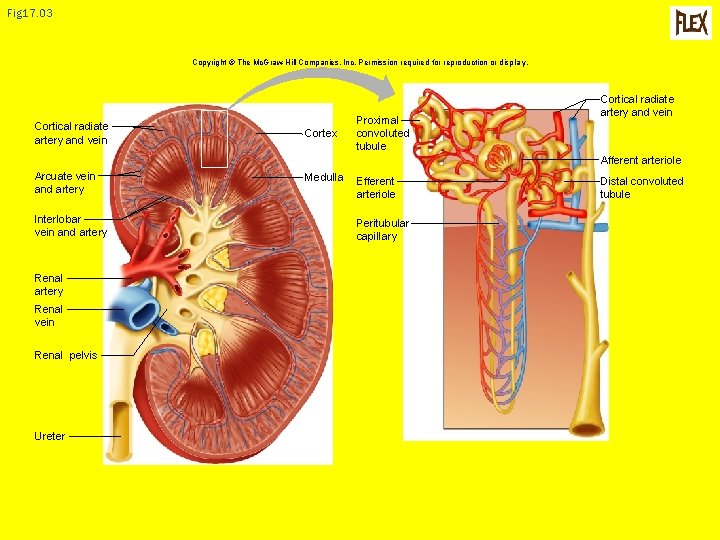
Fig 17. 03 Copyright © The Mc. Graw-Hill Companies, Inc. Permission required for reproduction or displa y. Cortical radiate artery and vein Cortex Proximal convoluted tubule Cortical radiate artery and vein Afferent arteriole Arcuate vein and artery Interlobar vein and artery Renal vein Renal pelvis Ureter Medulla Efferent arteriole Peritubular capillary Distal convoluted tubule
Ureters • 1 per kidney • Peristalsis forces urine down • Valve at end allows urine into bladder

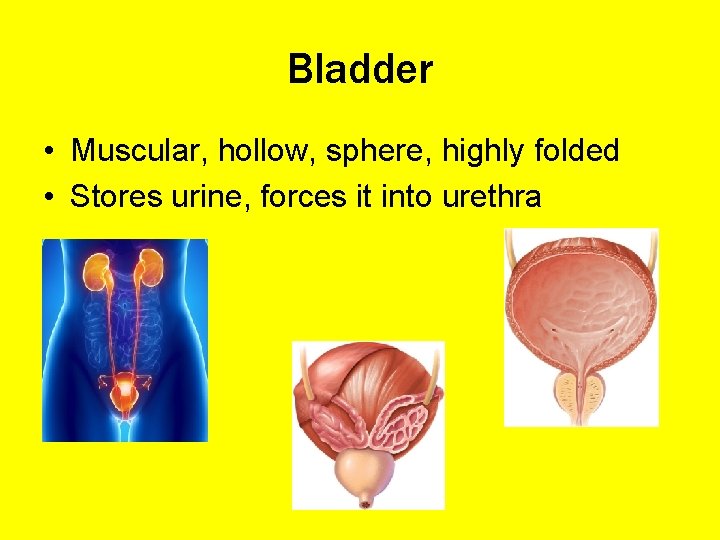
Bladder • Muscular, hollow, sphere, highly folded • Stores urine, forces it into urethra
Micturition Reflex • Process by which urine leaves bladder • Stretching of bladder detected by micturition reflex center of spinal cord • Causes: – Bladder muscle contraction – Urge to urinate – Internal urethral sphincter relaxes – External urethral sphincter relaxes (voluntary control)
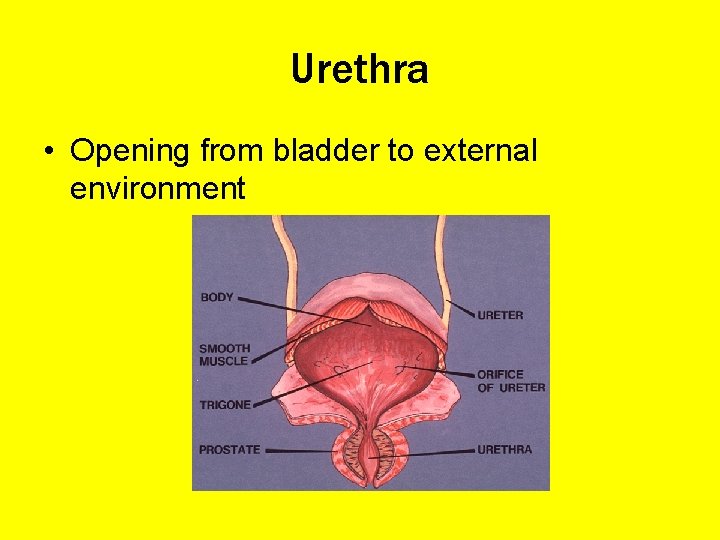
Urethra • Opening from bladder to external environment
Diuretics
Kidney Stones
- Slides: 42