
Urinary system 1 Anatomical structure The kidney present



- Slides: 13
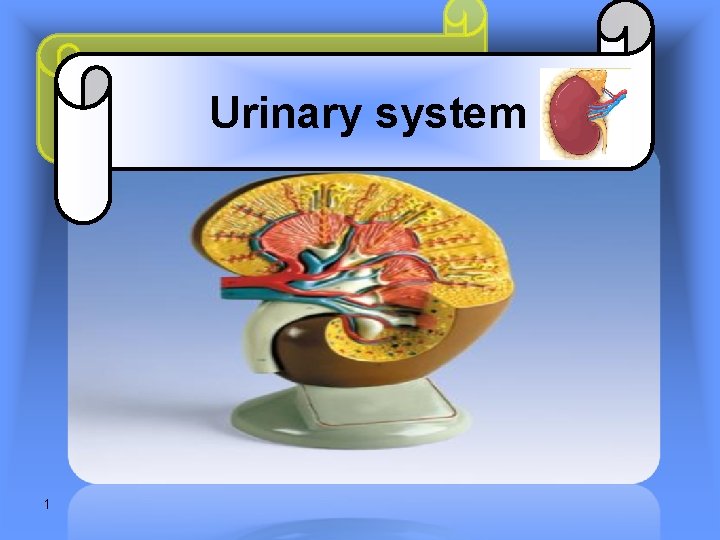
Urinary system 1
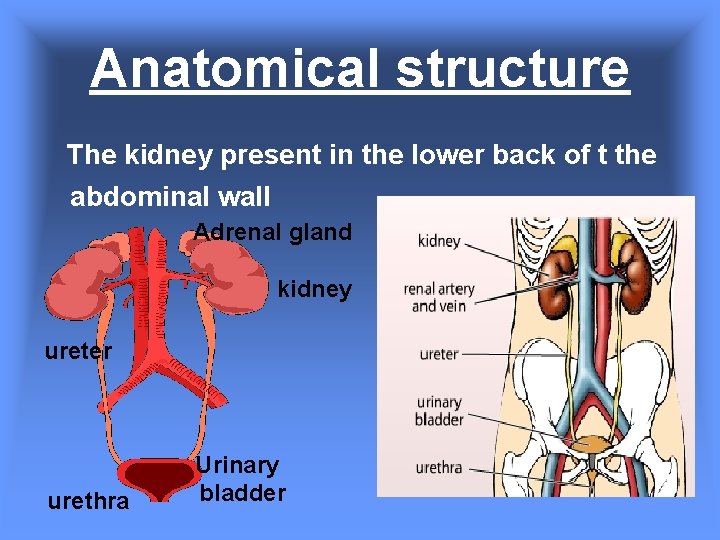
Anatomical structure The kidney present in the lower back of t the abdominal wall Adrenal gland kidney ureter urethra Urinary bladder
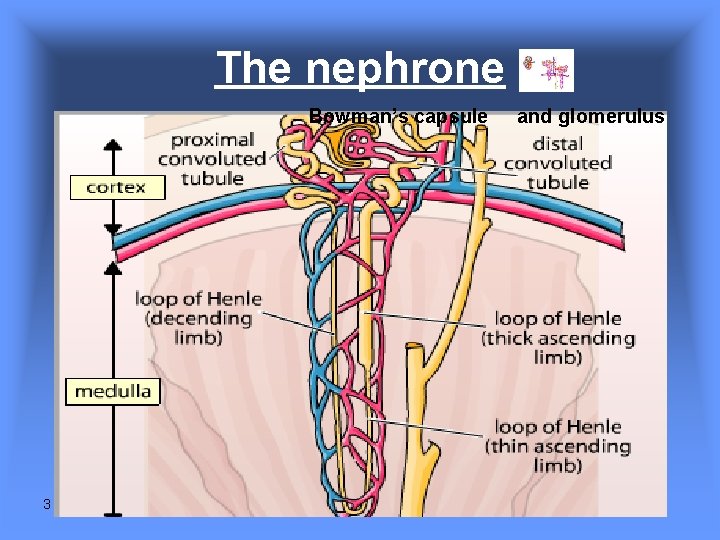
The nephrone Bowman’s capsule 3 and glomerulus
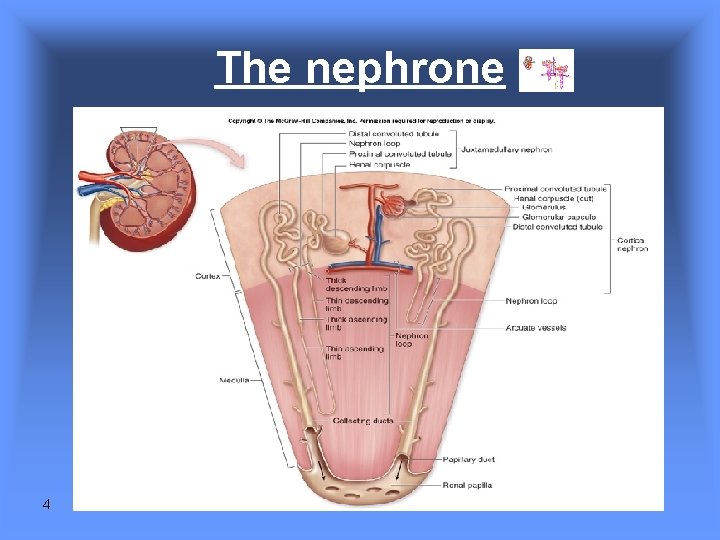
The nephrone 4
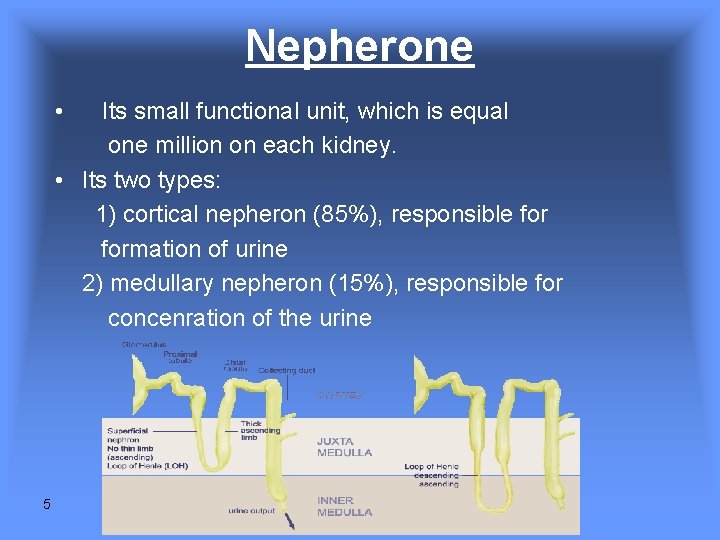
Nepherone • Its small functional unit, which is equal one million on each kidney. • Its two types: 1) cortical nepheron (85%), responsible formation of urine 2) medullary nepheron (15%), responsible for concenration of the urine 5
Structure of the nephron Ø the kidney is composed of about 1 million functional units called nephron. Ø one nephrone consist of : 1 -glomerular capsule (Bowman”s capsule & glomerulus) 2 - the proximal convoluted tubule 3 - loop of Henle ( medullary (long) and cortex (short) loop) 4 - distal convoluting tubule 5 - collecting duct 6
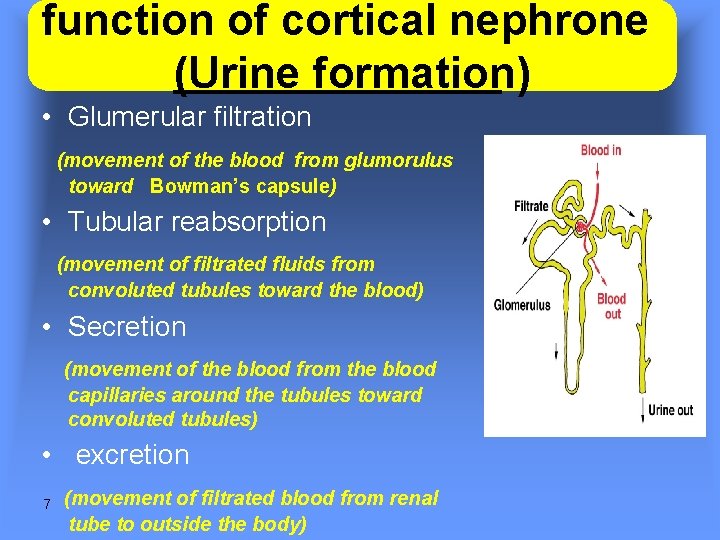
function of cortical nephrone (Urine formation) • Glumerular filtration (movement of the blood from glumorulus toward Bowman’s capsule) • Tubular reabsorption (movement of filtrated fluids from convoluted tubules toward the blood) • Secretion (movement of the blood from the blood capillaries around the tubules toward convoluted tubules) • excretion 7 (movement of filtrated blood from renal tube to outside the body)
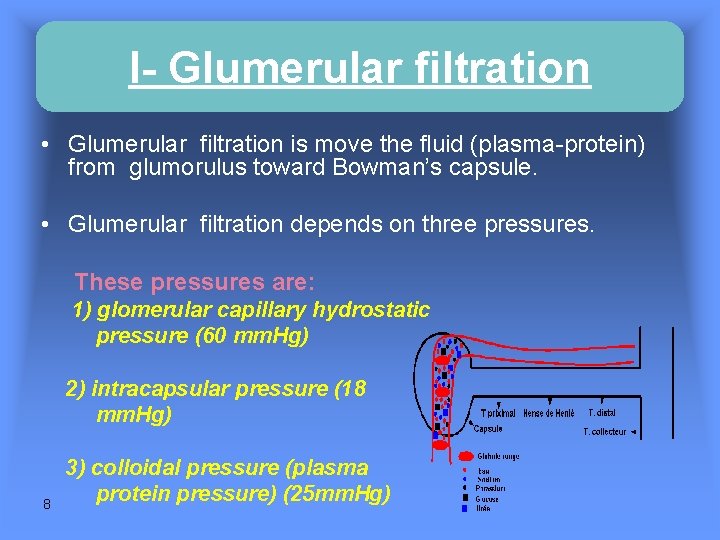
I- Glumerular filtration • Glumerular filtration is move the fluid (plasma-protein) from glumorulus toward Bowman’s capsule. • Glumerular filtration depends on three pressures. These pressures are: 1) glomerular capillary hydrostatic pressure (60 mm. Hg) 2) intracapsular pressure (18 mm. Hg) 8 3) colloidal pressure (plasma protein pressure) (25 mm. Hg)
(Glomerular filtration rate) GFR Definition: its volume of the blood filtrate from the glomeruli into Bowman`s space per unit time. Normal value: in 70 Kg person the volume of filtration equal 125 mlmin or 180 Lday. plasma volume filtrate by the kidney is about 60 times a day 9
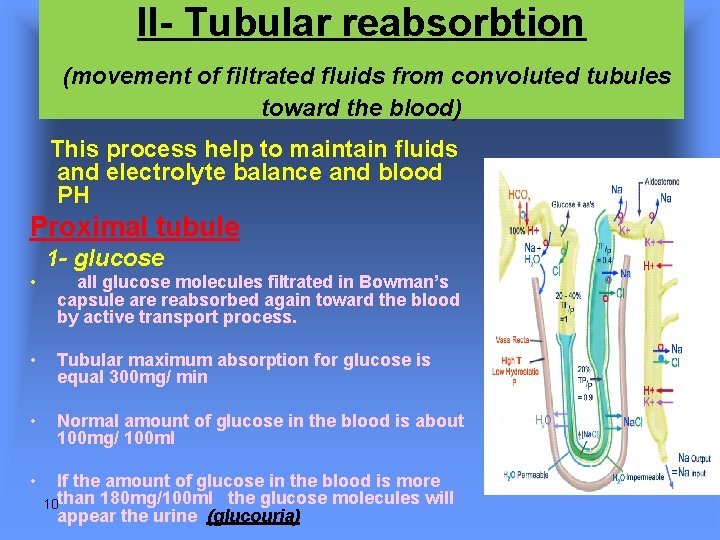
II- Tubular reabsorbtion (movement of filtrated fluids from convoluted tubules toward the blood) This process help to maintain fluids and electrolyte balance and blood PH Proximal tubule 1 - glucose • all glucose molecules filtrated in Bowman’s capsule are reabsorbed again toward the blood by active transport process. • Tubular maximum absorption for glucose is equal 300 mg/ min • Normal amount of glucose in the blood is about 100 mg/ 100 ml • If the amount of glucose in the blood is more 10 than 180 mg/100 ml the glucose molecules will appear the urine (glucouria)
• Proximal tubule 2 - protein • Small amount of protein filtrated from Bowman’s capsule (30 -50 mgday), but its reabsorbed again in proximal tubule by active transpose process • If the protein molecule not absorbed due to kidney diseases, it will appear in the urine (albuminuria) 11
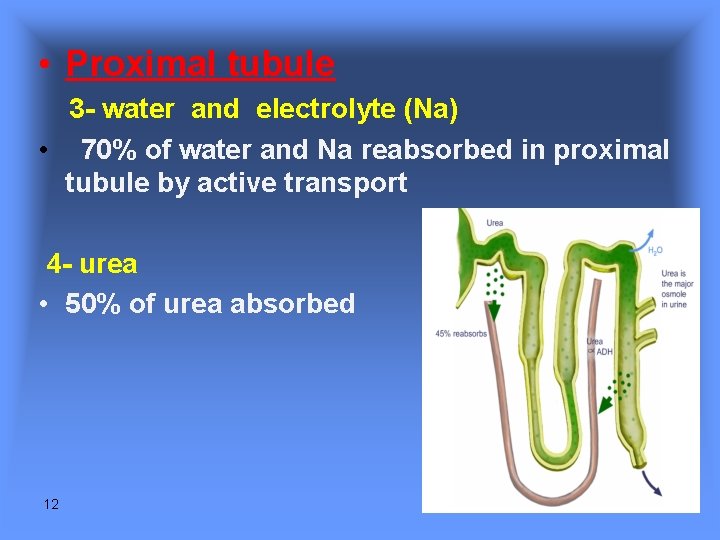
• Proximal tubule 3 - water and electrolyte (Na) • 70% of water and Na reabsorbed in proximal tubule by active transport 4 - urea • 50% of urea absorbed 12
Lube of Henley • 20 -30% of water and electrolyte absorbed in lube of Henley by diffusion for the water and active transport for electrolyte • (descending lube of Henley is thin and mainly its reabsorbed the water, but ascending lube of Henley is thick and reabsorbed Na and electrolytes) 13