
URINARY INCONTINENCE By Ahmed Abulfotooh Eid M D
URINARY INCONTINENCE By Ahmed Abulfotooh Eid M D, FEBU Assisstant Professor of Urology Alexandria University
FUNCTON OF THE BLADDER & URETHRA - URINARY STORAGE ( Filling of the bladder) - and Emptying at desired time - Failure of the bladder or the urethra to maintain storage of urine may result in urinary incontinence.
Definition lack of voluntary control over urination
HOW THIS FUNCTION IS ACHIEVED? NEURAL CONTROL - Higher control by the brain (Cerebral cortex & Pons) - Spinal cord reflexes MYOGENIC FACTORS - Normal Bladder Muscle -Normal Urethral Sphincter
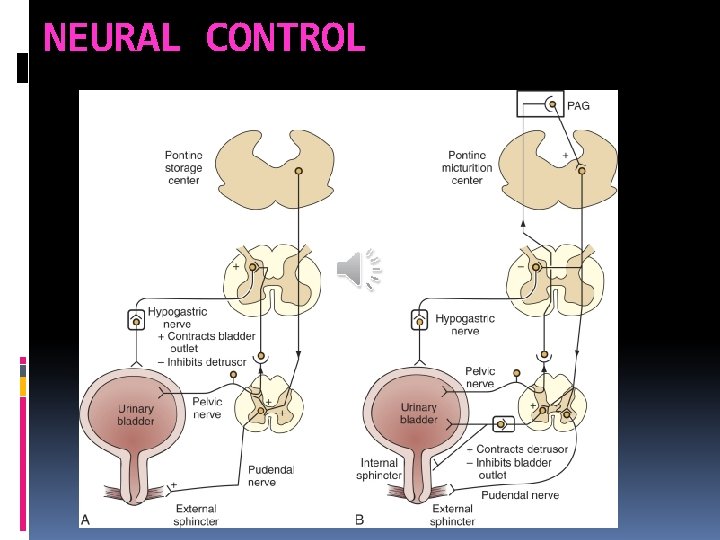
NEURAL CONTROL
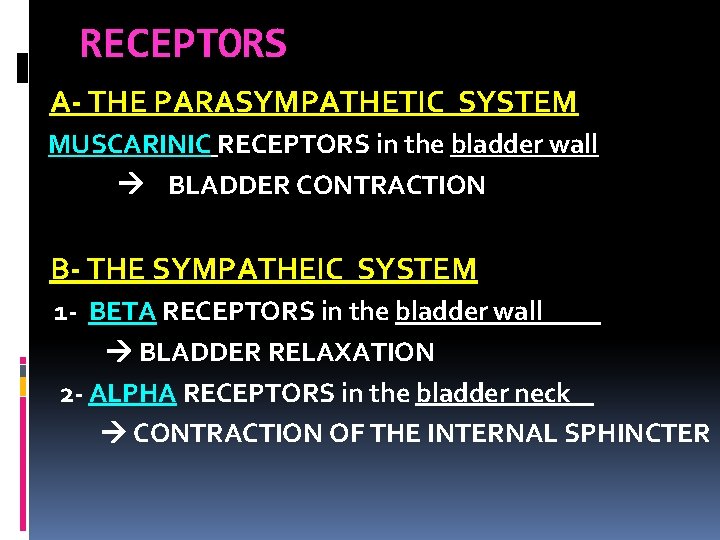
RECEPTORS A- THE PARASYMPATHETIC SYSTEM MUSCARINIC RECEPTORS in the bladder wall BLADDER CONTRACTION B- THE SYMPATHEIC SYSTEM 1 - BETA RECEPTORS in the bladder wall BLADDER RELAXATION 2 - ALPHA RECEPTORS in the bladder neck CONTRACTION OF THE INTERNAL SPHINCTER
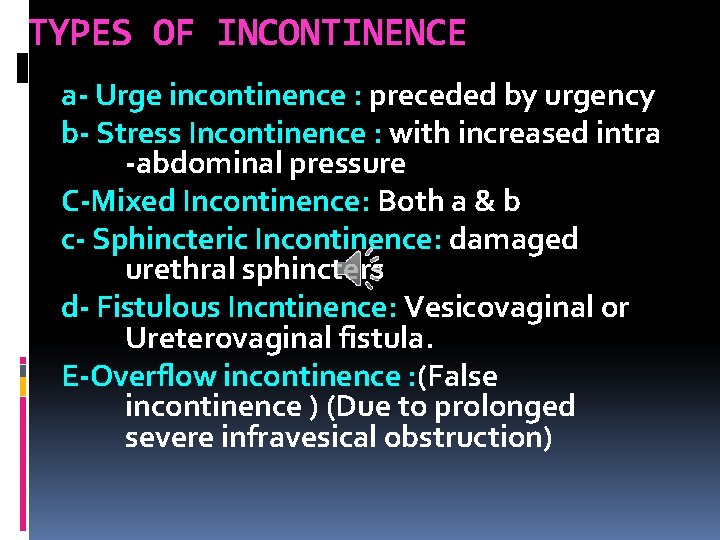
TYPES OF INCONTINENCE a- Urge incontinence : preceded by urgency b- Stress Incontinence : with increased intra -abdominal pressure C-Mixed Incontinence: Both a & b c- Sphincteric Incontinence: damaged urethral sphincters d- Fistulous Incntinence: Vesicovaginal or Ureterovaginal fistula. E-Overflow incontinence : (False incontinence ) (Due to prolonged severe infravesical obstruction)
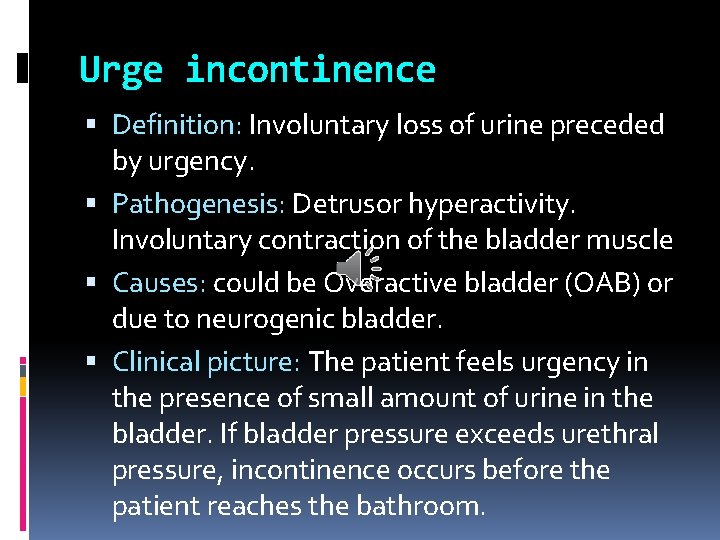
Urge incontinence Definition: Involuntary loss of urine preceded by urgency. Pathogenesis: Detrusor hyperactivity. Involuntary contraction of the bladder muscle Causes: could be Overactive bladder (OAB) or due to neurogenic bladder. Clinical picture: The patient feels urgency in the presence of small amount of urine in the bladder. If bladder pressure exceeds urethral pressure, incontinence occurs before the patient reaches the bathroom.
DIAGNOSIS of Incontinence - Good HISTORY taking -PHYSICAL EXAMINATION - UROLOGICAL - NEUROLOGICAL - INVESTIGATIONS
Urge incontinence look for neurologic causes (diseases of the brain, spinal cord, or peripheral pelvic nerves) e g. e. g Stroke, Disc Prolapse , Parkinsonism, Myelomeningocele, Multiple Sclerosis If no neurologic causes, it is considered as OAB Urodynamic study may be required specially in neurogenic diseases.

URODYNAMIC STudy -UROFLOWMETRY -CYSTOMETRY -PRESSURE FLOW STUDY
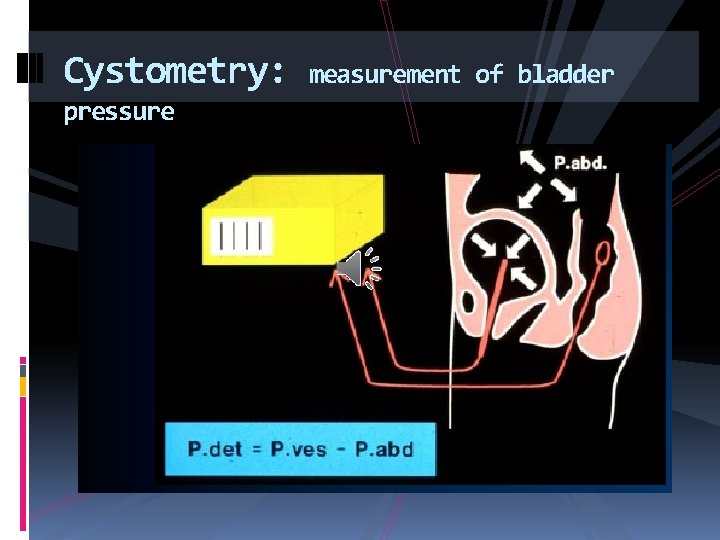
Cystometry: pressure measurement of bladder

Normal cystometry
Urge incontinence Treatment Medical : Anticholinergics (Antimuscarinics). Oral drugs to block the muscarinic receptors in the detrusor muscle to reduce invluntary contractions. Beta 3 Agonists: oral tablets to stimulate B 3 receptors in the bladder causing relaxation of the bladder muscle. Botox injection in the detrusor muscle in refractory cases. Effective but expensive and requires repeated injection every 9 months.
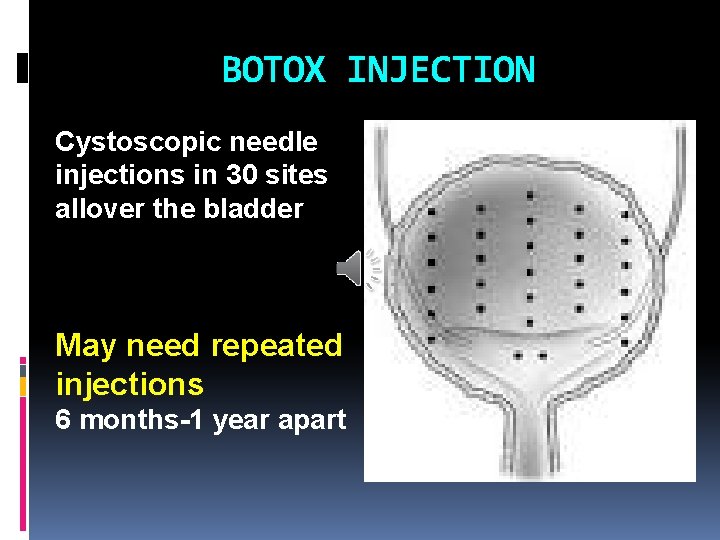
BOTOX INJECTION Cystoscopic needle injections in 30 sites allover the bladder May need repeated injections 6 months-1 year apart
Stress Incontinence (SUI) Definition: Involuntary loss of urine accompanied by increase intra abdominal pressure (coughing, sneezing, laughing or lifting heavy objects) Causes: loss of anatomic support of the urethra due to weakened pelvic floor, more common in middle aged females with history of repeated obstructed labour. Pathogenesis: Sudden increase in abdominal pressure causes the intravesical pressure to exceed urethral pressure and leakage.
Treatment of SUI Kegel contractions Functional electrical stimulation Medical treatment Anti-incontinence surgery Bulking agents
B- SURGICAL TREATMENT of SUI Medical treatment of SUI is not effective. 1 - URETHRAL SLING: TVT (Tension free vaginal tape) or TOT ( Transobturator tape). Both are simple vaginal surgeries. This is the standard of care in SUI. 2 - INJECTION OF BULKING AGENTS by cystoscopy to increase urethral resistance and prevent incontinence. It is less effective and usefull in only mild cases 3 - Autologus slings (use of rectus fascia ) as a sling arround the urethra to increase its resistance to incontinence. Used when artificial tapes are not available.
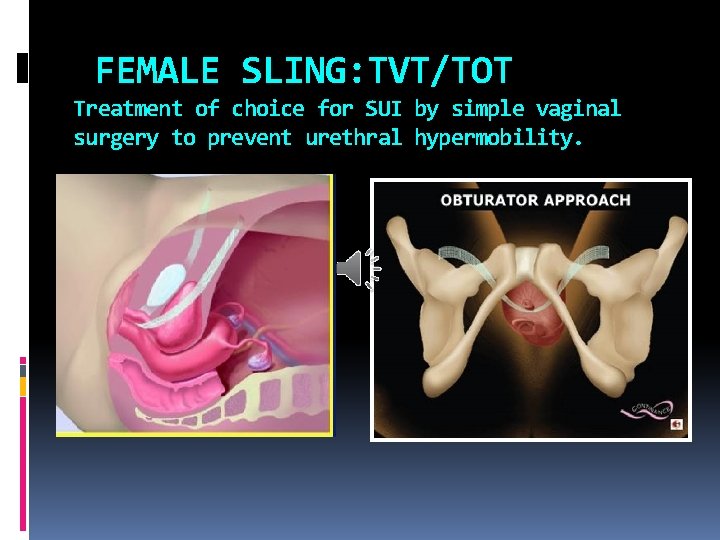
FEMALE SLING: TVT/TOT Treatment of choice for SUI by simple vaginal surgery to prevent urethral hypermobility.
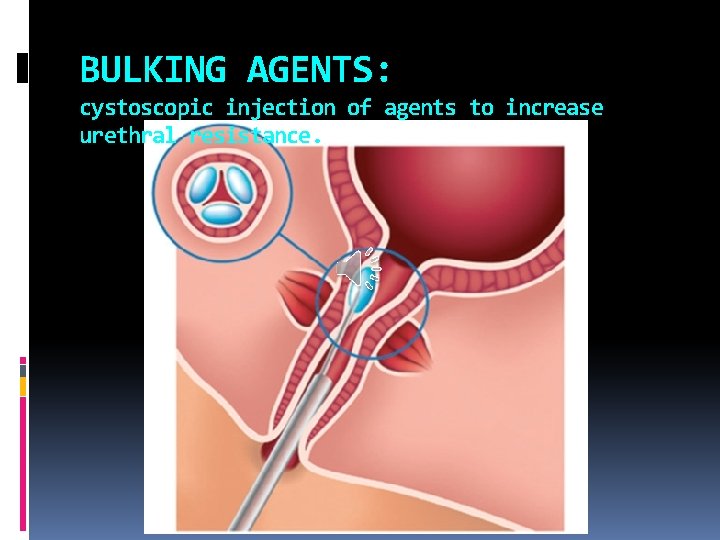
BULKING AGENTS: cystoscopic injection of agents to increase urethral resistance.
Mixed Incontinence Combination of SUI and Urge incontinence Treatment of both is required.
Sphincteric Incontinence Causes: Iatrogenic (post TURP or radical prostatectomy) or post urethral injury in road traffic injury. Both external and internal urinary sphincters are injured. Diagnosis: The patient is wet all the time and the bladder is empty all the time. Treatment: Artificial sphincter placement.
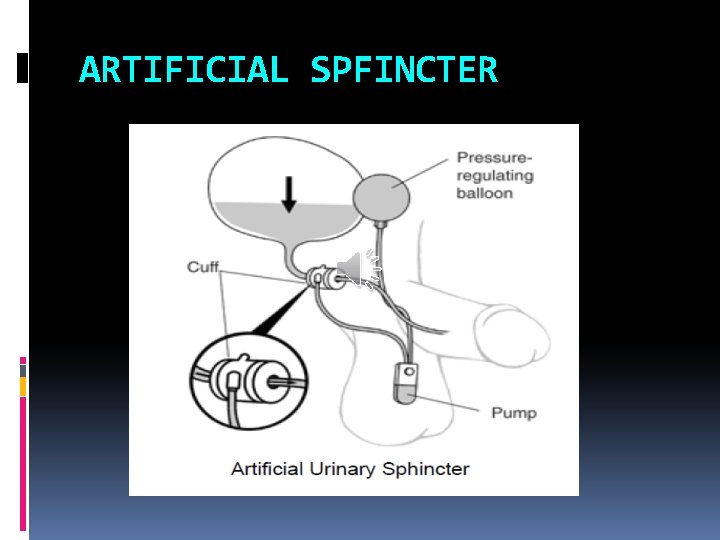
ARTIFICIAL SPFINCTER
Overflow incontinence Chronic retention with overflow A form of sever obstruction Diagnosis of cause of obstruction Treatment of cause of obstruction

Thank You
- Slides: 25