
Uric acid Introduction Uric acid is formed from

- Slides: 8
Uric acid
Introduction Uric acid is formed from the breakdown of nucleic acids and is an end product of purine metabolism. Uric acid is transported by the blood from the liver to the kidney, where it is filtered. Renal excretion accounts for 75% of uric acid elimination; the remainder of uric acid passes into the GI tract.
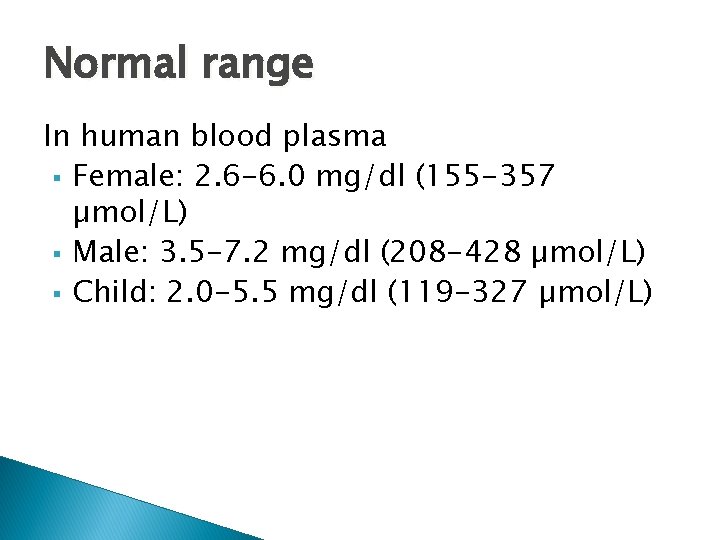
Normal range In human blood plasma § Female: 2. 6 -6. 0 mg/dl (155 -357 µmol/L) § Male: 3. 5 -7. 2 mg/dl (208 -428 µmol/L) § Child: 2. 0 -5. 5 mg/dl (119 -327 µmol/L)
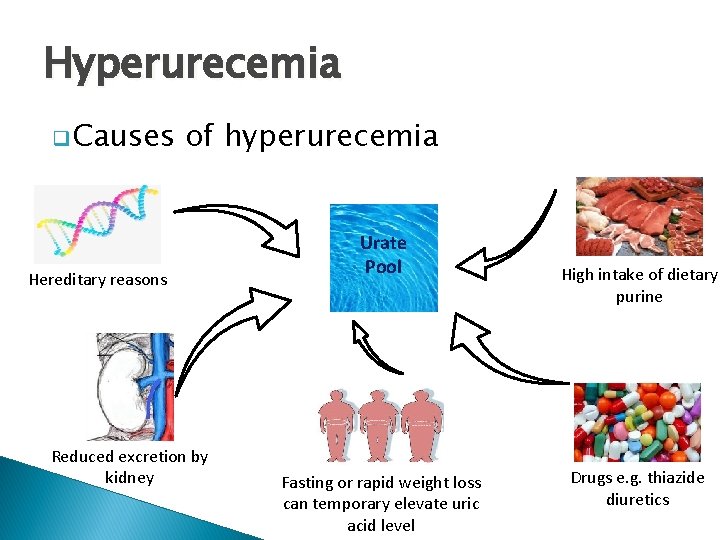
Hyperurecemia q Causes of hyperurecemia Hereditary reasons Reduced excretion by kidney Urate Pool Fasting or rapid weight loss can temporary elevate uric acid level High intake of dietary purine Drugs e. g. thiazide diuretics
Hypourecemia �is less common than hyperuricemia and is usually secondary to severe liver disease or defective tubular reabsorption, as in Fanconi syndrome.
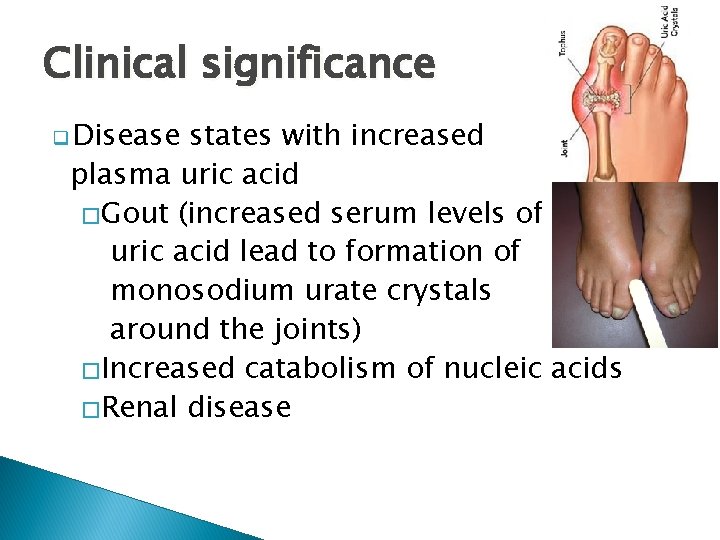
Clinical significance q Disease states with increased plasma uric acid �Gout (increased serum levels of uric acid lead to formation of monosodium urate crystals around the joints) �Increased catabolism of nucleic acids �Renal disease
Why it is done q Uric acid test is useful to �Assess for gout �Monitor patients with renal failure and see if kidney stone may be caused by high uric acid level �Monitor if uric acid levels are too high after chemotherapy or radiation �See if medicine that decreases uric acid level is working
The end