
Urban Wildlife http www tpwd state tx uslearningresourcespublicationsposters
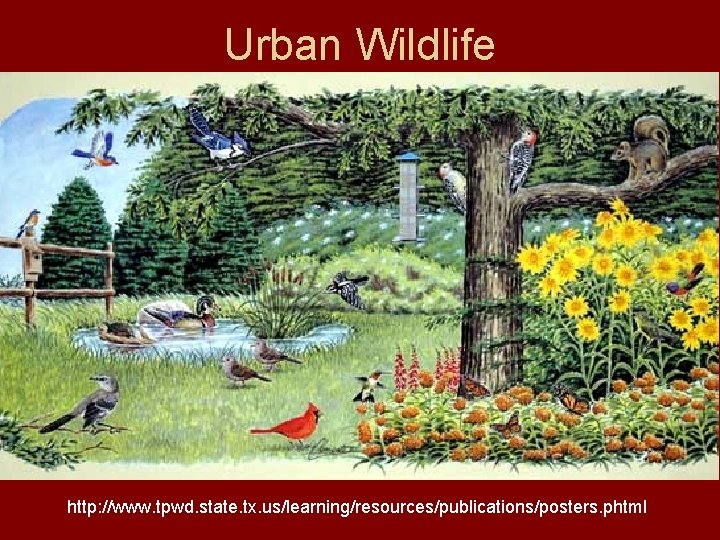
Urban Wildlife http: //www. tpwd. state. tx. us/learning/resources/publications/posters. phtml

Home is Where the Habitat Is Habitats and the Environment Part 1
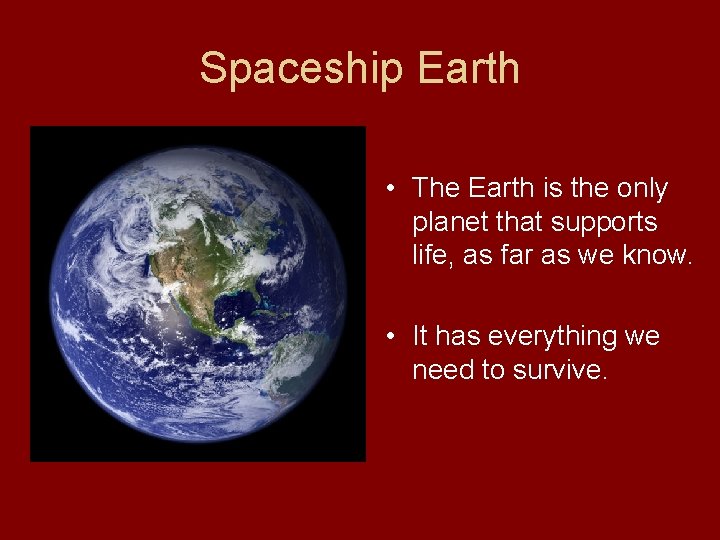
Spaceship Earth • The Earth is the only planet that supports life, as far as we know. • It has everything we need to survive.
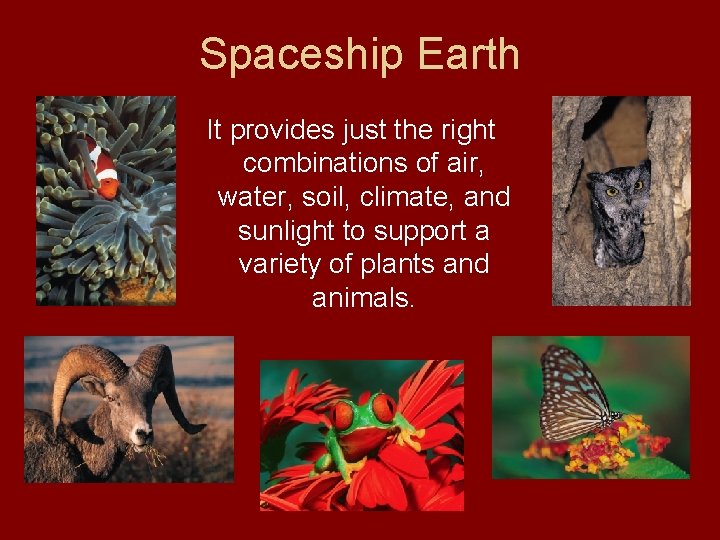
Spaceship Earth It provides just the right combinations of air, water, soil, climate, and sunlight to support a variety of plants and animals.
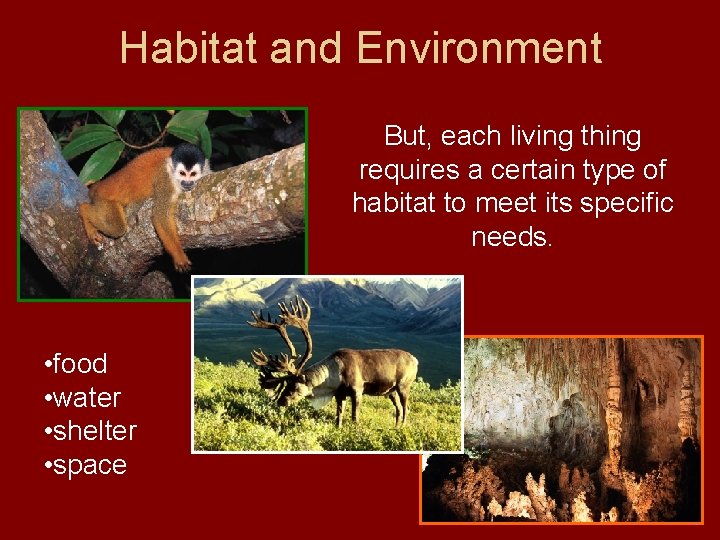
Habitat and Environment But, each living thing requires a certain type of habitat to meet its specific needs. • food • water • shelter • space
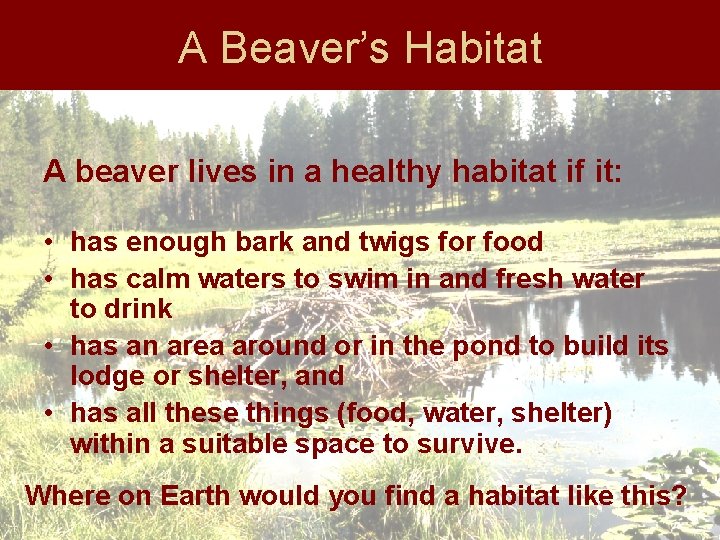
A Beaver’s Habitat A beaver lives in a healthy habitat if it: • has enough bark and twigs for food • has calm waters to swim in and fresh water to drink • has an area around or in the pond to build its lodge or shelter, and • has all these things (food, water, shelter) within a suitable space to survive. Where on Earth would you find a habitat like this?
Habitat and Environment Some of the major ecosystems on earth include: ØDeserts ØTundra ØForests ØGrasslands ØWetlands Temperature and the amount of available moisture have a lot to do with what kind of plants and animals live in each one. Basically, wetlands are wet (for part of the year, anyway)! Deserts and tundra are dry, and grasslands and forests fall somewhere in between.
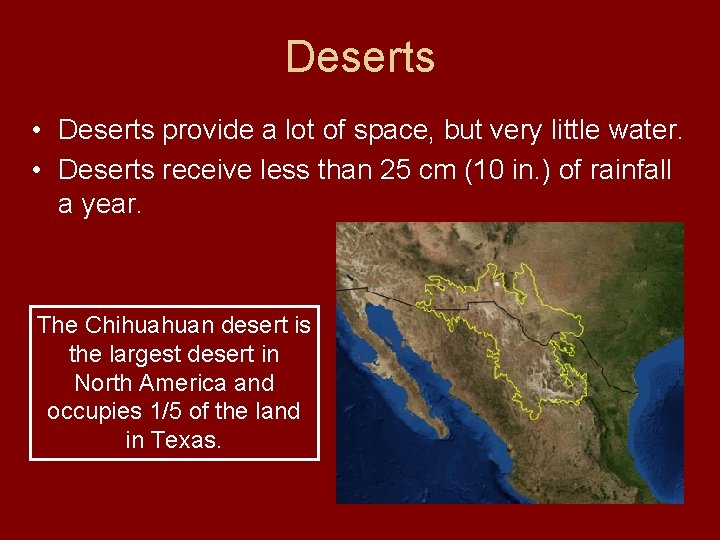
Deserts • Deserts provide a lot of space, but very little water. • Deserts receive less than 25 cm (10 in. ) of rainfall a year. The Chihuahuan desert is the largest desert in North America and occupies 1/5 of the land in Texas.
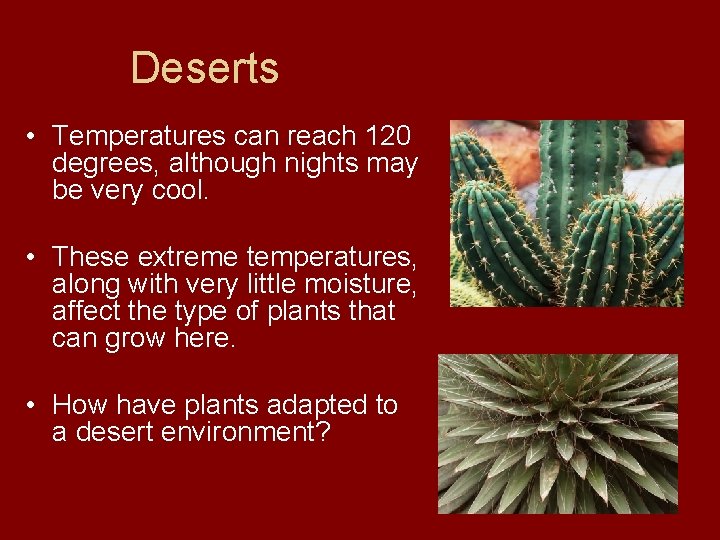
Deserts • Temperatures can reach 120 degrees, although nights may be very cool. • These extreme temperatures, along with very little moisture, affect the type of plants that can grow here. • How have plants adapted to a desert environment?
Deserts • Desert animals have also adapted to extreme temperatures and little water. • Some desert animals get the water they need from the food they eat. • Many animals find ways to avoid the midday heat by burrowing or hunting at night.
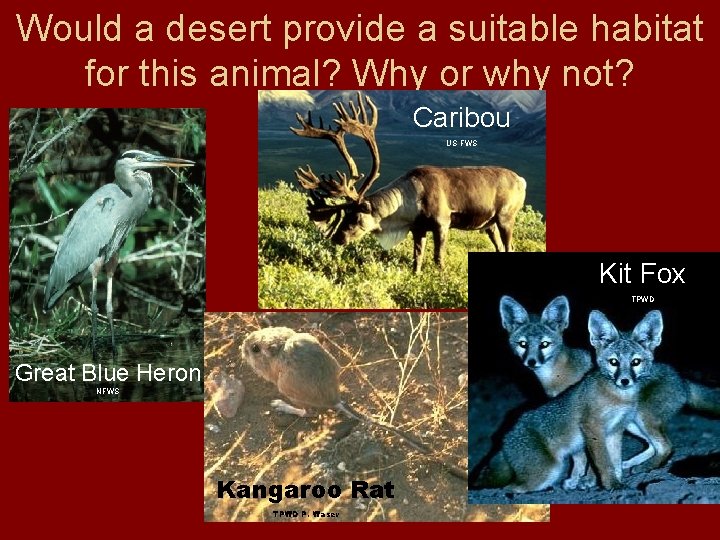
Would a desert provide a suitable habitat for this animal? Why or why not? Caribou US FWS Kit Fox TPWD Great Blue Heron NFWS Kangaroo Rat TPWD P. Waser
Deserts What other animals do you think would be happy living in a desert? Why?
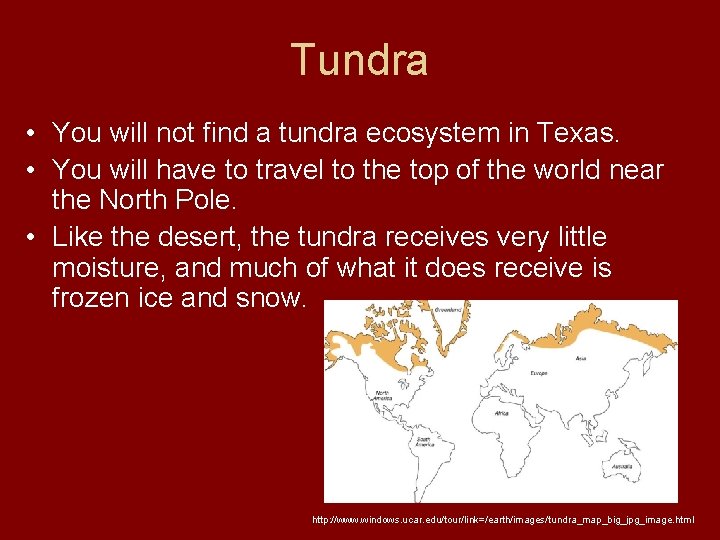
Tundra • You will not find a tundra ecosystem in Texas. • You will have to travel to the top of the world near the North Pole. • Like the desert, the tundra receives very little moisture, and much of what it does receive is frozen ice and snow. http: //www. windows. ucar. edu/tour/link=/earth/images/tundra_map_big_jpg_image. html
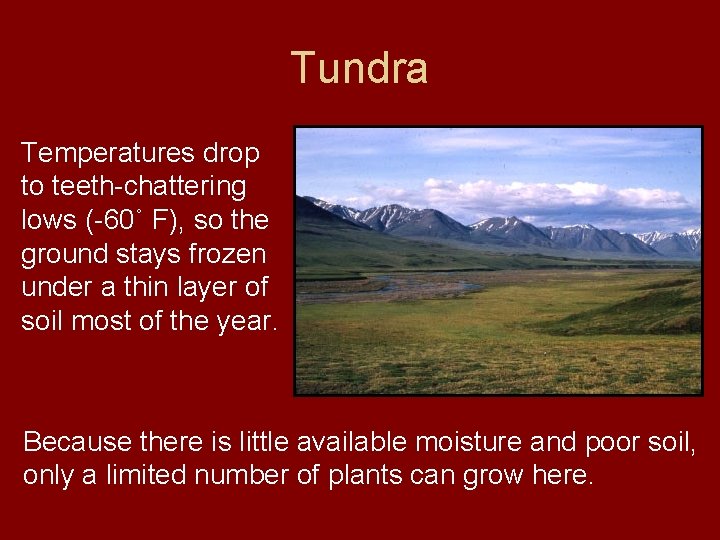
Tundra Temperatures drop to teeth-chattering lows (-60˚ F), so the ground stays frozen under a thin layer of soil most of the year. Because there is little available moisture and poor soil, only a limited number of plants can grow here.
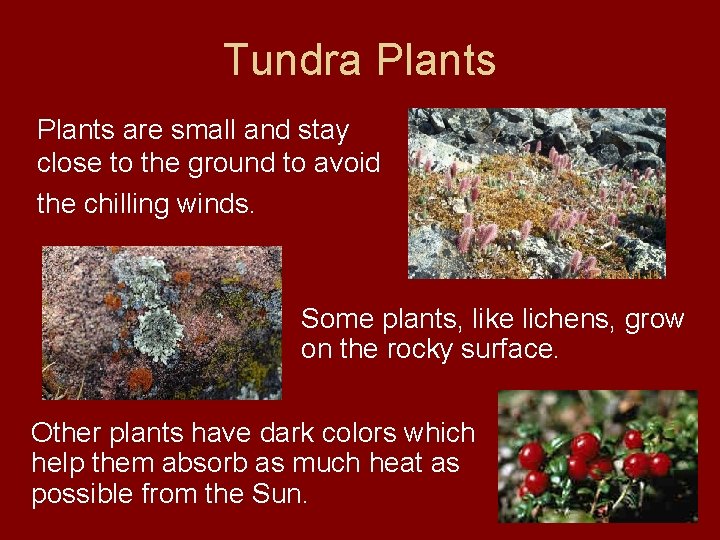
Tundra Plants are small and stay close to the ground to avoid the chilling winds. Some plants, like lichens, grow on the rocky surface. Other plants have dark colors which help them absorb as much heat as possible from the Sun.
Tundra Animals • Because plant life is limited, animal species are limited, too. • In order to survive the cold temperatures and frozen ground, animals dress in layers (thick fur and insulating fat) and have feet adapted for walking on snow and ice. • Some arctic animals take a long nap (hibernate) during the winter, while others may “pack their bags” and head south to find food and shelter.
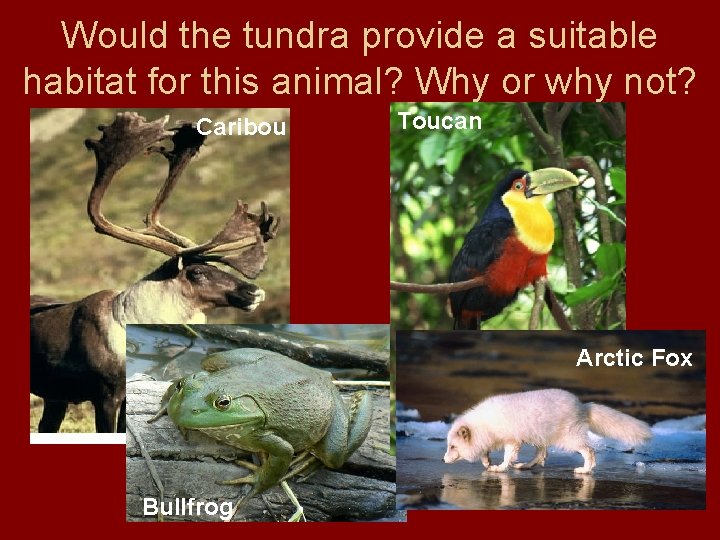
Would the tundra provide a suitable habitat for this animal? Why or why not? Caribou Toucan Arctic Fox Bullfrog
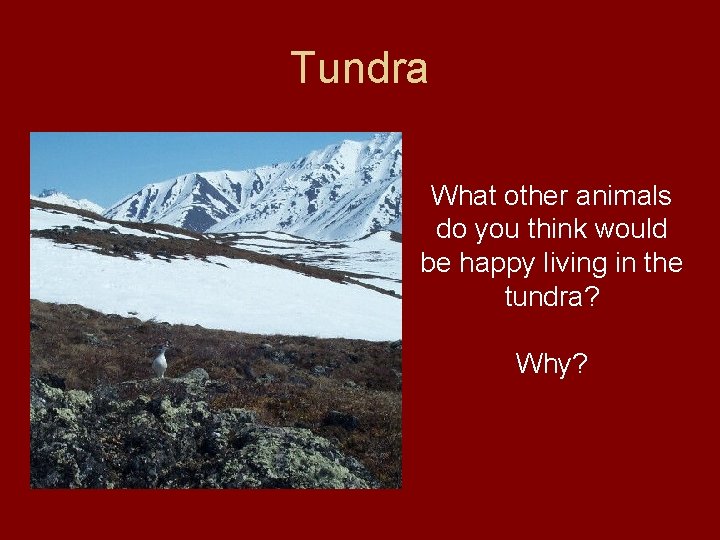
Tundra What other animals do you think would be happy living in the tundra? Why?
- Slides: 18