
Urban Reform During the Progressive Era 1890 1920
Urban Reform During the Progressive Era (1890 -1920) ■ From 1890 to 1920, reformers tried to clean up problems (“progress”) created during the Gilded Age: –Cities were plagued by slums, crime, disease, tenements –City, state, & national gov’ts were seen as corrupt & unresponsive to the needs of Americans –Corporate monopolies limited competition & workers’ wages
The Social Gospel Movement ■ In the 1880 s, many middle-class Protestant Christians embraced the Social Gospel movement: –To honor God, people must put aside their own desires & help other people, especially the poor –These ideas helped inspire Progressive reform in U. S. cities
Urban Progressive Reformers ■ One of the earliest progressive reforms was the settlement house movement led by Jane Addams –Addams’ Hull House in Chicago offered baths, cheap food, child care, job training, health care to poor citizens in the slums –Her efforts inspired reformers in other cities to build settlement houses to assist the poor
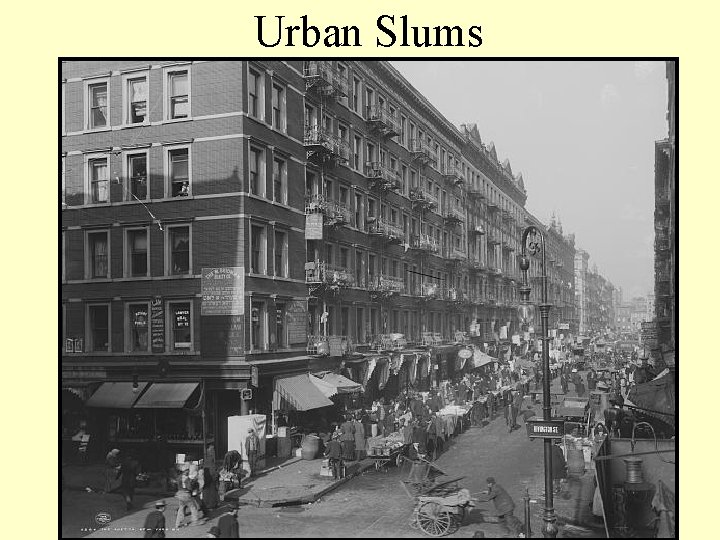
Urban Slums
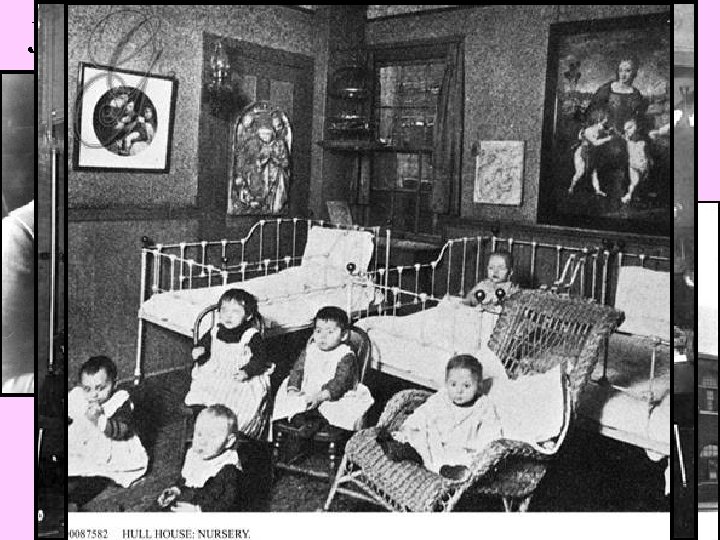
Jane Addams’ Hull House in Chicago
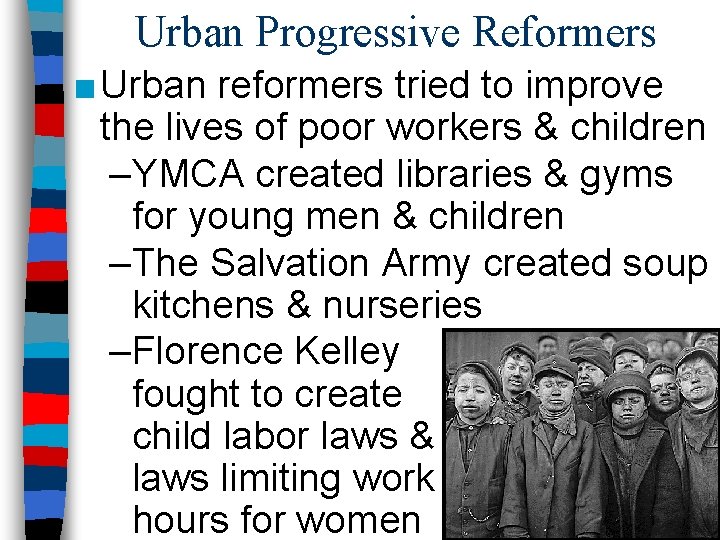
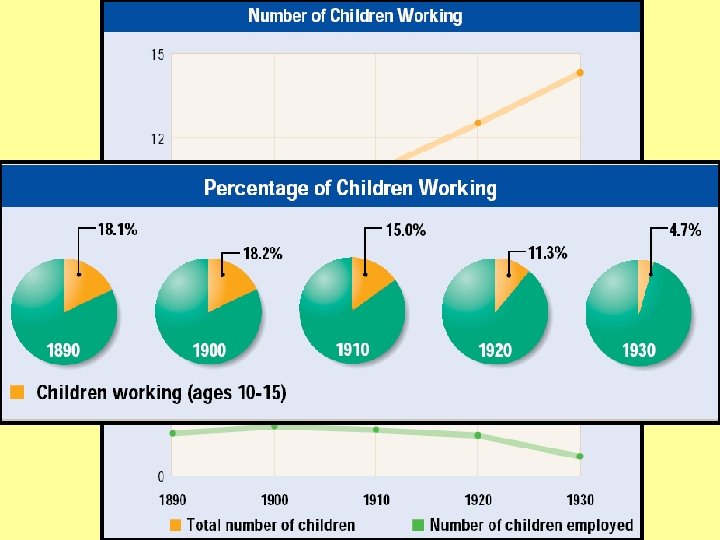
Urban Progressive Reformers ■ Urban reformers tried to improve the lives of poor workers & children –YMCA created libraries & gyms for young men & children –The Salvation Army created soup kitchens & nurseries –Florence Kelley fought to create child labor laws & laws limiting work hours for women
Urban Progressive Reformers ■ Many reformers saw alcohol abuse as serious urban problem: –Women’s Christian Temperance Union worked to end alcohol –Reformers gained prohibition laws in most states & outlawed alcohol throughout the USA with the 18 th Amendment in 1919 –Hoped prohibition would end corruption, domestic violence, & help “Americanize” immigrants
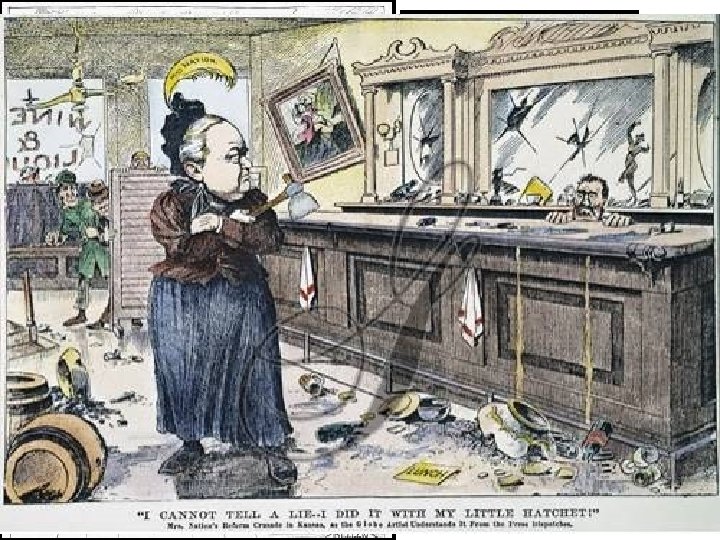
Carrie Nation Frances Willard
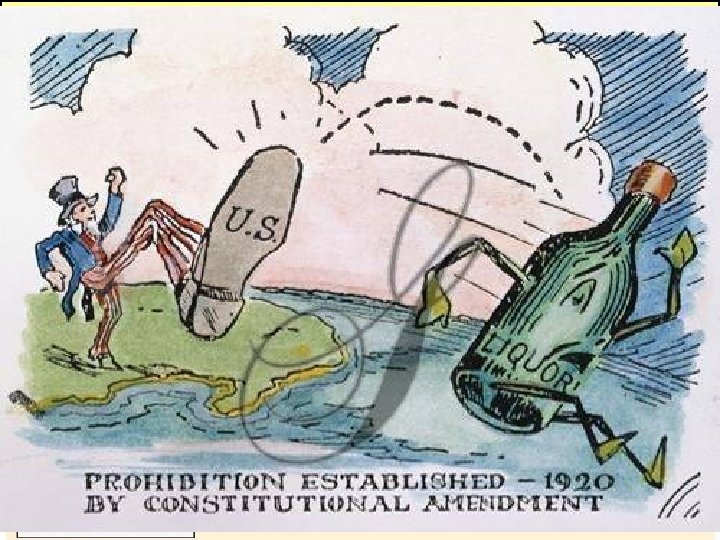
Prohibition of alcohol in the states prior to 1920
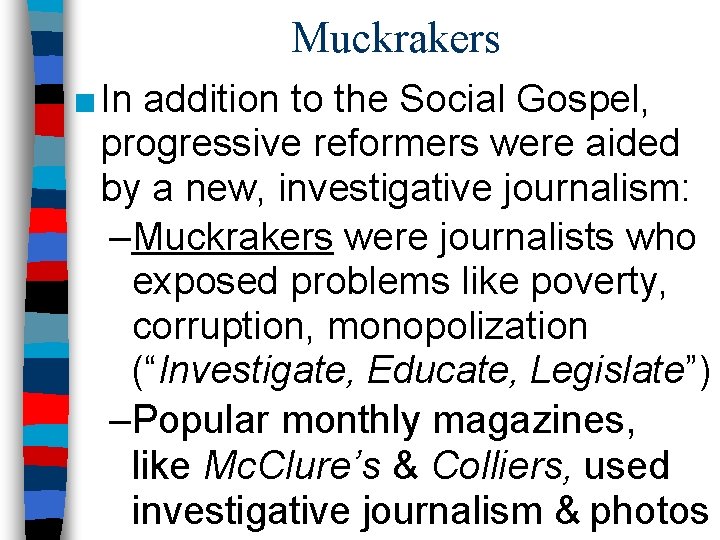
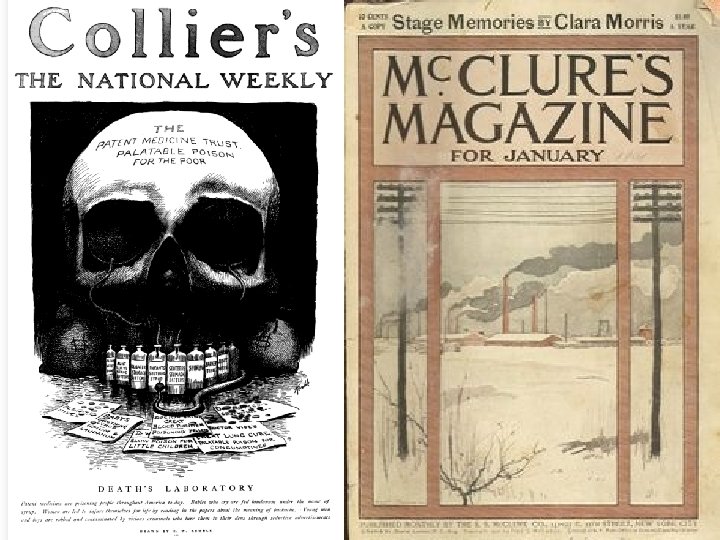
Muckrakers ■ In addition to the Social Gospel, progressive reformers were aided by a new, investigative journalism: –Muckrakers were journalists who exposed problems like poverty, corruption, monopolization (“Investigate, Educate, Legislate”) –Popular monthly magazines, like Mc. Clure’s & Colliers, used investigative journalism & photos
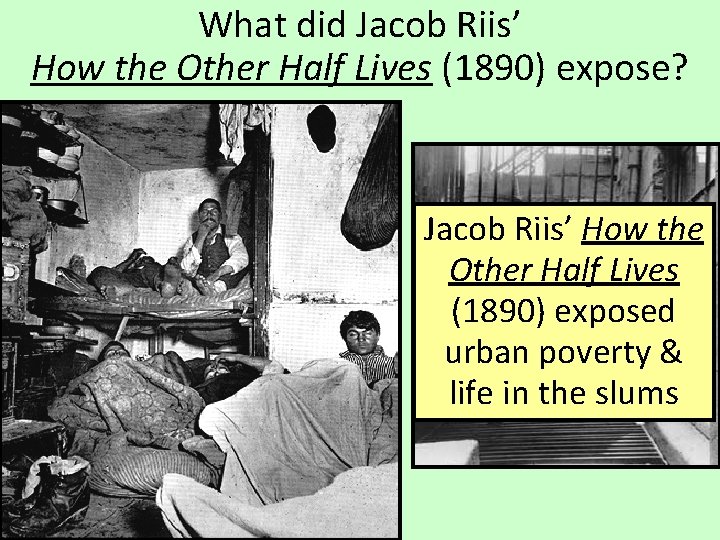
What did Jacob Riis’ How the Other Half Lives (1890) expose? Jacob Riis’ How the Other Half Lives (1890) exposed urban poverty & life in the slums
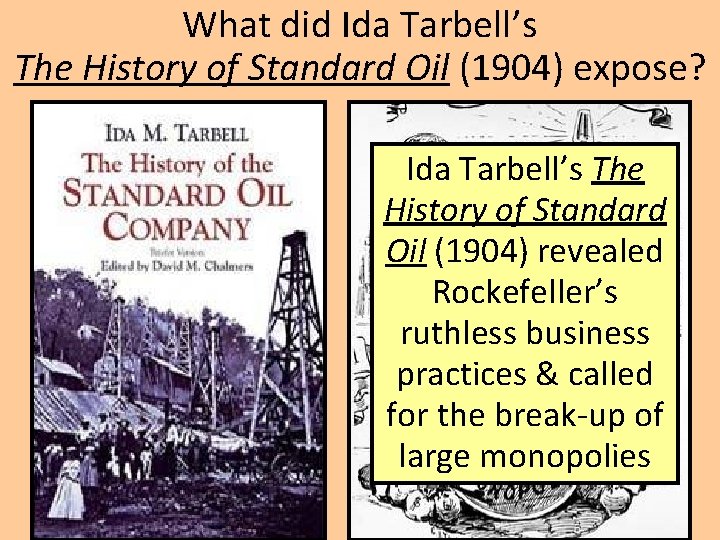
What did Ida Tarbell’s The History of Standard Oil (1904) expose? Ida Tarbell’s The History of Standard Oil (1904) revealed Rockefeller’s ruthless business practices & called for the break-up of large monopolies

What did Upton Sinclair’s The Jungle (1906) expose? Upton Sinclair’s The Jungle (1906) Quick Class Discussion: revealed the Read excerpts from The Jungle unsanitary Why did The Jungle generate so much conditions of outrage from Americansslaughterhouses & politicians? & led to gov’t regulation of food industries
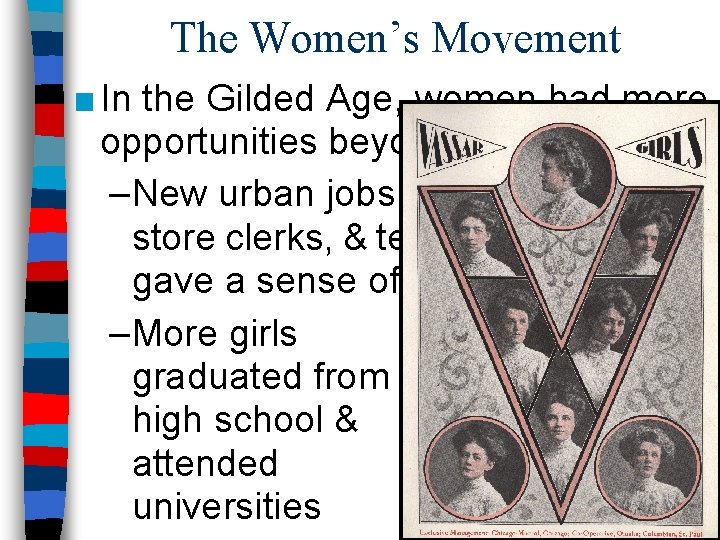
The Women’s Movement ■ In the Gilded Age, women had more opportunities beyond marriage: –New urban jobs as secretaries, store clerks, & telephone operators gave a sense of independence –More girls graduated from high school & attended universities
The Women’s Movement ■ Women played an important role as Progressive reformers: –Jane Addams led the settlement house movement –Muckraker Ida Tarbell exposed monopoly abuses of Standard Oil –Florence Kelley helped bring about child & women labor laws –Carrie Nation & Frances Willard helped push for prohibition
The Women’s Movement ■ Women reformers began to call attention to their own lack of rights: –In most states, married women could not divorce or own property Quick Class Discussion: –Women could not vote, but black, In what ways were women immigrant, & illiterate men could discriminated against or deprived –Women workers were paid less of the same rights given as men? than men for doing the same jobs –Middle & upper class women were expected to serve domestic & child rearing roles in the home
Reform for Women ■ Women reformers gained laws that banned prostitution & limited work hours for women to 10 hours ■ Margaret Sanger promoted birth control for women: –Her journals provided contraceptive information for poor & middle-class women –Sanger opened the 1 st birth control clinic in the U. S. in 1915
Women’s Suffrage ■ The most significant reform for women was voting rights (suffrage) –Women demanded suffrage since Seneca Falls in 1848 –Were frustrated in 1870 when the 15 th Amendment gave black men the right to vote but not women –In 1890, the National American Women Suffrage Association (NAWSA) was formed
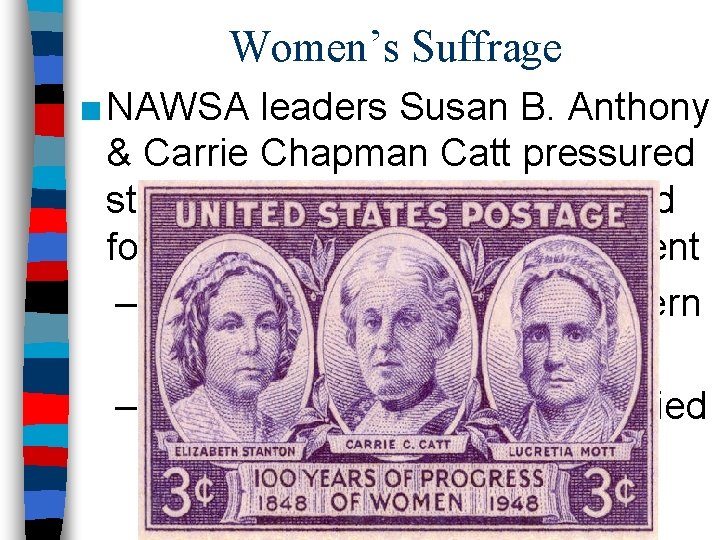
Women’s Suffrage ■ NAWSA leaders Susan B. Anthony & Carrie Chapman Catt pressured states to let women vote & called for a national suffrage amendment –By the early 1900 s, most western states allowed women to vote –Finally in 1920, the states ratified the 19 th Amendment giving women to right to vote
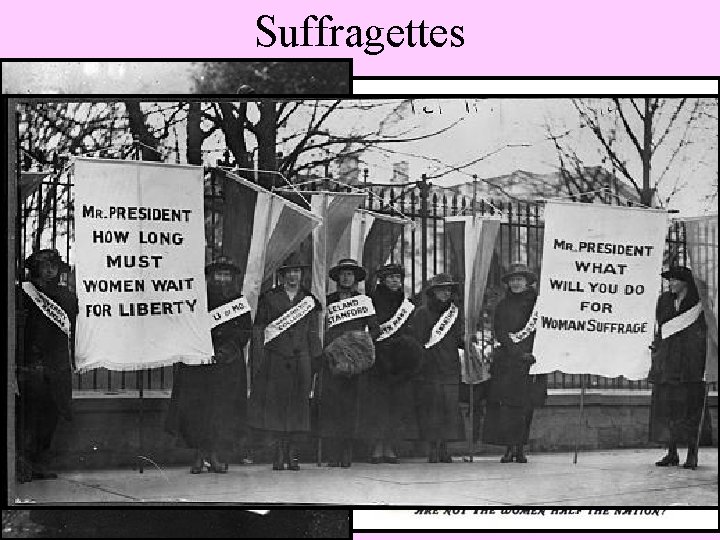
Suffragettes
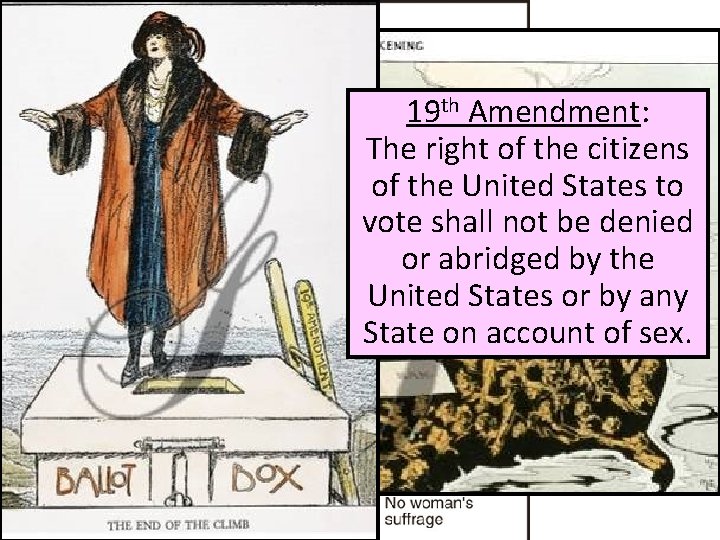
19 th Amendment: The right of the citizens of the United. Women’s States to vote shall not be denied or abridged. Suffrage by the United States or by any Before State on account of sex. 1900
Reform for African-Americans Plessy v Ferguson (1896): were in ■ By 1900, African-Americans Segregation does notreform violate the need of progressive 14 th amendment & can be used as –long 80%asofseparate lived infacilities rural areas in the are equal South, most asbut sharecroppers (“separate equal”) Quick Class Discussion: –In Poll taxes & literacy tests limited what ways were African-Americans black voting rights discriminated against or deprived of –Lynching violence common the same&rights givenwere as whites? –Plessy v Ferguson (1896) allowed Jim Crow laws to segregate in restaurants, hotels, schools
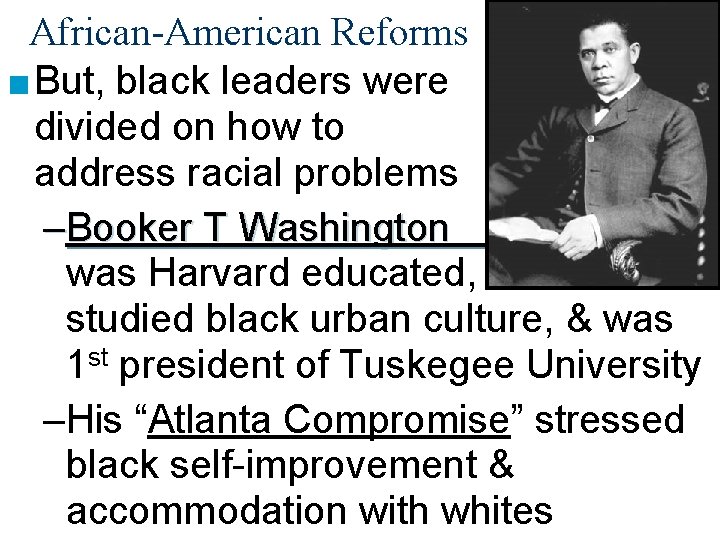
African-American Reforms ■ But, black leaders were divided on how to address racial problems –Booker T Washington was Harvard educated, studied black urban culture, & was 1 st president of Tuskegee University –His “Atlanta Compromise” stressed black self-improvement & accommodation with whites
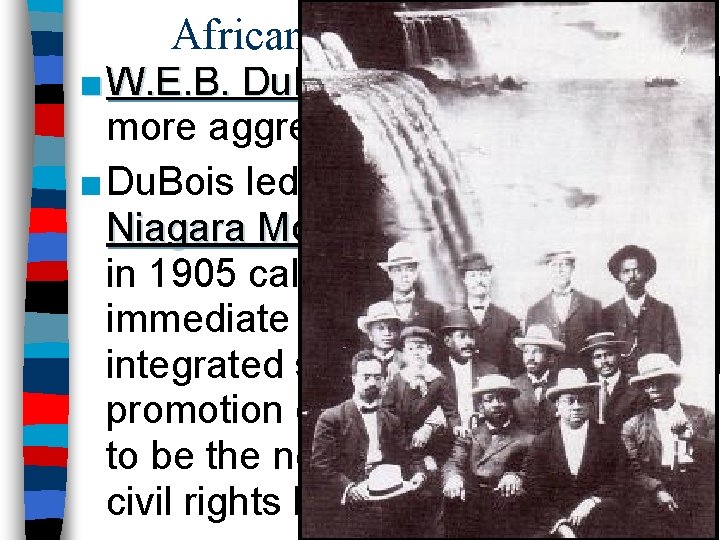
African-American Reforms ■ W. E. B. Du. Bois was more aggressive ■ Du. Bois led the Niagara Movement in 1905 calling for immediate civil rights, integrated schools, & promotion of the “Talented 10 th” to be the next generation of black civil rights leaders
The NAACP ■ In 1909, reformers formed the National Association for the Advancement of Colored People (NAACP) to fight for black equality –Du. Bois was put in charge of The Crisis publication to call attention to the cause –The NAACP used lawsuits to fight segregation laws & voting restrictions
Reforms for African-Americans ■ Unlike women, African-Americans did not see significant changes: –Black reformers failed to convince state or national politicians to offer equality –By the end of the Progressive Era, segregation & lynching were common throughout the South & in many parts of the U. S.
- Slides: 28