
Urban growth in LEDC cities LO To compare
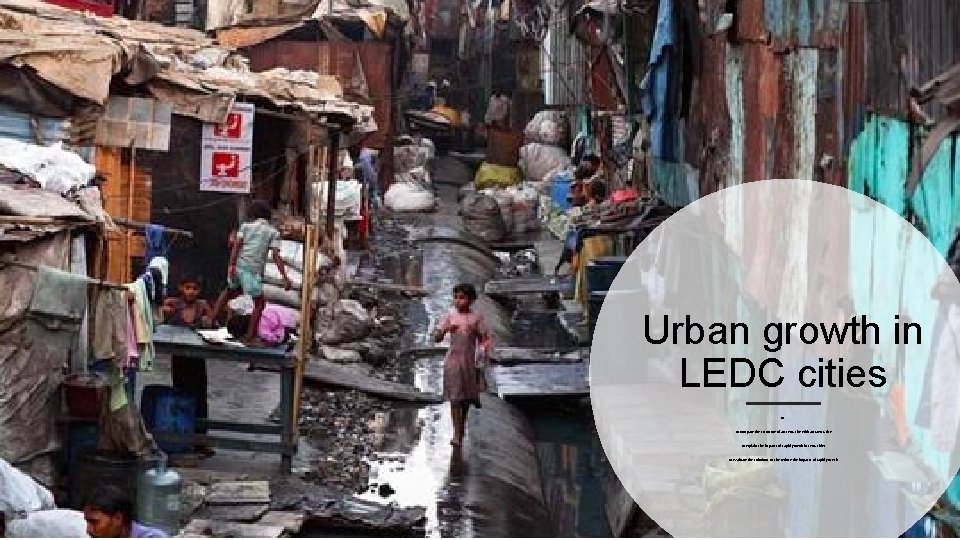
Urban growth in LEDC cities LO: To compare the structure of an LEDC city with an MEDC city To explain the impacts of rapid growth in LEDC cities To evaluate the solutions to the reduce the impacts of rapid growth
Discuss with a partner these key terms: Urbanisation Mega city
• URBANISATION • The increasing proportion of people living in towns and cities • MEGA CITY • A City with over 10 million people

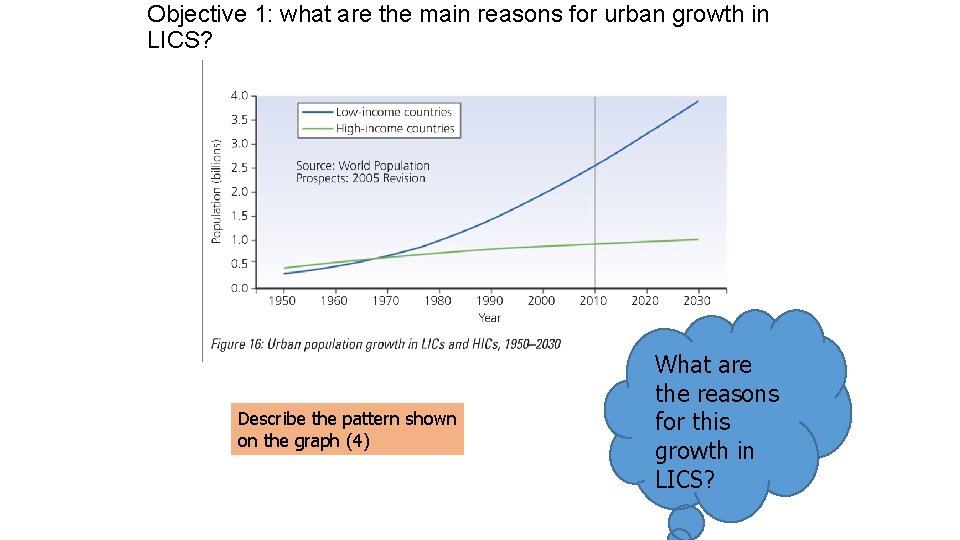
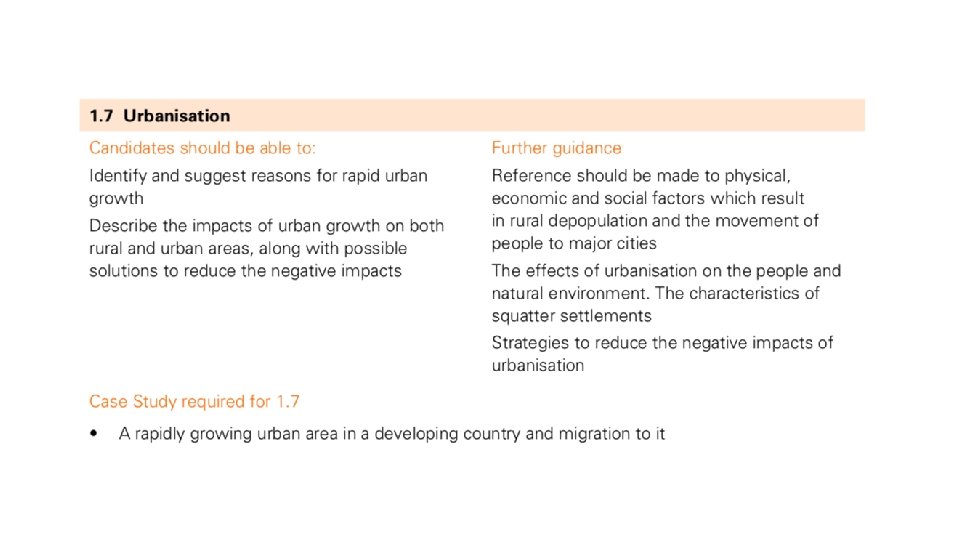
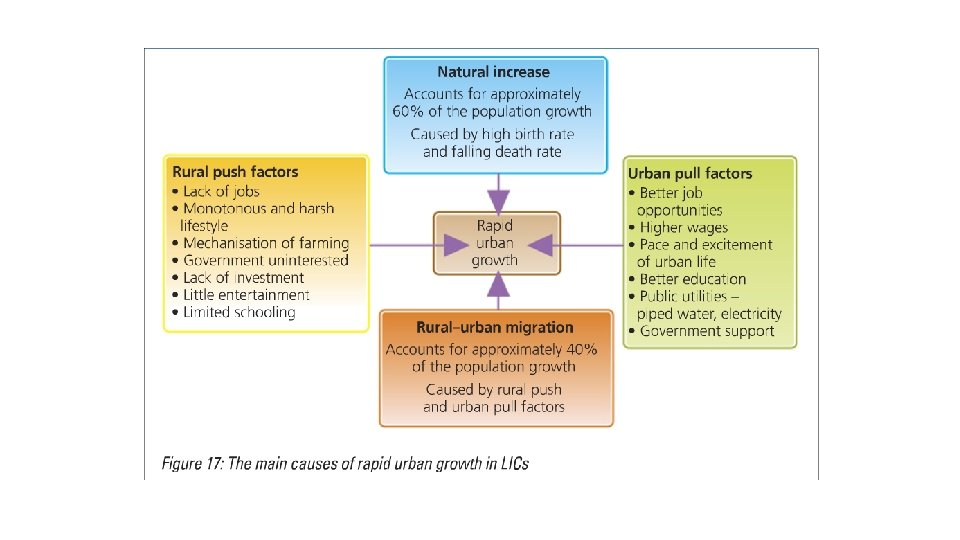
Objective 1: what are the main reasons for urban growth in LICS? Describe the pattern shown on the graph (4) What are the reasons for this growth in LICS?
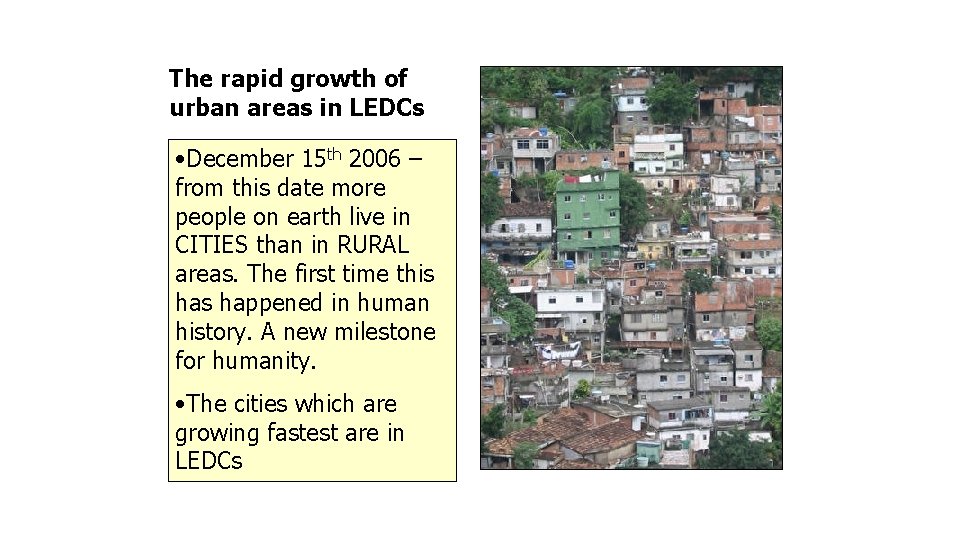
The rapid growth of urban areas in LEDCs • December 15 th 2006 – from this date more people on earth live in CITIES than in RURAL areas. The first time this happened in human history. A new milestone for humanity. • The cities which are growing fastest are in LEDCs
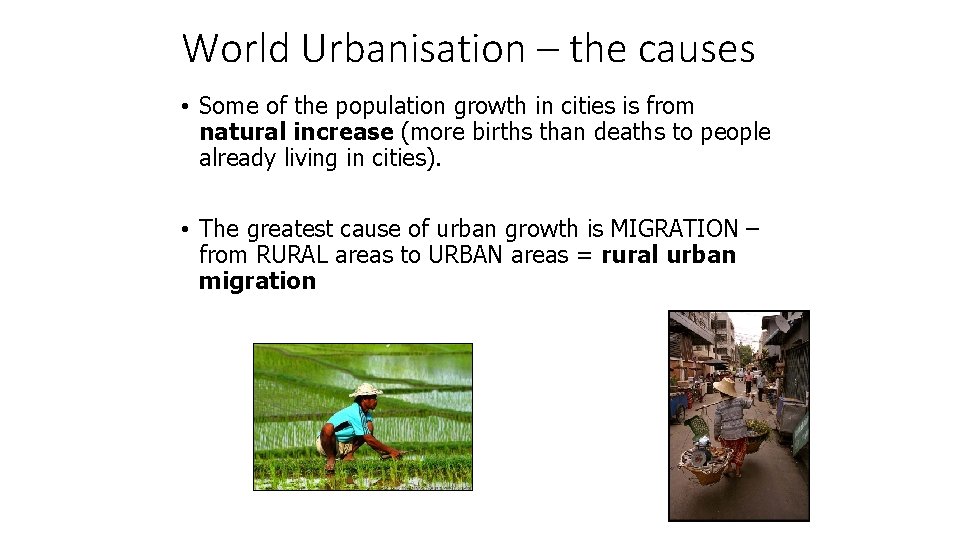
World Urbanisation – the causes • Some of the population growth in cities is from natural increase (more births than deaths to people already living in cities). • The greatest cause of urban growth is MIGRATION – from RURAL areas to URBAN areas = rural urban migration
Push and pull factors: rural to urban migration in an LIC Push factors Pull factors
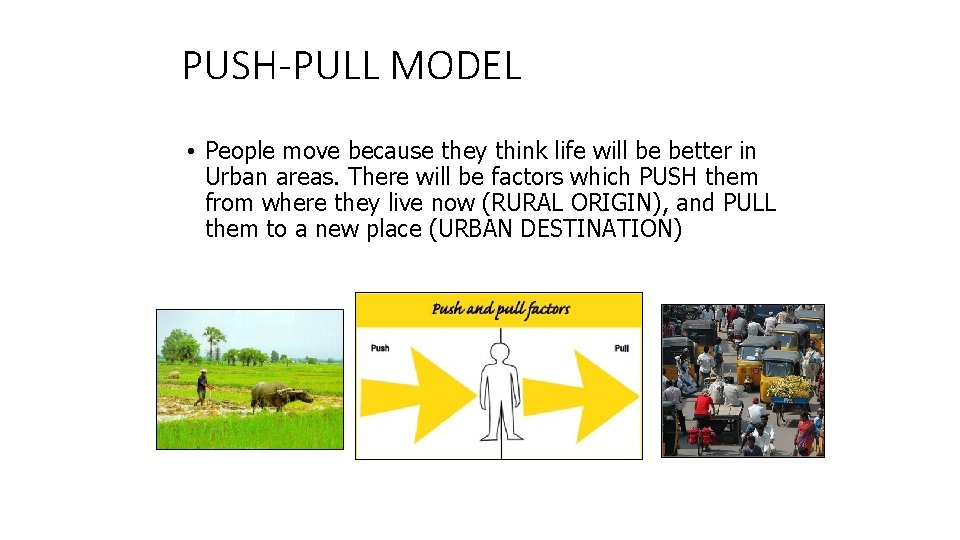
PUSH-PULL MODEL • People move because they think life will be better in Urban areas. There will be factors which PUSH them from where they live now (RURAL ORIGIN), and PULL them to a new place (URBAN DESTINATION)
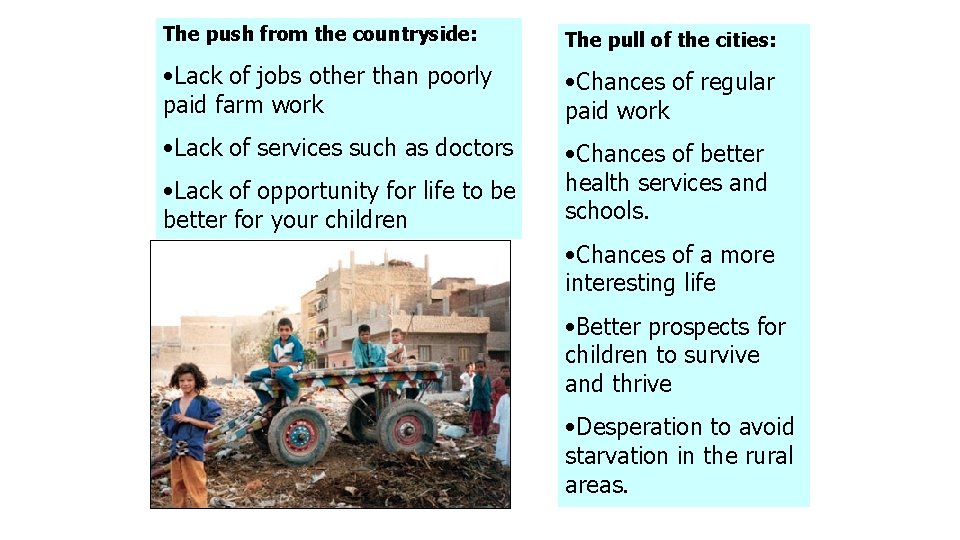
The push from the countryside: The pull of the cities: • Lack of jobs other than poorly paid farm work • Chances of regular paid work • Lack of services such as doctors • Chances of better health services and schools. • Lack of opportunity for life to be better for your children • Chances of a more interesting life • Better prospects for children to survive and thrive • Desperation to avoid starvation in the rural areas.
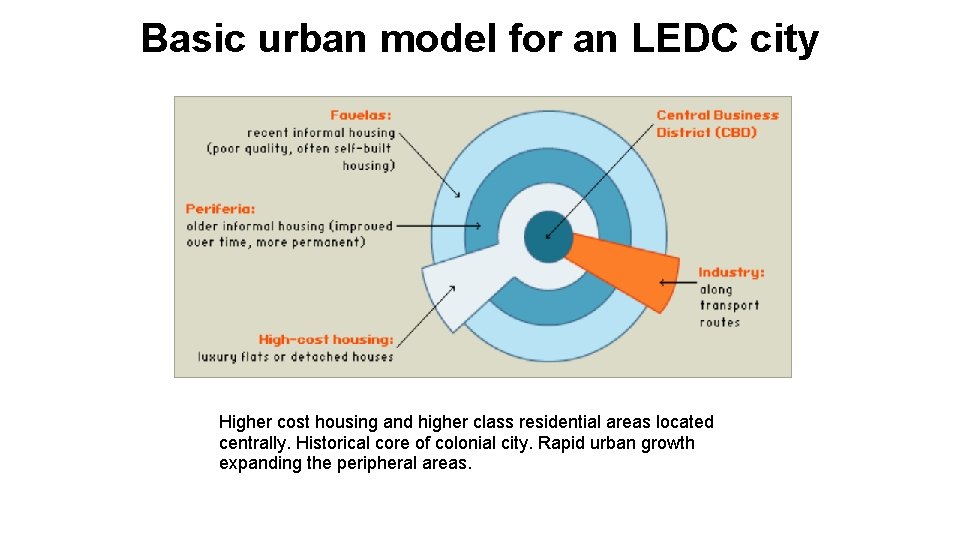
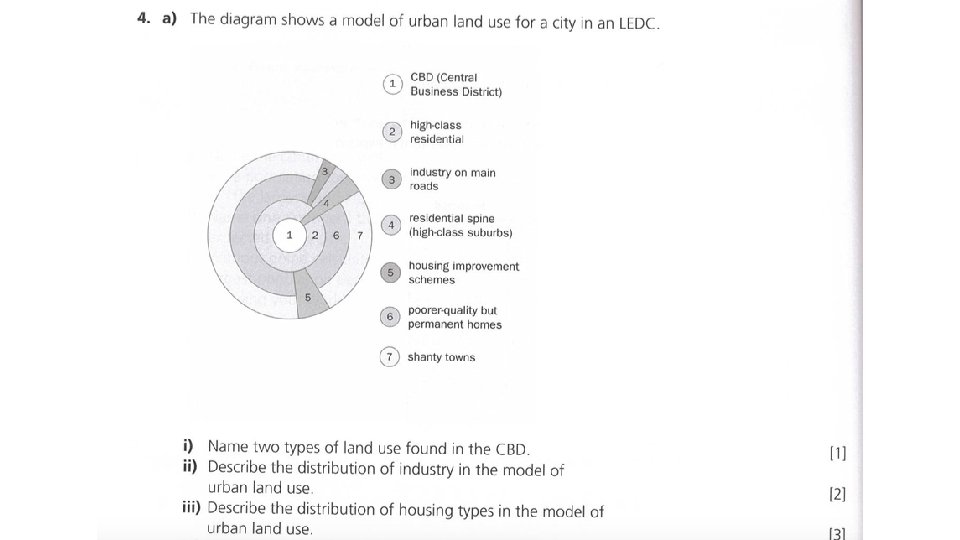
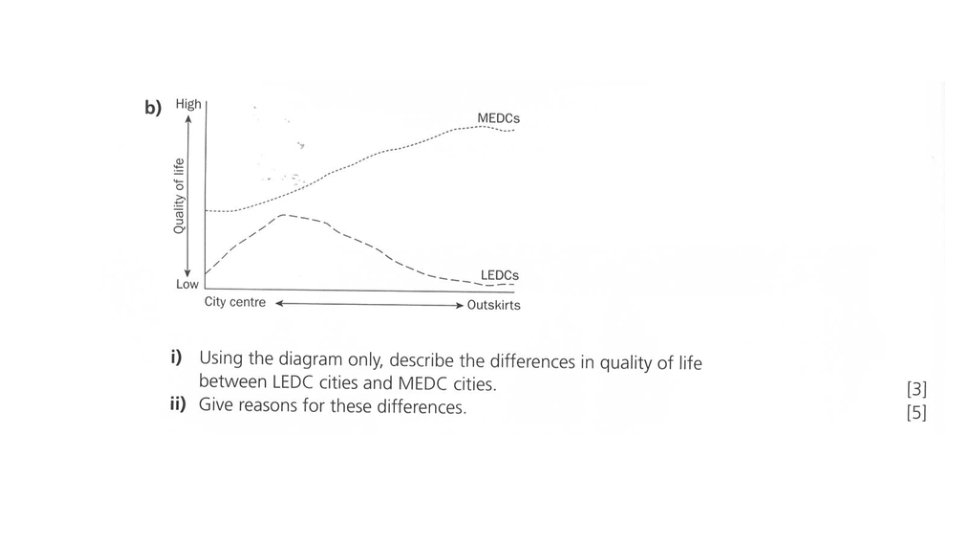
Basic urban model for an LEDC city Higher cost housing and higher class residential areas located centrally. Historical core of colonial city. Rapid urban growth expanding the peripheral areas.
• Name a city and describe what has been done to improve living conditions in the slums found there. (7)
Name a city and describe what has been done to improve living conditions in the slums found there. (7) • What would be the success critria for answering this question well?
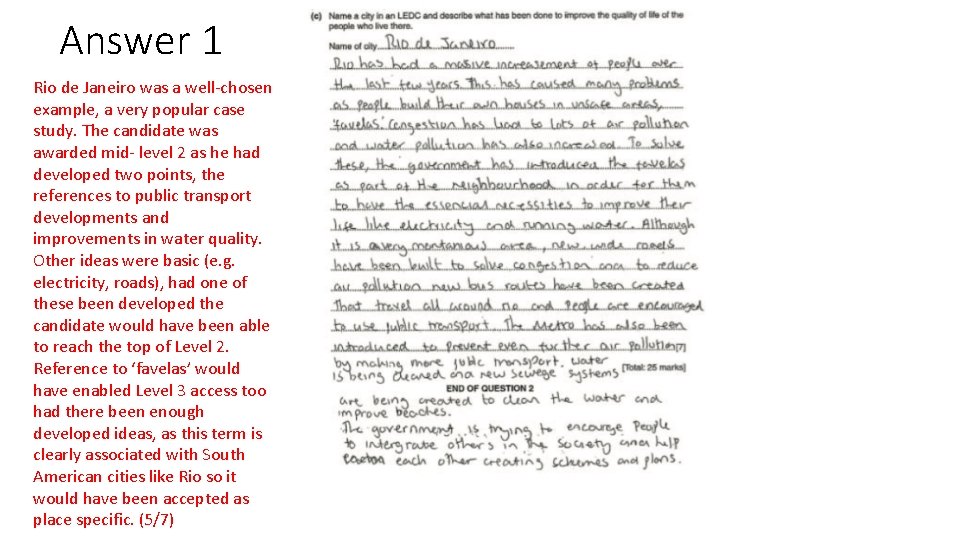
Answer 1 Rio de Janeiro was a well-chosen example, a very popular case study. The candidate was awarded mid- level 2 as he had developed two points, the references to public transport developments and improvements in water quality. Other ideas were basic (e. g. electricity, roads), had one of these been developed the candidate would have been able to reach the top of Level 2. Reference to ‘favelas’ would have enabled Level 3 access too had there been enough developed ideas, as this term is clearly associated with South American cities like Rio so it would have been accepted as place specific. (5/7)

Answer 2 Rio de Janeiro was a good example but the candidate only achieved Level 1 as all the references to improvements were brief and simple statements (e. g. built houses, clinics and schools out of decent materials). The first half of the answer, where the candidate has developed ideas, is not relevant as it describes problems faced by residents rather than solutions to them. (3/7)
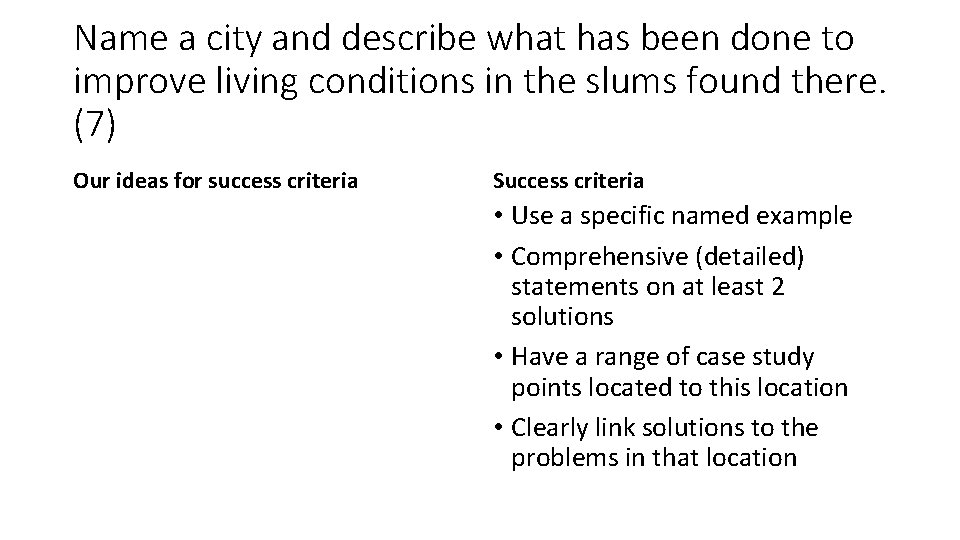
Name a city and describe what has been done to improve living conditions in the slums found there. (7) Our ideas for success criteria Success criteria • Use a specific named example • Comprehensive (detailed) statements on at least 2 solutions • Have a range of case study points located to this location • Clearly link solutions to the problems in that location
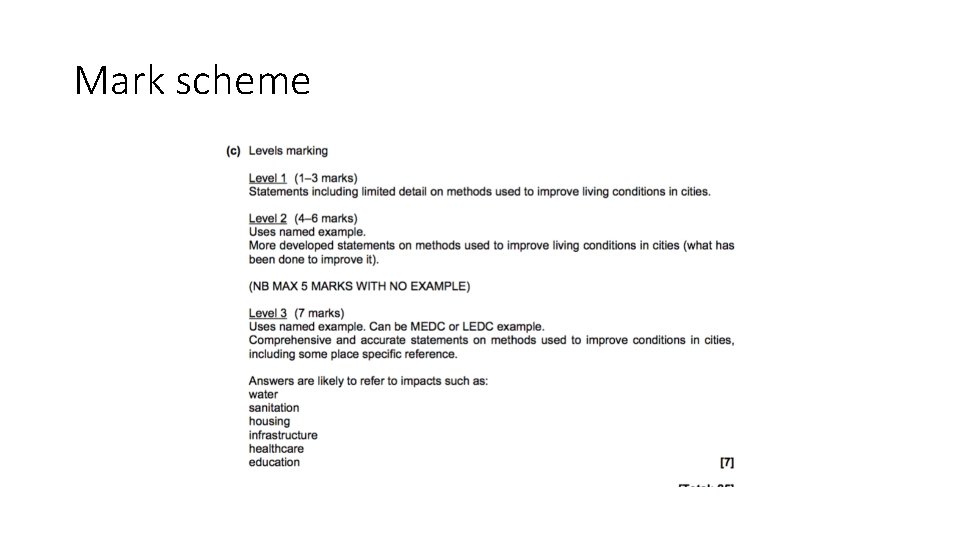
Mark scheme
- Slides: 21