
URBAN DEVELOPMENT STORMWATER MANAGEMENT HOW COLLABORATION ACHIEVES EXCELLENT
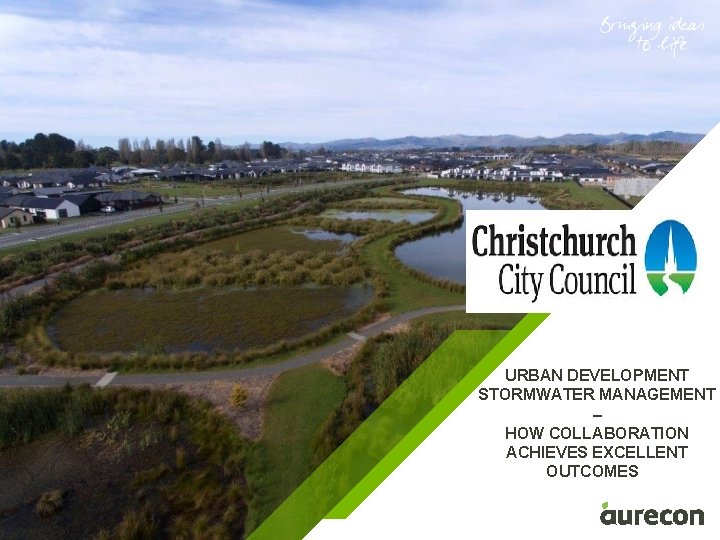
URBAN DEVELOPMENT STORMWATER MANAGEMENT – HOW COLLABORATION ACHIEVES EXCELLENT OUTCOMES
INTRODUCTION 2 § Exceptional stormwater outcomes don’t just happen. § They require a bit of art, technical innovation, and collaboration. § In this presentation, the stormwater journey to achieve excellent outcomes through collaboration is illustrated using the Prestons Development in Christchurch.
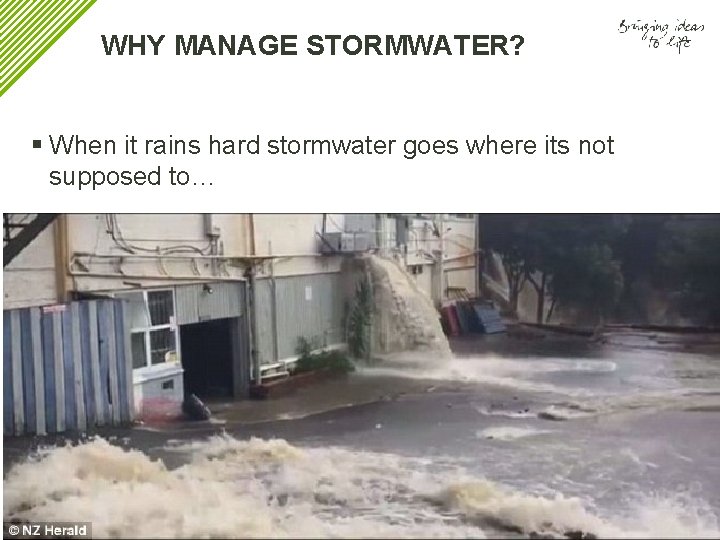
WHY MANAGE STORMWATER? § When it rains hard stormwater goes where its not supposed to… 3
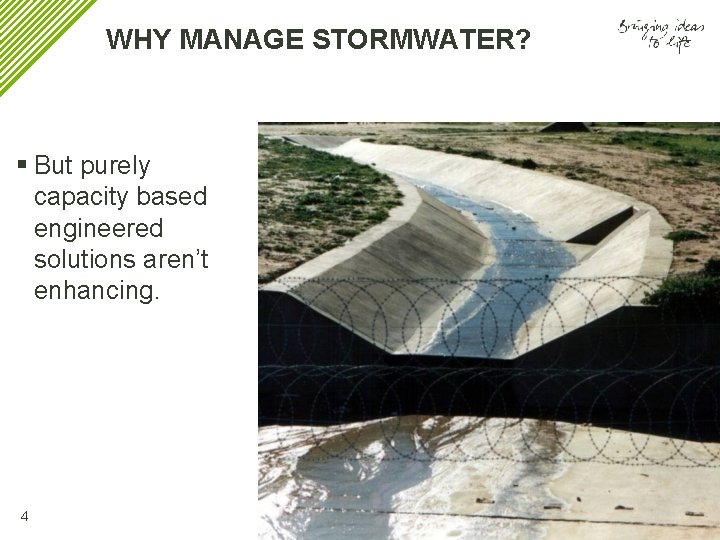
WHY MANAGE STORMWATER? § But purely capacity based engineered solutions aren’t enhancing. 4
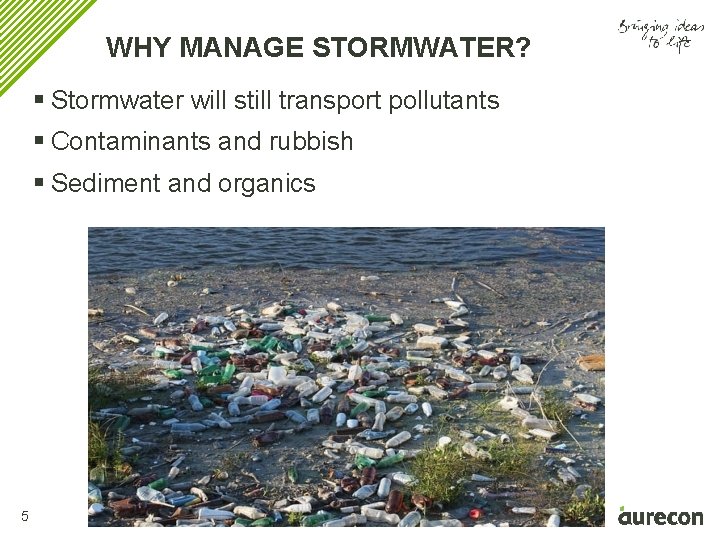
WHY MANAGE STORMWATER? § Stormwater will still transport pollutants § Contaminants and rubbish § Sediment and organics 5
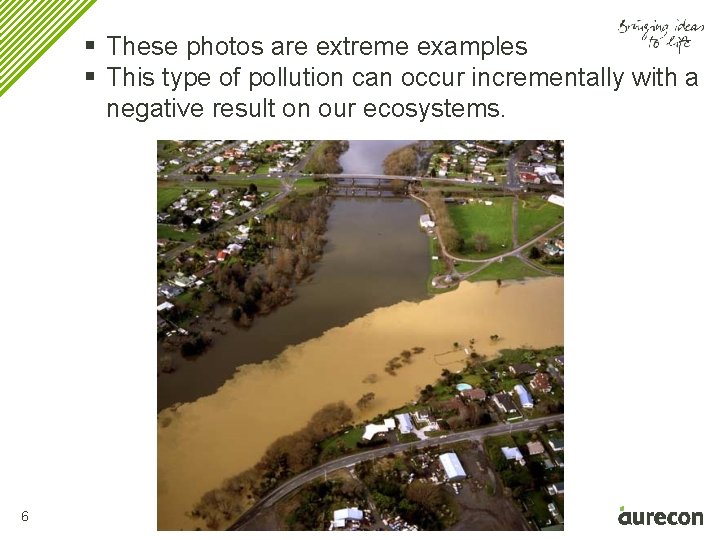
§ These photos are extreme examples § This type of pollution can occur incrementally with a negative result on our ecosystems. 6
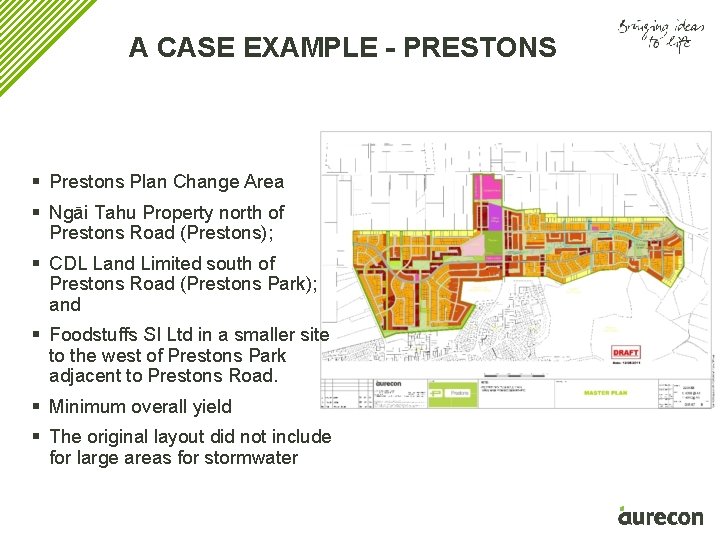
A CASE EXAMPLE - PRESTONS § Prestons Plan Change Area § Ngāi Tahu Property north of Prestons Road (Prestons); § CDL Land Limited south of Prestons Road (Prestons Park); and § Foodstuffs SI Ltd in a smaller site to the west of Prestons Park adjacent to Prestons Road. § Minimum overall yield § The original layout did not include for large areas for stormwater
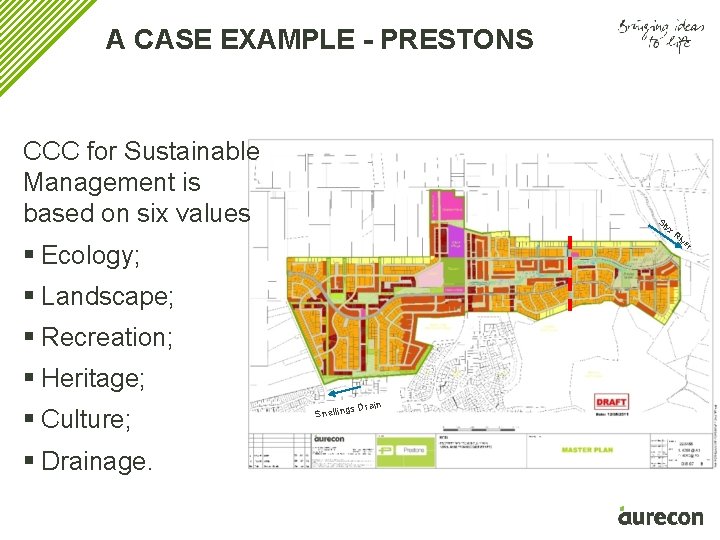
A CASE EXAMPLE - PRESTONS CCC for Sustainable Management is based on six values St yx ve § Ecology; § Landscape; § Recreation; § Heritage; § Culture; § Drainage. Ri gs Drain Snellin r
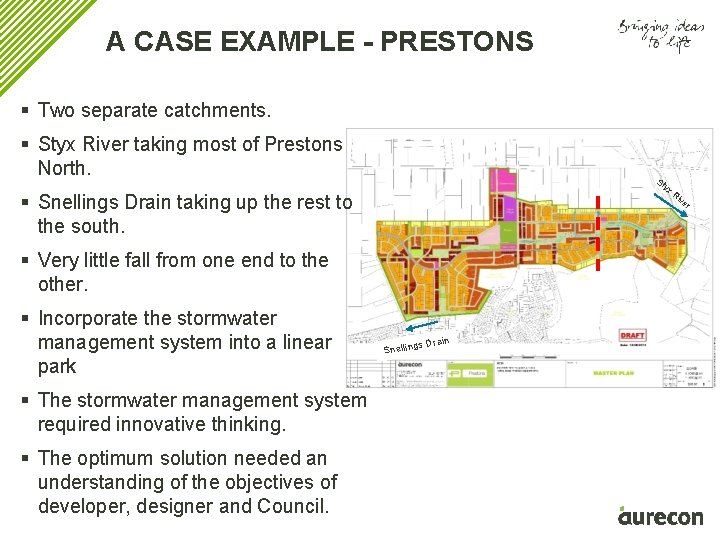
A CASE EXAMPLE - PRESTONS § Two separate catchments. § Styx River taking most of Prestons North. St yx § Snellings Drain taking up the rest to the south. ve § Very little fall from one end to the other. § Incorporate the stormwater management system into a linear park § The stormwater management system required innovative thinking. § The optimum solution needed an understanding of the objectives of developer, designer and Council. Ri gs Drain Snellin r
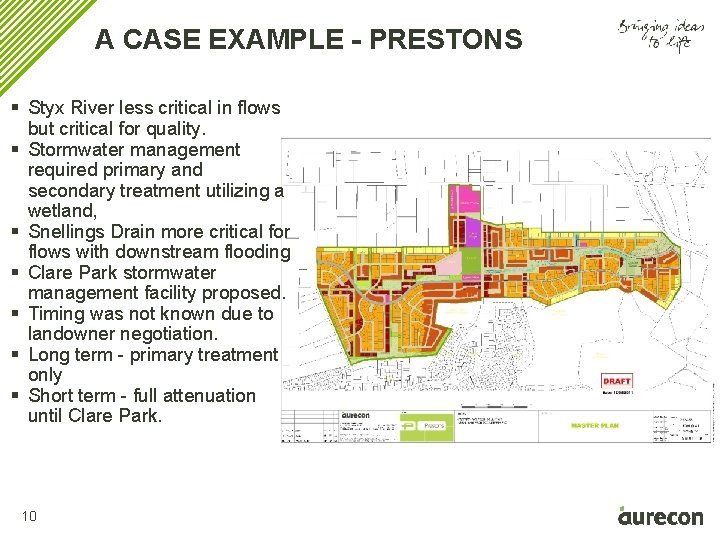
A CASE EXAMPLE - PRESTONS § Styx River less critical in flows but critical for quality. § Stormwater management required primary and secondary treatment utilizing a wetland, § Snellings Drain more critical for flows with downstream flooding § Clare Park stormwater management facility proposed. § Timing was not known due to landowner negotiation. § Long term - primary treatment only § Short term - full attenuation until Clare Park. 10
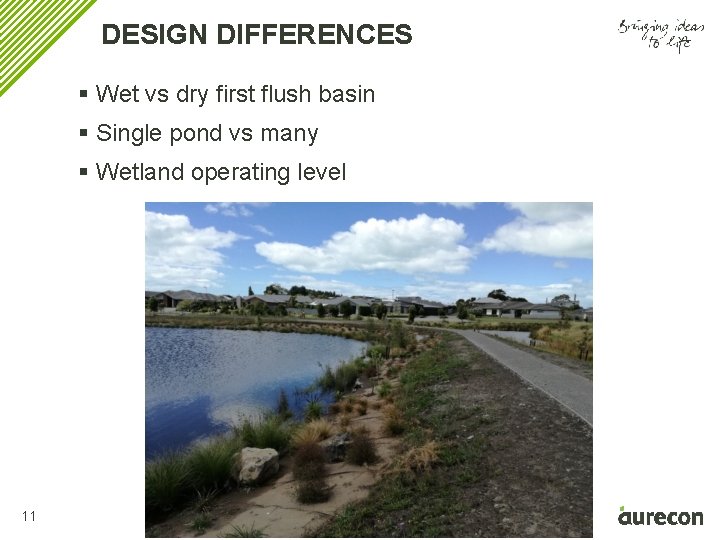
DESIGN DIFFERENCES § Wet vs dry first flush basin § Single pond vs many § Wetland operating level 11
FIRST FLUSH BASINS § The purpose of first flush basins is to contain and provide primary treatment of the initial runoff. § Slow release for secondary treatment, usually through a wetland. § Additional flows preferably bypass the first flush basins. § CCC prefer dry first flush basins and open channels for bypass flows § These require more area for the same top water level. § Ngai Tahu Property have a cultural desire to be near and see water. § Concern over “deep” holes looking ugly. Reticulation design to FFBs with tail water levels was one area of compromise. Baseflow for wet ponds was also a concern. § Technical discussion and workshopping between the representatives of each party was key. that enabled a better overall design solution to be agreed. § Agreement for small FFBs to be dry, larger could be wet. § Accompanied by a specialist landscape design. 12

FIRST FLUSH BASINS
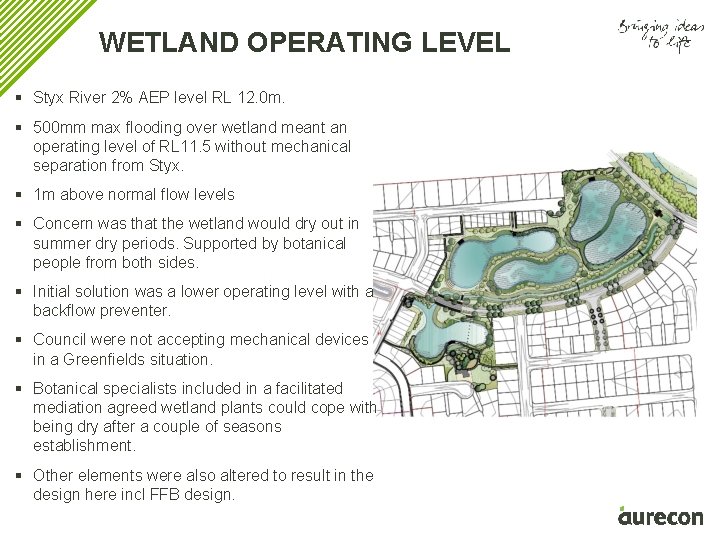
WETLAND OPERATING LEVEL § Styx River 2% AEP level RL 12. 0 m. § 500 mm max flooding over wetland meant an operating level of RL 11. 5 without mechanical separation from Styx. § 1 m above normal flow levels § Concern was that the wetland would dry out in summer dry periods. Supported by botanical people from both sides. § Initial solution was a lower operating level with a backflow preventer. § Council were not accepting mechanical devices in a Greenfields situation. § Botanical specialists included in a facilitated mediation agreed wetland plants could cope with being dry after a couple of seasons establishment. § Other elements were also altered to result in the design here incl FFB design.
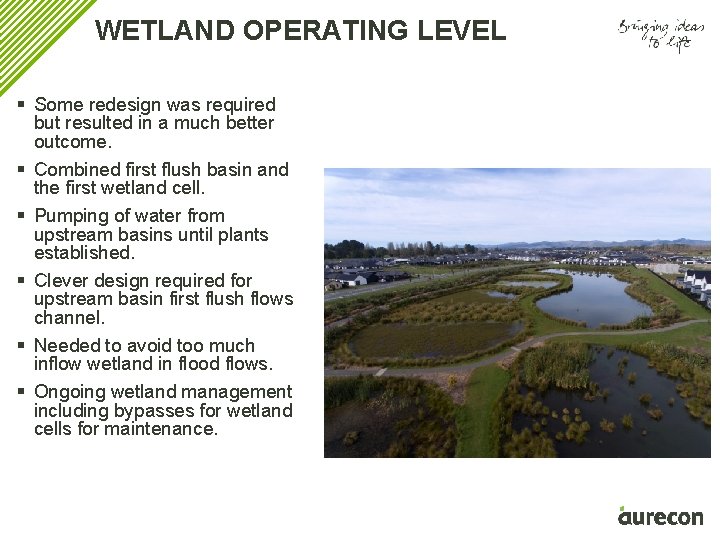
WETLAND OPERATING LEVEL § Some redesign was required but resulted in a much better outcome. § Combined first flush basin and the first wetland cell. § Pumping of water from upstream basins until plants established. § Clever design required for upstream basin first flush flows channel. § Needed to avoid too much inflow wetland in flood flows. § Ongoing wetland management including bypasses for wetland cells for maintenance.
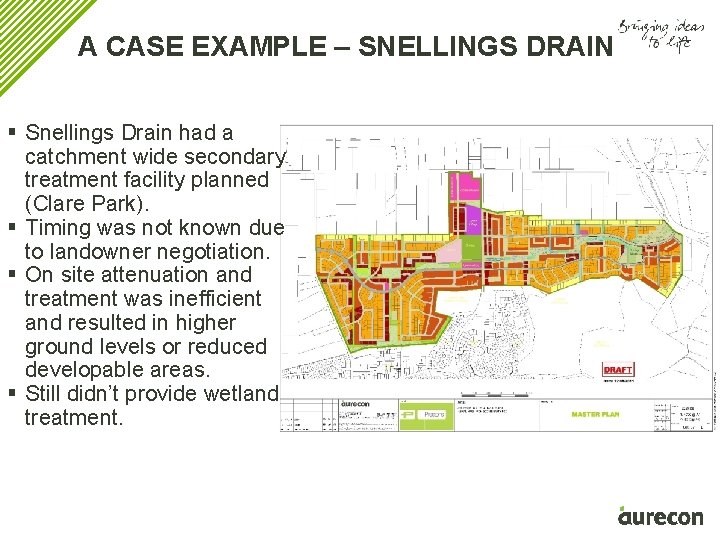
A CASE EXAMPLE – SNELLINGS DRAIN § Snellings Drain had a catchment wide secondary treatment facility planned (Clare Park). § Timing was not known due to landowner negotiation. § On site attenuation and treatment was inefficient and resulted in higher ground levels or reduced developable areas. § Still didn’t provide wetland treatment.
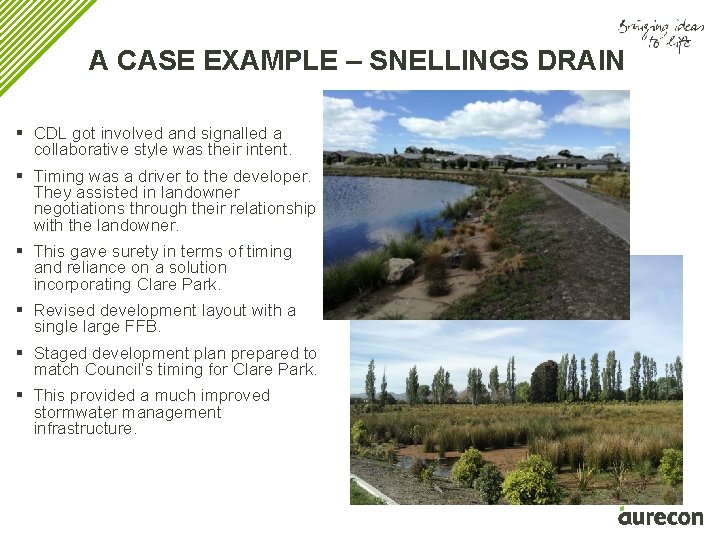
A CASE EXAMPLE – SNELLINGS DRAIN § CDL got involved and signalled a collaborative style was their intent. § Timing was a driver to the developer. They assisted in landowner negotiations through their relationship with the landowner. § This gave surety in terms of timing and reliance on a solution incorporating Clare Park. § Revised development layout with a single large FFB. § Staged development plan prepared to match Council’s timing for Clare Park. § This provided a much improved stormwater management infrastructure.
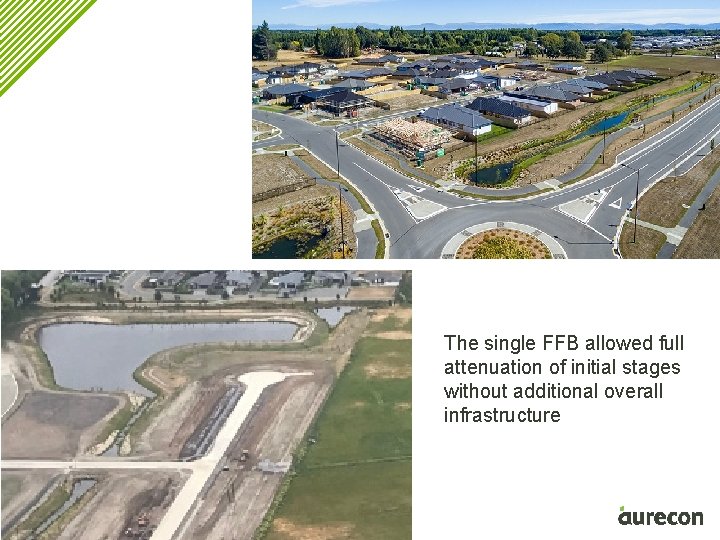
The single FFB allowed full attenuation of initial stages without additional overall infrastructure
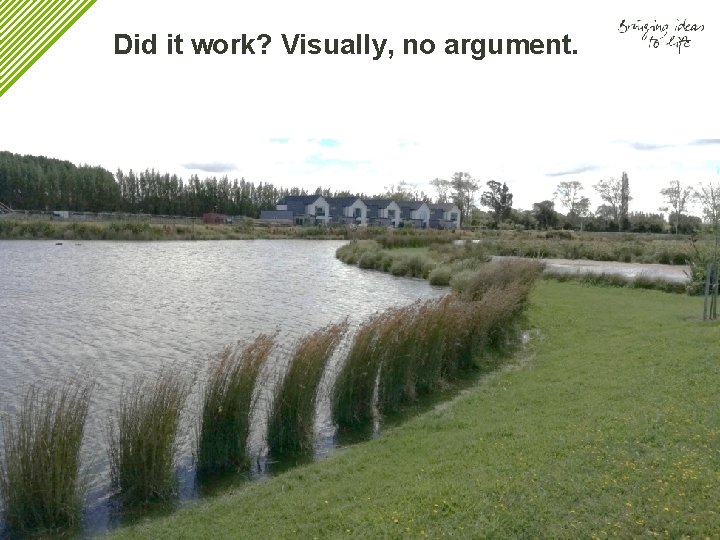
Did it work? Visually, no argument.
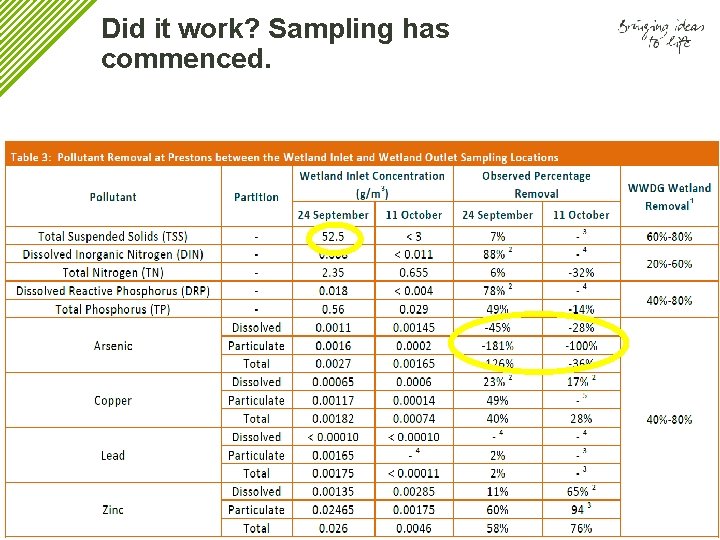
Did it work? Sampling has commenced.
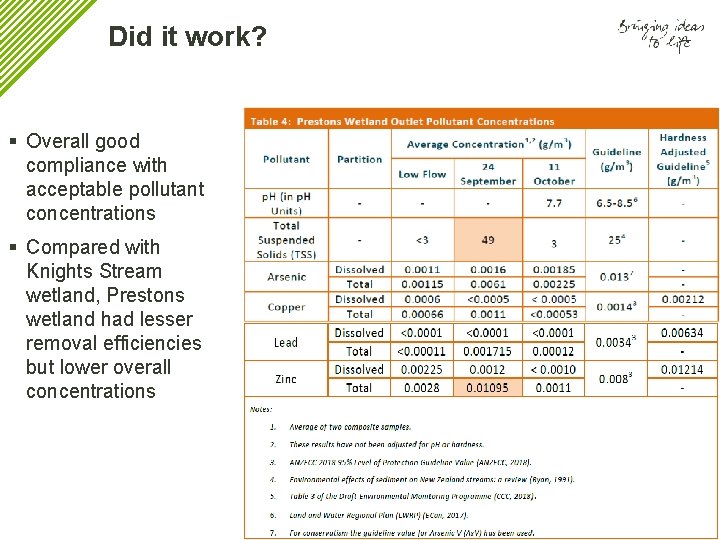
Did it work? § Overall good compliance with acceptable pollutant concentrations § Compared with Knights Stream wetland, Prestons wetland had lesser removal efficiencies but lower overall concentrations
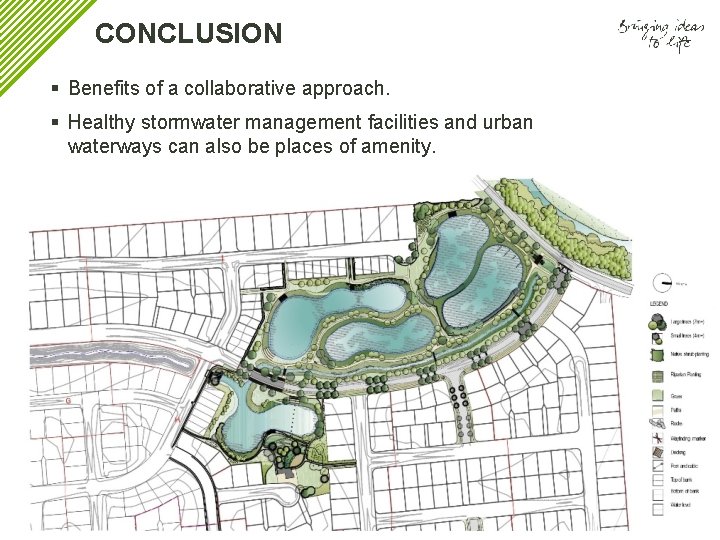
CONCLUSION § Benefits of a collaborative approach. § Healthy stormwater management facilities and urban waterways can also be places of amenity.
Follow us on www. twitter. com/Aurecon Join us on www. facebook. com/Aurecon Watch us on www. youtube. com/user/Aurecon. Group Follow us on www. instagram. com/Aurecon Follow us on www. linkedin. com/company/Aurecon Follow us on www. slideshare. net/Aurecon
- Slides: 23