
Urban Design Creating an Active City Density Diversity
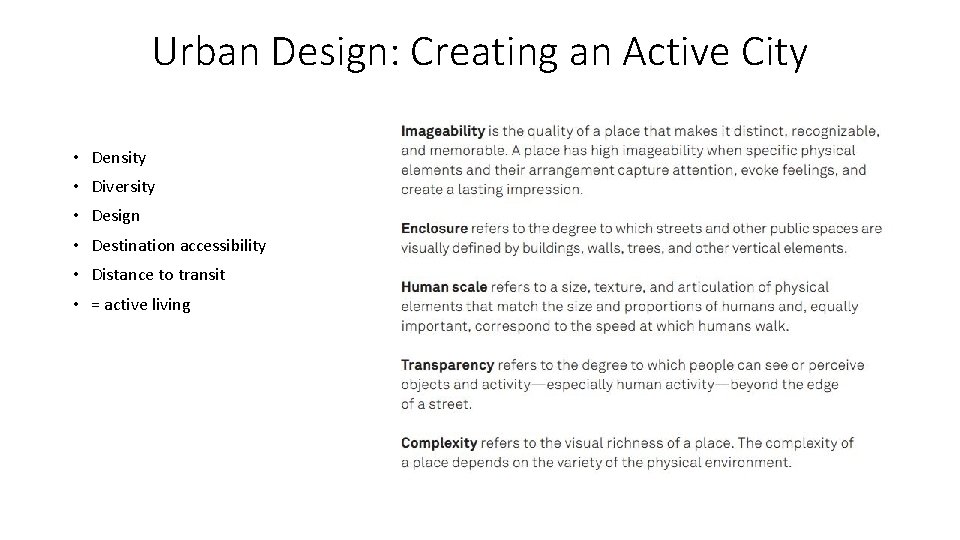
Urban Design: Creating an Active City • Density • Diversity • Design • Destination accessibility • Distance to transit • = active living
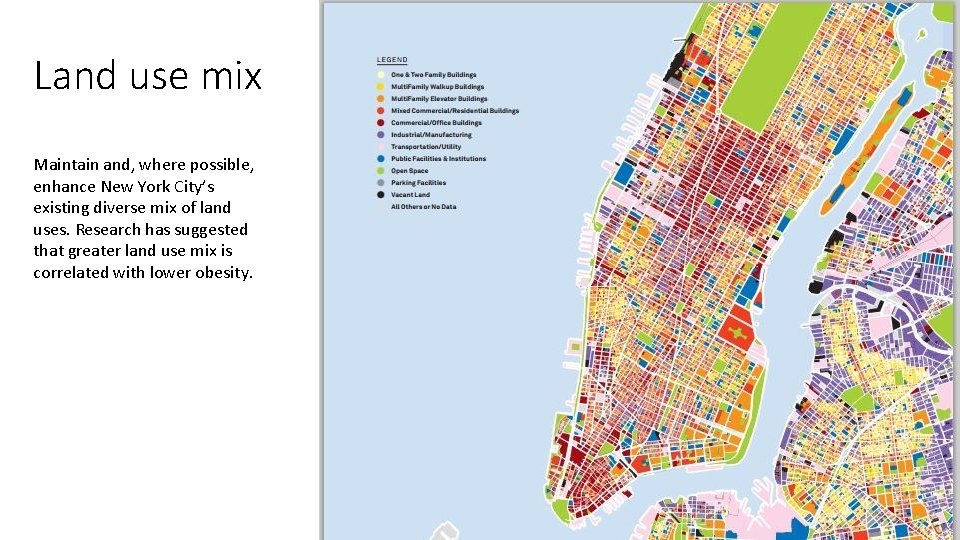
Land use mix Maintain and, where possible, enhance New York City’s existing diverse mix of land uses. Research has suggested that greater land use mix is correlated with lower obesity.
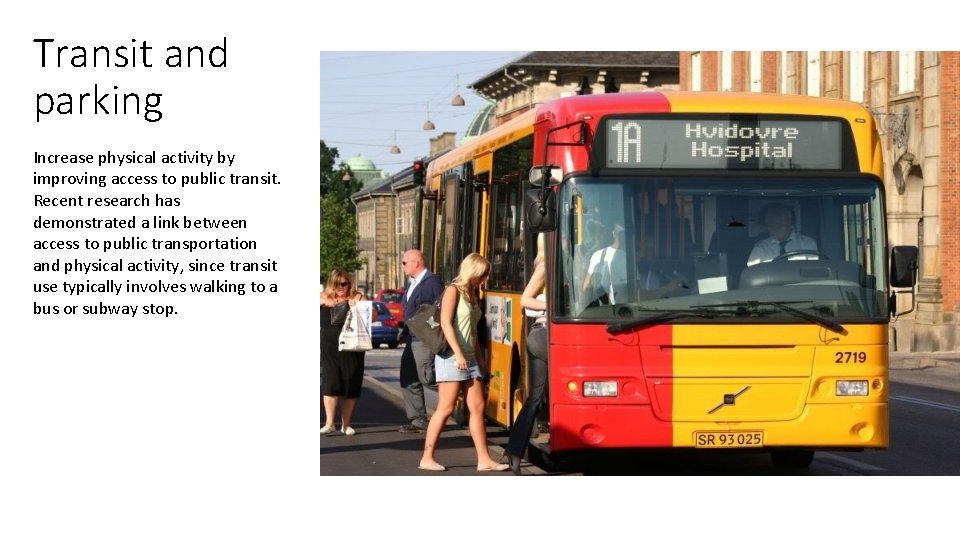
Transit and parking Increase physical activity by improving access to public transit. Recent research has demonstrated a link between access to public transportation and physical activity, since transit use typically involves walking to a bus or subway stop.
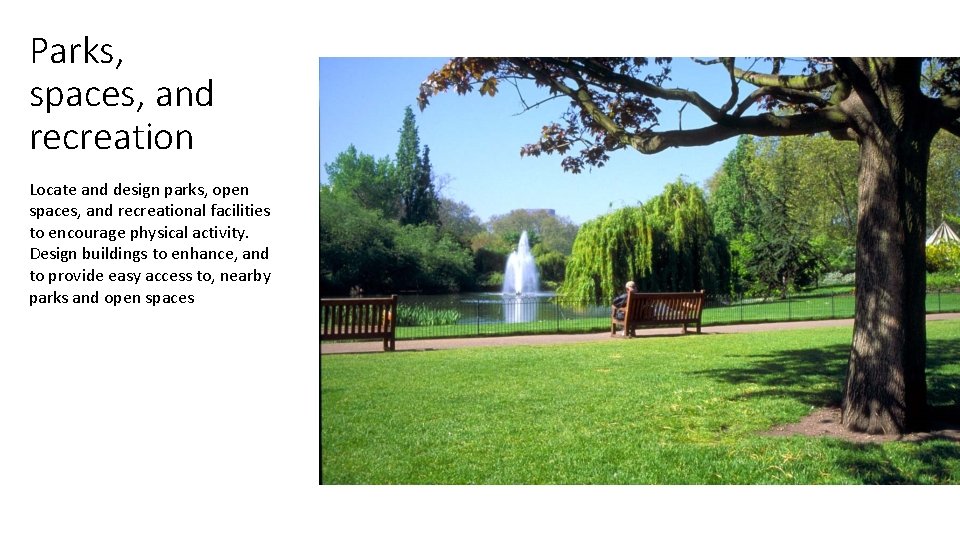
Parks, spaces, and recreation Locate and design parks, open spaces, and recreational facilities to encourage physical activity. Design buildings to enhance, and to provide easy access to, nearby parks and open spaces
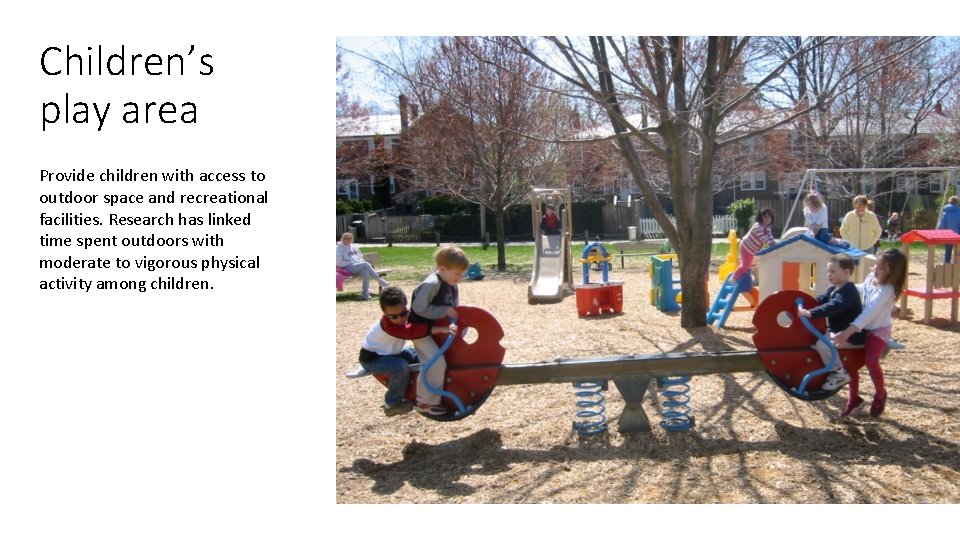
Children’s play area Provide children with access to outdoor space and recreational facilities. Research has linked time spent outdoors with moderate to vigorous physical activity among children.
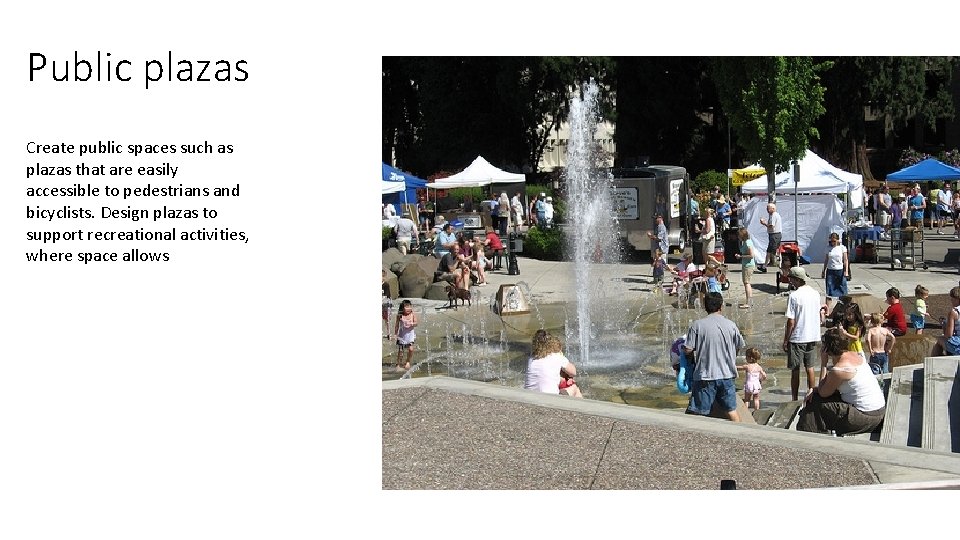
Public plazas Create public spaces such as plazas that are easily accessible to pedestrians and bicyclists. Design plazas to support recreational activities, where space allows
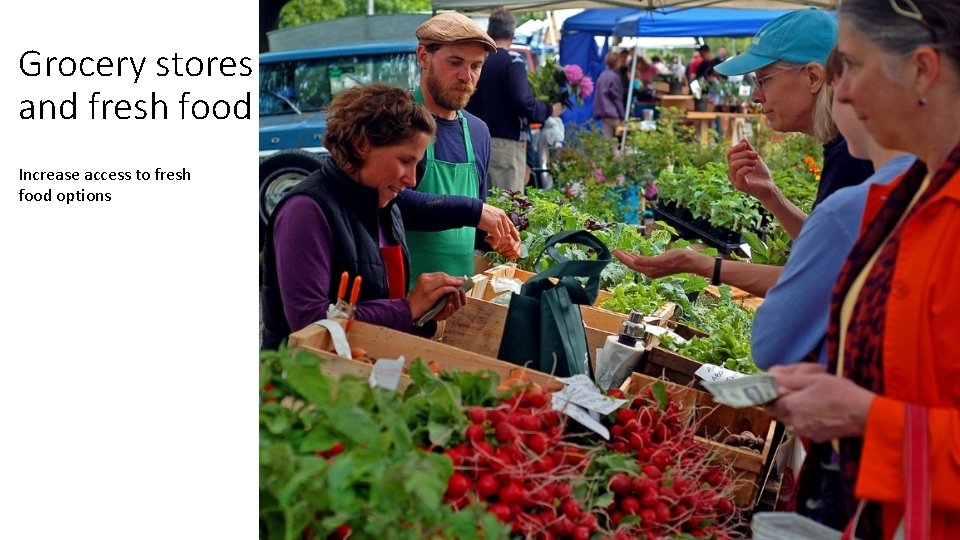
Grocery stores and fresh food Increase access to fresh food options
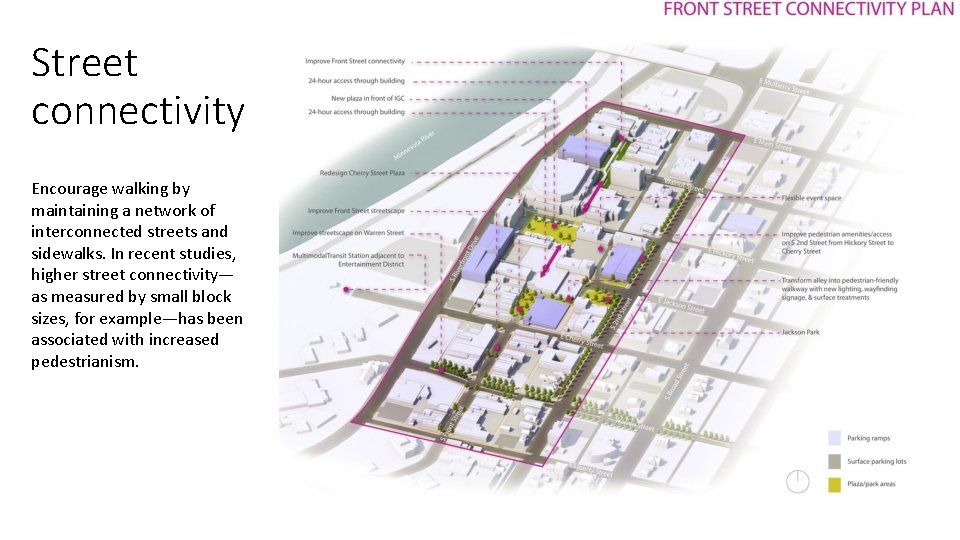
Street connectivity Encourage walking by maintaining a network of interconnected streets and sidewalks. In recent studies, higher street connectivity— as measured by small block sizes, for example—has been associated with increased pedestrianism.
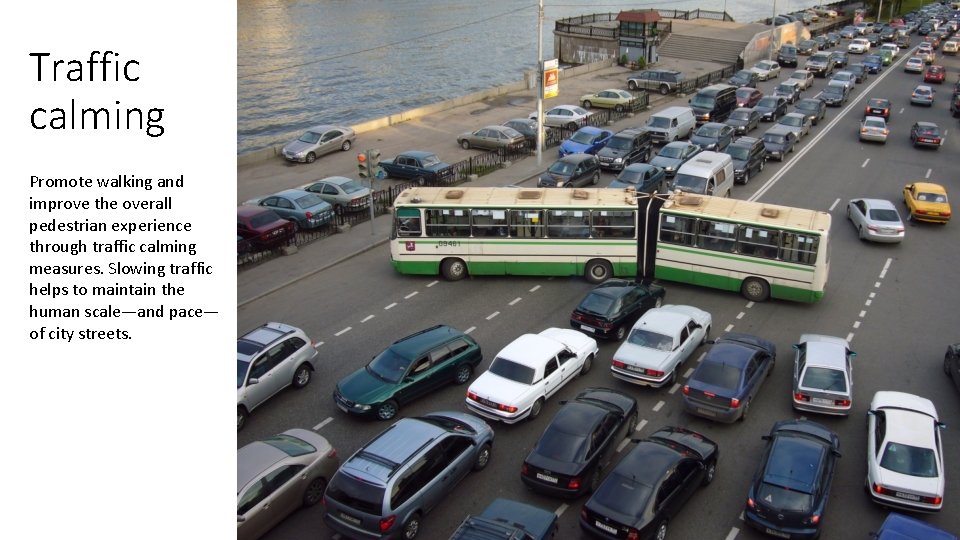
Traffic calming Promote walking and improve the overall pedestrian experience through traffic calming measures. Slowing traffic helps to maintain the human scale—and pace— of city streets.
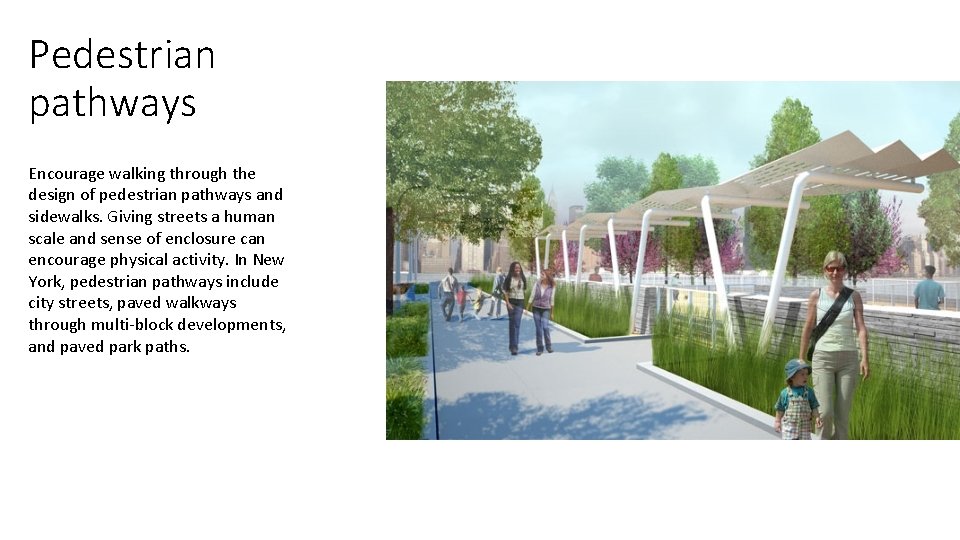
Pedestrian pathways Encourage walking through the design of pedestrian pathways and sidewalks. Giving streets a human scale and sense of enclosure can encourage physical activity. In New York, pedestrian pathways include city streets, paved walkways through multi-block developments, and paved park paths.
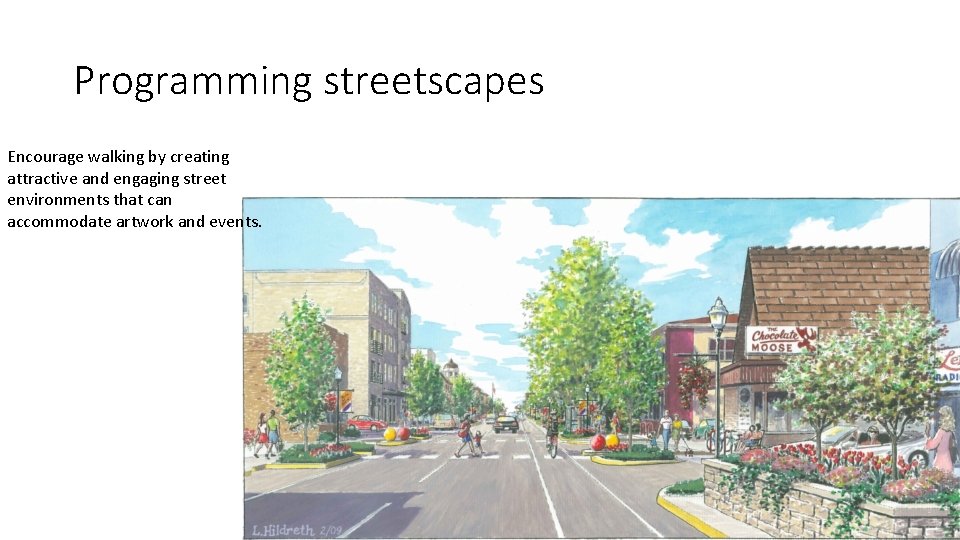
Programming streetscapes Encourage walking by creating attractive and engaging street environments that can accommodate artwork and events.
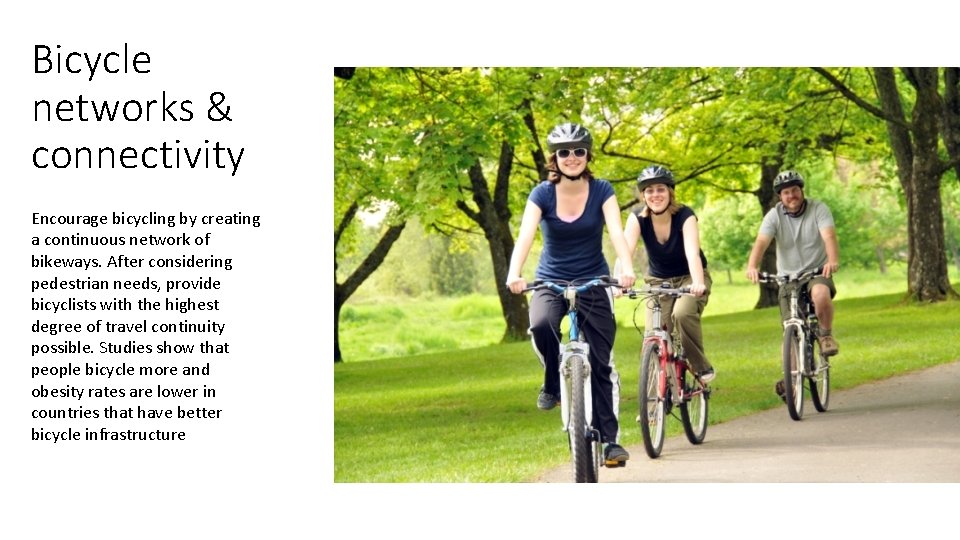
Bicycle networks & connectivity Encourage bicycling by creating a continuous network of bikeways. After considering pedestrian needs, provide bicyclists with the highest degree of travel continuity possible. Studies show that people bicycle more and obesity rates are lower in countries that have better bicycle infrastructure
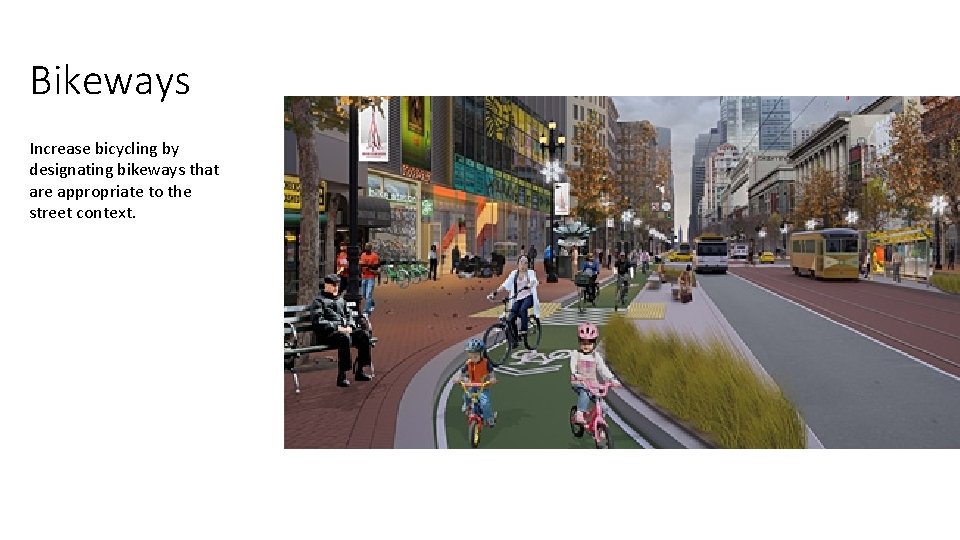
Bikeways Increase bicycling by designating bikeways that are appropriate to the street context.
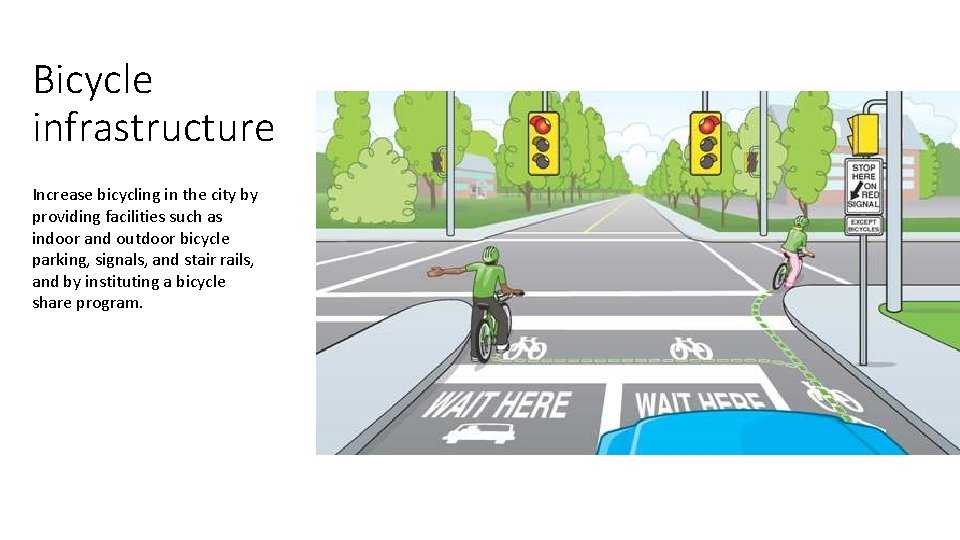
Bicycle infrastructure Increase bicycling in the city by providing facilities such as indoor and outdoor bicycle parking, signals, and stair rails, and by instituting a bicycle share program.
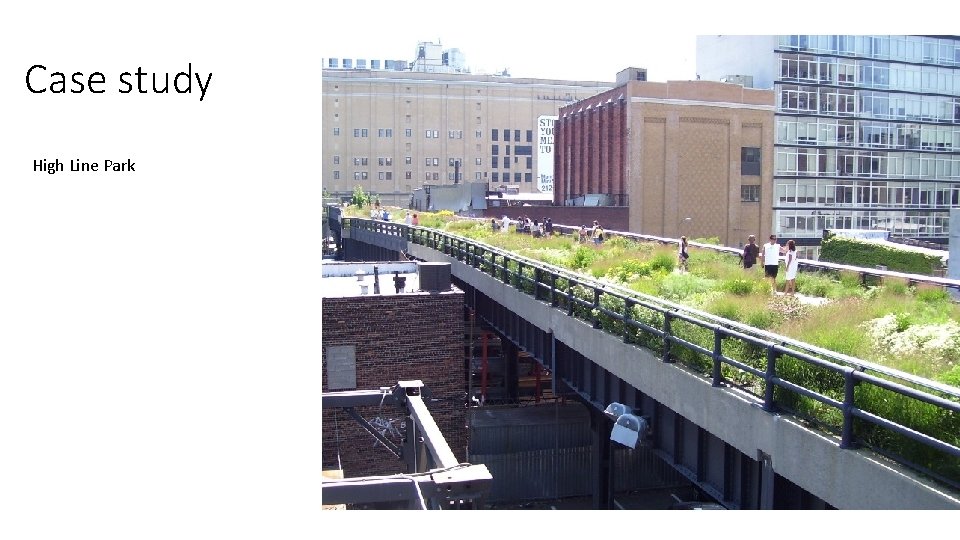
Case study High Line Park
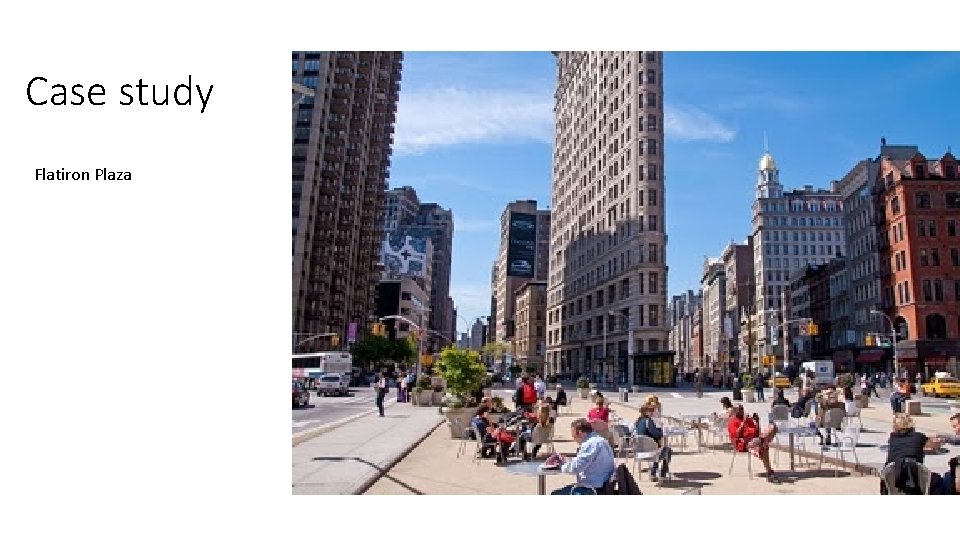
Case study Flatiron Plaza
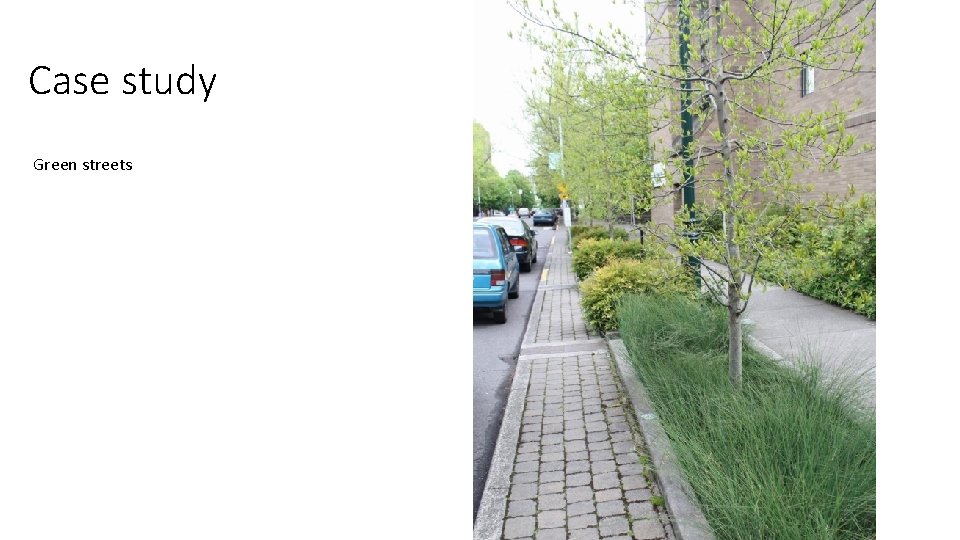
Case study Green streets
- Slides: 20