
Urban Assistance Guidelines G ui de lin C
Urban Assistance Guidelines G ui de lin C es ra w fo rd BIG LAUNCH! Shelter Meeting 10 a May 2010
At a glance, the global discussion addresses: • Identification of beneficiaries • And what needs to be done differently Can these guidelines help me when doing program planning (policy and technical)? M
These guidelines can help you with: 1. Defining Affected Population (Beneficiaries) 2. Combining Assistance Methods 3. Understanding the SWOT of 18 Assistance Methods 4. Deciding on Standards In addition they provide on overview of: Assessment Tools and Handbooks Profiling Methods Housing, Land Property Issues (HLP) Case studies K
But how does it all work? Urban areas are very attractive (economic, social, . . . ) and especially after a crisis people choose their ”durable soultion” based on the benefits they have in the city. Do I get guidance on who to assist (who is actually affected and in need) and on how people make a living? M
How does it all work? • Urban Livelihoods Approach: thinking about people in cities. . . • Affected Populations: thinking about what happens to people in cities after disasters/crisis (durable solution). . . • Appropriate combinations of assistance: thinking about what to do. . . K

Urban Livelihoods Approach ØHouseholds Ø. . . . Neighbourhoods Ø. . . . . Cities Ø. . . . Regions K
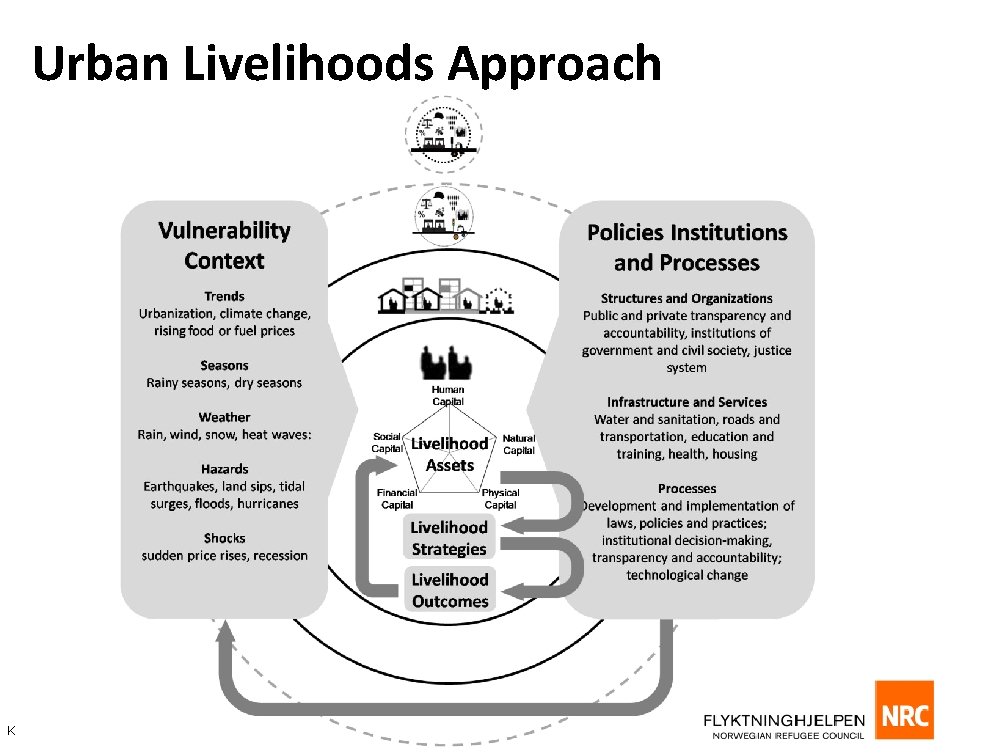
Urban Livelihoods Approach K
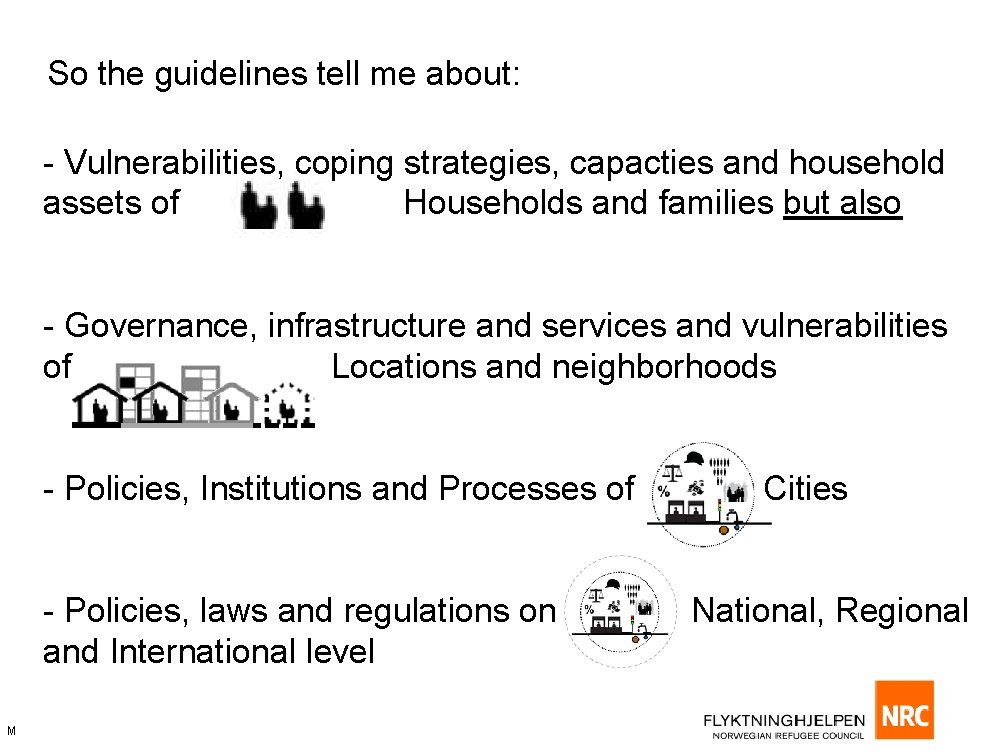
So the guidelines tell me about: - Vulnerabilities, coping strategies, capacties and household assets of Households and families but also - Governance, infrastructure and services and vulnerabilities of Locations and neighborhoods - Policies, Institutions and Processes of - Policies, laws and regulations on and International level M Cities National, Regional
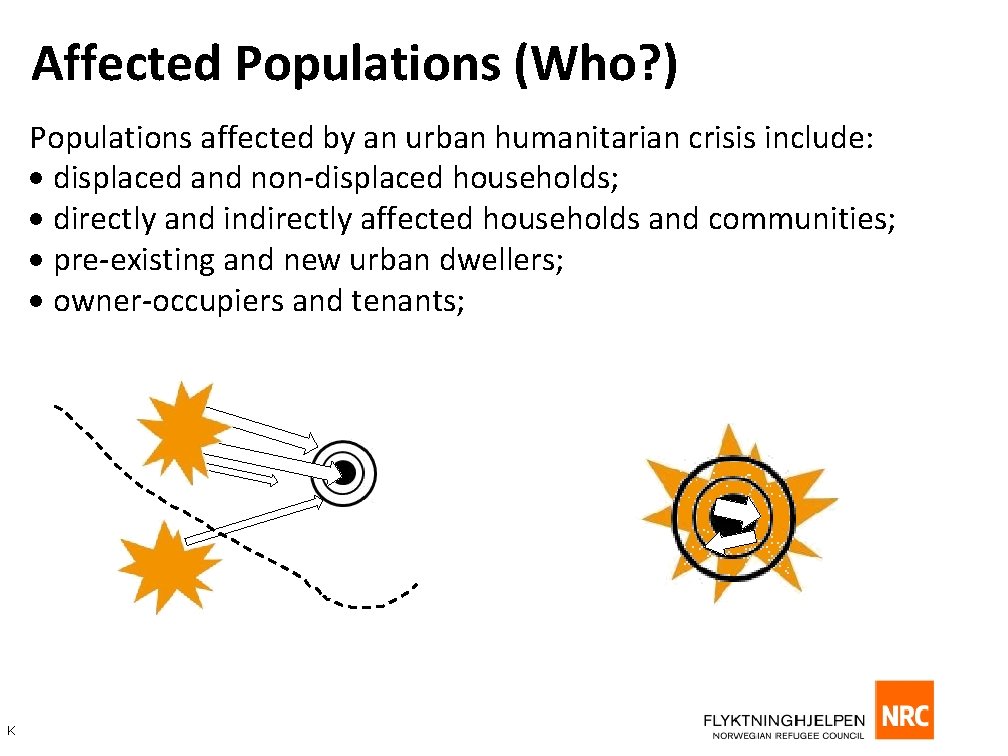
Affected Populations (Who? ) Populations affected by an urban humanitarian crisis include: displaced and non-displaced households; directly and indirectly affected households and communities; pre-existing and new urban dwellers; owner-occupiers and tenants; K
How can the affected populations, those in need (needs based vs. status based assistance) get assistance? Is it possible to know who is affected and what about all the urban poor? M
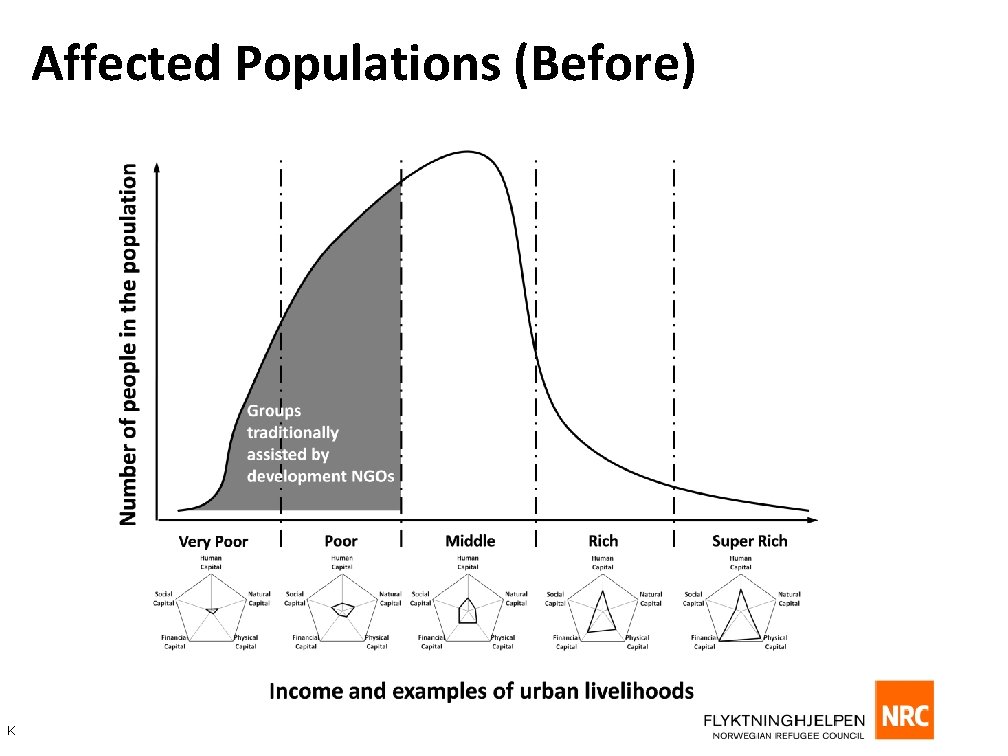
Affected Populations (Before) K
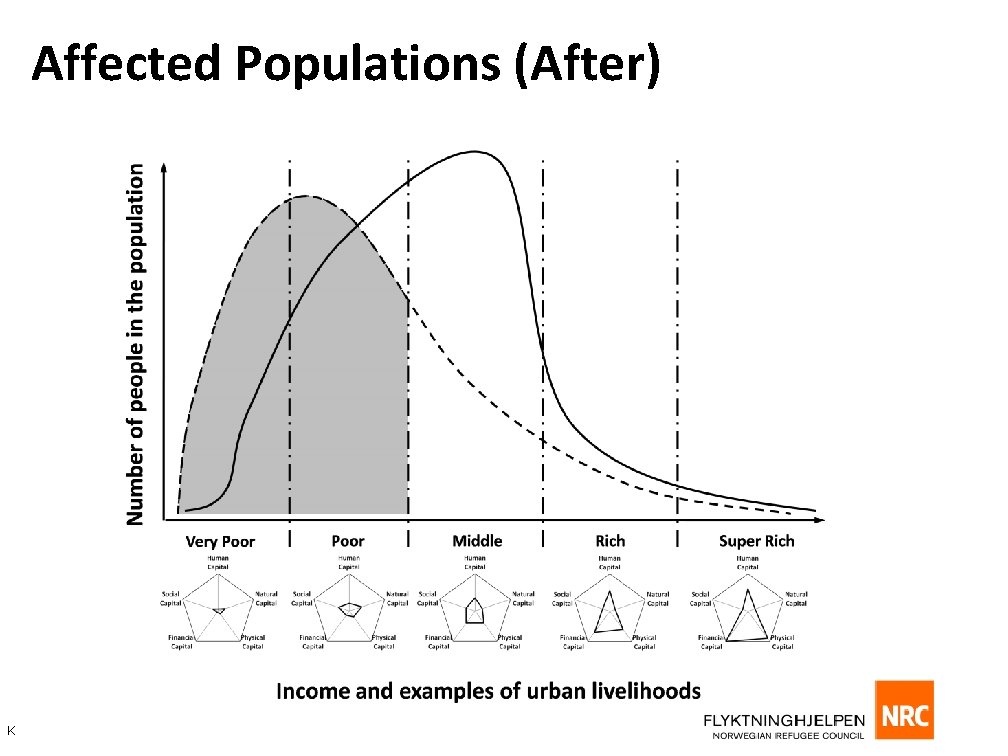
Affected Populations (After) K
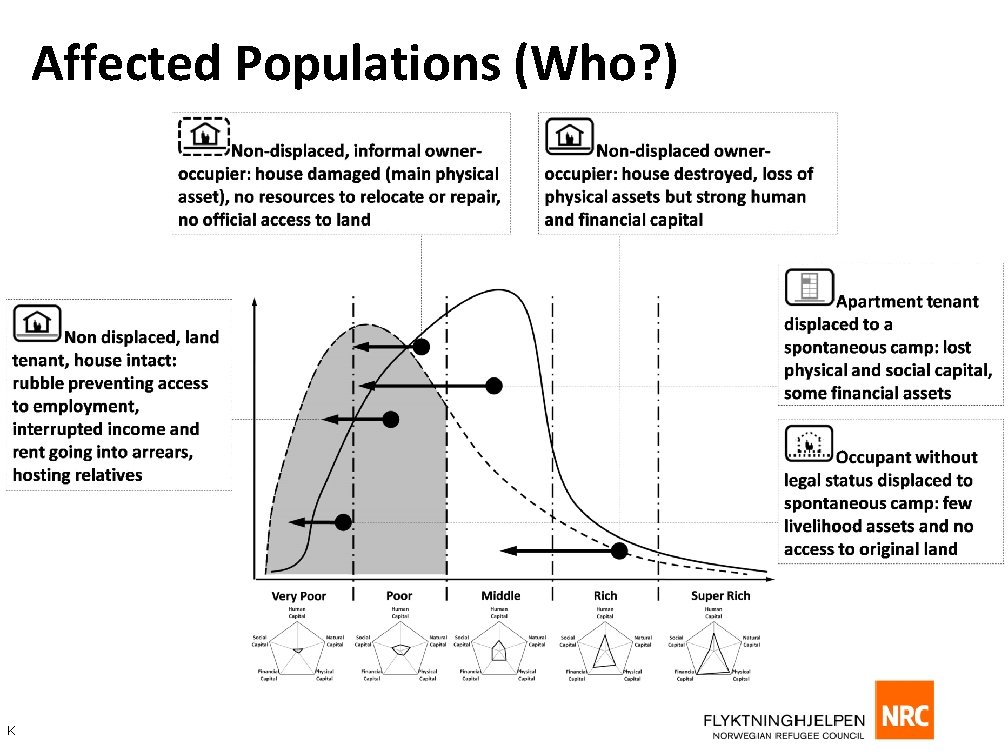
Affected Populations (Who? ) K
Know who to assist Know about the importance of livelihood How can the affected Populations be assisted (now what? ) M
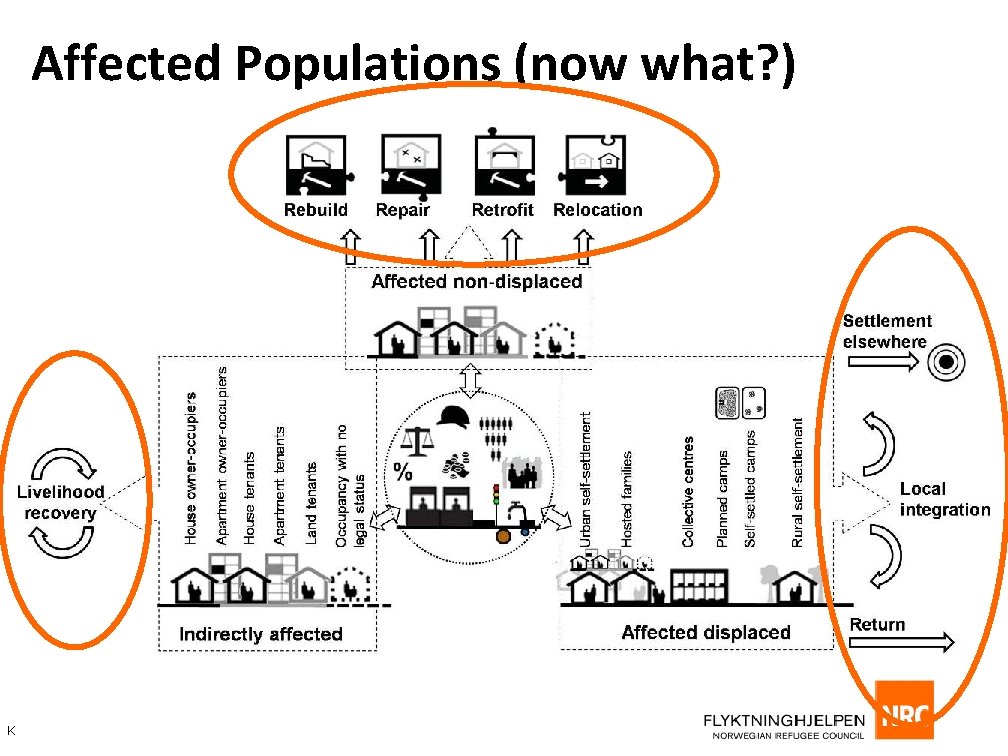
Affected Populations (now what? ) K
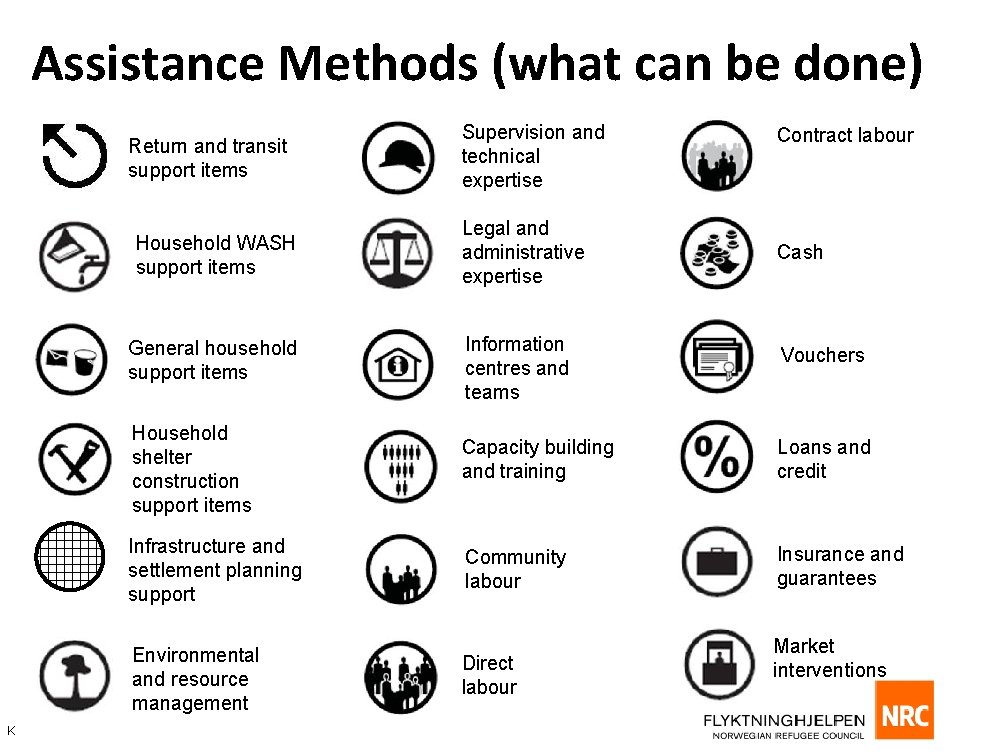
Assistance Methods (what can be done) Return and transit support items Contract labour Household WASH support items Legal and administrative expertise General household support items Information centres and teams Household shelter construction support items Capacity building and training Loans and credit Infrastructure and settlement planning support Community labour Insurance and guarantees Environmental and resource management K Supervision and technical expertise Direct labour Cash Vouchers Market interventions
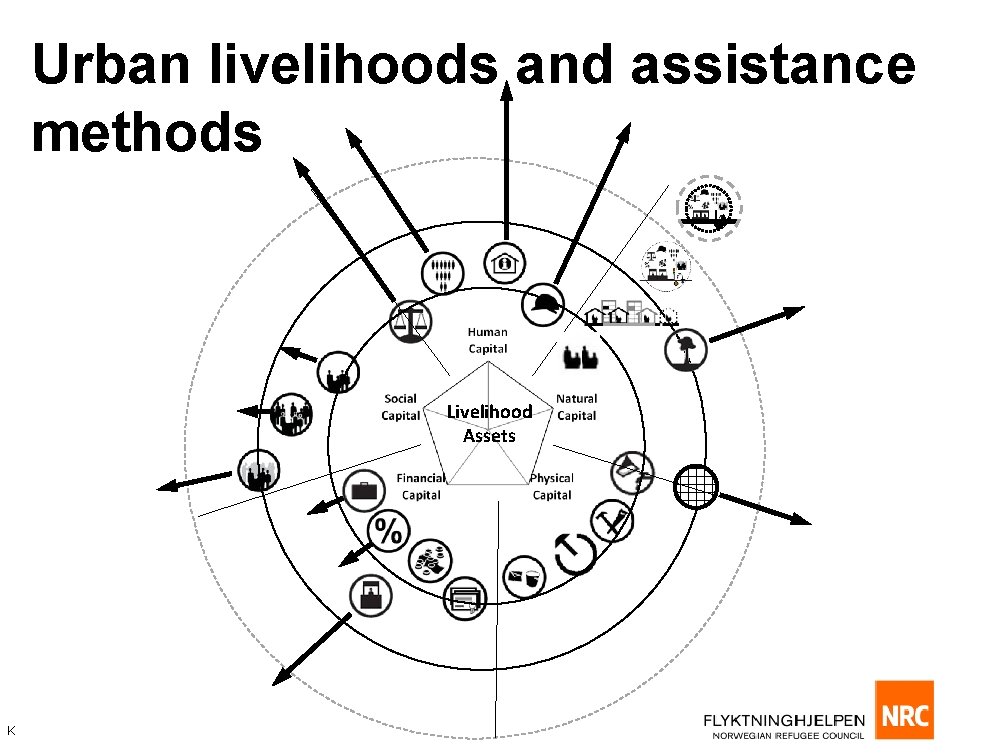
Urban livelihoods and assistance methods Livelihood Assets K
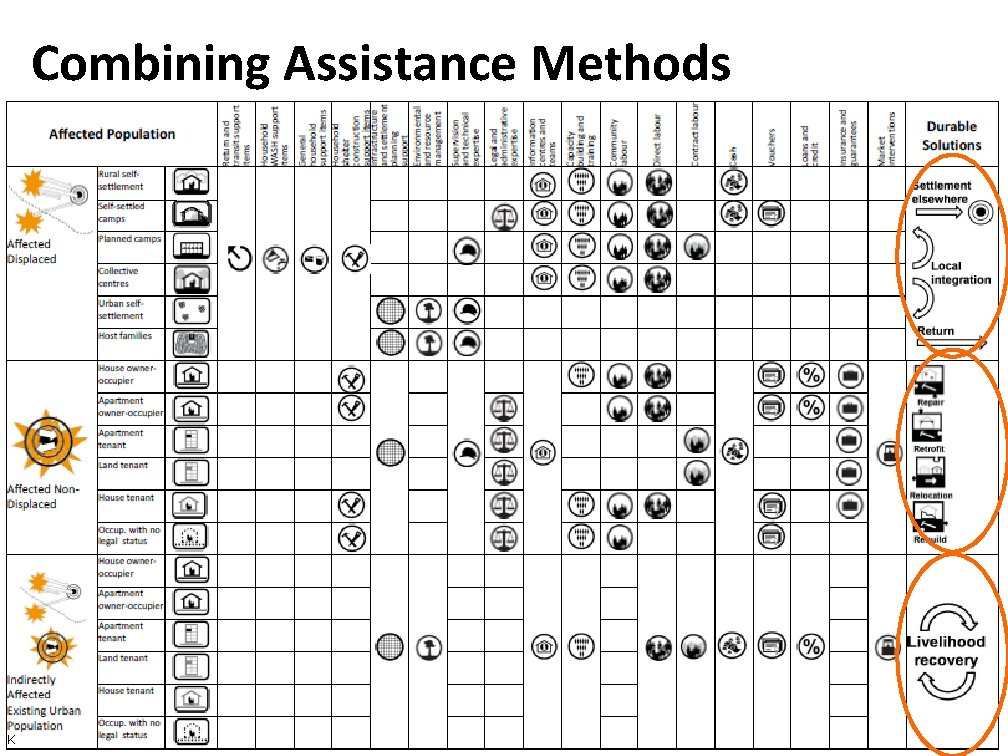
Combining Assistance Methods K
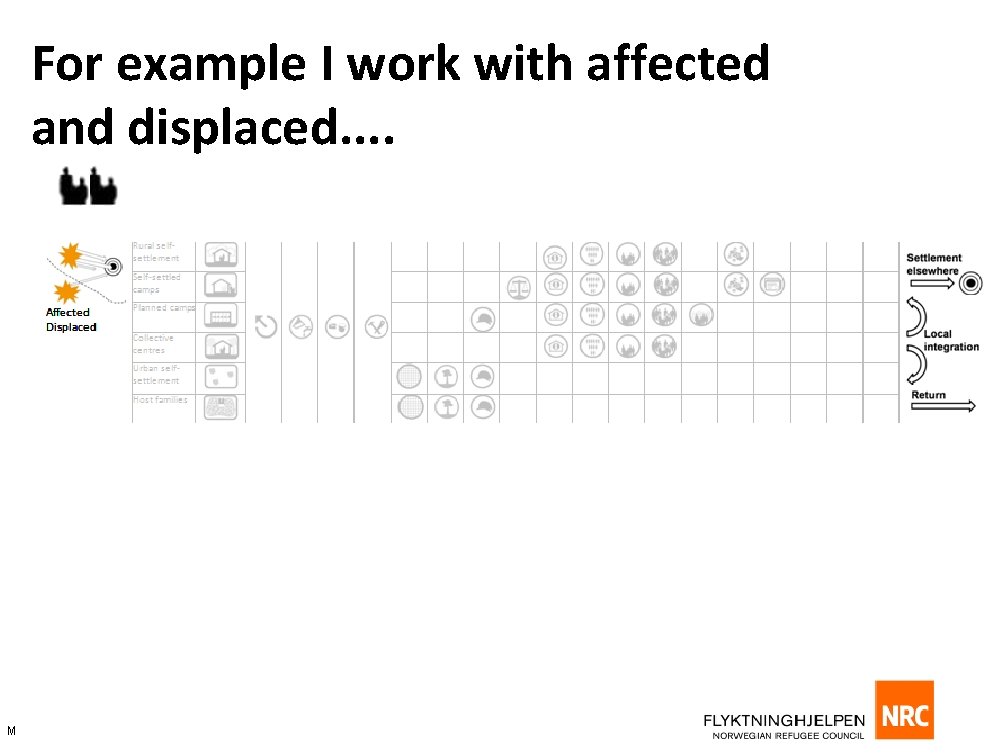
For example I work with affected and displaced. . M
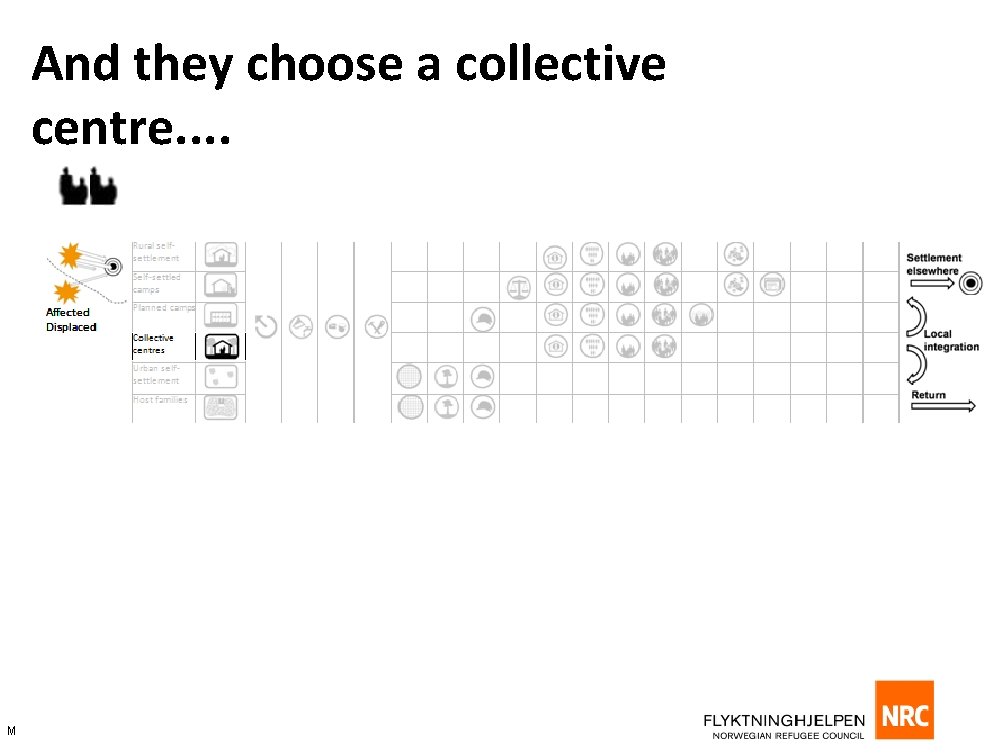
And they choose a collective centre. . M
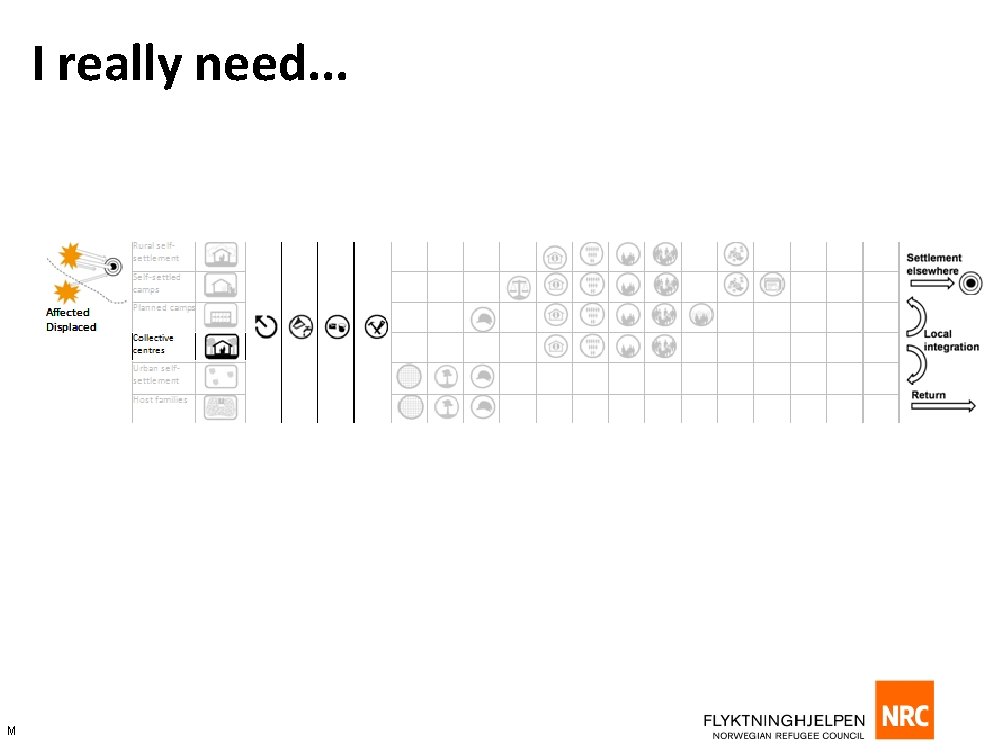
I really need. . . M
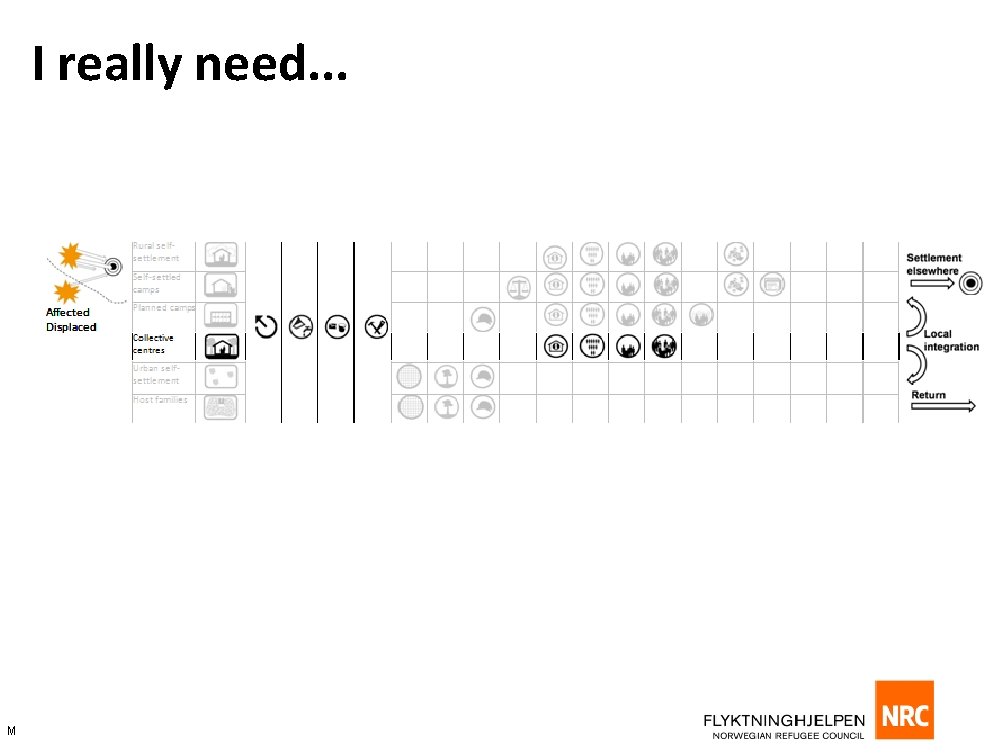
I really need. . . M
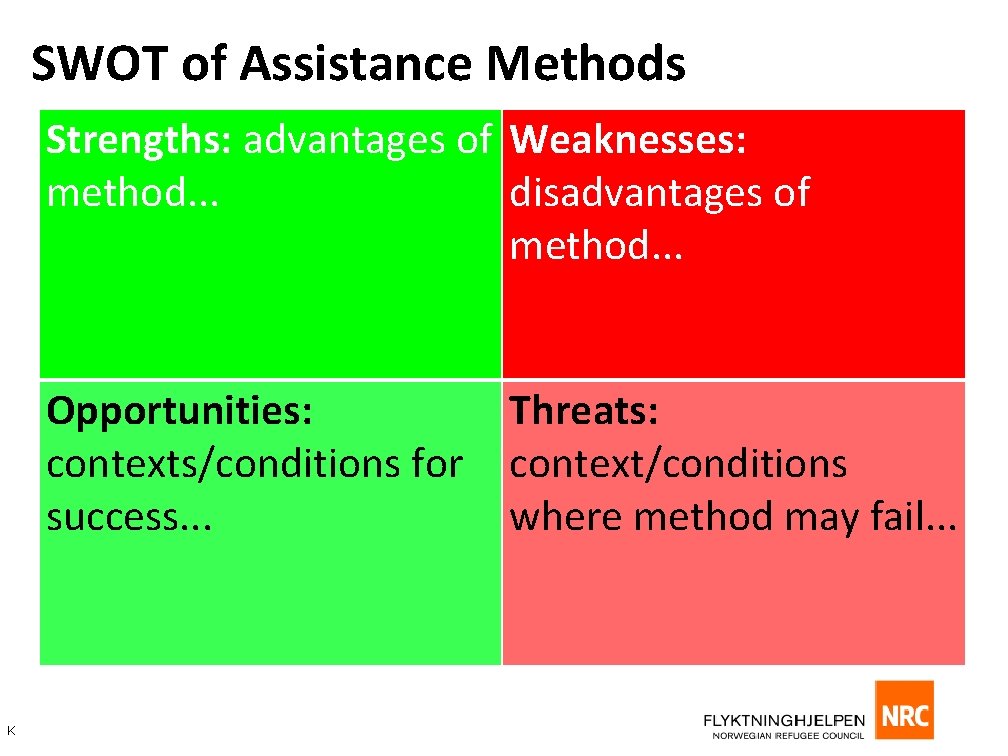
SWOT of Assistance Methods Strengths: advantages of Weaknesses: method. . . disadvantages of method. . . Opportunities: contexts/conditions for success. . . K Threats: context/conditions where method may fail. . .
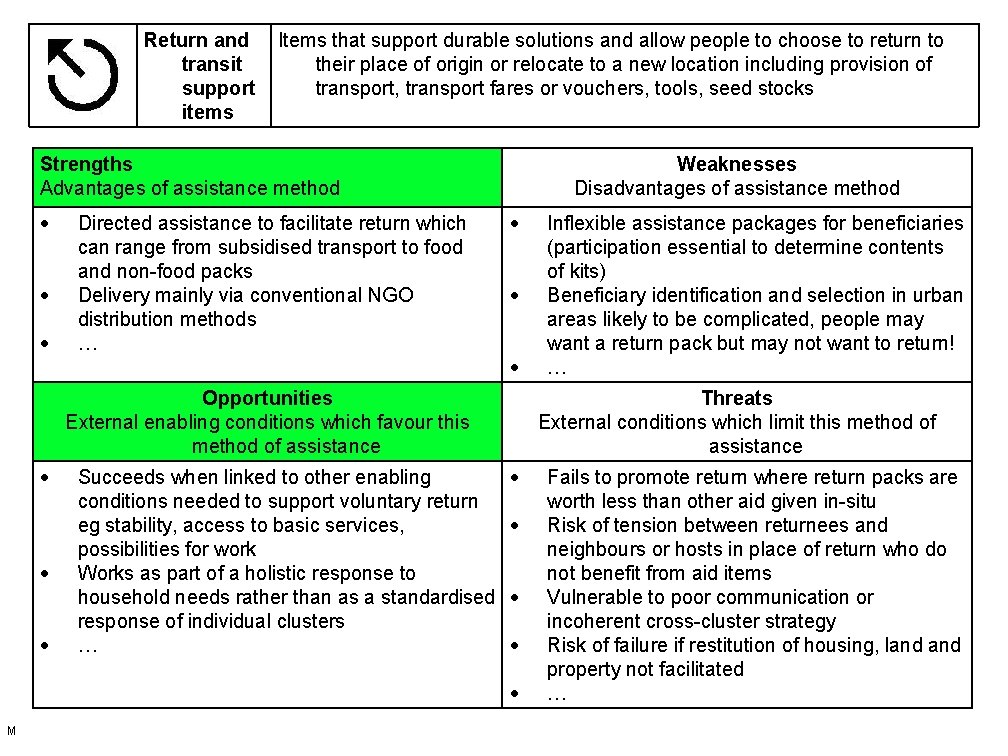
Return and transit support items Items that support durable solutions and allow people to choose to return to their place of origin or relocate to a new location including provision of transport, transport fares or vouchers, tools, seed stocks Strengths Advantages of assistance method Directed assistance to facilitate return which can range from subsidised transport to food and non-food packs Delivery mainly via conventional NGO distribution methods … Weaknesses Disadvantages of assistance method Opportunities External enabling conditions which favour this method of assistance Succeeds when linked to other enabling conditions needed to support voluntary return eg stability, access to basic services, possibilities for work Works as part of a holistic response to household needs rather than as a standardised response of individual clusters … Threats External conditions which limit this method of assistance M Inflexible assistance packages for beneficiaries (participation essential to determine contents of kits) Beneficiary identification and selection in urban areas likely to be complicated, people may want a return pack but may not want to return! … Fails to promote return where return packs are worth less than other aid given in-situ Risk of tension between returnees and neighbours or hosts in place of return who do not benefit from aid items Vulnerable to poor communication or incoherent cross-cluster strategy Risk of failure if restitution of housing, land property not facilitated …
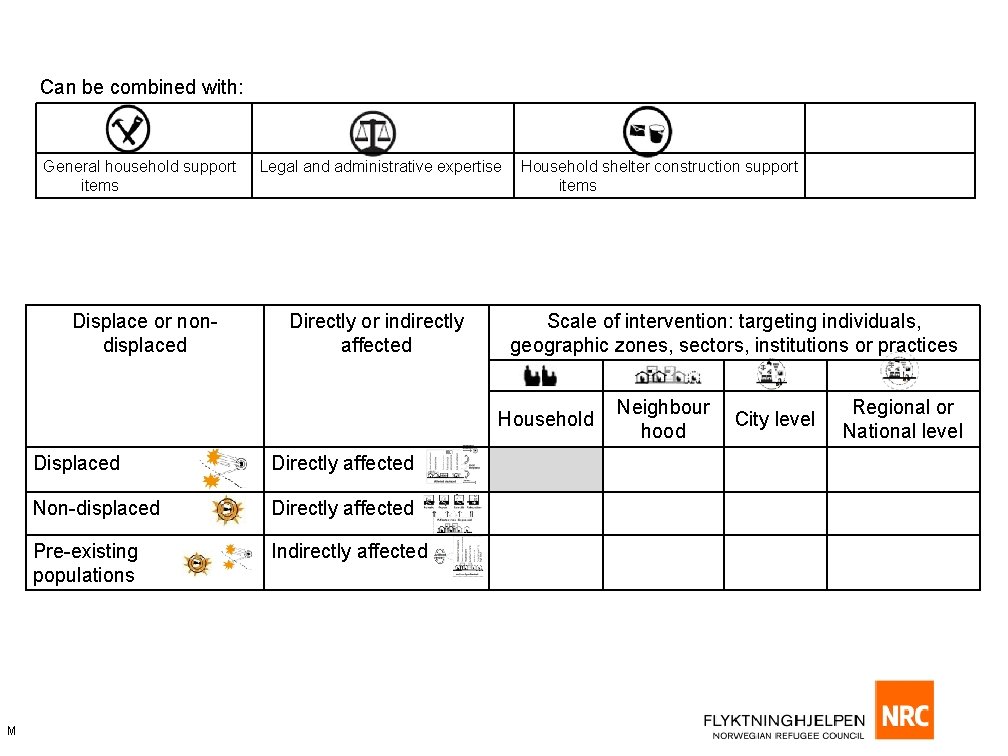
Can be combined with: General household support items Displace or nondisplaced Legal and administrative expertise Directly or indirectly affected Household shelter construction support items Scale of intervention: targeting individuals, geographic zones, sectors, institutions or practices Household M Displaced Directly affected Non-displaced Directly affected Pre-existing populations Indirectly affected Neighbour hood City level Regional or National level
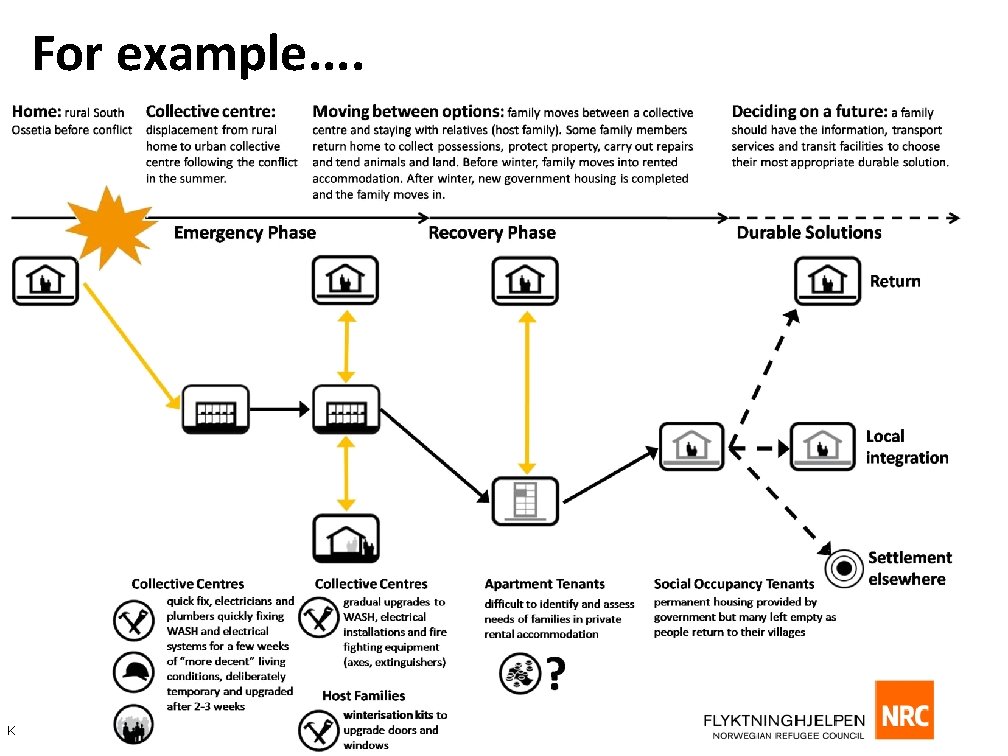
For example. . K
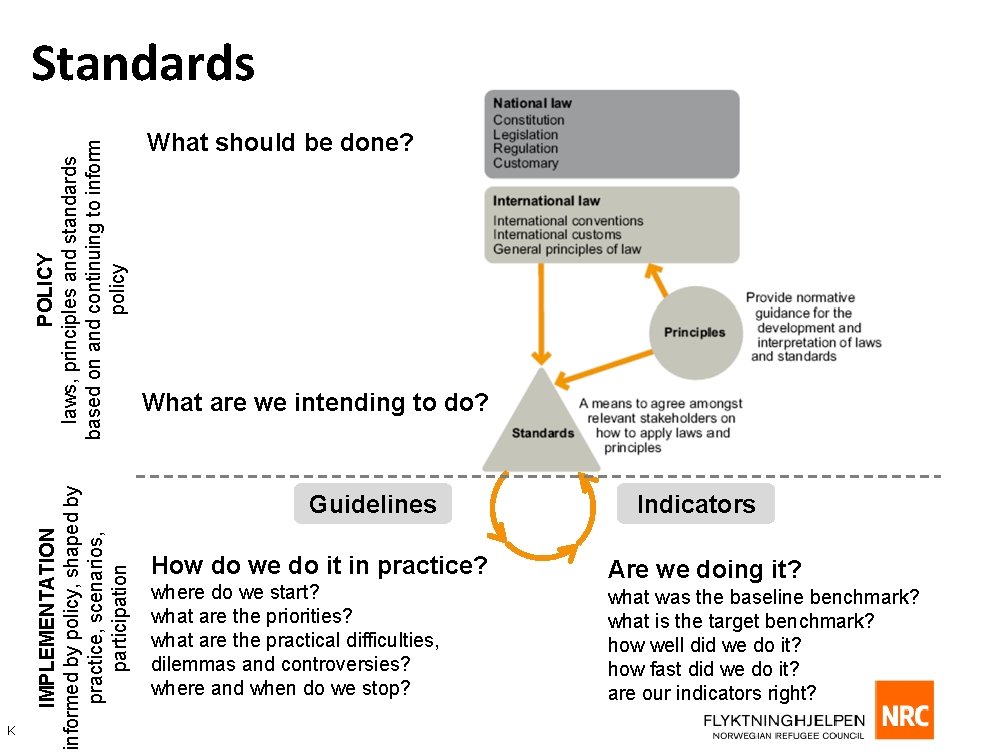
K IMPLEMENTATION informed by policy, shaped by practice, scenarios, participation POLICY laws, principles and standards based on and continuing to inform policy Standards What should be done? What are we intending to do? Guidelines How do we do it in practice? where do we start? what are the priorities? what are the practical difficulties, dilemmas and controversies? where and when do we stop? Indicators Are we doing it? what was the baseline benchmark? what is the target benchmark? how well did we do it? how fast did we do it? are our indicators right?
Before the Guidelines get printed: • Are they posted on SC webpage (Sector Projects, Urban, . . . ) • Can you provide your final comments • Will we decide how we make them look like (product of and for the entire shelter community)
- Slides: 28