
URANUS Uranus This planet is a very difficult
- Slides: 19
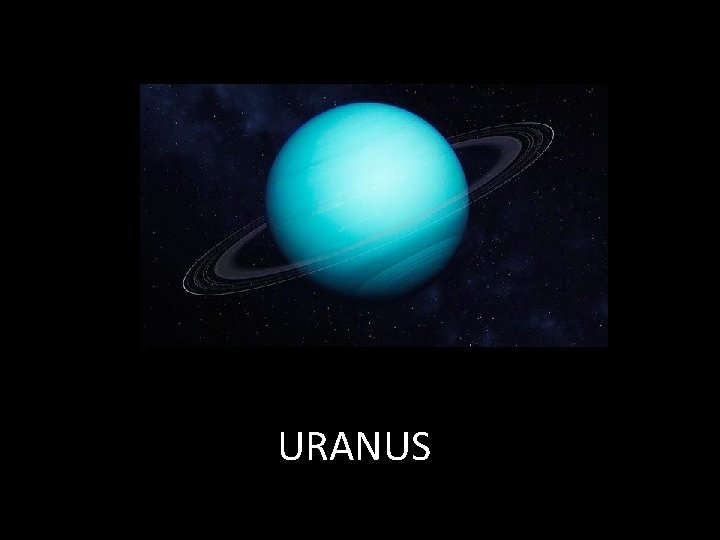
URANUS
Uranus • This planet is a very difficult planet to study. It is the third largest planet in the solar system. Uranus was discovered by William Herschel. The planet is nearly 3 billion kilometers from the sun.
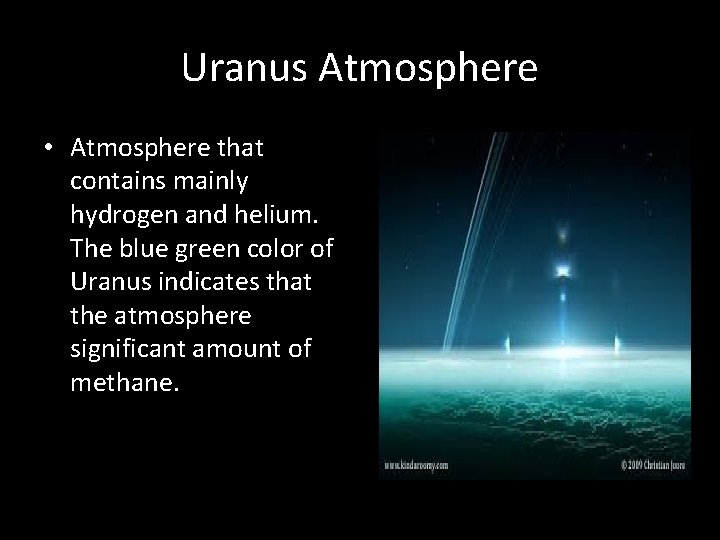
Uranus Atmosphere • Atmosphere that contains mainly hydrogen and helium. The blue green color of Uranus indicates that the atmosphere significant amount of methane.
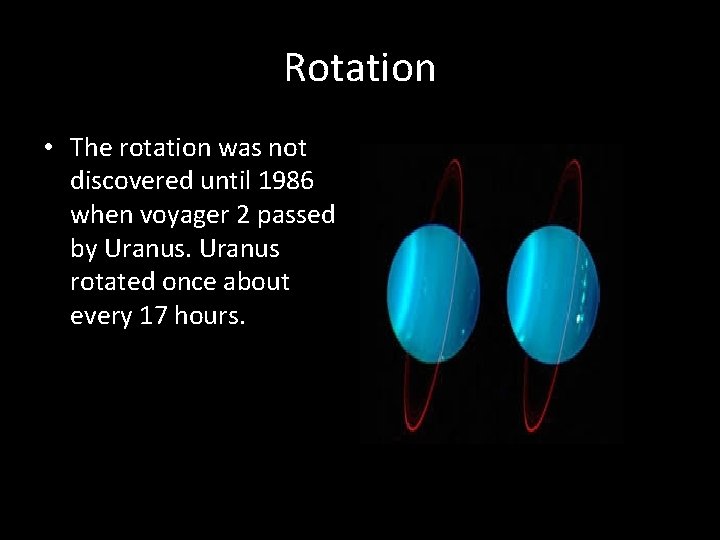
Rotation • The rotation was not discovered until 1986 when voyager 2 passed by Uranus rotated once about every 17 hours.
• Uranus moons are named after the characters from the works of William Shakespeare and Alexander Pope. To date 27 moons have been discovered around Uranus.
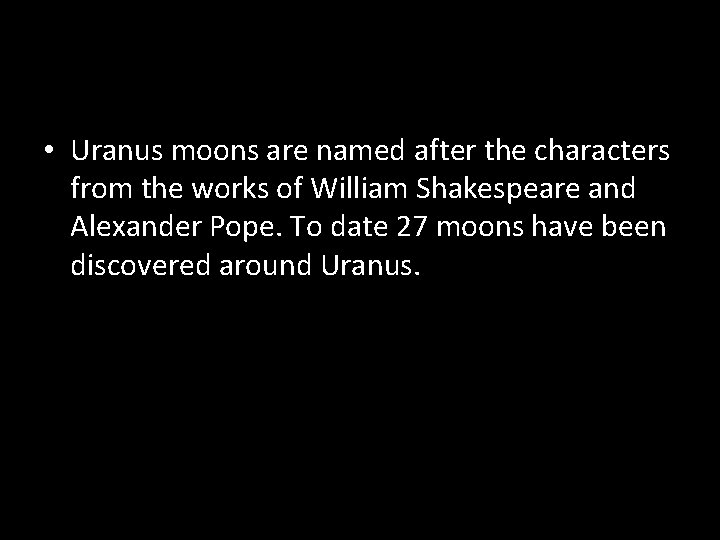
Moon 1 • Cordilia • Cordelia was discovered on 20 January 1986 in images taken by Voyager 2. It is one of the 10 Urania satellites discovered by the Voyager science team.
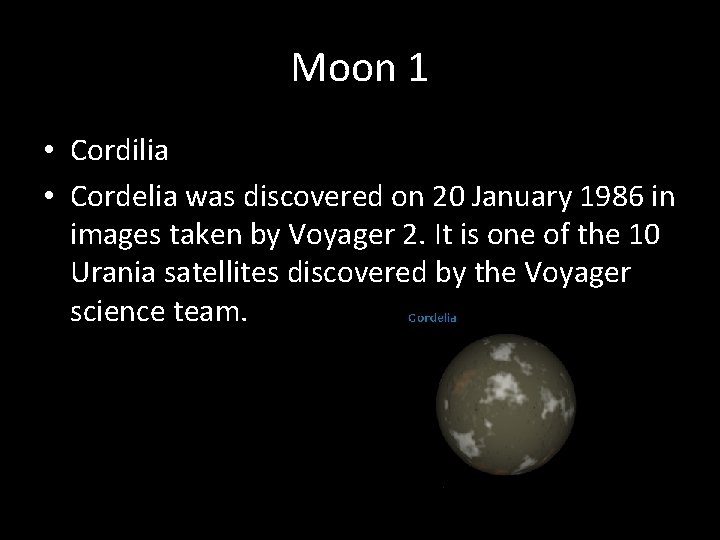
Moon 2 • Ophelia was discovered January 1986 in images sent back by the Voyager 2 spacecraft during its flyby of Uranus
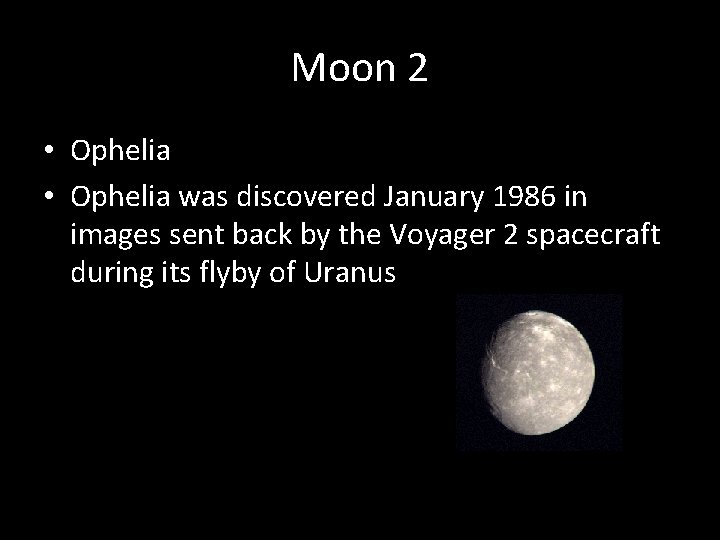
Moon 3 • Bianca was discovered 23 January 1986 in images taken by Voyager 2. It is one of the 10 Urania satellites discovered by the Voyager science team.
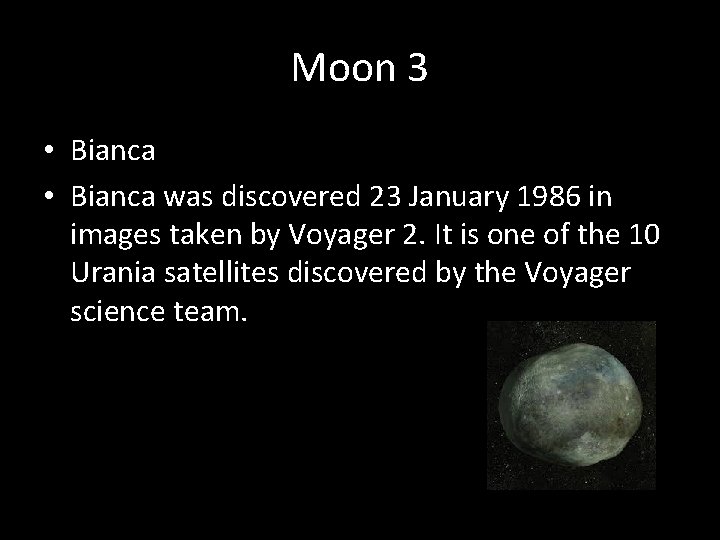
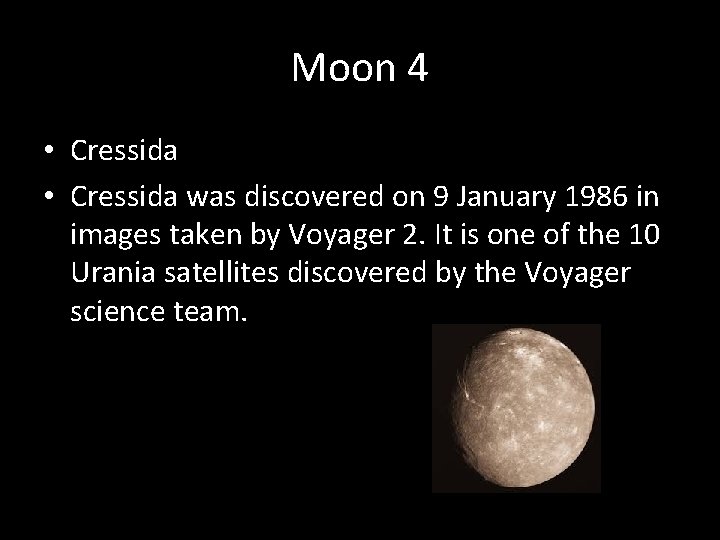
Moon 4 • Cressida was discovered on 9 January 1986 in images taken by Voyager 2. It is one of the 10 Urania satellites discovered by the Voyager science team.
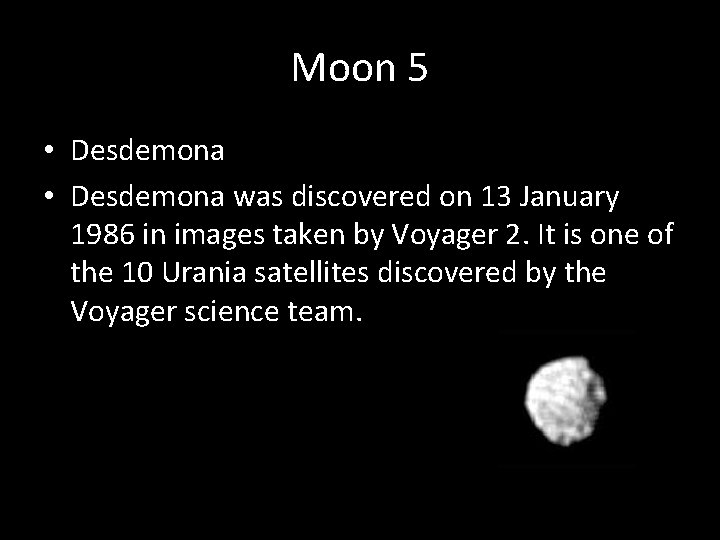
Moon 5 • Desdemona was discovered on 13 January 1986 in images taken by Voyager 2. It is one of the 10 Urania satellites discovered by the Voyager science team.
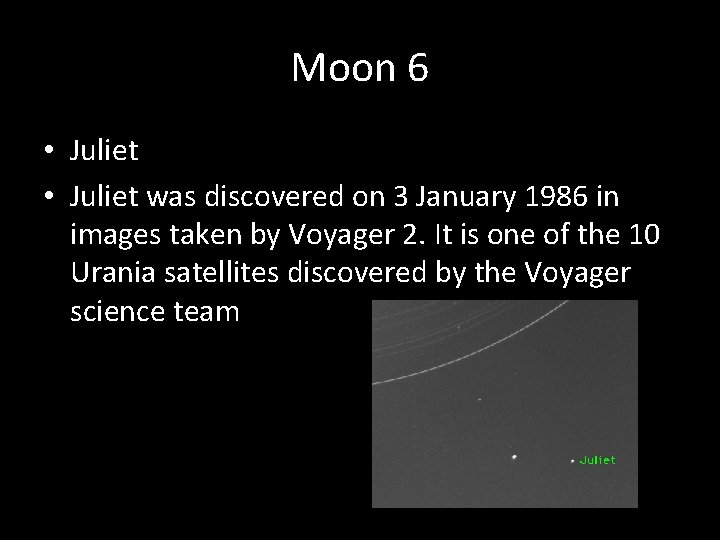
Moon 6 • Juliet was discovered on 3 January 1986 in images taken by Voyager 2. It is one of the 10 Urania satellites discovered by the Voyager science team
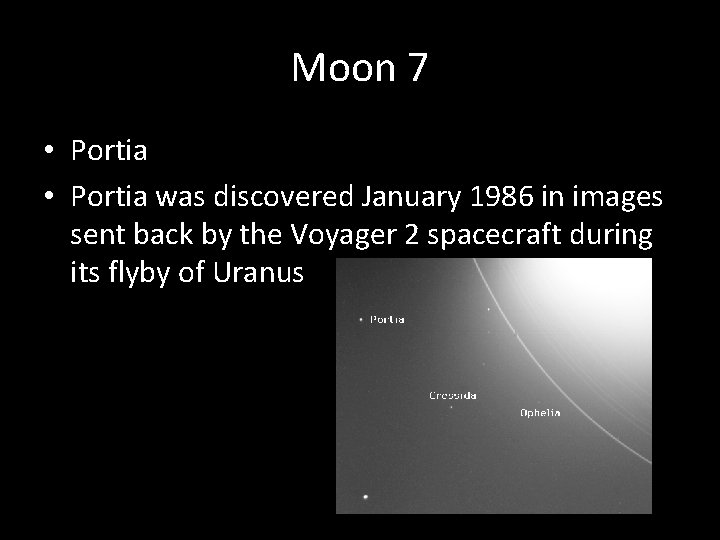
Moon 7 • Portia was discovered January 1986 in images sent back by the Voyager 2 spacecraft during its flyby of Uranus
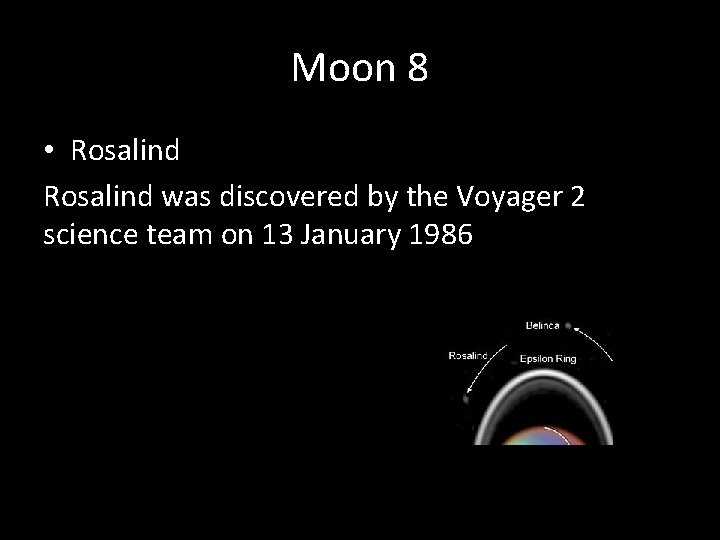
Moon 8 • Rosalind was discovered by the Voyager 2 science team on 13 January 1986
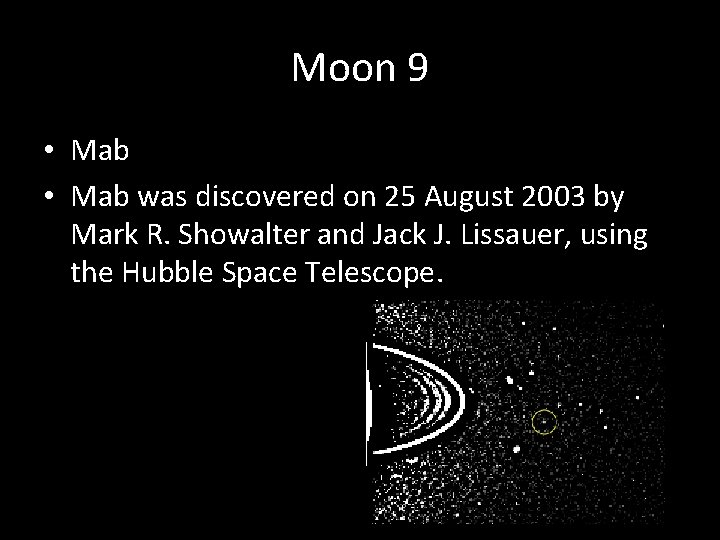
Moon 9 • Mab was discovered on 25 August 2003 by Mark R. Showalter and Jack J. Lissauer, using the Hubble Space Telescope.
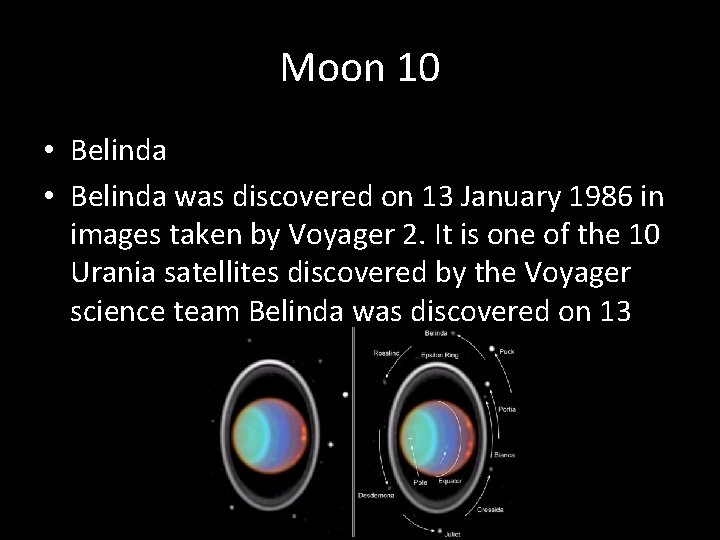
Moon 10 • Belinda was discovered on 13 January 1986 in images taken by Voyager 2. It is one of the 10 Urania satellites discovered by the Voyager science team Belinda was discovered on 13
• There about 27 moons that are from Uranus.
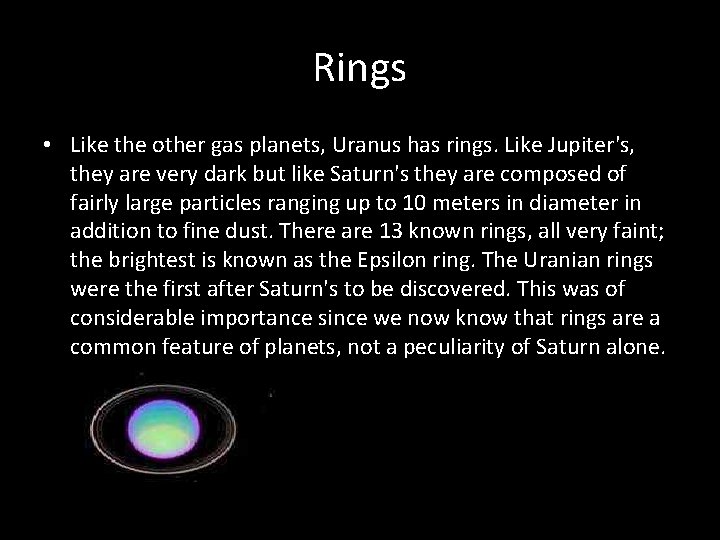
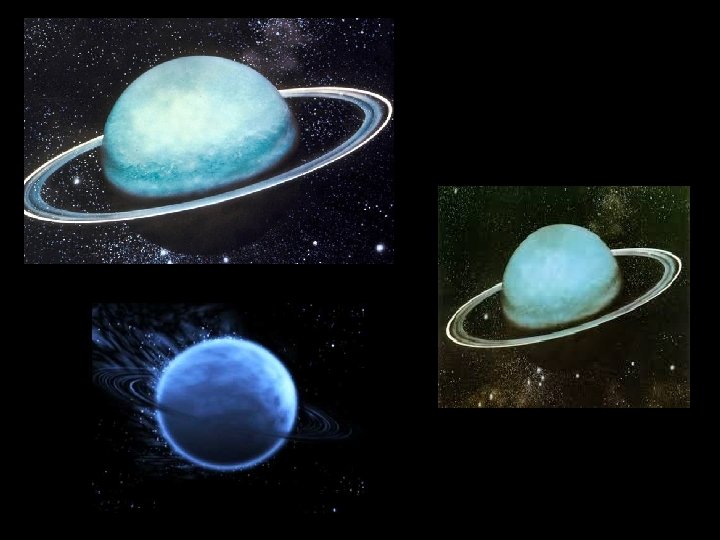
Rings • Like the other gas planets, Uranus has rings. Like Jupiter's, they are very dark but like Saturn's they are composed of fairly large particles ranging up to 10 meters in diameter in addition to fine dust. There are 13 known rings, all very faint; the brightest is known as the Epsilon ring. The Uranian rings were the first after Saturn's to be discovered. This was of considerable importance since we now know that rings are a common feature of planets, not a peculiarity of Saturn alone.
Questions! • Which of he following is NOT true of all the inner planets? • Answers • Do not have a solid rock • No metallic core • Uranus axis • Answers • Parallel to the planet of its orbit • Video: www. youtube. com/wat ch? v=G 7 f 1 nuw. Rq_E