
Uranus Tilt Caused by giant impact Unusual seasons
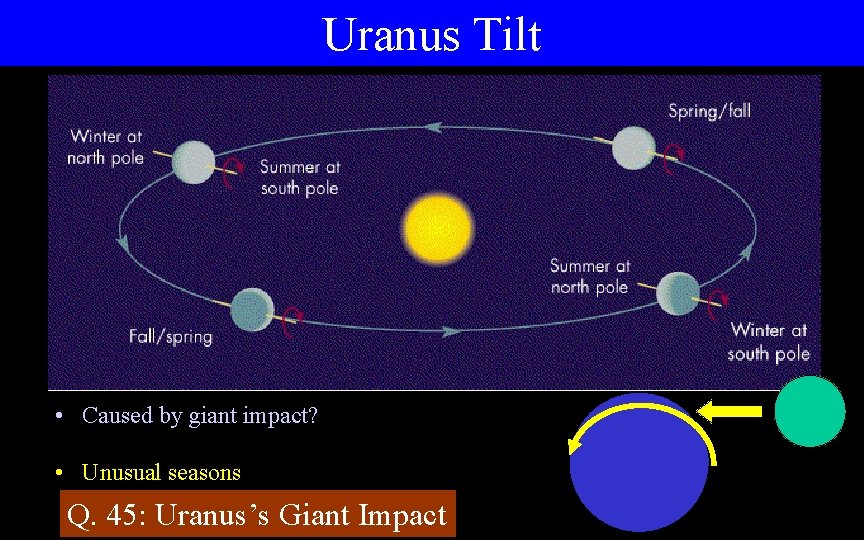
Uranus Tilt • Caused by giant impact? • Unusual seasons Q. 45: Uranus’s Giant Impact

Uranus and Neptune – Colors and Bands • Clouds form deep • Difficult to see • Methane absorbs red light • Methane scatters blue light • Makes them blue
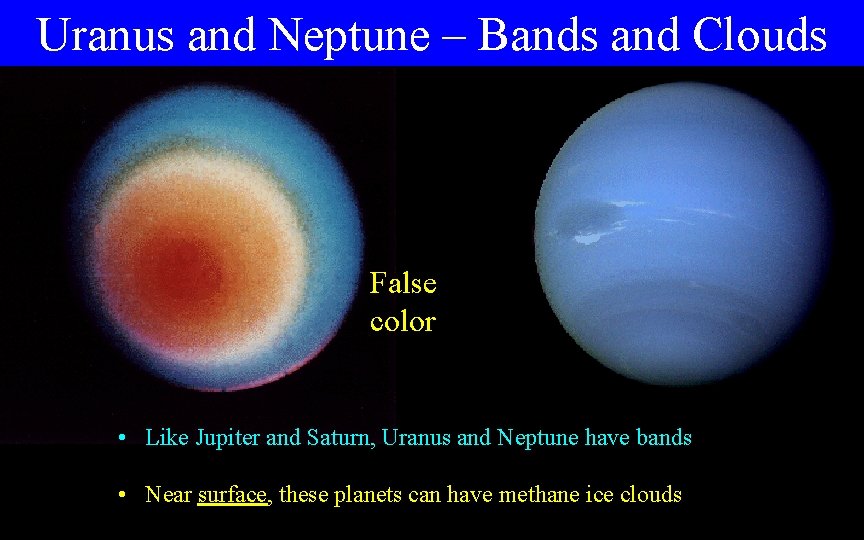
Uranus and Neptune – Bands and Clouds False color • Like Jupiter and Saturn, Uranus and Neptune have bands • Near surface, these planets can have methane ice clouds
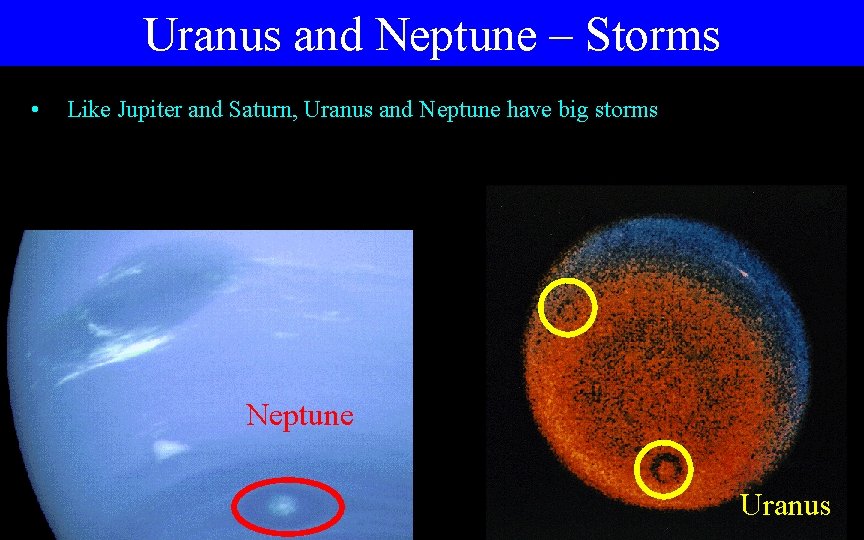
Uranus and Neptune – Storms • Like Jupiter and Saturn, Uranus and Neptune have big storms Neptune Uranus
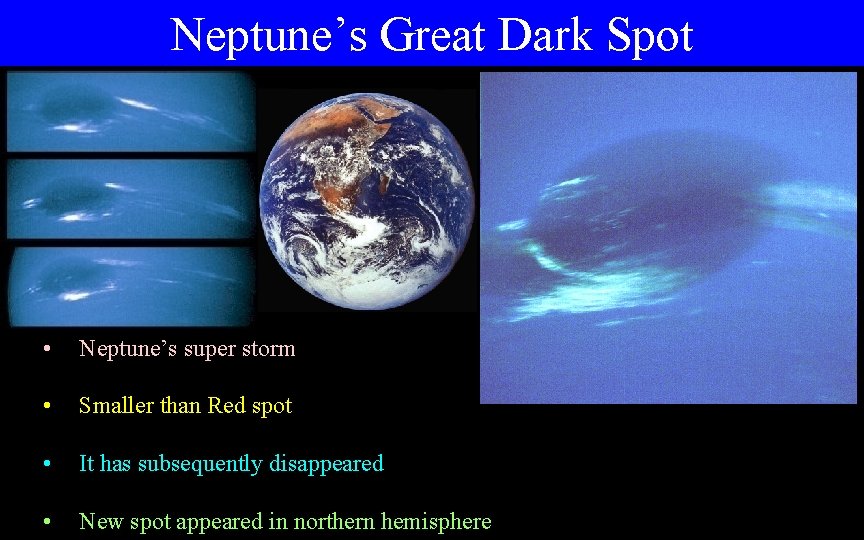
Neptune’s Great Dark Spot • Neptune’s super storm • Smaller than Red spot • It has subsequently disappeared • New spot appeared in northern hemisphere
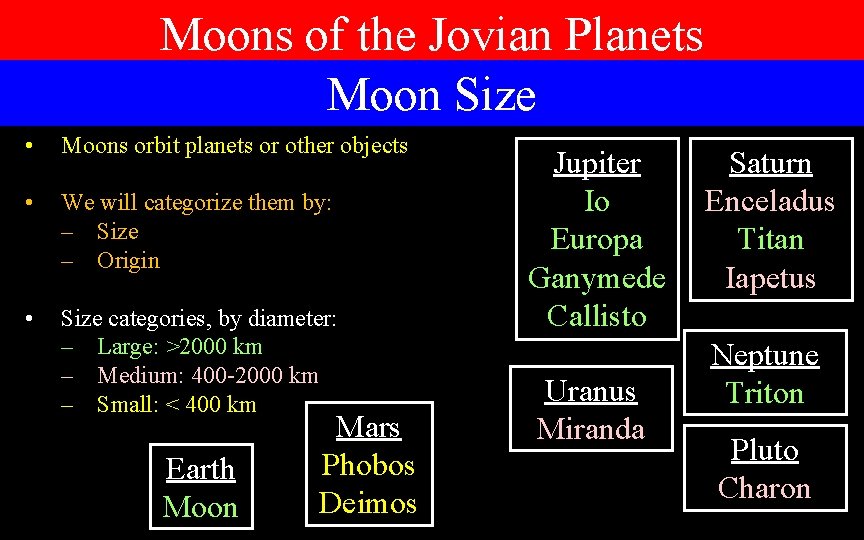
Moons of the Jovian Planets Moon Size • Moons orbit planets or other objects • We will categorize them by: – Size – Origin • Size categories, by diameter: – Large: >2000 km – Medium: 400 -2000 km – Small: < 400 km Earth Moon Mars Phobos Deimos Jupiter Io Europa Ganymede Callisto Uranus Miranda Saturn Enceladus Titan Iapetus Neptune Triton Pluto Charon
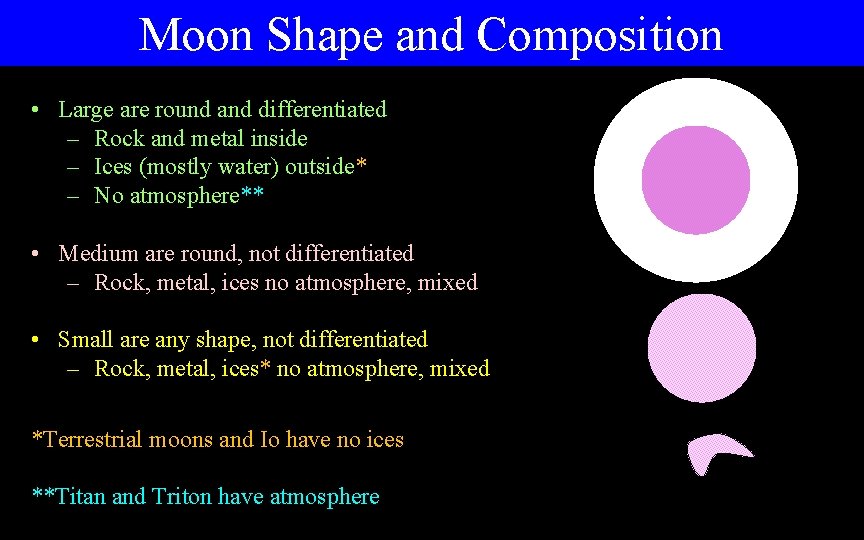
Moon Shape and Composition • Large are round and differentiated – Rock and metal inside – Ices (mostly water) outside* – No atmosphere** • Medium are round, not differentiated – Rock, metal, ices no atmosphere, mixed • Small are any shape, not differentiated – Rock, metal, ices* no atmosphere, mixed *Terrestrial moons and Io have no ices **Titan and Triton have atmosphere
Moon Origins • When large planets formed, they sometimes had their own disks – Like mini solar systems • These coalesced into moons • These moons go around the same way the planets rotate • Sometimes, moons are captured by planets much later – These moons usually go around backwards Moon Rotation • Moons are gravitationally dominated by their planets • Usually tidally locked to the planet – Like our moon
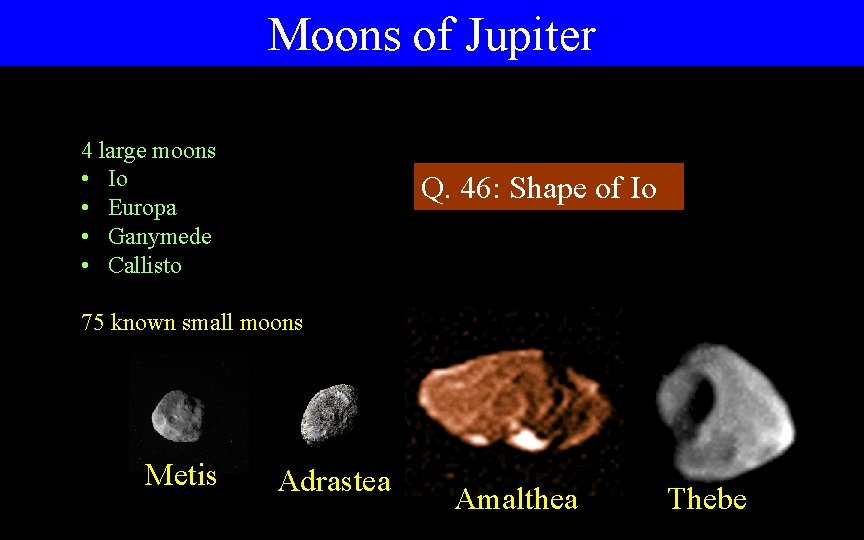
Moons of Jupiter 4 large moons • Io • Europa • Ganymede • Callisto Q. 46: Shape of Io 75 known small moons Metis Adrastea Amalthea Thebe
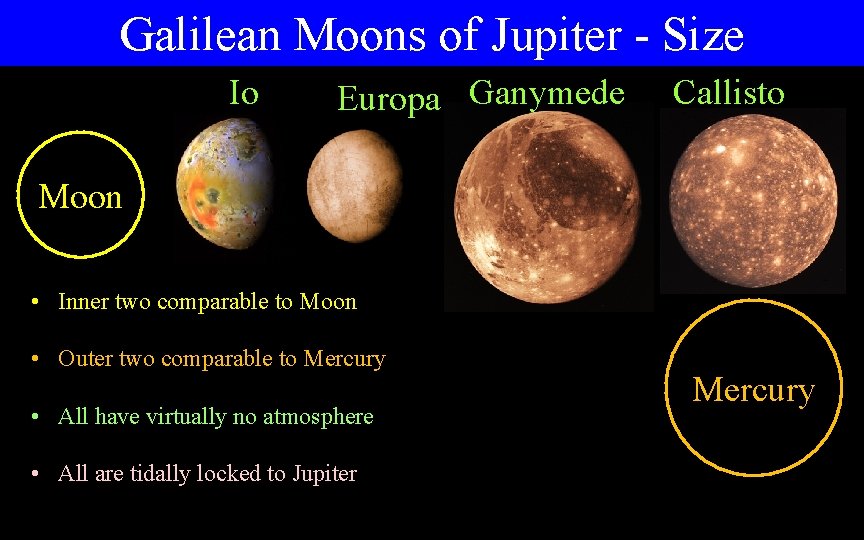
Galilean Moons of Jupiter - Size Io Europa Ganymede Callisto Moon • Inner two comparable to Moon • Outer two comparable to Mercury • All have virtually no atmosphere • All are tidally locked to Jupiter Mercury
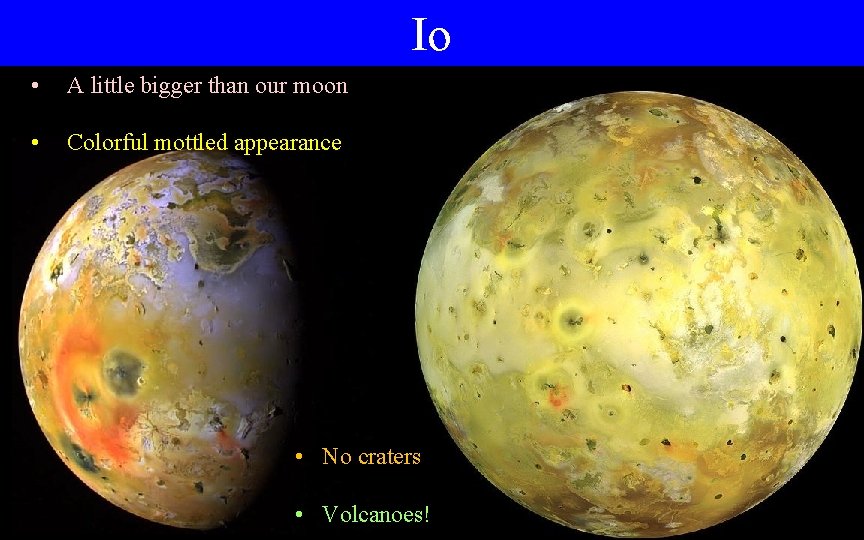
Io • A little bigger than our moon • Colorful mottled appearance • No craters • Volcanoes!

Io - Composition • Rocky Mantle • Metal Core • No ice/water
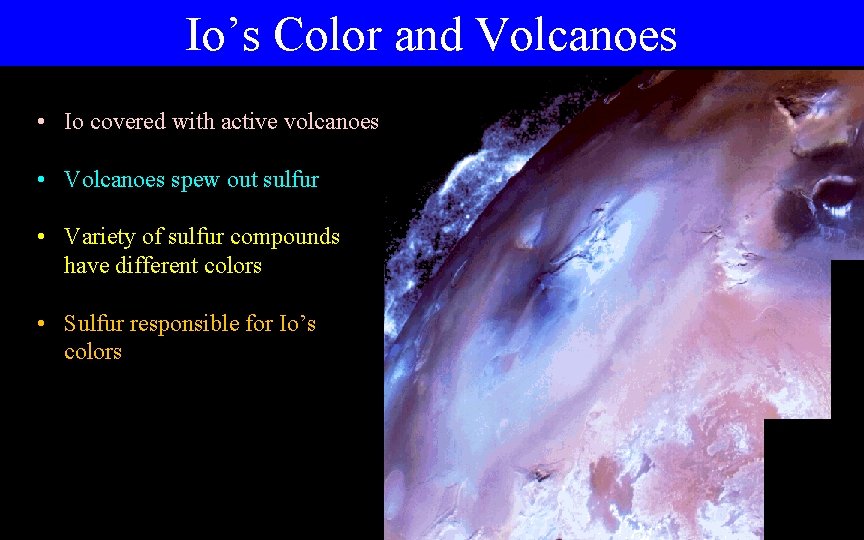
Io’s Color and Volcanoes • Io covered with active volcanoes • Volcanoes spew out sulfur • Variety of sulfur compounds have different colors • Sulfur responsible for Io’s colors
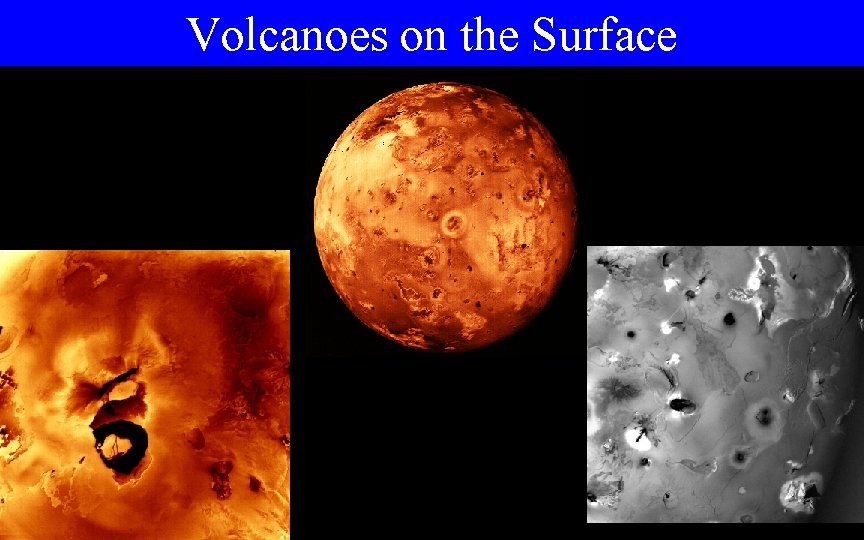
Volcanoes on the Surface
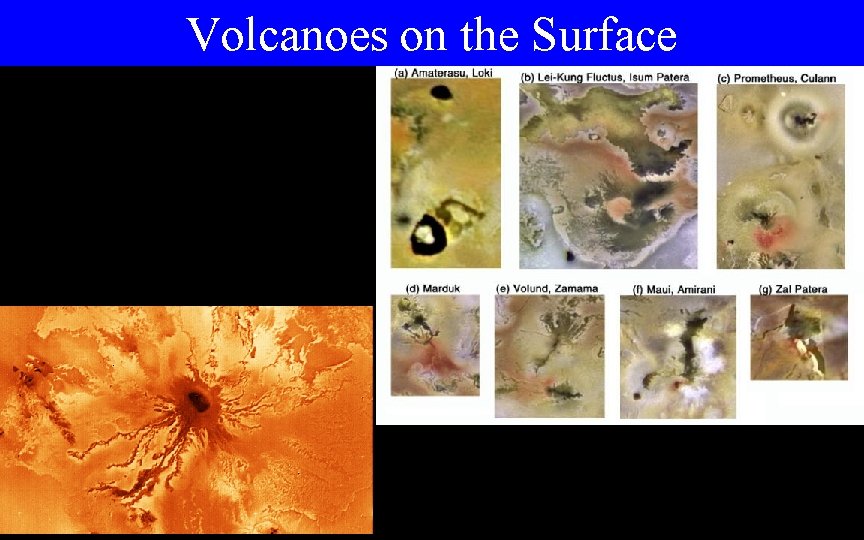
Volcanoes on the Surface
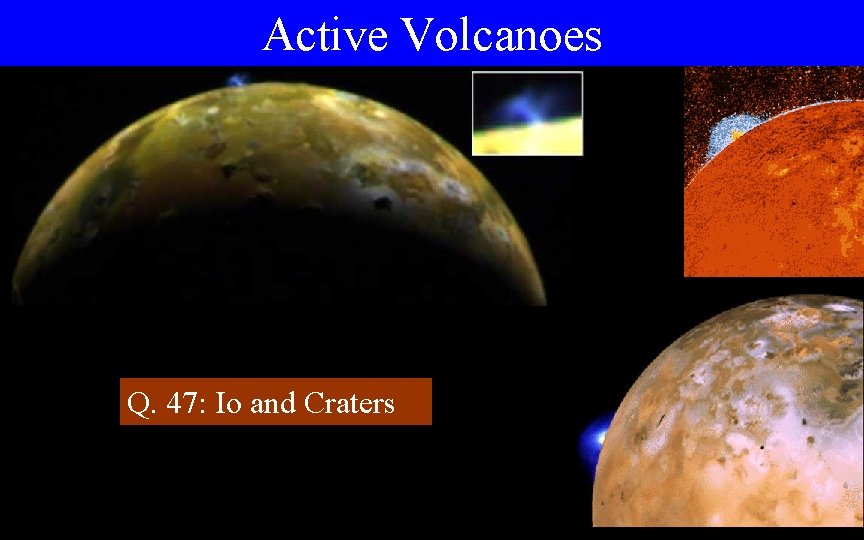
Active Volcanoes Q. 47: Io and Craters
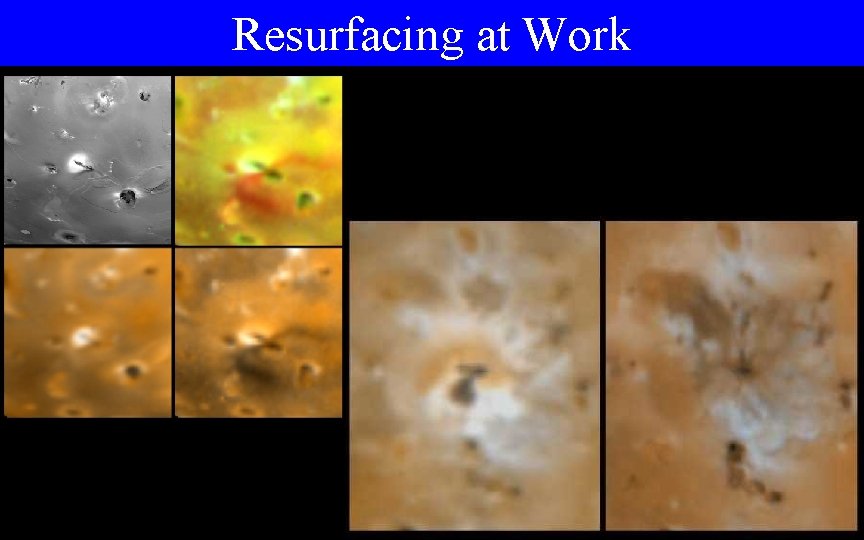
Resurfacing at Work
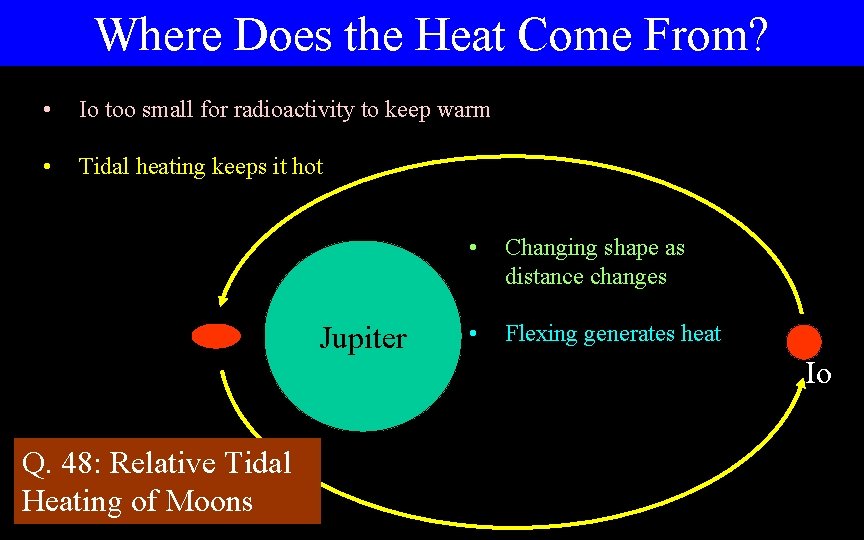
Where Does the Heat Come From? • Io too small for radioactivity to keep warm • Tidal heating keeps it hot Jupiter Q. 48: Relative Tidal Heating of Moons • Changing shape as distance changes • Flexing generates heat Io
Jovian Moons and Tidal Heating • Tidal effects get smaller with distance (Io is closest) • Gravity has biggest effect on large moons • All Galilean moons are about the same size – Io a tad larger
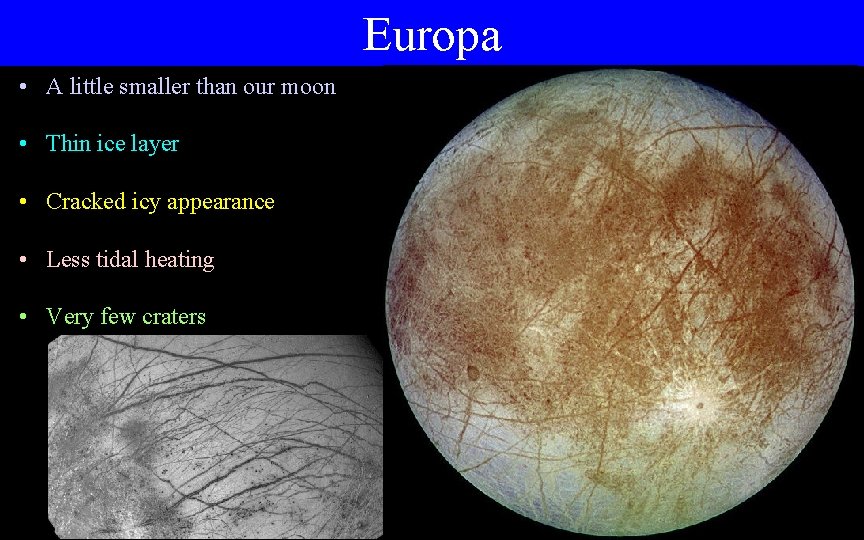
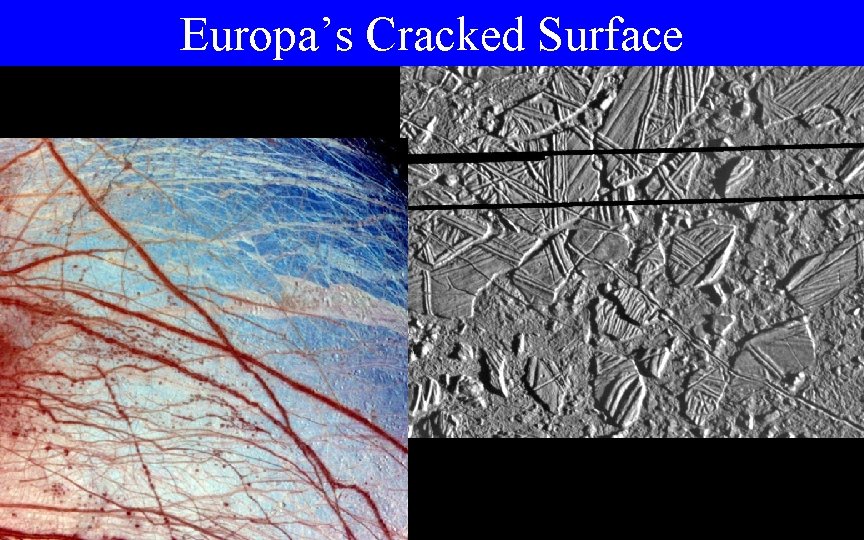
Europa • A little smaller than our moon • Thin ice layer • Cracked icy appearance • Less tidal heating • Very few craters
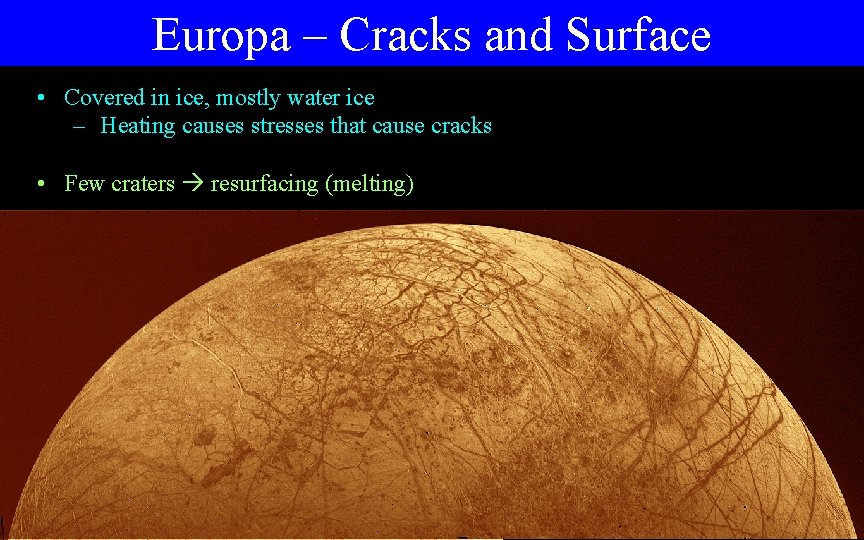
Europa – Cracks and Surface • Covered in ice, mostly water ice – Heating causes stresses that cause cracks • Few craters resurfacing (melting)
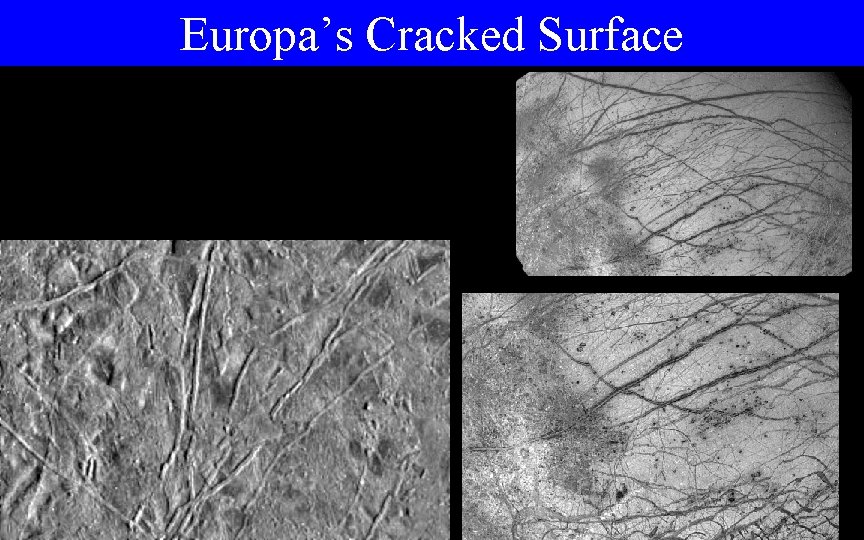
Europa’s Cracked Surface
Europa’s Cracked Surface
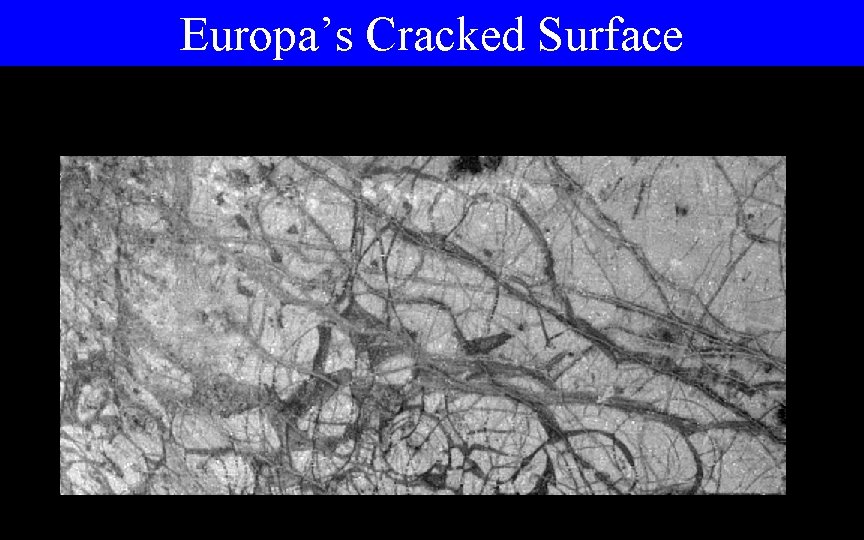
Europa’s Cracked Surface
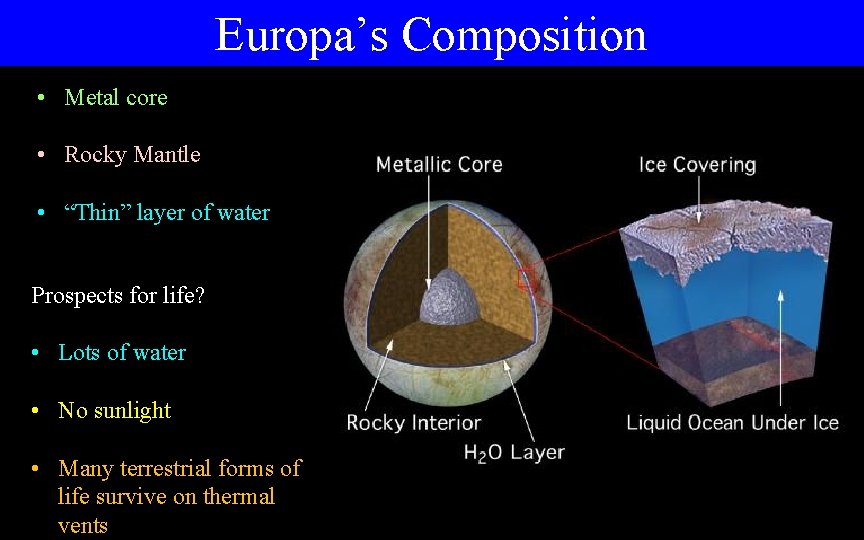
Europa’s Composition • Metal core • Rocky Mantle • “Thin” layer of water Prospects for life? • Lots of water • No sunlight • Many terrestrial forms of life survive on thermal vents
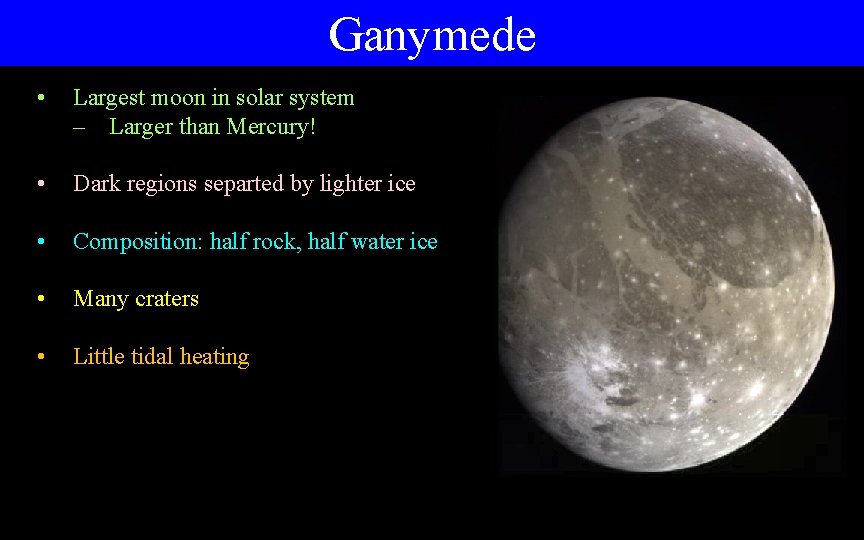
Ganymede • Largest moon in solar system – Larger than Mercury! • Dark regions separted by lighter ice • Composition: half rock, half water ice • Many craters • Little tidal heating
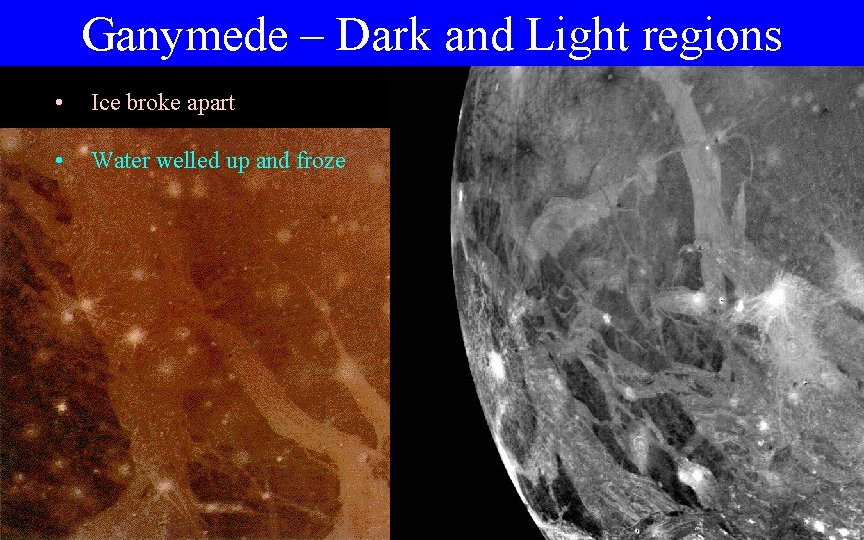
Ganymede – Dark and Light regions • Ice broke apart • Water welled up and froze
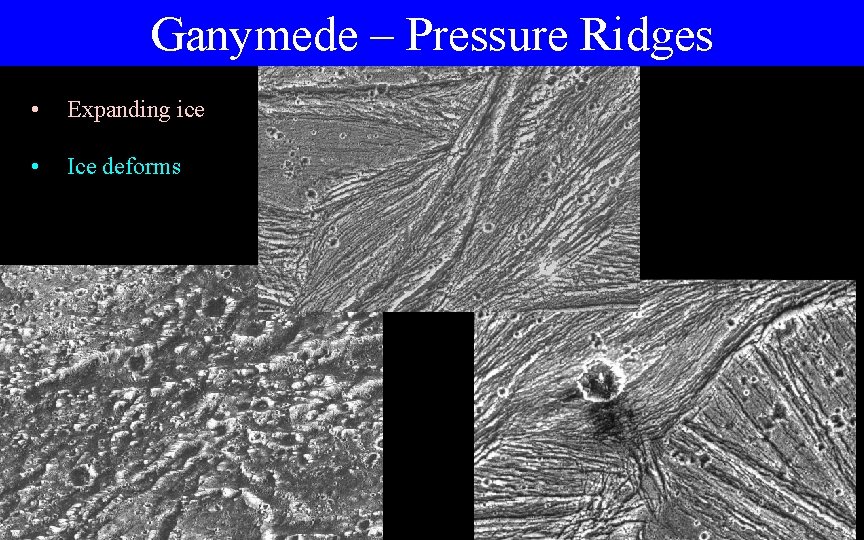
Ganymede – Pressure Ridges • Expanding ice • Ice deforms
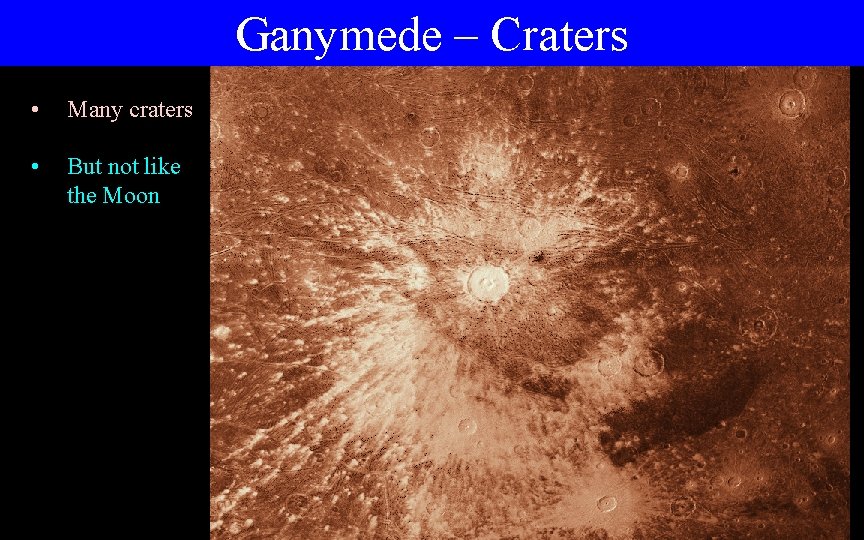
Ganymede – Craters • Many craters • But not like the Moon
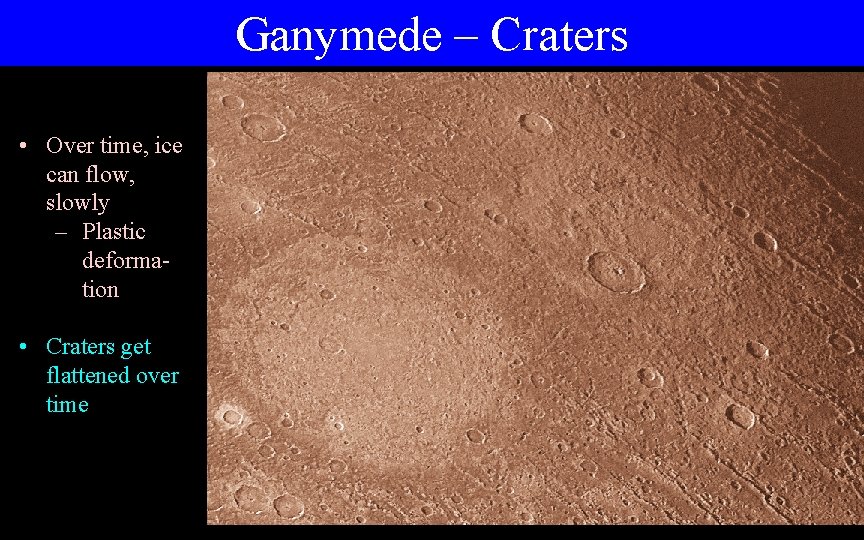
Ganymede – Craters • Over time, ice can flow, slowly – Plastic deformation • Craters get flattened over time
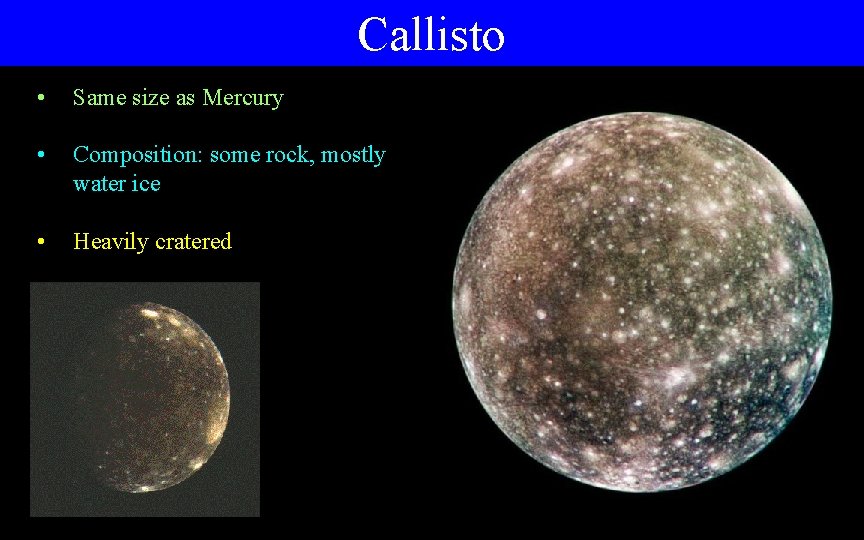
Callisto • Same size as Mercury • Composition: some rock, mostly water ice • Heavily cratered

Craters on Callisto Crater chains

Craters on Callisto Valhalla Crater
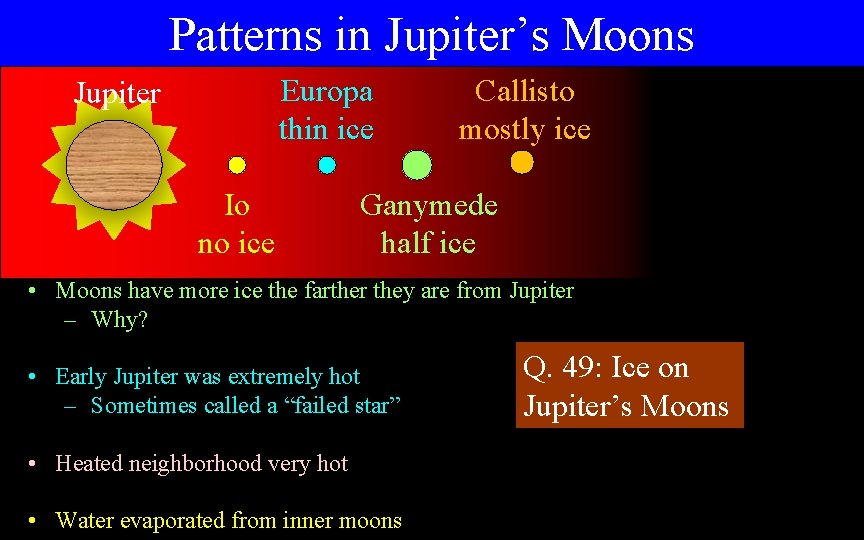
Patterns in Jupiter’s Moons Europa thin ice Jupiter Io no ice Callisto mostly ice Ganymede half ice • Moons have more ice the farther they are from Jupiter – Why? • Early Jupiter was extremely hot – Sometimes called a “failed star” • Heated neighborhood very hot • Water evaporated from inner moons Q. 49: Ice on Jupiter’s Moons
- Slides: 34