
Upper limb lecture two Claviopectrol fascia Axilla Clavipectoral
Upper limb lecture two Claviopectrol fascia Axilla
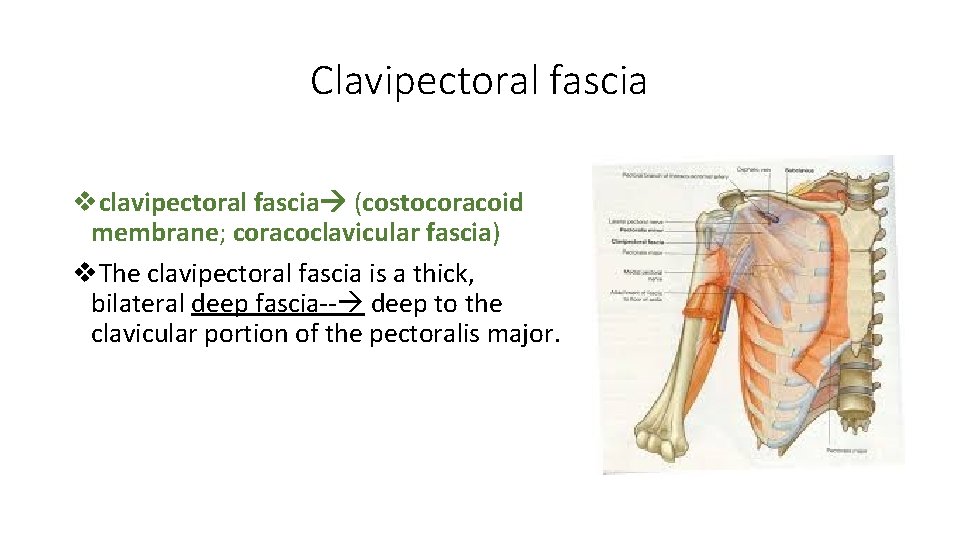
Clavipectoral fascia vclavipectoral fascia (costocoracoid membrane; coracoclavicular fascia) v. The clavipectoral fascia is a thick, bilateral deep fascia-- deep to the clavicular portion of the pectoralis major.
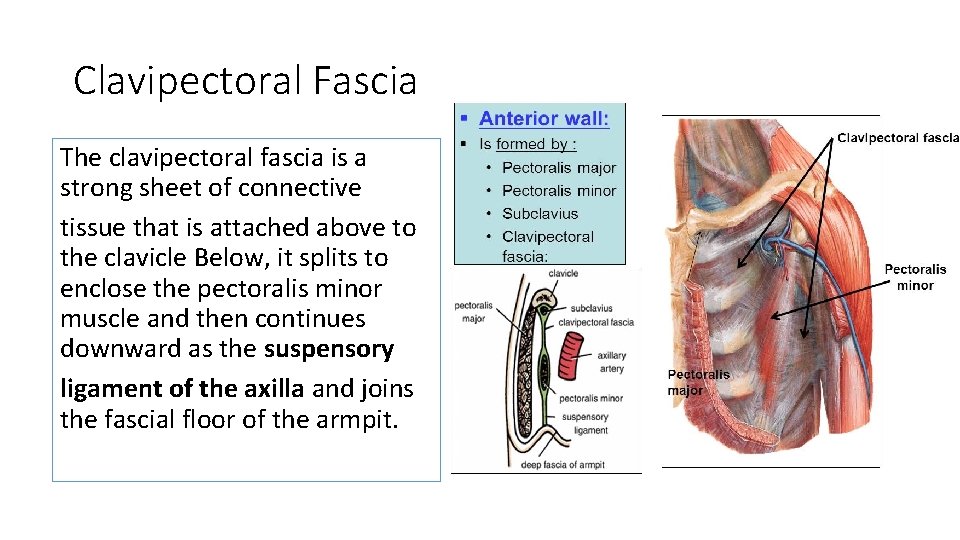
Clavipectoral Fascia The clavipectoral fascia is a strong sheet of connective tissue that is attached above to the clavicle Below, it splits to enclose the pectoralis minor muscle and then continues downward as the suspensory ligament of the axilla and joins the fascial floor of the armpit.
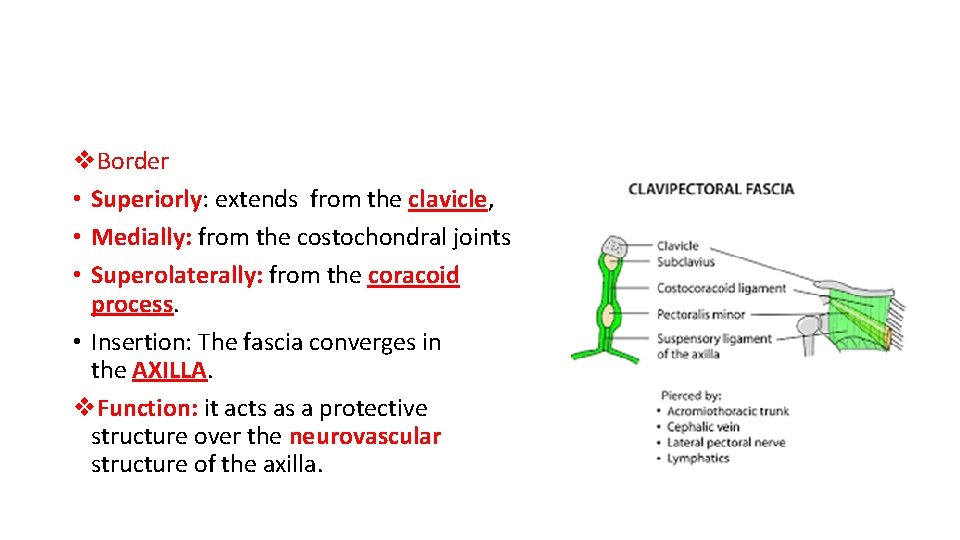
v. Border • Superiorly: extends from the clavicle, • Medially: from the costochondral joints • Superolaterally: from the coracoid process. • Insertion: The fascia converges in the AXILLA. v. Function: it acts as a protective structure over the neurovascular structure of the axilla.
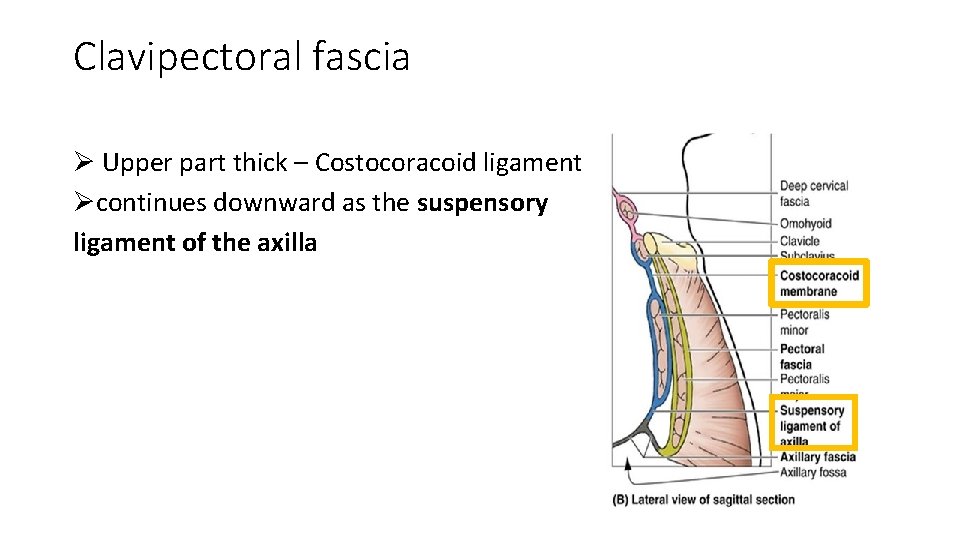
Clavipectoral fascia Ø Upper part thick – Costocoracoid ligament Øcontinues downward as the suspensory ligament of the axilla
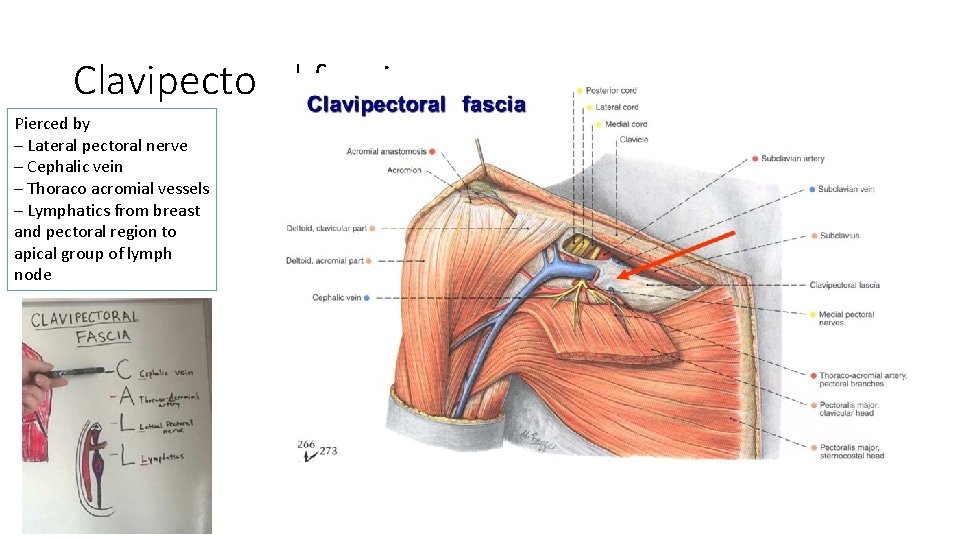
Clavipectoral fascia Pierced by – Lateral pectoral nerve – Cephalic vein – Thoraco acromial vessels – Lymphatics from breast and pectoral region to apical group of lymph node

AXILLA • A pyramid-shaped space between the upper part of the arm and the side of the chest through which major neurovascular structures pass between neck & thorax and upper limbs. • Axilla has an apex, a base and four walls.

Boundaries of the Axilla § Apex: § Is directed upwards & medially to the root of the neck. § It is called • Cervicoaxillary canal. § It is bounded, by 3 bones: Anteriorly: Clavicle posteriorly: Upper border of the scapula. Medially: Outer border of the first rib sca la u p 1 C L A R I V B I C L E
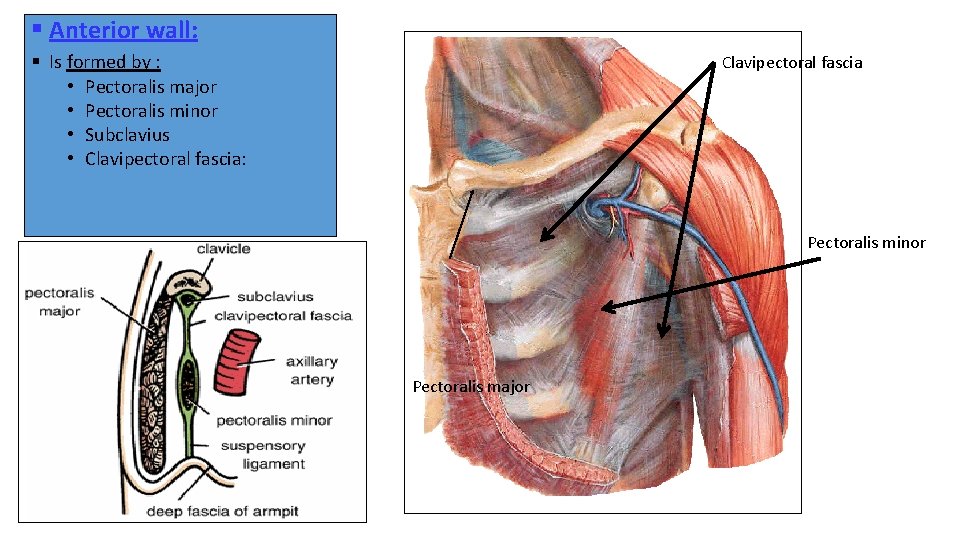
§ Anterior wall: § Is formed by : • Pectoralis major • Pectoralis minor • Subclavius • Clavipectoral fascia: Clavipectoral fascia Pectoralis minor Pectoralis major
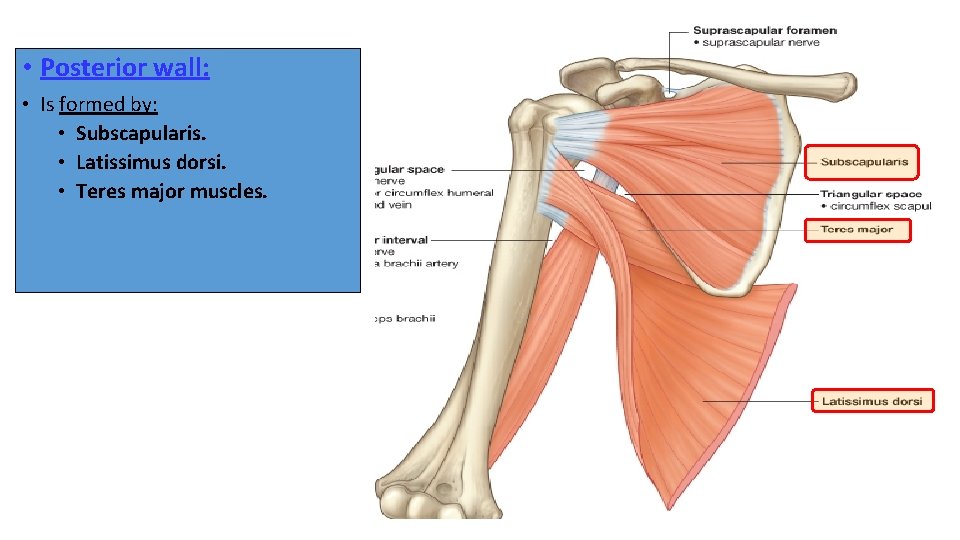
• Posterior wall: • Is formed by: • Subscapularis. • Latissimus dorsi. • Teres major muscles.
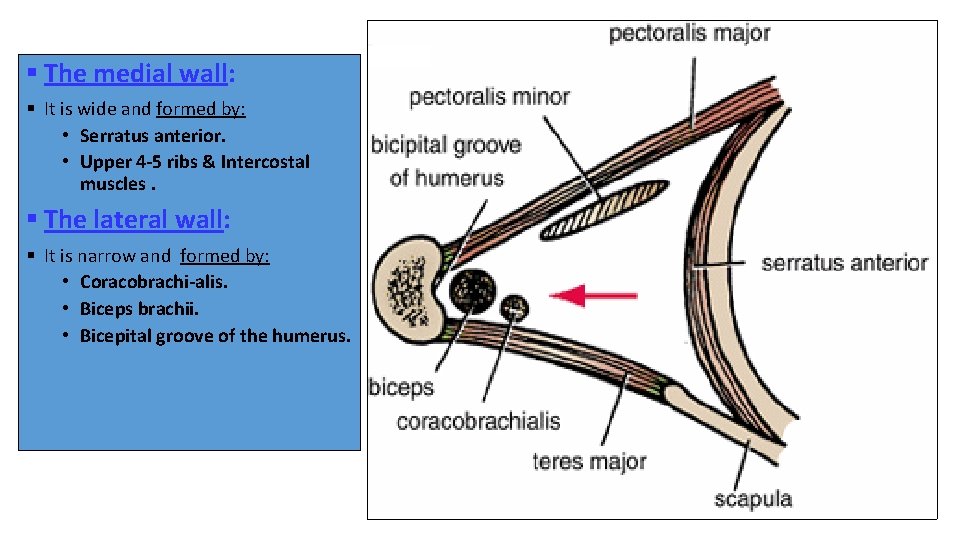
§ The medial wall: § It is wide and formed by: • Serratus anterior. • Upper 4 -5 ribs & Intercostal muscles. § The lateral wall: § It is narrow and formed by: • Coracobrachi-alis. • Biceps brachii. • Bicepital groove of the humerus.
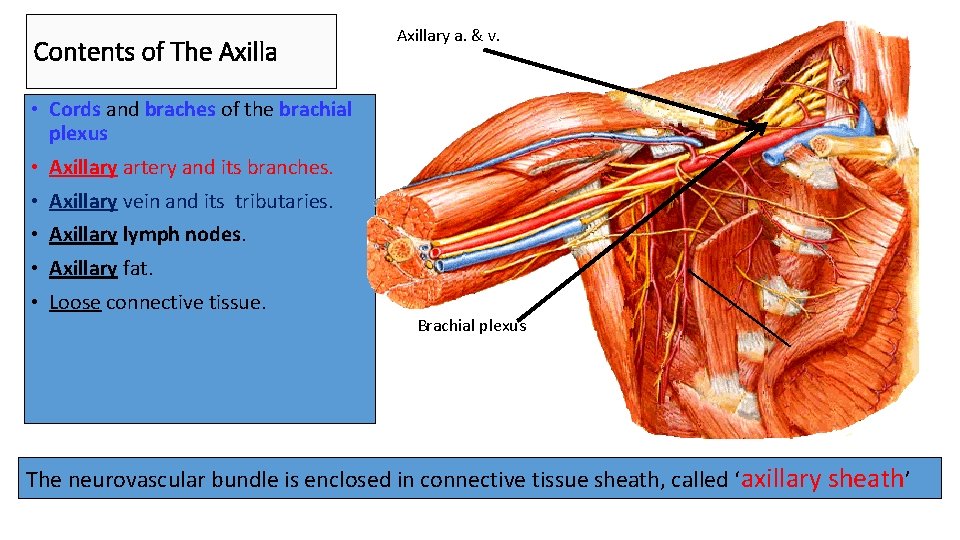
Contents of The Axillary a. & v. • Cords and braches of the brachial plexus • Axillary artery and its branches. • Axillary vein and its tributaries. • Axillary lymph nodes. • Axillary fat. • Loose connective tissue. Brachial plexus The neurovascular bundle is enclosed in connective tissue sheath, called ‘ axillary sheath’
- Slides: 12