
Upheavals in China After the fall of the
- Slides: 23
Upheavals in China
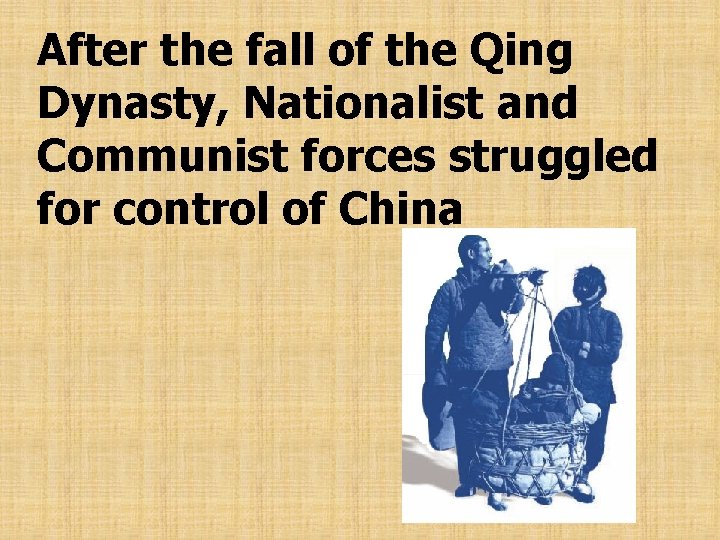
After the fall of the Qing Dynasty, Nationalist and Communist forces struggled for control of China
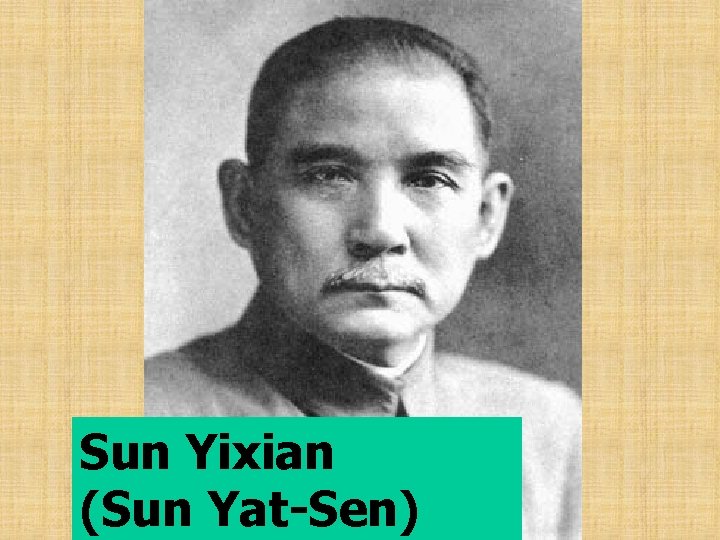
Rise of the Guomintang , or Nationalist, Party • Led by Sun Yixian-”Father of Modern China” • Wanted to establish western -style capitalist economy and representative government
Sun Yixian (Sun Yat-Sen)
Three Principles of the People • democracy • nationalism • economic security (socialism, communism)
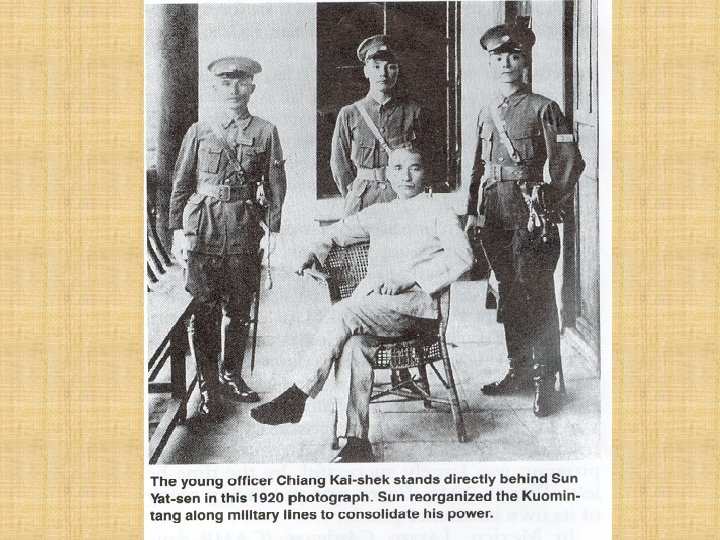
Chinese reformers unite and then turn on each other • 1919 the Fourth of May Movement • 1925, Jiang Jieshi takes over Nationalist Party • Nationalists unite with Communists to defeat warlords of Northern China
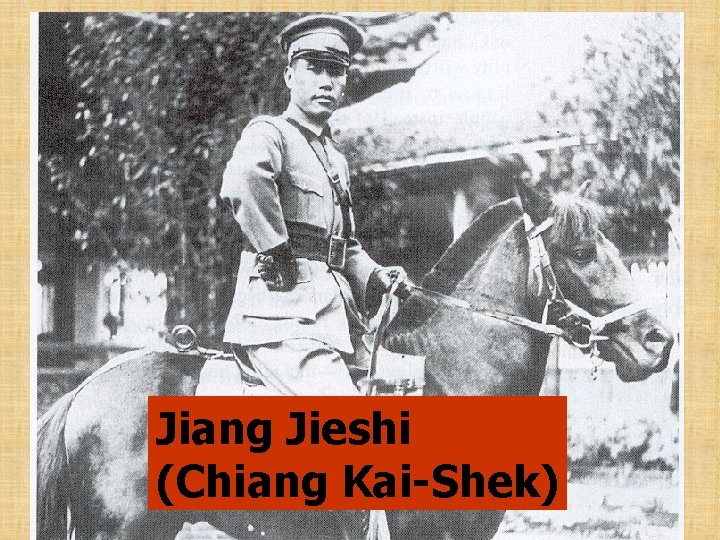
Jiang Jieshi (Chiang Kai-Shek)
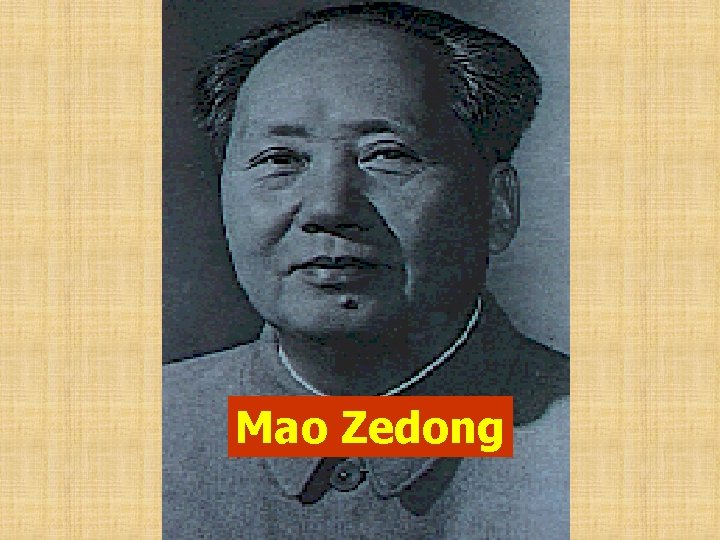
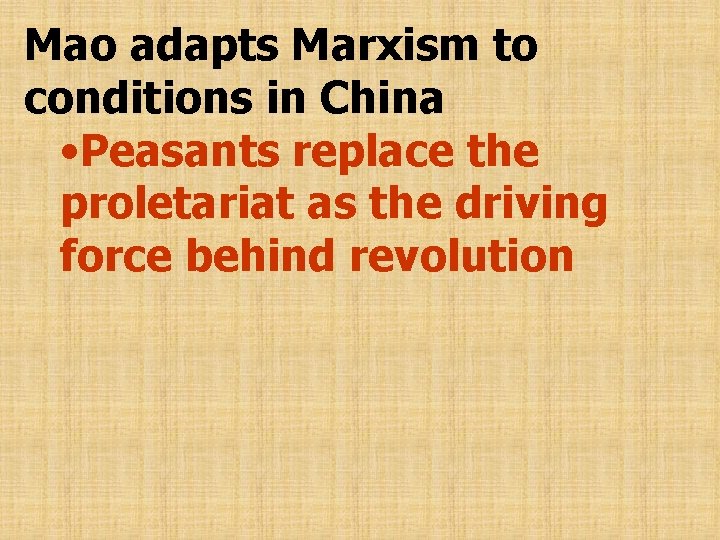
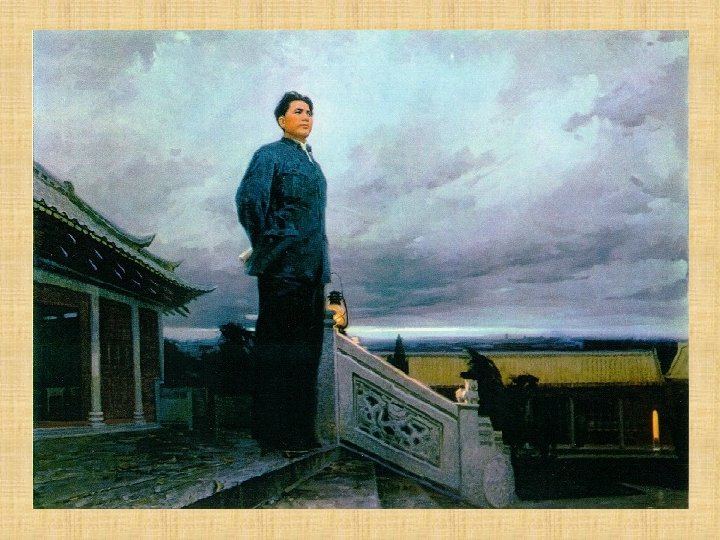
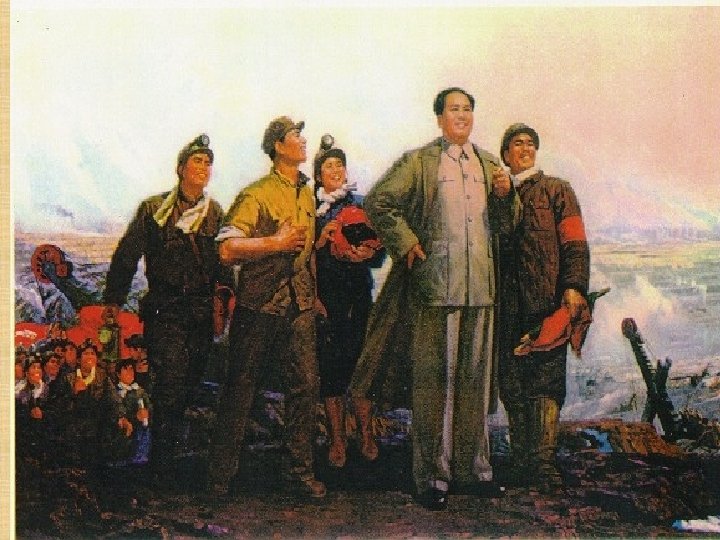
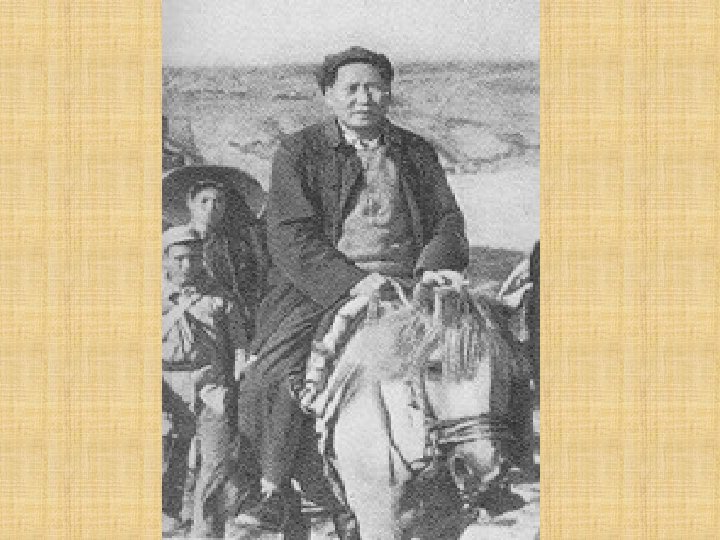
Chinese Communism • Mao Zedong -founder of Chinese Communism • “Freedom comes from the barrel of a gun”
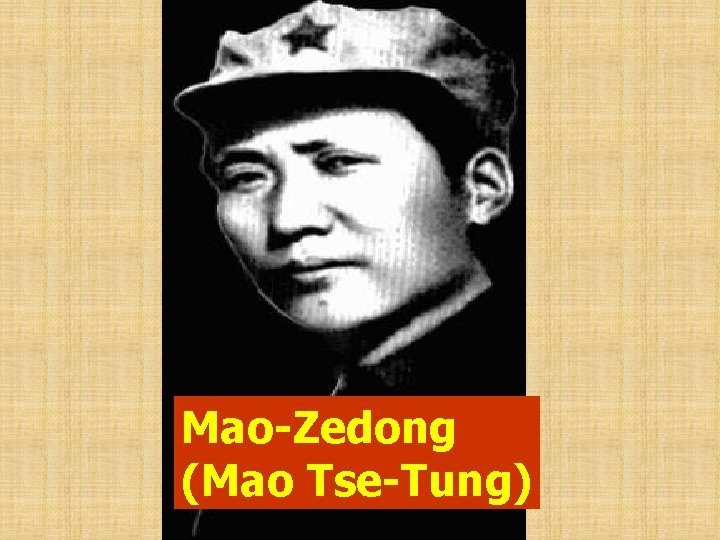
Mao-Zedong (Mao Tse-Tung)
Mao Zedong
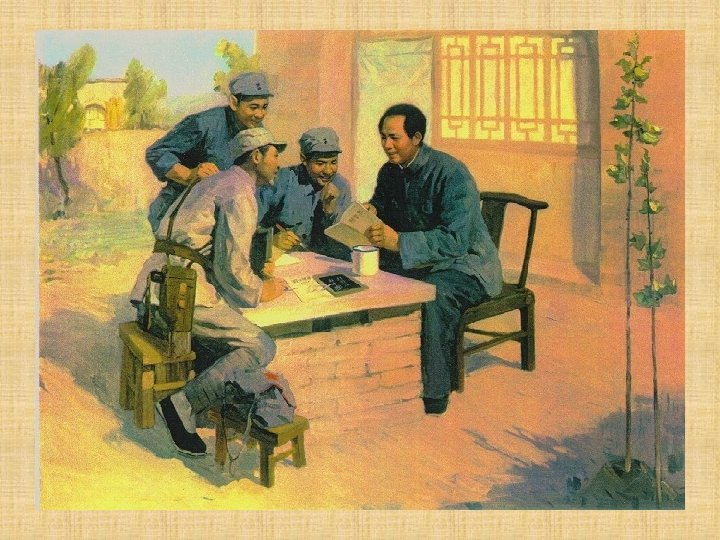
Mao adapts Marxism to conditions in China • Peasants replace the proletariat as the driving force behind revolution
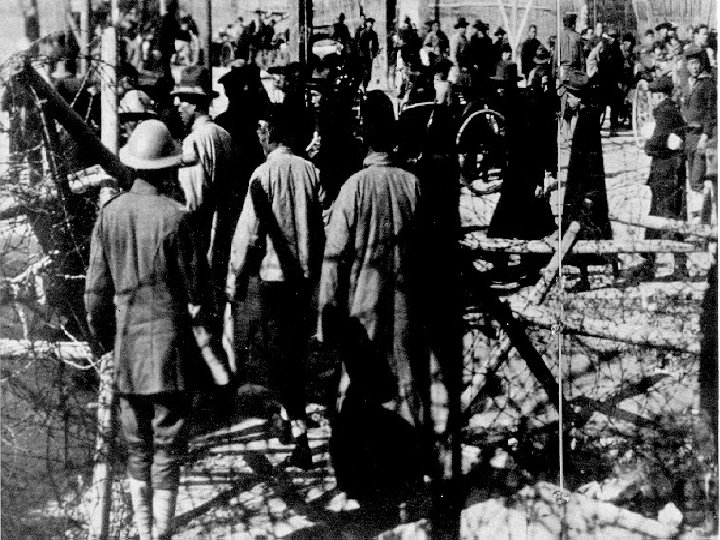
Shanghai falls • Nationalists turn on former Communists allies in a massacre known as the “White Terror” • In 1928, Jiang becomes president of the Nationalist Republic of China
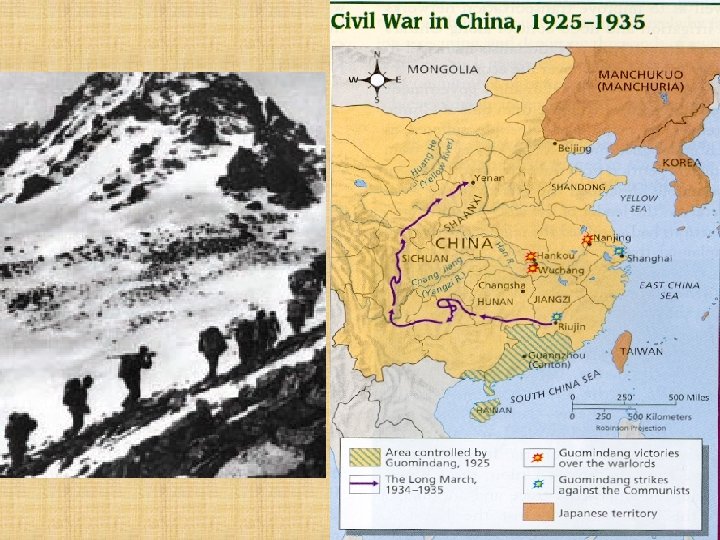
Jiang’s policies cause many peasants to join communist forces • By 1930 full scale civil war • 1934 Mao leads his 6000 mile “Long March”
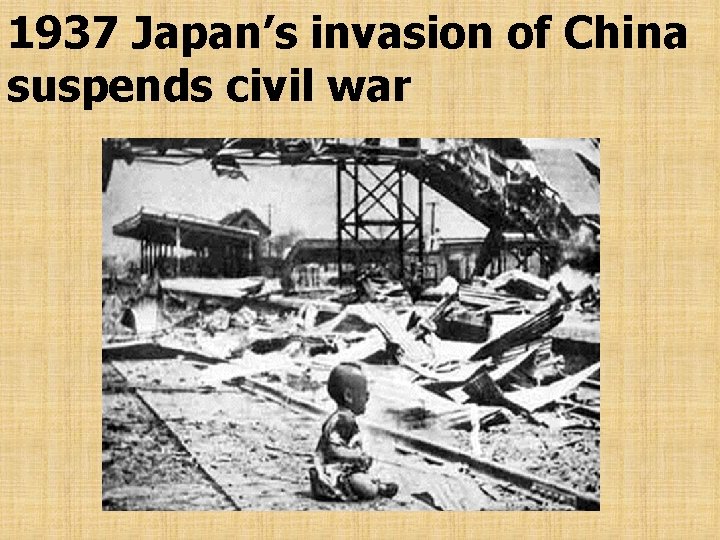
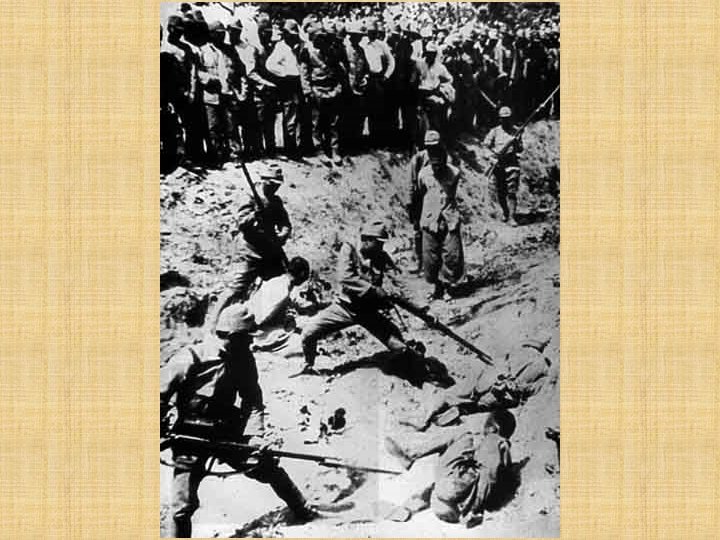
1937 Japan’s invasion of China suspends civil war