
UPGRADE PLANS FOR THE CERN ACCELERATOR COMPLEX OUTLINE



- Slides: 43
UPGRADE PLANS FOR THE CERN ACCELERATOR COMPLEX OUTLINE • Why upgrade ? When ? • Injectors • LHC • Preliminary expectations LHCC – 1 July, 2008 R. Garoby
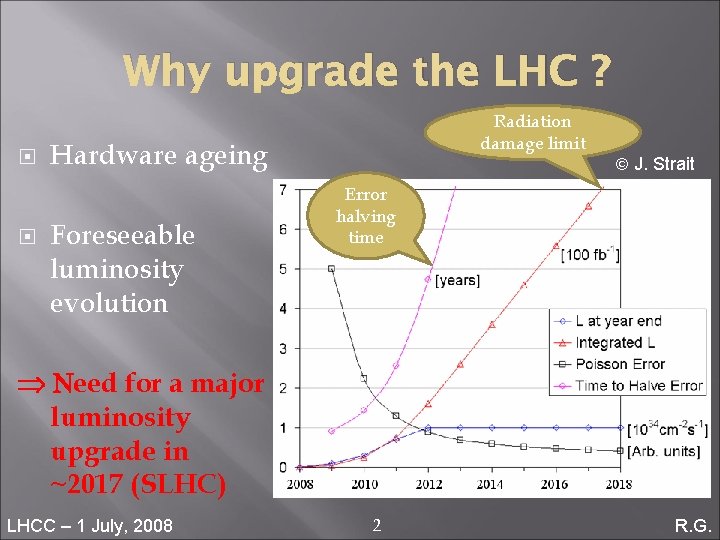
Why upgrade the LHC ? Radiation damage limit Hardware ageing Foreseeable luminosity evolution ã J. Strait Error halving time Þ Need for a major luminosity upgrade in ~2017 (SLHC) LHCC – 1 July, 2008 2 R. G.
Why upgrade the injectors ? Need for reliability: Accelerators are old [Linac 2: 1978, PSB: 1975, PS: 1959, SPS: 1976] They operate far from their design parameters and close to hardware limits The infrastructure has suffered from the concentration of resources on LHC during the past 10 years Need for better beam characteristics LHCC – 1 July, 2008 3 R. G.
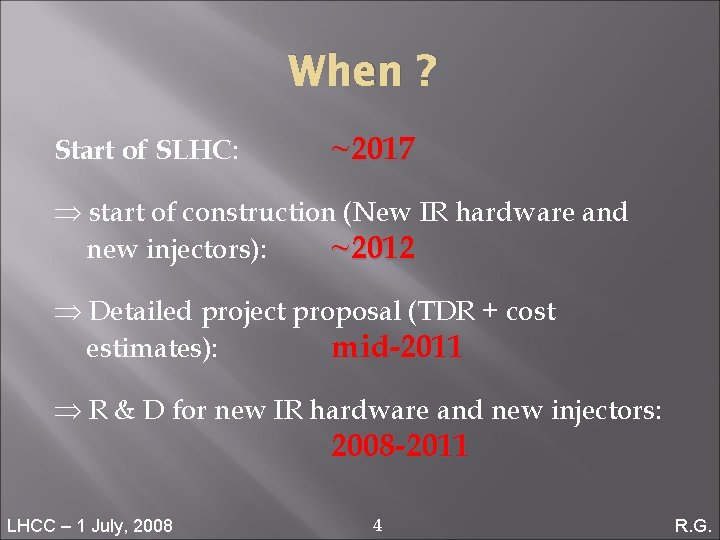
When ? Start of SLHC: ~2017 Þ start of construction (New IR hardware and new injectors): ~2012 Þ Detailed project proposal (TDR + cost estimates): mid-2011 Þ R & D for new IR hardware and new injectors: 2008 -2011 LHCC – 1 July, 2008 4 R. G.
INJECTORS
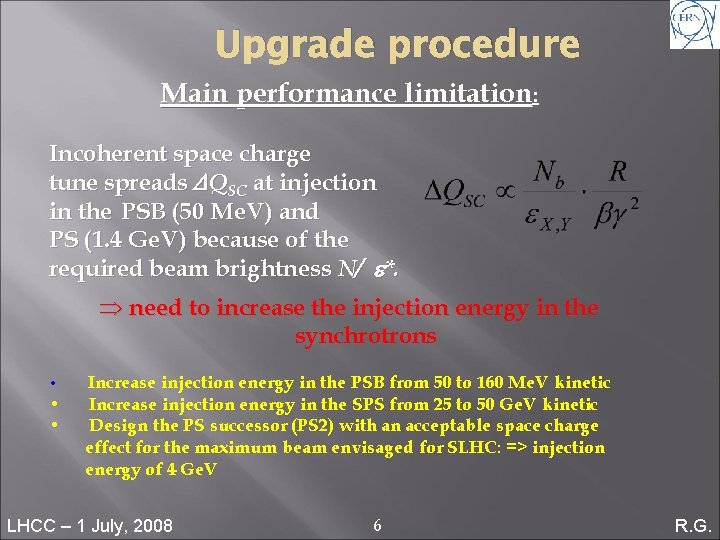
Upgrade procedure Main performance limitation: Incoherent space charge tune spreads DQSC at injection in the PSB (50 Me. V) and PS (1. 4 Ge. V) because of the required beam brightness N/ e*. Þ need to increase the injection energy in the synchrotrons • • • Increase injection energy in the PSB from 50 to 160 Me. V kinetic Increase injection energy in the SPS from 25 to 50 Ge. V kinetic Design the PS successor (PS 2) with an acceptable space charge effect for the maximum beam envisaged for SLHC: => injection energy of 4 Ge. V LHCC – 1 July, 2008 6 R. G.
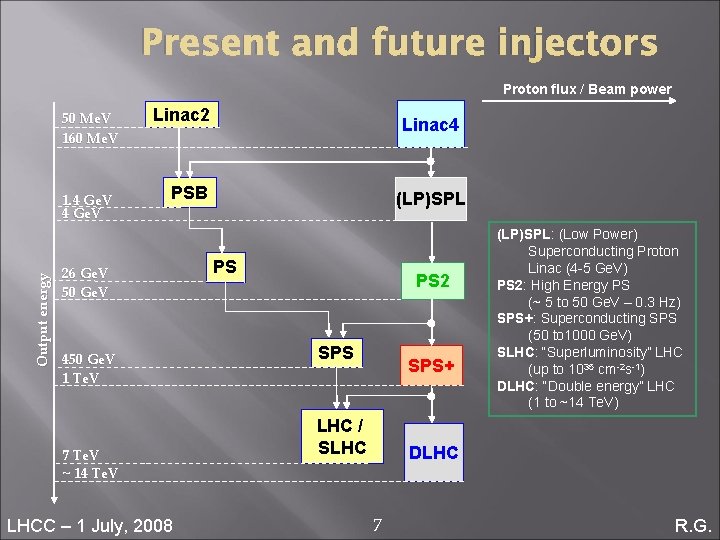
Present and future injectors Proton flux / Beam power 50 Me. V 160 Me. V Output energy 1. 4 Ge. V Linac 2 Linac 4 PSB 26 Ge. V 50 Ge. V 450 Ge. V 1 Te. V 7 Te. V ~ 14 Te. V LHCC – 1 July, 2008 (LP)SPL PS PS 2 SPS+ LHC / SLHC (LP)SPL: (Low Power) Superconducting Proton Linac (4 -5 Ge. V) PS 2: High Energy PS (~ 5 to 50 Ge. V – 0. 3 Hz) SPS+: Superconducting SPS (50 to 1000 Ge. V) SLHC: “Superluminosity” LHC (up to 1035 cm-2 s-1) DLHC: “Double energy” LHC (1 to ~14 Te. V) DLHC 7 R. G.
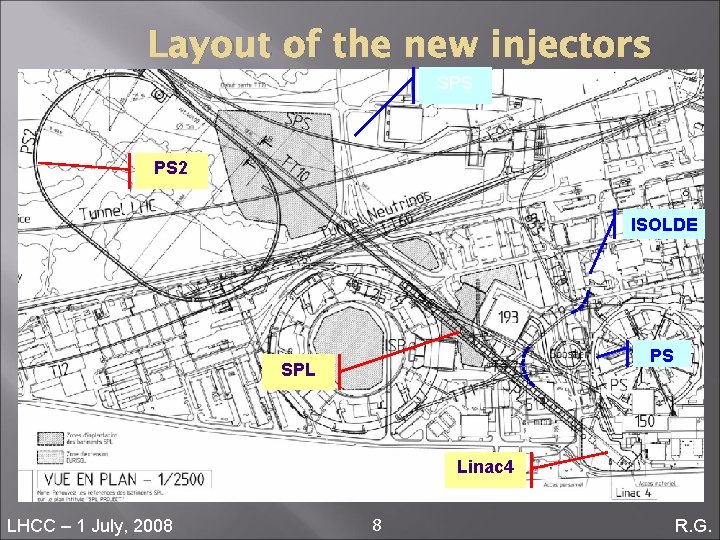
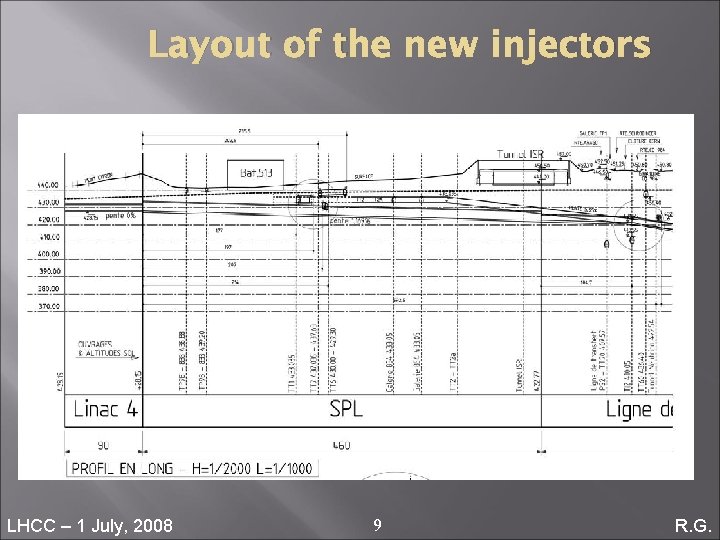
Layout of the new injectors SPS PS 2 ISOLDE PS SPL Linac 4 LHCC – 1 July, 2008 8 R. G.
Layout of the new injectors LHCC – 1 July, 2008 9 R. G.
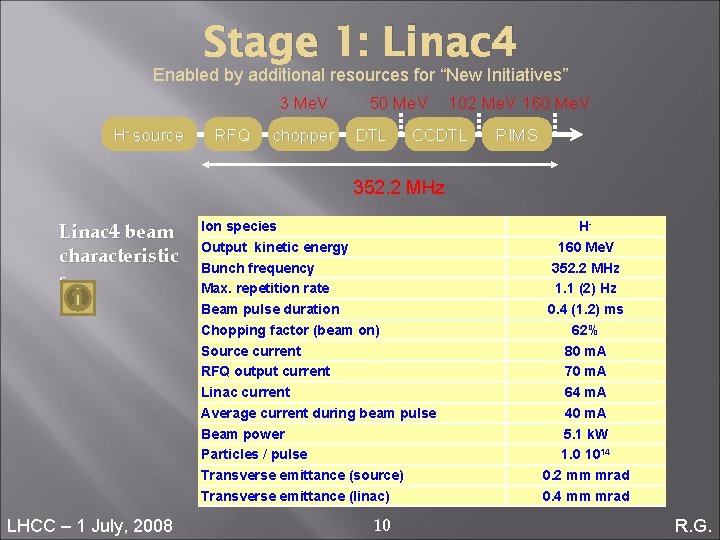
Stage 1: Linac 4 Enabled by additional resources for “New Initiatives” 3 Me. V H- source RFQ chopper 50 Me. V DTL 102 Me. V 160 Me. V CCDTL PIMS 352. 2 MHz Linac 4 beam characteristic s LHCC – 1 July, 2008 Ion species Output kinetic energy Bunch frequency Max. repetition rate Beam pulse duration Chopping factor (beam on) Source current RFQ output current Linac current Average current during beam pulse Beam power Particles / pulse Transverse emittance (source) Transverse emittance (linac) 10 H 160 Me. V 352. 2 MHz 1. 1 (2) Hz 0. 4 (1. 2) ms 62% 80 m. A 70 m. A 64 m. A 40 m. A 5. 1 k. W 1. 0 1014 0. 2 mm mrad 0. 4 mm mrad R. G.
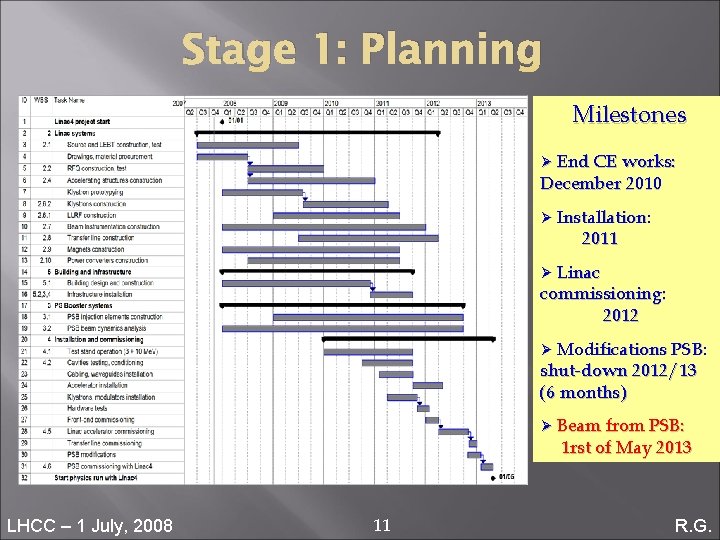
Stage 1: Planning Milestones Ø End CE works: December 2010 Ø Installation: 2011 Ø Linac commissioning: 2012 Ø Modifications PSB: shut-down 2012/13 (6 months) Ø Beam from PSB: 1 rst of May 2013 LHCC – 1 July, 2008 11 R. G.
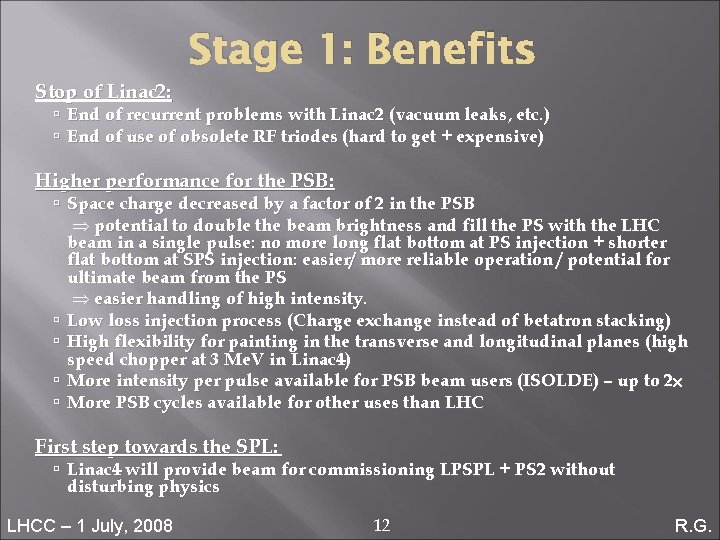
Stage 1: Benefits Stop of Linac 2: End of recurrent problems with Linac 2 (vacuum leaks, etc. ) End of use of obsolete RF triodes (hard to get + expensive) Higher performance for the PSB: Space charge decreased by a factor of 2 in the PSB Þ potential to double the beam brightness and fill the PS with the LHC beam in a single pulse: no more long flat bottom at PS injection + shorter flat bottom at SPS injection: easier/ more reliable operation / potential for ultimate beam from the PS Þ easier handling of high intensity. Low loss injection process (Charge exchange instead of betatron stacking) High flexibility for painting in the transverse and longitudinal planes (high speed chopper at 3 Me. V in Linac 4) More intensity per pulse available for PSB beam users (ISOLDE) – up to 2´ More PSB cycles available for other uses than LHC First step towards the SPL: Linac 4 will provide beam for commissioning LPSPL + PS 2 without disturbing physics LHCC – 1 July, 2008 12 R. G.
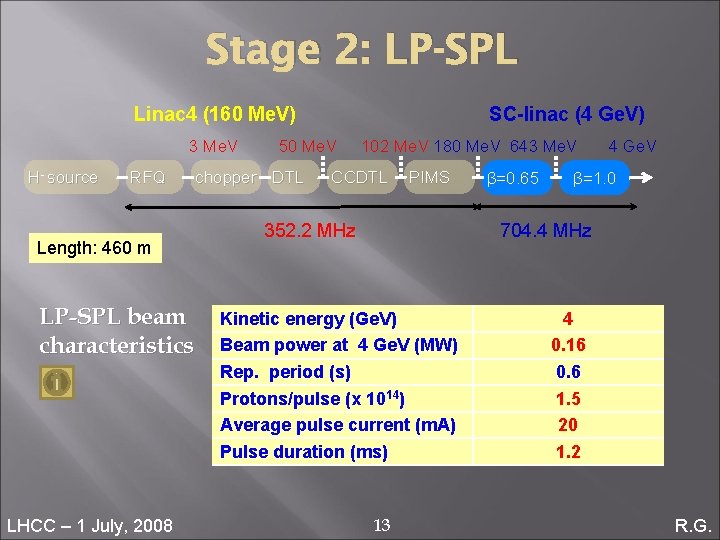
Stage 2: LP-SPL Linac 4 (160 Me. V) 3 Me. V H- source RFQ Length: 460 m LP-SPL beam characteristics LHCC – 1 July, 2008 SC-linac (4 Ge. V) 50 Me. V chopper DTL 102 Me. V 180 Me. V 643 Me. V CCDTL PIMS 352. 2 MHz β=0. 65 4 Ge. V β=1. 0 704. 4 MHz Kinetic energy (Ge. V) Beam power at 4 Ge. V (MW) Rep. period (s) Protons/pulse (x 1014) Average pulse current (m. A) Pulse duration (ms) 13 4 0. 16 0. 6 1. 5 20 1. 2 R. G.
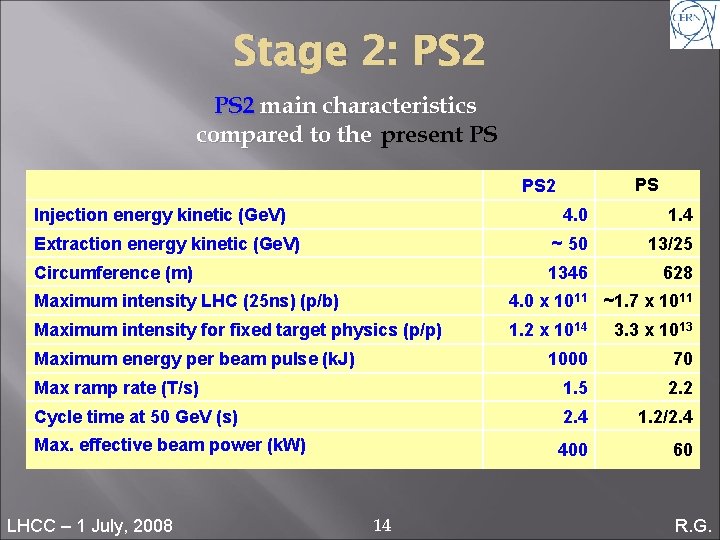
Stage 2: PS 2 main characteristics compared to the present PS PS PS 2 Injection energy kinetic (Ge. V) 4. 0 1. 4 Extraction energy kinetic (Ge. V) ~ 50 13/25 Circumference (m) 1346 628 Maximum intensity LHC (25 ns) (p/b) 4. 0 x 1011 ~1. 7 x 10¹¹ Maximum intensity for fixed target physics (p/p) 1. 2 x 10¹⁴ 3. 3 x 10¹³ 1000 70 Max ramp rate (T/s) 1. 5 2. 2 Cycle time at 50 Ge. V (s) 2. 4 1. 2/2. 4 Max. effective beam power (k. W) 400 60 Maximum energy per beam pulse (k. J) LHCC – 1 July, 2008 14 R. G.
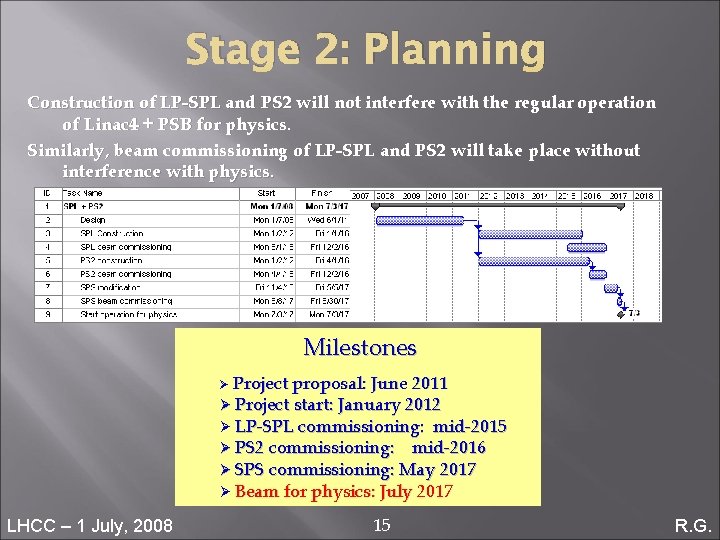
Stage 2: Planning Construction of LP-SPL and PS 2 will not interfere with the regular operation of Linac 4 + PSB for physics. Similarly, beam commissioning of LP-SPL and PS 2 will take place without interference with physics. Milestones Ø Project proposal: June 2011 Ø Project start: January 2012 Ø LP-SPL commissioning: mid-2015 Ø PS 2 commissioning: mid-2016 Ø SPS commissioning: May 2017 Ø Beam for physics: July 2017 LHCC – 1 July, 2008 15 R. G.
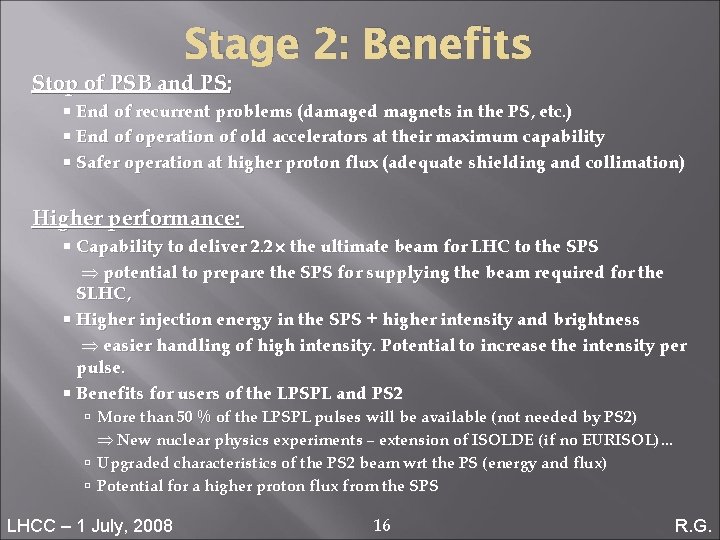
Stage 2: Benefits Stop of PSB and PS: End of recurrent problems (damaged magnets in the PS, etc. ) End of operation of old accelerators at their maximum capability Safer operation at higher proton flux (adequate shielding and collimation) Higher performance: Capability to deliver 2. 2 ´ the ultimate beam for LHC to the SPS Þ potential to prepare the SPS for supplying the beam required for the SLHC, Higher injection energy in the SPS + higher intensity and brightness Þ easier handling of high intensity. Potential to increase the intensity per pulse. Benefits for users of the LPSPL and PS 2 More than 50 % of the LPSPL pulses will be available (not needed by PS 2) Þ New nuclear physics experiments – extension of ISOLDE (if no EURISOL)… Upgraded characteristics of the PS 2 beam wrt the PS (energy and flux) Potential for a higher proton flux from the SPS LHCC – 1 July, 2008 16 R. G.
LHC
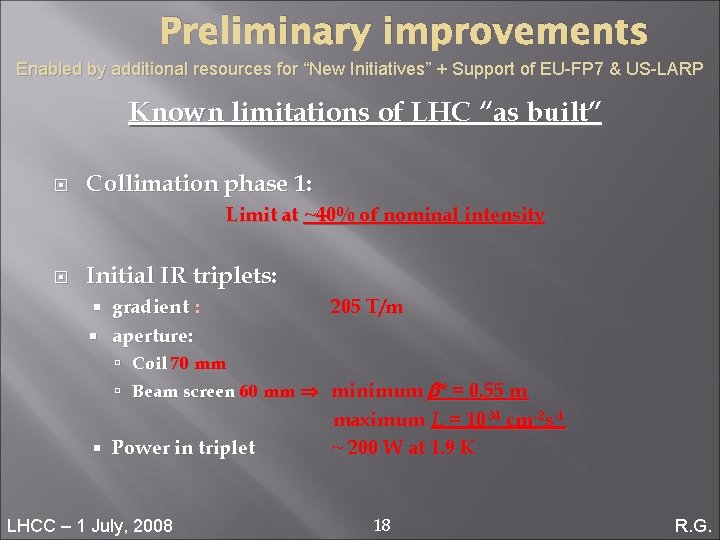
Preliminary improvements Enabled by additional resources for “New Initiatives” + Support of EU-FP 7 & US-LARP Known limitations of LHC “as built” Collimation phase 1: Limit at ~40% of nominal intensity Initial IR triplets: gradient : aperture: 205 T/m Coil 70 mm Beam screen 60 mm Þ minimum b* = 0. 55 m Power in triplet LHCC – 1 July, 2008 maximum L = 10 34 cm -2 s-1 ~ 200 W at 1. 9 K 18 R. G.
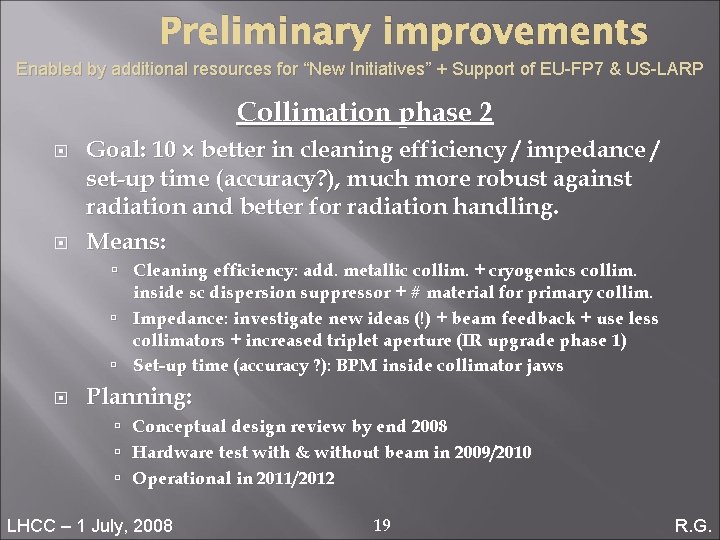
Preliminary improvements Enabled by additional resources for “New Initiatives” + Support of EU-FP 7 & US-LARP Collimation phase 2 Goal: 10 ´ better in cleaning efficiency / impedance / set-up time (accuracy? ), much more robust against radiation and better for radiation handling. Means: Cleaning efficiency: add. metallic collim. + cryogenics collim. inside sc dispersion suppressor + # material for primary collim. Impedance: investigate new ideas (!) + beam feedback + use less collimators + increased triplet aperture (IR upgrade phase 1) Set-up time (accuracy ? ): BPM inside collimator jaws Planning: Conceptual design review by end 2008 Hardware test with & without beam in 2009/2010 Operational in 2011/2012 LHCC – 1 July, 2008 19 R. G.
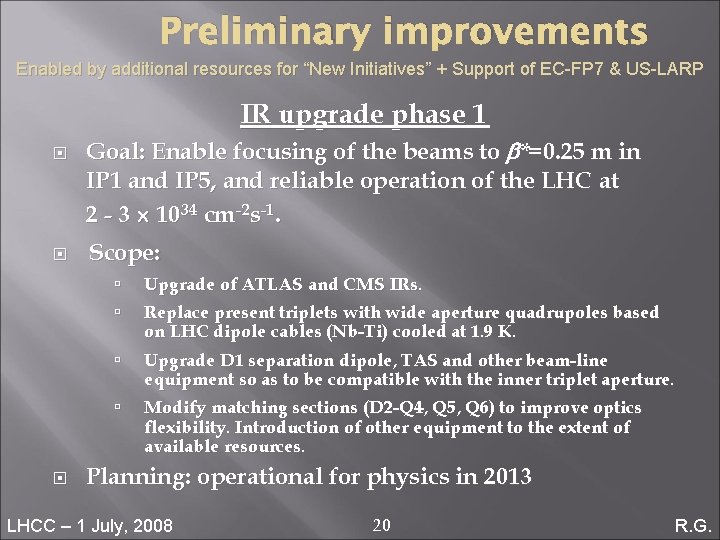
Preliminary improvements Enabled by additional resources for “New Initiatives” + Support of EC-FP 7 & US-LARP IR upgrade phase 1 Goal: Enable focusing of the beams to b*=0. 25 m in IP 1 and IP 5, and reliable operation of the LHC at 2 - 3 ´ 10 34 cm -2 s-1. Scope: Upgrade of ATLAS and CMS IRs. Replace present triplets with wide aperture quadrupoles based on LHC dipole cables (Nb-Ti) cooled at 1. 9 K. Upgrade D 1 separation dipole, TAS and other beam-line equipment so as to be compatible with the inner triplet aperture. Modify matching sections (D 2 -Q 4, Q 5, Q 6) to improve optics flexibility. Introduction of other equipment to the extent of available resources. Planning: operational for physics in 2013 LHCC – 1 July, 2008 20 R. G.
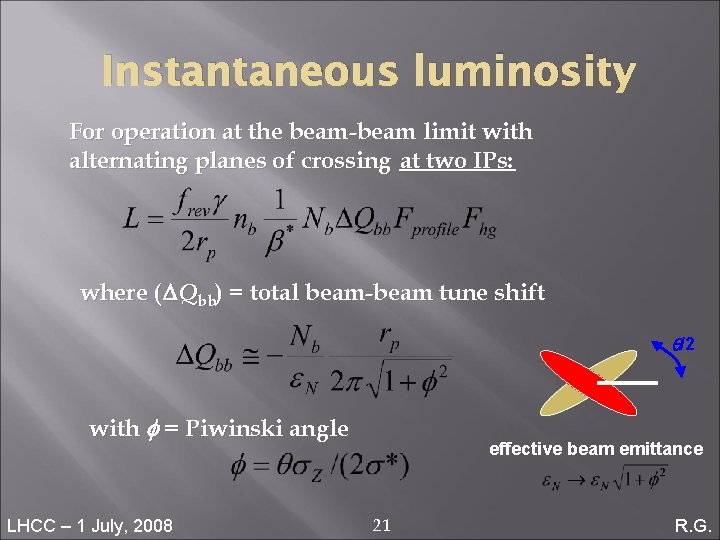
Instantaneous luminosity For operation at the beam-beam limit with alternating planes of crossing at two IPs: where ( DQbb) = total beam-beam tune shift q/2 with f = Piwinski angle LHCC – 1 July, 2008 effective beam emittance 21 R. G.
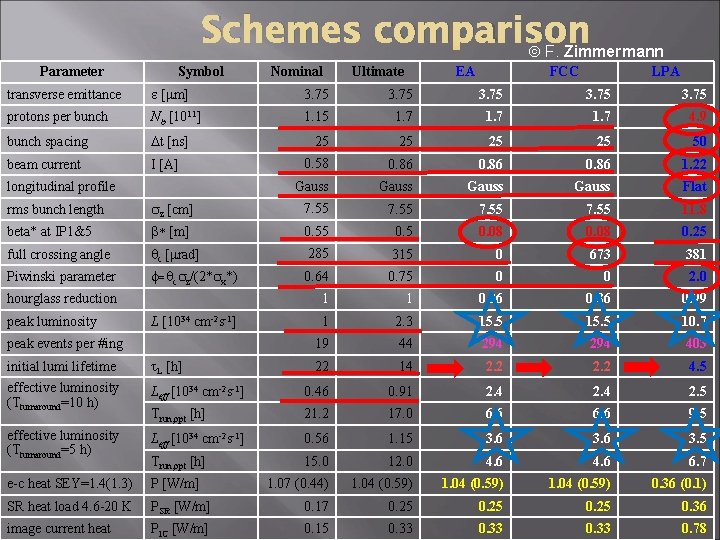
Schemes comparison ã F. Zimmermann Parameter Symbol Nominal Ultimate EA FCC LPA transverse emittance e [mm] 3. 75 protons per bunch Nb [1011] 1. 15 1. 7 4. 9 bunch spacing Dt [ns] 25 25 50 beam current I [A] 0. 58 0. 86 1. 22 Gauss Flat longitudinal profile rms bunch length sz [cm] 7. 55 11. 8 beta* at IP 1&5 b* [m] 0. 55 0. 08 0. 25 full crossing angle qc [mrad] 285 315 0 673 381 Piwinski parameter f=qcsz/(2*sx*) 0. 64 0. 75 0 0 2. 0 1 1 0. 86 0. 99 1 2. 3 15. 5 10. 7 19 44 294 403 22 14 2. 2 4. 5 hourglass reduction peak luminosity L [1034 cm-2 s-1] peak events per #ing initial lumi lifetime t. L [h] effective luminosity (Tturnaround=10 h) Leff [1034 cm-2 s-1] 0. 46 0. 91 2. 4 2. 5 Trun, opt [h] 21. 2 17. 0 6. 6 9. 5 effective luminosity (Tturnaround=5 h) Leff [1034 cm-2 s-1] 0. 56 1. 15 3. 6 3. 5 Trun, opt [h] 15. 0 12. 0 4. 6 6. 7 e-c heat SEY=1. 4(1. 3) P [W/m] 1. 07 (0. 44) 1. 04 (0. 59) 0. 36 (0. 1) SR heat load 4. 6 -20 K PSR [W/m] 0. 17 0. 25 0. 36 image current heat PIC [W/m] 0. 15 0. 33 0. 78
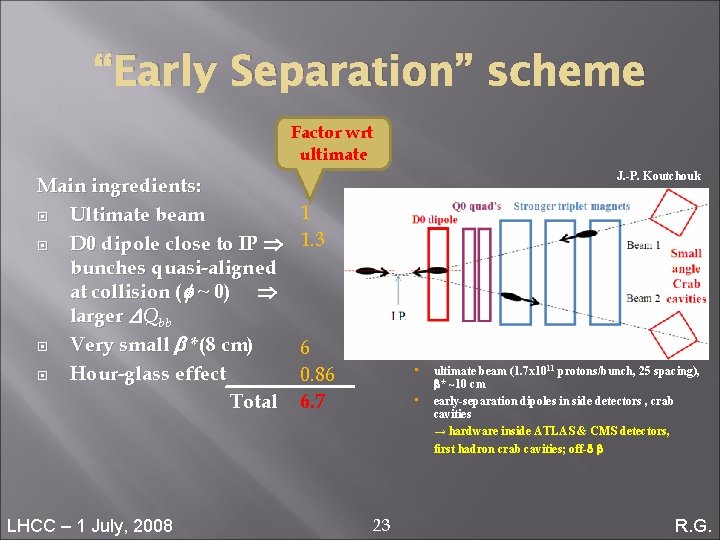
“Early Separation” scheme Factor wrt ultimate Main ingredients: Ultimate beam D 0 dipole close to IP Þ bunches quasi-aligned at collision (f ~ 0) Þ larger DQbb Very small b *(8 cm) Hour-glass effect Total LHCC – 1 July, 2008 J. -P. Koutchouk 1 1. 3 6 0. 86 6. 7 • ultimate beam (1. 7 x 10¹¹ protons/bunch, 25 spacing), • 23 * ~10 cm early-separation dipoles in side detectors , crab cavities → hardware inside ATLAS & CMS detectors, first hadron crab cavities; off-d R. G.
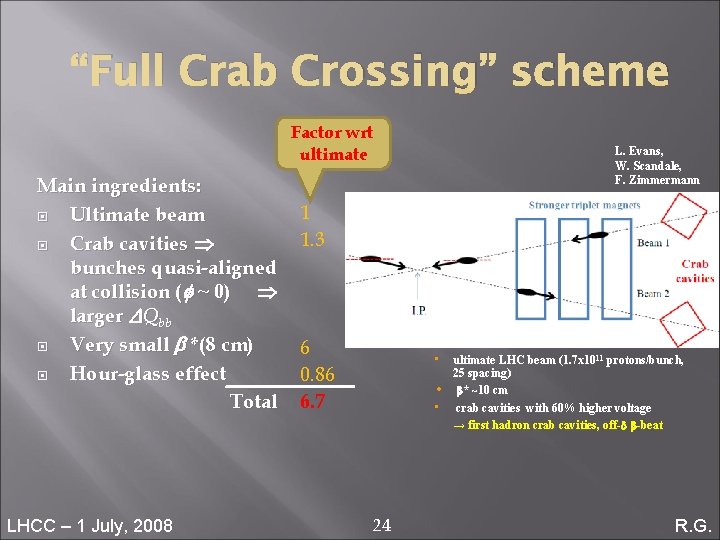
“Full Crab Crossing” scheme Factor wrt ultimate Main ingredients: Ultimate beam Crab cavities Þ bunches quasi-aligned at collision (f ~ 0) Þ larger DQbb Very small b *(8 cm) Hour-glass effect Total LHCC – 1 July, 2008 L. Evans, W. Scandale, F. Zimmermann 1 1. 3 6 0. 86 6. 7 • ultimate LHC beam (1. 7 x 10¹¹ protons/bunch, 25 spacing) • * ~10 cm • crab cavities with 60% higher voltage → first hadron crab cavities, off-d -beat 24 R. G.
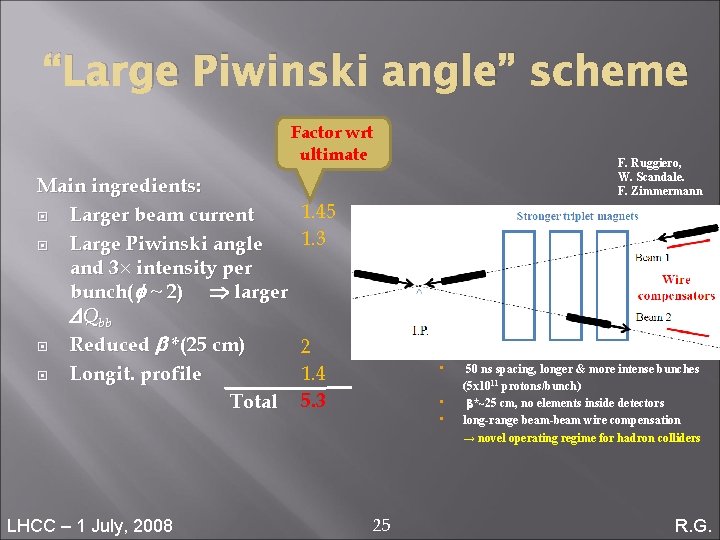
“Large Piwinski angle” scheme Factor wrt ultimate Main ingredients: Larger beam current Large Piwinski angle and 3´ 3 intensity per bunch(f ~ 2) Þ larger DQbb Reduced b *(25 cm) Longit. profile Total LHCC – 1 July, 2008 F. Ruggiero, W. Scandale. F. Zimmermann 1. 45 1. 3 2 1. 4 5. 3 • • • 25 50 ns spacing, longer & more intense bunches (5 x 10¹¹ protons/bunch) *~25 cm, no elements inside detectors long-range beam-beam wire compensation → novel operating regime for hadron colliders R. G.
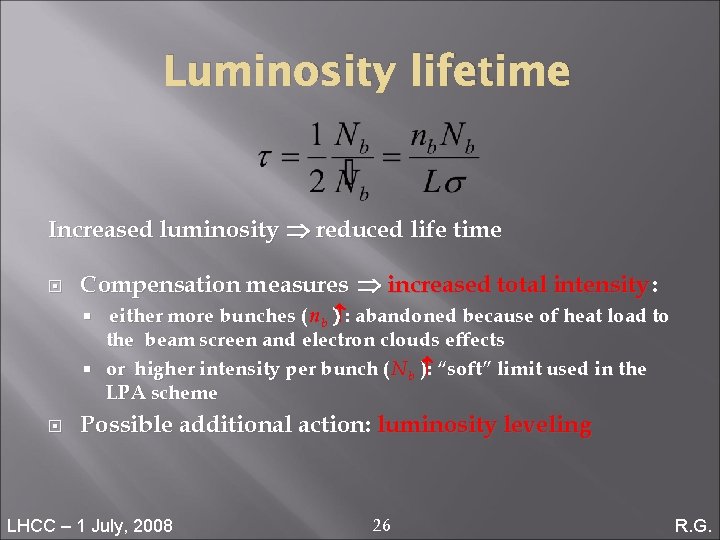
Luminosity lifetime Increased luminosity Þ reduced life time Compensation measures Þ increased total intensity : either more bunches ( n b ) : abandoned because of heat load to the beam screen and electron clouds effects or higher intensity per bunch ( N b ): “soft” limit used in the LPA scheme Po ssible additional action: luminosity leveling LHCC – 1 July, 2008 26 R. G.
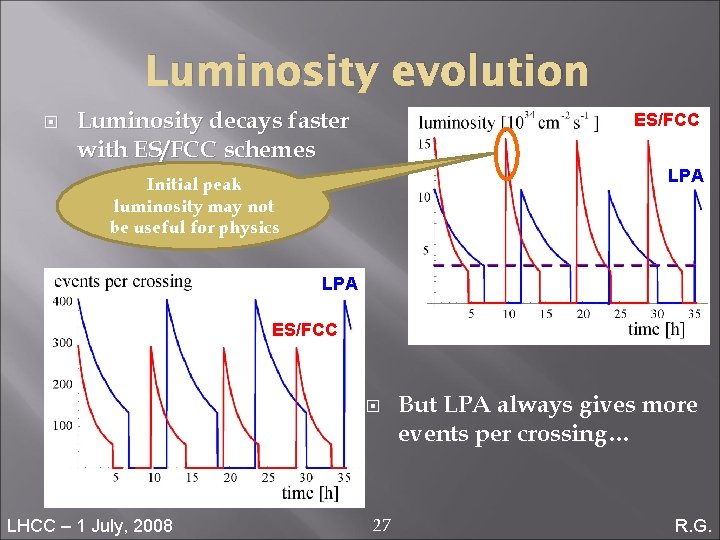
Luminosity evolution Luminosity decays faster with ES/FCC schemes ES/FCC LPA Initial peak luminosity may not be useful for physics LPA ES/FCC LHCC – 1 July, 2008 27 But LPA always gives more events per crossing… R. G.
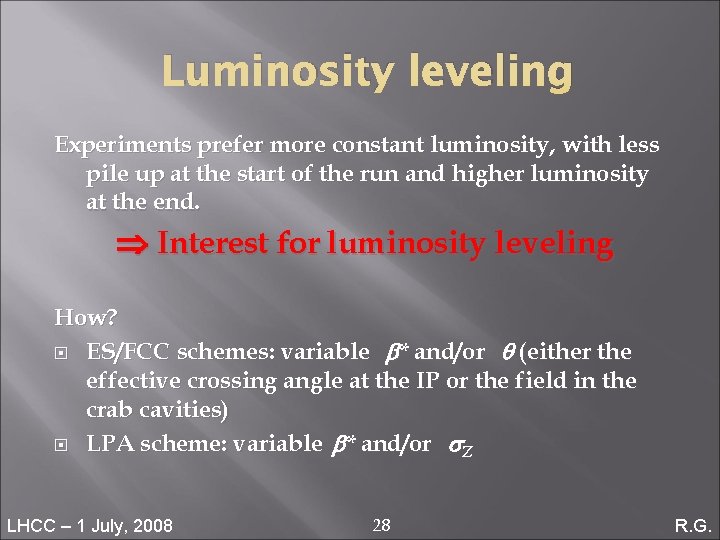
Luminosity leveling Experiments prefer more constant luminosity, with less pile up at the start of the run and higher luminosity at the end. Þ Interest for luminosity leveling How? ES/FCC schemes: variable b* and/or q (either the effective crossing angle at the IP or the field in the crab cavities) LPA scheme: variable b* and/or s. Z LHCC – 1 July, 2008 28 R. G.
PRELIMINARY EXPECTATIONS
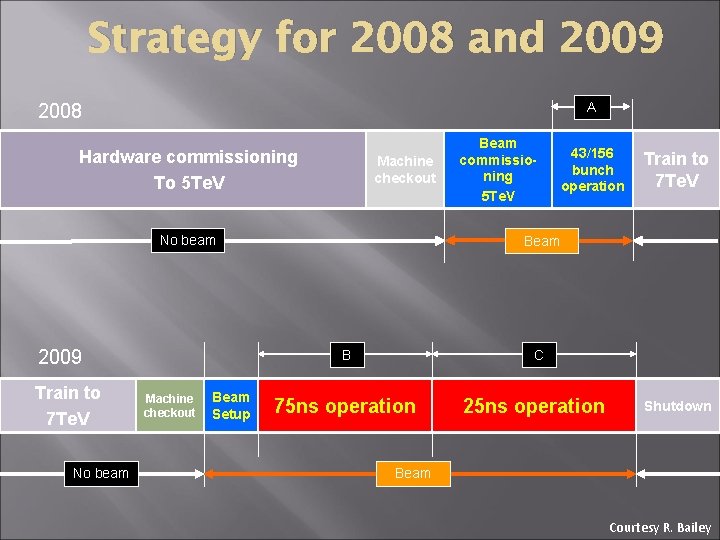
Strategy for 2008 and 2009 2008 A Hardware commissioning To 5 Te. V Machine checkout No beam 2009 Train to 7 Te. V No beam Beam Setup 43/156 bunch operation Train to 7 Te. V Beam B Machine checkout Beam commissioning 5 Te. V C 75 ns operation 25 ns operation Shutdown Beam Courtesy R. Bailey
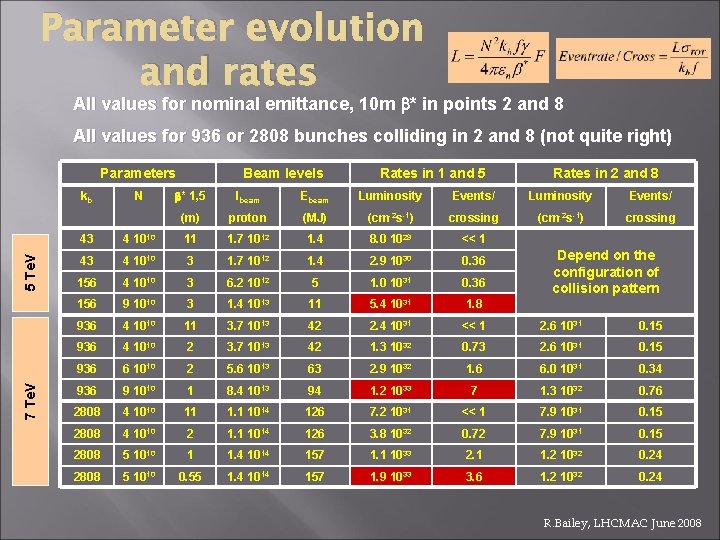
Parameter evolution and rates All values for nominal emittance, 10 m * in points 2 and 8 All values for 936 or 2808 bunches colliding in 2 and 8 (not quite right) Parameters 7 Te. V 5 Te. V kb N Beam levels Rates in 1 and 5 Rates in 2 and 8 * 1, 5 Ibeam Ebeam Luminosity Events/ (m) proton (MJ) (cm-2 s-1) crossing 43 4 1010 11 1. 7 1012 1. 4 8. 0 1029 << 1 43 4 1010 3 1. 7 1012 1. 4 2. 9 1030 0. 36 156 4 1010 3 6. 2 1012 5 1. 0 1031 0. 36 156 9 1010 3 1. 4 1013 11 5. 4 1031 1. 8 936 4 1010 11 3. 7 1013 42 2. 4 1031 << 1 2. 6 1031 0. 15 936 4 1010 2 3. 7 1013 42 1. 3 1032 0. 73 2. 6 1031 0. 15 936 6 1010 2 5. 6 1013 63 2. 9 1032 1. 6 6. 0 1031 0. 34 936 9 1010 1 8. 4 1013 94 1. 2 1033 7 1. 3 1032 0. 76 2808 4 1010 11 1. 1 1014 126 7. 2 1031 << 1 7. 9 1031 0. 15 2808 4 1010 2 1. 1 1014 126 3. 8 1032 0. 72 7. 9 1031 0. 15 2808 5 1010 1 1. 4 1014 157 1. 1 1033 2. 1 1. 2 1032 0. 24 2808 5 1010 0. 55 1. 4 1014 157 1. 9 1033 3. 6 1. 2 1032 0. 24 Depend on the configuration of collision pattern R. Bailey, LHCMAC June 2008
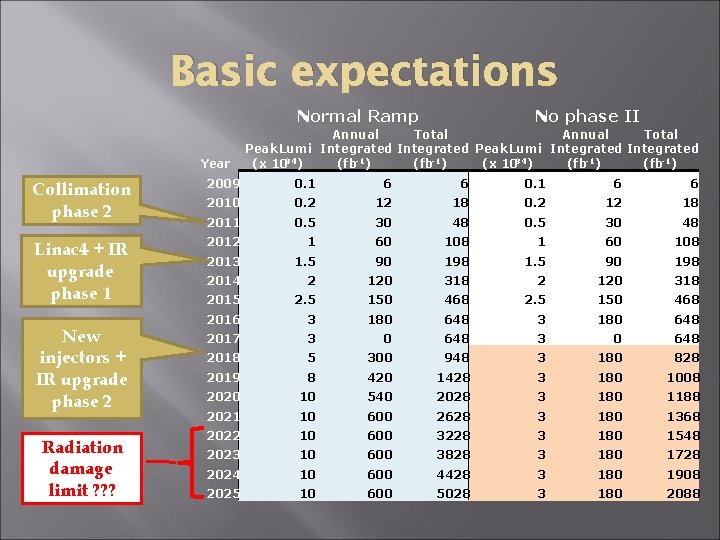
Basic expectations Normal Ramp Year No phase II Annual Total Peak Lumi Integrated (x 1034) (fb-1) Collimation phase 2 2009 0. 1 6 6 2010 0. 2 12 18 2011 0. 5 30 48 Linac 4 + IR upgrade phase 1 2012 1 60 108 2013 1. 5 90 198 2014 2 120 318 2015 2. 5 150 468 2016 3 180 648 2017 3 0 648 2018 5 300 948 3 180 828 2019 8 420 1428 3 180 1008 2020 10 540 2028 3 180 1188 2021 10 600 2628 3 180 1368 2022 10 600 3228 3 180 1548 2023 10 600 3828 3 180 1728 2024 10 600 4428 3 180 1908 2025 10 600 5028 3 180 2088 New injectors + IR upgrade phase 2 Radiation damage limit ? ? ?
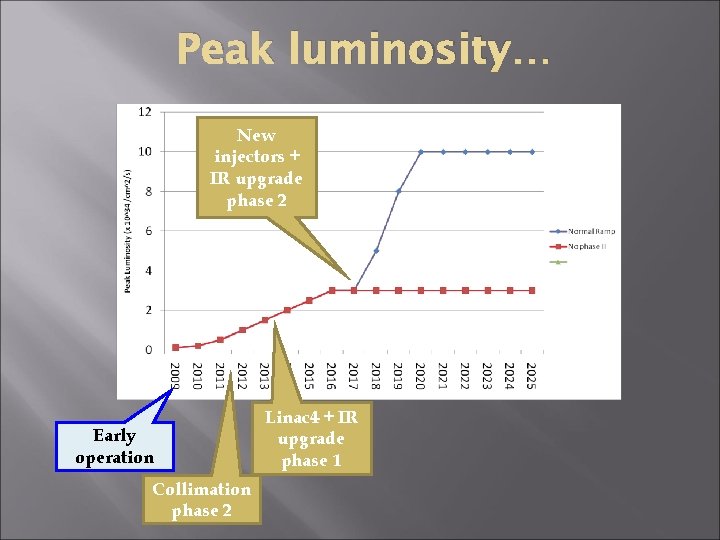
Peak luminosity… New injectors + IR upgrade phase 2 Early operation Collimation phase 2 Linac 4 + IR upgrade phase 1
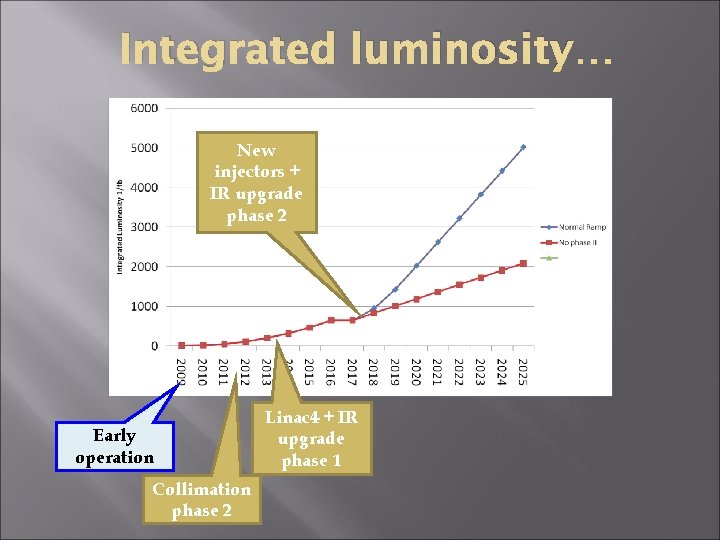
Integrated luminosity… New injectors + IR upgrade phase 2 Early operation Collimation phase 2 Linac 4 + IR upgrade phase 1
REFERENCES - Linac 4 -
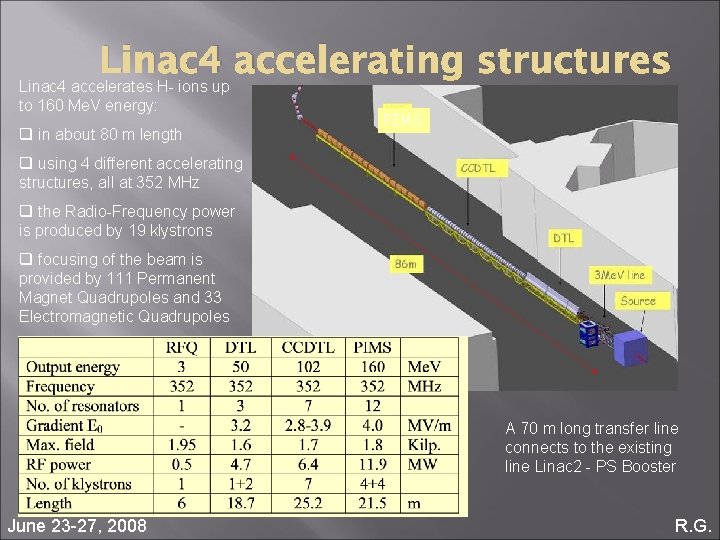
Linac 4 accelerating structures Linac 4 accelerates H- ions up to 160 Me. V energy: q in about 80 m length PIMS q using 4 different accelerating structures, all at 352 MHz q the Radio-Frequency power is produced by 19 klystrons q focusing of the beam is provided by 111 Permanent Magnet Quadrupoles and 33 Electromagnetic Quadrupoles A 70 m long transfer line connects to the existing line Linac 2 - PS Booster June 23 -27, 2008 R. G.
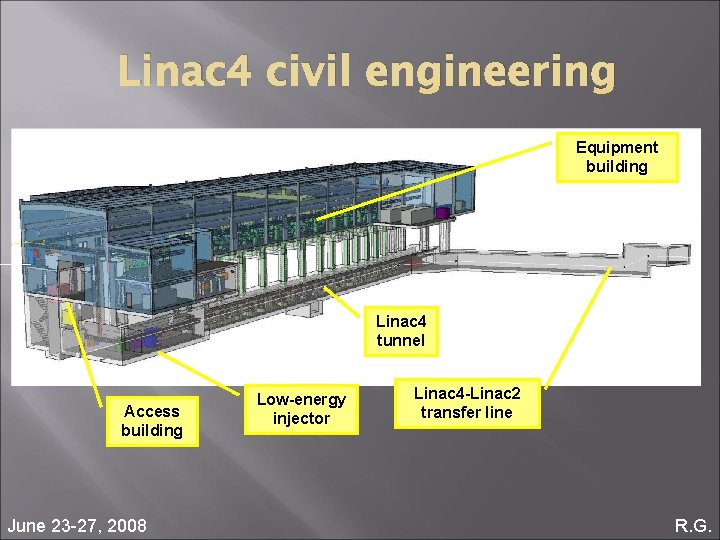
Linac 4 civil engineering Equipment building ground level Linac 4 tunnel Access building June 23 -27, 2008 Low-energy injector Linac 4 -Linac 2 transfer line R. G.
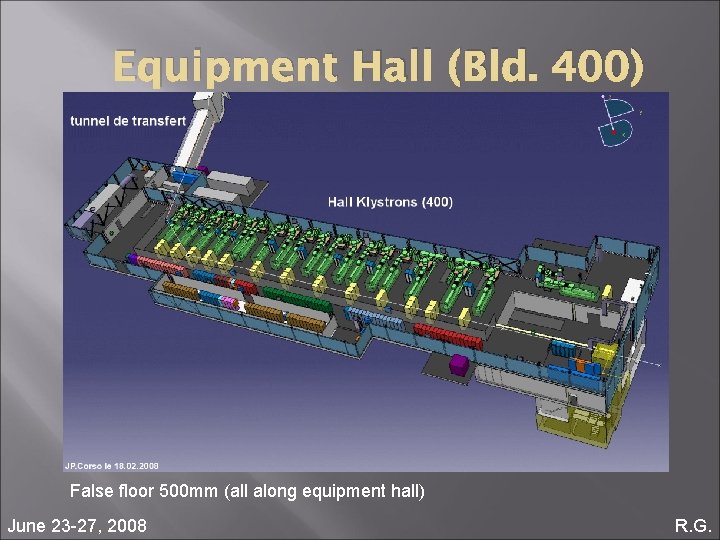
Equipment Hall (Bld. 400) False floor 500 mm (all along equipment hall) June 23 -27, 2008 R. G.
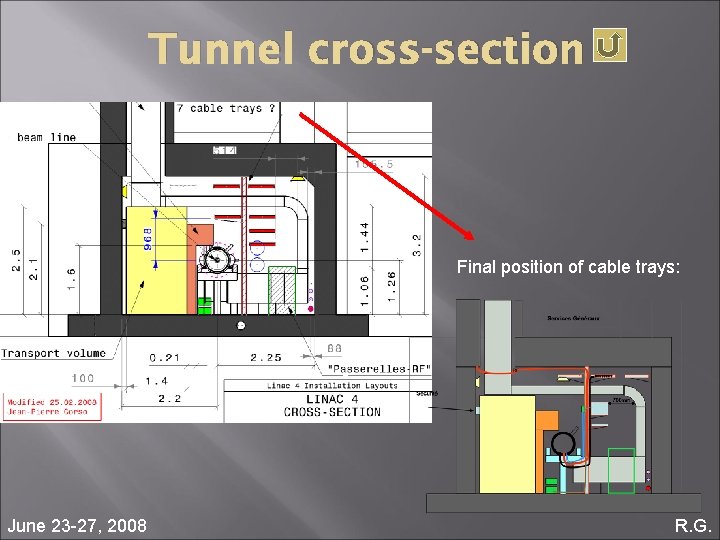
Tunnel cross-section Final position of cable trays: June 23 -27, 2008 R. G.
REFERENCES - SPL -
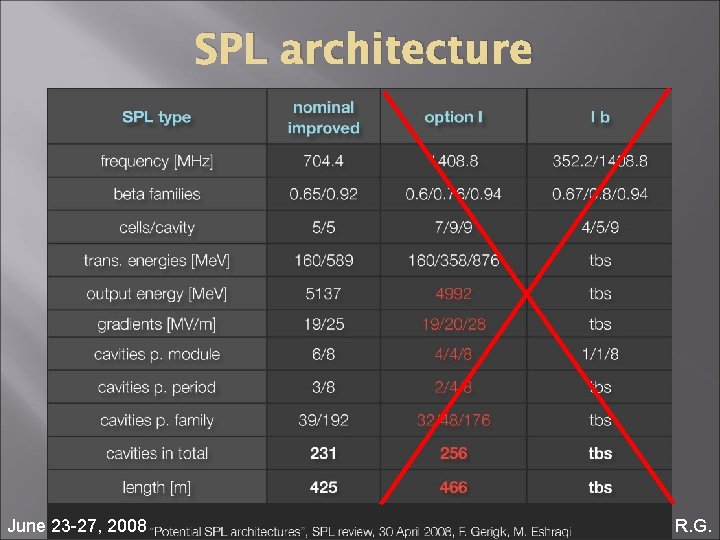
SPL architecture June 23 -27, 2008 R. G.
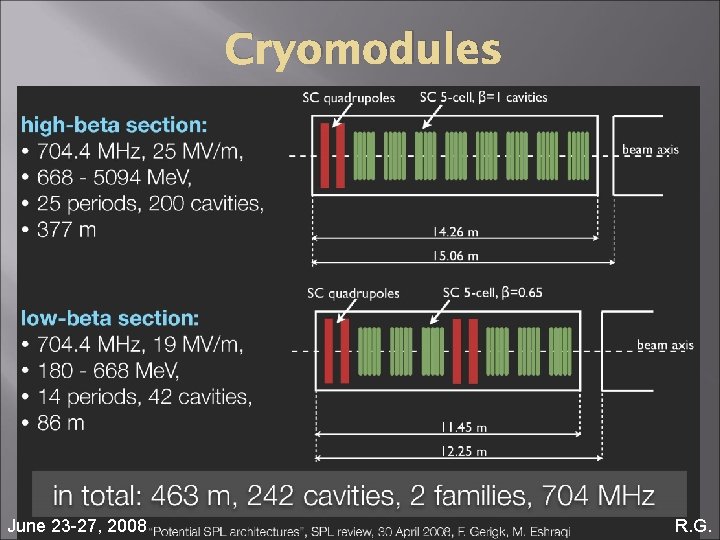
Cryomodules June 23 -27, 2008 R. G.
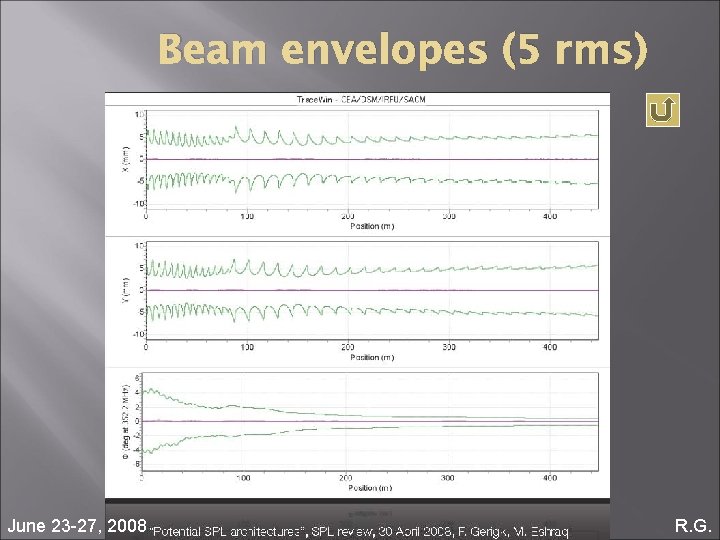
Beam envelopes (5 rms) June 23 -27, 2008 R. G.