
Updates Bishop Peggy A Johnson The United Methodist
Updates Bishop Peggy A. Johnson
“The United Methodist Church does not condone the practice of homosexuality and considers this practice incompatible with Christian teaching. ”
“The practice of homosexuality is incompatible with Christian teaching. Therefore self-avowed practicing homosexuals are not to be certified as candidates, ordained as ministers or appointed to serve in the United Methodist Church. ”
“We affirm the sanctity of the marriage covenant that is expressed in love, mutual support, personal commitment, and shared fidelity between a man and a woman. We support laws in civil society that define marriage as the union of one man and one woman. ”
“Ceremonies that celebrate homosexual unions shall not be conducted by our ministers and shall not be conducted in our churches. ”
“A clergy member…may be tried when charged with one or more of the following offenses (a) immorality including but not limited to, not being celibate in singleness or not faithful in a heterosexual marriage, (b) practices declared by the United Methodist church to be incompatible with Christian teachings, including but not limited to: being a selfavowed practicing homosexual or conducting ceremonies which celebrate homosexual unions; or performing same-sex wedding ceremonies…”
� These paragraphs have been debated and voted again and again � At every General Conference since these paragraphs have been challenged but in general they have stayed the same with the exception of some additions about “God’s grace is available for all” “we implore families and churches not to reject or condemn lesbians and gay members and friends. ”
� All legislation regarding homosexuality was suspended � A commission of 32 people was created to study the issue in depth and bring to the bishops a plan � The commission consists of a wide variety of diversity: ethnically, gender, orientation, theological, lay and clergy � The creation of the commission passed by 23 votes � The 2012 Discipline stays in place while the commission does its work
To design a way for being church that maximizes the presence of the UM witness in as many places in the world as possible, that allows for as much contextual differentiation as possible and balances an approach to different theological understanding of human sexuality with a desire for as much unity as possible.
…This unity will not be grounded in our conceptions of human sexuality but in our affirmation of the Triune God who calls us to be a gracefilled and holy people in the Wesleyan tradition”
� Undergirded with an intentional and global prayer effort � Study of the scriptures � Presentations by theologians, historians, financial leaders, other denominations � Hearing from agencies, boards, churches � Much conversation and sharing of hearts and perspectives
� The Commission has met 7 times and has scheduled 2 more meetings. � The Commission lives together with a “Covenant of Accountability” of respect, prayer, study, hospitality, and confidentiality � The Commission has identified behaviors that need to be avoided (harmful speech, interrupting others, blaming, distracting, politicizing) � There is a process for sharing news, information and updates � Matthew 18 is the model for how to work with each other as differences are processed
� Affirms the current Book of Discipline language about homosexuality, ordination and same gender marriages/unions � Places a high value on accountability THIS MODEL WAS ELIMINATED BECAUSE IT IS EMBEDDED IN THE OTHER TWO MODELS AND IS THE STATUS QUO.
� Removes all of the restrictive language in the Book of Discipline about homosexuality, ordination and same gender marriages/unions � Has a high value on contextualization � Protects the rights of those whose conscience will not allow them to perform same gender weddings or ordained LGBTQ persons
� Has one “core” that includes shared doctrine and services � Creates 3 “branches” that have clearly defined values � Jurisdictions will be eliminated and it will be just those three groups world-wide � These values include: accountability, contextualization and justice � 27 changes to the constitution would need to be made � Each conference would vote where they wanted to affiliate
� Churches that did not agree with the model that their conference votes for can join one out of the area � Pensions would serve all the areas and some agencies would as well but that is still being discussed
�Each represent values that are within the Council of Bishops and the UMC �Each includes a gracious way for those who feel called to exit from the denomination �Each includes Biblical theology and mission
�We have not voted on any of these models �We have not eliminated any model �We have not ruled out other additional models that could come from further conversation �We are not planning on schism and believe that unity is our best witness
� Conferences are encouraged to study the “Anatomy of Peace” (by the Arbinger Institute) and have conversations locally � The bishops met Feb. 25 -28, 2018 in Dallas and discussed further but made no decisions � The bishops will meet again April 29 -May 4, 2018 in Chicago to finalize whatever they will be proposing. � Special called session of General Conference to vote on this one issue: February 23 -26, 2019 in St. Louis, MO
� Delegations will be having discussions in the conferences � Conversation will happen at annual conference � Bishop Johnson will come to every district and have a town hall meeting to discuss this in the fall.
� There will be 864 delegates – (½ lay and ½ clergy) from the entire denomination � 42% of the voting delegates are from countries other than the US � 30% of the delegates are from the continent of Africa � The majority of the US delegates are from the southeast and south central jurisdictions � Eastern PA has 8 delegates, Pen Del has 4 delegates
� The final proposal from the bishops may not be totally in print until July 8, 2018 (due to translation time) but the general idea will be out before then. � The bishops will only be putting up one proposal but it may not be the two models we have now � The bishops have done much prayer, theological reflection and Biblical study � The bishops stressed public mission, contextuality, and unity in all their discussions
� The Judicial Council will review whatever the bishops propose � Pensions and all the program agencies have weighed in on the impact of the models � Institutions and partner organizations have been consulted � Care has been given to the Central (global) Conferences and their concerns and opinions
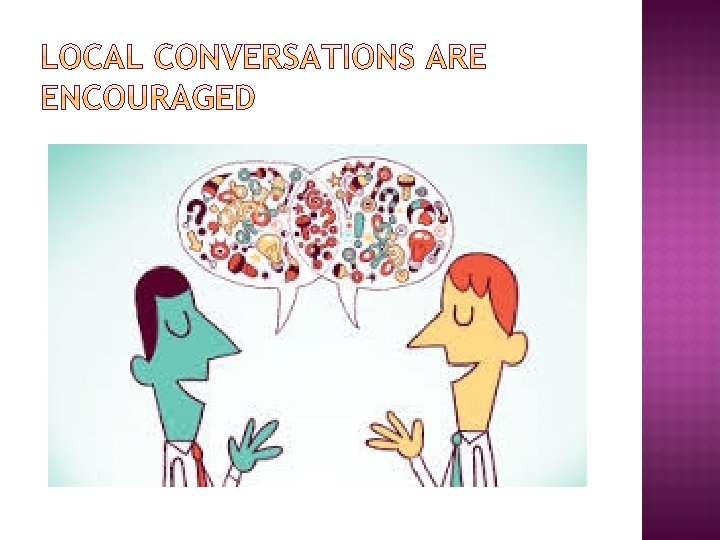
�What are the most important values and convictions in seeking a way forward? �What resources help us to tell the narratives of unity in seeking a way forward? �What are the core convictions of our faith as United Methodists?
- Slides: 29