
Update on diabetes New evidence and options IAFP
Update on diabetes New evidence and options IAFP Schweitzer Ski CME Scott Dunn MD Family Health Center, Sandpoint, Idaho February 9, 2019
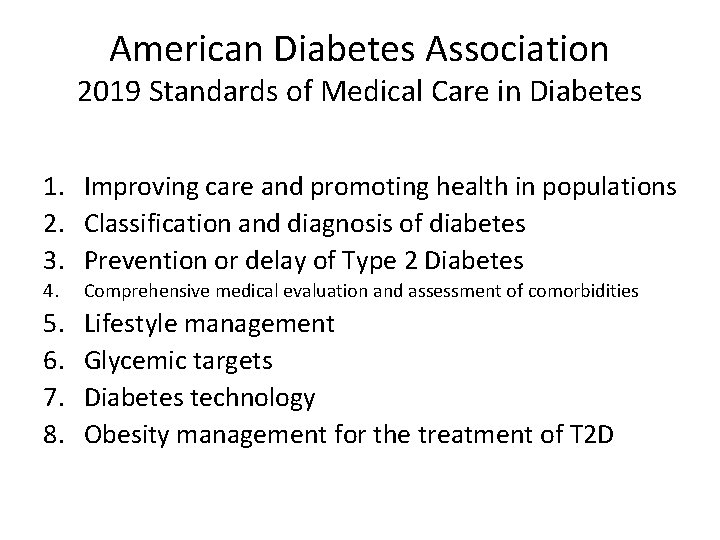
American Diabetes Association 2019 Standards of Medical Care in Diabetes 1. Improving care and promoting health in populations 2. Classification and diagnosis of diabetes 3. Prevention or delay of Type 2 Diabetes 4. Comprehensive medical evaluation and assessment of comorbidities 5. 6. 7. 8. Lifestyle management Glycemic targets Diabetes technology Obesity management for the treatment of T 2 D
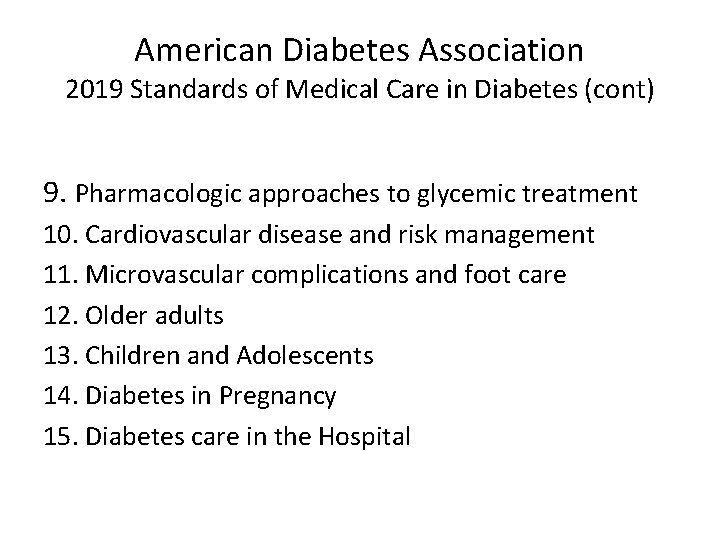
American Diabetes Association 2019 Standards of Medical Care in Diabetes (cont) 9. Pharmacologic approaches to glycemic treatment 10. Cardiovascular disease and risk management 11. Microvascular complications and foot care 12. Older adults 13. Children and Adolescents 14. Diabetes in Pregnancy 15. Diabetes care in the Hospital
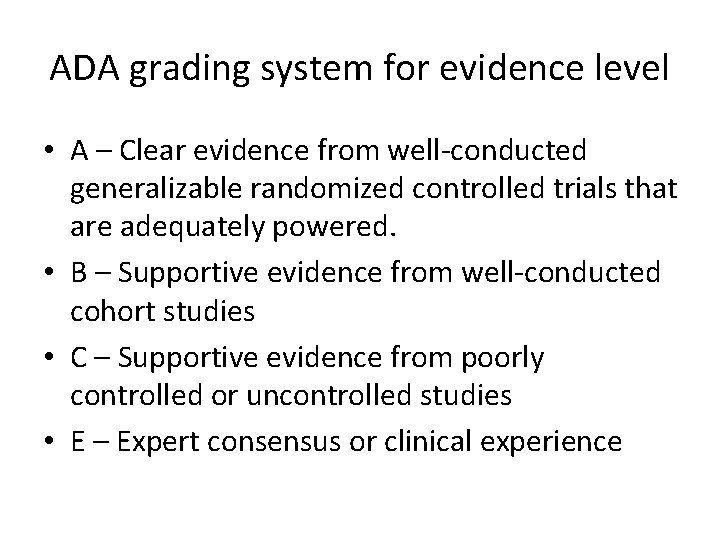
ADA grading system for evidence level • A – Clear evidence from well-conducted generalizable randomized controlled trials that are adequately powered. • B – Supportive evidence from well-conducted cohort studies • C – Supportive evidence from poorly controlled or uncontrolled studies • E – Expert consensus or clinical experience
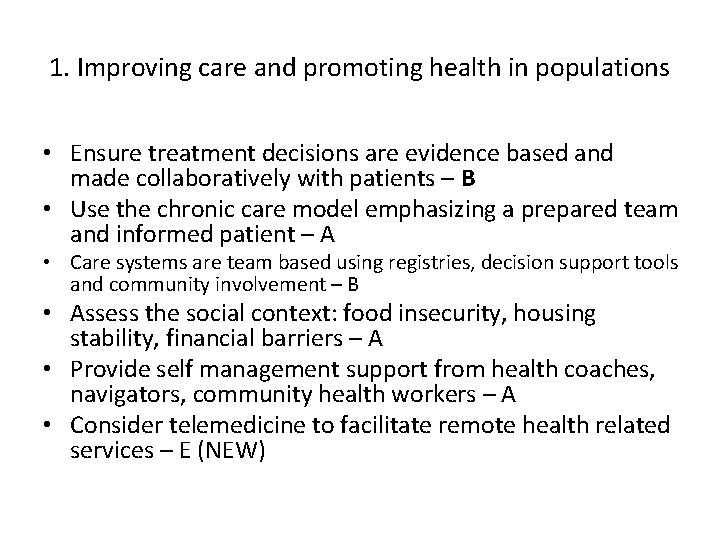
1. Improving care and promoting health in populations • Ensure treatment decisions are evidence based and made collaboratively with patients – B • Use the chronic care model emphasizing a prepared team and informed patient – A • Care systems are team based using registries, decision support tools and community involvement – B • Assess the social context: food insecurity, housing stability, financial barriers – A • Provide self management support from health coaches, navigators, community health workers – A • Consider telemedicine to facilitate remote health related services – E (NEW)
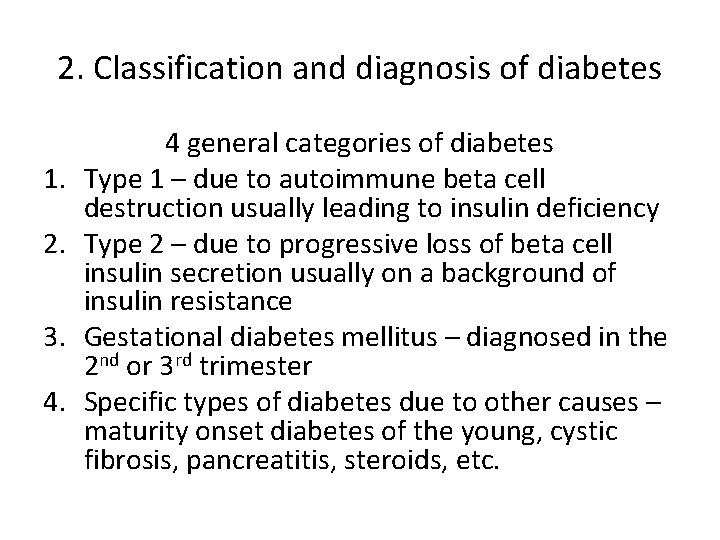
2. Classification and diagnosis of diabetes 1. 2. 3. 4. 4 general categories of diabetes Type 1 – due to autoimmune beta cell destruction usually leading to insulin deficiency Type 2 – due to progressive loss of beta cell insulin secretion usually on a background of insulin resistance Gestational diabetes mellitus – diagnosed in the 2 nd or 3 rd trimester Specific types of diabetes due to other causes – maturity onset diabetes of the young, cystic fibrosis, pancreatitis, steroids, etc.

Diagnostic testing Routine screening for prediabetes and T 2 D • All people starting at age 45 - B • Adults any age BMI >25 (Asian >23) + 1 risk factor – B – 1 st degree relative with diabetes – Ethnicity (African, Native or Asian American, Latino, Pacific Islander) – – – CVD (Cardiovascular disease) HTN (Hypertension) HDL <35 or Triglyceride >250 Polycystic ovarian syndrome Physically inactive Signs of insulin resistance i. e. Acanthosis nigrans • Women with hx of GDM (Gestational diabetes) - B • If initial screen is normal, then repeat every 3 years – C • Children age >10 with BMI >85 th %tile + 1 risk factor - A
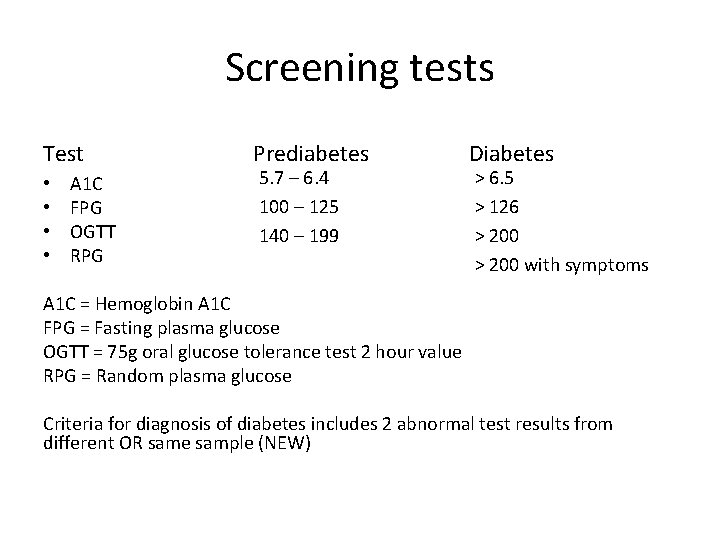
Screening tests Test • • A 1 C FPG OGTT RPG Prediabetes 5. 7 – 6. 4 100 – 125 140 – 199 Diabetes > 6. 5 > 126 > 200 with symptoms A 1 C = Hemoglobin A 1 C FPG = Fasting plasma glucose OGTT = 75 g oral glucose tolerance test 2 hour value RPG = Random plasma glucose Criteria for diagnosis of diabetes includes 2 abnormal test results from different OR same sample (NEW)
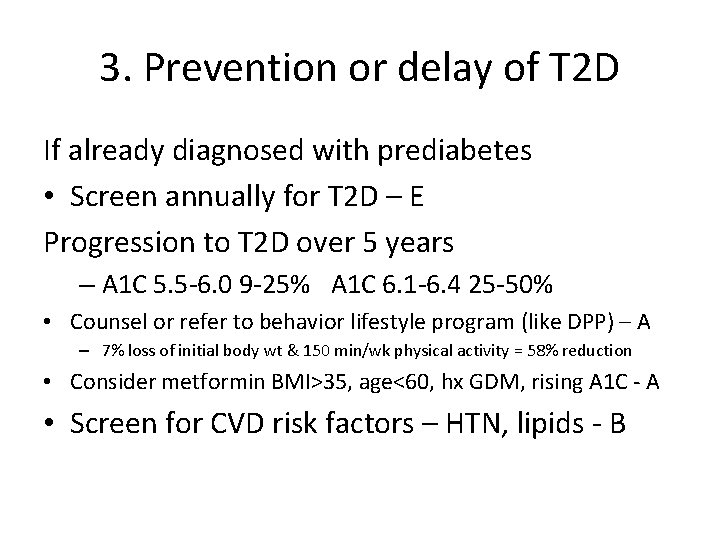
3. Prevention or delay of T 2 D If already diagnosed with prediabetes • Screen annually for T 2 D – E Progression to T 2 D over 5 years – A 1 C 5. 5 -6. 0 9 -25% A 1 C 6. 1 -6. 4 25 -50% • Counsel or refer to behavior lifestyle program (like DPP) – A – 7% loss of initial body wt & 150 min/wk physical activity = 58% reduction • Consider metformin BMI>35, age<60, hx GDM, rising A 1 C - A • Screen for CVD risk factors – HTN, lipids - B
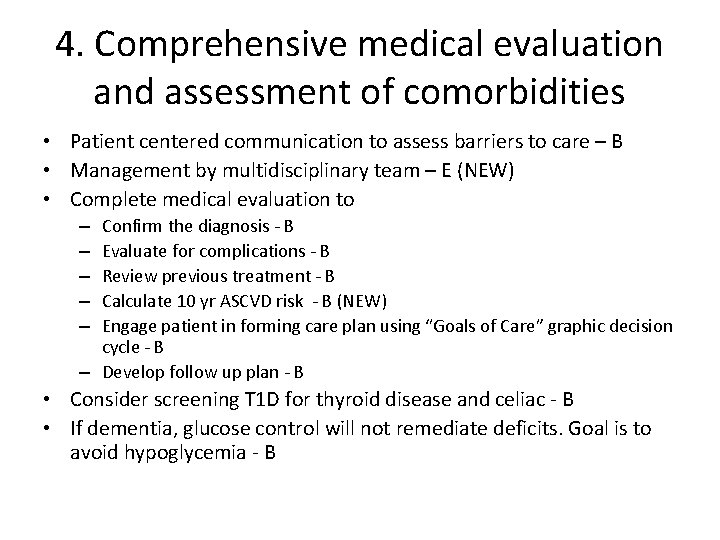
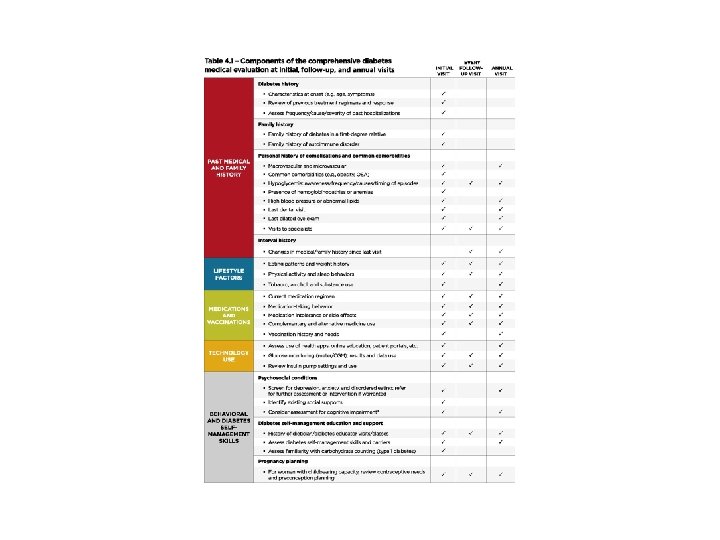
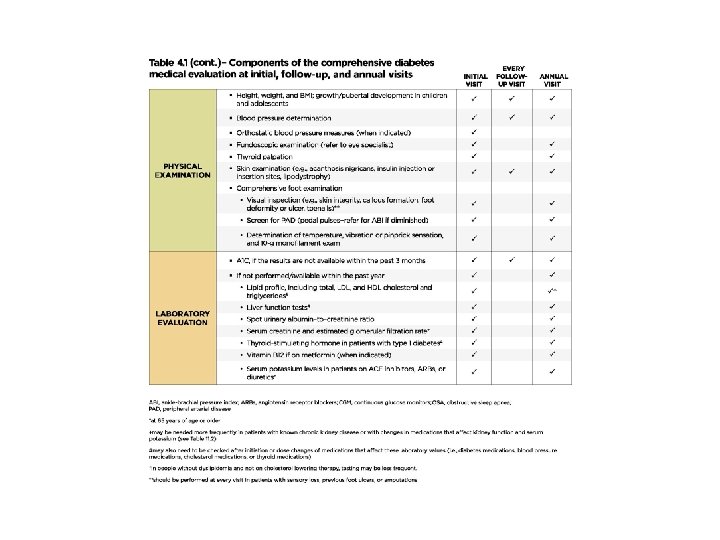
4. Comprehensive medical evaluation and assessment of comorbidities • Patient centered communication to assess barriers to care – B • Management by multidisciplinary team – E (NEW) • Complete medical evaluation to Confirm the diagnosis - B Evaluate for complications - B Review previous treatment - B Calculate 10 yr ASCVD risk - B (NEW) Engage patient in forming care plan using “Goals of Care” graphic decision cycle - B – Develop follow up plan - B – – – • Consider screening T 1 D for thyroid disease and celiac - B • If dementia, glucose control will not remediate deficits. Goal is to avoid hypoglycemia - B
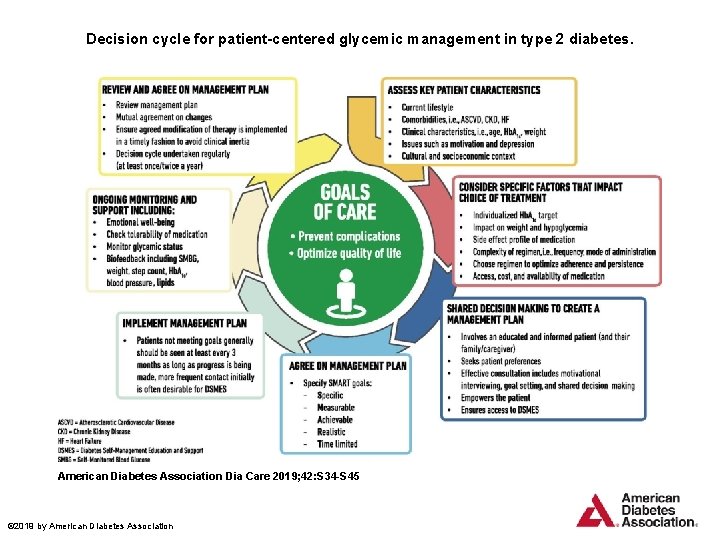
Decision cycle for patient-centered glycemic management in type 2 diabetes. American Diabetes Association Dia Care 2019; 42: S 34 -S 45 © 2019 by American Diabetes Association
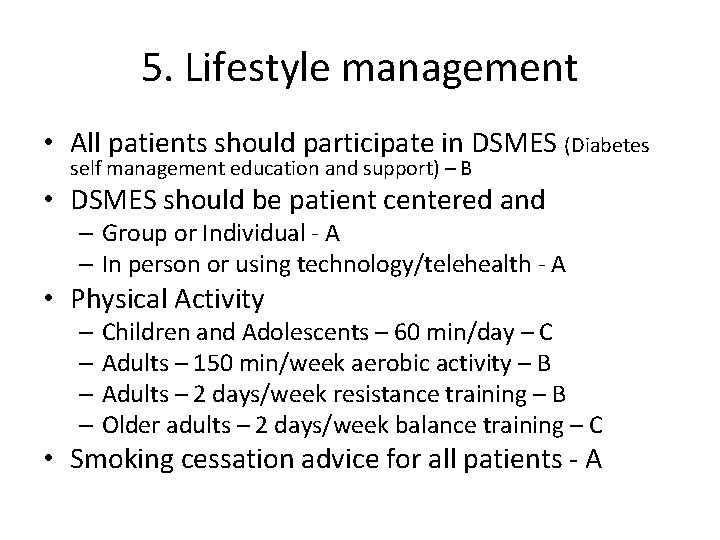
5. Lifestyle management • All patients should participate in DSMES (Diabetes self management education and support) – B • DSMES should be patient centered and – Group or Individual - A – In person or using technology/telehealth - A • Physical Activity – Children and Adolescents – 60 min/day – C – Adults – 150 min/week aerobic activity – B – Adults – 2 days/week resistance training – B – Older adults – 2 days/week balance training – C • Smoking cessation advice for all patients - A
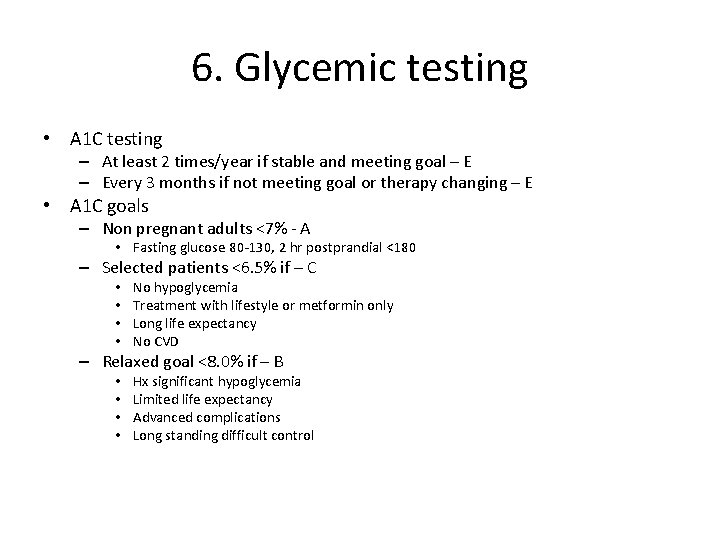
6. Glycemic testing • A 1 C testing – At least 2 times/year if stable and meeting goal – Every 3 months if not meeting goal or therapy changing – E • A 1 C goals – Non pregnant adults <7% - A • Fasting glucose 80 -130, 2 hr postprandial <180 – Selected patients <6. 5% if – C • • No hypoglycemia Treatment with lifestyle or metformin only Long life expectancy No CVD – Relaxed goal <8. 0% if – B • • Hx significant hypoglycemia Limited life expectancy Advanced complications Long standing difficult control
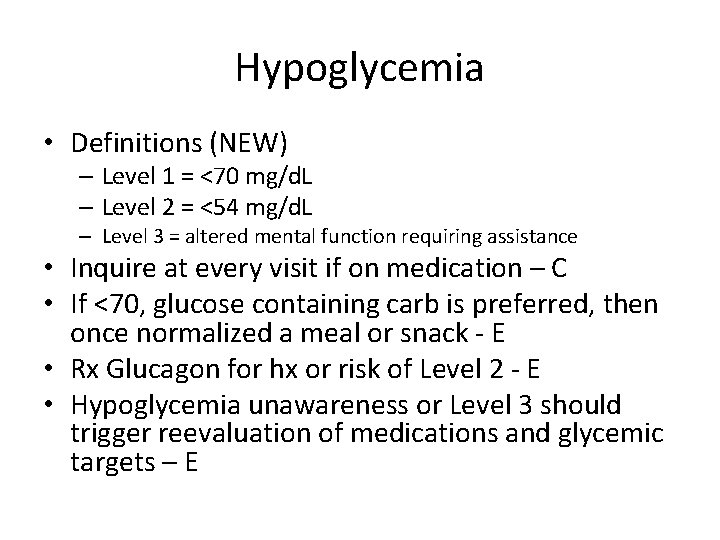
Hypoglycemia • Definitions (NEW) – Level 1 = <70 mg/d. L – Level 2 = <54 mg/d. L – Level 3 = altered mental function requiring assistance • Inquire at every visit if on medication – C • If <70, glucose containing carb is preferred, then once normalized a meal or snack - E • Rx Glucagon for hx or risk of Level 2 - E • Hypoglycemia unawareness or Level 3 should trigger reevaluation of medications and glycemic targets – E
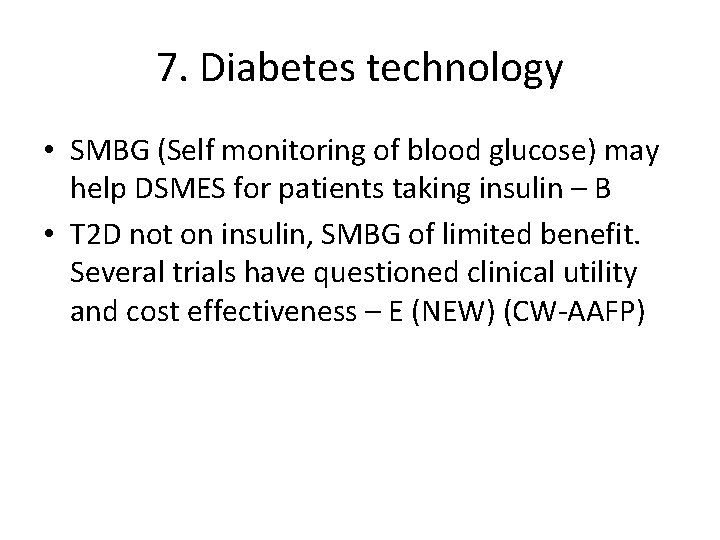
7. Diabetes technology • SMBG (Self monitoring of blood glucose) may help DSMES for patients taking insulin – B • T 2 D not on insulin, SMBG of limited benefit. Several trials have questioned clinical utility and cost effectiveness – E (NEW) (CW-AAFP)
8. Obesity management • BMI calculated at every encounter – B • Diet and physical activity prescribed for all overweight (BMI 28 -30) or obese (BMI>30) - A • Goal 500 -750 kcal/day energy deficit – A • Choose glucose lowering therapy to minimize weight gain – E • Consider FDA approved weight loss medication if T 2 D and BMI >27 – A • Metabolic surgery recommended as an option (NEW) – BMI >40 (>37. 5 Asian American) - A – BMI >35 who fail non surgical methods - A
9. Pharmacologic approach to glycemic treatment • Type 1 diabetes – Multiple daily injections preferred either basal/prandial or continuous infusion – A – Use rapid acting analogs to reduce hypoglycemia – A – Consider education on matching prandial insulin to carbs, premeal glucose, activity levels – E
9. Pharmacologic approach to glycemic treatment (cont) • Type 2 diabetes – Metformin is preferred initial agent for T 2 D – A – Metformin is continued as long as tolerated, other agents are added – A – Metformin long term is associated with B 12 deficiency, measure if anemic or neuropathy – B – Add insulin early if - E • Ongoing weight loss • A 1 C >10% • Glucose >300 mg/d. L
9. Pharmacologic approach to glycemic treatment (cont) • Type 2 diabetes with comorbidities – If CVD, SGLT 2 or GLP 1 with proven CVD benefit preferred – A • SGLT 2 – empagliflozin (Jardiance), canagliflozin (Invokana) • GLP 1 – liraglutide (Victoza), semaglutide (Ozempic), exanitide (Bydureon) – If CHF, SGLT 2 with proven benefit preferred – C • SGLT 2 – empagliflozin, canagliflozin – If CKD, SGLT 2 or GLP 1 with proven benefit preferred – C • SGLT 2 – empagliflozin, canagliflozin • GLP 1 – liraglutide – If greater glucose-lowering effect of an injectable is needed, GLP 1 receptor agonist are preferred to insulin – B (NEW)
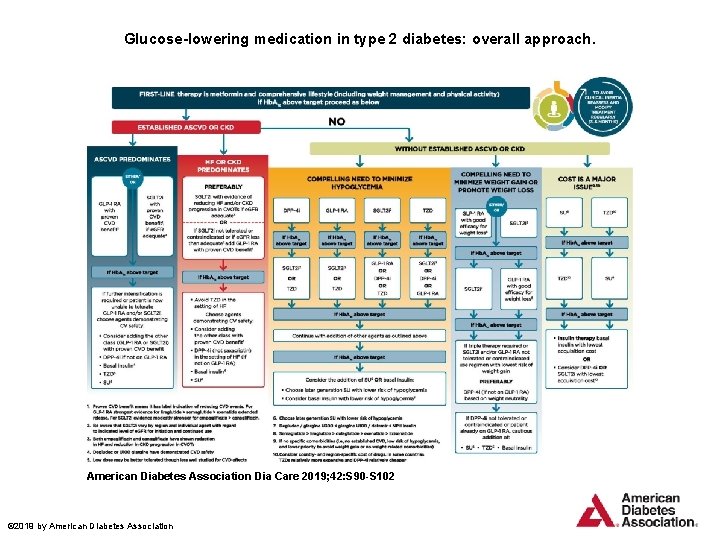
Glucose-lowering medication in type 2 diabetes: overall approach. American Diabetes Association Dia Care 2019; 42: S 90 -S 102 © 2019 by American Diabetes Association
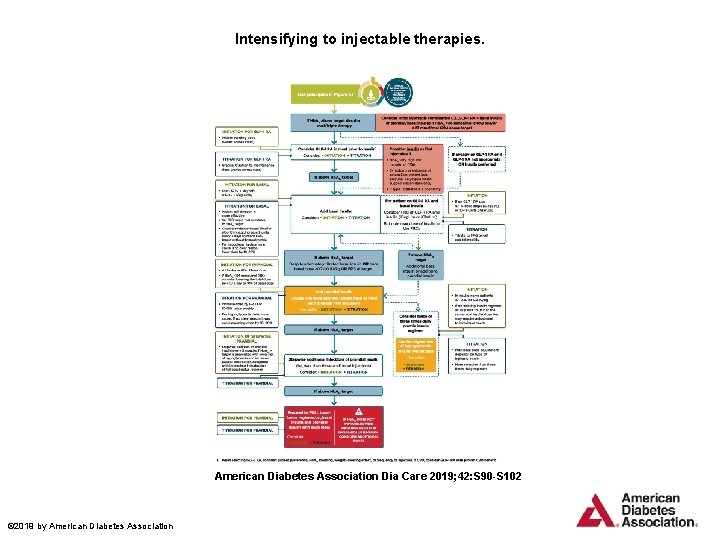
Intensifying to injectable therapies. American Diabetes Association Dia Care 2019; 42: S 90 -S 102 © 2019 by American Diabetes Association
10. Cardiovascular disease and risk management • Hypertension – BP measured at every visit – If BP >140/90 confirm with ABPM or multiple visits – B – If 10 yr risk <15% goal <140/90 – A (NEW) – If 10 yr risk >15% or existing ASCVD goal <130/80 if it can be safely attained – C (NEW) – For all >120/80 advise wt loss, DASH style diet, moderate alcohol, more physical activity – B – ACE, ARB, CCB, diuretics preferred – Avoid ACE+ARB, ACE+renin inh, ARB+renin inh – A – If microalbuminuria, ACE or ARB
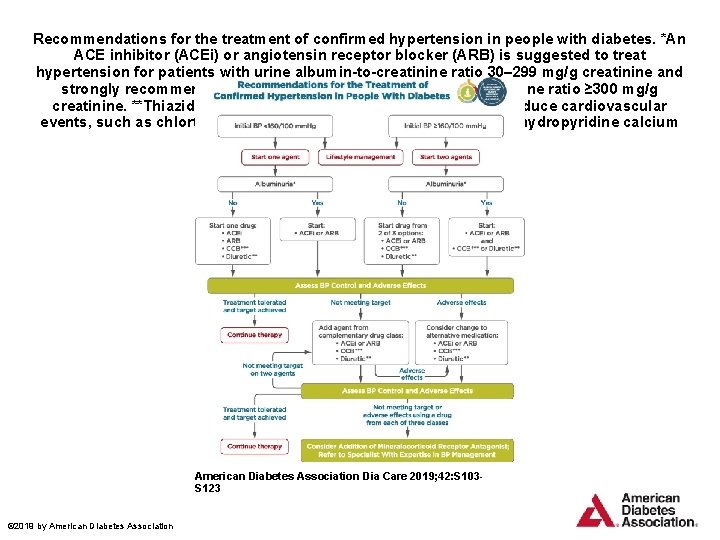
Recommendations for the treatment of confirmed hypertension in people with diabetes. *An ACE inhibitor (ACEi) or angiotensin receptor blocker (ARB) is suggested to treat hypertension for patients with urine albumin-to-creatinine ratio 30– 299 mg/g creatinine and strongly recommended for patients with urine albumin-to-creatinine ratio ≥ 300 mg/g creatinine. **Thiazide-like diuretic; long-acting agents shown to reduce cardiovascular events, such as chlorthalidone and indapamide, are preferred. ***Dihydropyridine calcium channel blocker (CCB). American Diabetes Association Dia Care 2019; 42: S 103 S 123 © 2019 by American Diabetes Association
10. Cardiovascular disease and risk management (cont) • Lipids – Lifestyle modification initially - A • • Mediterranean or DASH style diet preferred Increase omega 3 fatty acids Decrease saturated fats Increase physical activity – All ages with ASCVD or 10 yr risk >20%, add high intensity statin – A – – Over 40 without ASCVD, add moderate intensity statin – A If statin intensity not tolerated, use max tolerated dose – E With ASCVD, if LDL>70 consider add on ezetimibe – A Combination statin + fibrate or niacin has not shown additional benefit and is not recommended - A
10. Cardiovascular disease and risk management (cont) • Antiplatelet therapy – Use ASA 75 -162 mg for secondary ASCVD prevention - A – For ASA allergy, use clopidigrel 75 mg/day - B – Consider ASA 75 -162 mg as primary prevention for increased ASCVD risk - C
10. Cardiovascular disease and risk management (cont) • Cardiovascular disease – If asymptomatic, routine screening for CAD is not recommended as it does not improve outcomes – A – If CVD present, may use ACE or ARB to reduce risk even if normotensive – B – If prior MI, beta blocker for 2 years – B – If CHF, metformin okay if GFR >30 – B – If CVD, proven SGLT 2 or GLP 1 preferred – A (NEW) – If CVD + CHF, proven SGLT 2 preferred – C (NEW)
11. Microvascular complications and foot care CKD = albuminuria (>30 mg/g) and/or low GFR • Annually asses urinary alb/cr + GFR – B • If T 2 D + CKD, consider proven SGLT 2 or GLP 1 to reduce CKD progression and CVD events – C • Optimize blood pressure <140/90 - A • Dietary protein 0. 8 gm/kg/day – B • If T 2 D + HTN + alb/cr>30, add ACE or ARB – B • Consider nephrology consult for GFR<30 - A
11. Microvascular complications and foot care (cont) Retinopathy – 30% of newly dx T 2 D have some retinopathy • Screen T 1 D within 5 years of onset – B • Screen T 2 D at diagnosis – B • If screen normal and diabetes well controlled, repeat screening every 1 -2 years – B • Telemedicine retinal photography is appropriate screening – B (NEW) • Refer to optho for macular edema, severe nonproliferative or any proliferative retinopathy – A • Retinopathy is not a contradiction to ASA - A
11. Microvascular complications and foot care (cont) Neuropathy – 10 -15% newly dx T 2 D have bilateral polyneuropathy • Screen T 1 D within 5 years of onset – B • Screen T 2 D at diagnosis – B • Repeat annually using 10 g monofilament – B • Pregabalin, duloxetine or gabapentin (NEW) are recommended treatments for neuropathic pain - A
11. Microvascular complications and foot care (cont) Foot care • Screening foot exam annually including inspection, 10 g monofilament, pulses – B • If smoker, loss of sensation, structural abnormalities, or PAD consult podiatry – C • Specialized footwear recommended for severe neuropathy, foot deformity, hx amputation - B
12. Older Adults • Over age 65, 25% have diabetes • Hypoglycemia is greater risk and should be avoided – B • Glycemic goals can be relaxed to individualize care – C My default approach for A 1 C goal – (also CW-AGS) – < 65 A 1 C < 7. 0 – 65 -75 A 1 C < 7. 5 – 75 -85 A 1 C < 8. 0 – > 85 A 1 C < 9. 0 • Medications with lower risk hypoglycemia preferred – B • Deintensification appropriate for simplicity to match patient ability and avoid hypoglycemia – B (NEW)
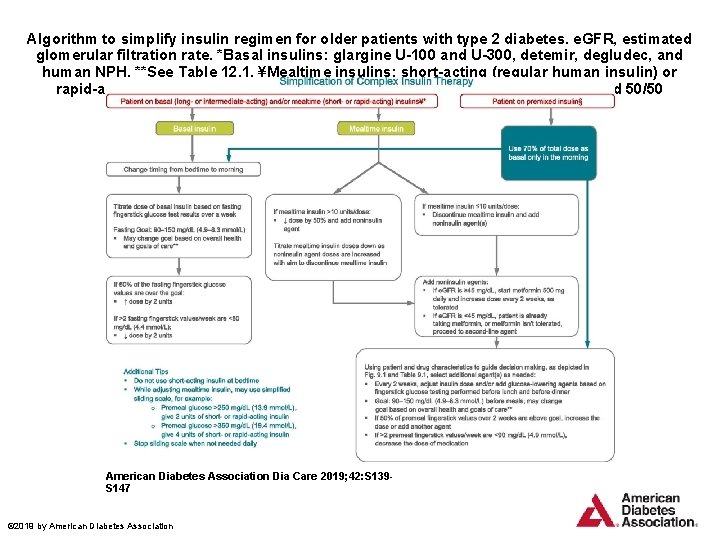
Algorithm to simplify insulin regimen for older patients with type 2 diabetes. e. GFR, estimated glomerular filtration rate. *Basal insulins: glargine U-100 and U-300, detemir, degludec, and human NPH. **See Table 12. 1. ¥Mealtime insulins: short-acting (regular human insulin) or rapid-acting (lispro, aspart, and glulisine). §Premixed insulins: 70/30, 75/25, and 50/50 products. American Diabetes Association Dia Care 2019; 42: S 139 S 147 © 2019 by American Diabetes Association
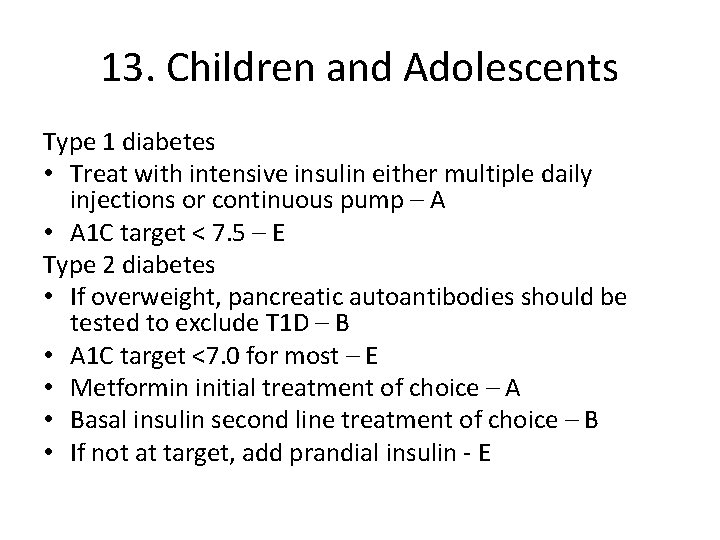
13. Children and Adolescents Type 1 diabetes • Treat with intensive insulin either multiple daily injections or continuous pump – A • A 1 C target < 7. 5 – E Type 2 diabetes • If overweight, pancreatic autoantibodies should be tested to exclude T 1 D – B • A 1 C target <7. 0 for most – E • Metformin initial treatment of choice – A • Basal insulin second line treatment of choice – B • If not at target, add prandial insulin - E
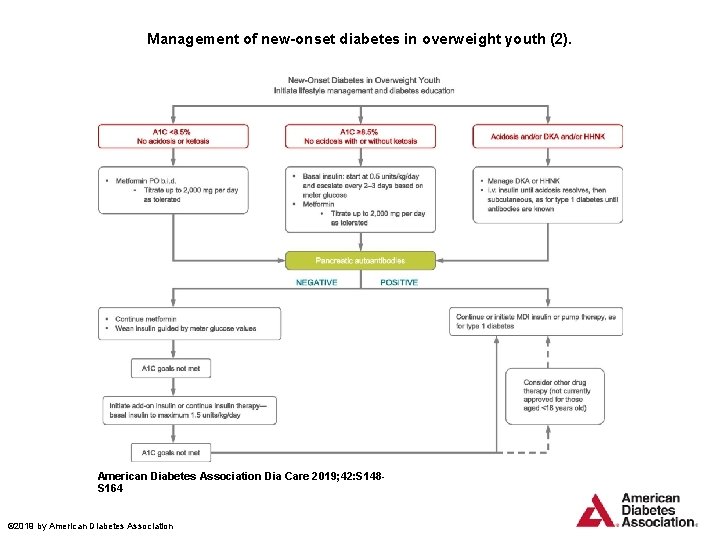
Management of new-onset diabetes in overweight youth (2). American Diabetes Association Dia Care 2019; 42: S 148 S 164 © 2019 by American Diabetes Association
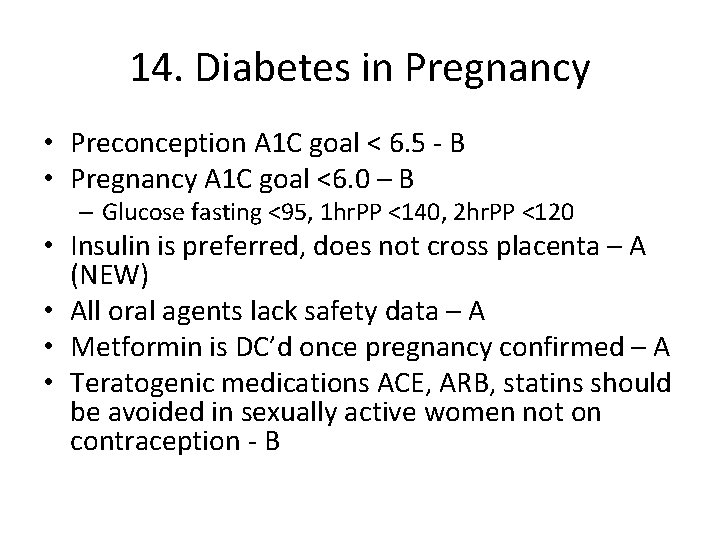
14. Diabetes in Pregnancy • Preconception A 1 C goal < 6. 5 - B • Pregnancy A 1 C goal <6. 0 – B – Glucose fasting <95, 1 hr. PP <140, 2 hr. PP <120 • Insulin is preferred, does not cross placenta – A (NEW) • All oral agents lack safety data – A • Metformin is DC’d once pregnancy confirmed – A • Teratogenic medications ACE, ARB, statins should be avoided in sexually active women not on contraception - B
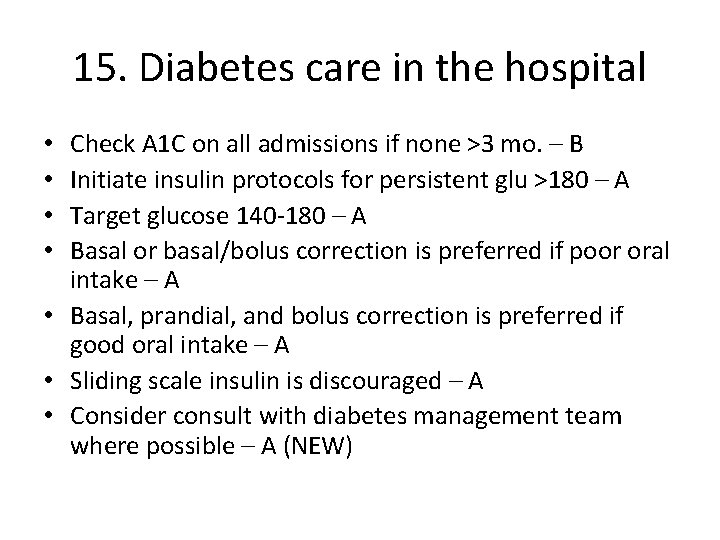
15. Diabetes care in the hospital Check A 1 C on all admissions if none >3 mo. – B Initiate insulin protocols for persistent glu >180 – A Target glucose 140 -180 – A Basal or basal/bolus correction is preferred if poor oral intake – A • Basal, prandial, and bolus correction is preferred if good oral intake – A • Sliding scale insulin is discouraged – A • Consider consult with diabetes management team where possible – A (NEW) • •
- Slides: 38