
Update on Be Wall Cavity MAP Meeting June
Update on Be Wall Cavity MAP Meeting June 4, 2010 • Steve Virostek • Lawrence Berkeley National Lab
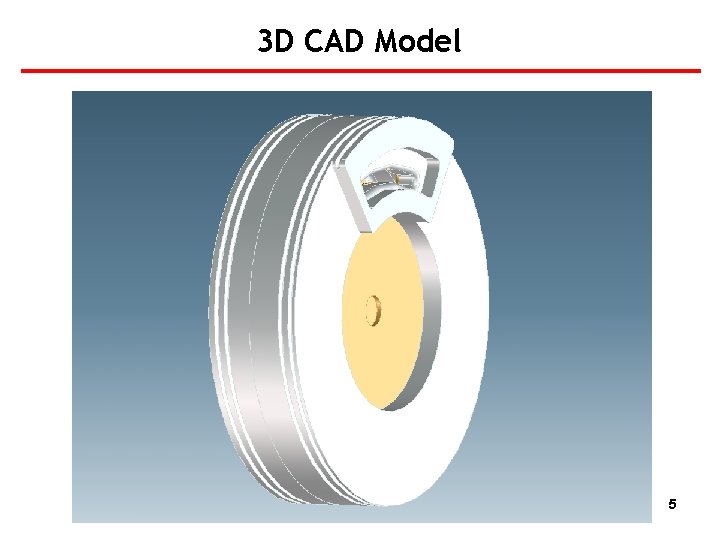
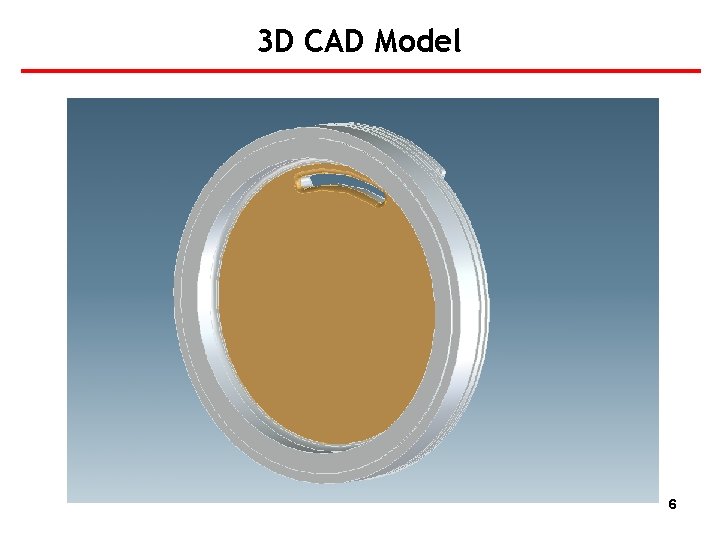
Current Status • An LBNL account ID is now open for the design/fab project • Preliminary discussions (R. Palmer, S. Virostek, D. Li) and design work has resulted in several design concepts • A preliminary 3 D CAD model of one of the design concepts has been completed • One of the next steps is a cost analysis of the concepts – Cost of raw beryllium material – Cost of various fabrication techniques • Also need to analyze the manufacturing risks – Brazing – Coupling port – Bolted joints – Machining processes 2
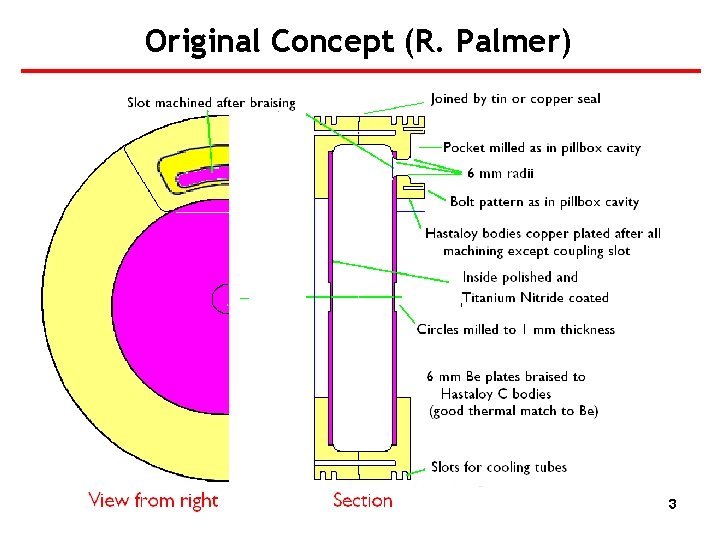
Original Concept (R. Palmer) 3
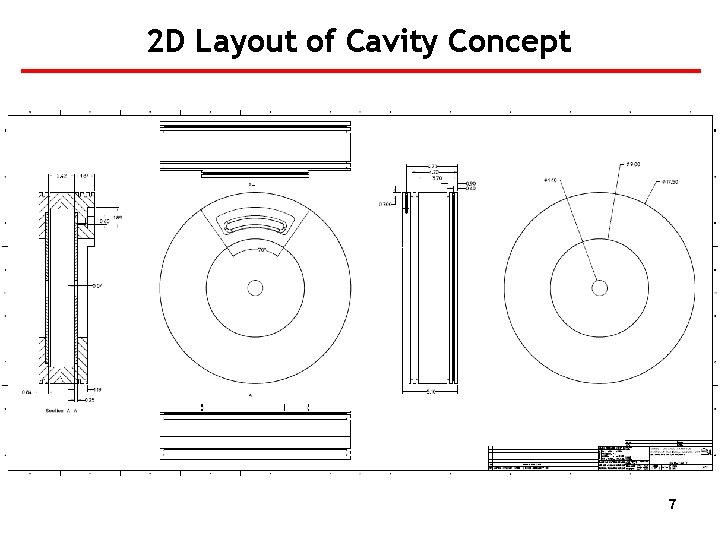
Concept Descriptions • Common characteristics – Two bolted halves w/RF and vacuum seal – Main body is Cu plated Hastelloy or solid Cu – Cavity inner side walls are beryllium (Ti. N coated) – Slotted coupling port in side wall • Beryllium side wall options 1) Thin Be foil (~500 mm) brazed to side walls 2) Thick Be plates (~6 mm) brazed to side walls 3) Solid Be side walls (no brazing) • An all Be cavity is not likely to be practical • Bolted cavity assembly offers accessibility advantages over an e-beam welded cavity 4
3 D CAD Model 5
3 D CAD Model 6
2 D Layout of Cavity Concept 7
Manufacturing Risks • Brazing – Be brazing is only done at select shops – Differential expansion may be a problem for solid Cu body – May be some issues with brazing to Cu plated Hastelloy – Transition from Be side walls to rounded corner at cavity OD presents some challenges • Coupling port – Interface between Be and cavity body material at port needs to be fully brazed – Need to incorporate a connection flange to RF waveguide • Cavity joints – Seal(s) between cavity halves needs to provide a good RF connection as well as a vacuum seal • Machining: few shops available to do Be machining 8
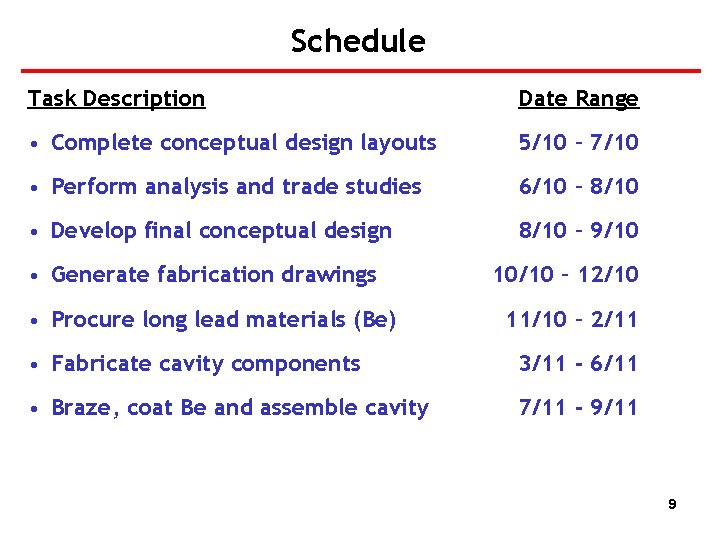
Schedule Task Description Date Range • Complete conceptual design layouts 5/10 – 7/10 • Perform analysis and trade studies 6/10 – 8/10 • Develop final conceptual design 8/10 – 9/10 • Generate fabrication drawings • Procure long lead materials (Be) 10/10 – 12/10 11/10 – 2/11 • Fabricate cavity components 3/11 - 6/11 • Braze, coat Be and assemble cavity 7/11 - 9/11 9
- Slides: 9