
Update Future of Do D Linguistic Training LTC










- Slides: 24
Update & Future of Do. D Linguistic Training LTC Jason Weece Director, Foreign Area Officer Program Office Defense Language Institute Foreign Language Center 19 September 2012
Agenda • DLIFLC Update • Future of Language Training • FAO Issues
Linguistic Readiness
DLIFLC Mission & Vision Mission DLIFLC provides culturally-based foreign language education, training, evaluation, research, and sustainment for Do. D personnel in order to ensure the success of the Defense Language Program and enhance the security of the nation. Vision Delivering the world’s best culturally-based foreign language training and education—at the point of need.
Core Competencies linguist
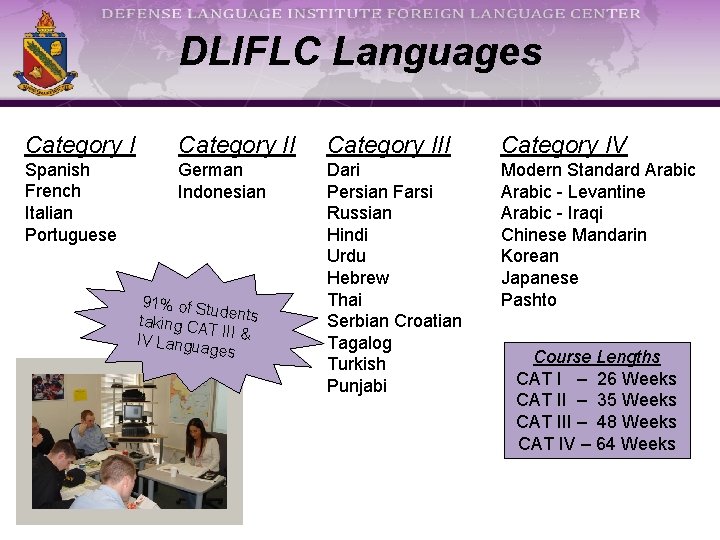
DLIFLC Languages Category III Category IV Spanish French Italian Portuguese German Indonesian Dari Persian Farsi Russian Hindi Urdu Hebrew Thai Serbian Croatian Tagalog Turkish Punjabi Modern Standard Arabic - Levantine Arabic - Iraqi Chinese Mandarin Korean Japanese Pashto 91% of S tudents taking CA T III & IV Langu ages Course Lengths CAT I – 26 Weeks CAT II – 35 Weeks CAT III – 48 Weeks CAT IV – 64 Weeks
Faculty Profile • Title 10 Department of the Army civilian faculty • 95% native speakers: 17% Ph. D. , 53% M. A. • DLI-Washington: Contract faculty provide flexibility and surge capacity • Robust Faculty Development Division • Professional development opportunities: MIIS, CSUMB, Argosy, Brandman, University of San Francisco, etc.
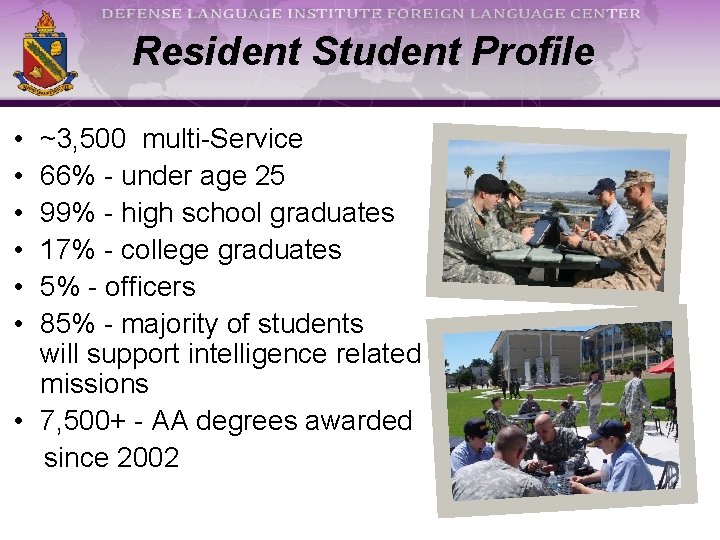
Resident Student Profile • • • ~3, 500 multi-Service 66% - under age 25 99% - high school graduates 17% - college graduates 5% - officers 85% - majority of students will support intelligence related missions • 7, 500+ - AA degrees awarded since 2002
Linguistic Readiness
Linguistic Readiness
Support to AFPAK
General Purpose Force (GPF)
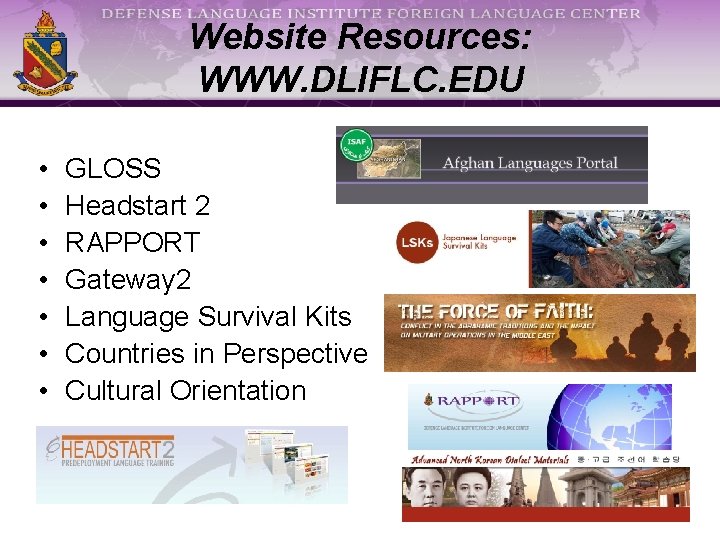
Website Resources: WWW. DLIFLC. EDU • • GLOSS Headstart 2 RAPPORT Gateway 2 Language Survival Kits Countries in Perspective Cultural Orientation
Linguistic Readiness
Language Training Detachments
Linguistic Readiness
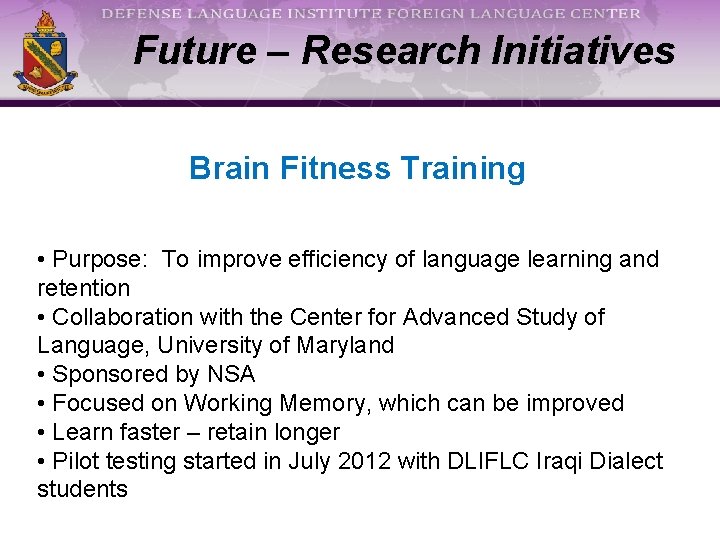
Future – Research Initiatives Brain Fitness Training • Purpose: To improve efficiency of language learning and retention • Collaboration with the Center for Advanced Study of Language, University of Maryland • Sponsored by NSA • Focused on Working Memory, which can be improved • Learn faster – retain longer • Pilot testing started in July 2012 with DLIFLC Iraqi Dialect students
Future – Research Initiatives Attrition Reduction Initiative • Purpose: To pinpoint and implement specific components of student success • 18 -month evaluation of five Persian Farsi Basic Courses • Started in February 2011 – results in evaluation • Employed video diaries for students to record daily progress • Evaluation included interviews, questionnaires, sensing sessions, and classroom observation
Future – Technology Initiatives Migration to DLIFLC. EDU Network Advantages: • 40 times faster than legacy network • Access to more language learning resources • Saves 9 -10 training days per language program • Lifetime connection for alumni • Greater public access to language training materials
Future – Technology Initiatives Upgrade Technology Issued to Students Goals FY 12 -15: • Replace all tablet PC’s with 13” Macbook Pro • Replace i. Pod Touch with i. Pad HD • Distribute to all students and faculty Advantages: • Standardization • Backward compatibility • Allowed on Academic Network • Control content, security, and apps through network • Reduce failure rate and help desk call volume
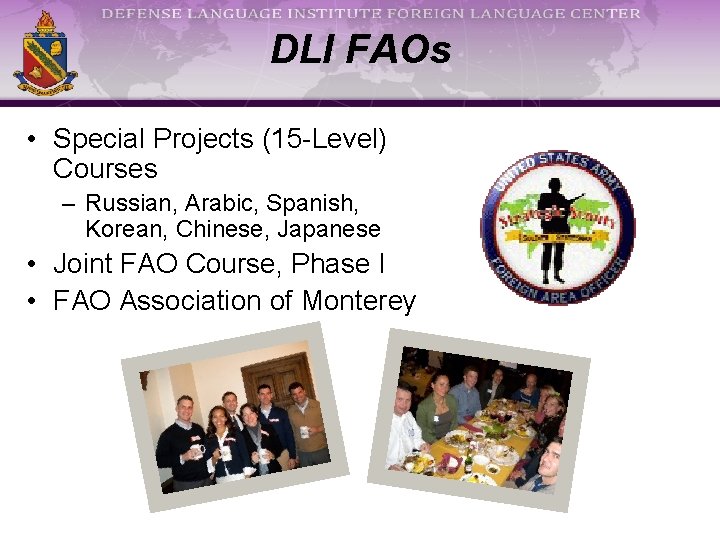
DLI FAOs • Special Projects (15 -Level) Courses – Russian, Arabic, Spanish, Korean, Chinese, Japanese • Joint FAO Course, Phase I • FAO Association of Monterey
Summary • DLIFLC Update - Focused on improving all aspects of language acquisition and sustainment to meet Do. D requirements • Future of Language Training • Better language learning results through application of research • Efficient use of technology to build and sustain language learning • FAO Issues • Adapting to FAO language needs • Developing joint FAO skills early
Questions?
www. dliflc. edu