
UP STEP THE STEPUP MODEL An overview of


- Slides: 51
UP STEP THE STEP-UP MODEL An overview of program components and theory
UP STEP CURRICULUM A RESPECTFUL FAMILY MODEL
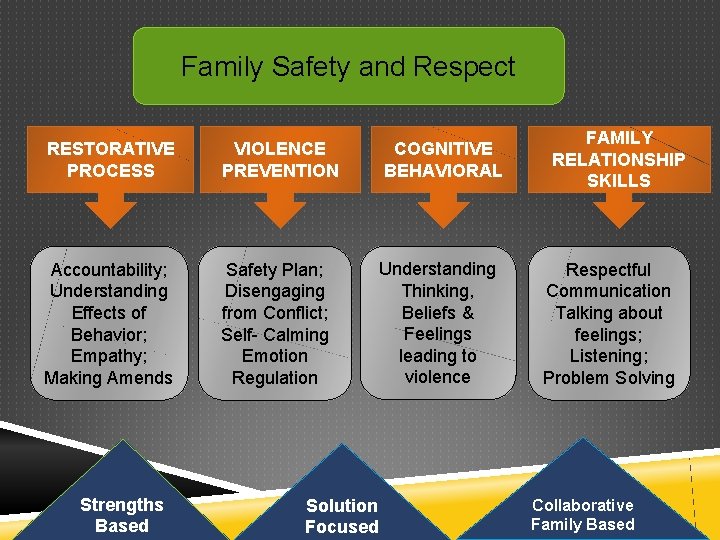
Family Safety and Respect RESTORATIVE PROCESS VIOLENCE PREVENTION COGNITIVE BEHAVIORAL Accountability; Understanding Effects of Behavior; Empathy; Making Amends Safety Plan; Disengaging from Conflict; Self- Calming Emotion Regulation Understanding Thinking, Beliefs & Feelings leading to violence Strengths Based Solution Focused FAMILY RELATIONSHIP SKILLS Respectful Communication Talking about feelings; Listening; Problem Solving Collaborative Family Based
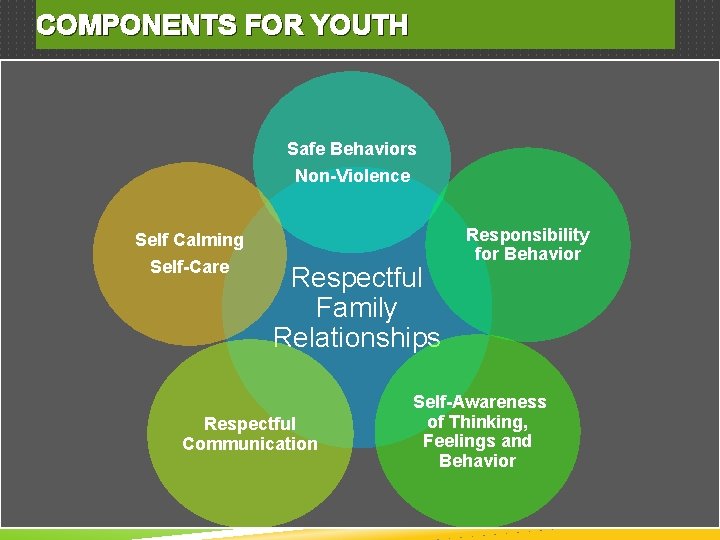
COMPONENTS FOR YOUTH Safe Behaviors Non-Violence Self Calming Self-Care Respectful Family Relationships Respectful Communication Responsibility for Behavior Self-Awareness of Thinking, Feelings and Behavior
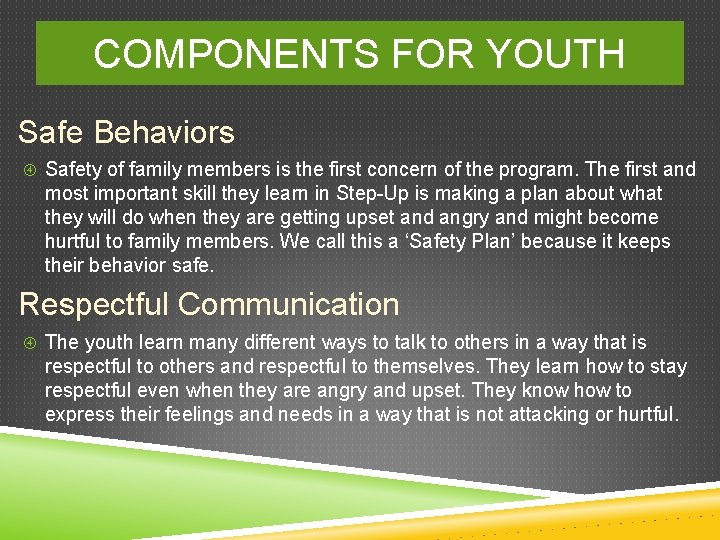
COMPONENTS FOR YOUTH Safe Behaviors Safety of family members is the first concern of the program. The first and most important skill they learn in Step-Up is making a plan about what they will do when they are getting upset and angry and might become hurtful to family members. We call this a ‘Safety Plan’ because it keeps their behavior safe. Respectful Communication The youth learn many different ways to talk to others in a way that is respectful to others and respectful to themselves. They learn how to stay respectful even when they are angry and upset. They know how to express their feelings and needs in a way that is not attacking or hurtful.
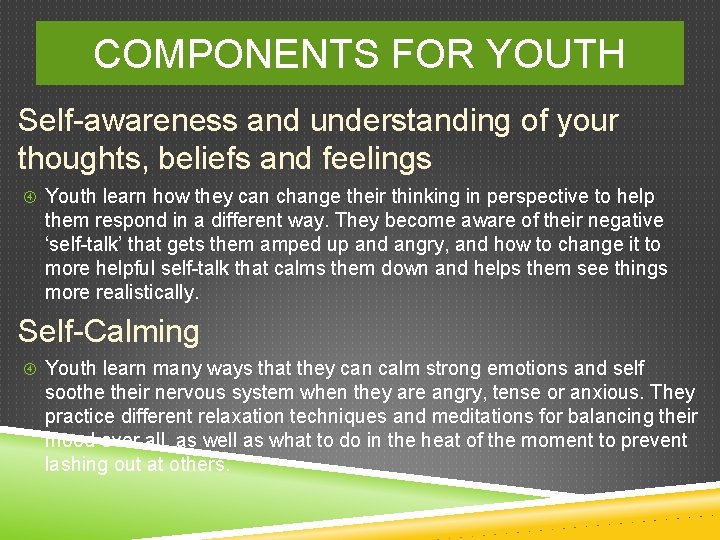
COMPONENTS FOR YOUTH Self-awareness and understanding of your thoughts, beliefs and feelings Youth learn how they can change their thinking in perspective to help them respond in a different way. They become aware of their negative ‘self-talk’ that gets them amped up and angry, and how to change it to more helpful self-talk that calms them down and helps them see things more realistically. Self-Calming Youth learn many ways that they can calm strong emotions and self soothe their nervous system when they are angry, tense or anxious. They practice different relaxation techniques and meditations for balancing their mood over all, as well as what to do in the heat of the moment to prevent lashing out at others.
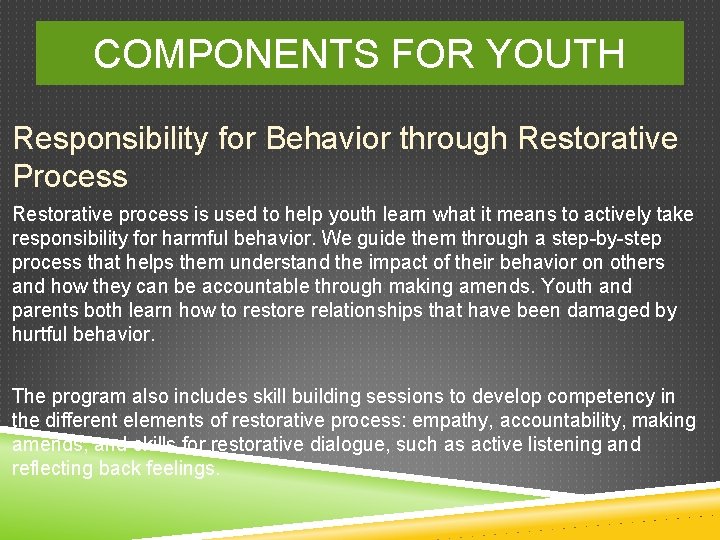
COMPONENTS FOR YOUTH Responsibility for Behavior through Restorative Process Restorative process is used to help youth learn what it means to actively take responsibility for harmful behavior. We guide them through a step-by-step process that helps them understand the impact of their behavior on others and how they can be accountable through making amends. Youth and parents both learn how to restore relationships that have been damaged by hurtful behavior. The program also includes skill building sessions to develop competency in the different elements of restorative process: empathy, accountability, making amends, and skills for restorative dialogue, such as active listening and reflecting back feelings.
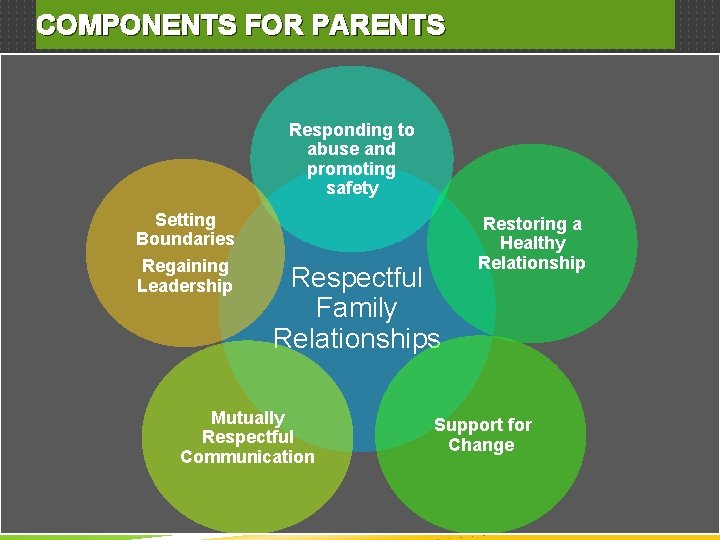
COMPONENTS FOR PARENTS Responding to abuse and promoting safety Setting Boundaries Regaining Leadership Respectful Family Relationships Mutually Respectful Communication Restoring a Healthy Relationship Support for Change
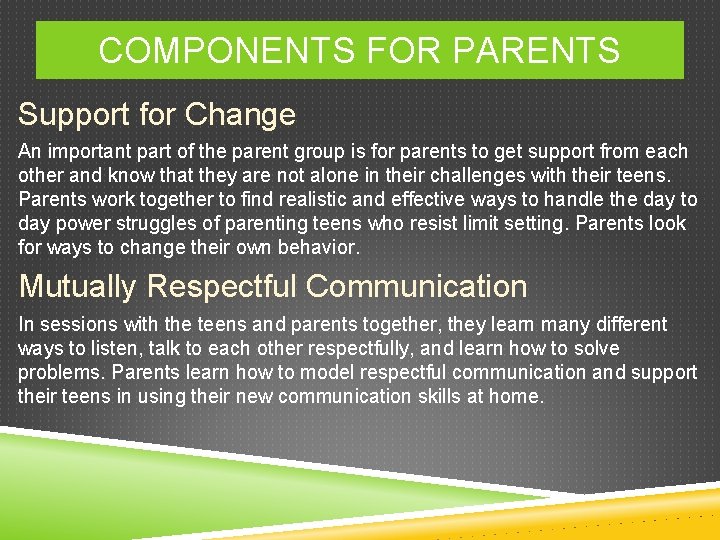
COMPONENTS FOR PARENTS Support for Change An important part of the parent group is for parents to get support from each other and know that they are not alone in their challenges with their teens. Parents work together to find realistic and effective ways to handle the day to day power struggles of parenting teens who resist limit setting. Parents look for ways to change their own behavior. Mutually Respectful Communication In sessions with the teens and parents together, they learn many different ways to listen, talk to each other respectfully, and learn how to solve problems. Parents learn how to model respectful communication and support their teens in using their new communication skills at home.
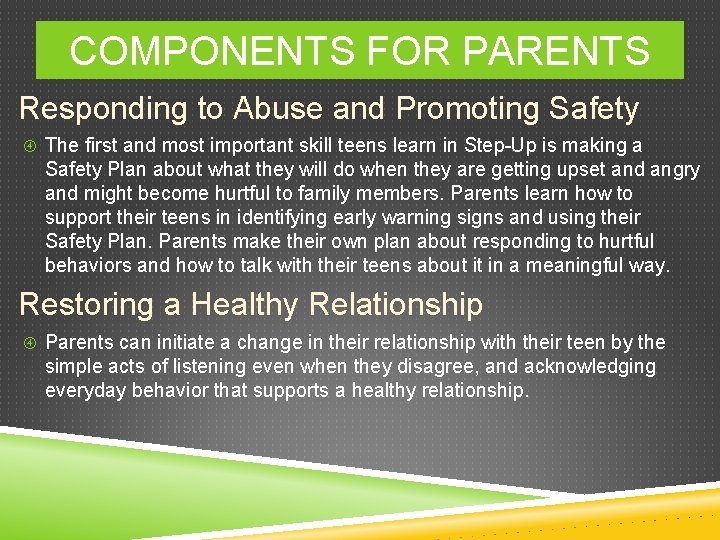
COMPONENTS FOR PARENTS Responding to Abuse and Promoting Safety The first and most important skill teens learn in Step-Up is making a Safety Plan about what they will do when they are getting upset and angry and might become hurtful to family members. Parents learn how to support their teens in identifying early warning signs and using their Safety Plan. Parents make their own plan about responding to hurtful behaviors and how to talk with their teens about it in a meaningful way. Restoring a Healthy Relationship Parents can initiate a change in their relationship with their teen by the simple acts of listening even when they disagree, and acknowledging everyday behavior that supports a healthy relationship.
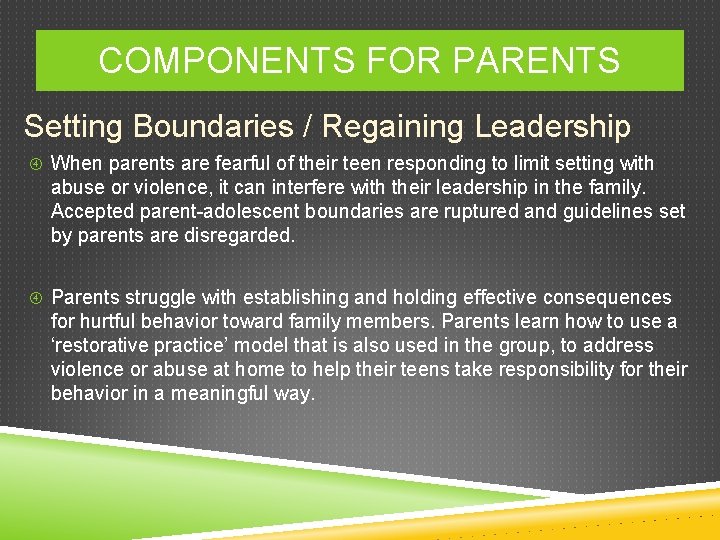
COMPONENTS FOR PARENTS Setting Boundaries / Regaining Leadership When parents are fearful of their teen responding to limit setting with abuse or violence, it can interfere with their leadership in the family. Accepted parent-adolescent boundaries are ruptured and guidelines set by parents are disregarded. Parents struggle with establishing and holding effective consequences for hurtful behavior toward family members. Parents learn how to use a ‘restorative practice’ model that is also used in the group, to address violence or abuse at home to help their teens take responsibility for their behavior in a meaningful way.
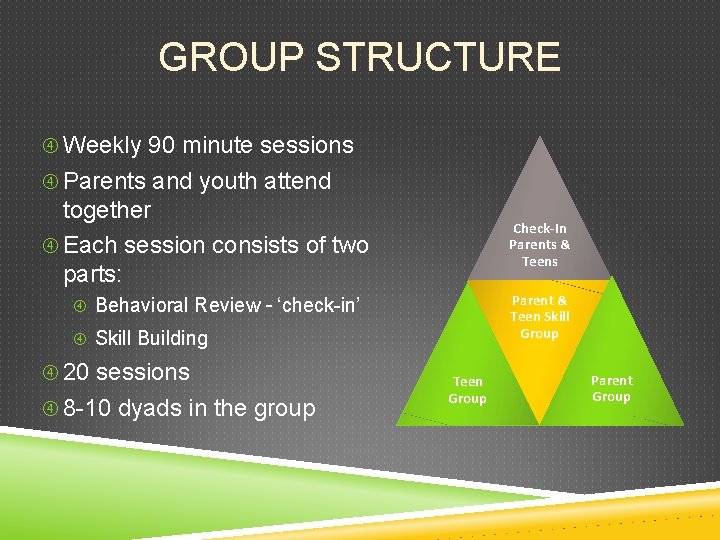
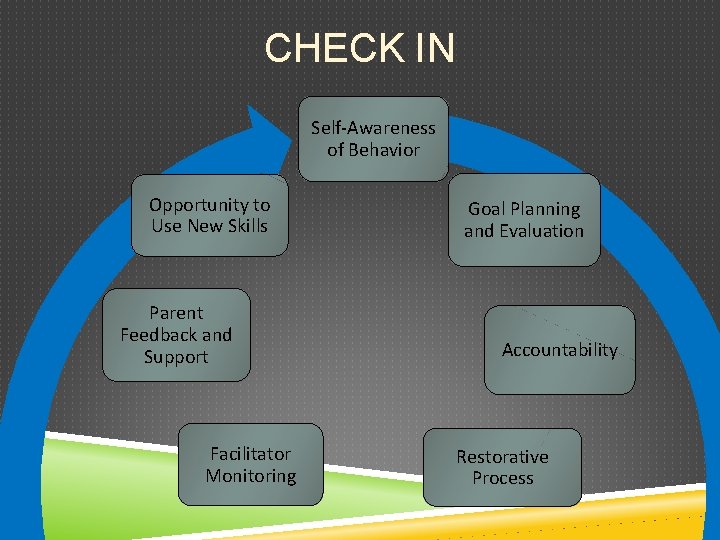
GROUP STRUCTURE Weekly 90 minute sessions Parents and youth attend together Each session consists of two parts: Check-In Parents & Teens Behavioral Review – ‘check-in’ Parent & Teen Skill Group Skill Building 20 sessions 8 -10 dyads in the group Teen Group Parent Group
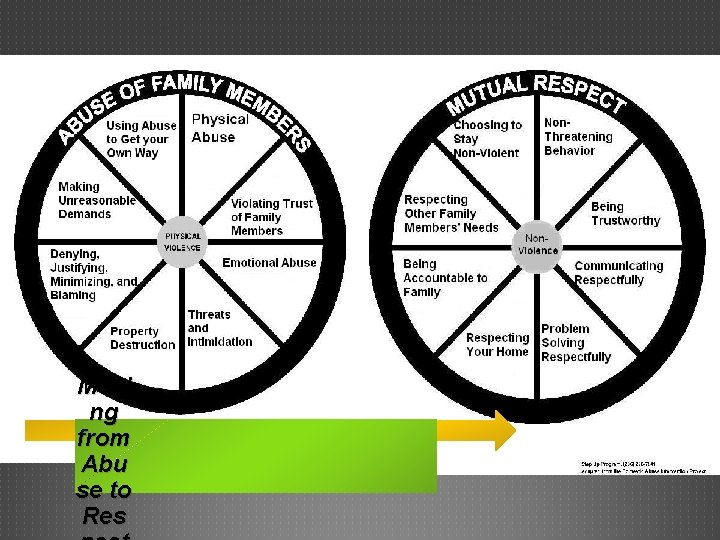
Movi ng from Abu se to Res
CHECK IN Self-Awareness of Behavior Opportunity to Use New Skills Parent Feedback and Support Facilitator Monitoring Goal Planning and Evaluation Accountability Restorative Process
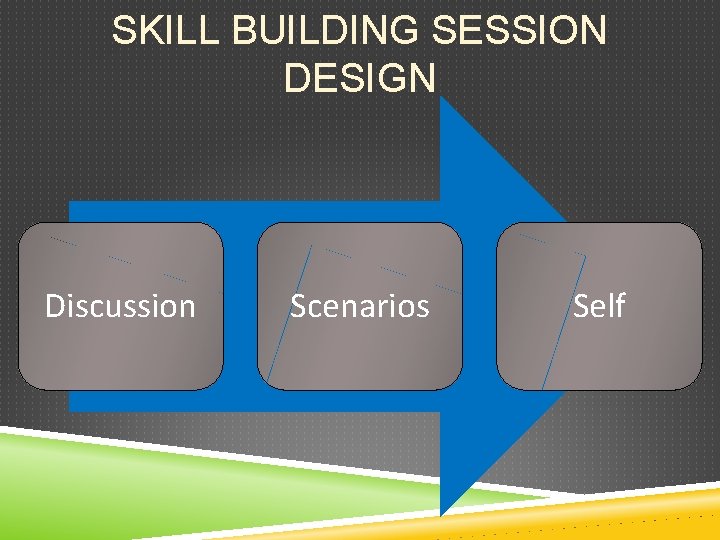
SKILL BUILDING SESSION DESIGN Discussion Scenarios Self
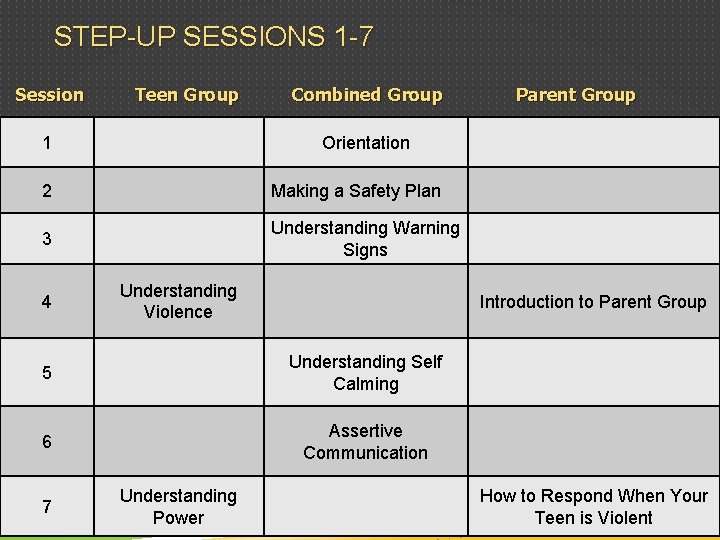
STEP-UP SESSIONS 1 -7 Session Teen Group 1 Combined Group Orientation 2 Making a Safety Plan 3 Understanding Warning Signs 4 Understanding Violence Introduction to Parent Group 5 Understanding Self Calming 6 Assertive Communication 7 Parent Group Understanding Power How to Respond When Your Teen is Violent
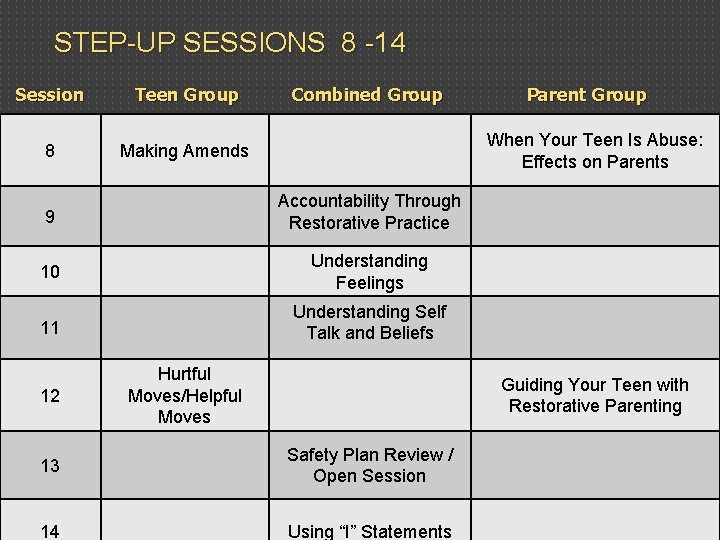
STEP-UP SESSIONS 8 -14 Session Teen Group 8 Making Amends Combined Group When Your Teen Is Abuse: Effects on Parents 9 Accountability Through Restorative Practice 10 Understanding Feelings 11 Understanding Self Talk and Beliefs 12 Parent Group Hurtful Moves/Helpful Moves Guiding Your Teen with Restorative Parenting 13 Safety Plan Review / Open Session 14 Using “I” Statements
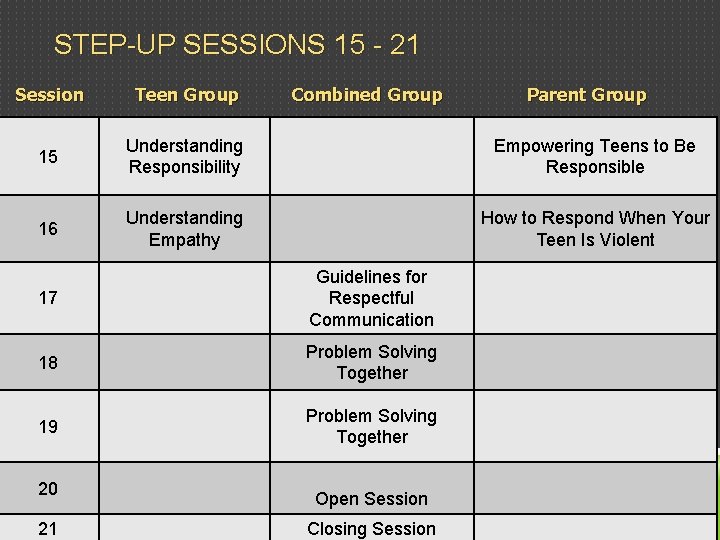
STEP-UP SESSIONS 15 - 21 Session Teen Group Combined Group 15 Understanding Responsibility Empowering Teens to Be Responsible 16 Understanding Empathy How to Respond When Your Teen Is Violent 17 Guidelines for Respectful Communication 18 Problem Solving Together 19 Problem Solving Together 20 21 Open Session Closing Session Parent Group
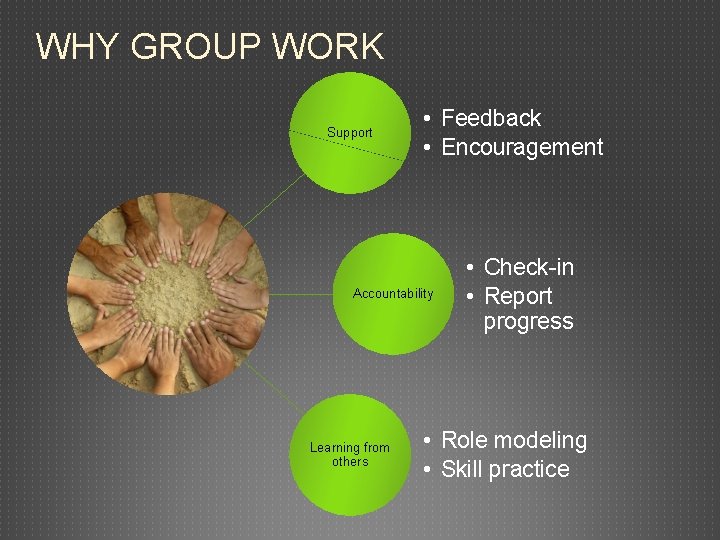
WHY GROUP WORK Support • Feedback • Encouragement Accountability Learning from others • Check-in • Report progress • Role modeling • Skill practice
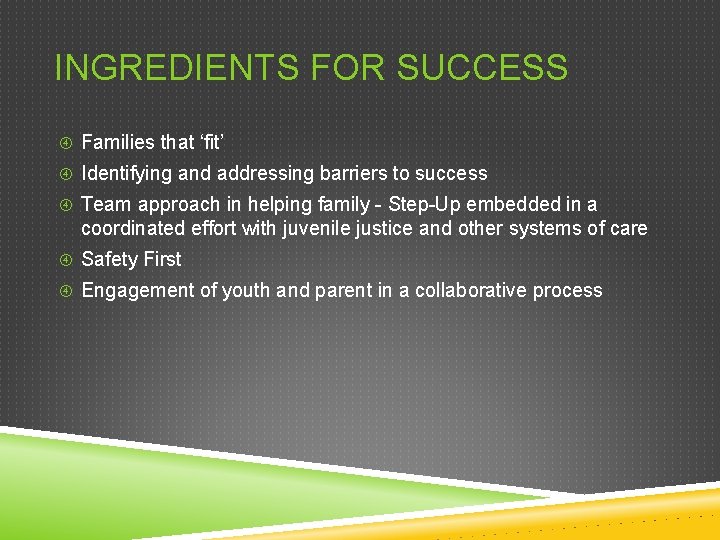
INGREDIENTS FOR SUCCESS Families that ‘fit’ Identifying and addressing barriers to success Team approach in helping family - Step-Up embedded in a coordinated effort with juvenile justice and other systems of care Safety First Engagement of youth and parent in a collaborative process
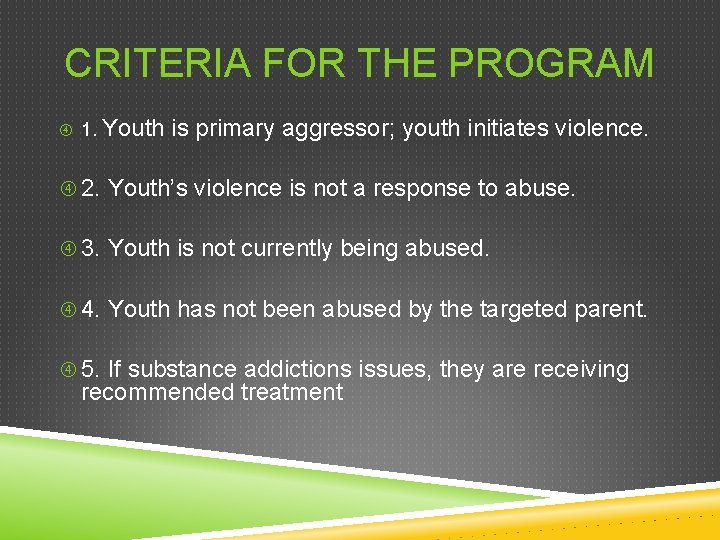
CRITERIA FOR THE PROGRAM 1. Youth is primary aggressor; youth initiates violence. 2. Youth’s violence is not a response to abuse. 3. Youth is not currently being abused. 4. Youth has not been abused by the targeted parent. 5. If substance addictions issues, they are receiving recommended treatment
Etiology/ Theoretical Foundation /Researched Practices Used / Guiding Principles RESEARCH BASIS FOR MODEL
WHY DOES THIS HAPPEN? “Why does my child act this way? My other children don’t…” “None of my friend’s children get violent like this… why does he? ” “I would never have acted like this with my parents. . ” “What causes this? ”
IDENTIFYING ETIOLOGY
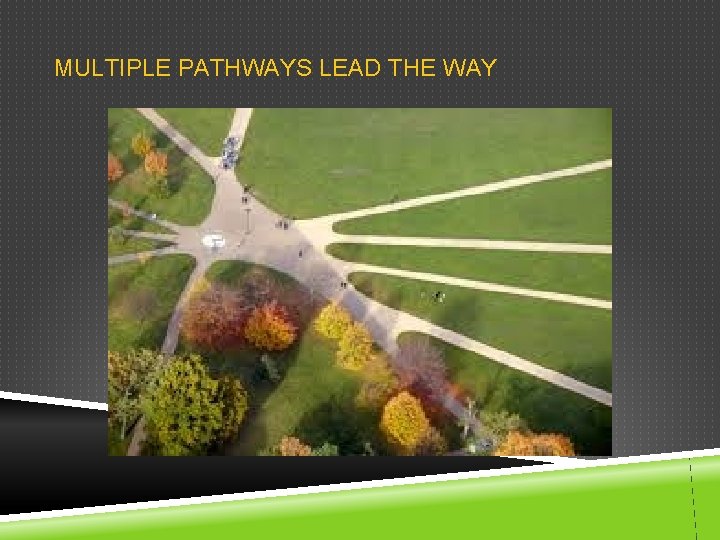
MULTIPLE PATHWAYS LEAD THE WAY
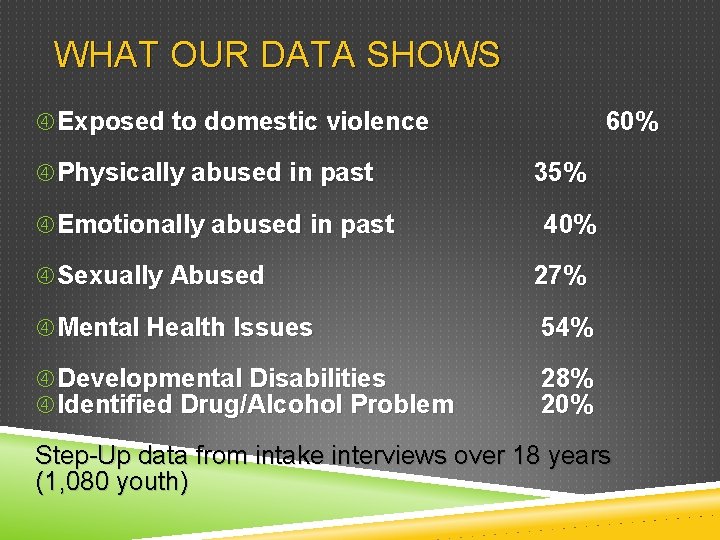
WHAT OUR DATA SHOWS Exposed to domestic violence Physically abused in past Emotionally abused in past Sexually Abused 60% 35% 40% 27% Mental Health Issues 54% Developmental Disabilities Identified Drug/Alcohol Problem 28% 20% Step-Up data from intake interviews over 18 years (1, 080 youth)
Most prominent indicator: exposure to domestic violence Common quotes from mothers: Ø “He says the same things to me that his father used to say” Ø Ø “I left my abuser, now I’m afraid of my son…. ” “We tip toe around so he won’t go off…. Just like we used to do with his Dad. ”
ADOLESCENT BEHAVIORS VS. DV OFFENDER'S BEHAVIOR Power and Control Mood swings Impulsiveness Self-absorbed v Is it DV behavior or just challenging adolescents?
IMPACT OF DOMESTIC VIOLENCE ON CHILDREN / PARENTING Children who have experienced trauma from domestic violence in their lives often struggle to develop the ability to express their emotions in a healthy and acceptable way. They often use similar behaviors as the domestic violence perpetrators in their lives. They may have integrated a perception of their mother that interferes with parent/child boundaries that would normally prohibit abuse and violence toward her The abusive father may have undermined her parenting authority and leadership in the home Feelings of guilt about youth’s exposure to DV may block ability to hold youth accountable Supporting survivor moms w/ this issue is key to regaining parental leadership
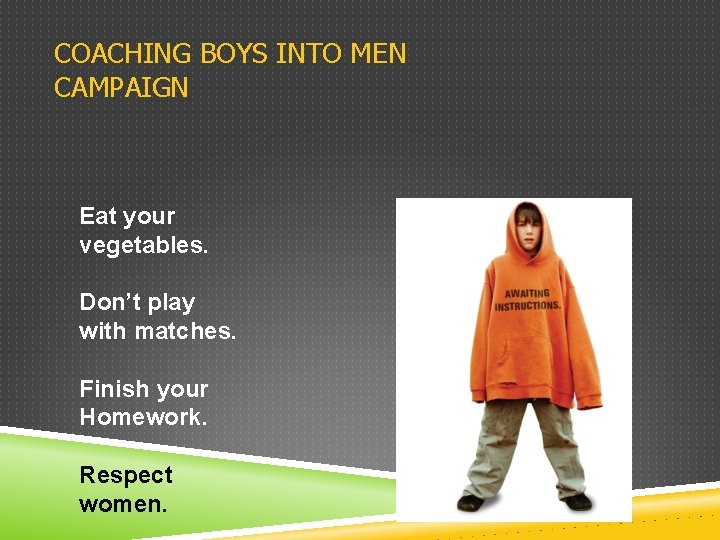
COACHING BOYS INTO MEN CAMPAIGN Eat your vegetables. Don’t play with matches. Finish your Homework. Respect women.
RESEARCH ON ETIOLOGY AND INTERVENTION… WE’RE WAITING… “Despite the prevalence of YFV and its emotional and financial impact on families and public systems, empirical research on etiology and treatment approaches for this issue is seriously inadequate. ” –Sarah Walker, Ph. D University of Washington researcher/ Step-Up’s current evaluator
EFFECTIVENESS OF STEP-UP Since it’s development in 1998, Step-Up has been evaluated with 2 process evaluations, and one impact evaluation with a comparison group. Step-Up is currently undergoing it’s 4 th evaluation, a comparison group evaluation by the University of Washington. “Step-Up’s body of research represents the most evaluation conducted on any single YFV intervention in the U. S, and elsewhere. ” Sarah Walker, Ph. D Step-Up Evaluator, University of Washington
STEP-UP EVALUATION OUTCOMES Process Evaluations: provide “compelling evidence that the program has beneficial impacts on reducing family violence. “ In 2001, pre and post measures of youth behavior “demonstrated statistically significant reductions in verbal abuse, attempts to control, using threats, and physical abuse. ” A replication of Step-Up in Du. Page, Illinois found similarly significant reductions in those behaviors.
STEP-UP EVALUATION OUTCOMES The comparison group evaluation: A retrospective comparison of youth who had domestic violence assault or other assault histories that were matched to Step-Up participants on criminal history, gender, ethnicity and age at referral for youth between 12 and 16. 5 y/o. Services to the control group were unknown. After 12 months, youth in the comparison group were 2. 5 times more likely to have been arrested for DV than the youth who participated in Step-Up. This trend held at 18 months.
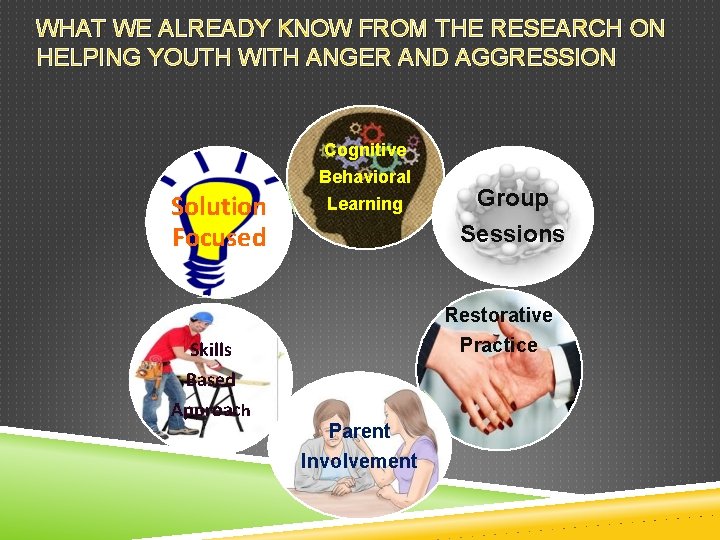
WHAT WE ALREADY KNOW FROM THE RESEARCH ON HELPING YOUTH WITH ANGER AND AGGRESSION Cognitive Behavioral Solution Focused Learning Sessions Restorative Practice Skills Based Approach Group Parent Involvement
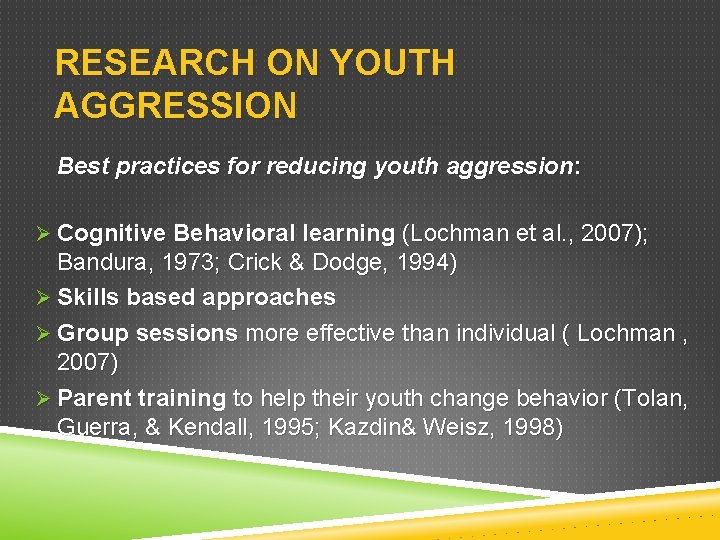
RESEARCH ON YOUTH AGGRESSION Best practices for reducing youth aggression: Ø Cognitive Behavioral learning (Lochman et al. , 2007); Bandura, 1973; Crick & Dodge, 1994) Ø Skills based approaches Ø Group sessions more effective than individual ( Lochman , 2007) Ø Parent training to help their youth change behavior (Tolan, Guerra, & Kendall, 1995; Kazdin& Weisz, 1998)
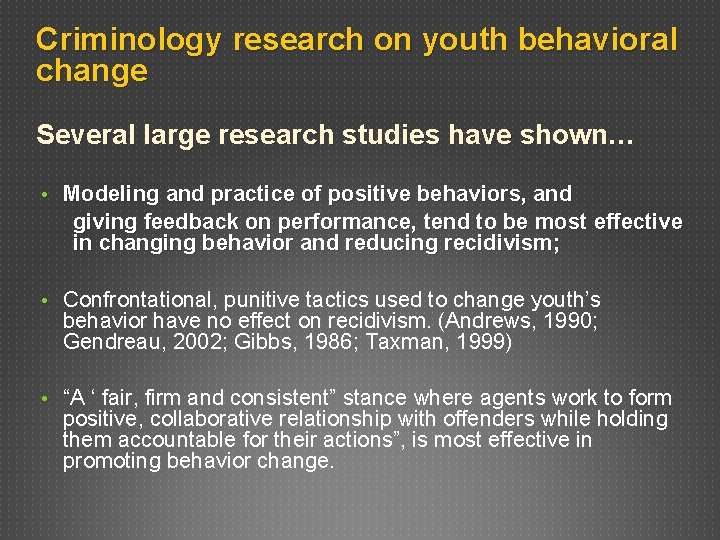
Criminology research on youth behavioral change Several large research studies have shown… • Modeling and practice of positive behaviors, and giving feedback on performance, tend to be most effective in changing behavior and reducing recidivism; • Confrontational, punitive tactics used to change youth’s behavior have no effect on recidivism. (Andrews, 1990; Gendreau, 2002; Gibbs, 1986; Taxman, 1999) • “A ‘ fair, firm and consistent” stance where agents work to form positive, collaborative relationship with offenders while holding them accountable for their actions”, is most effective in promoting behavior change.
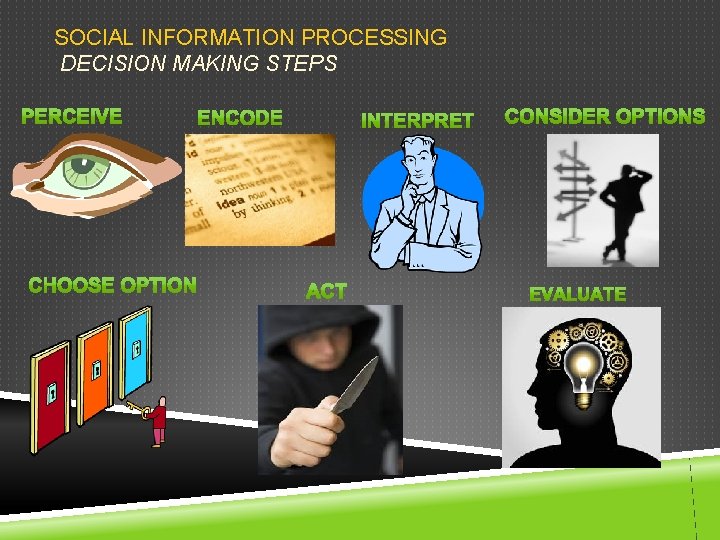
SOCIAL INFORMATION PROCESSING DECISION MAKING STEPS
COGNITIVE EMOTIVE BEHAVIORAL LEARNING Most studied approach with consistent positive outcomes for behavioral problems Slows down the thinking process / raises awareness of connection between thoughts, feelings and behaviors Teaches self awareness of perceptions Widens perspective / ideas for solutions “How could you have done that differently? ” Teaches “you have choices about your behavior” Youth demonstrate their learning and use of this skill frequently in Step-Up when asked how they made a decision to stay nonviolent in a tough situation
SELF-CALMING / EMOTION REGULATION Brain research over the past 15 years has provided new information about our ability to manage emotions and calm anxiety Understanding how the brain works and using techniques to shift the nervous system to a calmer state has become an evidence based practice for treating trauma, ADHD, anxiety, anger and depression. Adolescents take interest in learning about their brains, and are more interested in trying new strategies when they know how they work.
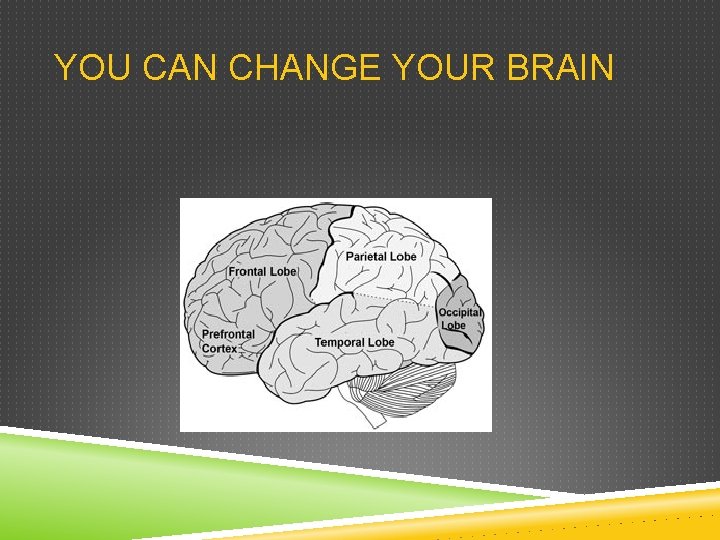
YOU CAN CHANGE YOUR BRAIN
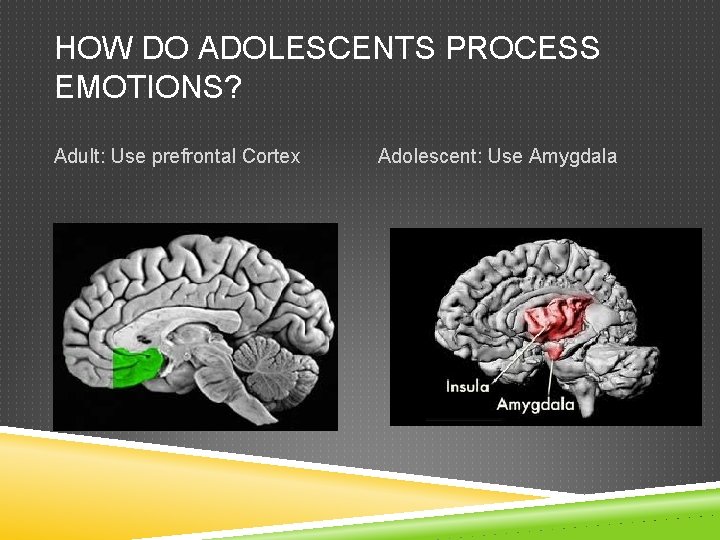
HOW DO ADOLESCENTS PROCESS EMOTIONS? Adult: Use prefrontal Cortex Adolescent: Use Amygdala
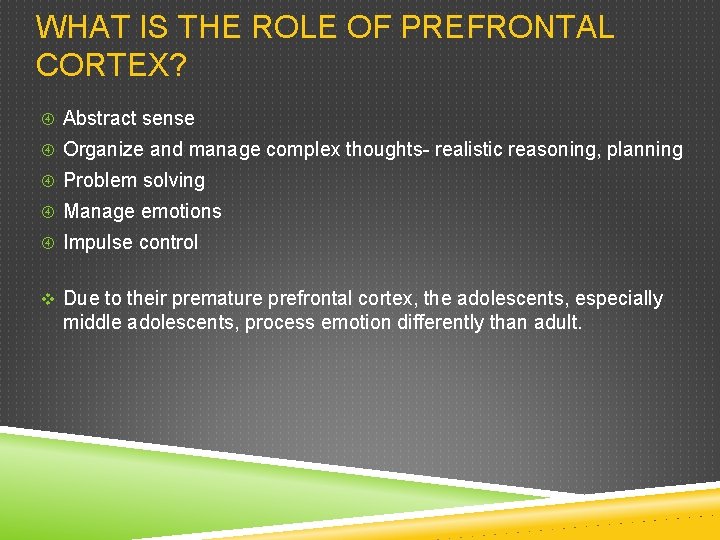
WHAT IS THE ROLE OF PREFRONTAL CORTEX? Abstract sense Organize and manage complex thoughts- realistic reasoning, planning Problem solving Manage emotions Impulse control v Due to their premature prefrontal cortex, the adolescents, especially middle adolescents, process emotion differently than adult.
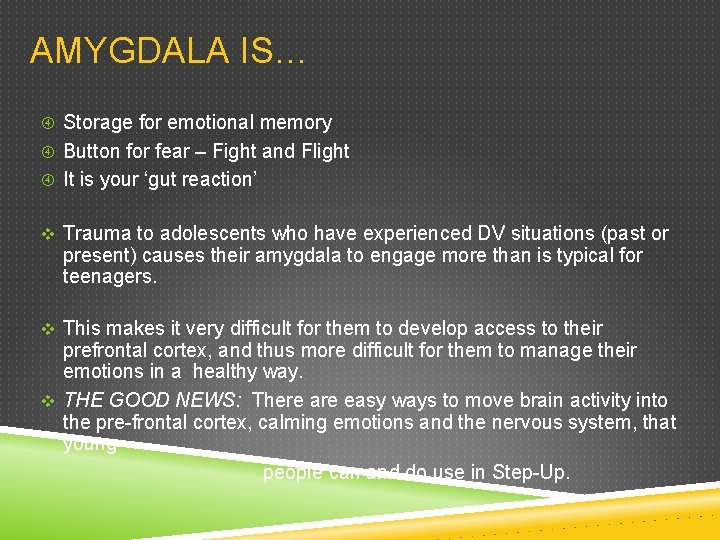
AMYGDALA IS… Storage for emotional memory Button for fear – Fight and Flight It is your ‘gut reaction’ v Trauma to adolescents who have experienced DV situations (past or present) causes their amygdala to engage more than is typical for teenagers. v This makes it very difficult for them to develop access to their prefrontal cortex, and thus more difficult for them to manage their emotions in a healthy way. v THE GOOD NEWS: There are easy ways to move brain activity into the pre-frontal cortex, calming emotions and the nervous system, that young people can and do use in Step-Up.
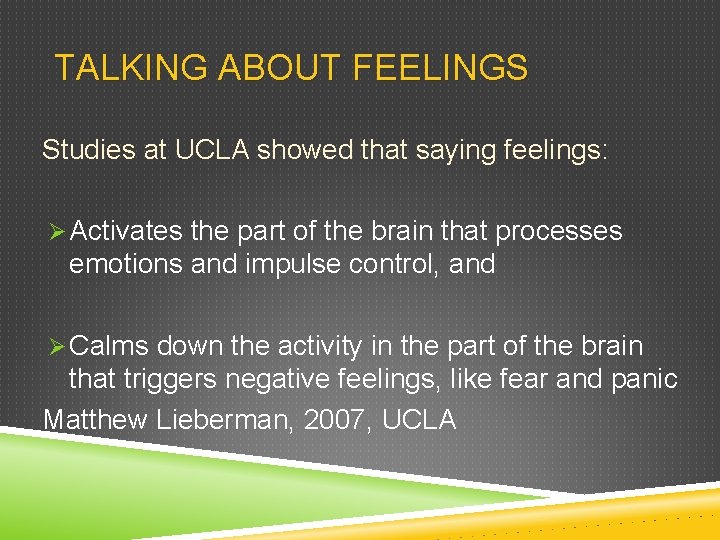
TALKING ABOUT FEELINGS Studies at UCLA showed that saying feelings: Ø Activates the part of the brain that processes emotions and impulse control, and Ø Calms down the activity in the part of the brain that triggers negative feelings, like fear and panic Matthew Lieberman, 2007, UCLA
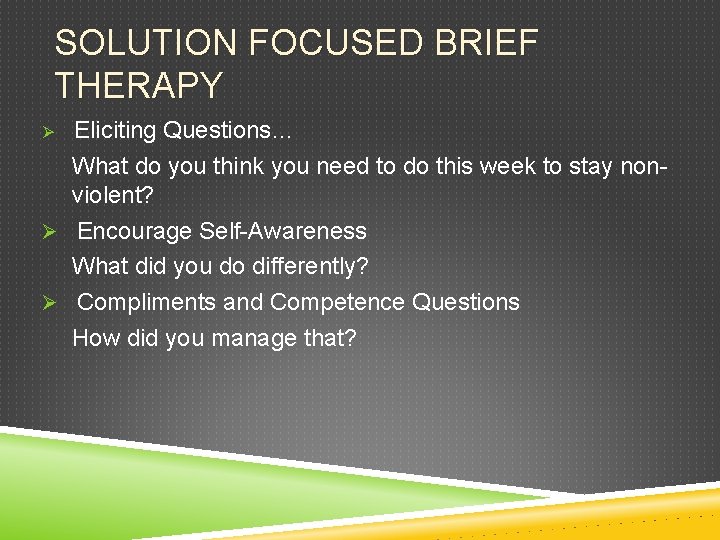
SOLUTION FOCUSED BRIEF THERAPY Eliciting Questions… What do you think you need to do this week to stay nonviolent? Ø Encourage Self-Awareness What did you do differently? Ø Compliments and Competence Questions How did you manage that? Ø
PRINCIPALS OF SFBT Focus on holding accountable for solutions, not just problems Centers on creating solutions rather than focus on problem Focuses on present and future What’s happening now and what do you need to do about it
STEP-UP GUIDING PRINCIPLE Ø Focus on the behavior, not the person o Behaviors can change o It’s not who you are o You are capable of change o Separating behavior from person reduces shame and empowers them to realize they have the ability to change their behavior
WHAT WE HAVE LEARNED: KEY FACTORS IN HELPING YOUTH CHANGE Keep the focus on safety and stopping violence Behavioral skills to replace abuse / violence Parent training to support youth’s behavior change Weekly goals for skill practice at home- targeting their needs/situation Involvement of parent/caretaker – skill training to support youth’s behavior change, learning the skills the youth learning A Restorative process for addressing violent incidents, teaching accountability and reducing shame Self-calming skills – parent and youth learning them together Collaboration with court and other providers (if involved) is essential
RESTORATIVE PRACTICE Stay tuned for power point presentation: Addressing Hurtful Behavior Through Restorative Process
FOR MORE INFORMATION CONTACT: Lily Anderson, Step-Up Program Co -Developer Lily. anderson@kingcounty. gov or Greg Routt, Step-Up Program Co. Developer gbroutt@yahoo. com To view Step-Up Curriculum google: King County Step-Up