
Unsegmented Worms Phylum Platyhelminthes Phylum Nematoda First Hunter
- Slides: 24
Unsegmented Worms Phylum Platyhelminthes & Phylum Nematoda First Hunter
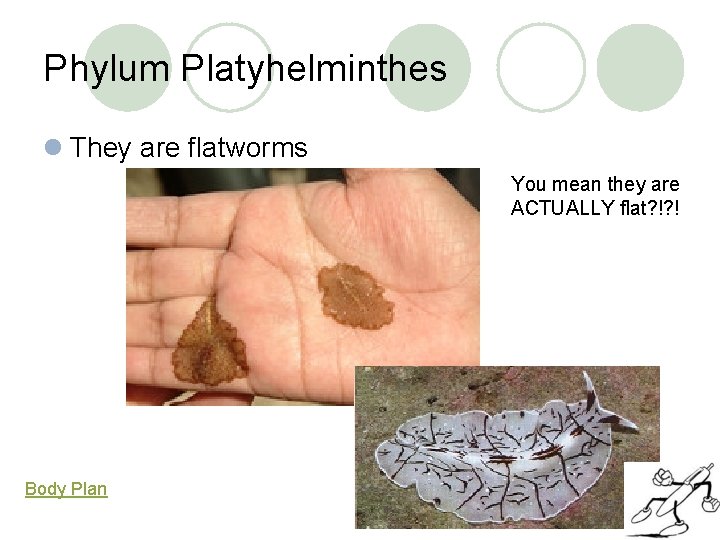
Phylum Platyhelminthes l They are flatworms You mean they are ACTUALLY flat? !? ! Body Plan
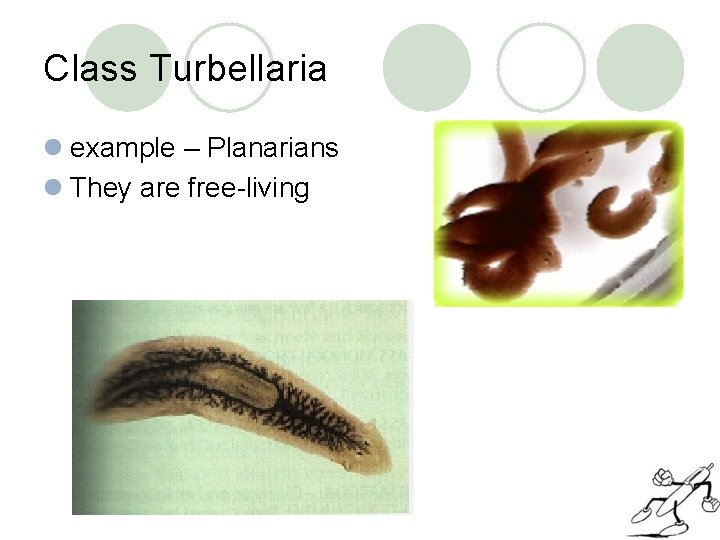
Class Turbellaria l example – Planarians l They are free-living
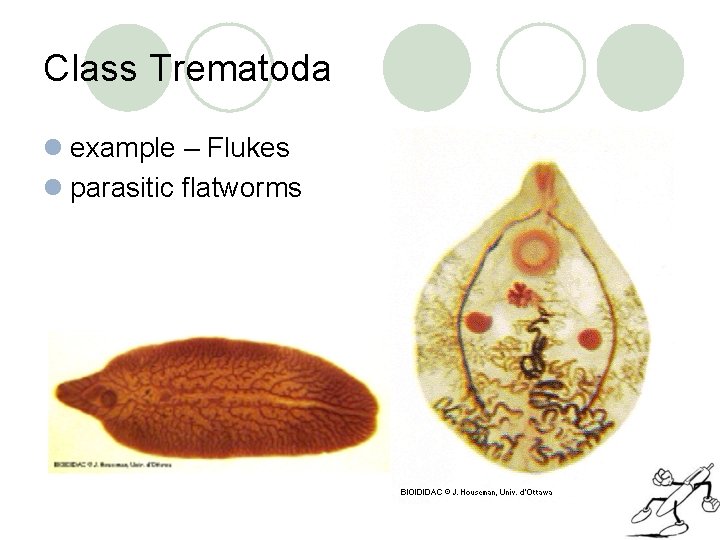
Class Trematoda l example – Flukes l parasitic flatworms
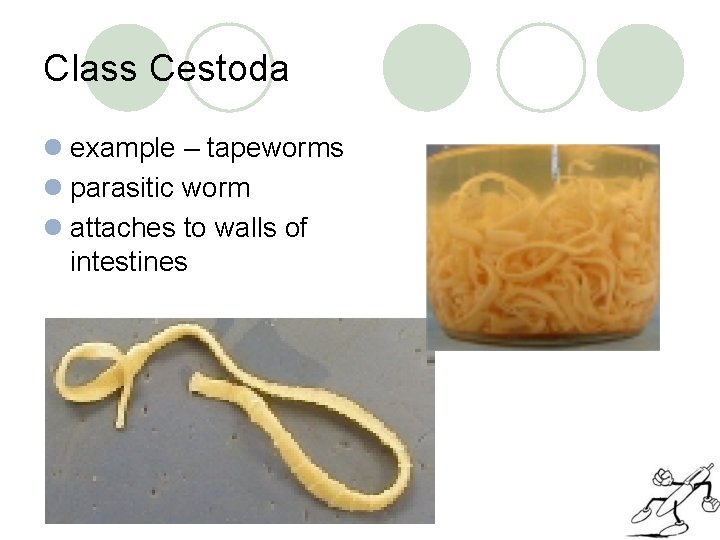
Class Cestoda l example – tapeworms l parasitic worm l attaches to walls of intestines
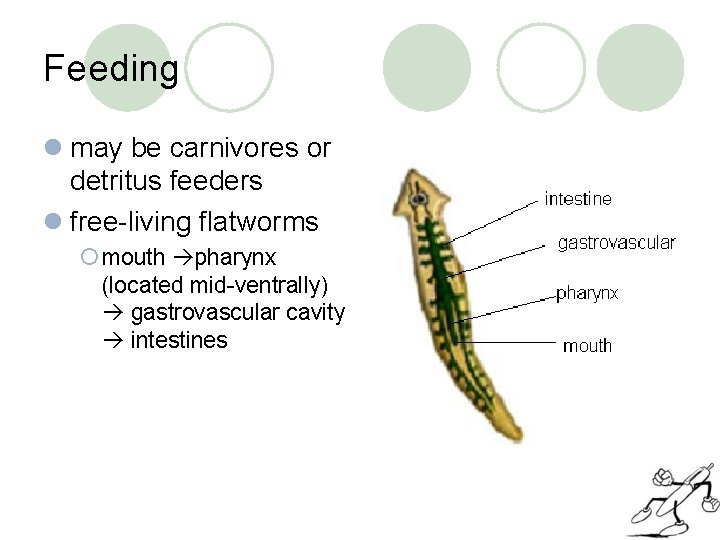
Feeding l may be carnivores or detritus feeders l free-living flatworms ¡ mouth pharynx (located mid-ventrally) gastrovascular cavity intestines
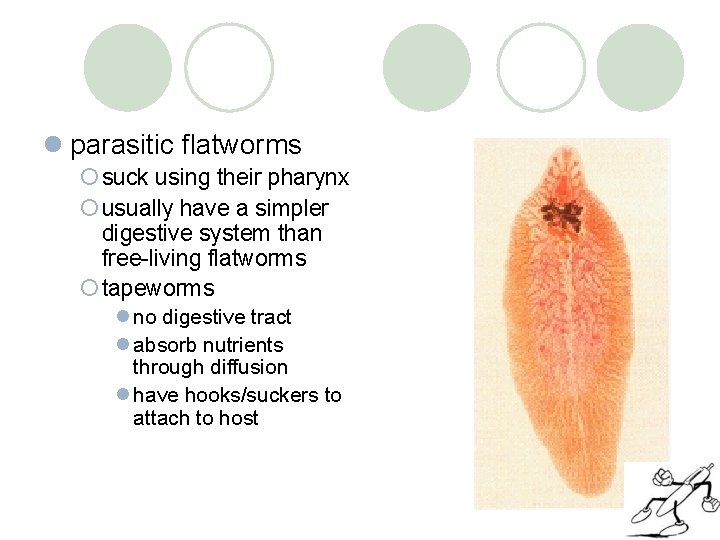
l parasitic flatworms ¡ suck using their pharynx ¡ usually have a simpler digestive system than free-living flatworms ¡ tapeworms l no digestive tract l absorb nutrients through diffusion l have hooks/suckers to attach to host
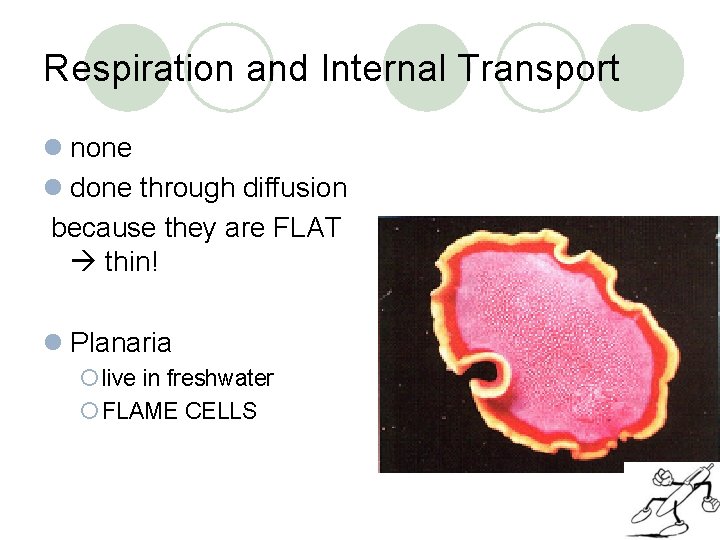
Respiration and Internal Transport l none l done through diffusion because they are FLAT thin! l Planaria ¡ live in freshwater ¡ FLAME CELLS
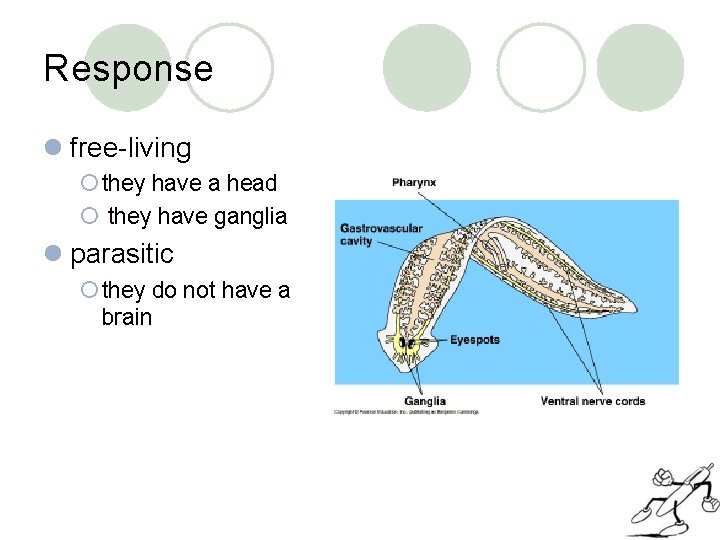
Response l free-living ¡ they have a head ¡ they have ganglia l parasitic ¡ they do not have a brain
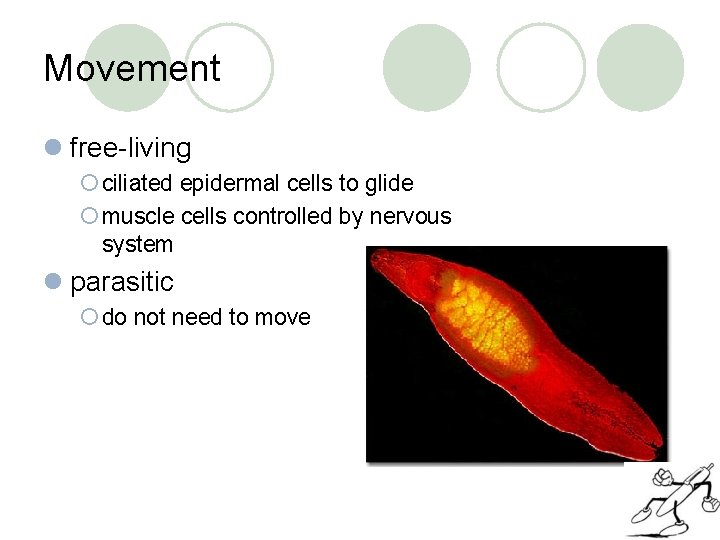
Movement l free-living ¡ ciliated epidermal cells to glide ¡ muscle cells controlled by nervous system l parasitic ¡ do not need to move
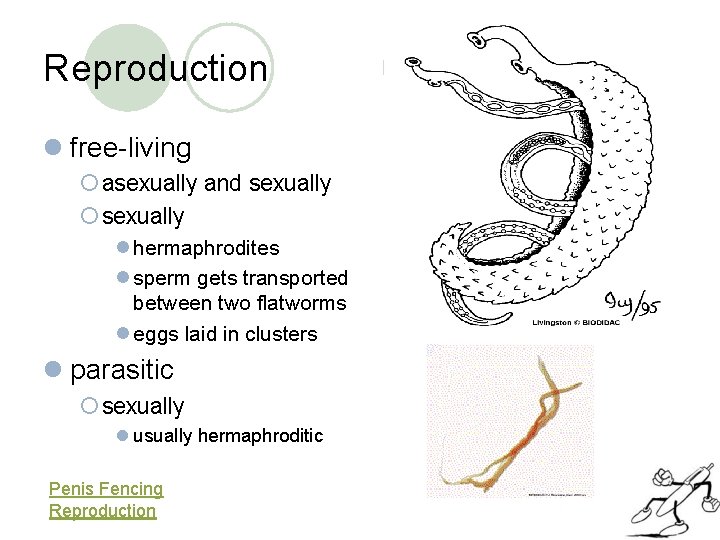
Reproduction l free-living ¡ asexually and sexually ¡ sexually l hermaphrodites l sperm gets transported between two flatworms l eggs laid in clusters l parasitic ¡ sexually l usually hermaphroditic Penis Fencing Reproduction
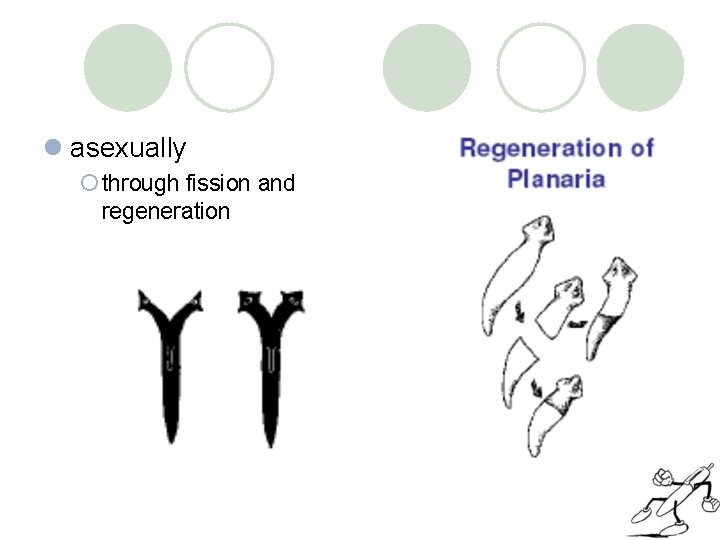
l asexually ¡ through fission and regeneration
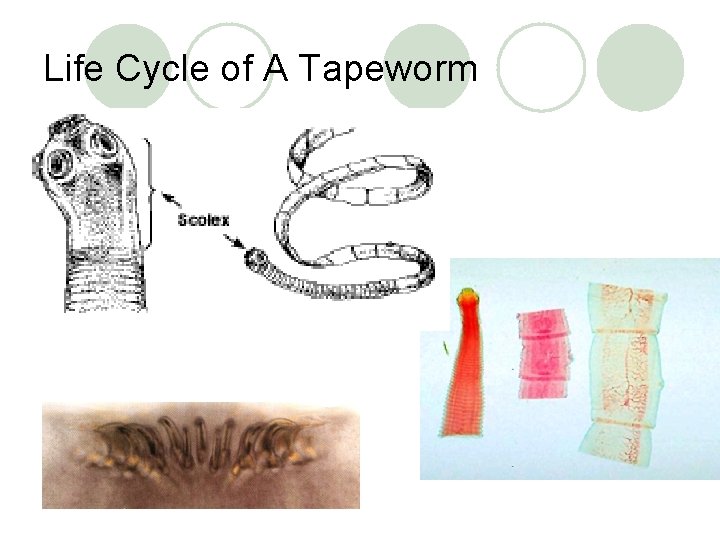
Life Cycle of A Tapeworm
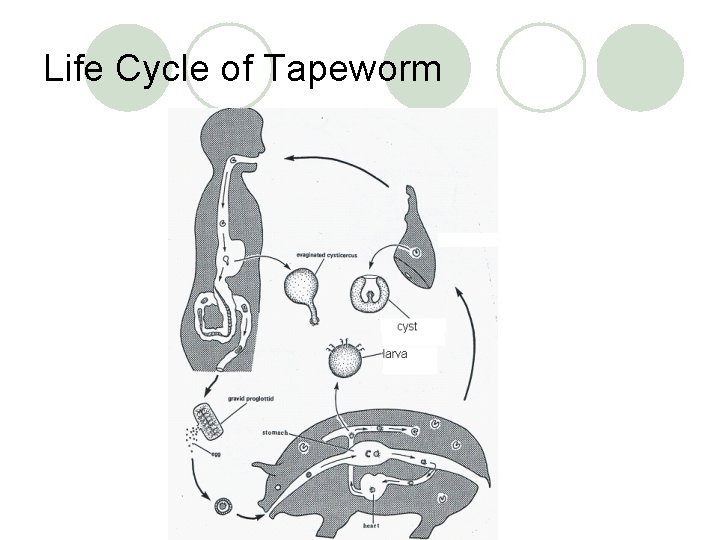
Life Cycle of Tapeworm
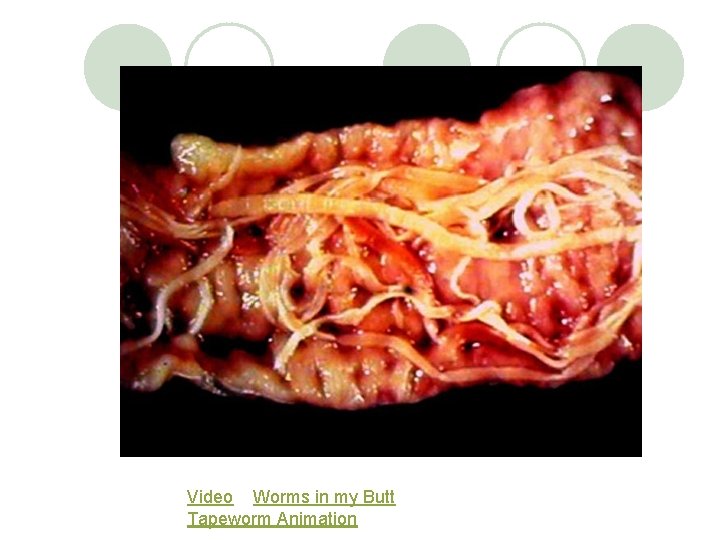
Video Worms in my Butt Tapeworm Animation
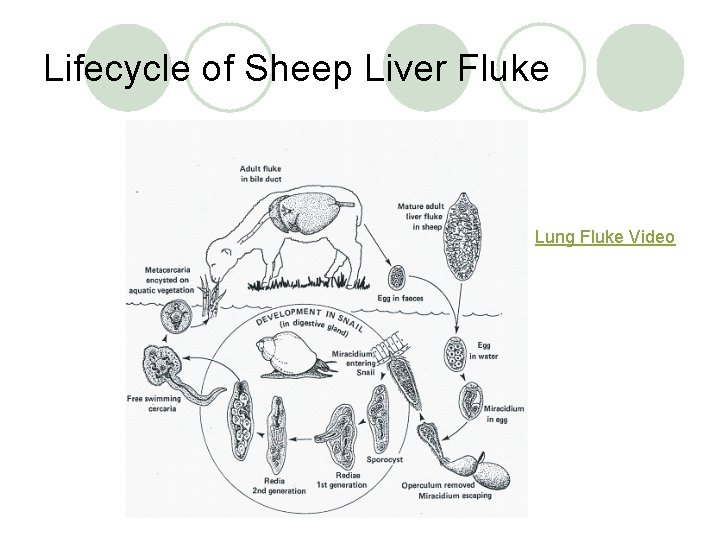
Lifecycle of Sheep Liver Fluke Lung Fluke Video
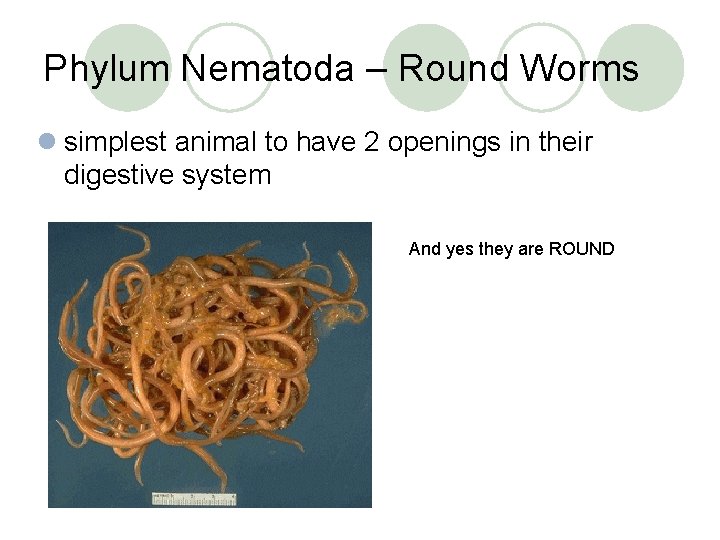
Phylum Nematoda – Round Worms l simplest animal to have 2 openings in their digestive system And yes they are ROUND
Feeding l carnivores, herbivores, detritus feeder, parasites l mouth stomach intestine anus
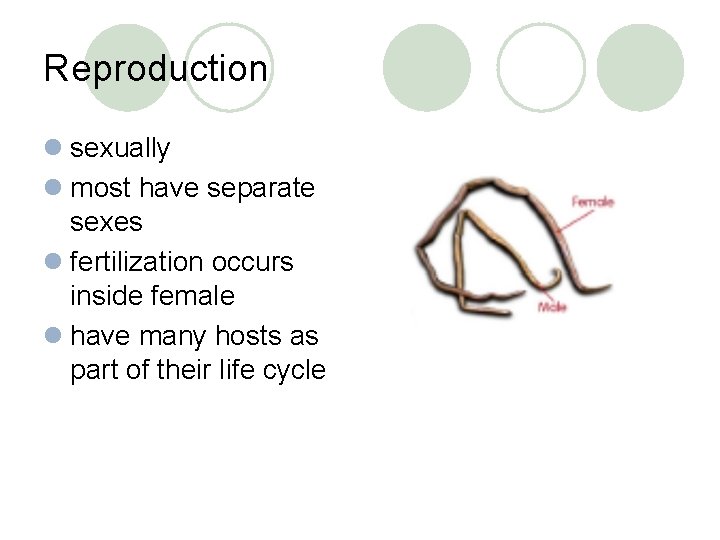
Reproduction l sexually l most have separate sexes l fertilization occurs inside female l have many hosts as part of their life cycle
Role of Roundworms l to cause pain! l hookworms
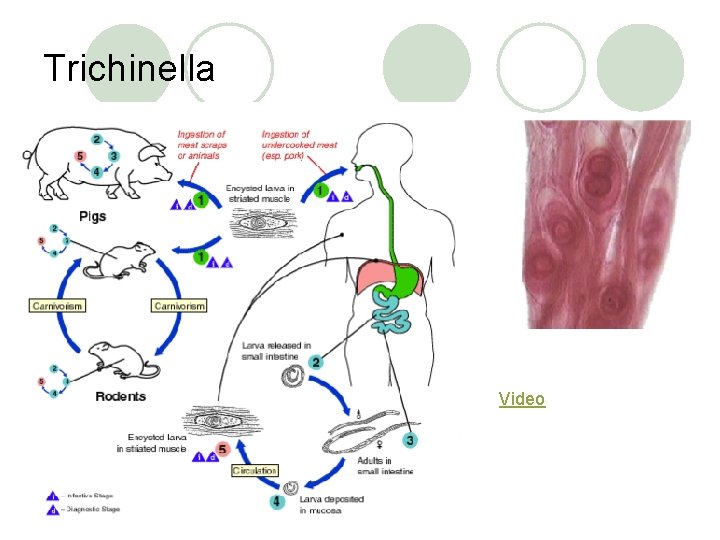
Trichinella Video
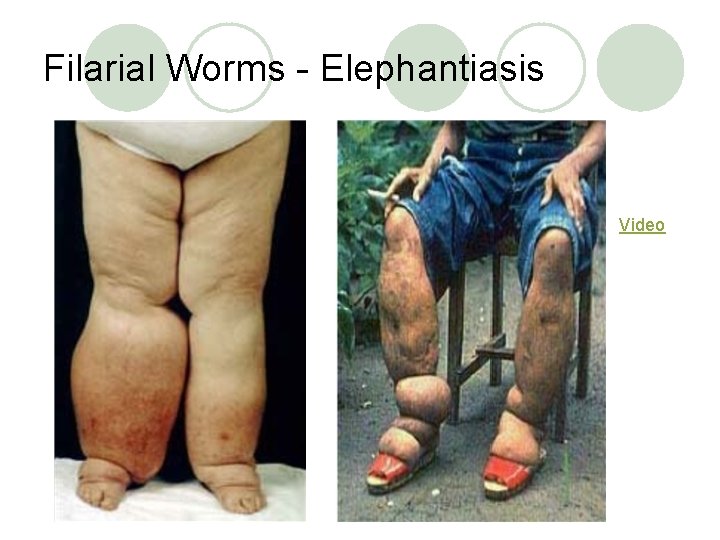
Filarial Worms - Elephantiasis Video
Nematode Video 1 Nematode Video 2 Nematode Video 3 Video
Sequencing events- Tapeworm’s Lifecycle 1. Grass contaminated with tapeworm eggs eaten by a cow __ Human eats poorly cooked meat __Mature tapeworms produce eggs __Eggs pass to the cow’s intestine and develop into immature worms __Tapeworm eggs cling to grass and soil __Human eliminates solid wastes containing tapeworm eggs __Blood carries immature worms to cow’s muscles (meat) __Immature worms develop into mature tapeworms in human intestines. __Immature worms dig out of cow’s intestine and enter cow’s bloodstream