
Unsegmented worms flatworms roundworms Kingdom Animalia Overview First

- Slides: 22
Unsegmented worms (flatworms & roundworms)
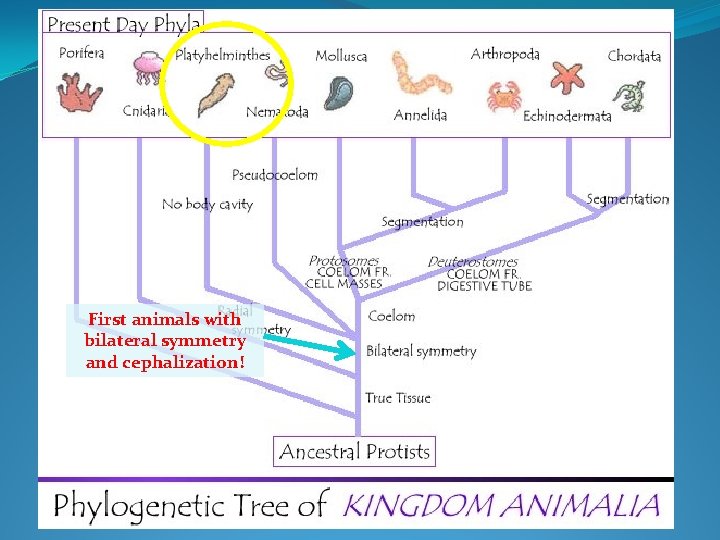
Kingdom Animalia Overview First animals with bilateral symmetry and cephalization!
General Characteristics �Eukaryotic, multicellular, heterotrophic �Includes Planaria (free-living) and parasites: fluke and tapeworm � 3 germ layers: endoderm, mesoderm & ectoderm �Acoelomates (no central body cavity) �Bilateral symmetry – has symmetry in only one direction �Cephalization! Nervous tissue is concentrated in one end of organism. �Two way digestive system (one opening) �Hermaphrodites �Regeneration/Fragmentation
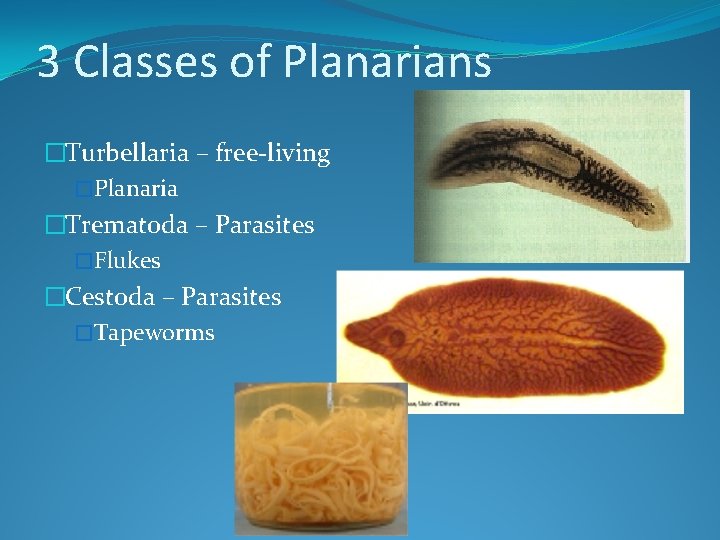
3 Classes of Planarians �Turbellaria – free-living �Planaria �Trematoda – Parasites �Flukes �Cestoda – Parasites �Tapeworms
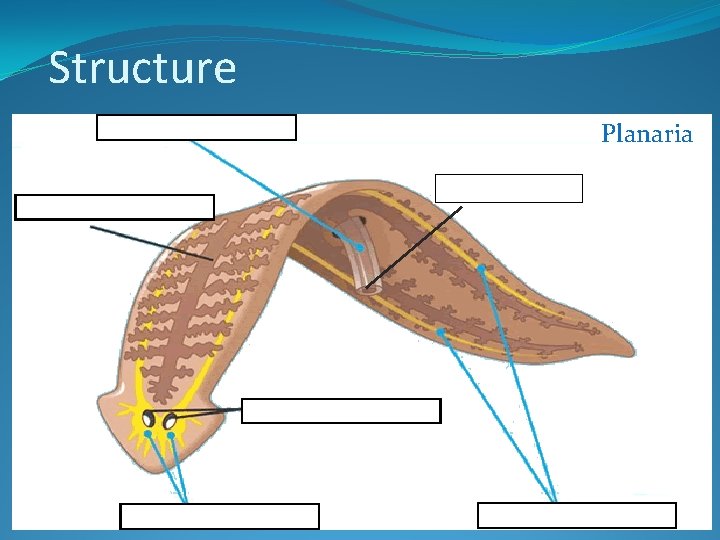
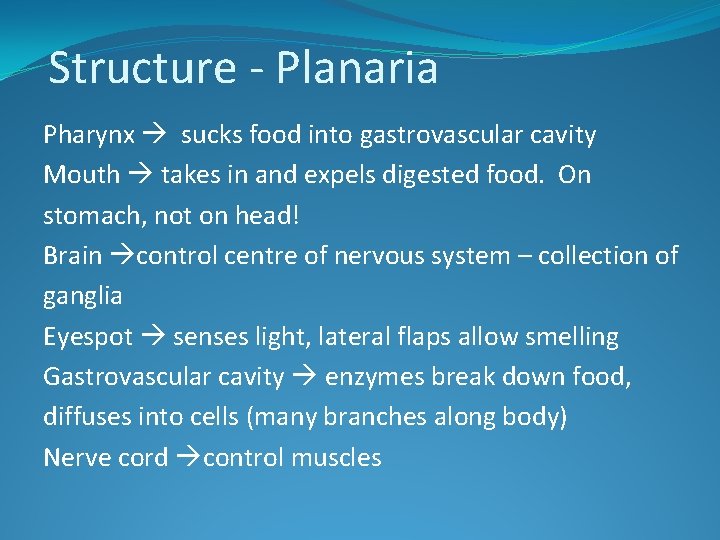
Structure Planaria
Structure - Planaria Pharynx sucks food into gastrovascular cavity Mouth takes in and expels digested food. On stomach, not on head! Brain control centre of nervous system – collection of ganglia Eyespot senses light, lateral flaps allow smelling Gastrovascular cavity enzymes break down food, diffuses into cells (many branches along body) Nerve cord control muscles
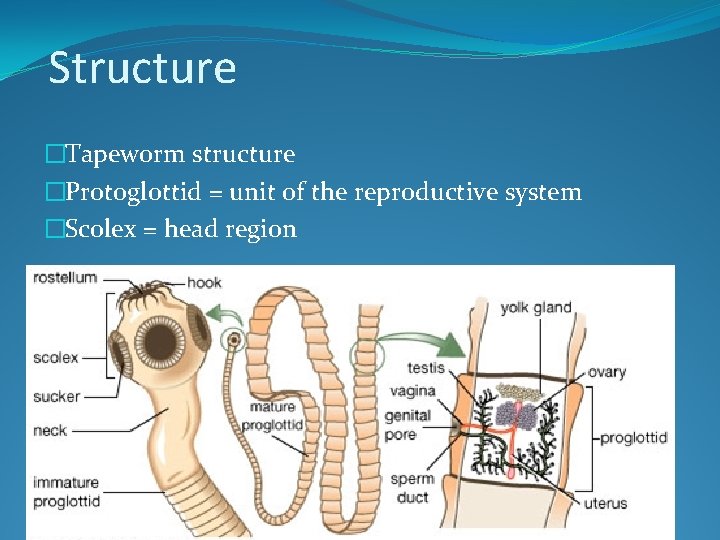
Structure �Tapeworm structure �Prot 0 glottid = unit of the reproductive system �Scolex = head region
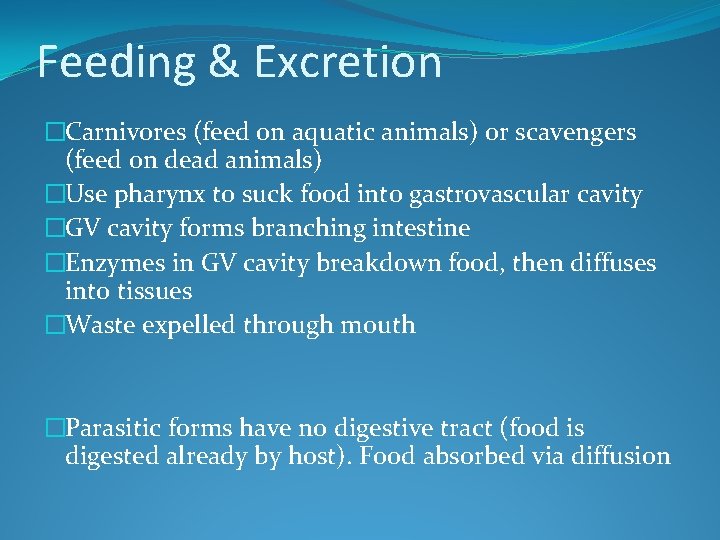
Feeding & Excretion �Carnivores (feed on aquatic animals) or scavengers (feed on dead animals) �Use pharynx to suck food into gastrovascular cavity �GV cavity forms branching intestine �Enzymes in GV cavity breakdown food, then diffuses into tissues �Waste expelled through mouth �Parasitic forms have no digestive tract (food is digested already by host). Food absorbed via diffusion
Response � simple “brain” (collection of ganglia) �Nerve cords down length of body �Ocelli (eye spots) – detect light & dark �Cells to detect food source, direction of water flow �Parasitic forms – no nervous system Movement �Cilia on epidermal cells glide along a film of mucus they secrete �Muscle cells controlled by nervous system allows twisting and turning �Parasitic – no need for movement (constant supply of food)
Circulation & Respiration �Rely on diffusion for transport and for gas exchange �Some use flame cells for reproduction Reproduction �Most free-living (non-parasitic) are hermaphrodites (sexual reproduction) �Some: asexual reproduction through fission �Parasites – complicated life cycles. Sexual reproduction, no fission
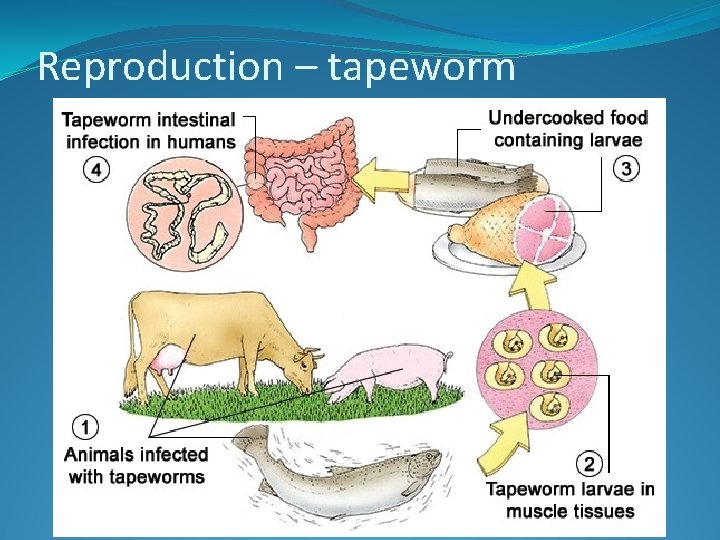
Reproduction – tapeworm
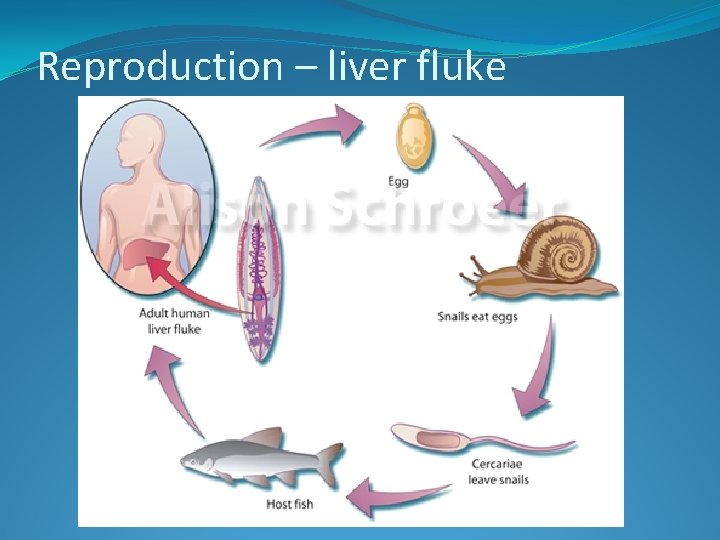
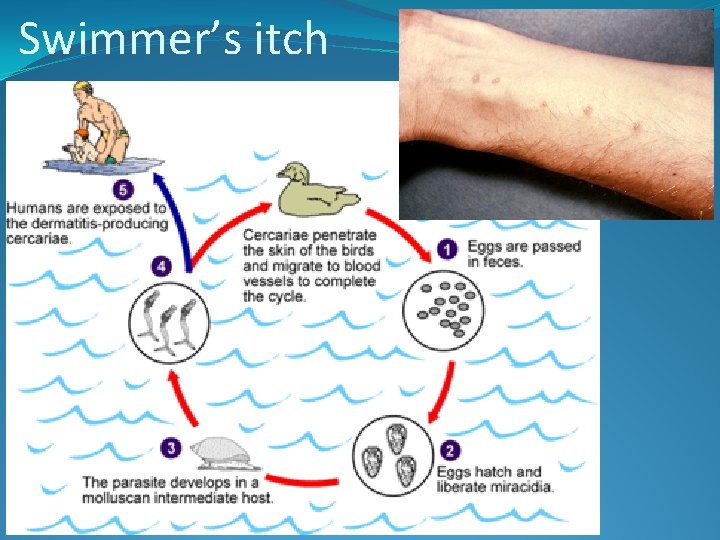
Reproduction – liver fluke
Swimmer’s itch
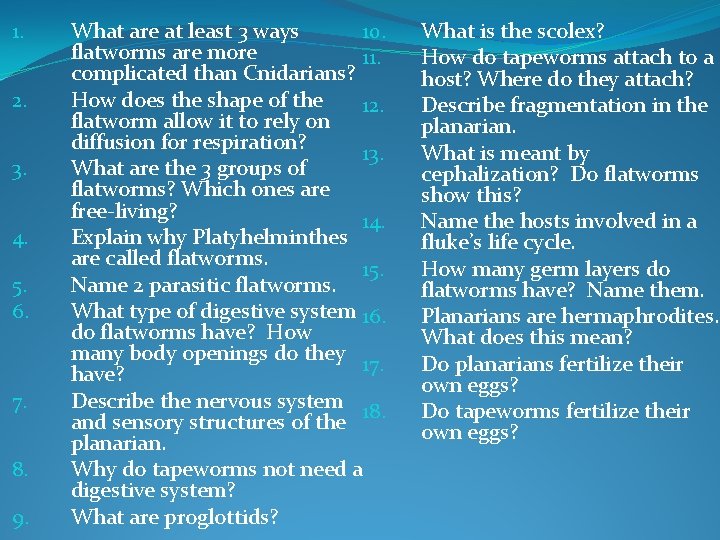
1. 2. 3. 4. 5. 6. 7. 8. 9. 10. What are at least 3 ways flatworms are more 11. complicated than Cnidarians? How does the shape of the 12. flatworm allow it to rely on diffusion for respiration? 13. What are the 3 groups of flatworms? Which ones are free-living? 14. Explain why Platyhelminthes are called flatworms. 15. Name 2 parasitic flatworms. What type of digestive system 16. do flatworms have? How many body openings do they 17. have? Describe the nervous system 18. and sensory structures of the planarian. Why do tapeworms not need a digestive system? What are proglottids? What is the scolex? How do tapeworms attach to a host? Where do they attach? Describe fragmentation in the planarian. What is meant by cephalization? Do flatworms show this? Name the hosts involved in a fluke’s life cycle. How many germ layers do flatworms have? Name them. Planarians are hermaphrodites. What does this mean? Do planarians fertilize their own eggs? Do tapeworms fertilize their own eggs?
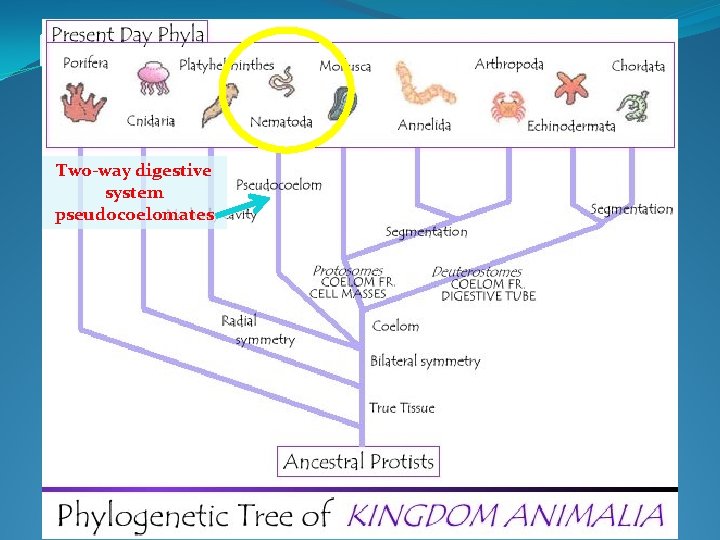
Kingdom Animalia Overview Two-way digestive system pseudocoelomates
General Characteristics �Well defined digestive system with TWO openings �Most are free-living and some parasitic �Unsegmented worms with tapering ends �Bilateral symmetry and cephalization
Structure
General Characteristics �Well defined digestive system with TWO openings �Most are free-living and some parasitic �Unsegmented worms with tapering ends �Bilateral symmetry and cephalization
Feeding �Long tube-shaped digestive tract with a separate mouth and anus creates a one-way digestive system. �food goes in through the mouth, and undigested food is expelled from the anus � �Free-living roundworms are often carnivores that eat tiny animals �Some eat algae, fungi, or rotting organic matter �Some attach to the roots of plants and suck out the plant juices
Response �simple nervous systems: several ganglia (groups of nerve cells) in head region but no real brain � Nerves attached to the ganglia run the length of the body �Simple sense organs detect chemicals given off by prey or hosts
Movement �Longitudinal muscles run in strips down their bodies, and when contracted allow them to move similar to snakes to push their way forward Internal Transport �Breathe and excrete metabolic wastes through their body walls using diffusion, just like flatworms
Reproduction �Roundworms reproduce sexually, and most species have separate male and female sexes � few are hermaphroditic �Fertilization happens inside the female � �Parasitic roundworms often have complex life cycles involving two or three hosts