
Unsaturated Hydrocarbons Alkenes 1435 1436 2014 2015 Alkenes
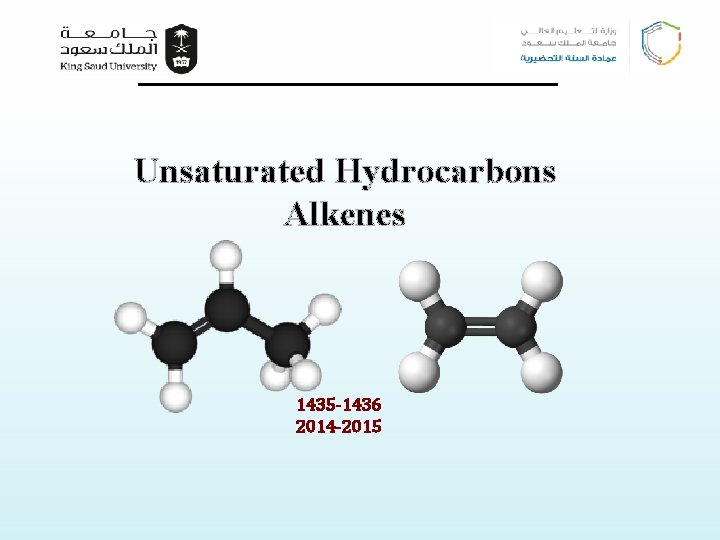
Unsaturated Hydrocarbons Alkenes 1435 -1436 2014 -2015
Alkenes Learning Objectives Chapter two discusses the following topics and the student by the end of this chapter will: Ø Know the structure, hybridization and bonding of alkenes Ø Know the common and IUPAC naming of alkenes Ø Know the geometry of the double bond i. e. cis/trans isomerization Ø Know the physical properties of alkenes Ø Know the different methods used for preparation of alkenes (elimination reactions ; dehydrogenation, dehydration and alkenes stability (Zaitsev’s rule) play an important role in understanding these reactions Ø Know the addition reactions of alkenes and the effect of Markovnikov’s rule in determining the regioselectivity of this reaction.
Alkenes tructure Of Alkenes ØThey are unsaturated hydrocarbons – made up of C and H atoms and contain one or more C=C double bond somewhere in their structures. ØTheir general formula is Cn. H 2 n - for non-cyclic alkenes ØTheir general formula is Cn. H 2 n-2 - for cyclic alkenes 3
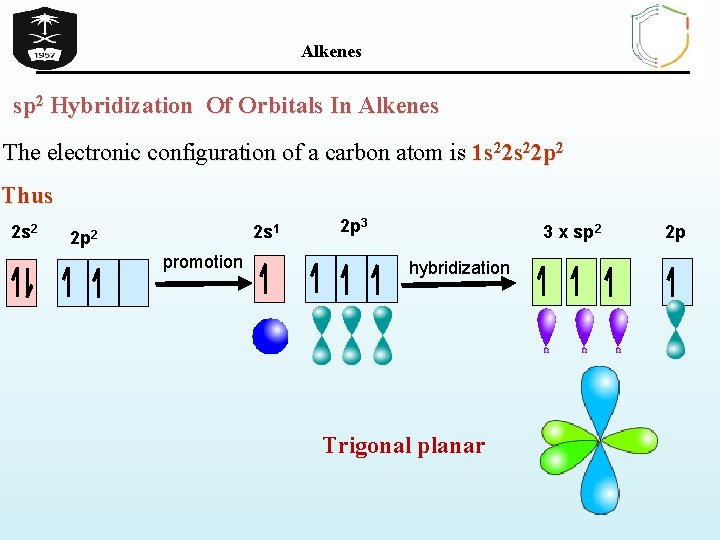
Alkenes sp 2 Hybridization Of Orbitals In Alkenes The electronic configuration of a carbon atom is 1 s 22 p 2 Thus 2 s 2 2 s 1 2 p 2 promotion 2 p 3 3 x sp 2 hybridization Trigonal planar 2 p
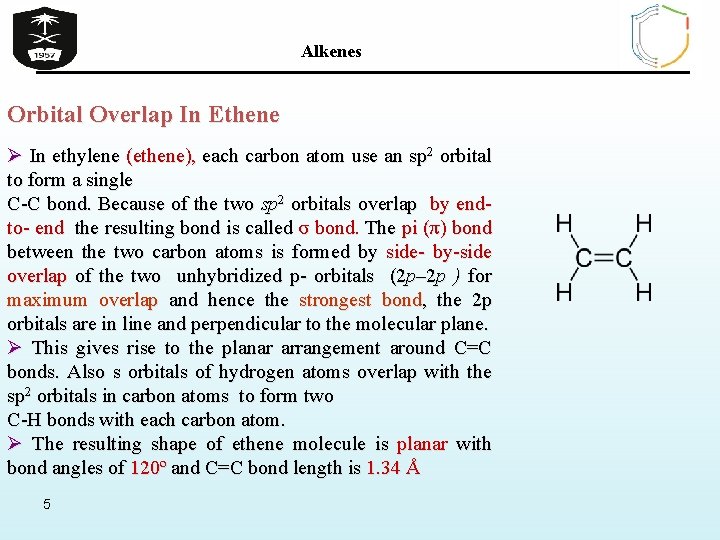
Alkenes Orbital Overlap In Ethene Ø In ethylene (ethene), each carbon atom use an sp 2 orbital to form a single C-C bond. Because of the two sp 2 orbitals overlap by end- to- end the resulting bond is called σ bond. The pi (π) bond between the two carbon atoms is formed by side- by-side overlap of the two unhybridized p- orbitals (2 p– 2 p ) for maximum overlap and hence the strongest bond, the 2 p orbitals are in line and perpendicular to the molecular plane. Ø This gives rise to the planar arrangement around C=C bonds. Also s orbitals of hydrogen atoms overlap with the sp 2 orbitals in carbon atoms to form two C-H bonds with each carbon atom. Ø The resulting shape of ethene molecule is planar with bond angles of 120º and C=C bond length is 1. 34 Å 5
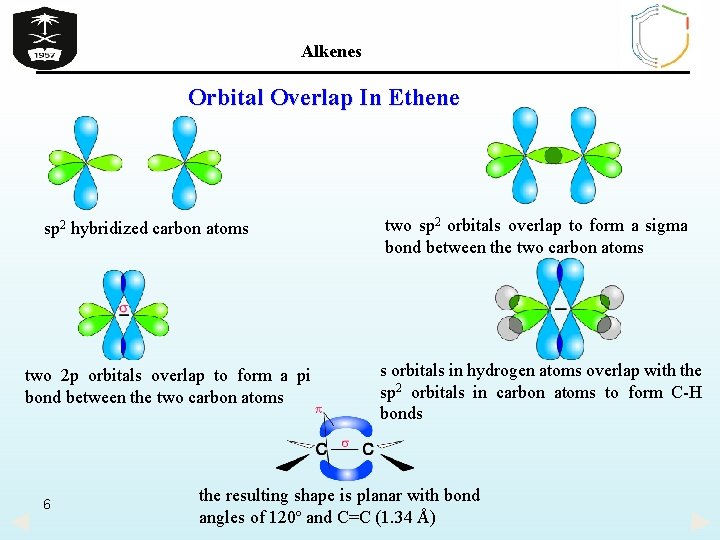
Alkenes Orbital Overlap In Ethene sp 2 hybridized carbon atoms two 2 p orbitals overlap to form a pi bond between the two carbon atoms 6 two sp 2 orbitals overlap to form a sigma bond between the two carbon atoms s orbitals in hydrogen atoms overlap with the sp 2 orbitals in carbon atoms to form C-H bonds the resulting shape is planar with bond angles of 120º and C=C (1. 34 Å)
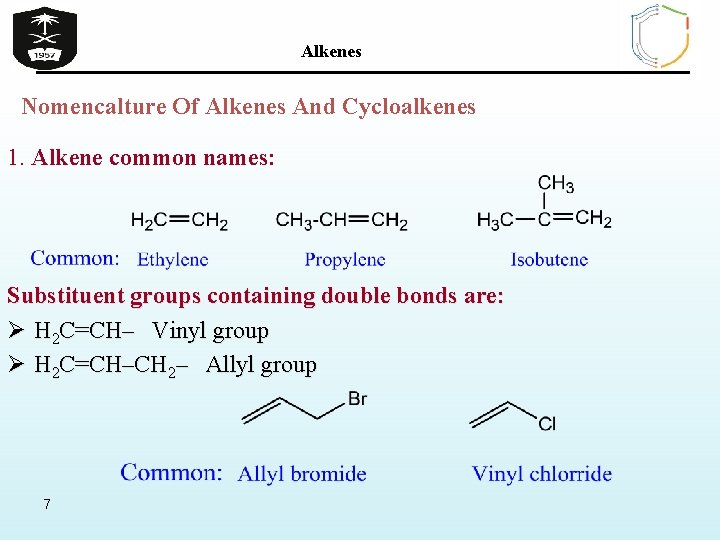
Alkenes Nomencalture Of Alkenes And Cycloalkenes 1. Alkene common names: Substituent groups containing double bonds are: Ø H 2 C=CH– Vinyl group Ø H 2 C=CH–CH 2– Allyl group 7
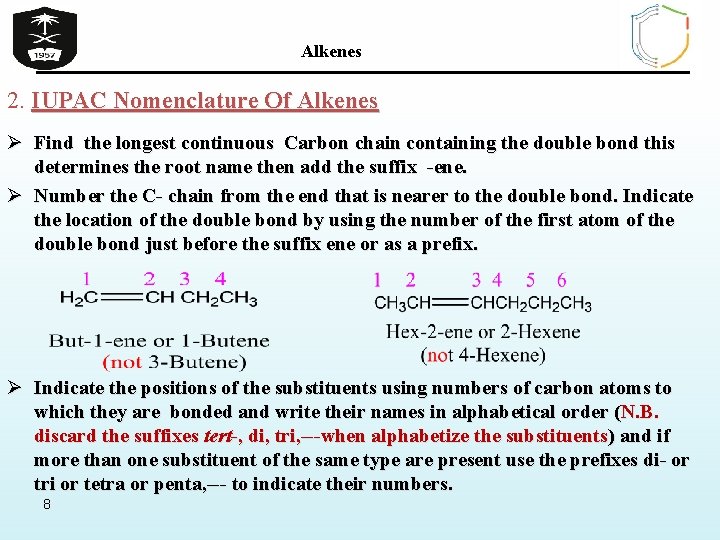
Alkenes 2. IUPAC Nomenclature Of Alkenes Ø Find the longest continuous Carbon chain containing the double bond this determines the root name then add the suffix -ene. Ø Number the C- chain from the end that is nearer to the double bond. Indicate the location of the double bond by using the number of the first atom of the double bond just before the suffix ene or as a prefix. Ø Indicate the positions of the substituents using numbers of carbon atoms to which they are bonded and write their names in alphabetical order (N. B. discard the suffixes tert-, di, tri, ---when alphabetize the substituents) and if more than one substituent of the same type are present use the prefixes di- or tri or tetra or penta, --- to indicate their numbers. 8
Alkenes
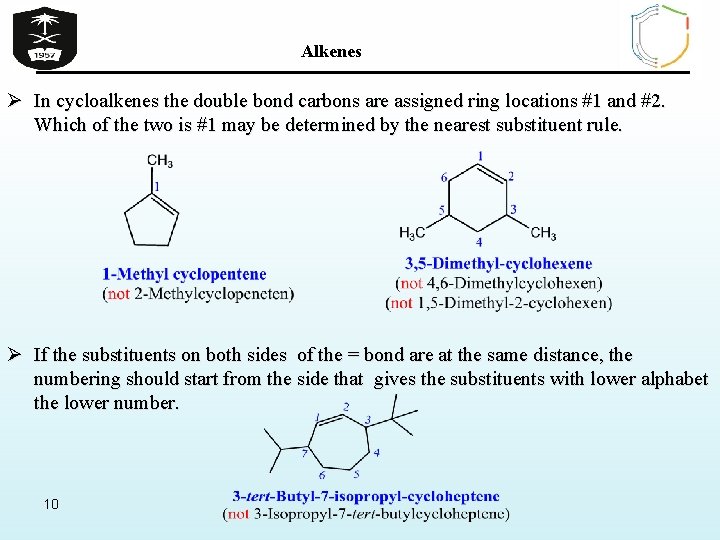
Alkenes Ø In cycloalkenes the double bond carbons are assigned ring locations #1 and #2. Which of the two is #1 may be determined by the nearest substituent rule. Ø If the substituents on both sides of the = bond are at the same distance, the numbering should start from the side that gives the substituents with lower alphabet the lower number. 10
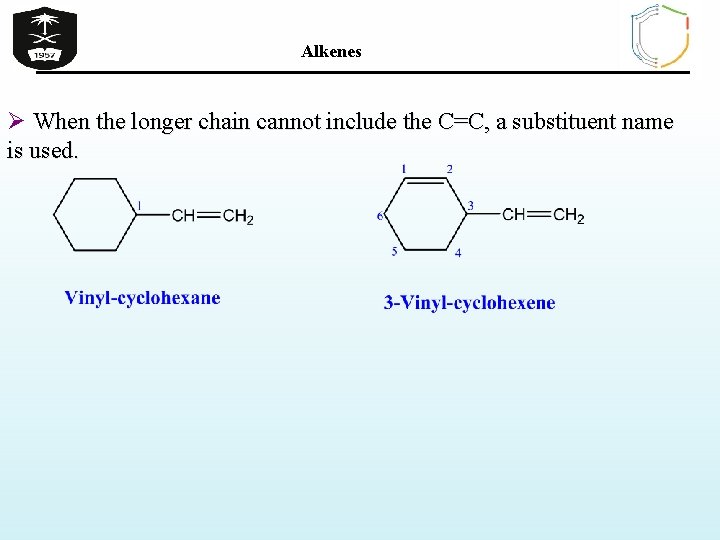
Alkenes Ø When the longer chain cannot include the C=C, a substituent name is used.
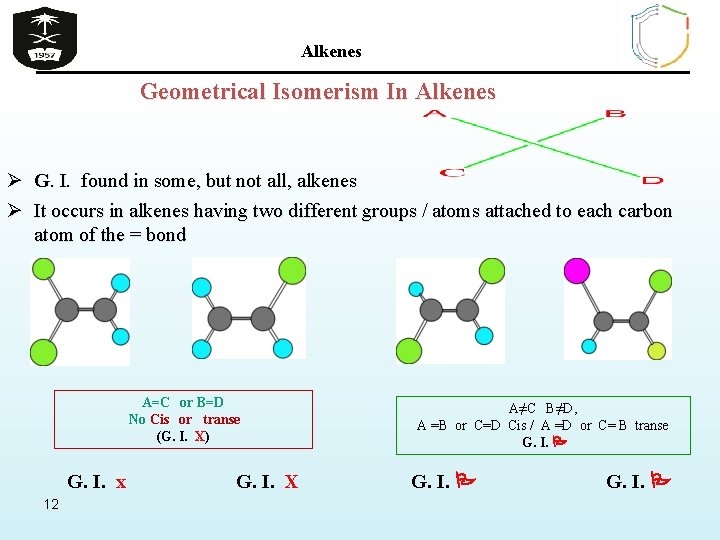
Alkenes Geometrical Isomerism In Alkenes Ø G. I. found in some, but not all, alkenes Ø It occurs in alkenes having two different groups / atoms attached to each carbon atom of the = bond A=C or B=D No Cis or transe (G. I. X) G. I. x 12 G. I. X A≠C B≠D, A =B or C=D Cis / A =D or C= B transe G. I.
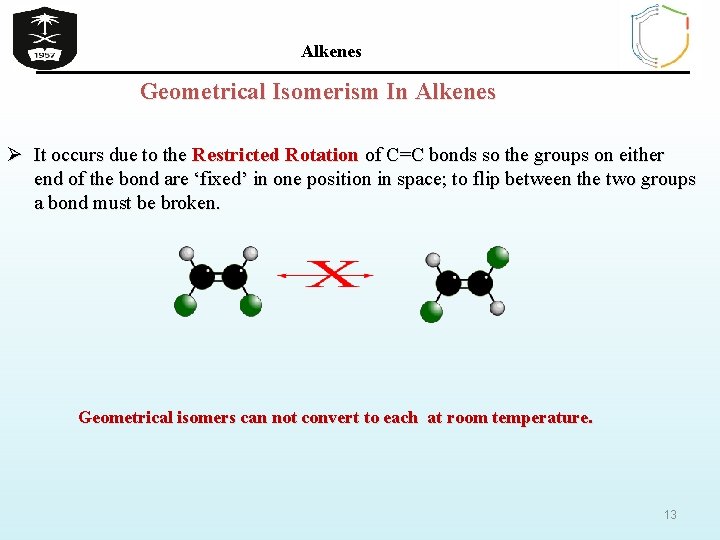
Alkenes Geometrical Isomerism In Alkenes Ø It occurs due to the Restricted Rotation of C=C bonds so the groups on either end of the bond are ‘fixed’ in one position in space; to flip between the two groups a bond must be broken. Geometrical isomers can not convert to each at room temperature. 13
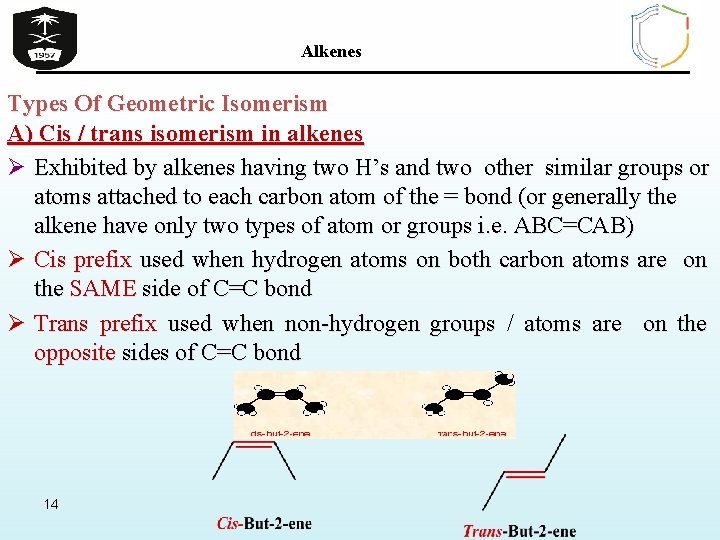
Alkenes Types Of Geometric Isomerism A) Cis / trans isomerism in alkenes Ø Exhibited by alkenes having two H’s and two other similar groups or atoms attached to each carbon atom of the = bond (or generally the alkene have only two types of atom or groups i. e. ABC=CAB) Ø Cis prefix used when hydrogen atoms on both carbon atoms are on the SAME side of C=C bond Ø Trans prefix used when non-hydrogen groups / atoms are on the opposite sides of C=C bond 14
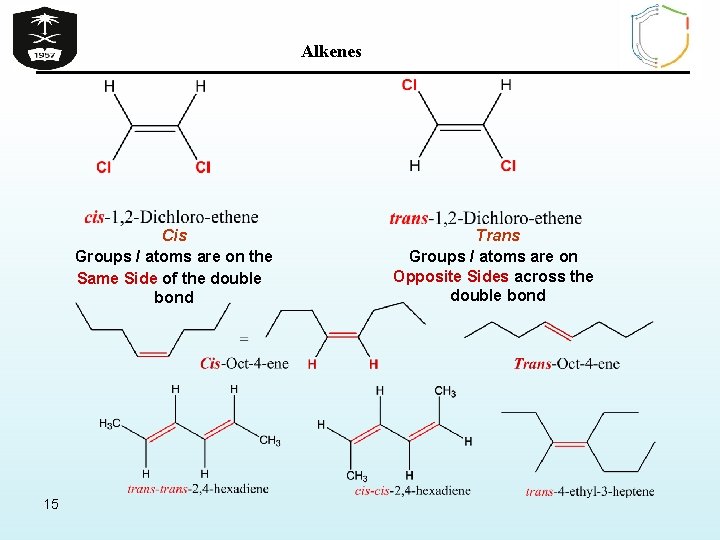
Alkenes Cis Groups / atoms are on the Same Side of the double bond 15 Trans Groups / atoms are on Opposite Sides across the double bond
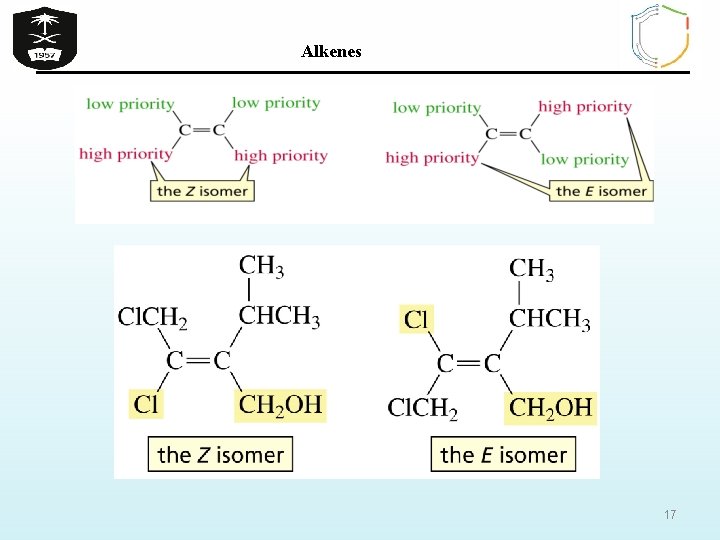
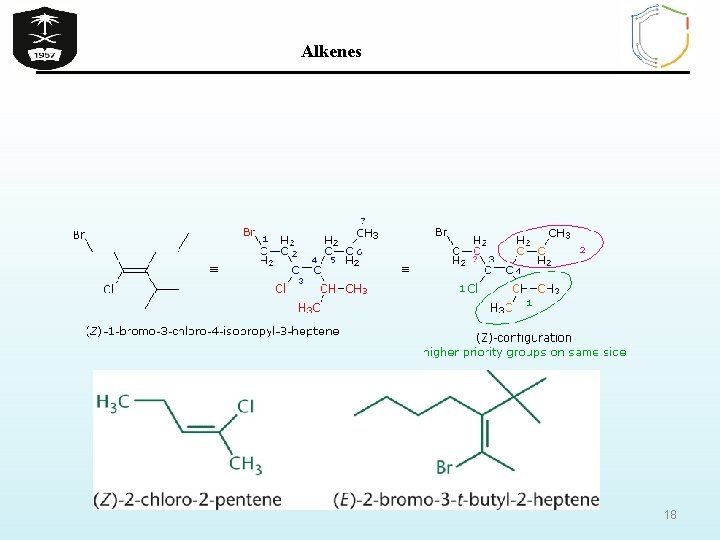
Alkenes B) Z/ E isomerism in alkenes If the groups attached to the C=C are different, we distinguish the two isomers by adding the prefix Z (from German word Zusammen) if the higher-priority groups are together in the same side or E (from German word Entgegen) if the higherpriority groups are opposite sides depending on the atomic number of the atoms attached to each end of the C=C. Atoms with higher atomic numbers receive higher priority I> Br > Cl > F > O > N > C > H 16
Alkenes 17
Alkenes 18
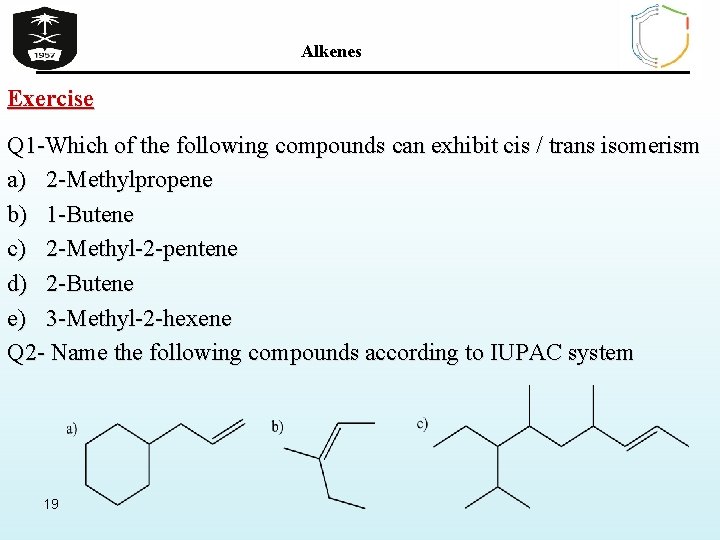
Alkenes Exercise Q 1 -Which of the following compounds can exhibit cis / trans isomerism a) 2 -Methylpropene b) 1 -Butene c) 2 -Methyl-2 -pentene d) 2 -Butene e) 3 -Methyl-2 -hexene Q 2 - Name the following compounds according to IUPAC system 19
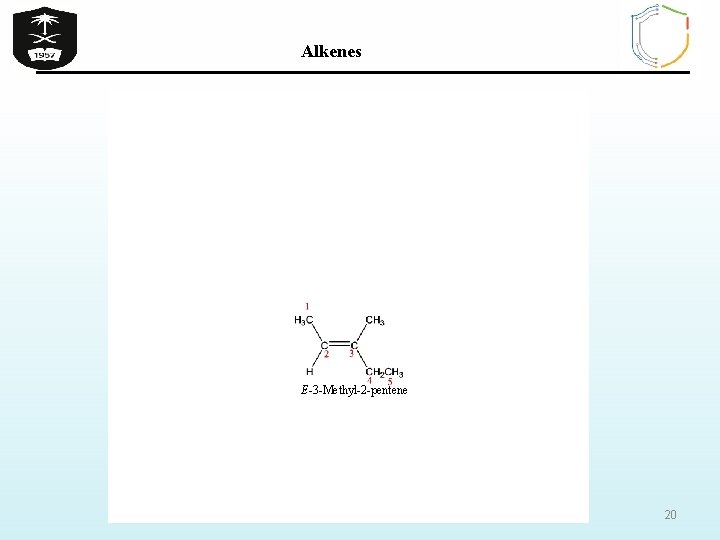
Alkenes E-3 -Methyl-2 -pentene 20
Alkenes Physical Properties of Alkenes Ø Ø 21 Alkenes are nonpolar compounds thus: Insoluble in water Soluble in nonpolar solvents ( hexane, benzene, …) The boiling point of alkenes increase as the number of carbons increase.
Alkenes Preparation Of Aalkenes 1 - Dehydration of alcohols ( removal of OH group and a proton from two adjacent carbon atoms ) using mineral acids such as H 2 SO 4 or H 3 PO 4 22
Alkenes Zaitsev’s. Rule Ø If there are different protons can be eliminated with the hydroxyl group or with halogen atom, in this case more than one alkene can be formed, the major product will be the alkene with the most alkyl substituents attached to the double bonded carbon. Zaitsev rule: an elimination occurs to give the most stable, more highly substituted alkene 23
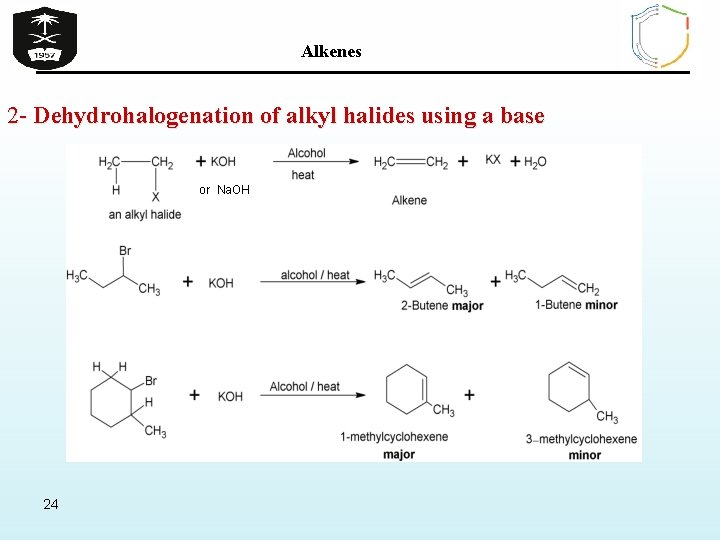
Alkenes 2 - 2 - Dehydrohalogenation of alkyl halides using a base or Na. OH 24
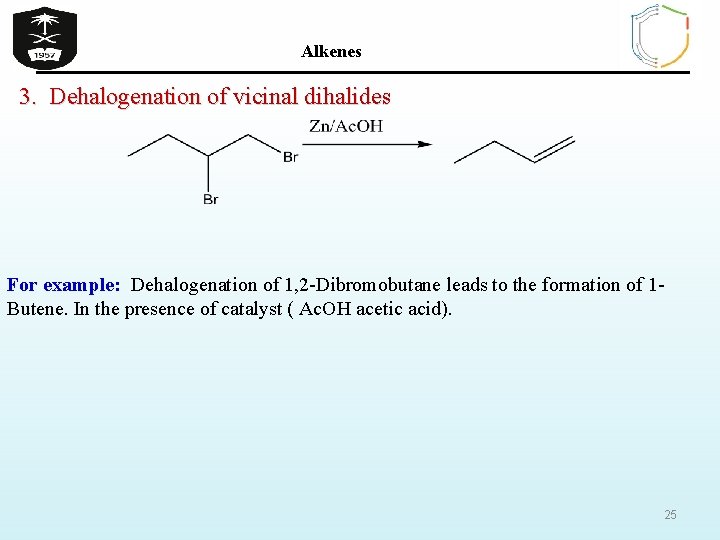
Alkenes 3. Dehalogenation of vicinal dihalides For example: Dehalogenation of 1, 2 -Dibromobutane leads to the formation of 1 Butene. In the presence of catalyst ( Ac. OH acetic acid). 25
Alkenes Reactions Of Alkenes 26
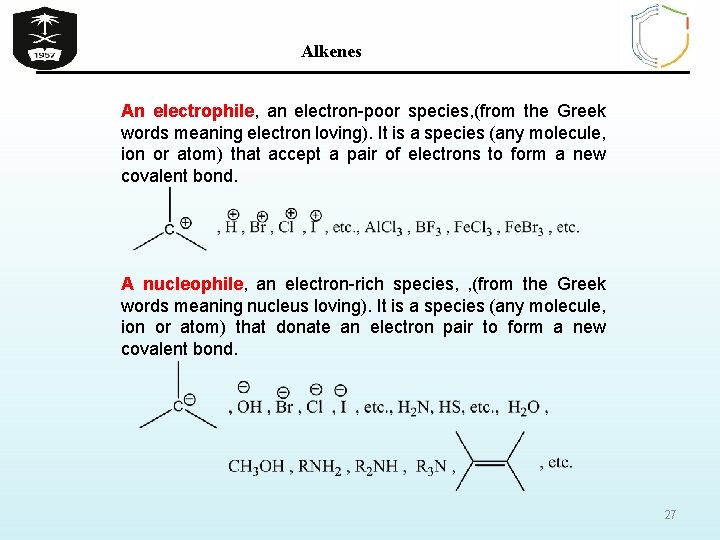
Alkenes An electrophile, an electron-poor species, (from the Greek words meaning electron loving). It is a species (any molecule, ion or atom) that accept a pair of electrons to form a new covalent bond. A nucleophile, an electron-rich species, , (from the Greek words meaning nucleus loving). It is a species (any molecule, ion or atom) that donate an electron pair to form a new covalent bond. 27
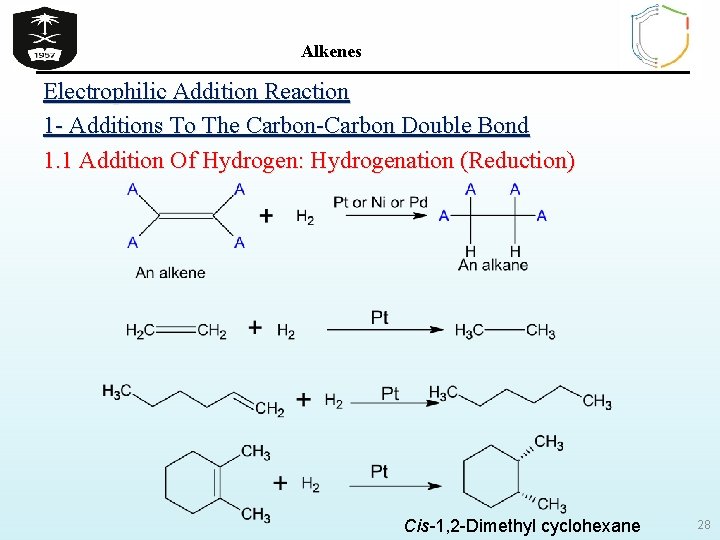
Alkenes Electrophilic Addition Reaction 1 - Additions To The Carbon-Carbon Double Bond 1. 1 Addition Of Hydrogen: Hydrogenation (Reduction) Cis-1, 2 -Dimethyl cyclohexane 28
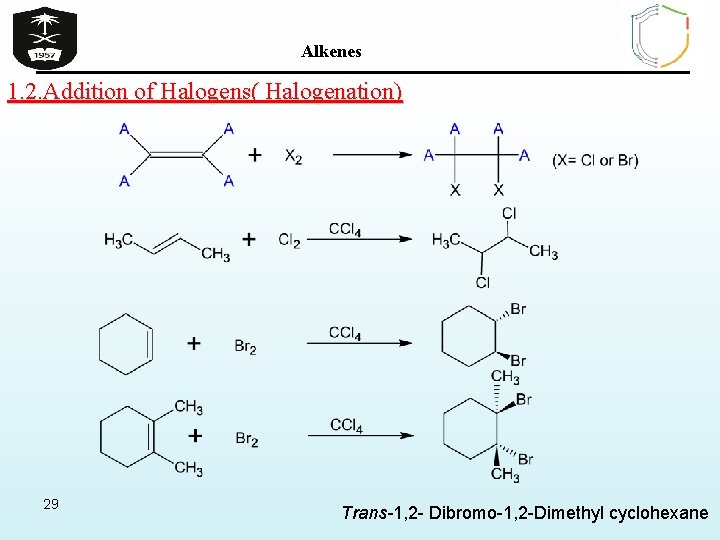
Alkenes 1. 2. Addition of Halogens( Halogenation) 29 Trans-1, 2 - Dibromo-1, 2 -Dimethyl cyclohexane
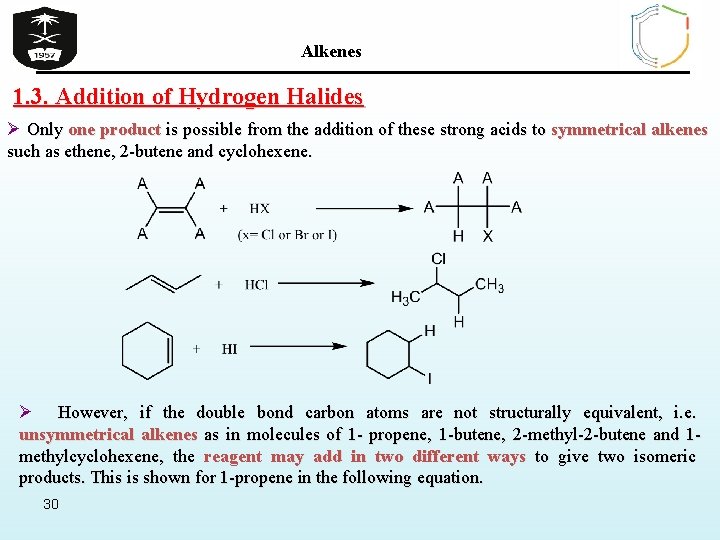
Alkenes 1. 3. Addition of Hydrogen Halides Ø Only one product is possible from the addition of these strong acids to symmetrical alkenes such as ethene, 2 -butene and cyclohexene. Ø However, if the double bond carbon atoms are not structurally equivalent, i. e. unsymmetrical alkenes as in molecules of 1 - propene, 1 -butene, 2 -methyl-2 -butene and 1 methylcyclohexene, the reagent may add in two different ways to give two isomeric products. This is shown for 1 -propene in the following equation. 30
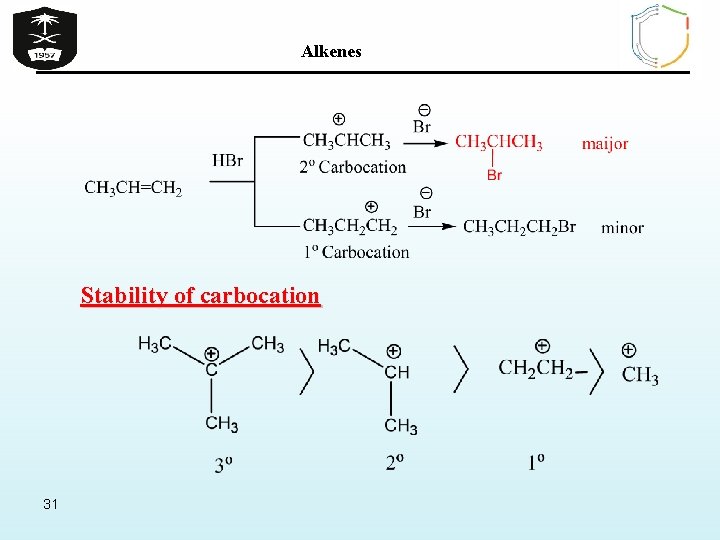
Alkenes Stability of carbocation 31
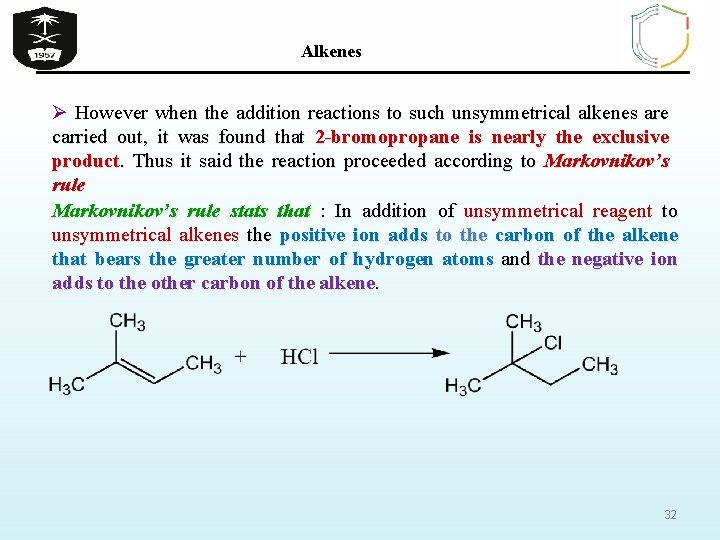
Alkenes Ø However when the addition reactions to such unsymmetrical alkenes are carried out, it was found that 2 -bromopropane is nearly the exclusive product. Thus it said the reaction proceeded according to Markovnikov’s rule stats that : In addition of unsymmetrical reagent to unsymmetrical alkenes the positive ion adds to the carbon of the alkene that bears the greater number of hydrogen atoms and the negative ion adds to the other carbon of the alkene. 32
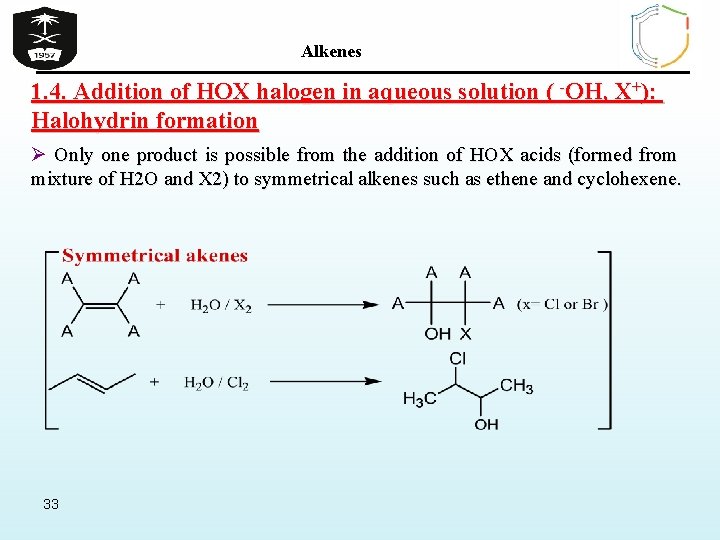
Alkenes 1. 4. Addition of HOX halogen in aqueous solution ( -OH, X+): Halohydrin formation Ø Only one product is possible from the addition of HOX acids (formed from mixture of H 2 O and X 2) to symmetrical alkenes such as ethene and cyclohexene. 33
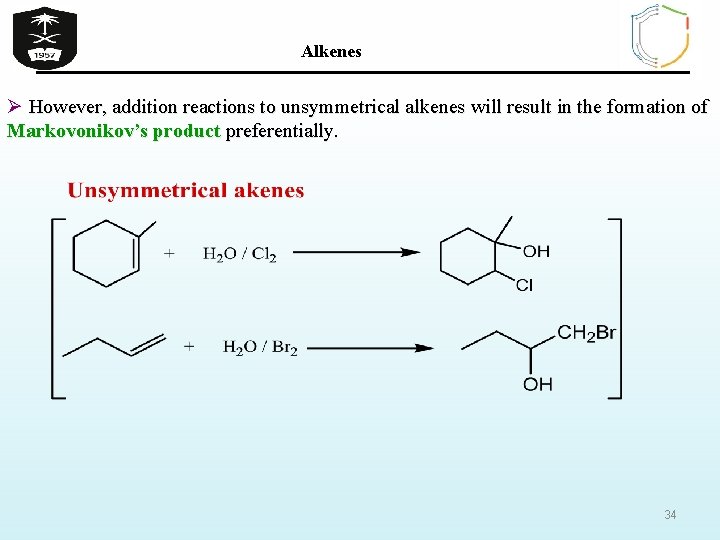
Alkenes Ø However, addition reactions to unsymmetrical alkenes will result in the formation of Markovonikov’s product preferentially. 34
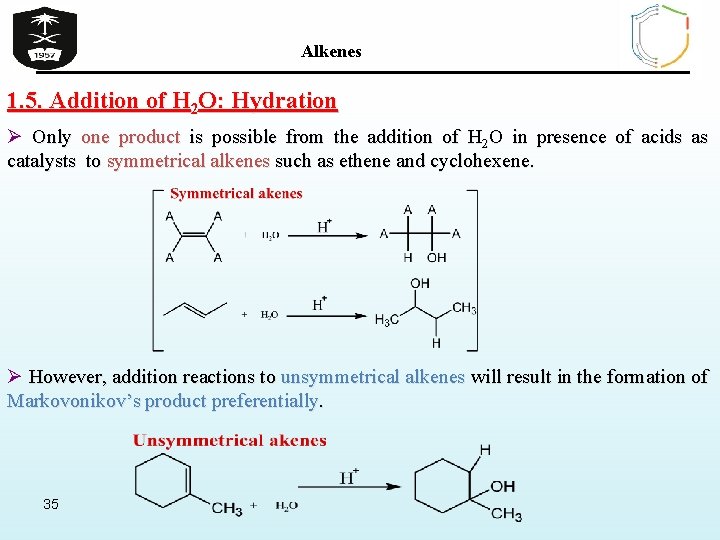
Alkenes 1. 5. Addition of H 2 O: Hydration Ø Only one product is possible from the addition of H 2 O in presence of acids as catalysts to symmetrical alkenes such as ethene and cyclohexene. Ø However, addition reactions to unsymmetrical alkenes will result in the formation of Markovonikov’s product preferentially. 35
Alkenes 2 -Oxidation Reaction: 2. 1 - Ozonolysis: Oxidation with ozone (Oxidative cleavage): This reaction involves rupture of the C=C to give aldehydes or ketones according to the structure of the original alkene. 36
Alkenes 2 - Oxidation with KMn. O 4 (Oxidative addition): Cis- diol 37
Alkenes Thank You for your kind attention ! Questions? Comments 38
- Slides: 38