
Unraveling the History of the Moon The Lunar
- Slides: 20
Unraveling the History of the Moon
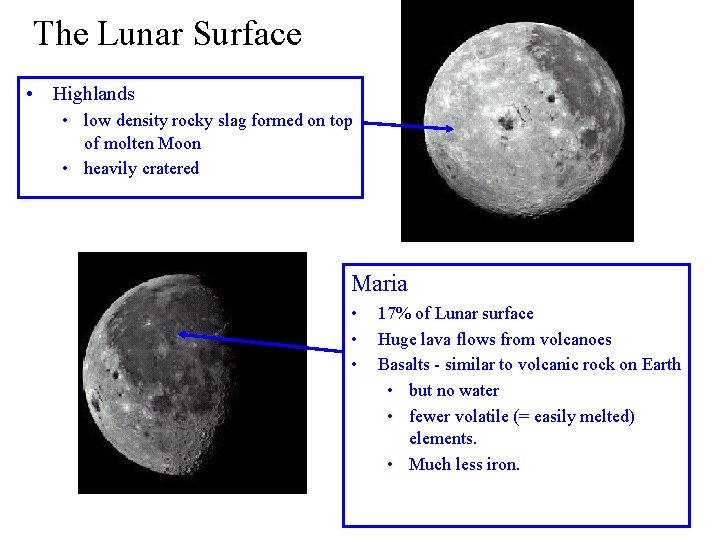
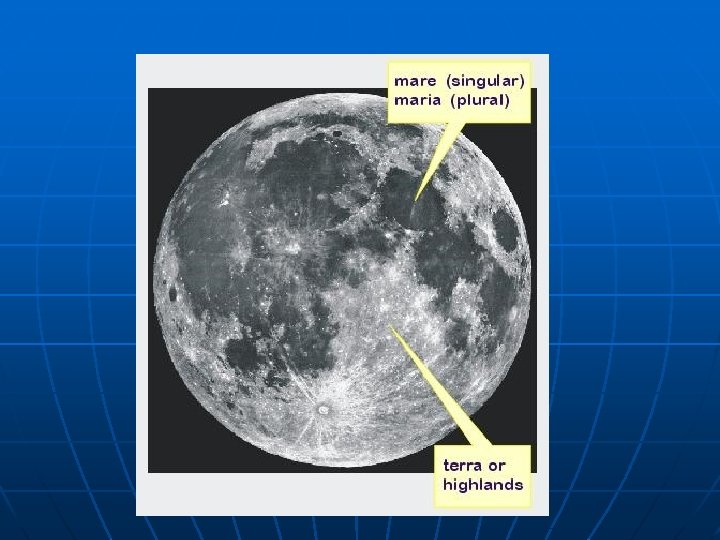
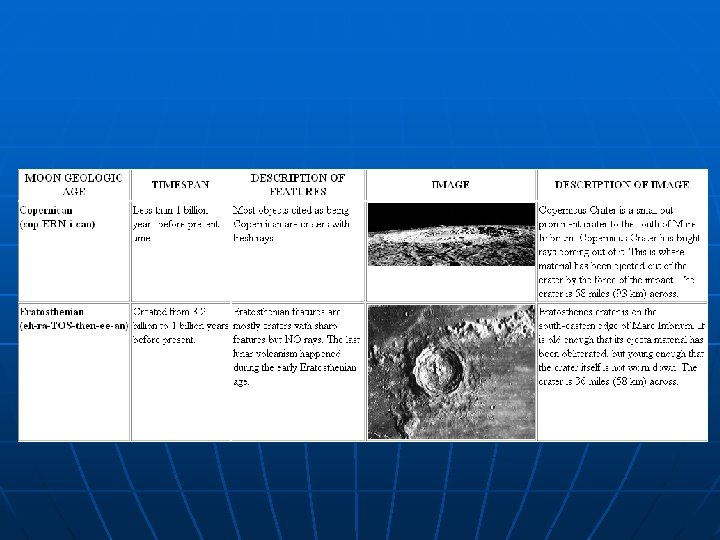
The Lunar Surface • Highlands • low density rocky slag formed on top of molten Moon • heavily cratered Maria • • • 17% of Lunar surface Huge lava flows from volcanoes Basalts - similar to volcanic rock on Earth • but no water • fewer volatile (= easily melted) elements. • Much less iron.
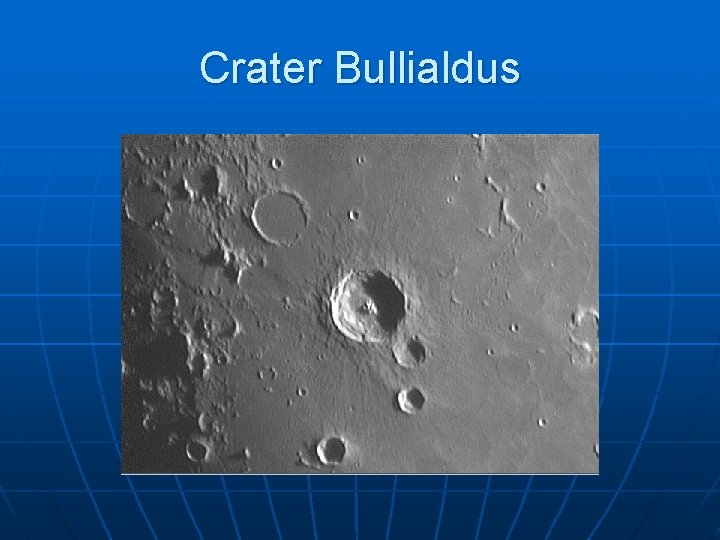
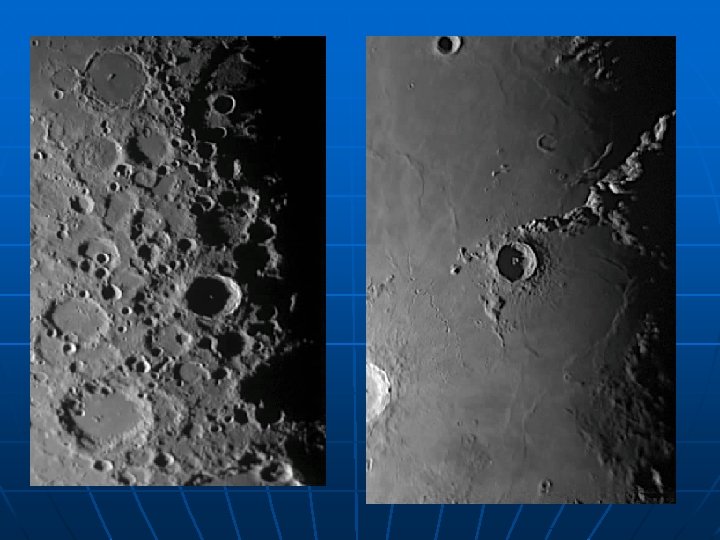
Crater Bullialdus
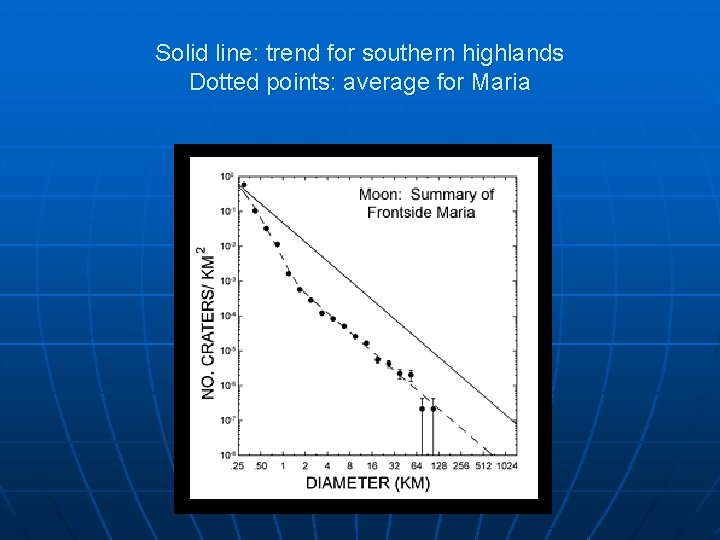
Craters as Chronometers n The number of craters on a surface can be used to estimate its age: older surfaces have been exposed to impacts for longer and show more craters
Complications n n Any changes in the impactor population over time Secondary impacts formed by ejecta from a single large impact Saturation: when a surface is so heavily cratered that a new crater can form only at the expense of an older one There is a need for measured surface ages in order to calibrate the crater counting
Solid line: trend for southern highlands Dotted points: average for Maria
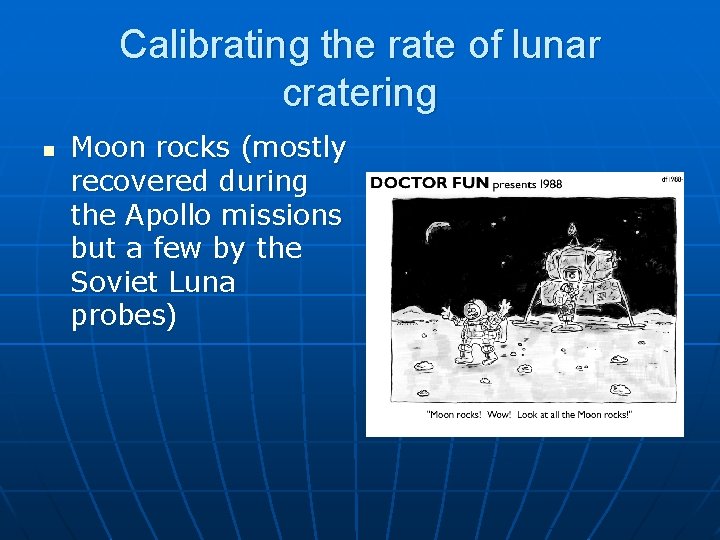
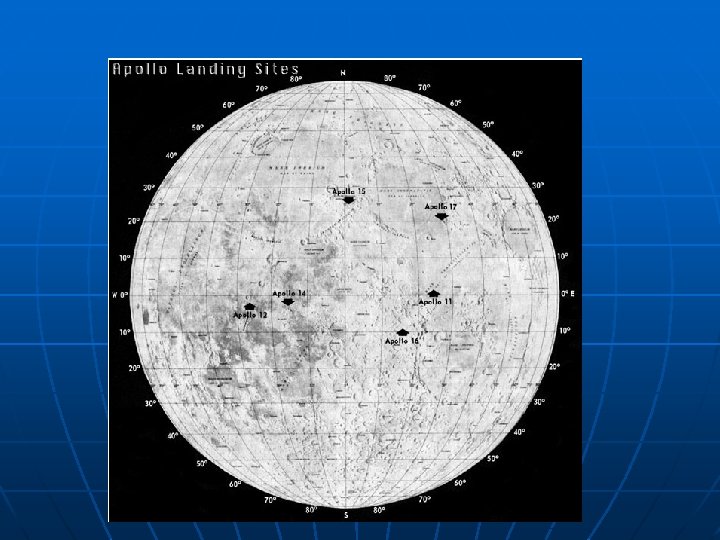
Calibrating the rate of lunar cratering n Moon rocks (mostly recovered during the Apollo missions but a few by the Soviet Luna probes)
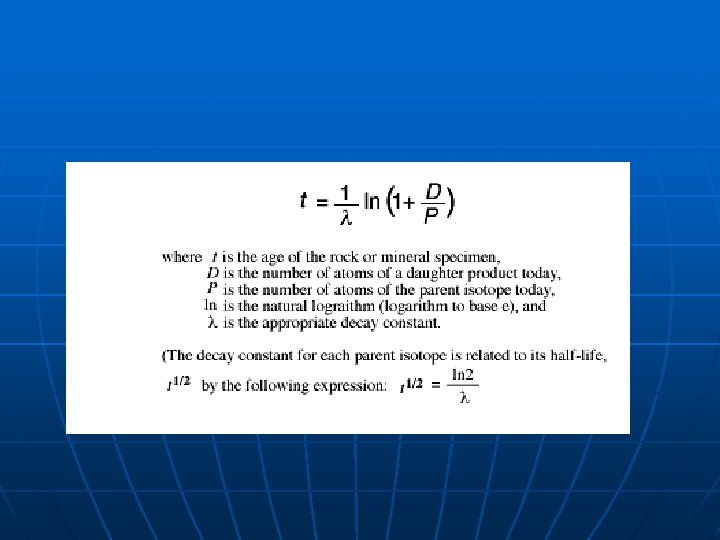
Dating Rocks n Radioactive elements • U-235 half-life = 710 million years • U-238 half-life = 4. 5 billion years • Th-232 half-life = 13. 9 billion years
Ages of lunar features n n Heavily cratered highlands: 4. 1 -4. 5 billion years old Large basins: 3. 9 – 4. 1 billion years old Maria flooding: 3. 0 – 3. 9 billion years old Compared to the Earth, the typical lunar surface is very ancient
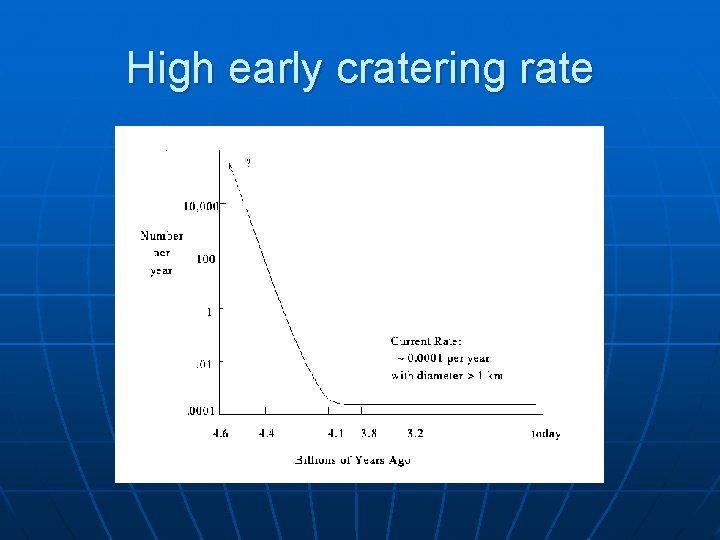
High early cratering rate
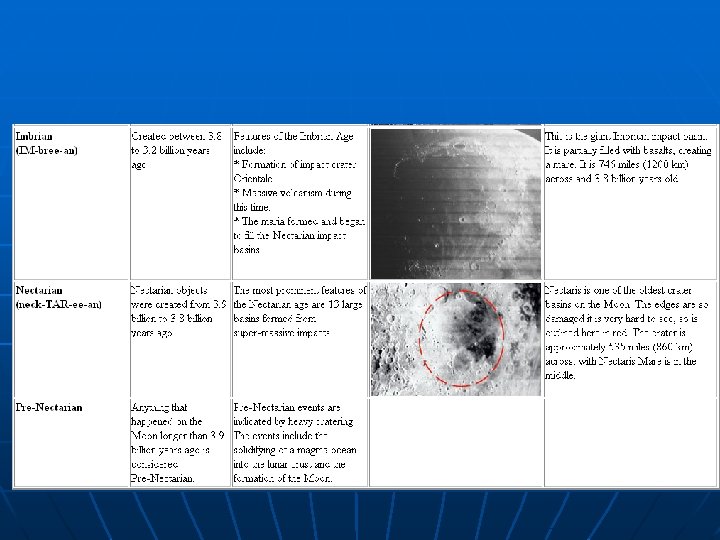
Late heavy bombardment? n n A proposed interval about 3. 8 to 4 billion years ago in which the moon and the inner solar system were subjected to heavy asteroid bombardment Time of the formation of impact basins?
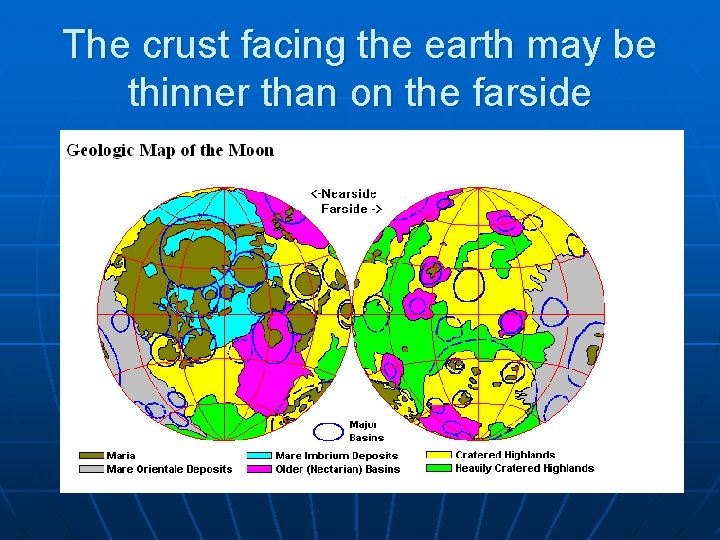
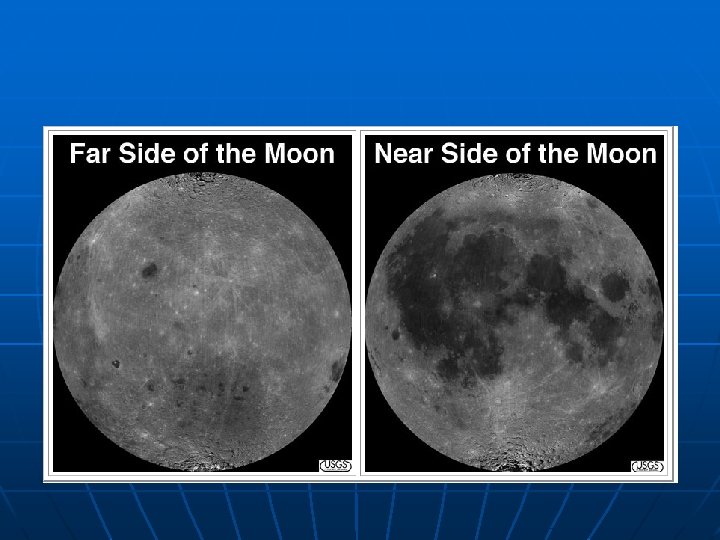
The crust facing the earth may be thinner than on the farside
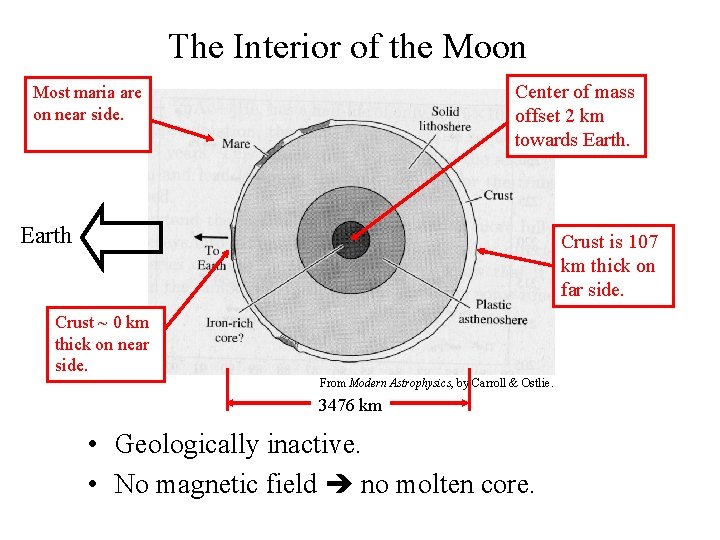
The Interior of the Moon Center of mass offset 2 km towards Earth. Most maria are on near side. Earth Crust is 107 km thick on far side. Crust ~ 0 km thick on near side. From Modern Astrophysics, by Carroll & Ostlie. 3476 km • Geologically inactive. • No magnetic field no molten core.