
Unprofessionalism Editing file Objectives 1 Define unprofessional behavior
Unprofessionalism Editing file Objectives: 1. Define unprofessional behavior 2. Identify various elements of human nature that contribute to unprofessionalism 3. Provide examples of such behaviors from daily life 4. Avoid unprofessional behaviors ❏ ❏ ❏ important original content only in girls slides only in boys slides extra notes Doctors’ notes
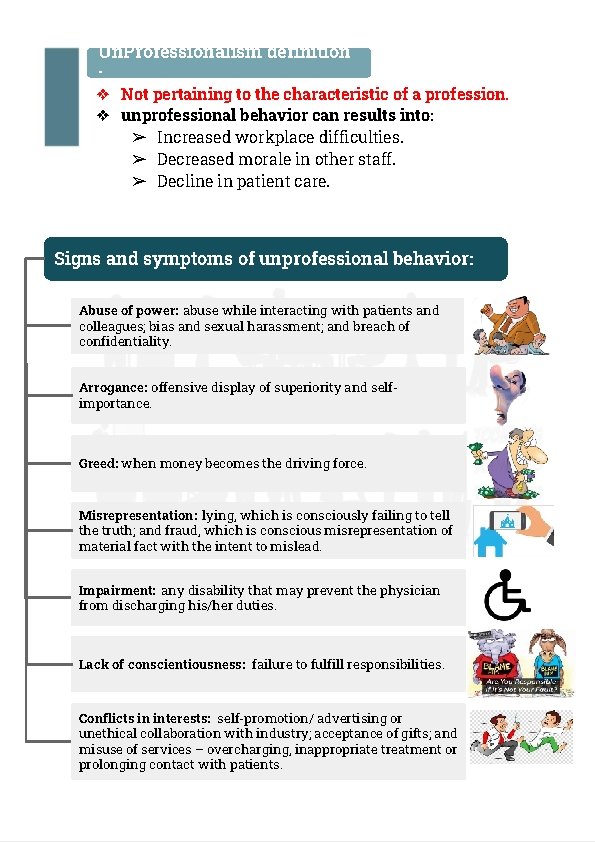
Un. Professionalism definition : ❖ Not pertaining to the characteristic of a profession. ❖ unprofessional behavior can results into: ➢ Increased workplace difficulties. ➢ Decreased morale in other staff. ➢ Decline in patient care. Signs and symptoms of unprofessional behavior: Abuse of power: abuse while interacting with patients and colleagues; bias and sexual harassment; and breach of confidentiality. Arrogance: offensive display of superiority and selfimportance. Greed: when money becomes the driving force. Misrepresentation: lying, which is consciously failing to tell the truth; and fraud, which is conscious misrepresentation of material fact with the intent to mislead. Impairment: any disability that may prevent the physician from discharging his/her duties. Lack of conscientiousness: failure to fulfill responsibilities. Conflicts in interests: self-promotion/ advertising or unethical collaboration with industry; acceptance of gifts; and misuse of services – overcharging, inappropriate treatment or prolonging contact with patients.
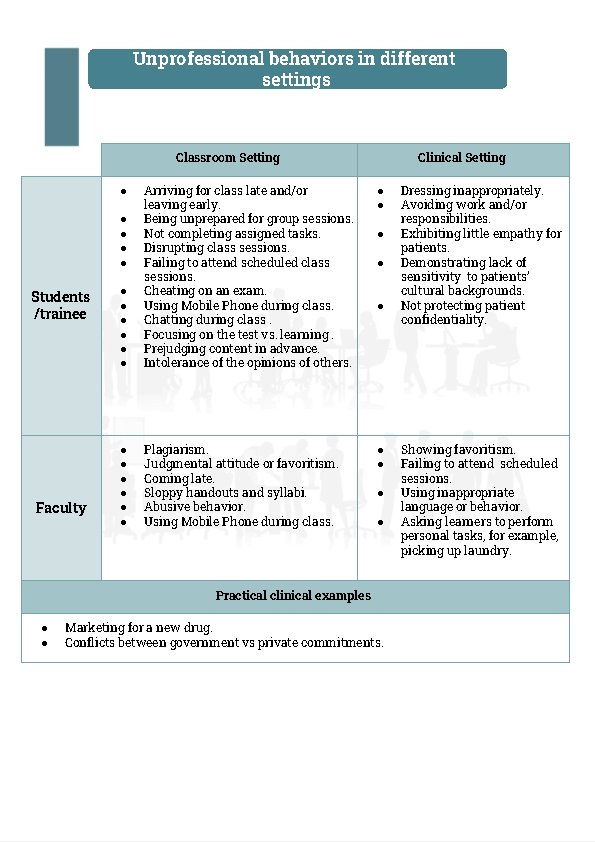
Unprofessional behaviors in different settings Classroom Setting ● ● ● ● Arriving for class late and/or leaving early. Being unprepared for group sessions. Not completing assigned tasks. Disrupting class sessions. Failing to attend scheduled class sessions. Cheating on an exam. Using Mobile Phone during class. Chatting during class. Focusing on the test vs. learning. Prejudging content in advance. Intolerance of the opinions of others. ● ● ● Plagiarism. Judgmental attitude or favoritism. Coming late. Sloppy handouts and syllabi. Abusive behavior. Using Mobile Phone during class. ● ● ● ● Students /trainee Faculty Clinical Setting ● ● ● Practical clinical examples ● ● Marketing for a new drug. Conflicts between government vs private commitments. Dressing inappropriately. Avoiding work and/or responsibilities. Exhibiting little empathy for patients. Demonstrating lack of sensitivity to patients’ cultural backgrounds. Not protecting patient confidentiality. Showing favoritism. Failing to attend scheduled sessions. Using inappropriate language or behavior. Asking learners to perform personal tasks, for example, picking up laundry.

IMPORTANT! Un. Professional behavior : -In general terms, acts that may be characterized as unprofessional fall into five categories: Illegal or criminal acts A physician may be disciplined and lose his medical license based solely on the fact that he was convicted for a crime or offense. Immoral acts “Immoral” acts generally fall into the limited category of sexual activity with individuals that may be patients. Business related acts These acts are related to the operation of the business, not the quality of the care. ● Obtain, maintain, or renew a license to practice medicine by bribery, fraud or misrepresentation. ● Negligent practice Plagiarism ● ● Failure to maintain records of a patient, relating to diagnosis, treatment and care. Altering medical records. Failure to make medical records available for inspection. Is an unethical, dishonest act whereby an individual uses the work of another, commit literacy theft, or present work as an original idea without crediting the source or stating that it is derived from an existing source.
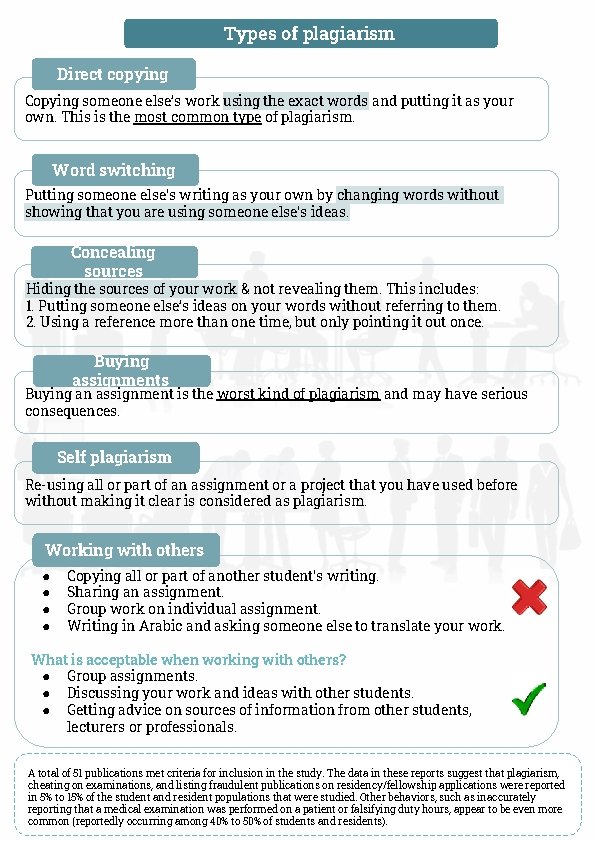
Types of plagiarism Direct copying Copying someone else’s work using the exact words and putting it as your own. This is the most common type of plagiarism. Word switching Putting someone else's writing as your own by changing words without showing that you are using someone else's ideas. Concealing sources Hiding the sources of your work & not revealing them. This includes: 1. Putting someone else’s ideas on your words without referring to them. 2. Using a reference more than one time, but only pointing it out once. Buying assignments Buying an assignment is the worst kind of plagiarism and may have serious consequences. Self plagiarism Re-using all or part of an assignment or a project that you have used before without making it clear is considered as plagiarism. Working with others ● ● Copying all or part of another student's writing. Sharing an assignment. Group work on individual assignment. Writing in Arabic and asking someone else to translate your work. What is acceptable when working with others? ● Group assignments. ● Discussing your work and ideas with other students. ● Getting advice on sources of information from other students, lecturers or professionals. A total of 51 publications met criteria for inclusion in the study. The data in these reports suggest that plagiarism, cheating on examinations, and listing fraudulent publications on residency/fellowship applications were reported in 5% to 15% of the student and resident populations that were studied. Other behaviors, such as inaccurately reporting that a medical examination was performed on a patient or falsifying duty hours, appear to be even more common (reportedly occurring among 40% to 50% of students and residents).
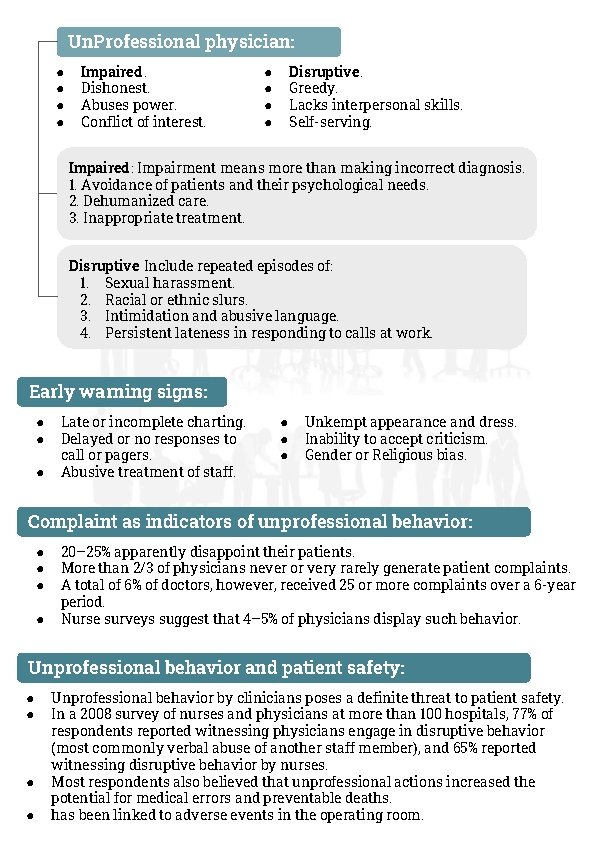
Un. Professional physician: ● ● Impaired. Dishonest. Abuses power. Conflict of interest. Disruptive. Greedy. Lacks interpersonal skills. Self-serving. ● ● Impaired : Impairment means more than making incorrect diagnosis. 1. Avoidance of patients and their psychological needs. 2. Dehumanized care. 3. Inappropriate treatment. Disruptive Include repeated episodes of: 1. Sexual harassment. 2. Racial or ethnic slurs. 3. Intimidation and abusive language. 4. Persistent lateness in responding to calls at work. Early warning signs: ● ● ● Late or incomplete charting. Delayed or no responses to call or pagers. Abusive treatment of staff. ● ● ● Unkempt appearance and dress. Inability to accept criticism. Gender or Religious bias. Complaint as indicators of unprofessional behavior: ● ● 20– 25% apparently disappoint their patients. More than 2/3 of physicians never or very rarely generate patient complaints. A total of 6% of doctors, however, received 25 or more complaints over a 6 -year period. Nurse surveys suggest that 4– 5% of physicians display such behavior. Unprofessional behavior and patient safety: ● ● Unprofessional behavior by clinicians poses a definite threat to patient safety. In a 2008 survey of nurses and physicians at more than 100 hospitals, 77% of respondents reported witnessing physicians engage in disruptive behavior (most commonly verbal abuse of another staff member), and 65% reported witnessing disruptive behavior by nurses. Most respondents also believed that unprofessional actions increased the potential for medical errors and preventable deaths. has been linked to adverse events in the operating room.
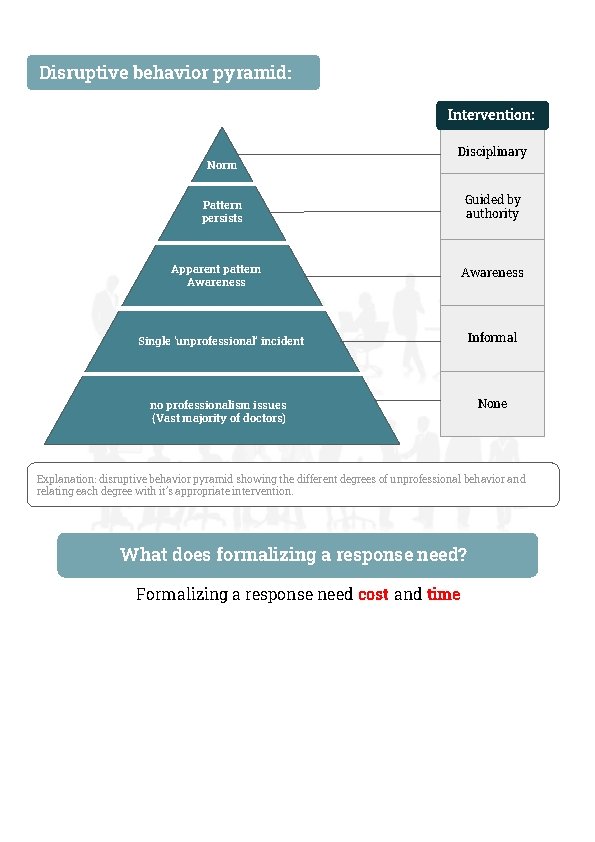
Disruptive behavior pyramid: Intervention: Norm Disciplinary Guided by authority Pattern persists Apparent pattern Awareness Single ‘unprofessional’ incident Informal no professionalism issues (Vast majority of doctors) None Explanation: disruptive behavior pyramid showing the different degrees of unprofessional behavior and relating each degree with it’s appropriate intervention. What does formalizing a response need? Formalizing a response need cost and time
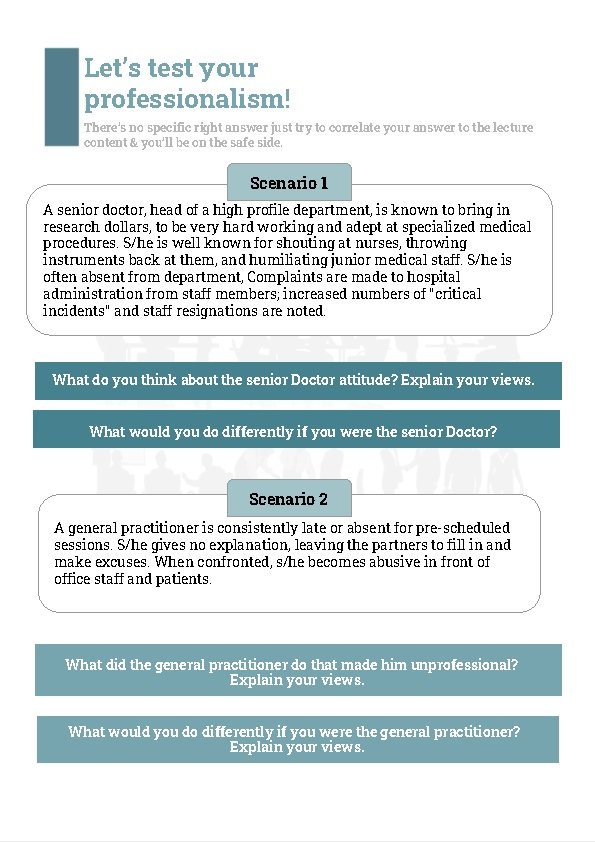
Let’s test your professionalism! There’s no specific right answer just try to correlate your answer to the lecture content & you’ll be on the safe side. Scenario 1 A senior doctor, head of a high profile department, is known to bring in research dollars, to be very hard working and adept at specialized medical procedures. S/he is well known for shouting at nurses, throwing instruments back at them, and humiliating junior medical staff. S/he is often absent from department, Complaints are made to hospital administration from staff members; increased numbers of "critical incidents" and staff resignations are noted. What do you think about the senior Doctor attitude? Explain your views. What would you do differently if you were the senior Doctor? Scenario 2 A general practitioner is consistently late or absent for pre-scheduled sessions. S/he gives no explanation, leaving the partners to fill in and make excuses. When confronted, s/he becomes abusive in front of office staff and patients. What did the general practitioner do that made him unprofessional? Explain your views. What would you do differently if you were the general practitioner? Explain your views.
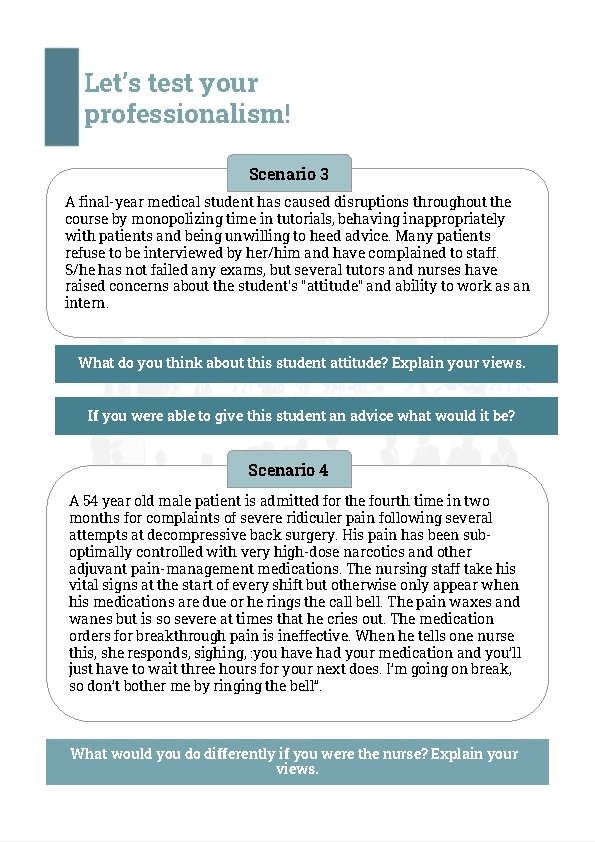
Let’s test your professionalism! Scenario 3 A final-year medical student has caused disruptions throughout the course by monopolizing time in tutorials, behaving inappropriately with patients and being unwilling to heed advice. Many patients refuse to be interviewed by her/him and have complained to staff. S/he has not failed any exams, but several tutors and nurses have raised concerns about the student's "attitude" and ability to work as an intern. What do you think about this student attitude? Explain your views. If you were able to give this student an advice what would it be? Scenario 4 A 54 year old male patient is admitted for the fourth time in two months for complaints of severe ridiculer pain following several attempts at decompressive back surgery. His pain has been suboptimally controlled with very high-dose narcotics and other adjuvant pain-management medications. The nursing staff take his vital signs at the start of every shift but otherwise only appear when his medications are due or he rings the call bell. The pain waxes and wanes but is so severe at times that he cries out. The medication orders for breakthrough pain is ineffective. When he tells one nurse this, she responds, sighing, : you have had your medication and you’ll just have to wait three hours for your next does. I’m going on break, so don’t bother me by ringing the bell”. What would you do differently if you were the nurse? Explain your views.
Team leaders Abdulrahman Bedaiwi Zahrani Amirah Al- Team members ● ● ● Abdullah Alassaf Abdullah Alasmari Abdulrahman Almezaini Khalid Alkwai Mohammed Alhamad Say cheese : ) ● ● ● ● THANK YOU! Give us your feedback! Deema Almaziad Elaf Almusahel Rema Almutawa Renad Almutawa Shahd Alsalamah Taif Alotaibi Tarfah Alkaltham
- Slides: 10