
Unpacking WellStructured Lessons EDUCATOR EFFECTIVENESS FACILITATORS SESSION 2
- Slides: 45
Unpacking Well-Structured Lessons EDUCATOR EFFECTIVENESS FACILITATORS SESSION #2 JANUARY 2013
Today’s Agenda • Welcome • Table Group Check-ins • EDFS • “Well-Structured Lessons” & the Interactive Rubric • Closing
Norms & Community Agreements Start and end on time. Limit technology to break time. Include everyone in conversations. Vegas Rule: Confidentiality
Session #1 Homework ØSecure the opportunity to lead at least 1 meeting focused on unpacking an element of the rubric ØBring a laptop next meeting ØComplete EEF Survey
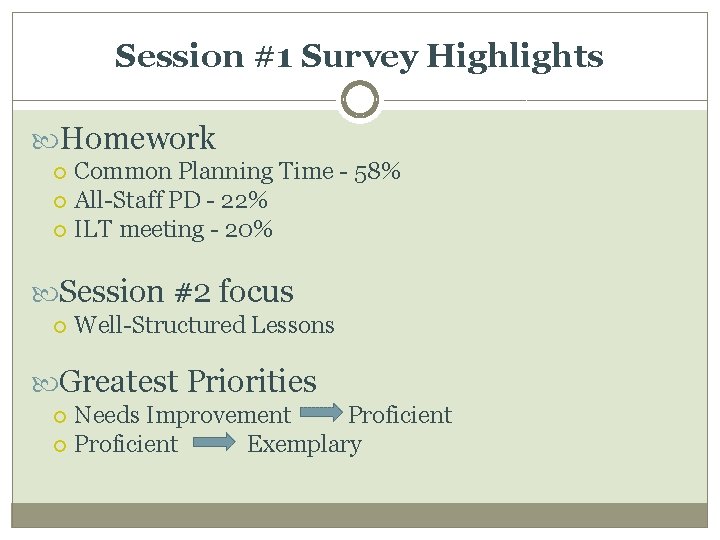
Session #1 Survey Highlights Homework Common Planning Time - 58% All-Staff PD - 22% ILT meeting - 20% Session #2 focus Well-Structured Lessons Greatest Priorities Needs Improvement Proficient Exemplary
Defining the Scope EEFs will: Be conduits for feedback Contribute expertise to develop resources for the district Disseminate information and best practices Lead conversations around effective instructional practice Stipends: Distributed by principals & headmasters Make-up session in May
EEF Series Objective EEFs will be able to identify, discuss, and cultivate effective instructional practices within their school communities using the tools provided by the evaluation system.
Session 2 Objectives Today we will: Share questions, challenges, & best practices Continue to build expertise in the evaluation system Explore proficient practice in Well-Structured Lessons Develop plans for the Interactive Rubric
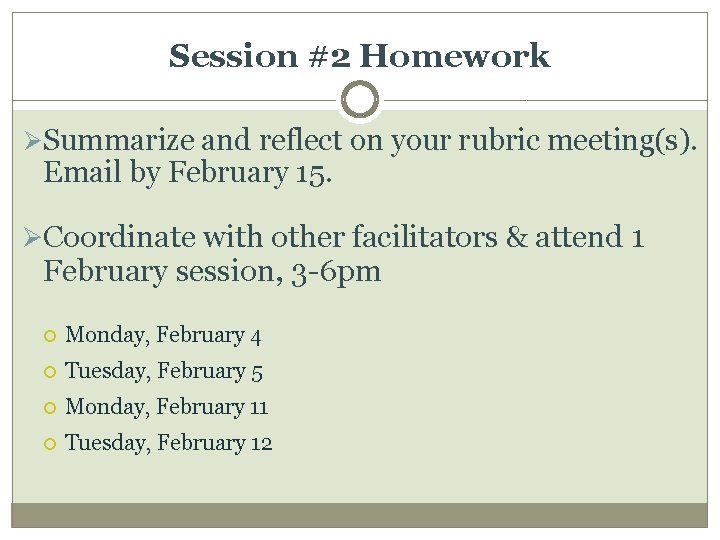
Session #2 Homework Ø Summarize and reflect on your rubric meeting(s). Email by February 15. ØCoordinate with other facilitators & attend 1 February session, 3 -6 pm – location TBD Monday, February 4 Tuesday, February 5 Monday, February 11 Tuesday, February 12
Facilitation Moves Keep an eye on: The use of surveys and pre-assessment Opportunities for collaboration Integration of small group & large group discussion
Today’s Agenda • Welcome • Table Group Check-ins • EDFS • “Well-Structured Lessons” & the Interactive Rubric • Closing
Check-ins Evaluation successes & challenges? Pre-assessment: Compare your answers with others at your table As in a group, complete one blue copy to turn
Today’s Agenda • Welcome • Table Group Check-ins • EDFS • “Well-Structured Lessons” & the Interactive Rubric • Closing
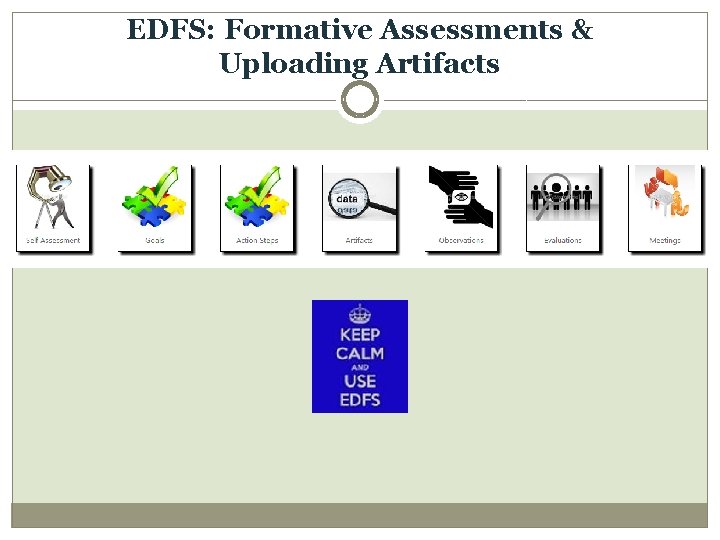
EDFS: Formative Assessments & Uploading Artifacts
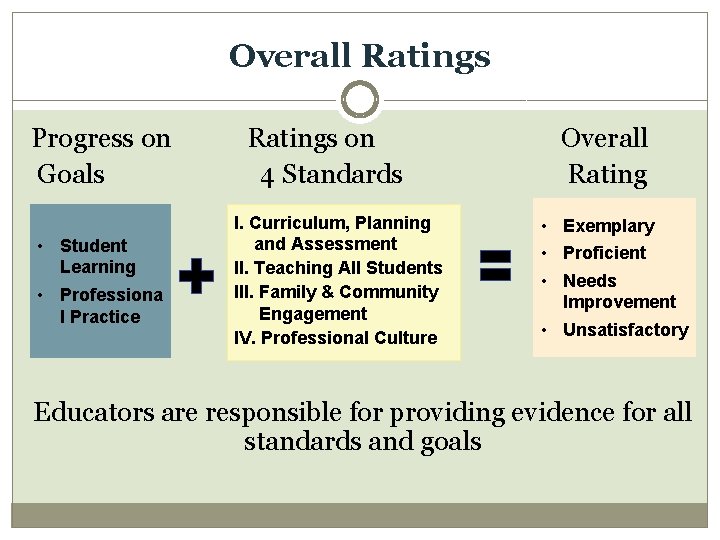
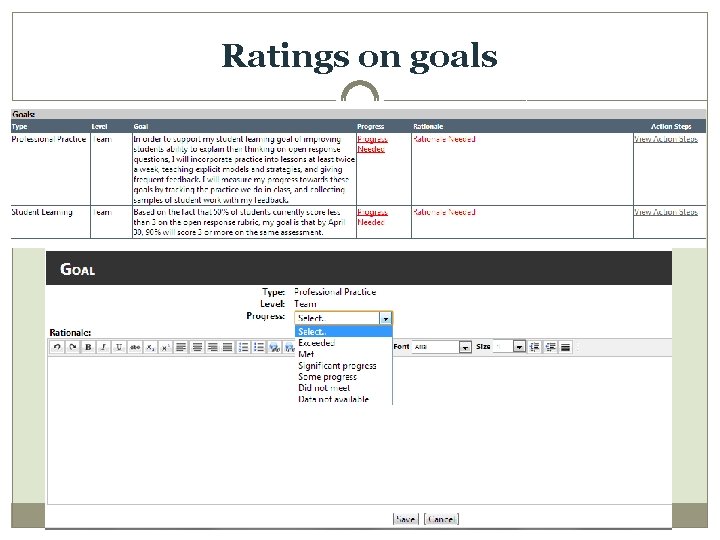
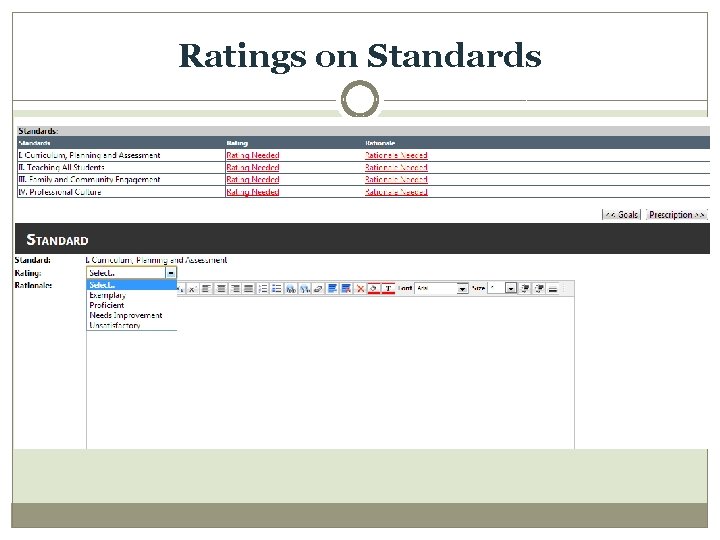
Overall Ratings Progress on Goals • Student Learning • Professiona l Practice Ratings on 4 Standards I. Curriculum, Planning and Assessment II. Teaching All Students III. Family & Community Engagement IV. Professional Culture Overall Rating • Exemplary • Proficient • Needs Improvement • Unsatisfactory Educators are responsible for providing evidence for all standards and goals
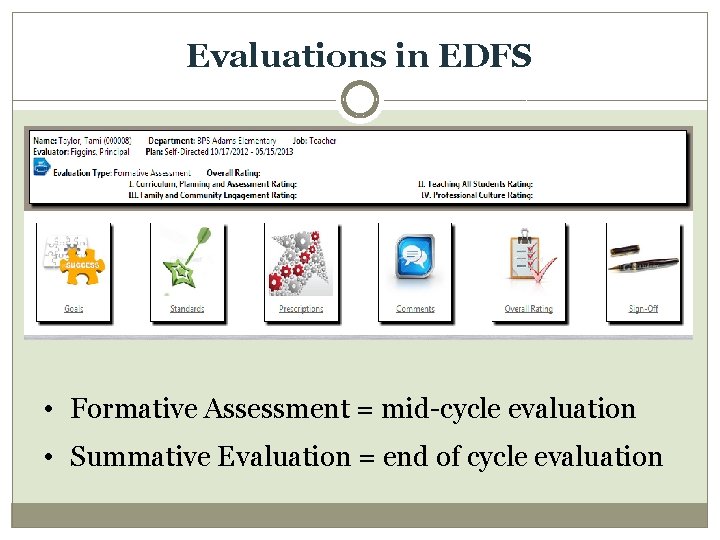
Evaluations in EDFS • Formative Assessment = mid-cycle evaluation • Summative Evaluation = end of cycle evaluation
Ratings on goals
Ratings on Standards
Evidence: Observations & Artifacts Ø Ratings on Goals & Standards based on: o o Evidence collected in observations Evidence documented in artifacts Ø Artifacts can be submitted by the Educator OR the Evaluator
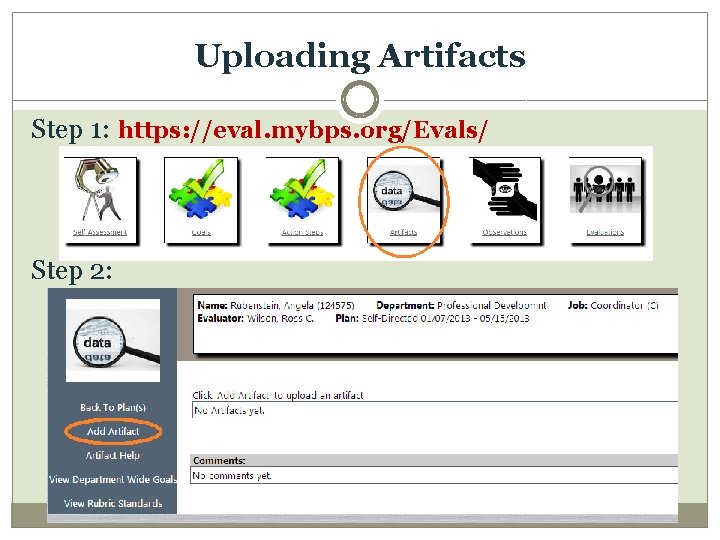
Uploading Artifacts Step 1: https: //eval. mybps. org/Evals/ Step 2:
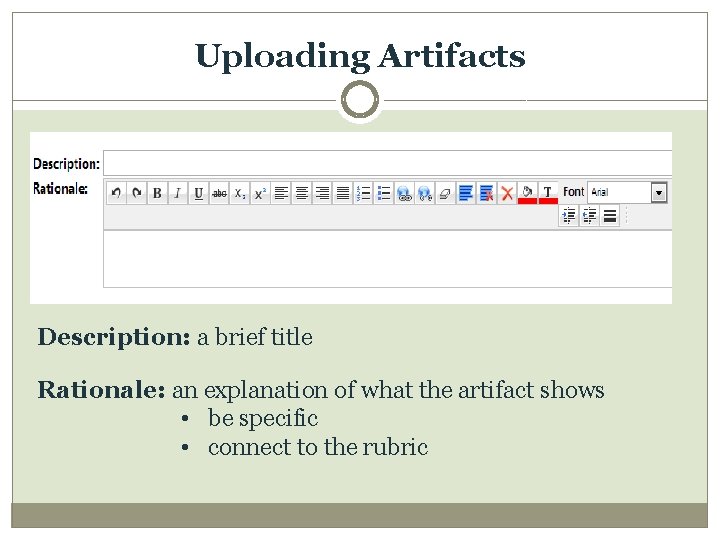
Uploading Artifacts Description: a brief title Rationale: an explanation of what the artifact shows • be specific • connect to the rubric
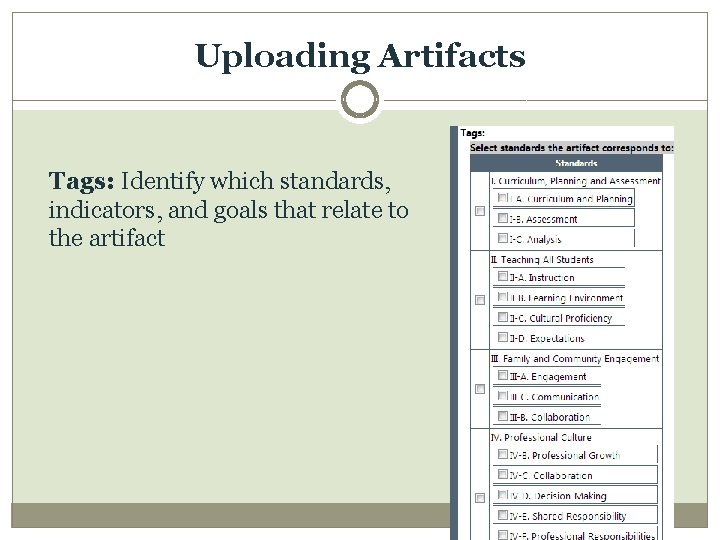
Uploading Artifacts Tags: Identify which standards, indicators, and goals that relate to the artifact
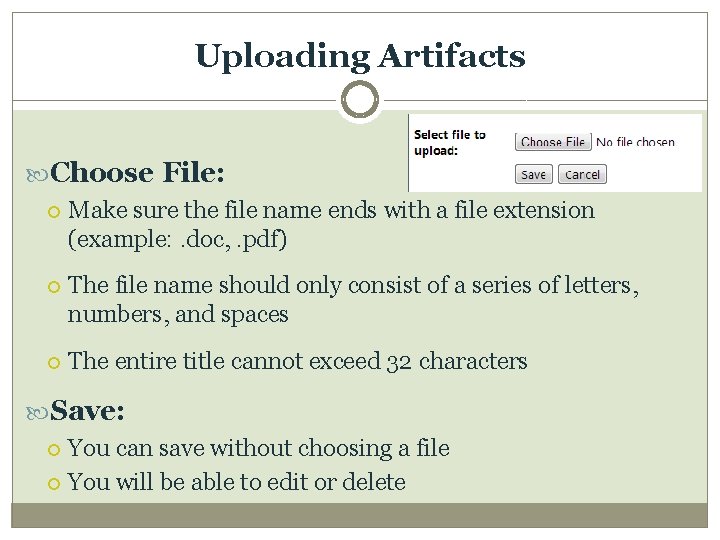
Uploading Artifacts Choose File: Make sure the file name ends with a file extension (example: . doc, . pdf) The file name should only consist of a series of letters, numbers, and spaces The entire title cannot exceed 32 characters Save: You can save without choosing a file You will be able to edit or delete
Uploading Artifacts How many? At least 1 for each standard and goal prior to the formative More before the summative By when? More than 2 weeks before the formative More than 4 weeks before the summative Or, the date established by the evaluator
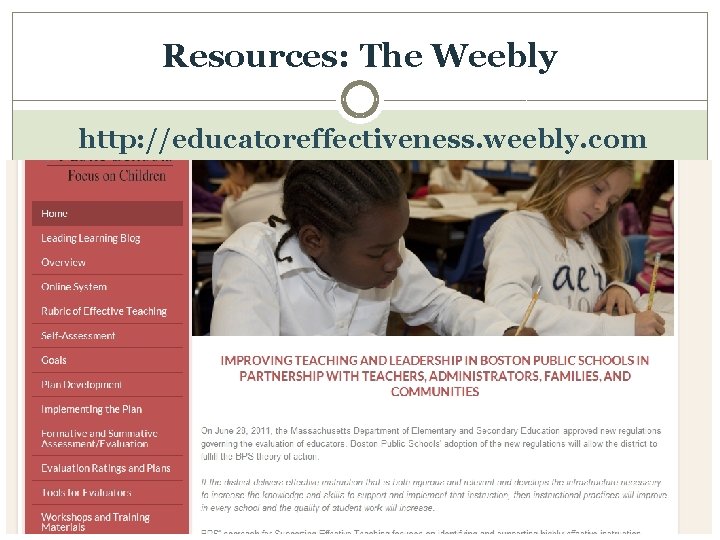
Resources: The Weebly http: //educatoreffectiveness. weebly. com
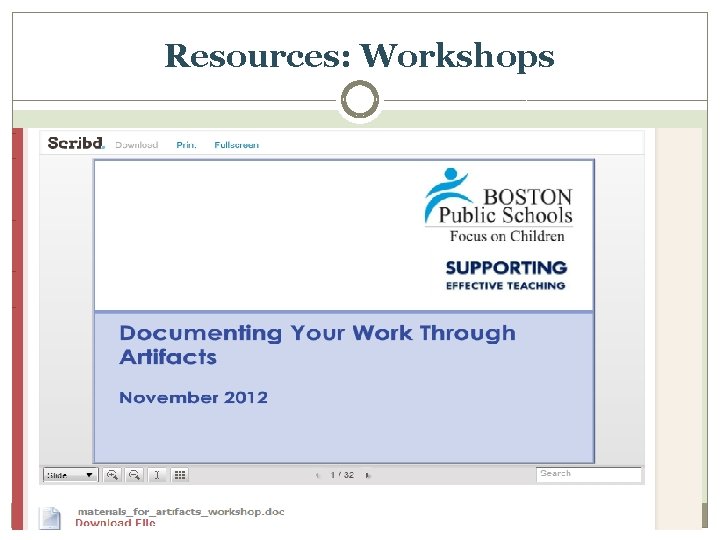
Resources: Workshops http: //educatoreffectiveness. weebly. com
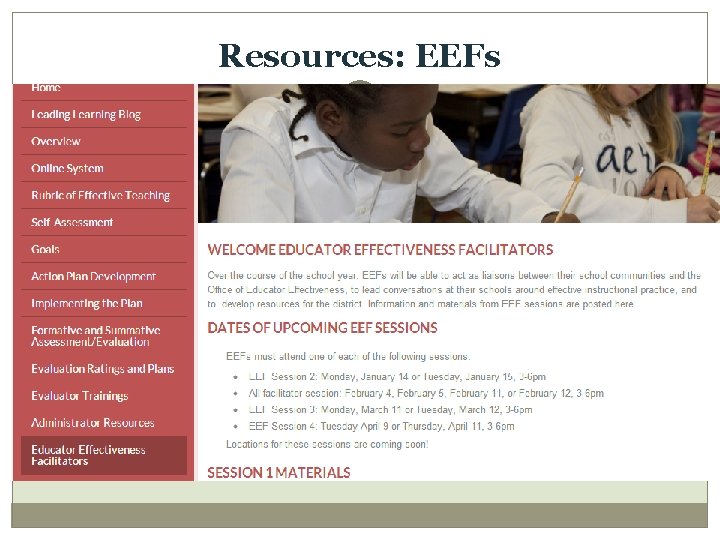
Resources: EEFs
Break
Today’s Agenda • Welcome • Table Group Check-ins • EDFS • “Well-Structured Lessons” & the Interactive Rubric • Closing
Well-Structured Lessons “Develops well-structured lessons with challenging, measurable objectives and appropriate student engagement strategies, pacing, sequence, activities, materials, resources, technologies, and grouping. ”
Well-Structured Lessons Work with your group to identify the essential components of a well-structured lesson What has the biggest impact on student learning? What should be evident both in a lesson plan and in during an observation? What artifacts would reflect these qualities?
Well-Structured Lessons What does lesson planning look like at your school? Writing daily plans? Differentiating Regularly consistently? assessing student understanding?
Rubric of Effective Teaching The challenge: language is broad, interpreted differently by different people The vision: provide resources & exemplars to bring clarity & consistency The strategy: an interactive rubric
Interactive Rubric For each element, the Interactive Rubric will provide: Non-negotiables Videos & examples of proficiency levels Resources & strategies Information on PD opportunities
Interactive Rubric Go to: http: //www. teachingasleadership. org/ Click on “Plan Purposefully” Explore the site with a partner – take notes! When finished, compare notes with table group
Interactive Rubric What features did you like? What else would you want to see?
Well-Structured Lessons What are the non-negotiables? With your group, list the top 5
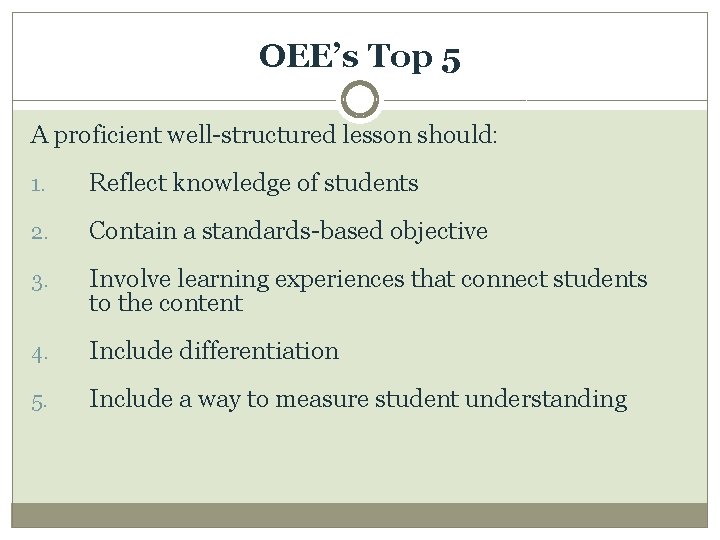
OEE’s Top 5 A proficient well-structured lesson should: 1. Reflect knowledge of students 2. Contain a standards-based objective 3. Involve learning experiences that connect students to the content 4. Include differentiation 5. Include a way to measure student understanding
Today’s Agenda • Welcome • Table Group Check-ins • EDFS • “Well-Structured Lessons” & Interactive Rubric • Closing
Session 2 Objectives Today we will: Share questions, challenges, & best practices Continue to build expertise in the evaluation system Explore proficient practice in Well-Structured Lessons Develop plans for the Interactive Rubric
Session #2 Homework Ø Summarize and reflect on your rubric meeting(s). Email by February 15. ØCoordinate with other facilitators & attend 1 February session, 3 -6 pm Monday, February 4 Tuesday, February 5 Monday, February 11 Tuesday, February 12
Debrief Comments on… today’s activities? the facilitation moves? the evaluation process? suggestions?
Thanks! See you at our next sessions on: Feb 4 th, 5 th, 11 th OR 12 th, 3 -6 pm March 11 th OR 12 th, 3 -6 pm, location TBD
Office of Educator Effectiveness Ross Wilson, Assistant Superintendent for Educator Effectiveness (rwilson) Jared Joiner, Implementation Specialist (jjoiner) Emily Kalejs Qazilbash, Implementation Specialist (eqazilbash) Angela Rubenstein, Implementation Specialist (arubenstein) Kris Taylor, Implementation Specialist (ktaylor 2) Jenna Costin, EDFS On-line System Coordinator (jcostin) Chason Ishino, Consultant (cishino)
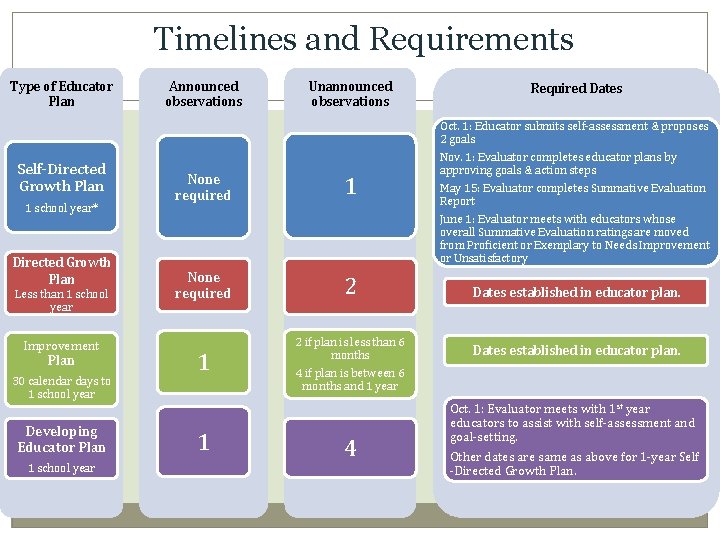
Timelines and Requirements Type of Educator Plan Self-Directed Growth Plan 1 school year* Directed Growth Plan Less than 1 school year Improvement Plan 30 calendar days to 1 school year Developing Educator Plan 1 school year Announced observations Unannounced observations None required 1 None required 2 1 2 if plan is less than 6 months 4 if plan is between 6 months and 1 year 1 4 Required Dates Oct. 1: Educator submits self-assessment & proposes 2 goals Nov. 1: Evaluator completes educator plans by approving goals & action steps May 15: Evaluator completes Summative Evaluation Report June 1: Evaluator meets with educators whose overall Summative Evaluation ratings are moved from Proficient or Exemplary to Needs Improvement or Unsatisfactory Dates established in educator plan. Oct. 1: Evaluator meets with 1 st year educators to assist with self-assessment and goal-setting. Other dates are same as above for 1 -year Self -Directed Growth Plan.