
Unlocking the origin and methods to navigate matrix
- Slides: 26
Unlocking the origin and methods to navigate matrix organizations
The most important point to understand is that every growing organization evolves into matrix structures! This lecture is intended to provide both a historical perspective of matrix theory and my contemporary advice on how a leader should conceptualize and lead a matrix structure.
What is the origin of the Matrix organization? Aerospace Industry The success of the US space program to put a man on moon by 1970 – The press picked up the matrix as the hot new management trend – Books on matrix organization began to appear. • e. g. Matrix ( Davis, S. M. & Lawrence, P. R. 1977)
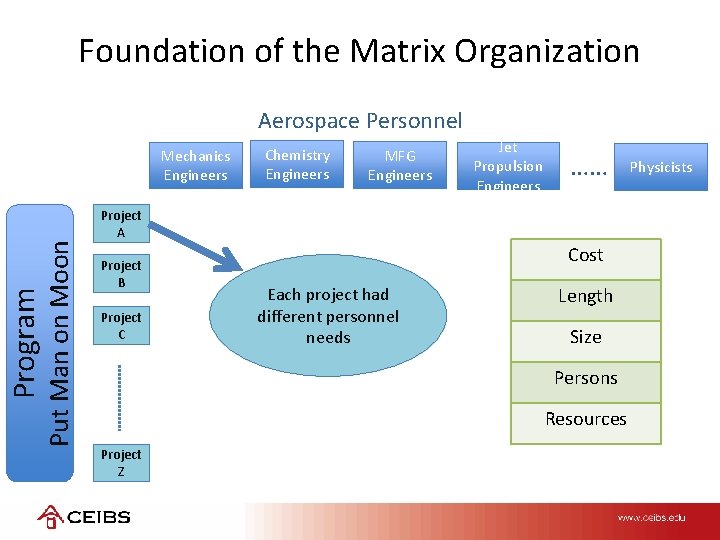
Foundation of the Matrix Organization Aerospace Personnel Program Put Man on Moon Mechanics Engineers Chemistry Engineers MFG Engineers Jet Propulsion Engineers …… Project A Project B Project C Cost Each project had different personnel needs Length Size Persons Resources Project Z Physicists
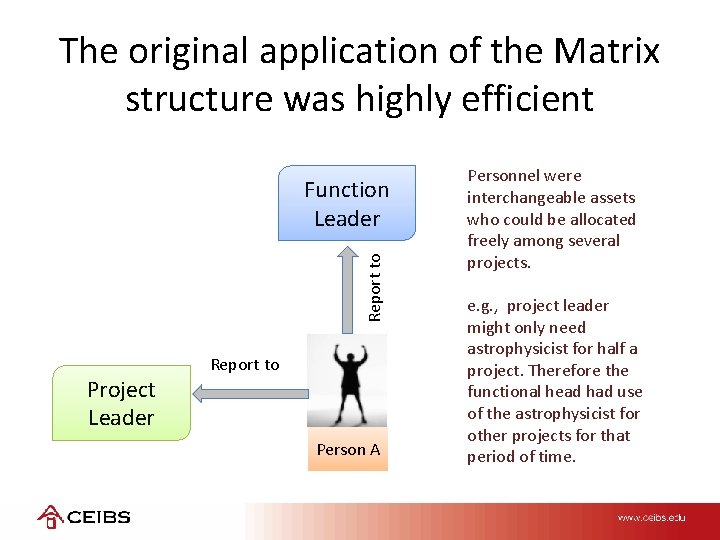
The original application of the Matrix structure was highly efficient Report to Function Leader Project Leader Report to Person A Personnel were interchangeable assets who could be allocated freely among several projects. e. g. , project leader might only need astrophysicist for half a project. Therefore the functional head had use of the astrophysicist for other projects for that period of time.
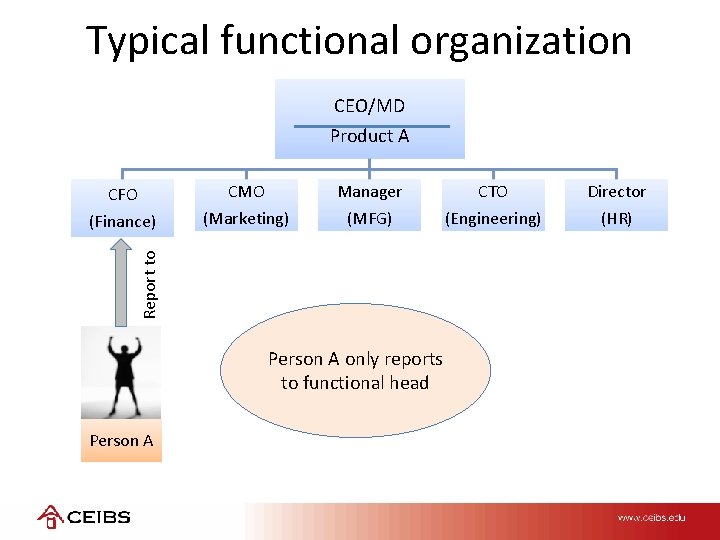
Typical functional organization CEO/MD Product A CMO Manager CTO Director (Marketing) (MFG) (Engineering) (HR) Report to CFO (Finance) Person A only reports to functional head Person A
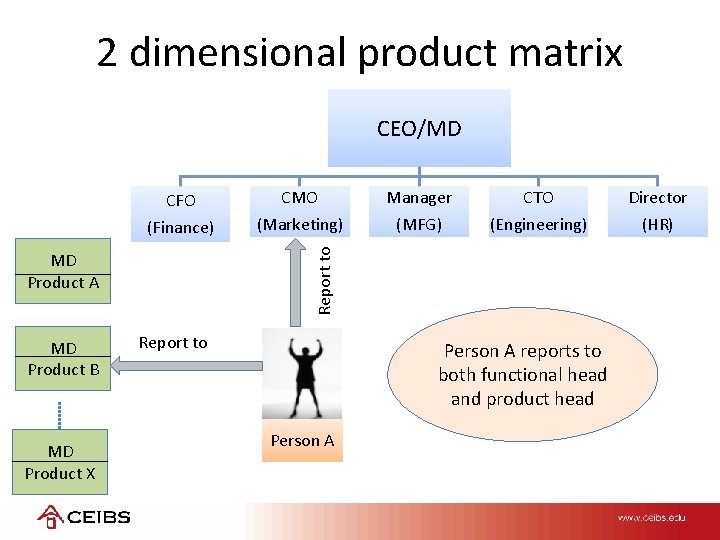
2 dimensional product matrix CEO/MD MD Product A MD Product B MD Product X CMO Manager CTO Director (Marketing) (MFG) (Engineering) (HR) Report to CFO (Finance) Report to Person A reports to both functional head and product head Person A
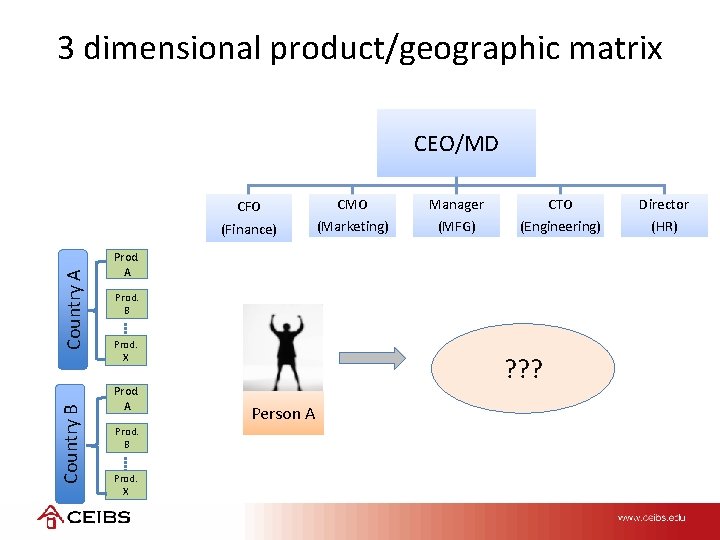
3 dimensional product/geographic matrix CEO/MD Country B Country A CFO (Finance) CMO (Marketing) Manager (MFG) CTO (Engineering) Prod. A Prod. B Prod. X ? ? ? Person A Director (HR)
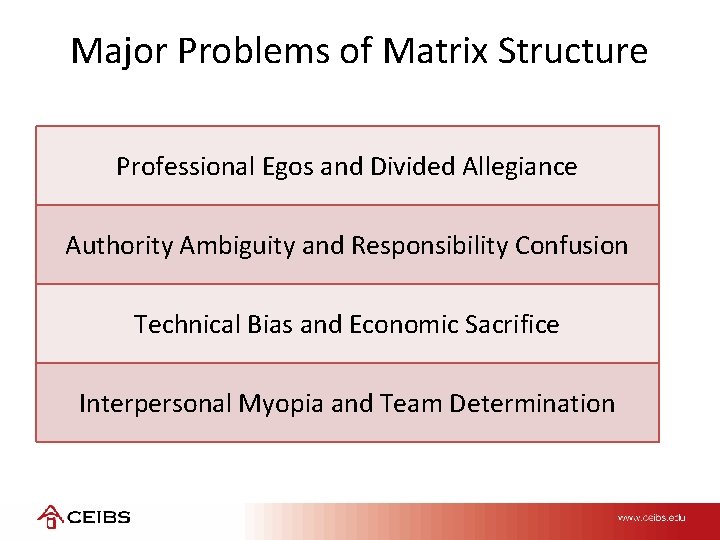
Major Problems of Matrix Structure Professional Egos and Divided Allegiance Authority Ambiguity and Responsibility Confusion Technical Bias and Economic Sacrifice Interpersonal Myopia and Team Determination
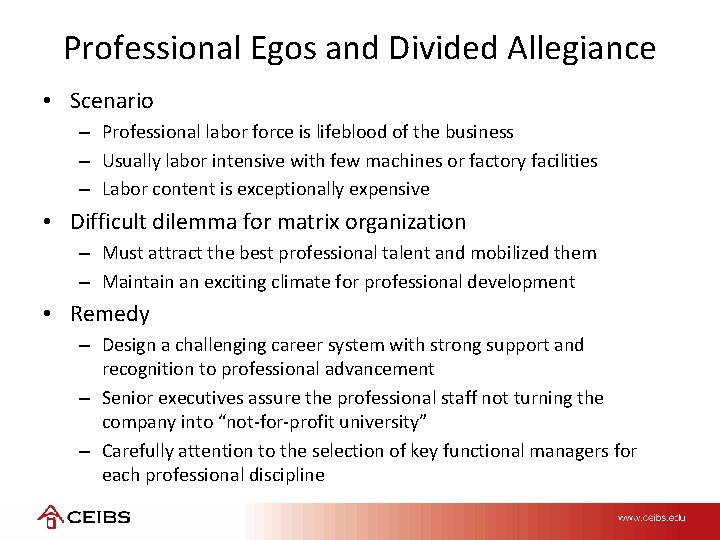
Professional Egos and Divided Allegiance • Scenario – Professional labor force is lifeblood of the business – Usually labor intensive with few machines or factory facilities – Labor content is exceptionally expensive • Difficult dilemma for matrix organization – Must attract the best professional talent and mobilized them – Maintain an exciting climate for professional development • Remedy – Design a challenging career system with strong support and recognition to professional advancement – Senior executives assure the professional staff not turning the company into “not-for-profit university” – Carefully attention to the selection of key functional managers for each professional discipline
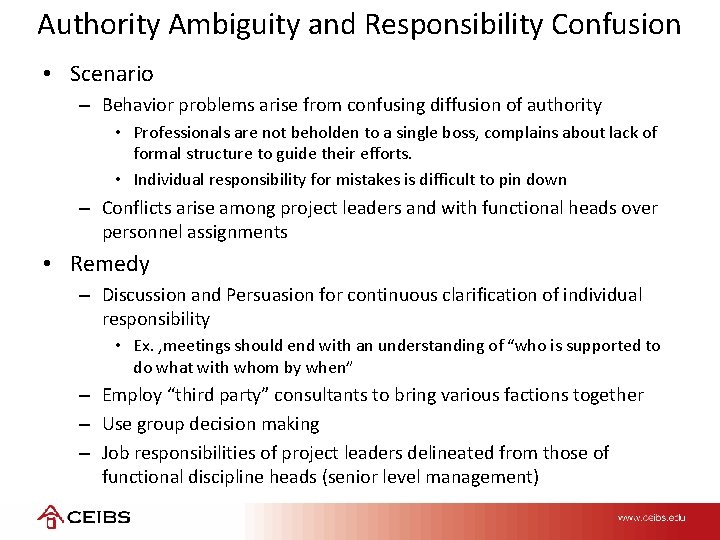
Authority Ambiguity and Responsibility Confusion • Scenario – Behavior problems arise from confusing diffusion of authority • Professionals are not beholden to a single boss, complains about lack of formal structure to guide their efforts. • Individual responsibility for mistakes is difficult to pin down – Conflicts arise among project leaders and with functional heads over personnel assignments • Remedy – Discussion and Persuasion for continuous clarification of individual responsibility • Ex. , meetings should end with an understanding of “who is supported to do what with whom by when” – Employ “third party” consultants to bring various factions together – Use group decision making – Job responsibilities of project leaders delineated from those of functional discipline heads (senior level management)
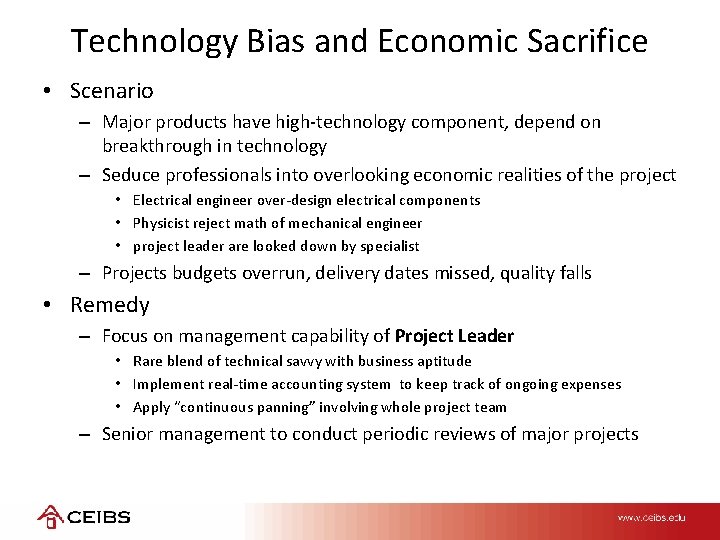
Technology Bias and Economic Sacrifice • Scenario – Major products have high-technology component, depend on breakthrough in technology – Seduce professionals into overlooking economic realities of the project • Electrical engineer over-design electrical components • Physicist reject math of mechanical engineer • project leader are looked down by specialist – Projects budgets overrun, delivery dates missed, quality falls • Remedy – Focus on management capability of Project Leader • Rare blend of technical savvy with business aptitude • Implement real-time accounting system to keep track of ongoing expenses • Apply “continuous panning” involving whole project team – Senior management to conduct periodic reviews of major projects
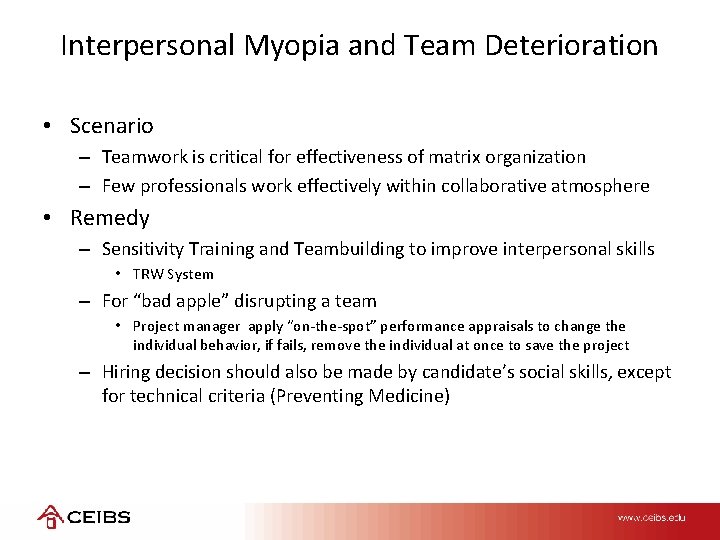
Interpersonal Myopia and Team Deterioration • Scenario – Teamwork is critical for effectiveness of matrix organization – Few professionals work effectively within collaborative atmosphere • Remedy – Sensitivity Training and Teambuilding to improve interpersonal skills • TRW System – For “bad apple” disrupting a team • Project manager apply “on-the-spot” performance appraisals to change the individual behavior, if fails, remove the individual at once to save the project – Hiring decision should also be made by candidate’s social skills, except for technical criteria (Preventing Medicine)
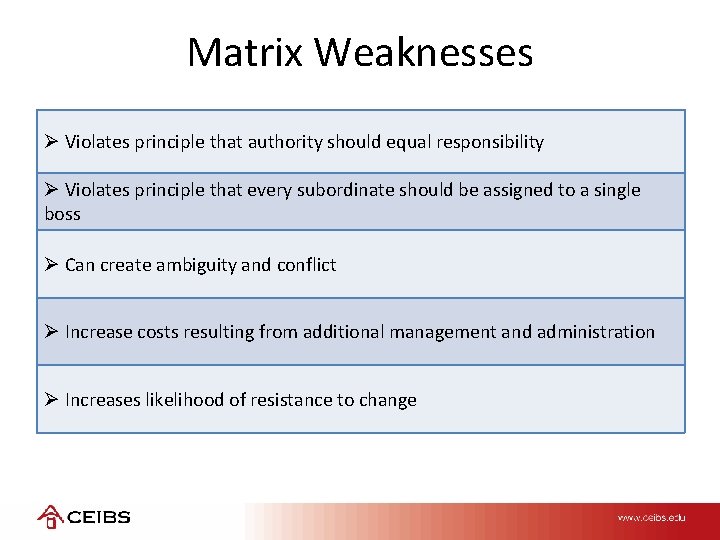
Matrix Weaknesses Ø Violates principle that authority should equal responsibility Ø Violates principle that every subordinate should be assigned to a single boss Ø Can create ambiguity and conflict Ø Increase costs resulting from additional management and administration Ø Increases likelihood of resistance to change
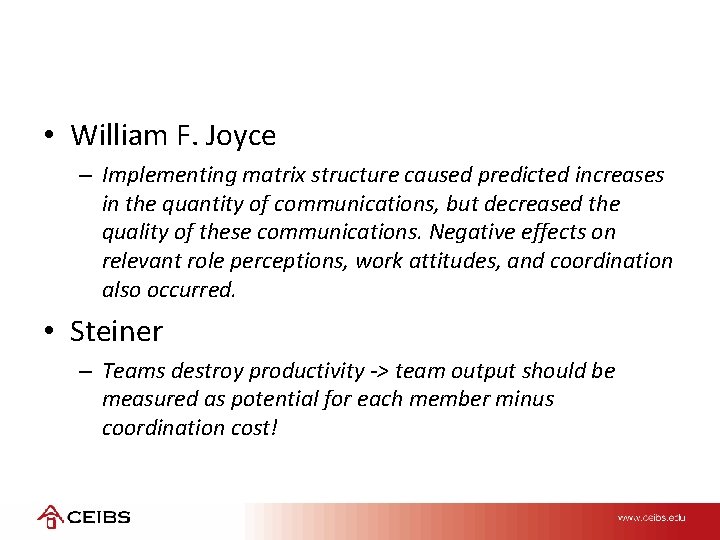
• William F. Joyce – Implementing matrix structure caused predicted increases in the quantity of communications, but decreased the quality of these communications. Negative effects on relevant role perceptions, work attitudes, and coordination also occurred. • Steiner – Teams destroy productivity -> team output should be measured as potential for each member minus coordination cost!
Moon’s recommendations for successful matrix management Permanency Status
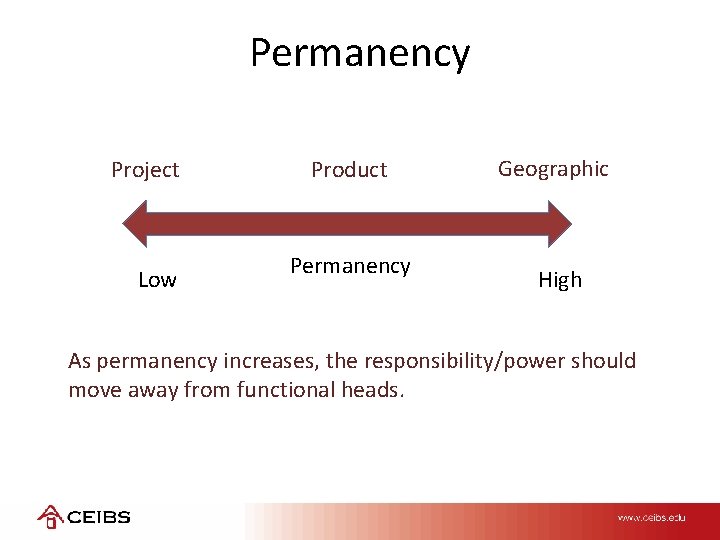
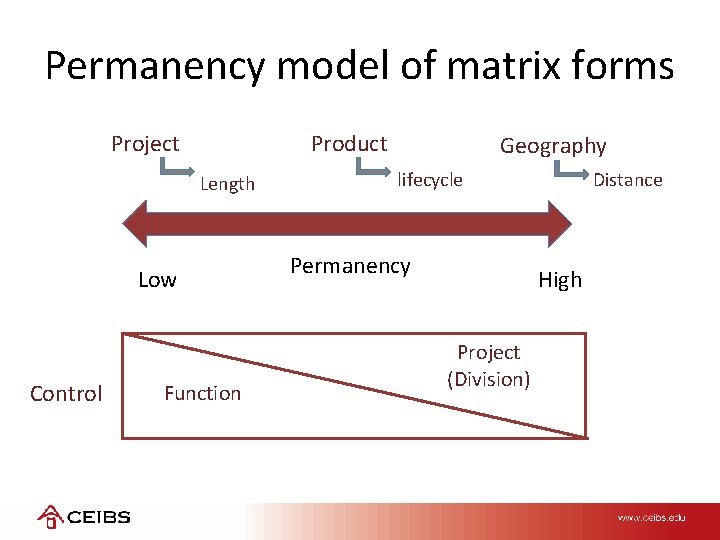
Permanency Project Low Product Permanency Geographic High As permanency increases, the responsibility/power should move away from functional heads.
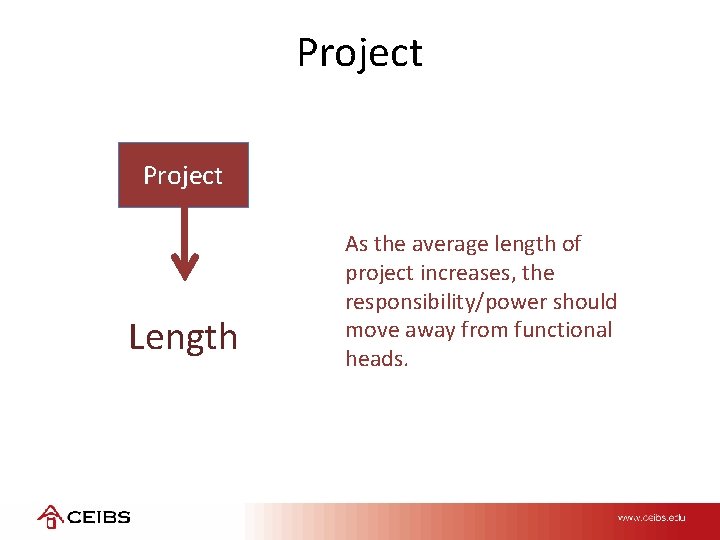
Project Length As the average length of project increases, the responsibility/power should move away from functional heads.
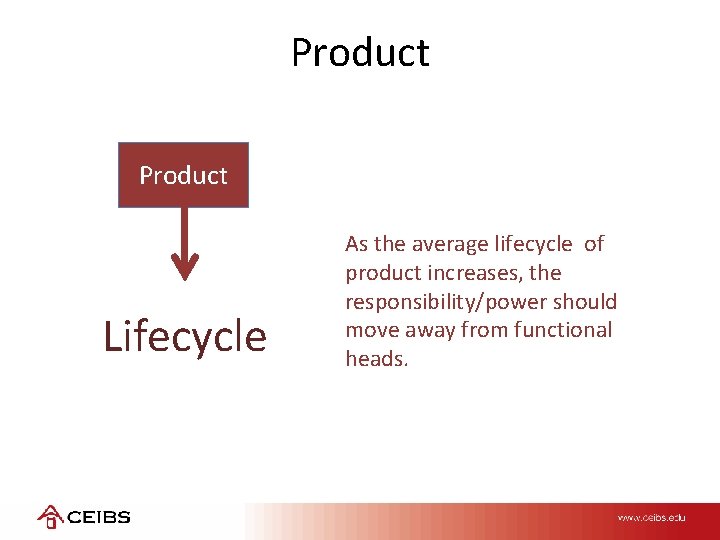
Product Lifecycle As the average lifecycle of product increases, the responsibility/power should move away from functional heads.
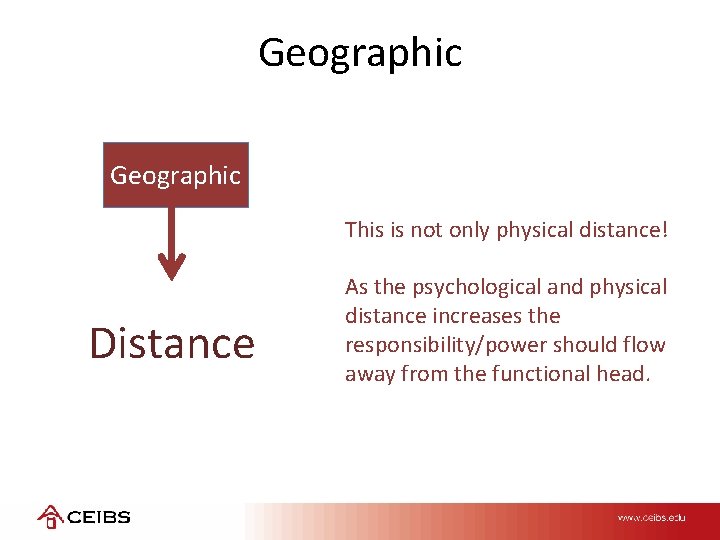
Geographic This is not only physical distance! Distance As the psychological and physical distance increases the responsibility/power should flow away from the functional head.
Permanency model of matrix forms Project Product Length Low Control Function Geography lifecycle Permanency Distance High Project (Division)
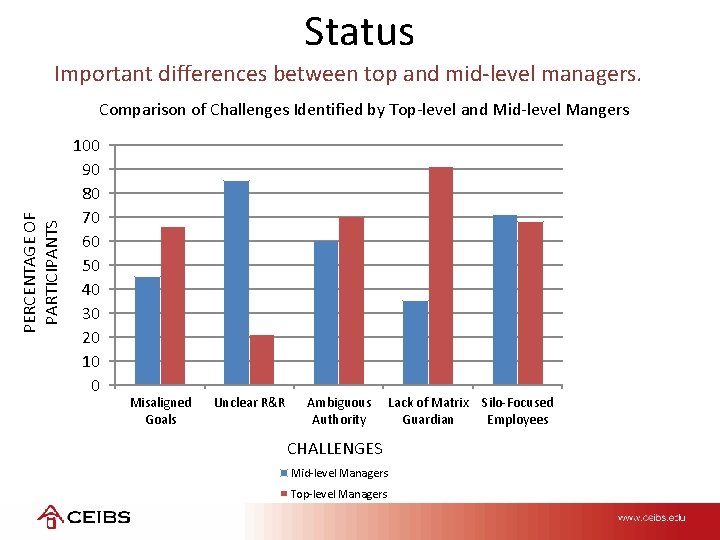
Status Important differences between top and mid-level managers. PERCENTAGE OF PARTICIPANTS Comparison of Challenges Identified by Top-level and Mid-level Mangers 100 90 80 70 60 50 40 30 20 10 0 Misaligned Goals Unclear R&R Ambiguous Authority CHALLENGES Mid-level Managers Top-level Managers Lack of Matrix Silo-Focused Guardian Employees
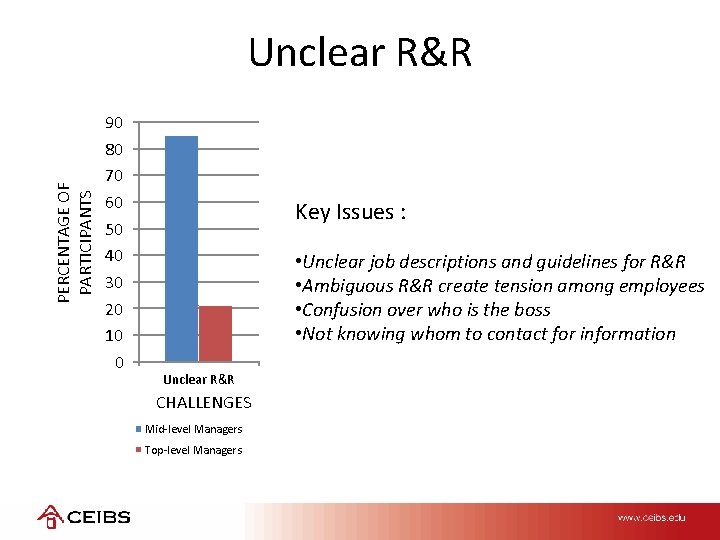
PERCENTAGE OF PARTICIPANTS Unclear R&R 90 80 70 60 50 40 30 20 10 0 Key Issues : • Unclear job descriptions and guidelines for R&R • Ambiguous R&R create tension among employees • Confusion over who is the boss • Not knowing whom to contact for information Unclear R&R CHALLENGES Mid-level Managers Top-level Managers
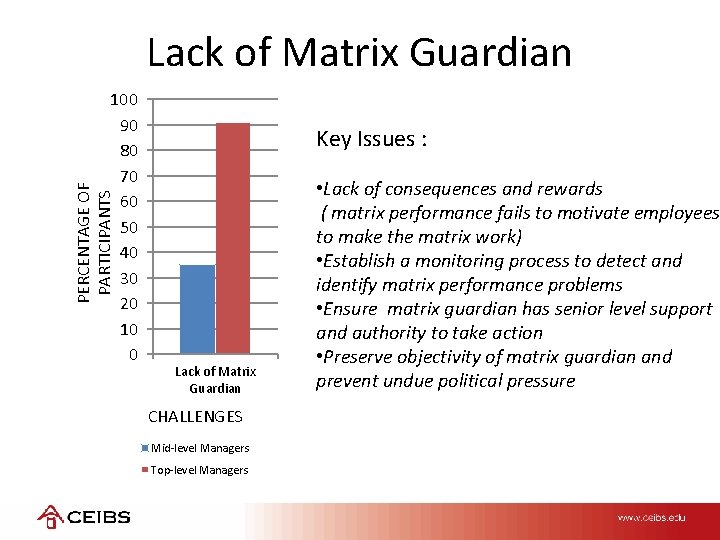
Lack of Matrix Guardian Key Issues : PERCENTAGE OF PARTICIPANTS 100 90 80 70 60 50 40 30 20 10 0 Lack of Matrix Guardian CHALLENGES Mid-level Managers Top-level Managers • Lack of consequences and rewards ( matrix performance fails to motivate employees to make the matrix work) • Establish a monitoring process to detect and identify matrix performance problems • Ensure matrix guardian has senior level support and authority to take action • Preserve objectivity of matrix guardian and prevent undue political pressure
The status differential in matrix structures has led to a very interesting observation in my classes over the years • MBA students enjoy matrix structures while senior executives (EMBA) tend to find them frustrating and disdainful. Why? • A. I believe MBA (younger) employees find it easy to “hide” in matrix organiations. • B. I believe EMBA (senior) employees find the divergence between responsibility and power to be insufferable.
Most important personal advice • I find no evidence that the successful matrix structure is one of permanent “equally” shared responsibility. • Rather, what you must do as a leader is continually shape the movement of the various levels of your organization toward either a functional (centralized) or divisional (decentralized) orientation. • The basis for this decision will be discussed in my team structure lecture