
Unknown genetic predisposition in familial breast cancer can
Unknown genetic predisposition in familial breast cancer can lie deep in family tree San Ming Wang University of Nebraska Medical Center
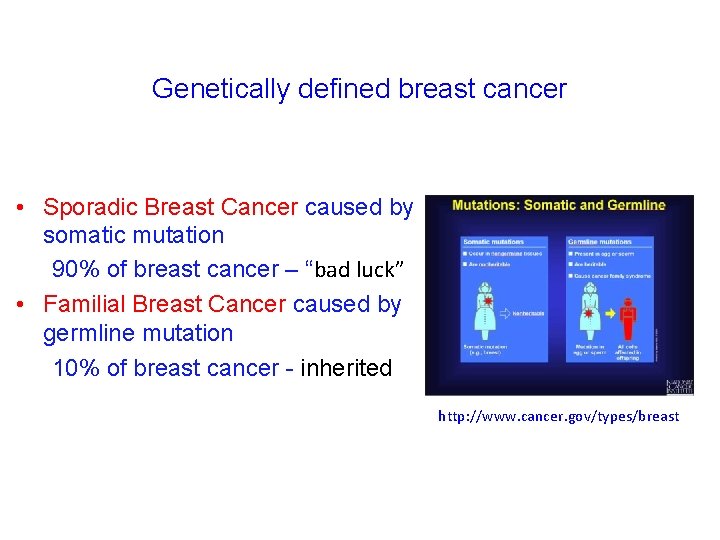
Genetically defined breast cancer • Sporadic Breast Cancer caused by somatic mutation 90% of breast cancer – “bad luck” • Familial Breast Cancer caused by germline mutation 10% of breast cancer - inherited http: //www. cancer. gov/types/breast
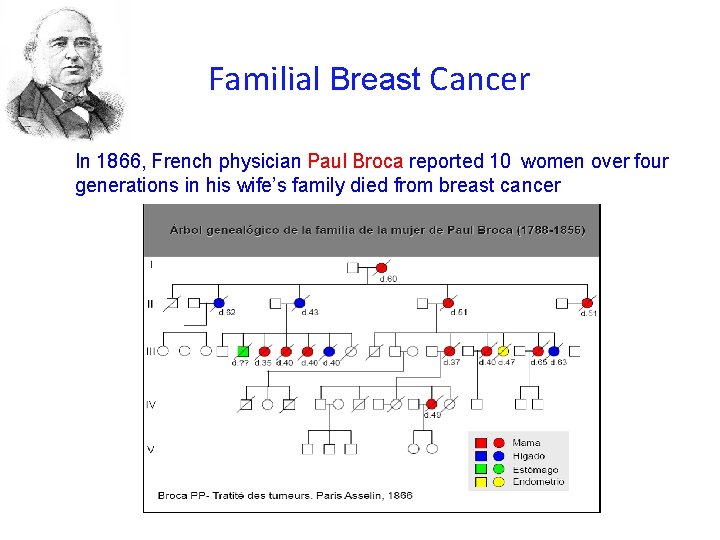
Familial Breast Cancer In 1866, French physician Paul Broca reported 10 women over four generations in his wife’s family died from breast cancer
Genetic predisposition is the major factor familial breast cancer • Factors contributing to cancer include environment, life style, nutrition, infection, genetics etc. • Genetic predisposition is considered as the major factor responsible for familial breast cancer • Familial breast cancer is a genetic disease
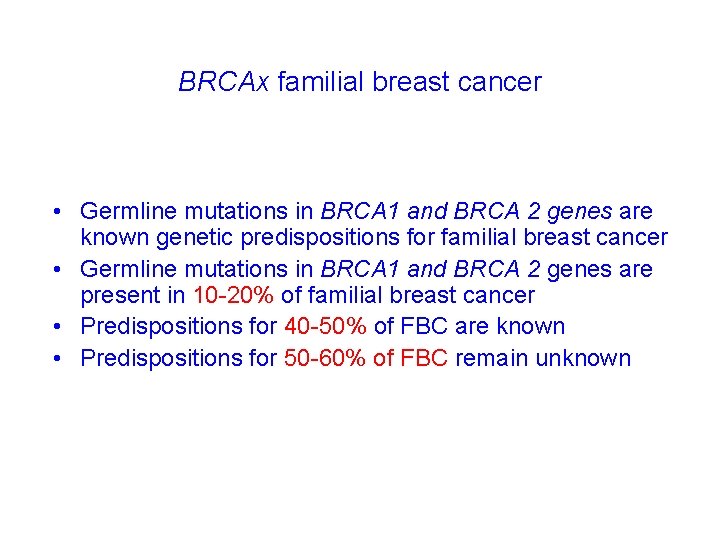
BRCAx familial breast cancer • Germline mutations in BRCA 1 and BRCA 2 genes are known genetic predispositions for familial breast cancer • Germline mutations in BRCA 1 and BRCA 2 genes are present in 10 -20% of familial breast cancer • Predispositions for 40 -50% of FBC are known • Predispositions for 50 -60% of FBC remain unknown
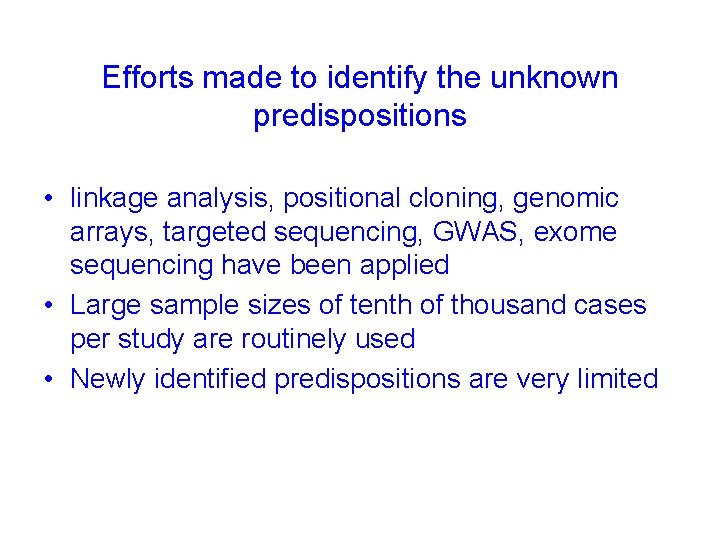
Efforts made to identify the unknown predispositions • linkage analysis, positional cloning, genomic arrays, targeted sequencing, GWAS, exome sequencing have been applied • Large sample sizes of tenth of thousand cases per study are routinely used • Newly identified predispositions are very limited
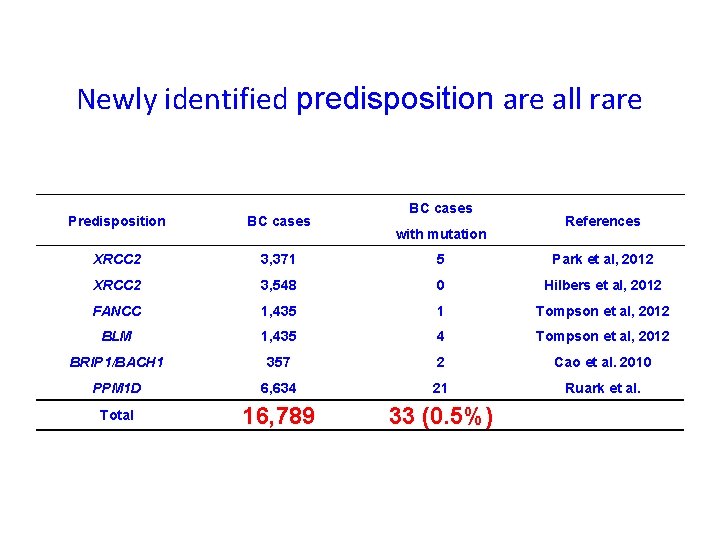
Newly identified predisposition are all rare BC cases Predisposition BC cases XRCC 2 3, 371 5 Park et al, 2012 XRCC 2 3, 548 0 Hilbers et al, 2012 FANCC 1, 435 1 Tompson et al, 2012 BLM 1, 435 4 Tompson et al, 2012 BRIP 1/BACH 1 357 2 Cao et al. 2010 PPM 1 D 6, 634 21 Ruark et al. Total 16, 789 33 (0. 5%) with mutation References
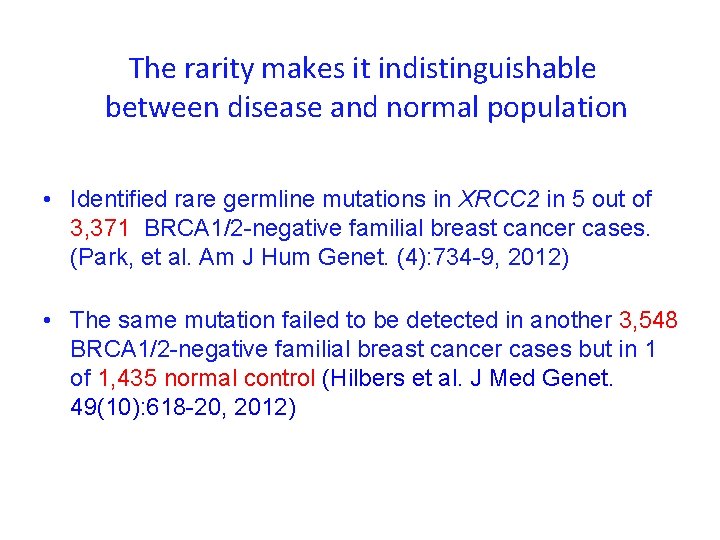
The rarity makes it indistinguishable between disease and normal population • Identified rare germline mutations in XRCC 2 in 5 out of 3, 371 BRCA 1/2 -negative familial breast cancer cases. (Park, et al. Am J Hum Genet. (4): 734 -9, 2012) • The same mutation failed to be detected in another 3, 548 BRCA 1/2 -negative familial breast cancer cases but in 1 of 1, 435 normal control (Hilbers et al. J Med Genet. 49(10): 618 -20, 2012)
Current theory to explain germline predispositions in familial breast cancer • High-risk genes: rare mutations convey high-risk, such as BRCA 1; • Intermediate-risk genes: rare mutations convey intermediate risk, such as CHEK 2; • Modest risk genetic variants: common genetic variants such as the SNPs detected by GWAS population studies
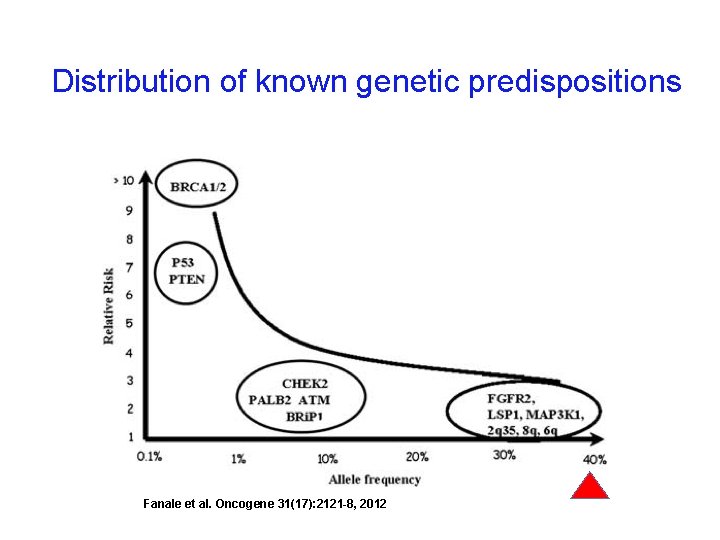
Distribution of known genetic predispositions Fanale et al. Oncogene 31(17): 2121 -8, 2012
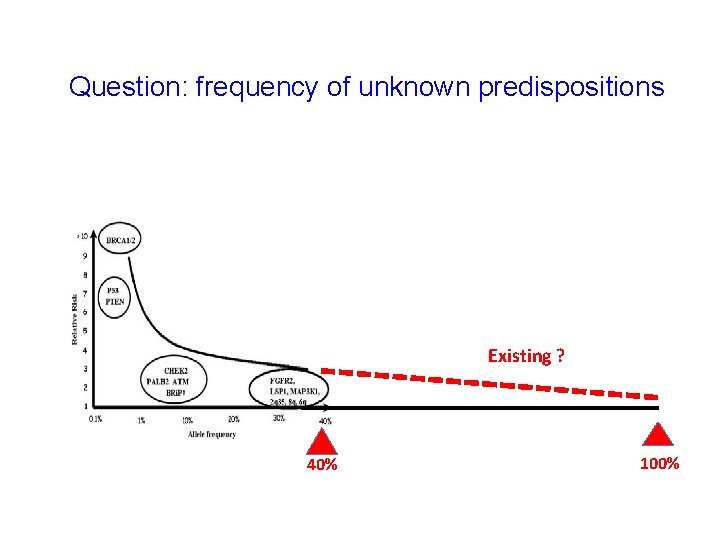
Question: frequency of unknown predispositions Existing ? 40% 100%
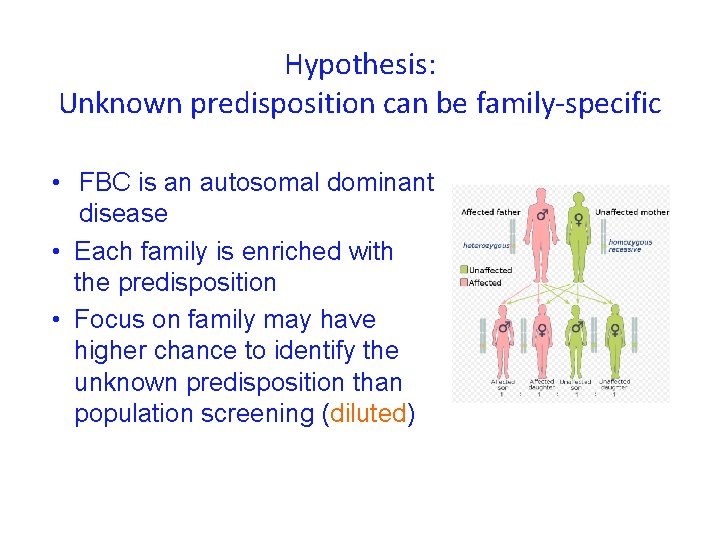
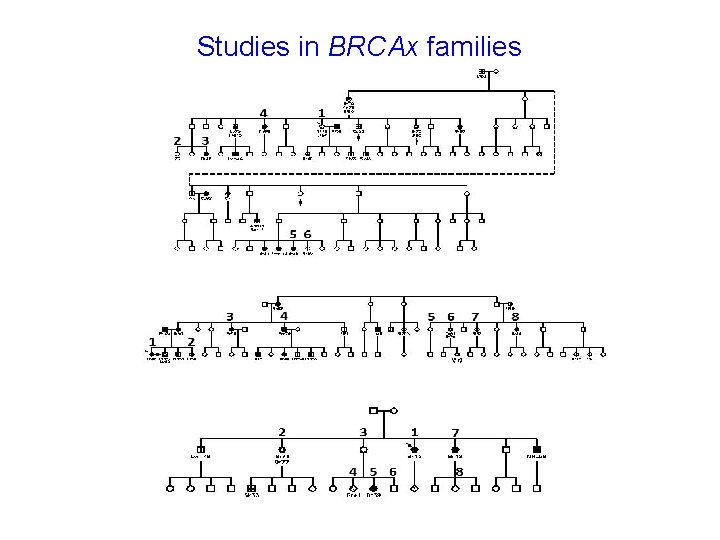
Hypothesis: Unknown predisposition can be family-specific • FBC is an autosomal dominant disease • Each family is enriched with the predisposition • Focus on family may have higher chance to identify the unknown predisposition than population screening (diluted)
Studies in BRCAx families
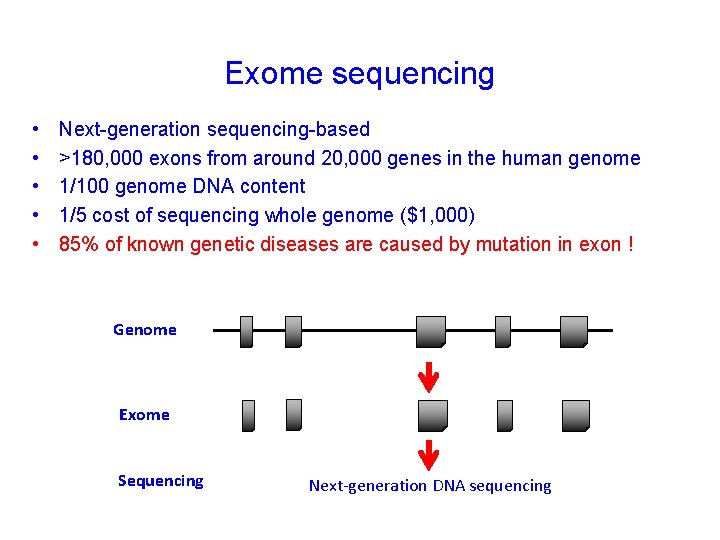
Exome sequencing • • • Next-generation sequencing-based >180, 000 exons from around 20, 000 genes in the human genome 1/100 genome DNA content 1/5 cost of sequencing whole genome ($1, 000) 85% of known genetic diseases are caused by mutation in exon ! Genome Exome Sequencing Next-generation DNA sequencing
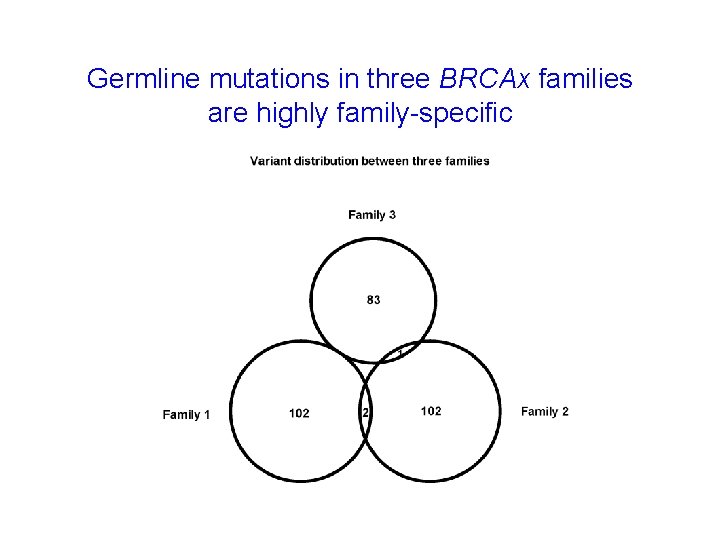
Germline mutations in three BRCAx families are highly family-specific
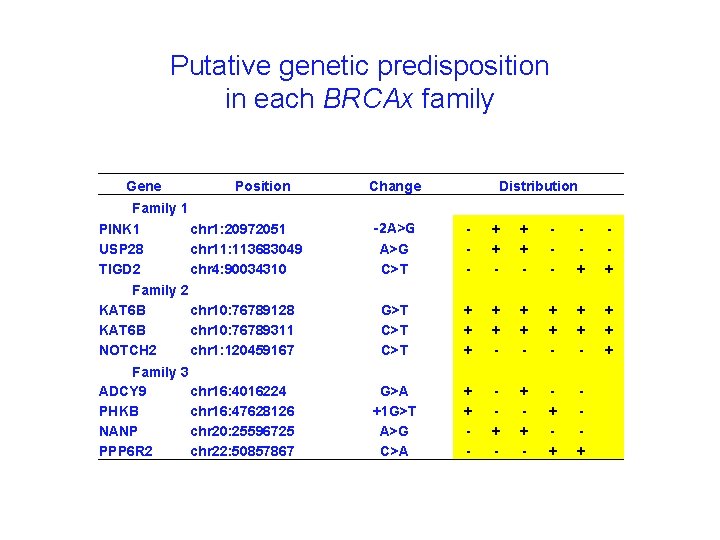
Putative genetic predisposition in each BRCAx family Gene Position Change Distribution Family 1 PINK 1 USP 28 TIGD 2 chr 1: 20972051 chr 11: 113683049 chr 4: 90034310 -2 A>G C>T - + + - - + + Family 2 KAT 6 B chr 10: 76789128 KAT 6 B chr 10: 76789311 NOTCH 2 chr 1: 120459167 G>T C>T + + + - + + + Family 3 ADCY 9 chr 16: 4016224 PHKB chr 16: 47628126 NANP chr 20: 25596725 PPP 6 R 2 chr 22: 50857867 G>A +1 G>T A>G C>A + + - + + +
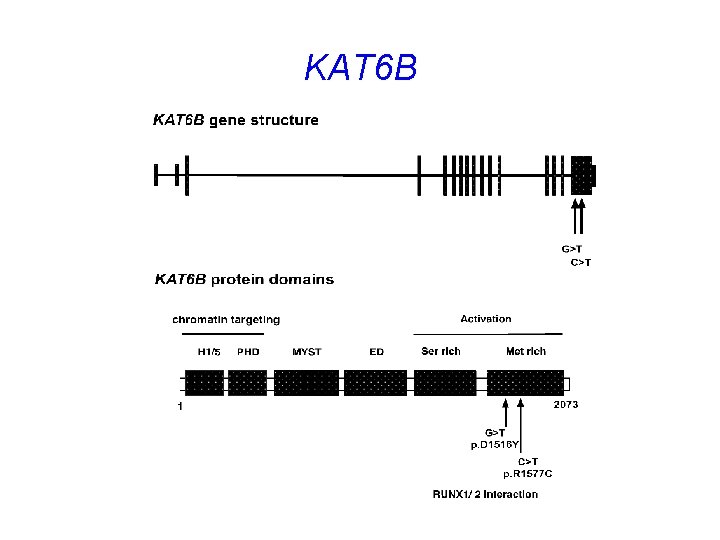
KAT 6 B
KAT 6 B • A histone acetyl-transferase • Its N-terminal is involved in transcriptional repression while its Cterminal is involved in transcriptional activation • Interacts with important transcriptional regulators RUNX 1 and RUNX 2. • A component of the MOZ/MORF complex involved in DNA replication, transcriptional regulation, and epigenetic modification of chromatin structure • Mutations cause several neural genetic disease • Not known involved in familial breast cancer
Are the same germline mutations in KAT 6 B also present in other BRCAX families? • 42 additional cancers from 26 BRCAx families were tested • None of the mutations are present in these families • Sequencing entire KAT 6 B gene see no mutations
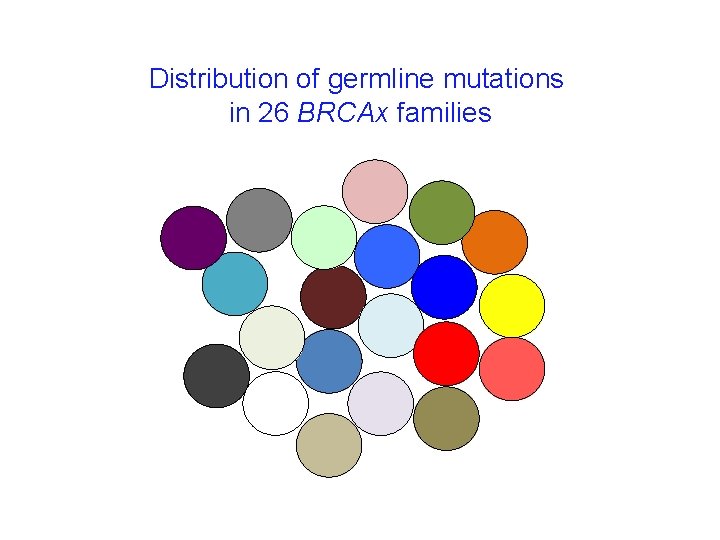
Distribution of germline mutations in 26 BRCAx families
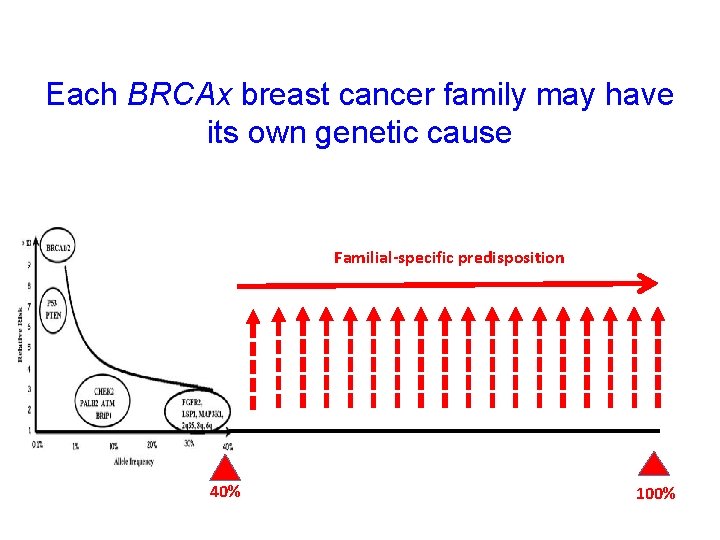
Each BRCAx breast cancer family may have its own genetic cause Familial-specific predisposition 40% 100%
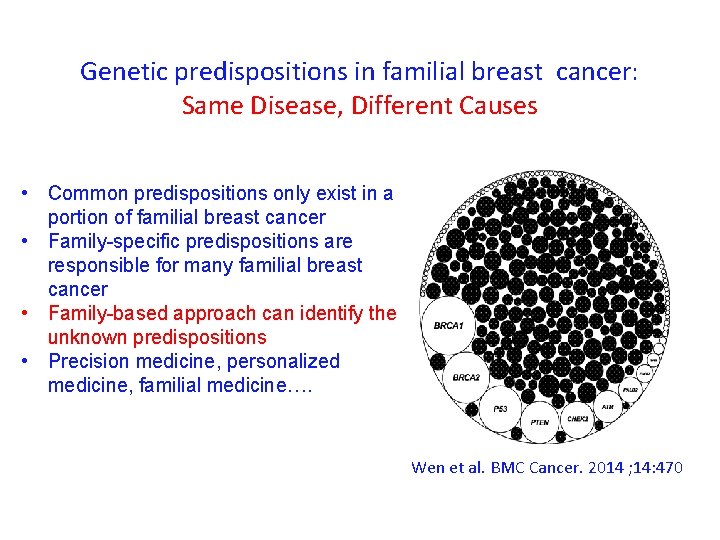
Genetic predispositions in familial breast cancer: Same Disease, Different Causes • Common predispositions only exist in a portion of familial breast cancer • Family-specific predispositions are responsible for many familial breast cancer • Family-based approach can identify the unknown predispositions • Precision medicine, personalized medicine, familial medicine…. Wen et al. BMC Cancer. 2014 ; 14: 470
Contribution University of Nebraska Med Center Yeong C. Kim Bradley Downs Hongxiu Wen Fengxia Xiao Peixian Chen Jiangtao Luo San Ming Wang Creighton University Carrie Snyder Mark Stacey Dina Becirovic Henry Lynch
- Slides: 23