
University of Canberra Advanced Communications Topics Television Broadcasting
University of Canberra Advanced Communications Topics Television Broadcasting into the Digital Era 1 Lecture 2 Digital Video Formats, Standards and Sampling by: Neil Pickford
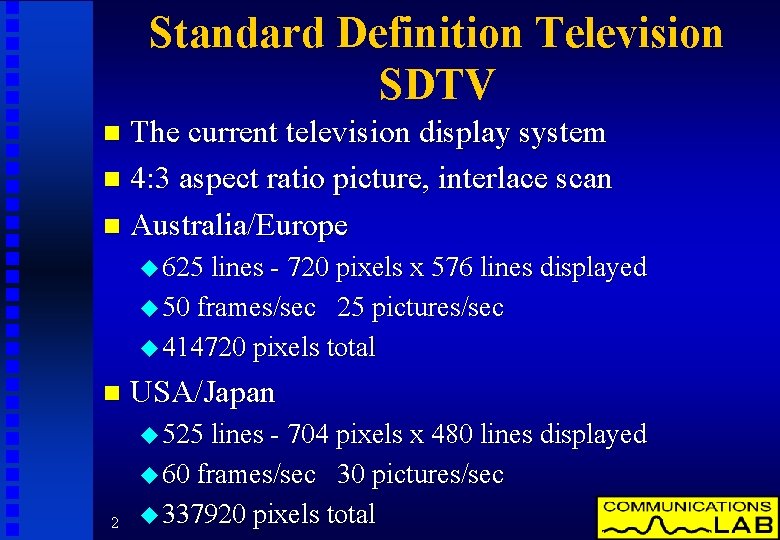
Standard Definition Television SDTV The current television display system n 4: 3 aspect ratio picture, interlace scan n Australia/Europe n u 625 lines - 720 pixels x 576 lines displayed u 50 frames/sec 25 pictures/sec u 414720 pixels total n USA/Japan u 525 lines - 704 pixels x 480 lines displayed u 60 frames/sec 2 30 pictures/sec u 337920 pixels total
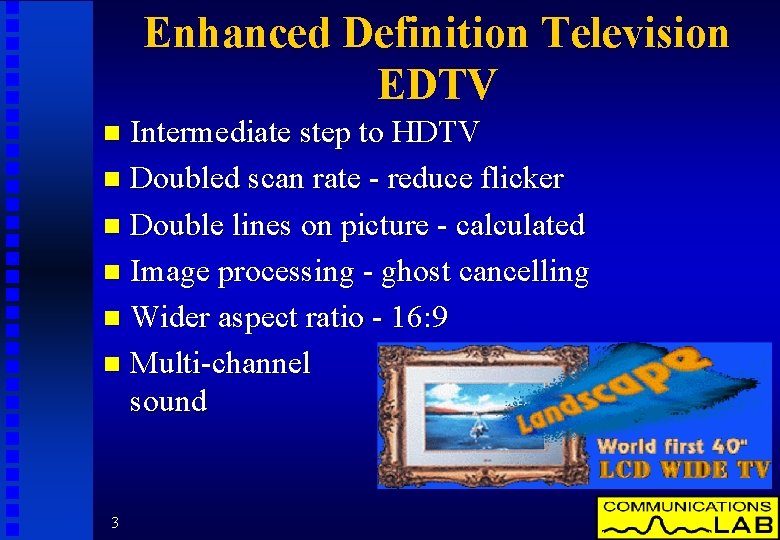
Enhanced Definition Television EDTV Intermediate step to HDTV n Doubled scan rate - reduce flicker n Double lines on picture - calculated n Image processing - ghost cancelling n Wider aspect ratio - 16: 9 n Multi-channel sound n 3
High Definition Television - HDTV Not exactly defined - number of systems n System with a higher picture resolution n Greater than 1000 lines resolution n Picture with less artefacts or distortions n Bigger picture to give a viewing experience n Wider aspect ratio to use peripheral vision n Progressive instead of interlaced pictures n 4
HDTV Have We Heard This Before? The first TV system had just 32 lines n When the 405 line system was introduced it was called HDTV! n When 625 line black & white came along it was called HDTV! n When the PAL colour system was introduced it was called HDTV by some people. n Now we have 1000+ line systems and digital television - guess what? Its called HDTV! 5 n
Do You Use A PC? All Current Generation PCs use Progressive Scan and display Pictures which match or exceed HDTV resolutions although the pixel pitch, aspect ratio and colorimetry are not correct. 6 HDTV
Digital Television Why digital? To Overcome Limitations of Analog Television n Noise free pictures n Higher resolution images Widescreen / HDTV n No Ghosting n Multi-channel, Enhanced Sound Services n Other Data services. 7
Enabling Technologies n Source digitisation (Rec 601 digital studio) n Compression technology (MPEG, AC-3) n Data multiplexing (MPEG) n Display technology (large wide screens) n Transmission technology (modulation) n Production 8
Sampling Digital video requires sampling of the Analog image information. n Highest quality achieved when sampling Component video signals. n For SDTV a basic luminance sampling frequency of 13. 5 MHz has been adopted. n Various methods exist to sample the complete colour image information n 4: 2: 2 4: 1: 1 9 4: 4: 4 4: 2: 0
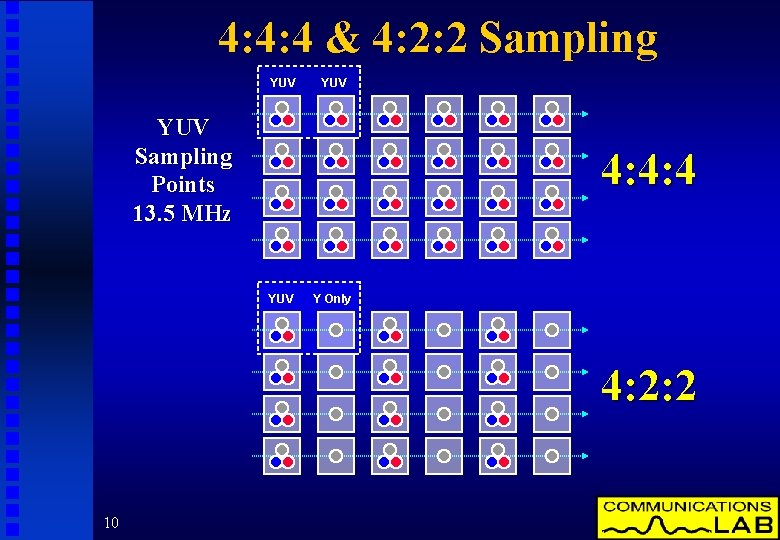
4: 4: 4 & 4: 2: 2 Sampling YUV YUV Sampling Points 13. 5 MHz 4: 4: 4 YUV Y Only 4: 2: 2 10
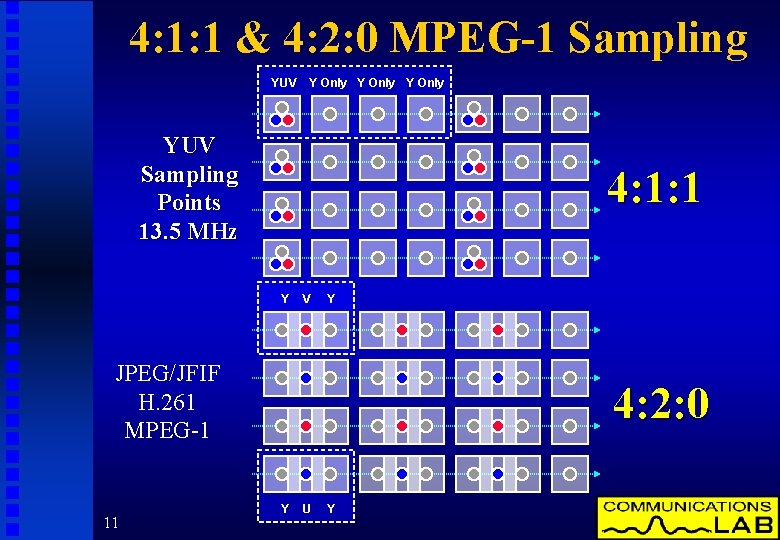
4: 1: 1 & 4: 2: 0 MPEG-1 Sampling YUV Y Only YUV Sampling Points 13. 5 MHz 4: 1: 1 Y V Y JPEG/JFIF H. 261 MPEG-1 11 4: 2: 0 Y U Y
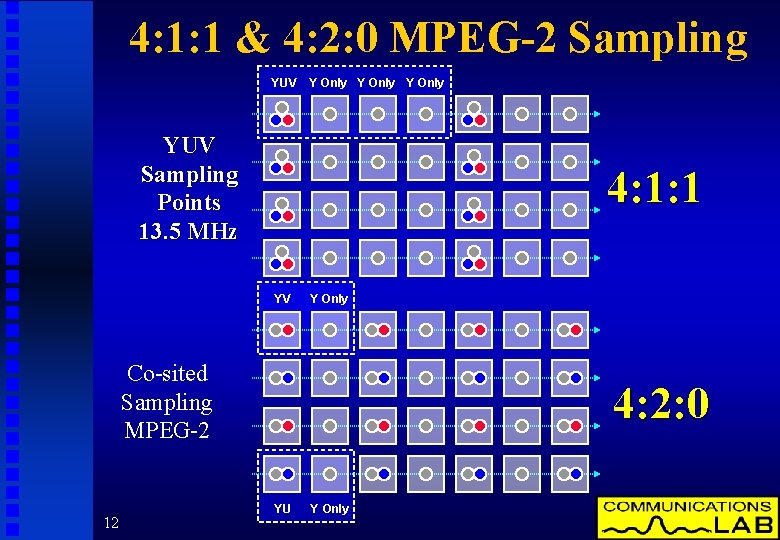
4: 1: 1 & 4: 2: 0 MPEG-2 Sampling YUV Y Only YUV Sampling Points 13. 5 MHz 4: 1: 1 YV Y Only Co-sited Sampling MPEG-2 12 4: 2: 0 YU Y Only
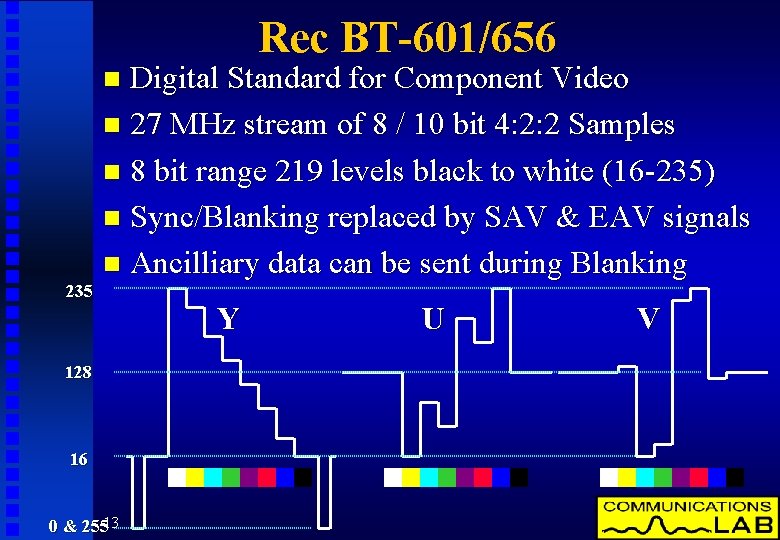
Rec BT-601/656 Digital Standard for Component Video n 27 MHz stream of 8 / 10 bit 4: 2: 2 Samples n 8 bit range 219 levels black to white (16 -235) n Sync/Blanking replaced by SAV & EAV signals n Ancilliary data can be sent during Blanking n 235 128 16 0 & 25513 Y U V
Parallel BT-656 1 st Rec 656 connection format used. n Uses 110 Ohm twisted pairs for data and clock n ECL level signalling @ 27 MHz n Width: 10 bits NRZ data + 1 clock pair n Uses standard DB-25 Female on Equipment n All cables are DB-25 Male to Male pin for pin n All cables have overall shield to prevent EMI n Max length without a DA 50 m, with EQ 200 m n 14
SDI - Serial BT-656 Serial Data Interface - Current version of 656 n Uses standard 75 Ohm video coax Cabling n 1300 nm Optical fibre interface also defined n 270 Mb/s Serial data stream of 10 bit data n X 9+X 4+1 scrambling used for data protection n Encoding polarity free NRZI 800 m. V pk-pk n 4 channel Audio can be encoded into ancillary data areas during the blanking period n 15
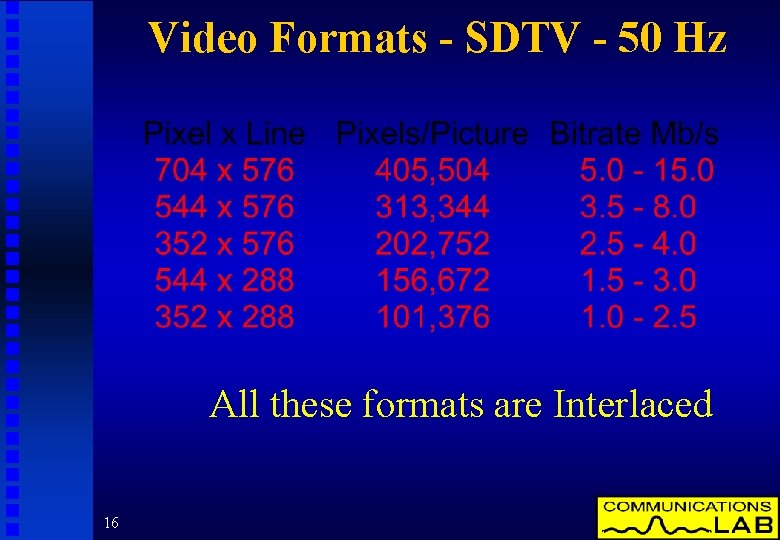
Video Formats - SDTV - 50 Hz All these formats are Interlaced 16
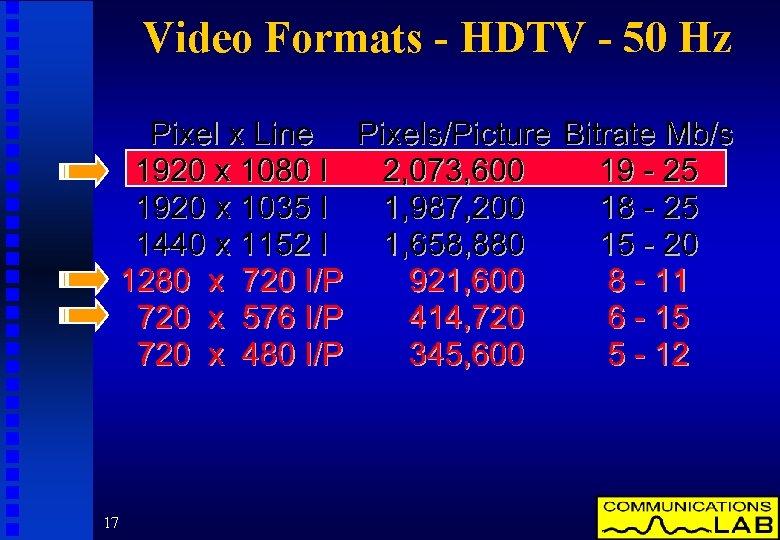
Video Formats - HDTV - 50 Hz 17
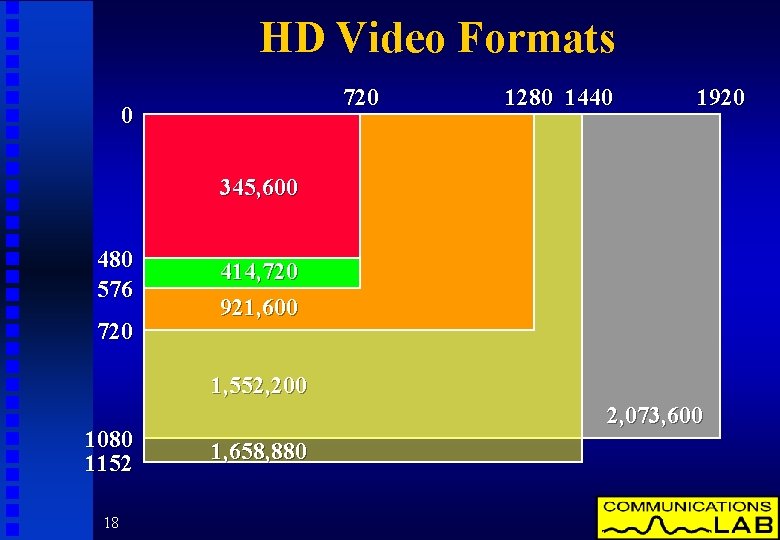
HD Video Formats 720 0 1280 1440 1920 345, 600 480 576 720 414, 720 921, 600 1, 552, 200 1080 1152 18 2, 073, 600 1, 658, 880
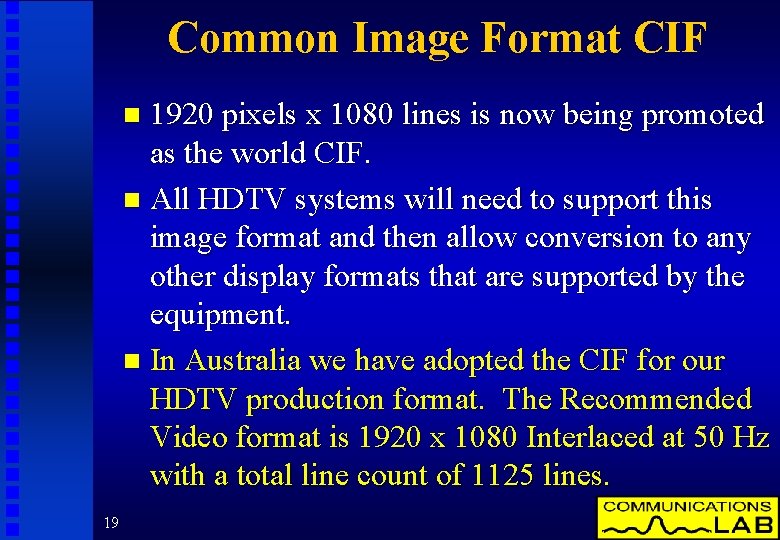
Common Image Format CIF 1920 pixels x 1080 lines is now being promoted as the world CIF. n All HDTV systems will need to support this image format and then allow conversion to any other display formats that are supported by the equipment. n In Australia we have adopted the CIF for our HDTV production format. The Recommended Video format is 1920 x 1080 Interlaced at 50 Hz with a total line count of 1125 lines. n 19
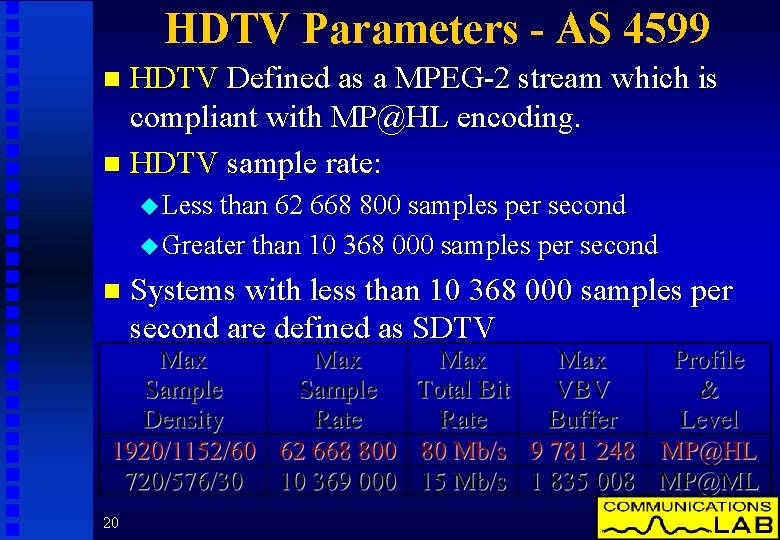
HDTV Parameters - AS 4599 HDTV Defined as a MPEG-2 stream which is compliant with MP@HL encoding. n HDTV sample rate: n u Less than 62 668 800 samples per second u Greater than 10 368 000 samples per second n 20 Systems with less than 10 368 000 samples per second are defined as SDTV
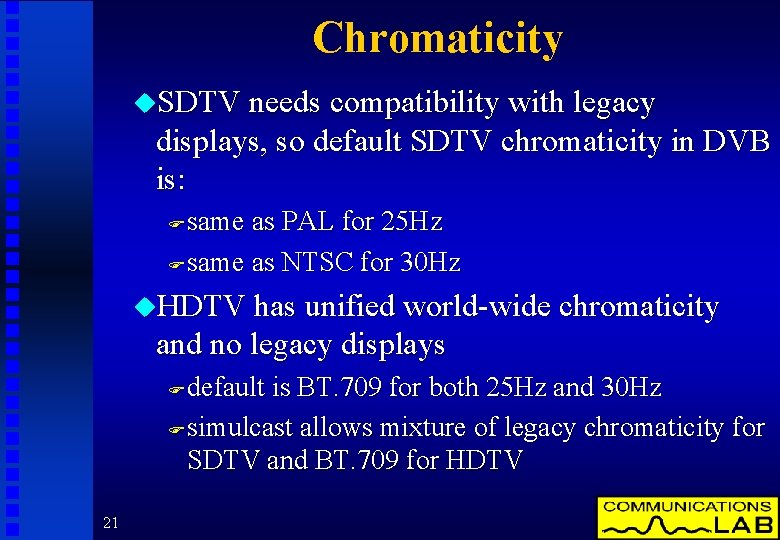
Chromaticity u. SDTV needs compatibility with legacy displays, so default SDTV chromaticity in DVB is: same as PAL for 25 Hz F same as NTSC for 30 Hz F u. HDTV has unified world-wide chromaticity and no legacy displays default is BT. 709 for both 25 Hz and 30 Hz F simulcast allows mixture of legacy chromaticity for SDTV and BT. 709 for HDTV F 21
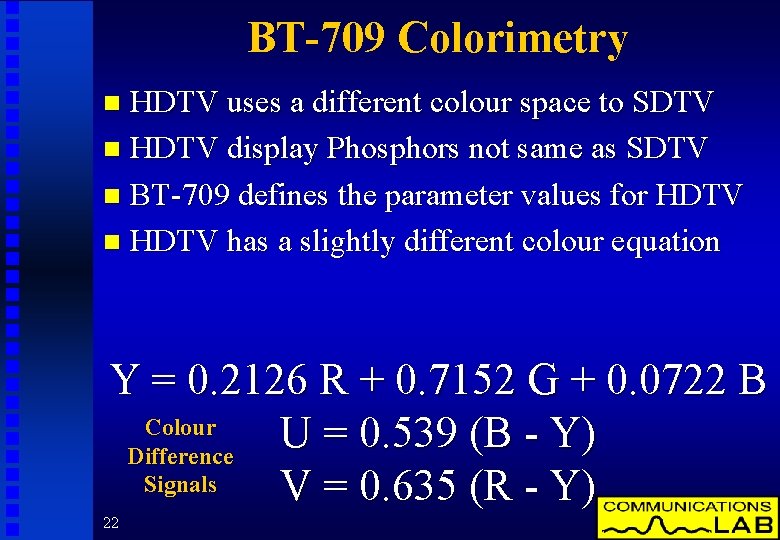
BT-709 Colorimetry HDTV uses a different colour space to SDTV n HDTV display Phosphors not same as SDTV n BT-709 defines the parameter values for HDTV n HDTV has a slightly different colour equation n Y = 0. 2126 R + 0. 7152 G + 0. 0722 B Colour U = 0. 539 (B Y) Difference Signals V = 0. 635 (R - Y) 22
- Slides: 22