
University Business Models Value Propositions in the Digital
University Business Models & Value Propositions in the Digital Age Alec Gershberg and Uta Wehn “The Digitalization of the University of the Future” University of the Future Network (UFN) Meeting II Fern. Universität in Hagen, Germany, July 11‐ 13, 2017
Some current functions of Higher Education • furthering human knowledge and understanding of the world. • provide professional and vocational training to students to access employment opportunities and build social capital. • equipping students with advanced skills useful in the workplace • experience serves as opportunity for the students’ personal growth, social development and awareness, generating a sense of independence within a community. • should also provide tacit value through improved quality of life ‐‐ however that is defined by the student/client. • This is the inherent value proposition at the center of the student‐university relationship.
Value of Higher Education & Labor Markets • despite much rhetoric to the contrary the return to a university degree is still high in many country contexts and an increasing number of individuals likely need a higher education degree to improve their socioeconomic standing. • >60% of existing jobs in the U. S require applicants have some type of college degree ‐‐ a bachelor or an associate ‐‐ to even consider the job application, while only 36% of jobs require nothing more than a high school diploma. • median earnings of young adults with a bachelor's degree ($49, 900) were 66 percent higher than high school completers ($30, 000). High school completers were 20 percent higher than those without a high school credential ($25, 000). • Some traditional occupations disappear, new occupations being created. Some full‐time, long‐term jobs evolving into uneven flow of “on‐demand” tasks. • Universities challenged to provide new skills to increasingly diverse target and age groups, if they don’t, someone will. • In the digital age, what is the value proposition of higher education for (lifelong) students?
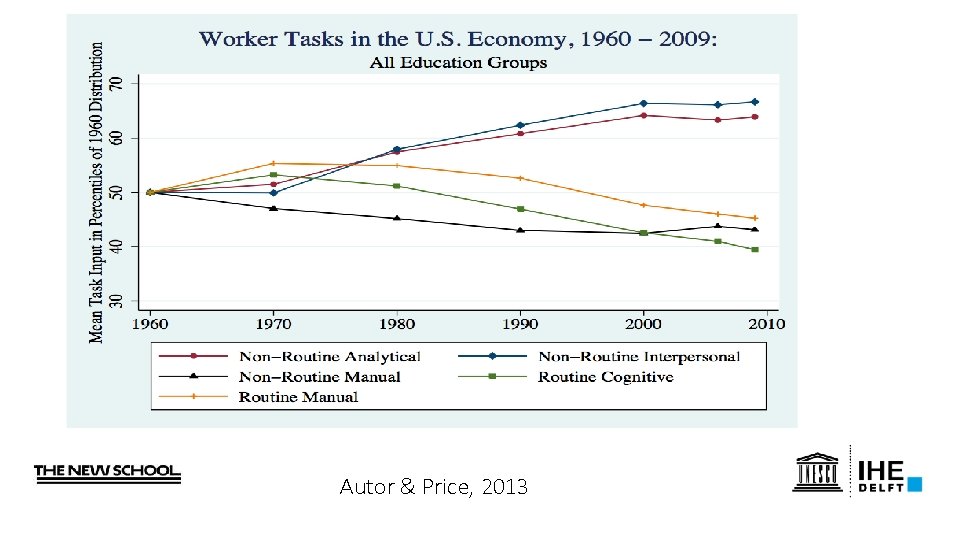
Autor & Price, 2013
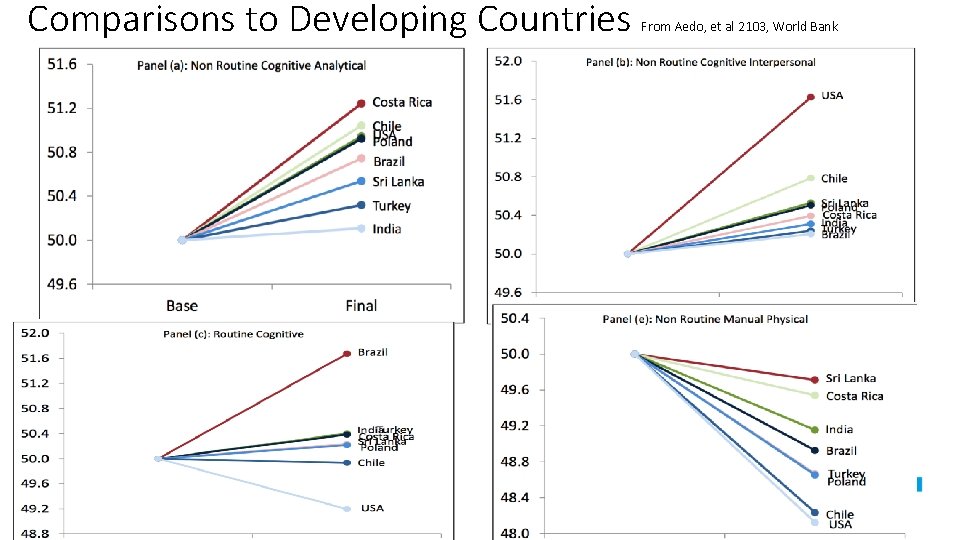
Comparisons to Developing Countries From Aedo, et al 2103, World Bank

Figure 1: Higher education Ecosystem and University Typology Source: Price and Kennie (2012)
“The Digitalization of the University of the Future” What is the value proposition of higher education for (lifelong)students?
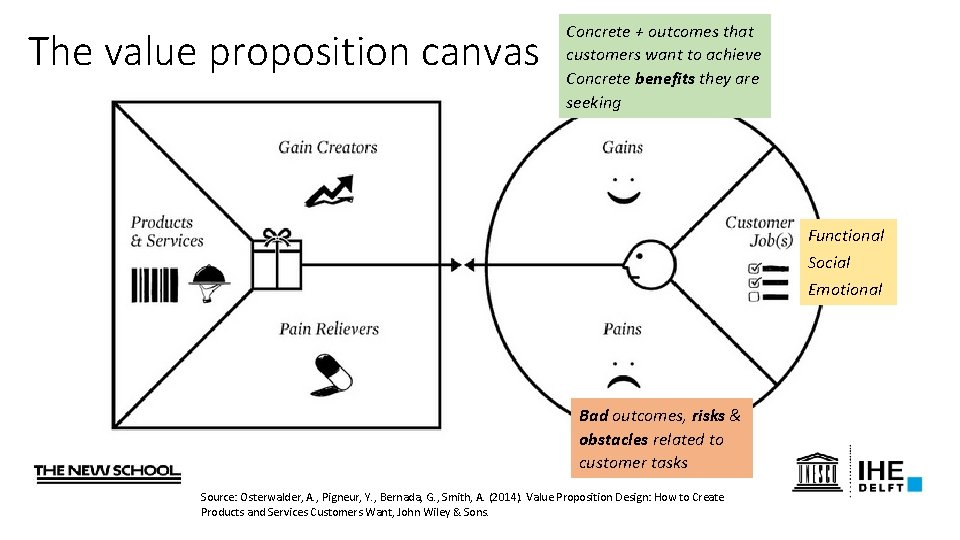
The value proposition canvas Concrete + outcomes that customers want to achieve Concrete benefits they are seeking Functional Social Emotional Bad outcomes, risks & obstacles related to customer tasks Source: Osterwalder, A. , Pigneur, Y. , Bernada, G. , Smith, A. (2014). Value Proposition Design: How to Create Products and Services Customers Want, John Wiley & Sons.
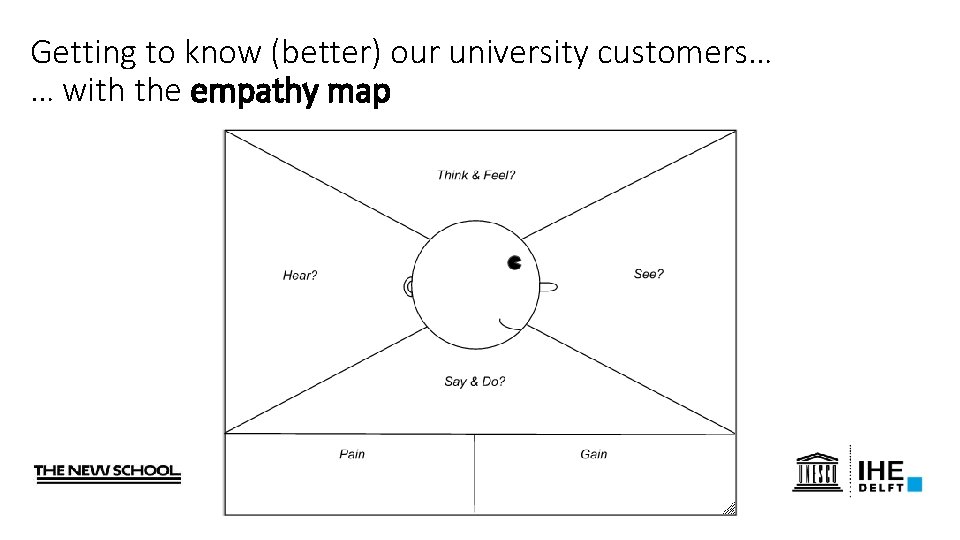
Getting to know (better) our university customers… … with the empathy map
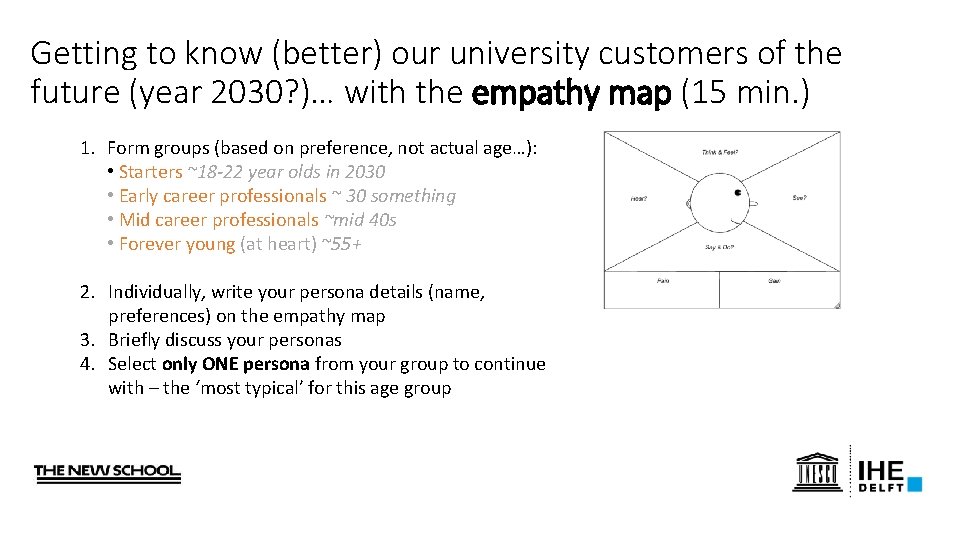
Getting to know (better) our university customers of the future (year 2030? )… with the empathy map (15 min. ) 1. Form groups (based on preference, not actual age…): • Starters ~18 -22 year olds in 2030 • Early career professionals ~ 30 something • Mid career professionals ~mid 40 s • Forever young (at heart) ~55+ 2. Individually, write your persona details (name, preferences) on the empathy map 3. Briefly discuss your personas 4. Select only ONE persona from your group to continue with – the ‘most typical’ for this age group
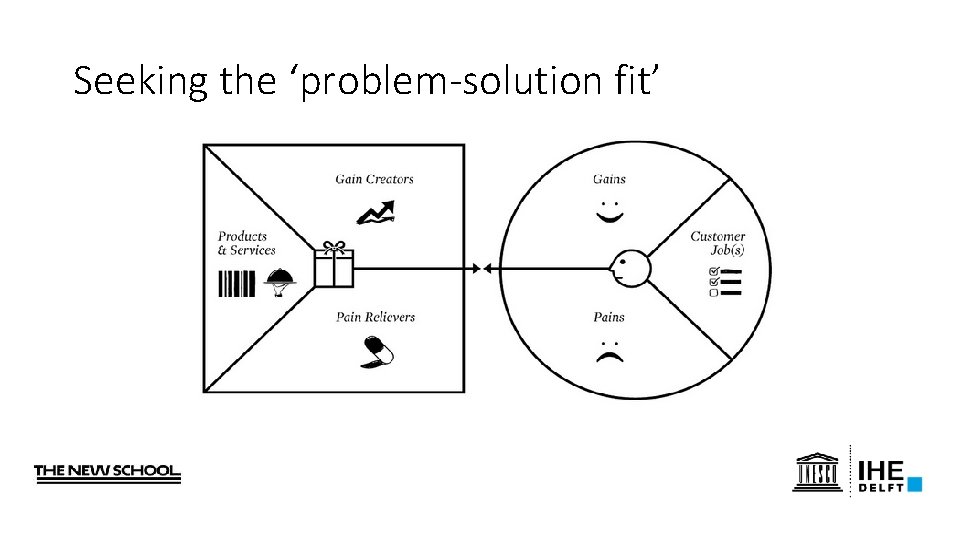
Seeking the ‘problem-solution fit’
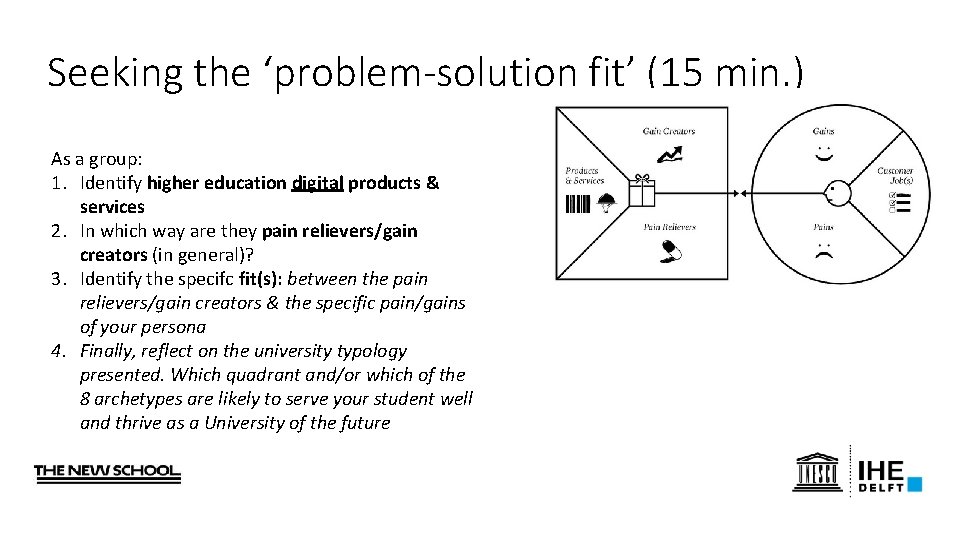
Seeking the ‘problem-solution fit’ (15 min. ) As a group: 1. Identify higher education digital products & services 2. In which way are they pain relievers/gain creators (in general)? 3. Identify the specifc fit(s): between the pain relievers/gain creators & the specific pain/gains of your persona 4. Finally, reflect on the university typology presented. Which quadrant and/or which of the 8 archetypes are likely to serve your student well and thrive as a University of the future
Moving forward (15 min) • Discussion results from the groups – where’s the problem-solution fit? • Comments & suggestions for using the Value Proposition Canvas for the ‘University of the Future’ analysis • Usefulness of the typology? • Usefulness, effectiveness, and challenges of juxaposing the two?
Thank you Alec Gershberg Uta Wehn Chair of Urban Policy & Associate Professor of Urban Policy Associate Professor of Water Innovation Studies Milano school of international affairs, management and urban policy gersh@newschool. edu u. wehn@un‐ihe. org IHE Delft Institute of Water Education
- Slides: 14