
Universitt Karlsruhe TH GERMANY A Taxonomy of Incentive
- Slides: 12
Universität Karlsruhe (TH) GERMANY A Taxonomy of Incentive Patterns - The Design Space of Incentives for Cooperation Philipp Obreiter and Jens Nimis Universität Karlsruhe (TH), Germany Institute for Program Structures und Data Organization Project DIANE: Project KRASH: http: //www. ipd. uni-karlsruhe. de/DIANE http: //www. ipd. uni-karlsruhe. de/KRASH Second International Workshop on Agents and Peer-to-Peer Computing (AP 2 PC 2003) held at AAMAS 2003 Melbourne, Australia, July 14 th, 2003 1/12
Overview • Project background and motivation – P 2 P, Ad-hoc systems – Multi-Agent Systems • (Un-)Cooperative Behavior • Incentive Patterns – Characteristics – Taxonomy • Conclusion 2/12
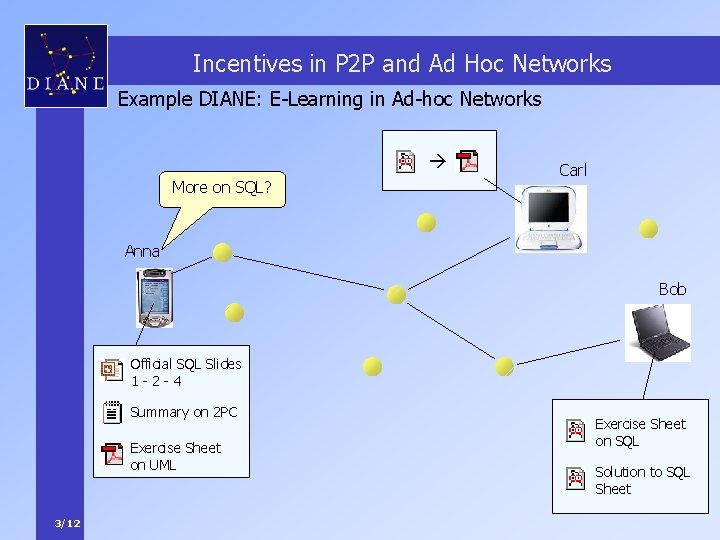
Incentives in P 2 P and Ad Hoc Networks Example DIANE: E-Learning in Ad-hoc Networks More on SQL? Carl Anna Bob Official SQL Slides 1 -2 -4 Summary on 2 PC Exercise Sheet on UML 3/12 Exercise Sheet on SQL Solution to SQL Sheet
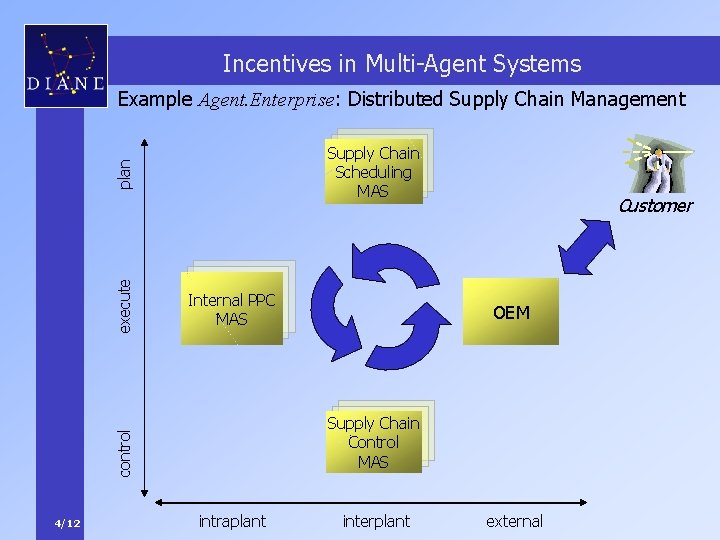
Incentives in Multi-Agent Systems Example Agent. Enterprise: Distributed Supply Chain Management 4/12 Customer KRASH- Inta. PSInternal PPC System MAS OEM Supply Chain dispoweb Control MAS control execute plan Supply Chain Scheduling MAS intraplant interplant external
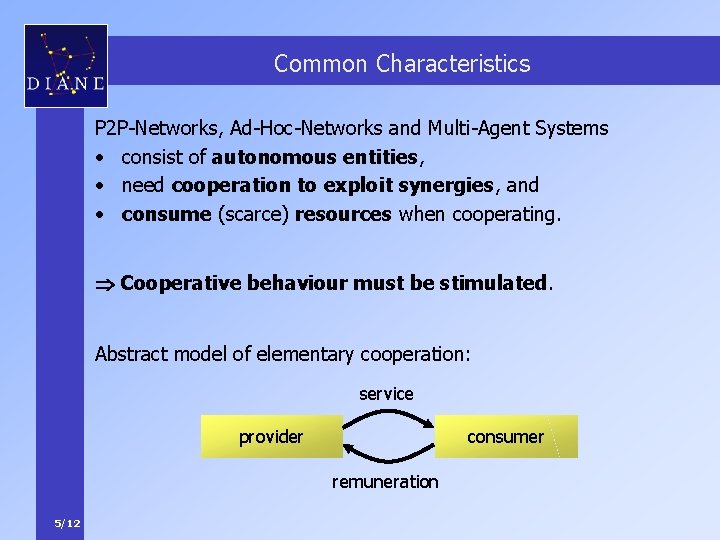
Common Characteristics P 2 P-Networks, Ad-Hoc-Networks and Multi-Agent Systems • consist of autonomous entities, • need cooperation to exploit synergies, and • consume (scarce) resources when cooperating. Cooperative behaviour must be stimulated. Abstract model of elementary cooperation: service provider consumer remuneration 5/12
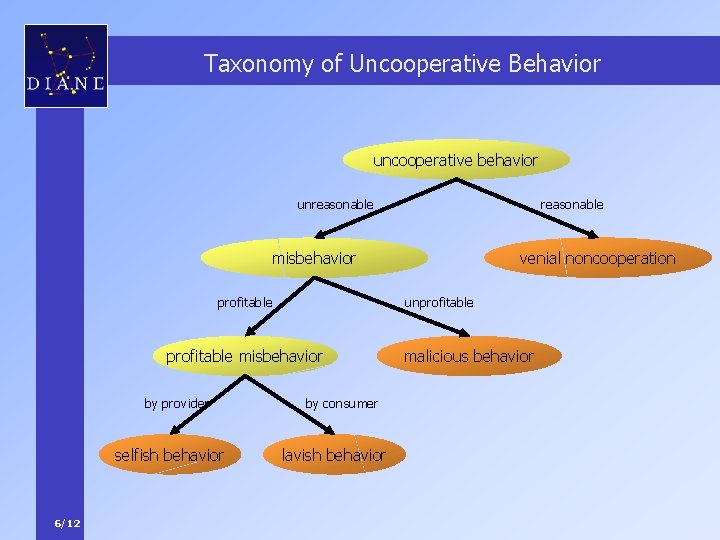
Taxonomy of Uncooperative Behavior uncooperative behavior unreasonable venial noncooperation misbehavior profitable unprofitable misbehavior by provider selfish behavior 6/12 by consumer lavish behavior malicious behavior
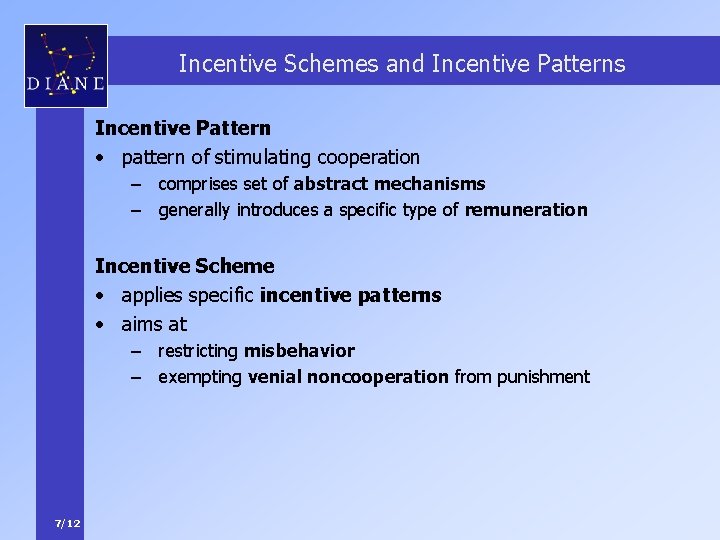
Incentive Schemes and Incentive Patterns Incentive Pattern • pattern of stimulating cooperation – comprises set of abstract mechanisms – generally introduces a specific type of remuneration Incentive Scheme • applies specific incentive patterns • aims at – restricting misbehavior – exempting venial noncooperation from punishment 7/12
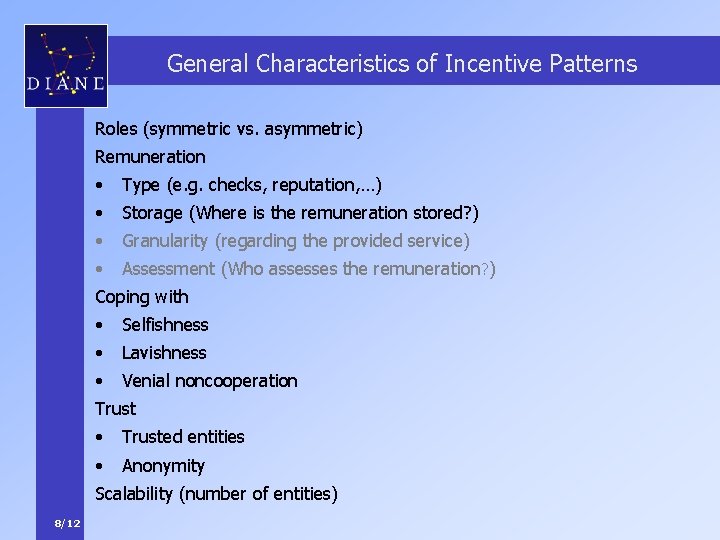
General Characteristics of Incentive Patterns Roles (symmetric vs. asymmetric) Remuneration • Type (e. g. checks, reputation, …) • Storage (Where is the remuneration stored? ) • Granularity (regarding the provided service) • Assessment (Who assesses the remuneration? ) Coping with • Selfishness • Lavishness • Venial noncooperation Trust • Trusted entities • Anonymity Scalability (number of entities) 8/12
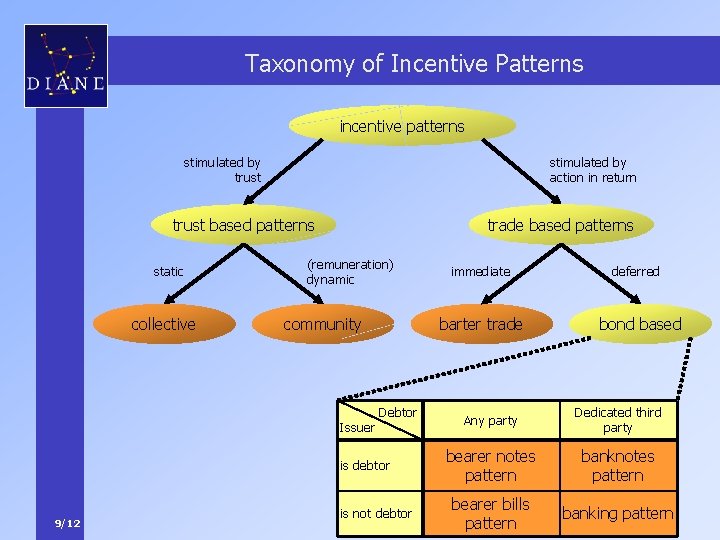
Taxonomy of Incentive Patterns incentive patterns stimulated by trust stimulated by action in return trust based patterns static collective trade based patterns (remuneration) dynamic community Issuer barter trade Debtor is debtor 9/12 immediate is not debtor deferred bond based Any party Dedicated third party bearer notes pattern banknotes pattern bearer bills pattern banking pattern
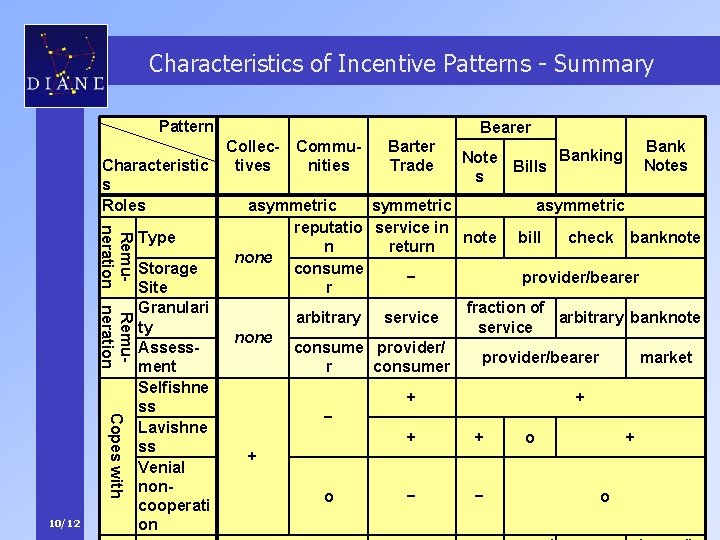
Characteristics of Incentive Patterns - Summary Pattern Characteristic s Roles Remuneration Copes with 10/12 Type Storage Site Granulari ty Assessment Selfishne ss Lavishne ss Venial noncooperati on Bearer Collectives Communities Barter Trade Bank Notes Banking Note Bills s asymmetric reputatio service in note bill check banknote n return none consume − provider/bearer r fraction of arbitrary service arbitrary banknote service none consume provider/bearer market r consumer + + − − o + + o o
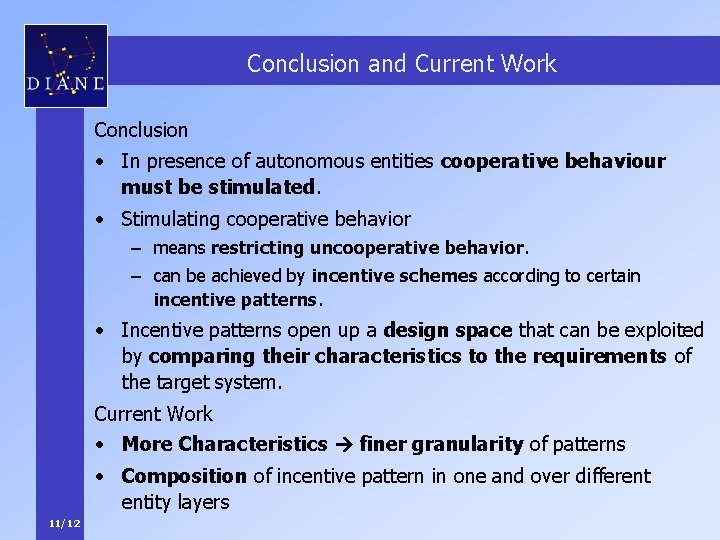
Conclusion and Current Work Conclusion • In presence of autonomous entities cooperative behaviour must be stimulated. • Stimulating cooperative behavior – means restricting uncooperative behavior. – can be achieved by incentive schemes according to certain incentive patterns. • Incentive patterns open up a design space that can be exploited by comparing their characteristics to the requirements of the target system. Current Work • More Characteristics finer granularity of patterns • Composition of incentive pattern in one and over different entity layers 11/12
Thank you! Thank you for your attention! More information (especially the technical report) on our project web page: http: //www. ipd. uni-karlsruhe. de/DIANE/en Are there any questions? 12/12