
Universal Screen A Brief Overview for Staff Universal
Universal Screen: A Brief Overview for Staff Universal Screens: AIMSweb R-CBM, MAZE, M-Comp, TEN, TEL
AIMSweb and RTI As part of our Provincially awarded RTI process, SECPSD utilizes universal screens in numeracy, literacy, and behaviour (starting in February through Review 360).
Why use a universal screen? In the context of an RTI prevention model, universal screening is the first step in identifying the students who are at risk for learning difficulties. It is the mechanism for targeting students who struggle to learn when provided a scientific, evidencebased general education (Jenkins, Hudson, & Johnson, 2007). Universal screening measures consist of brief assessments focused on target skills (e. g. , phonological awareness) that are highly predictive of future outcomes (Jenkins, 2003).
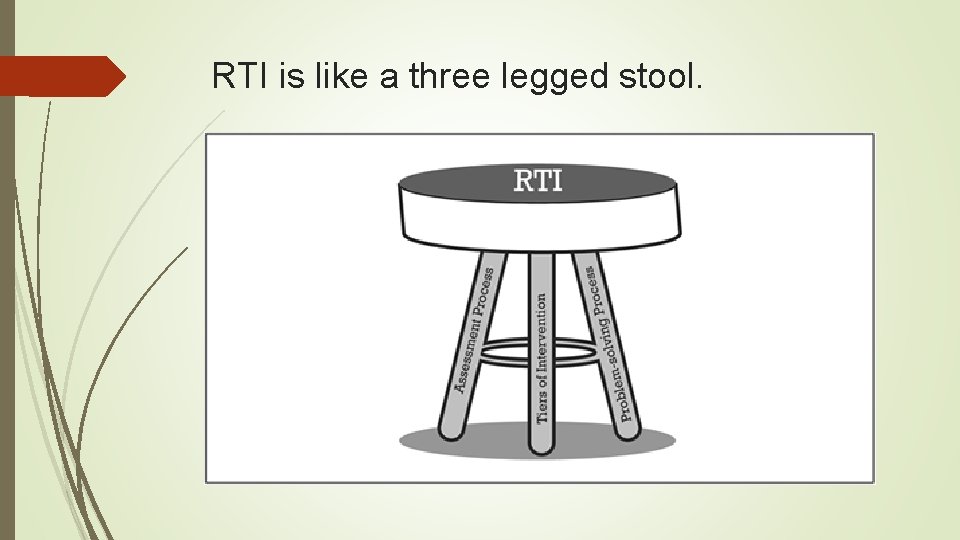
RTI is like a three legged stool.
RTI Model The three legs are (1) an assessment process, (2) a tiered intervention menu, and (3) a problem-solving process. Each leg of this stool must be in place for the framework to be stable and functional. The RTI process uses data from three assessment tools to meet this objective. Universal screening data help pinpoint high-priority areas of concern. Screening provides data that help answer fundamental questions: What should we keep and what needs to be dropped or updated? Which students are in danger of falling through the cracks if we do not intervene quickly?
RTI Model Diagnostic assessments refine the universal screening data by identifying the root causes for gaps between expected outcomes and actual performance. Progress monitoring provides continuous feedback about how successfully the selected intervention is promoting student growth and closing achievement gaps. It also helps determine when a change in strategy is required.
What is the purpose? AIMSweb Universal Screens are……… A Strong predictor of future success A feedback loop to flag students who may require additional supports. If a student is flagged (Tier 2 or Tier 3) further investigation is required. A tool for teachers to give them a snapshot of their classroom so they can adjust and inform instruction to suit the needs of all learners. (Success and Achievement for Every Student in Every School) A communication tool that should only be shared at Student Led Conferences or in direct conversation with parents.
Common Misconceptions or Errors Universal screens are not…. . An “add on” imposed by the division that has no connection to student teaching and learning A test of any kind, high stakes or other An evaluation which is included in the report card
Terminology When working with your staff please do not refer to AIMSweb as anything but the AIMSweb Universal Screens. (RCBM, MAZE, TEL, TEN, MCOMP) Correct terminology is crucial to reaffirming the intent of the procedure and to maintain the integrity of the process.
Screens used in SECPSD AIMSweb R-CBM (Reading Curriculum Based Measure) Web based with automated scoring. Three one minute probes in which students read a standardized passage. The median (middle) score is reported. Students’ scores are correlated to AIMSweb default criterion reference based on research and populations ranging from 5 000 - 55 000 students.
Screens used in SECPSD AIMSweb R-CBM (Reading Curriculum Based Measure) Fluency is an excellent indicator of comprehension. If a student is flagged (tier 2 or tier 3, yellow or red) in the screener, more investigation is required.
Diagnostic tools used in SECPSD Diagnostics Include: Fountas and Pinnell Benchmark Assessments Woodcock Reading Mastery Test
Universal Screens used in SECPSD AIMSweb MAZE Teacher delivered and teacher scored. One Three minute probe is administered in a whole class setting. Students read sentences and pick best fit words at intervals throughout a passage. Students are scored and results are criterion referenced with AIMSweb values based on large sample sizes.
M-Comp AIMSweb Math Computation Screen An eight minute probe administered in a whole class setting in which students are asked to solve math computations. Teacher administered and teacher scored. The M-Comp screen is based on entire year curriculum. Student’s target levels increase according to screen administration date. (In later screens, students need higher scores to remain at Tier 1)
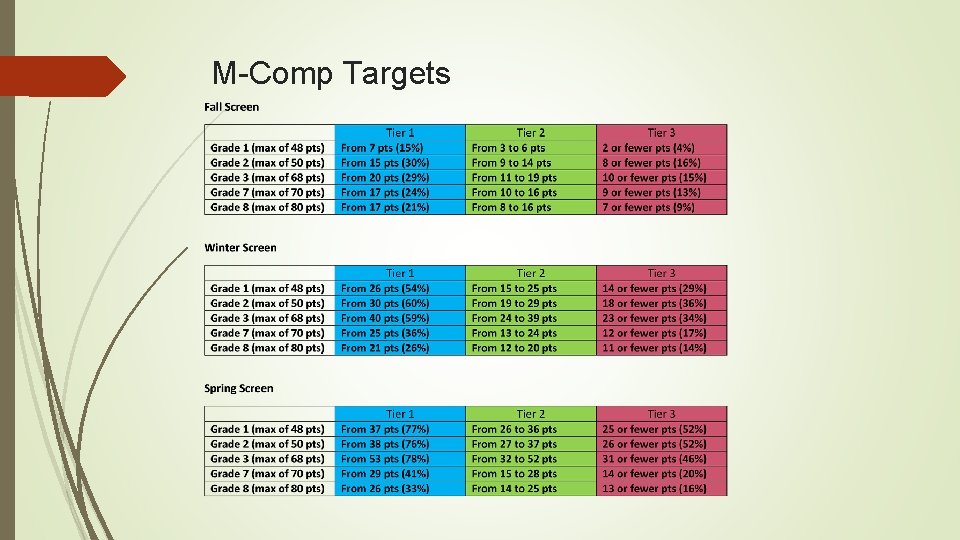
M-Comp Targets
M-Comp Correlates most closely with grades 1, 2, 3, 7, 8. Some questions do not fit grade level but we feel there is a strong enough correlation to use as a universal screen at the above grade levels. Since it is teacher scored, teachers will be aware of which questions are not in their grade specific curriculum and will use this information when analyzing screen results. TOPICS not in Curriculum
Food for Thought Script being read to students as distributed for administrating the screens. When we implemented the AIMSweb R-CBM results were low. Every excuse to discredit the screen was in play, such as: “Its an American program”, “the numbers don’t match curriculum”, “fluency doesn’t include comprehension”, “the reading passages are too hard”, “Its timed” etcetera We were in a state of denial
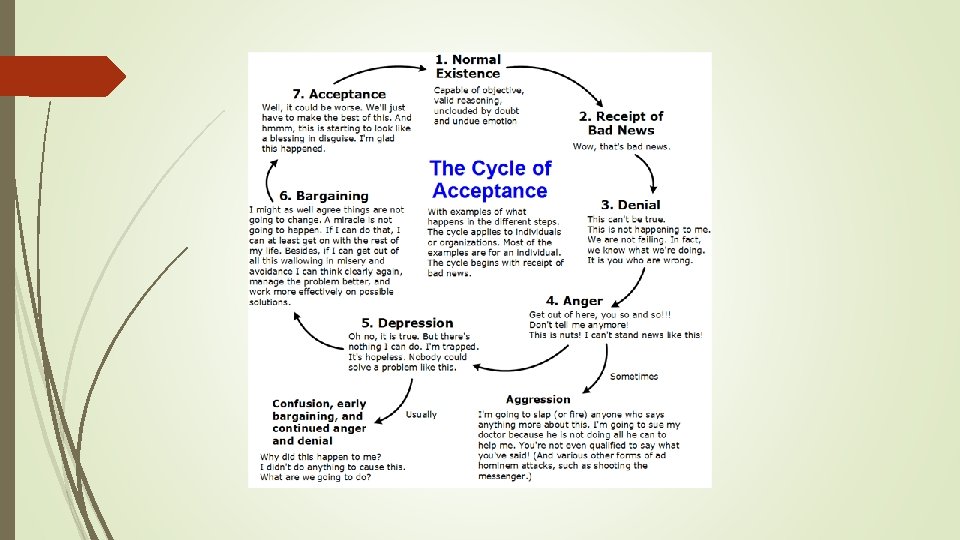
Food for Thought Math Results are low. Are the targets for fall unrealistic? Do we have to go through the Acceptance cycle again or can we expedite the process? Lets not admire the problem. Let’s accept the results and start solution-focused conversations to improve them.
Non-Negotiables Read aloud the scripts with fidelity included with the screens School support teams(SST) will use the screen results to initiate dialogue Screen data is used to Inform practice and adjust goals Level 3 data walls AIMSweb Webinar Thursday October 29 th, Analyzing the AIMSweb data LAMS What every School Leader needs to know about RTI by Margaret Searle
Questions?
- Slides: 21