
Universal Design for Learning UDL in a Distance
- Slides: 49
Universal Design for Learning (UDL) in a Distance Learning Environment Partner(s): California UDL Coalition James Mc. Kenna, Los Angeles County Office of Education Sung Park, Santa Clara County Office of Education Kelly Wylie, Santa Clara County Office of Education April 24, 2020 California Department of Education Tony Thurmond, State Superintendent of Public Instruction
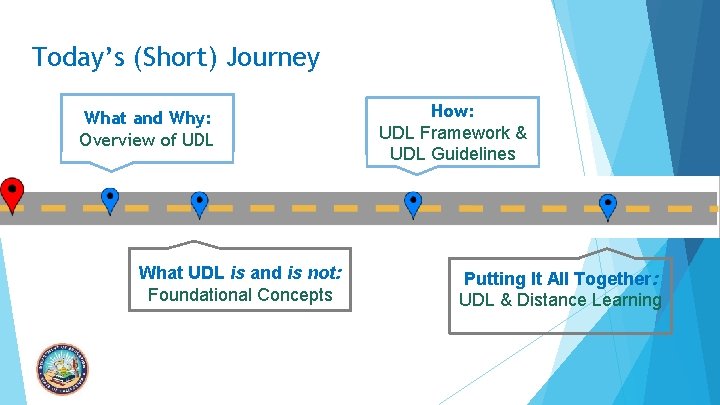
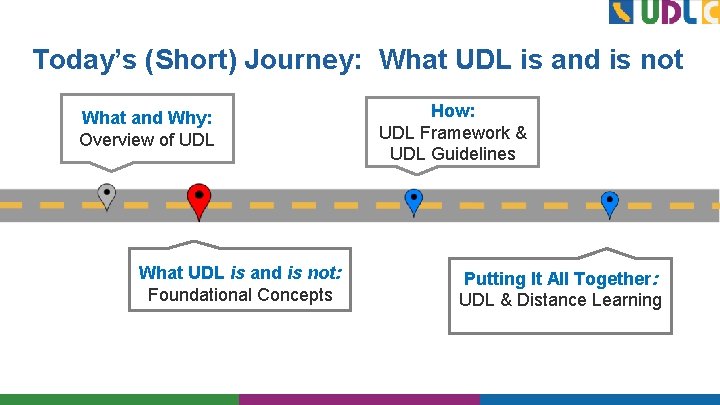
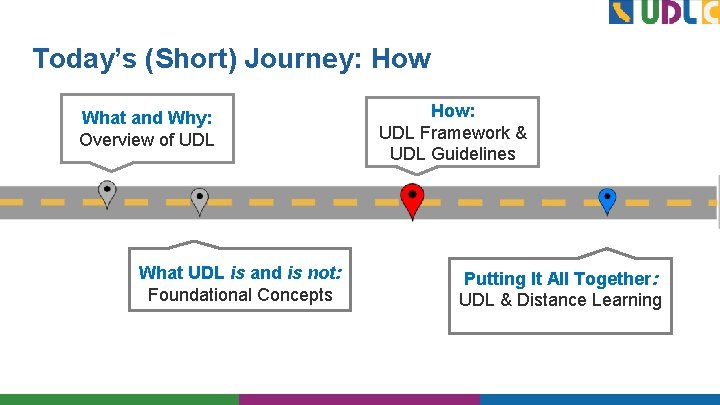
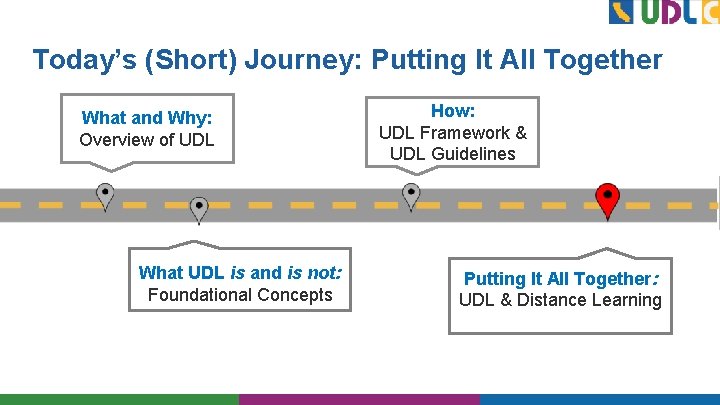
Today’s (Short) Journey What and Why: Overview of UDL What UDL is and is not: Foundational Concepts How: UDL Framework & UDL Guidelines Putting It All Together: UDL & Distance Learning
What and Why Overview of UDL
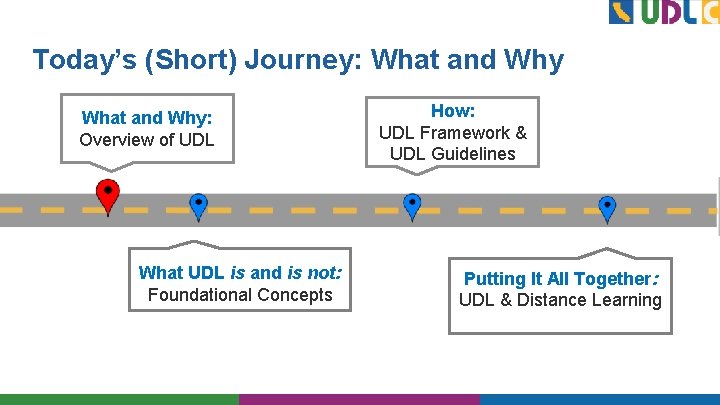
Today’s (Short) Journey: What and Why: Overview of UDL What UDL is and is not: Foundational Concepts How: UDL Framework & UDL Guidelines Putting It All Together: UDL & Distance Learning
What is UDL? Universal design for learning (UDL) is a framework to improve and optimize teaching and learning for all people based on scientific insights into how humans learn. 5
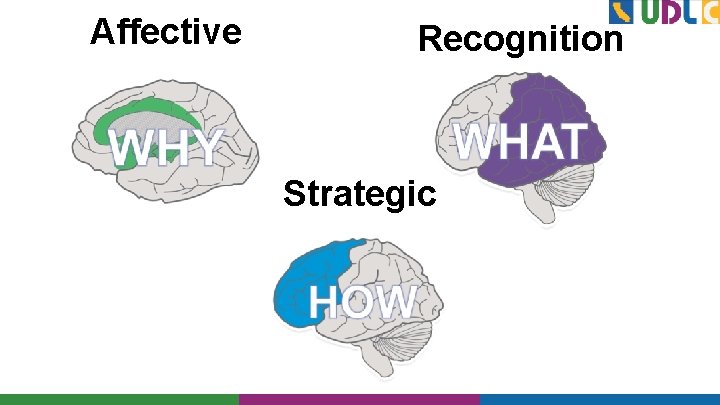
Affective Recognition Strategic
Learner Variability ● There is no single way a human brain will engage with, perceive, or act upon a task. ● Variability is predictable. ● What we can predict, we can plan for.
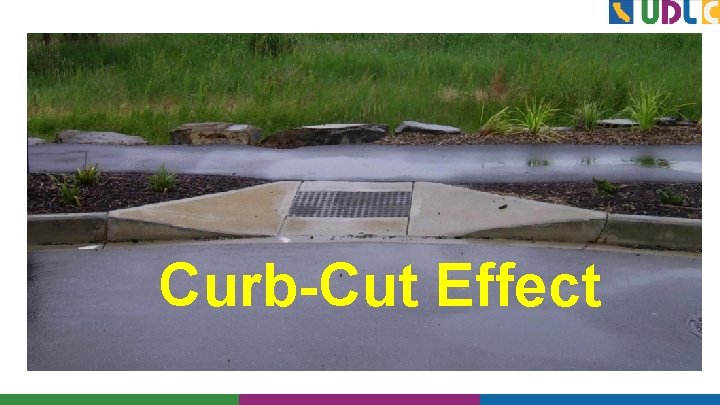
Curb-Cut Effect
What UDL is and is not Foundational Concepts and Myth-Busting
Today’s (Short) Journey: What UDL is and is not What and Why: Overview of UDL What UDL is and is not: Foundational Concepts How: UDL Framework & UDL Guidelines Putting It All Together: UDL & Distance Learning
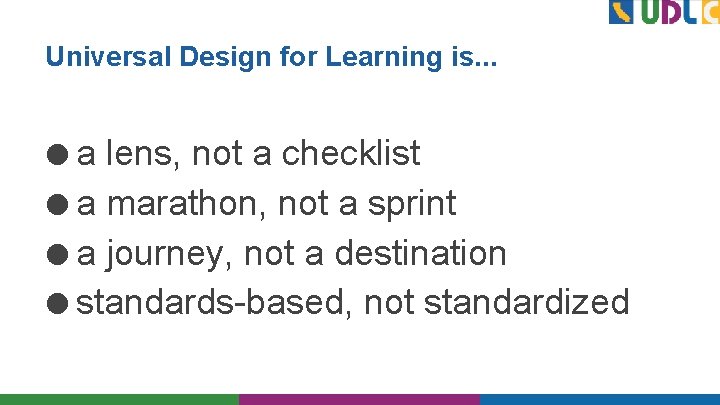
Universal Design for Learning is. . . ● a lens, not a checklist ● a marathon, not a sprint ● a journey, not a destination ● standards-based, not standardized
S R E T S U B H T Y M
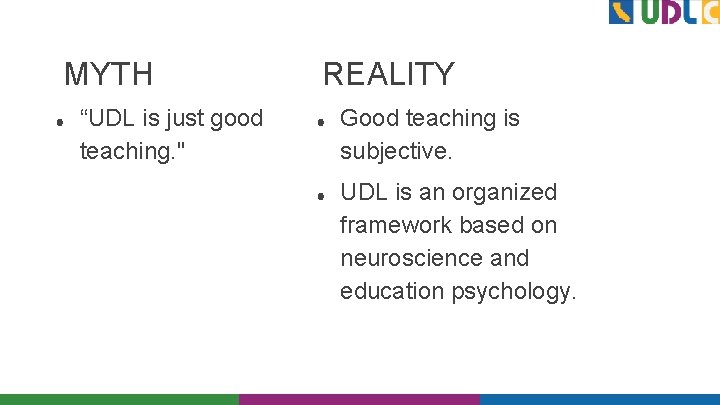
MYTH ● “UDL is just good teaching. " REALITY ● ● Good teaching is subjective. UDL is an organized framework based on neuroscience and education psychology.
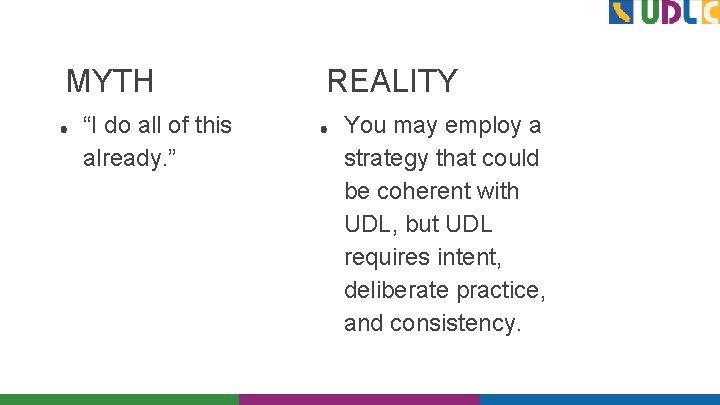
MYTH ● “I do all of this already. ” REALITY ● You may employ a strategy that could be coherent with UDL, but UDL requires intent, deliberate practice, and consistency.
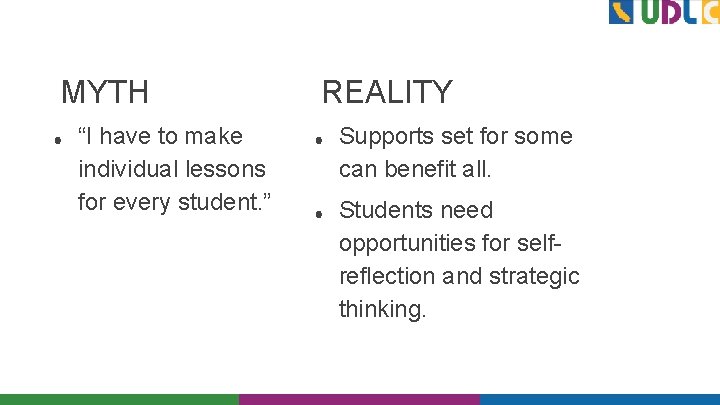
MYTH ● “I have to make individual lessons for every student. ” REALITY ● ● Supports set for some can benefit all. Students need opportunities for selfreflection and strategic thinking.
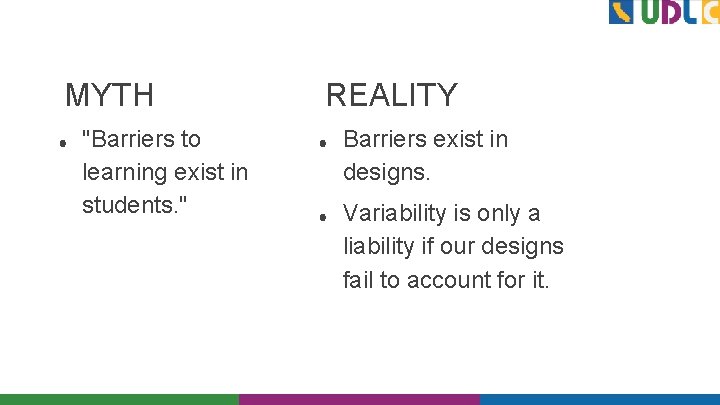
MYTH ● "Barriers to learning exist in students. " REALITY ● ● Barriers exist in designs. Variability is only a liability if our designs fail to account for it.
How UDL Framework & UDL Guidelines
Today’s (Short) Journey: How What and Why: Overview of UDL What UDL is and is not: Foundational Concepts How: UDL Framework & UDL Guidelines Putting It All Together: UDL & Distance Learning
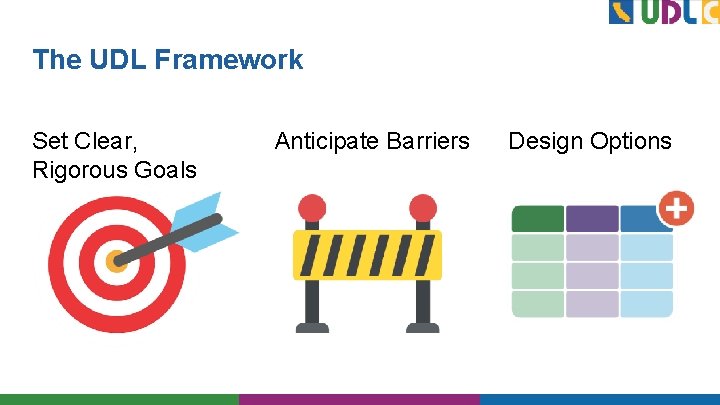
The UDL Framework Set Clear, Rigorous Goals Anticipate Barriers Design Options
Set Clear, Rigorous Goals Clear Goals, Flexible Means • Goals should be flexible –avoid including the “how. ” • Goals should be clear and discreet –only one goal at a time. • Goals should be rigorous!
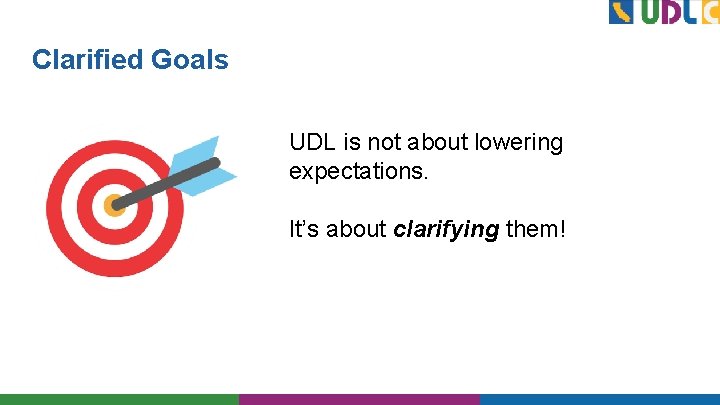
Clarified Goals UDL is not about lowering expectations. It’s about clarifying them!
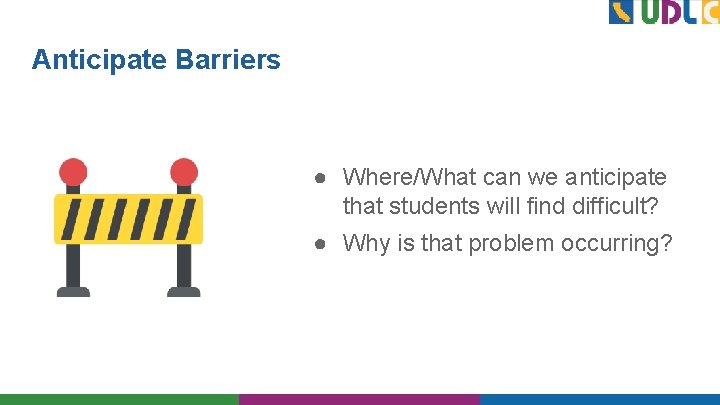
Anticipate Barriers ● Where/What can we anticipate that students will find difficult? ● Why is that problem occurring?
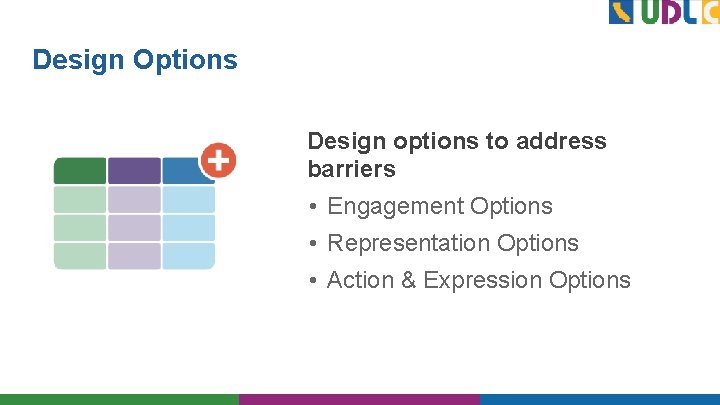
Design Options Design options to address barriers • Engagement Options • Representation Options • Action & Expression Options
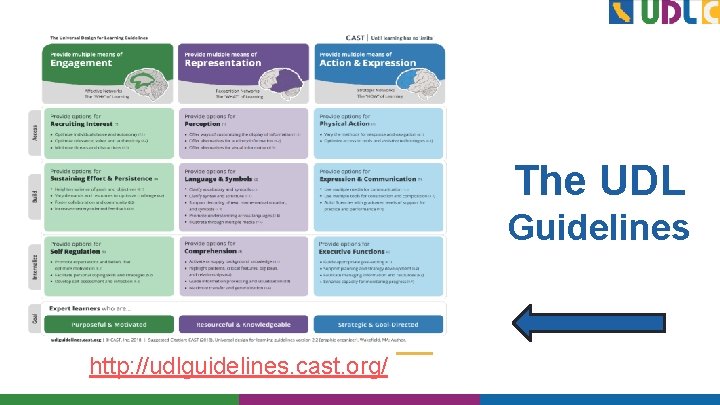
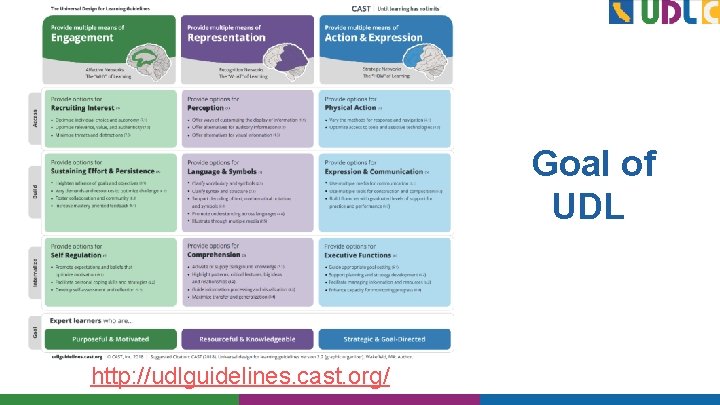
The UDL Guidelines http: //udlguidelines. cast. org/
Goal of UDL http: //udlguidelines. cast. org/
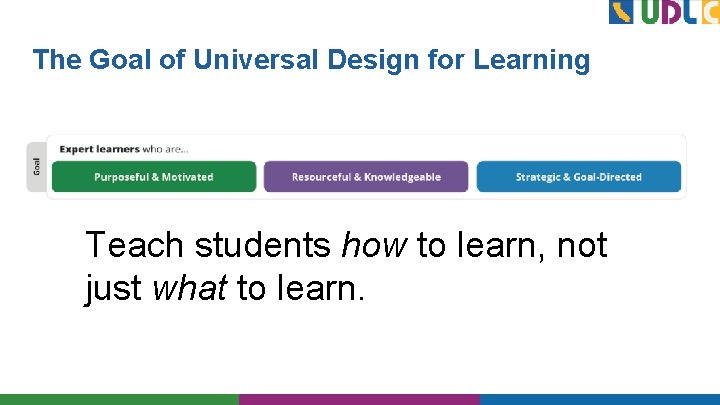
The Goal of Universal Design for Learning Teach students how to learn, not just what to learn.
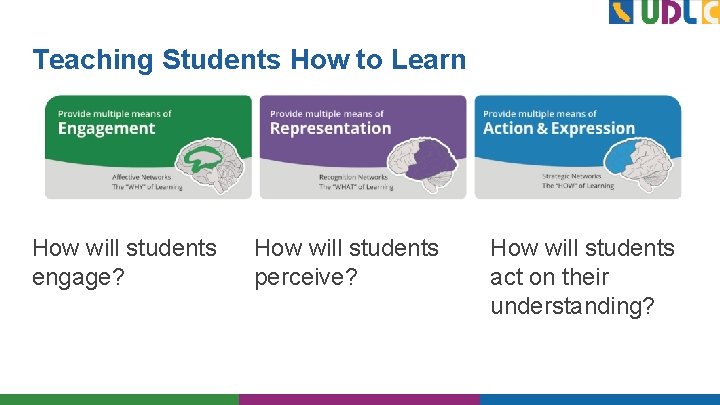
Teaching Students How to Learn How will students engage? How will students perceive? How will students act on their understanding?
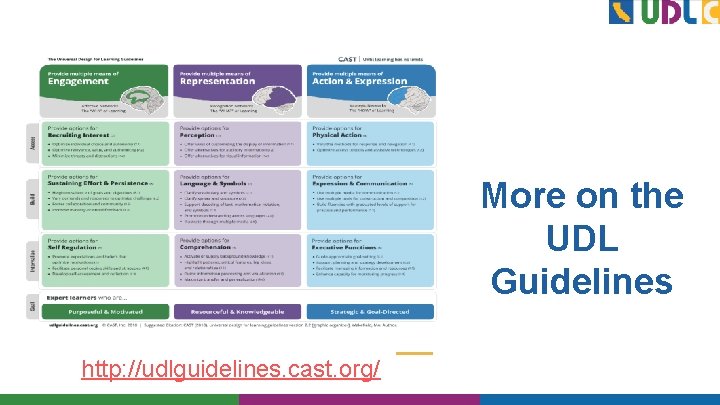
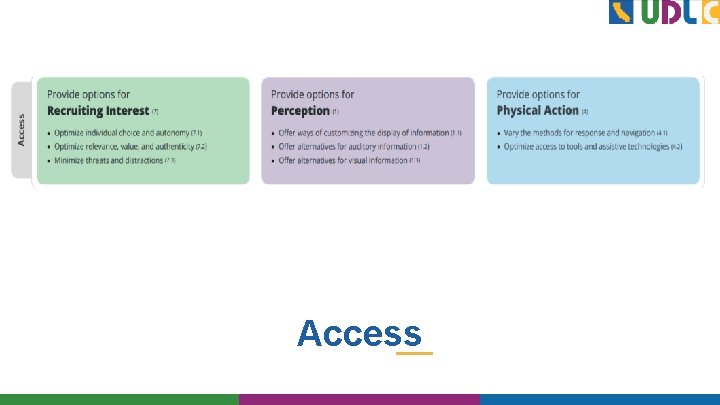
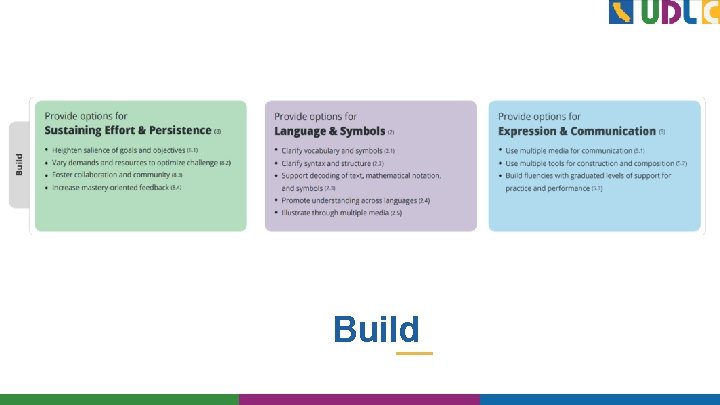
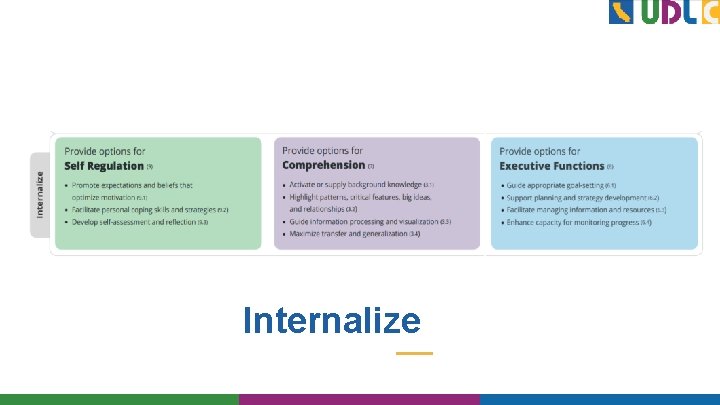
More on the UDL Guidelines http: //udlguidelines. cast. org/
Access
Build
Internalize
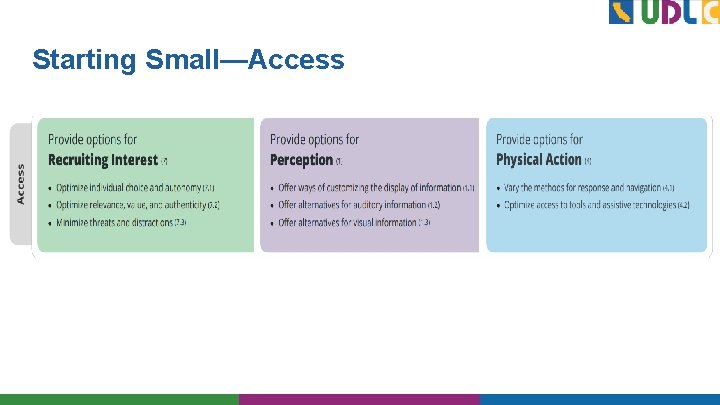
Starting Small—Access
Putting It All Together UDL & Distance Learning
Today’s (Short) Journey: Putting It All Together What and Why: Overview of UDL What UDL is and is not: Foundational Concepts How: UDL Framework & UDL Guidelines Putting It All Together: UDL & Distance Learning
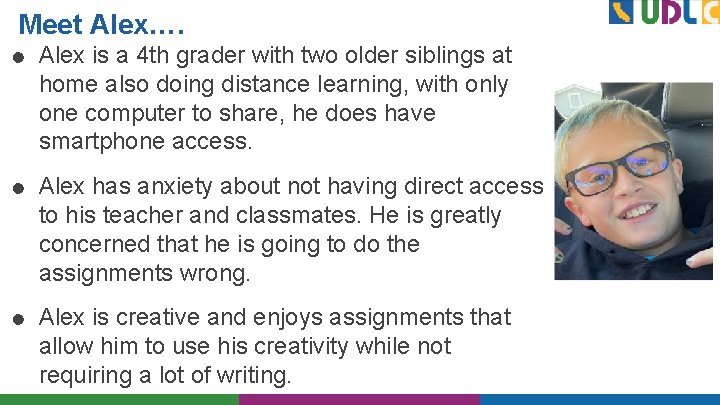
Meet Alex…. ● Alex is a 4 th grader with two older siblings at home also doing distance learning, with only one computer to share, he does have smartphone access. ● Alex has anxiety about not having direct access to his teacher and classmates. He is greatly concerned that he is going to do the assignments wrong. ● Alex is creative and enjoys assignments that allow him to use his creativity while not requiring a lot of writing.
Alex’s Week in Distance Learning Goal: This week students will explore California’s transformation from the early statehood to present day. Students will demonstrate their knowledge of California’s resources and what has influenced the growth of the state over time. Standard: History/Social Science 4. 4 – Students explain how California became an agricultural and industrial power, tracing the transformation of the California economy and its political and cultural development since the 1850 s.
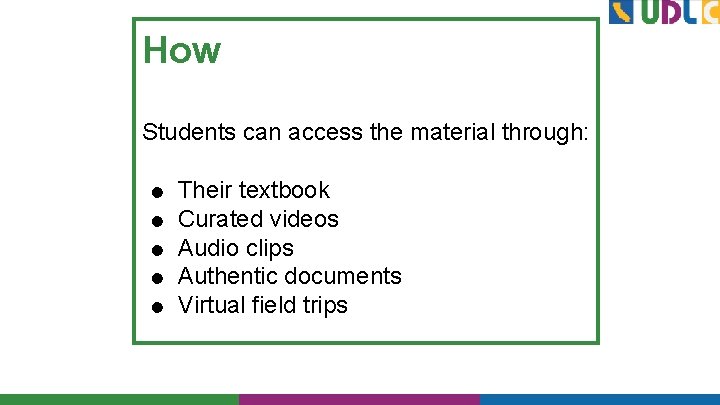
How Students can access the material through: ● ● ● Their textbook Curated videos Audio clips Authentic documents Virtual field trips
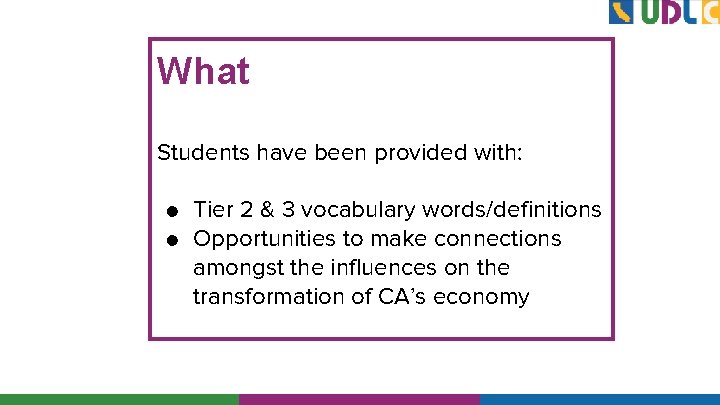
What Students have been provided with: ● ● Tier 2 & 3 vocabulary words/definitions Opportunities to make connections amongst the influences on the transformation of CA’s economy
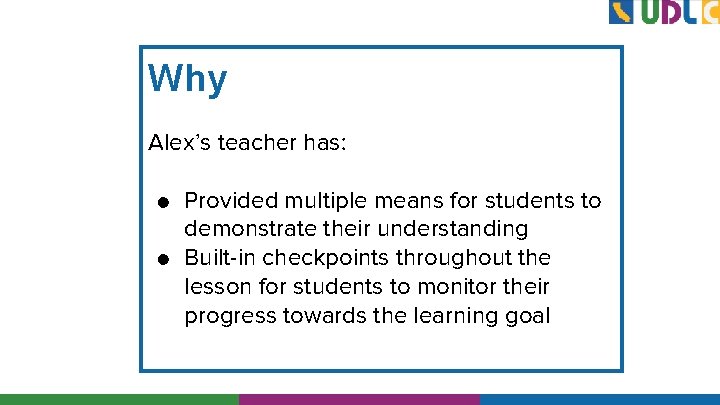
Why Alex’s teacher has: ● ● Provided multiple means for students to demonstrate their understanding Built-in checkpoints throughout the lesson for students to monitor their progress towards the learning goal
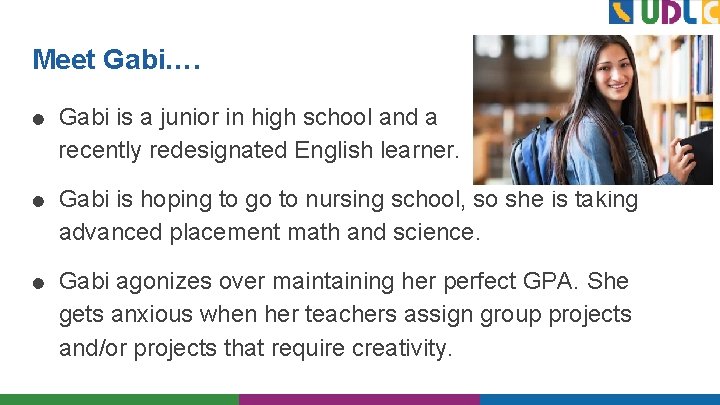
Meet Gabi…. ● Gabi is a junior in high school and a recently redesignated English learner. ● Gabi is hoping to go to nursing school, so she is taking advanced placement math and science. ● Gabi agonizes over maintaining her perfect GPA. She gets anxious when her teachers assign group projects and/or projects that require creativity.
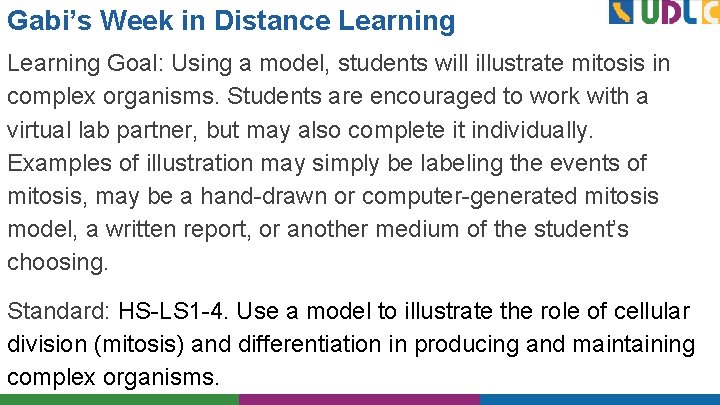
Gabi’s Week in Distance Learning Goal: Using a model, students will illustrate mitosis in complex organisms. Students are encouraged to work with a virtual lab partner, but may also complete it individually. Examples of illustration may simply be labeling the events of mitosis, may be a hand-drawn or computer-generated mitosis model, a written report, or another medium of the student’s choosing. Standard: HS-LS 1 -4. Use a model to illustrate the role of cellular division (mitosis) and differentiation in producing and maintaining complex organisms.
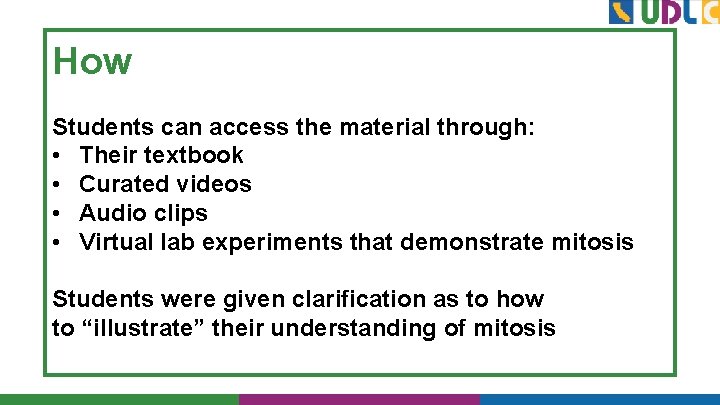
How Students can access the material through: • Their textbook • Curated videos • Audio clips • Virtual lab experiments that demonstrate mitosis Students were given clarification as to how to “illustrate” their understanding of mitosis
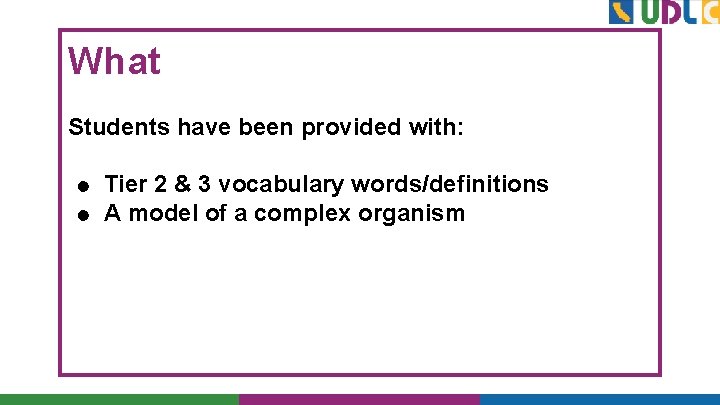
What Students have been provided with: ● ● Tier 2 & 3 vocabulary words/definitions A model of a complex organism
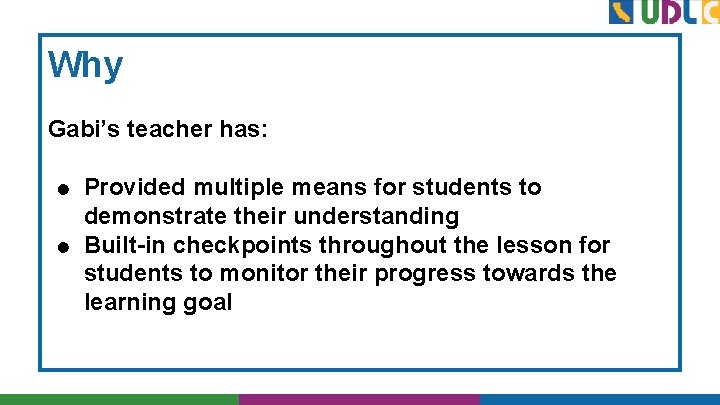
Why Gabi’s teacher has: ● ● Provided multiple means for students to demonstrate their understanding Built-in checkpoints throughout the lesson for students to monitor their progress towards the learning goal
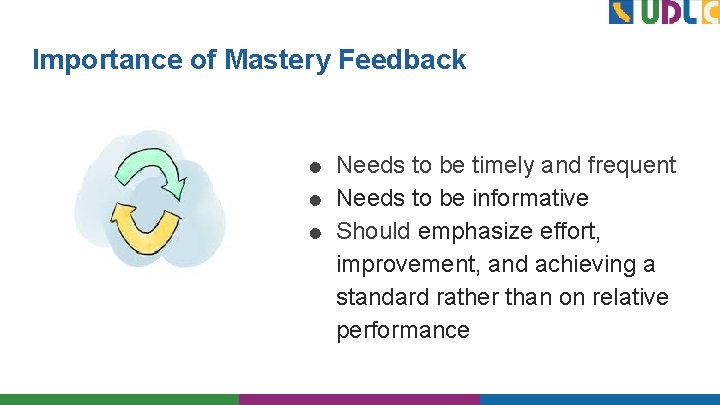
Importance of Mastery Feedback ● ● ● Needs to be timely and frequent Needs to be informative Should emphasize effort, improvement, and achieving a standard rather than on relative performance
Takeaways ● Methods, materials, and assessments need to be flexible. ● Design to the edges – the average learner is a myth. ● Start small – it’s a journey, not the destination. ● It’s the environment that needs to change, not the students.
For Additional Resources Tiny. URL. com/UDL 424
For questions or to get more information on future webinars, please contact us at: Distance. Learning@cde. ca. gov For weekly email updates from the California Department of Education on COVID-19, send a blank email to: join-covid 19 -update@mlist. cde. ca. gov 48
Posted by the California Department of Education | May 2020