
Universal Design for Learning UDL for Inclusive Teaching

- Slides: 21
Universal Design for Learning (UDL) for Inclusive Teaching and Learning Clayton A. Copeland Kim M. Thompson University of South Carolina School of Information Science 23 September 2020 IFLA Webinar Using Universal Design for Learning to Enhance Information Literacy Programs: Online and in the Library
Universal Design for Learning (UDL) and inclusive teaching and learning • What is UDL? • Why is UDL important for all students, with and without disabilities?
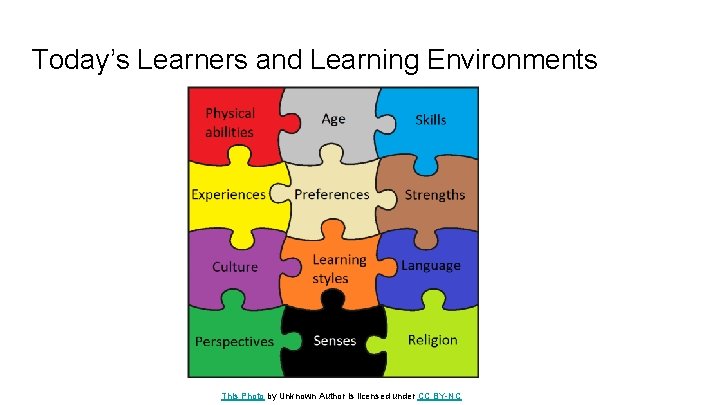
Today’s Learners and Learning Environments This Photo by Unknown Author is licensed under CC BY-NC
Universal Design for Learning Universal design is “the design of products and environments to be usable by all people, to the greatest extent possible, without the need for adaptation or specialized design” (Center for Universal Design, 2019, n. p. ).
University of South Carolina Center for Teaching Excellence: Accessibility Guides and Tutorials https: //www. sc. edu/about/offices_and_divisions/cte/instructional_design/accessibility/index. php
Applying concepts of UDL and inclusive teaching and learning to learners with visual limitations ● Microsoft Word “style” formatting; use headings and subheadings ● Alt text for images ● Upload both pdf and doc versions ● Sans serif (Arial, Calibri) font at 12 -point minimum for documents, larger for slides
Applying concepts of UDL and inclusive teaching and learning to learners with visual limitations, 2 ● Black or very dark fonts rather than color coded content ● Be aware of spacing and layout on the screen/page, ordering slide panes, etc. ● If using Microsoft Office, use Check Accessibility feature (be aware of limitations of the checker)
Applying concepts of UDL and inclusive teaching and learning to learners with hearing limitations ● Record video lectures for reviewing ● Provide copies of slides and notes ● Close caption whenever possible--if closed captioning is not available, transcription afterward is second best or detailed handout that follows same presentation order
Applying concepts of UDL and inclusive teaching and learning to learners with hearing limitations, 2 ● Try to have video of your face when lecturing, with good resolution, especially if closed captioning is not available ● Speak slowly with clear tone--shouting should be avoided
Applying concepts of UDL and inclusive teaching and learning to learners with mobility limitations ● May not be apparent in F 2 F classroom but may raise barriers in online learning environments ● Slower typing speeds; may need larger monitor or adaptive keyboards, roller ball, text-to-speech, sticky keys
Applying concepts of UDL and inclusive teaching and learning to learners with mobility limitations, 2 ● Recordings and transcripts of online meetings can help ● Designated note-taker in online meeting ● Reinforce verbal communications with written communications
Applying concepts of UDL and inclusive teaching and learning to learners with neurodiversit(ies) ● Be explicit about how to ask for clarification ● Set up a “Questions about Assignments” discussion board ● Clear structuring and subheadings throughout lecture materials
Applying concepts of UDL and inclusive teaching and learning to learners with neurodiversit(ies), 2 ● Be clear about expectations for behavior in-class, on discussion boards, and with other communication ● Scaffold assignments
Universal Design for Learning (UDL) and inclusive teaching and learning ● Accessibility strategies intended for some learners will also be helpful to others ● Accessibility helps ensure meaningful interactions and stronger learning outcomes
Answering Questions Academics tend to underrate librarians when conducting information literacy programs. How has this issue been overcome world over?
Any more questions?
References Burgstahler, S. (2017, January 30). ADA compliance for online course design. Educause Review. Retrieved from https: //er. educause. edu/articles/2017/1/ada-compliance -for-online-course-design Center for Applied Special Technology. (2019). CAST: About us - Universal design for learning. Retrieved from http: //www. cast. org/our-work/aboutudl. html#. Xh. Zch 5 NKiu 4
References, continued Center for Universal Design. (2019). Retrieved from https: //projects. ncsu. edu/ncsu/design/cud/
References, continued, 2 Copeland, C. A. (2019, January 16). Accessing ability through Universal Design for Learning: The challenge, the opportunity, the responsibility [Webinar]. ALISE Webinar Series. Mallary, K. J. & Copeland, C. A. (2020, August 24). Universal design and Universal Design for Learning: Tools in equity of access [Webinar]. ALISE Webinar Series.
References, continued, 3 Thompson, K. M. , & Copeland, C. A. (in press). Making the diversity, equity, and inclusion mindset indispensable in the LIS classroom through design, content, communication, and assessment. In K. Dali & N. Caidi (Eds. ). Humanizing LIS education and practice: Diversity by design. Routledge.
References, continued, 4 Thompson, K. M. & Copeland, C. A. (2020). Inclusive considerations for optimal online learning in times of disasters and crises. Information and Learning Sciences, Special Issue: A Response to Emergency Transitions to Remote Online Education in K-12 and Higher Education, 121(7/8), 481 - 486. https: //doi. org/10. 1108/ILS-04 -2020 -0083