
Universal Design for Learning UDL Equity Inclusion August


- Slides: 38
Universal Design for Learning (UDL) Equity & Inclusion August 20 th, 2019 Selma Smith and Douglas Matear
Agenda üTerritorial Acknowledgement—Doug üIce Breaker üOur Duties üInclusion, RTI, üEquity üCase study üQuestions
Ice Breaker • Your Name • Where you work • One thing about you that would surprise most people
Douglas Louis Matear District Principal Student Support, Support—Alternative and Alternate Programs dmatear@vsb. bc. ca • Principal of VASS and Alternate (21 Programs) • Oversees the VP of Alternate and Alternative Programs • Supervises of the DRT for Alternative Education, the Counselor of Alternative Education and the Literacy DRT (Orton-Gillingham trained)
Selma Smith shsmith@vsb. bc. ca District Principal Social Emotional Learning & Prevention • District Social Emotional Learning Programs & Initiatives including child abuse prevention • Chair of District Diversity Advisory Committee • Member of Special Education Advisory Committee (SEAC) • District Team lead for Critical Incident Response and Student Violent Threat Risk Response • Supervision of: • Elementary Area Counsellors, District Area Counsellor- Mental Health • DRT Diversity (SOGI & Anti-Racism), DRT- SEL, SACY (School Age Child & Youth Substance use prevention initiative), Liaises with Secondary Counselling Department Heads
Our Context • 92 Elementary (16 annexes, 76 main) • 18 Secondary • Approximately 50, 142 students • Approximately 5600 students with Ministry Designations • Host to 11 PRP’s (Provincial Resource Programs)
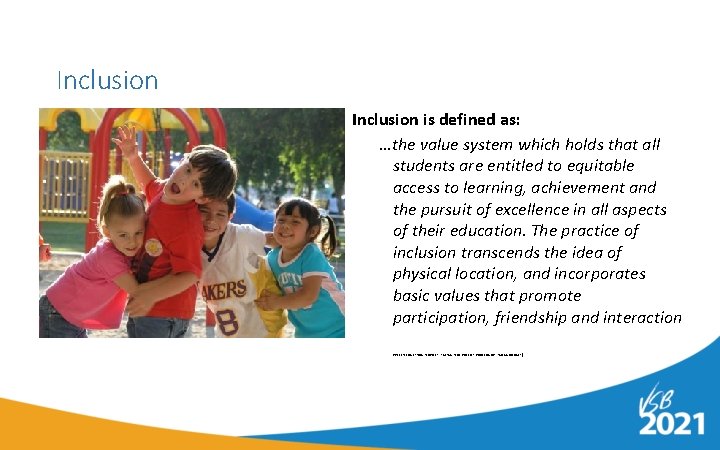
Inclusion is defined as: …the value system which holds that all students are entitled to equitable access to learning, achievement and the pursuit of excellence in all aspects of their education. The practice of inclusion transcends the idea of physical location, and incorporates basic values that promote participation, friendship and interaction (SPECIAL EDUCATION SERVICES: A MANUAL OF POLICIES, PROCEDURES AND GUIDELINES)
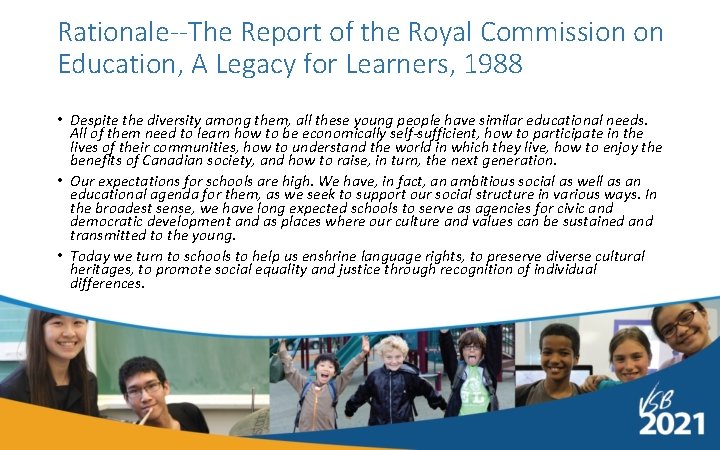
Rationale--The Report of the Royal Commission on Education, A Legacy for Learners, 1988 • Despite the diversity among them, all these young people have similar educational needs. All of them need to learn how to be economically self-sufficient, how to participate in the lives of their communities, how to understand the world in which they live, how to enjoy the benefits of Canadian society, and how to raise, in turn, the next generation. • Our expectations for schools are high. We have, in fact, an ambitious social as well as an educational agenda for them, as we seek to support our social structure in various ways. In the broadest sense, we have long expected schools to serve as agencies for civic and democratic development and as places where our culture and values can be sustained and transmitted to the young. • Today we turn to schools to help us enshrine language rights, to preserve diverse cultural heritages, to promote social equality and justice through recognition of individual differences.
Inclusion üThe action or state of including or of being included within a group or structure. A body or particle recognizably distinct from the substance in which it is embedded. üDr. Katz, Shelley Moore, Dr. P. Mirenda üSocial and Academic Inclusion
Small group discussion • Get into groups of 4 • Each define/ discuss your views of what INCLUSION means to you? • On sticky note paper provided, come up with a group definition • Assign a reporter who will share on behalf of the group. q What is the criteria we use to arrange and group students? q How can we give more opportunities for all students to be grouped by interest, strengths, identity and choice? q In our classrooms? Schools? Communities?
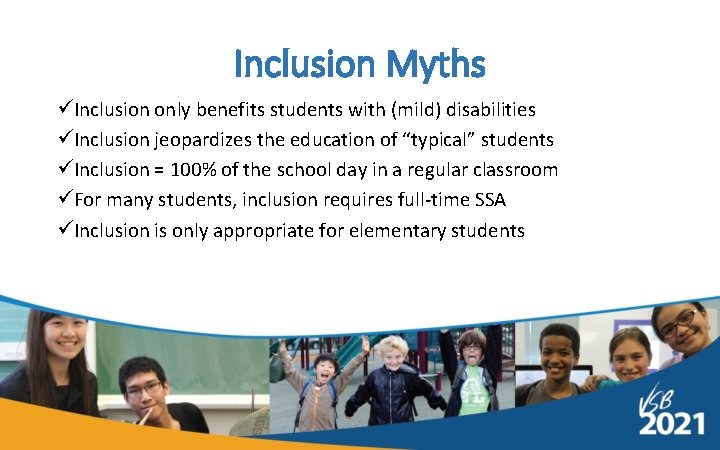
Inclusion Myths üInclusion only benefits students with (mild) disabilities üInclusion jeopardizes the education of “typical” students üInclusion = 100% of the school day in a regular classroom üFor many students, inclusion requires full-time SSA üInclusion is only appropriate for elementary students
Leadership in Inclusive Education üWhat is leadership in inclusive education? üWhat does getting it right look like? üFrom a student’s perspective? üFrom a parent’s perspective? üFrom the school’s perspective?
Innovation for Inclusion • Design: q. Learning Environment q. Physical environment q. Social environment q. Emotional Environment … • to meet the needs of our diverse learners Dr. Katz
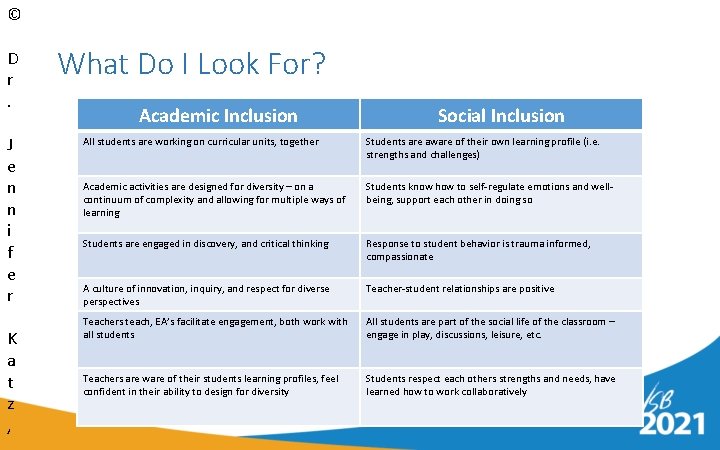
© D r. J e n n i f e r K a t z , What Do I Look For? Academic Inclusion Social Inclusion All students are working on curricular units, together Students are aware of their own learning profile (i. e. strengths and challenges) Academic activities are designed for diversity – on a continuum of complexity and allowing for multiple ways of learning Students know how to self-regulate emotions and wellbeing, support each other in doing so Students are engaged in discovery, and critical thinking Response to student behavior is trauma informed, compassionate A culture of innovation, inquiry, and respect for diverse perspectives Teacher-student relationships are positive Teachers teach, EA’s facilitate engagement, both work with all students All students are part of the social life of the classroom – engage in play, discussions, leisure, etc. Teachers are ware of their students learning profiles, feel confident in their ability to design for diversity Students respect each others strengths and needs, have learned how to work collaboratively
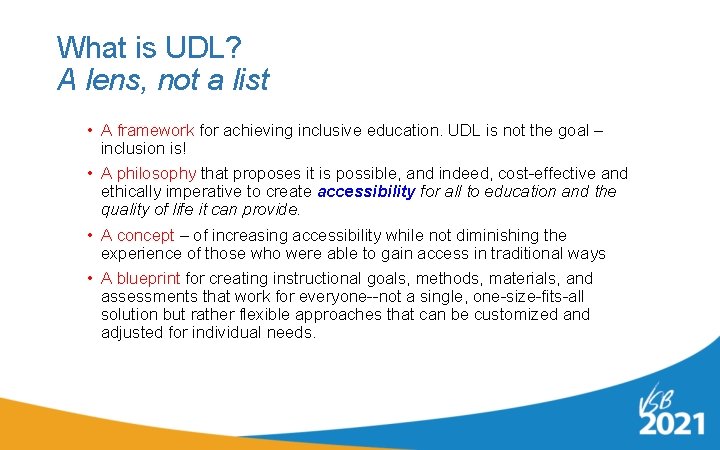
What is UDL? A lens, not a list • A framework for achieving inclusive education. UDL is not the goal – inclusion is! • A philosophy that proposes it is possible, and indeed, cost-effective and ethically imperative to create accessibility for all to education and the quality of life it can provide. • A concept – of increasing accessibility while not diminishing the experience of those who were able to gain access in traditional ways • A blueprint for creating instructional goals, methods, materials, and assessments that work for everyone--not a single, one-size-fits-all solution but rather flexible approaches that can be customized and adjusted for individual needs.
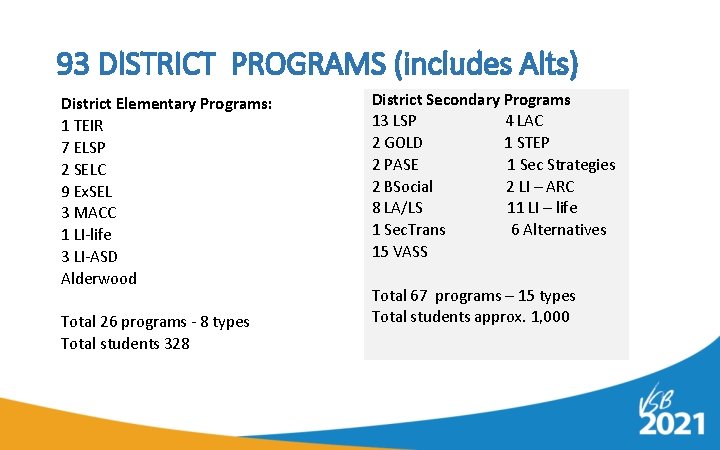
93 DISTRICT PROGRAMS (includes Alts) District Elementary Programs: 1 TEIR 7 ELSP 2 SELC 9 Ex. SEL 3 MACC 1 LI-life 3 LI-ASD Alderwood Total 26 programs - 8 types Total students 328 District Secondary Programs 13 LSP 4 LAC 2 GOLD 1 STEP 2 PASE 1 Sec Strategies 2 BSocial 2 LI – ARC 8 LA/LS 11 LI – life 1 Sec. Trans 6 Alternatives 15 VASS Total 67 programs – 15 types Total students approx. 1, 000
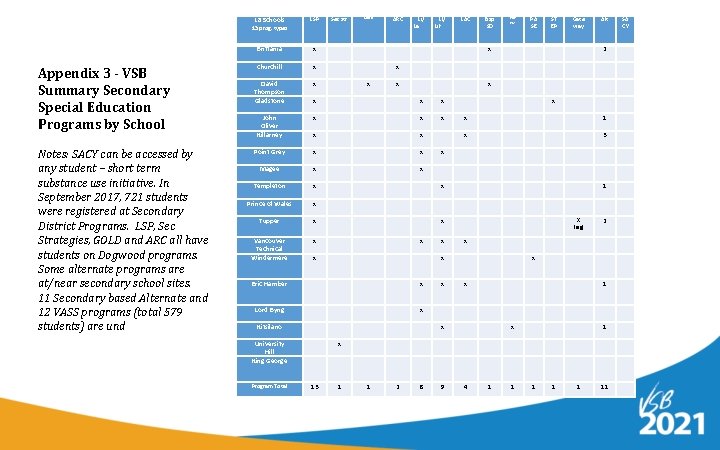
18 Schools LSP Brittania x Churchill x David Thompson Gladstone x x John Oliver Killarney x x x Point Grey x x Magee x x Templeton x Prince of Wales x Tupper x Vancouver Technical Windermere x Sec str GOLD ARC 13 prog. types Appendix 3 - VSB Summary Secondary Special Education Programs by School Notes: SACY can be accessed by any student – short term substance use initiative. In September 2017, 721 students were registered at Secondary District Programs. LSP, Sec Strategies, GOLD and ARC all have students on Dogwood programs. Some alternate programs are at/near secondary school sites. 11 Secondary based Alternate and 12 VASS programs (total 579 students) are und Li/ La LAC Bsp SD PA SE ST EP Gate way Alt SA CY 2 . x x . x . x 1 . x 3 . x 1 . . x x X (reg) Lord Byng x Kitsilano x 2 x . . x x x . x 1 . . x University Hill King George PRE EM x Eric Hamber Program Total LI/ Lif x 1 x . . . 13 1 1 2 8 9 4 1 1 11
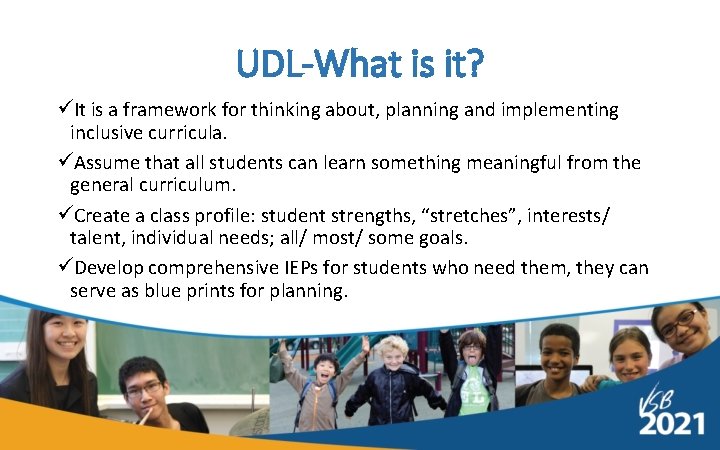
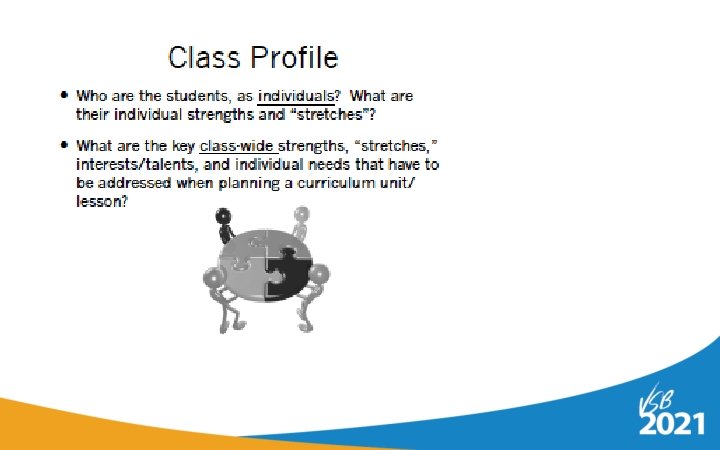
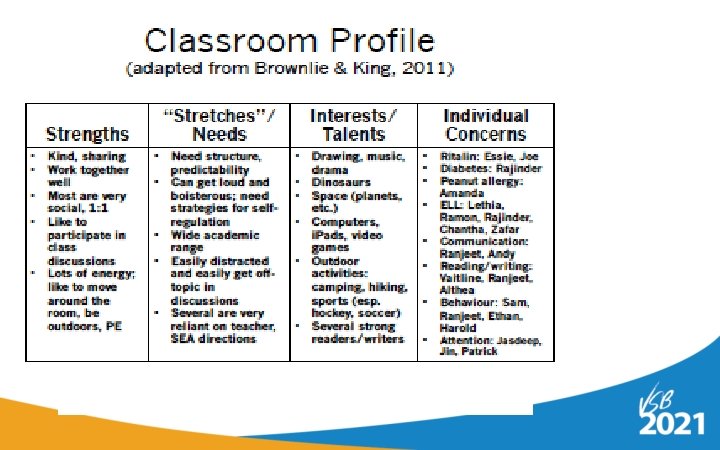
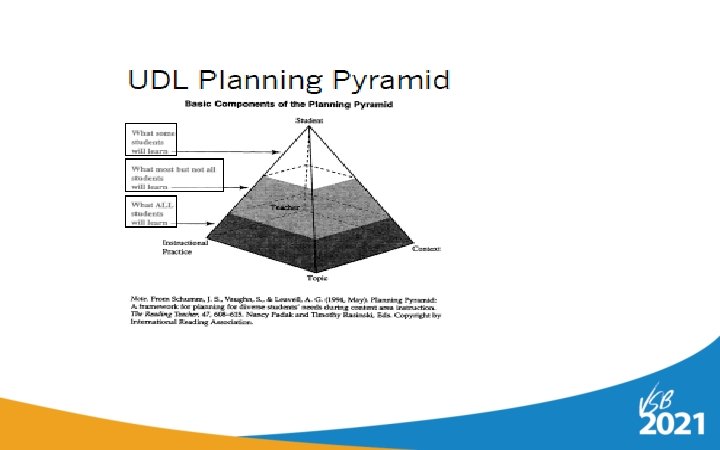
UDL-What is it? üIt is a framework for thinking about, planning and implementing inclusive curricula. üAssume that all students can learn something meaningful from the general curriculum. üCreate a class profile: student strengths, “stretches”, interests/ talent, individual needs; all/ most/ some goals. üDevelop comprehensive IEPs for students who need them, they can serve as blue prints for planning.
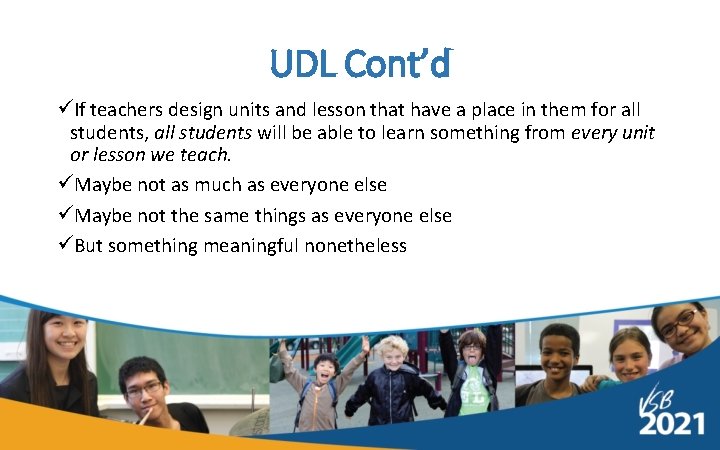
UDL Cont’d üIf teachers design units and lesson that have a place in them for all students, all students will be able to learn something from every unit or lesson we teach. üMaybe not as much as everyone else üMaybe not the same things as everyone else üBut something meaningful nonetheless
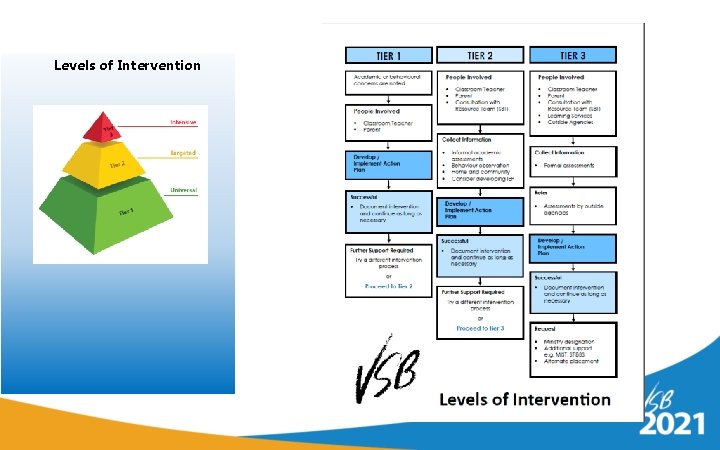
RTI • Response to Intervention vs. Response to Instruction • Tier 1, 2, 3 • District Booklet
Levels of Intervention
Assessment • Students in a modified curriculum for one or more subject areas • “When it is determined that a student with special needs is not capable of achieving the learning outcomes of the provincial… curriculum, and substantial course or program modification is necessary, specific individual goals and objectives will be established for the student in their IEP. Performance scales, letter grades, and structured written comments may be used to report the level of the student’s success in achieving these modified goals and objectives” (Reporting Student Progress: Policy and Practice, March 2009)
Adaptations • “Adaptations are teaching and assessment strategies especially designed to accommodate a student’s needs so they can achieve the learning outcomes of the subject or course and to demonstrate mastery of concepts. ” (A Guide to Adaptations and Modifications, August 2009)
CASE STUDY • Case Study • Groups of 3 or 4 people • Read, discuss and present
Case Study Sam is a grade 3 boy diagnosed with autism and ADHD. He has been assigned a 1: 1 support worker and has an IEP. He is very bright and interested in planes and cats. The school is primarily concerned with him having tantrum style outbursts which included throwing objects, swearing, clearing desks, shouting, and using repetitive language. The school believes any demand is a trigger, such as transitions and demands to complete work. The school prefers to use physical restraint and remove him from the classroom, along with applying physical pressure to calm him down. The school believes the behaviors occur constantly and they happen without warning. What other information would you like to know?
Case Study • What would you do? Where would you start? • How would you do to shift your teams thinking? • You have 15 minutes to talk with your group on how you would proceed.
Reporting Out • What are you taking away from this that you want to use next year?
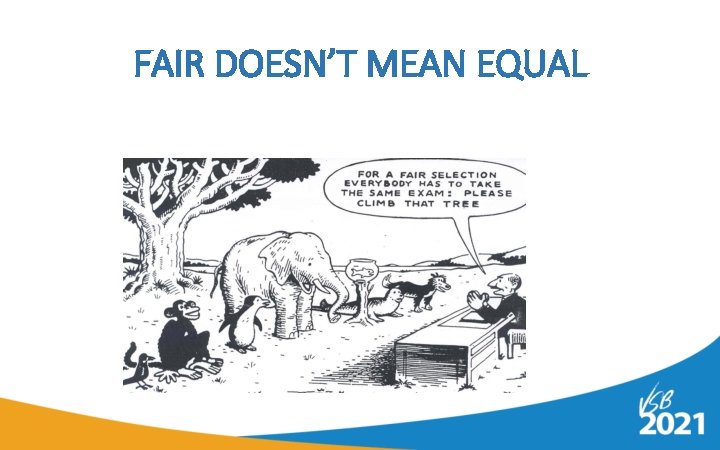
FAIR DOESN’T MEAN EQUAL
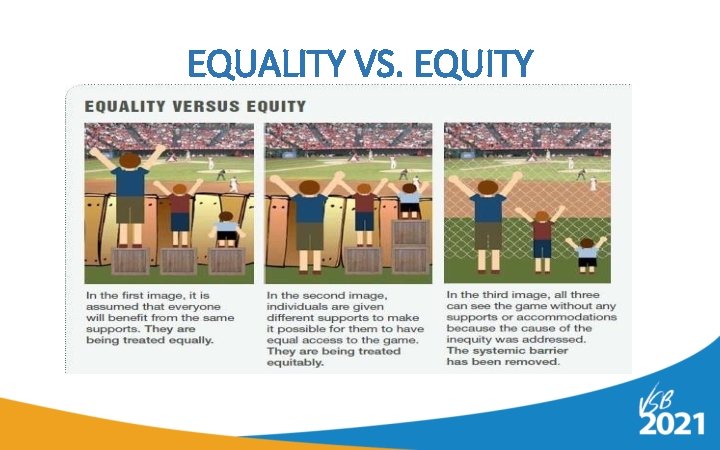
EQUALITY VS. EQUITY
What do we hear from staff in schools? • The child is always being sent to the office • No one wants to work with them • Everybody is scared of them • Group complaining in the staffroom • Eyerolls, sarcasm, sighing, parents are irrational • I have spent a lot of time with this child “reactive” • He needs more support even though he has 1: 1 • We have tried everything
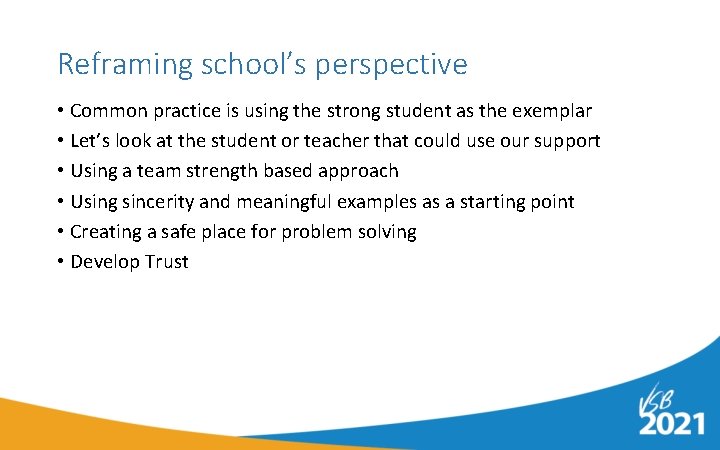
Reframing school’s perspective • Common practice is using the strong student as the exemplar • Let’s look at the student or teacher that could use our support • Using a team strength based approach • Using sincerity and meaningful examples as a starting point • Creating a safe place for problem solving • Develop Trust
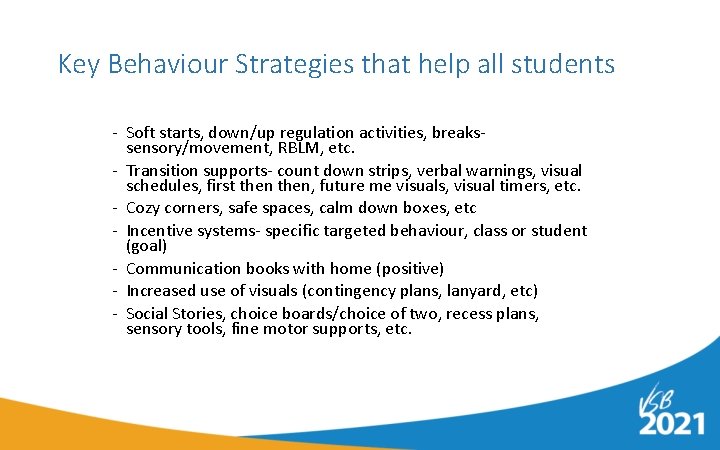
Key Behaviour Strategies that help all students - Soft starts, down/up regulation activities, breakssensory/movement, RBLM, etc. - Transition supports- count down strips, verbal warnings, visual schedules, first then, future me visuals, visual timers, etc. - Cozy corners, safe spaces, calm down boxes, etc - Incentive systems- specific targeted behaviour, class or student (goal) - Communication books with home (positive) - Increased use of visuals (contingency plans, lanyard, etc) - Social Stories, choice boards/choice of two, recess plans, sensory tools, fine motor supports, etc.
References • Explore: Shelley Moore and Jennifer Katz’s work • www. udlresource. ca • Dr. Pat Mirenda, Dr. Leyton Schnellert’s work as well
Questions?