
Universal Design for Learning and Information Literacy Instruction

- Slides: 16
Universal Design for Learning and Information Literacy Instruction By Dr. Gigi Mohamad
Universal Design for Learning (UDL/I) Multiple Means of Representation (What) Multiple Means of Expression (How) Multiple Means of Engagement (Why)
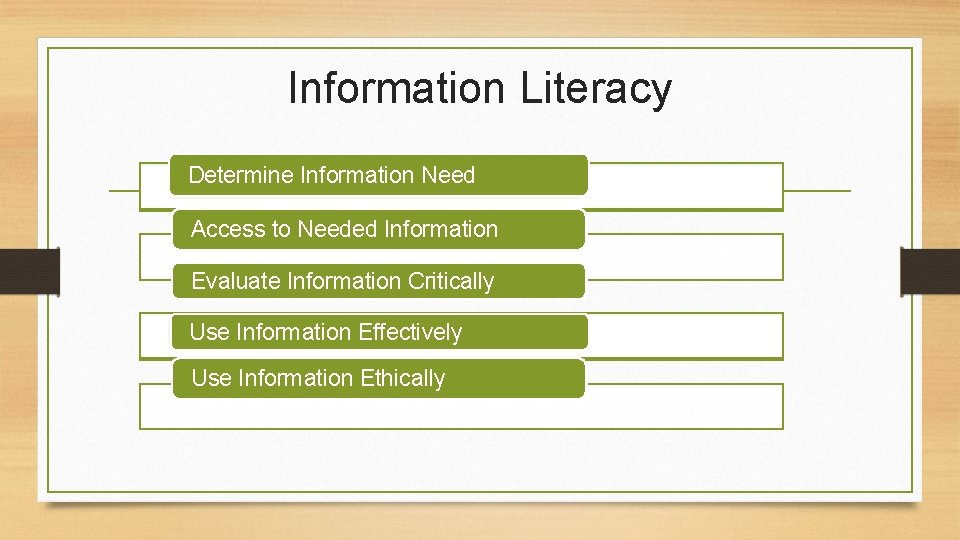
Information Literacy Determine Information Need Access to Needed Information Evaluate Information Critically Use Information Effectively Use Information Ethically
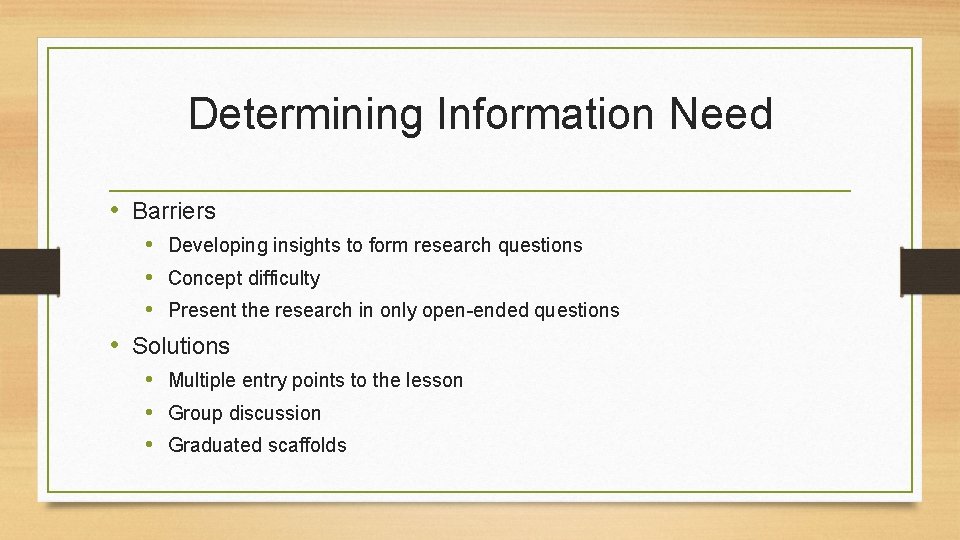
Determining Information Need • Barriers • Developing insights to form research questions • Concept difficulty • Present the research in only open-ended questions • Solutions • Multiple entry points to the lesson • Group discussion • Graduated scaffolds
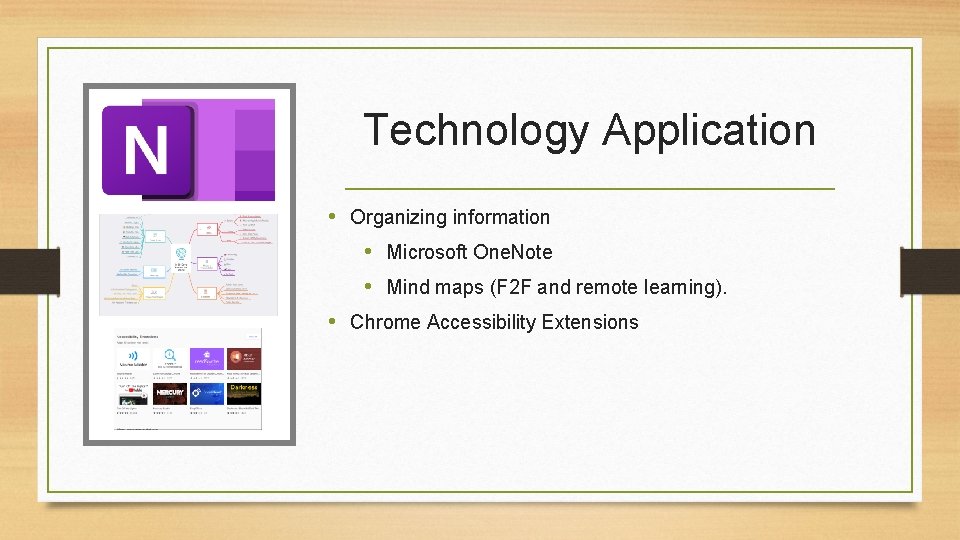
Technology Application • Organizing information • Microsoft One. Note • Mind maps (F 2 F and remote learning). • Chrome Accessibility Extensions
Access to Needed Information • Barriers • Using one format to present information • The layout and the volume of information • Solutions • • Present information in more than one format Identify critical information Model search strategies Use web accessibility tool
Technology Application • Using Databases that provide features such as dictionary, note taking, and read aloud This Photo by Unknown Author is licensed under CC BY-SA • Also a translation feature could be helpful such as Google Translate This Photo by Unknown Author is licensed under CC BY-SA
Evaluate Information Critically • Barriers • Comprehension skills • Analyzing text • Difficulty sustaining effort • Solutions • Create guides for students to self assess (such as getting started and assess my work • Support decoding of text (acronyms) • Unlock background knowledge to create intrinsic motivation
Technology Application • Google forms • Encyclopedia Britannica This Photo by Unknown Author is licensed under CC BY-SA-NC This Photo by Unknown Author is licensed under CC BY-SA
Use Information Effectively • Barriers • Organizing information • Making connections between important themes and patterns • Communication skills • Solutions • Multiple tools for communications • Set guidelines for planning and progress • Use citation-making software, print icons, and other built-in timesaving shortcuts • Decrease repetitiveness of tasks
Technology Application • Microsoft One. Note • Explain Everything is an app that allow students to communicate their knowledge using images and voice recoding This Photo by Unknown Author is licensed under CC BY-NC-ND
Use Information Ethically • Barriers • Processing technical terms • Prior knowledge • Solutions • Promote expectations and beliefs • Foster collaboration • Optimize value and authenticity
Technology Application • Citation software • Plagiarism self-check This Photo by Unknown Author is licensed under CC BY-NC-ND This Photo by Unknown Author is licensed under CC BY-SA-NC
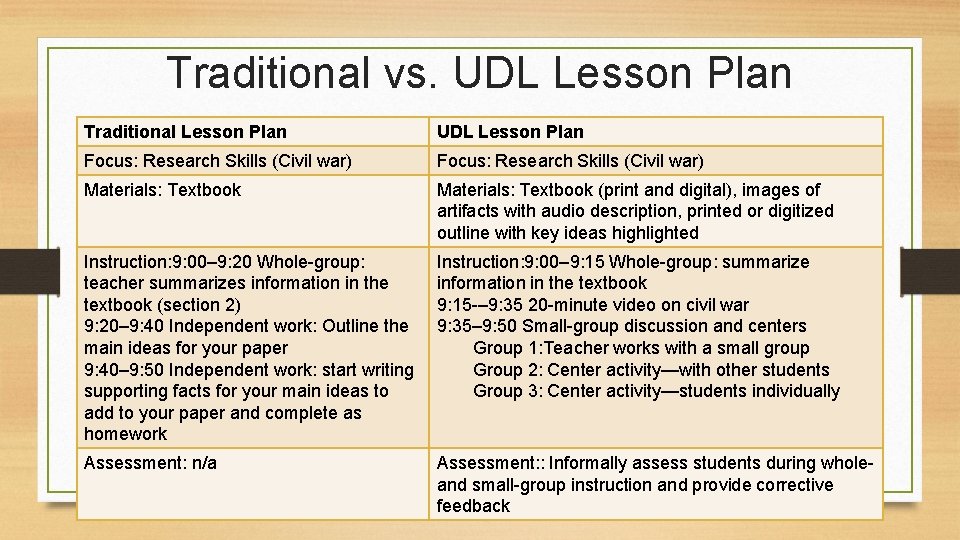
Traditional vs. UDL Lesson Plan Traditional Lesson Plan UDL Lesson Plan Focus: Research Skills (Civil war) Materials: Textbook (print and digital), images of artifacts with audio description, printed or digitized outline with key ideas highlighted Instruction: 9: 00– 9: 20 Whole-group: teacher summarizes information in the textbook (section 2) 9: 20– 9: 40 Independent work: Outline the main ideas for your paper 9: 40– 9: 50 Independent work: start writing supporting facts for your main ideas to add to your paper and complete as homework Instruction: 9: 00– 9: 15 Whole-group: summarize information in the textbook 9: 15 -– 9: 35 20 -minute video on civil war 9: 35– 9: 50 Small-group discussion and centers Group 1: Teacher works with a small group Group 2: Center activity—with other students Group 3: Center activity—students individually Assessment: n/a Assessment: : Informally assess students during wholeand small-group instruction and provide corrective feedback
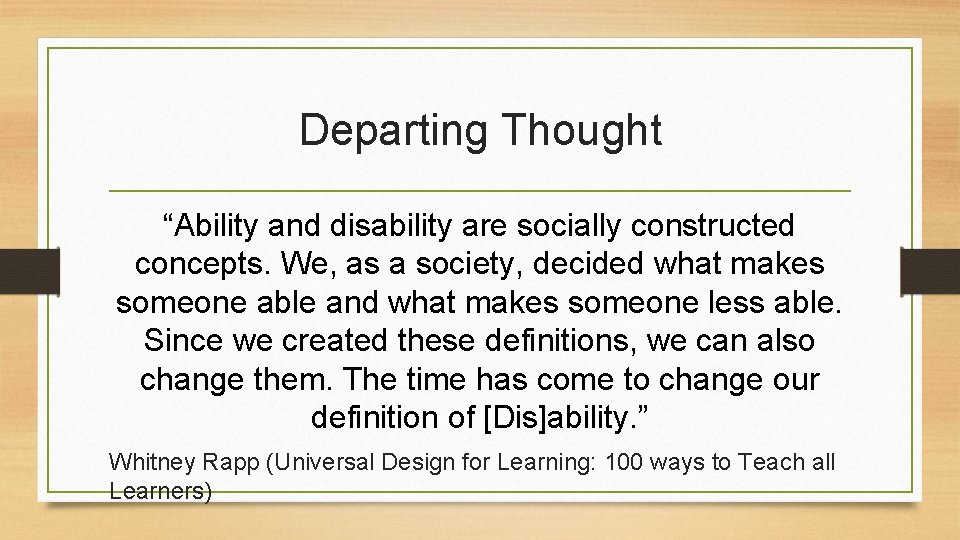
Departing Thought “Ability and disability are socially constructed concepts. We, as a society, decided what makes someone able and what makes someone less able. Since we created these definitions, we can also change them. The time has come to change our definition of [Dis]ability. ” Whitney Rapp (Universal Design for Learning: 100 ways to Teach all Learners)
Reference Hall, T. E. , Meyer, A. , & Rose, D. H. (Eds. ). (2012). Universal design for learning in the classroom : Practical applications. Pro. Quest Ebook Central https: //ebookcentral. proquest. com Nelson, L. L. (2013). Design and deliver : Planning and teaching using universal design for learning. Pro. Quest Ebook Central https: //ebookcentral. proquest. com Rapp, W. H. (2015). Universal design for learning in action : 100 ways to teach all learners. Pro. Quest Ebook Central https: //ebookcentral. proquest. com Websites http: //www. cast. org/ http: //udltheorypractice. cast. org/login https: //udl-irn. org/ https: //medium. com/udl-center