
Universal Design Damian Gordon Overview Topic 1 1


- Slides: 62
Universal Design Damian Gordon
Overview • • • Topic 1. 1. Understanding Design Topic 1. 2. Understanding Diversity Topic 1. 3. The Ageing Population Topic 1. 4. Good Business Topic 1. 5. Universal Design
Topic 1. 1 Understanding Design
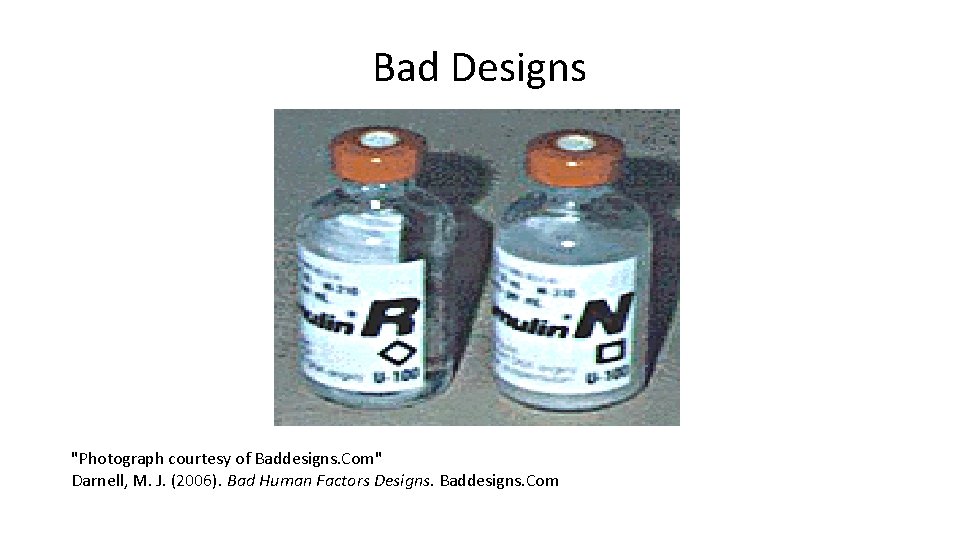
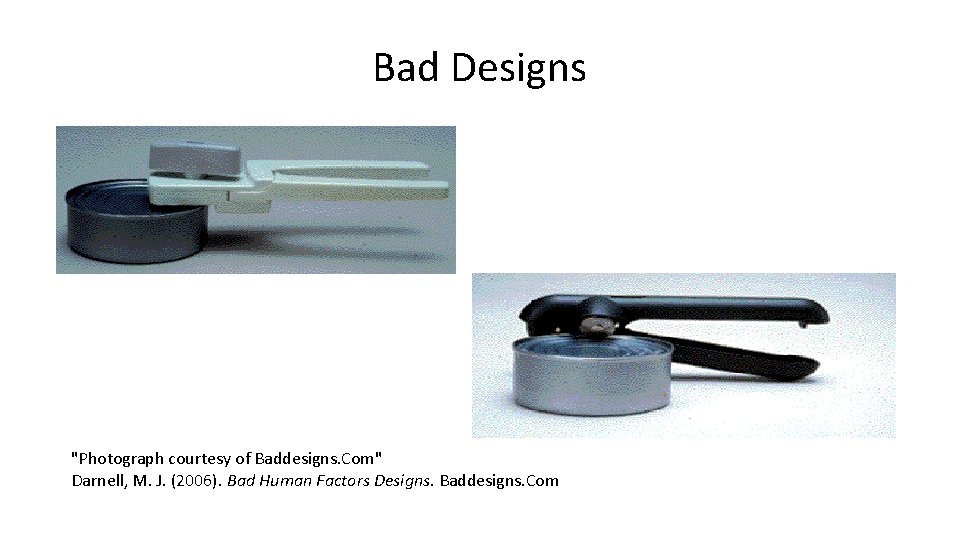
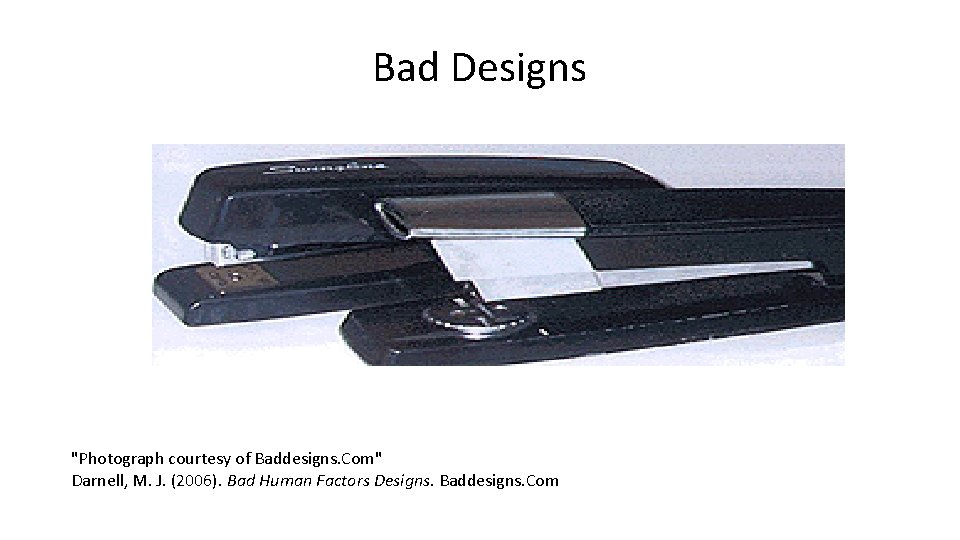
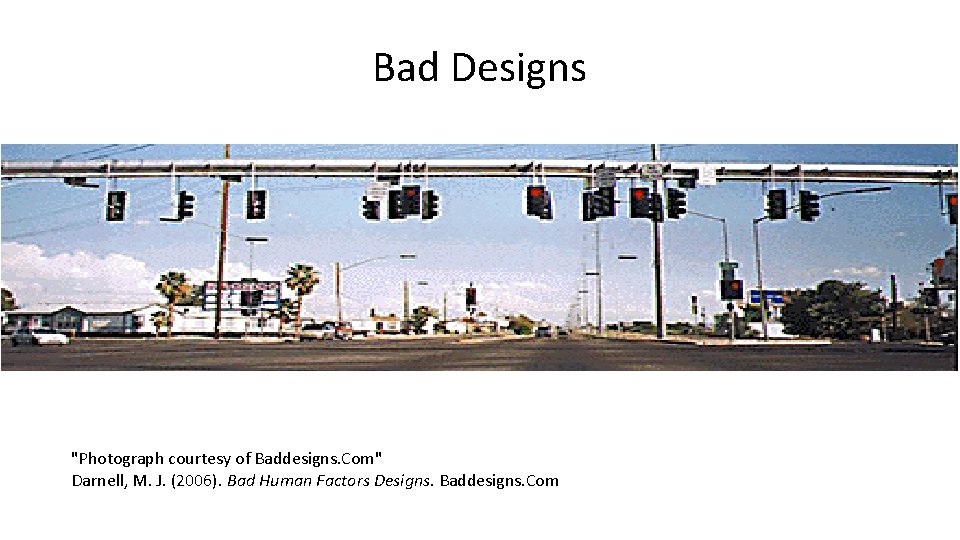
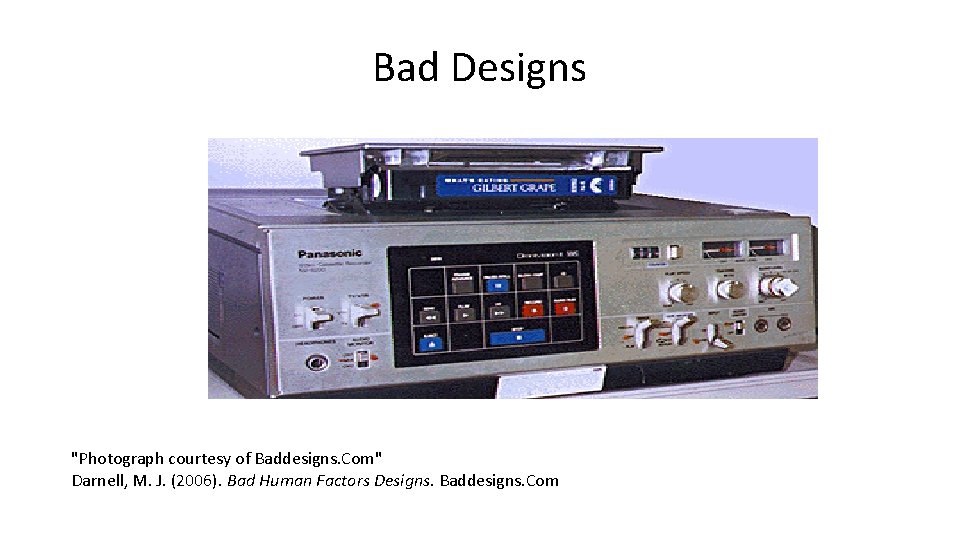
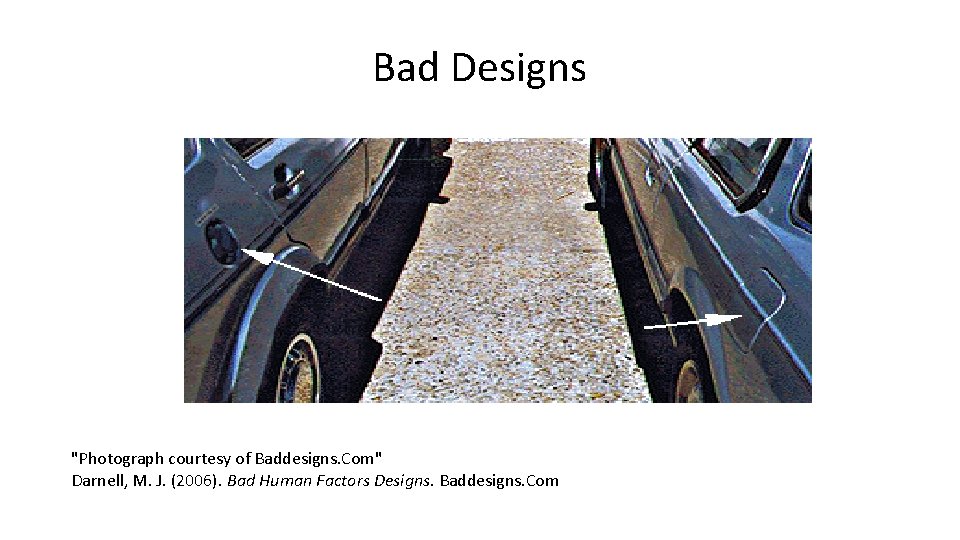
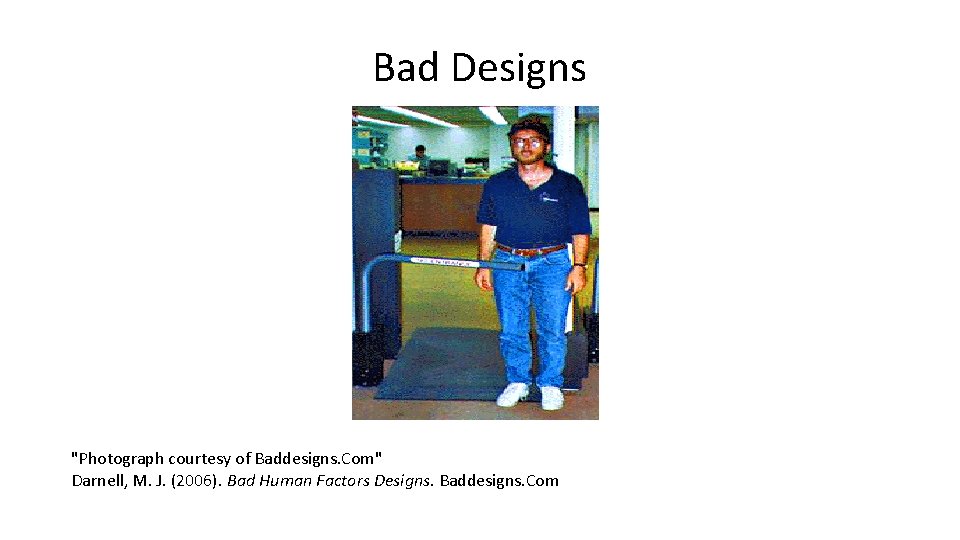
Design • What makes a design bad?
Bad Designs "Photograph courtesy of Baddesigns. Com" Darnell, M. J. (2006). Bad Human Factors Designs. Baddesigns. Com
Bad Designs "Photograph courtesy of Baddesigns. Com" Darnell, M. J. (2006). Bad Human Factors Designs. Baddesigns. Com
Bad Designs "Photograph courtesy of Baddesigns. Com" Darnell, M. J. (2006). Bad Human Factors Designs. Baddesigns. Com
Bad Designs "Photograph courtesy of Baddesigns. Com" Darnell, M. J. (2006). Bad Human Factors Designs. Baddesigns. Com
Bad Designs "Photograph courtesy of Baddesigns. Com" Darnell, M. J. (2006). Bad Human Factors Designs. Baddesigns. Com
Bad Designs "Photograph courtesy of Baddesigns. Com" Darnell, M. J. (2006). Bad Human Factors Designs. Baddesigns. Com
Bad Designs "Photograph courtesy of Baddesigns. Com" Darnell, M. J. (2006). Bad Human Factors Designs. Baddesigns. Com
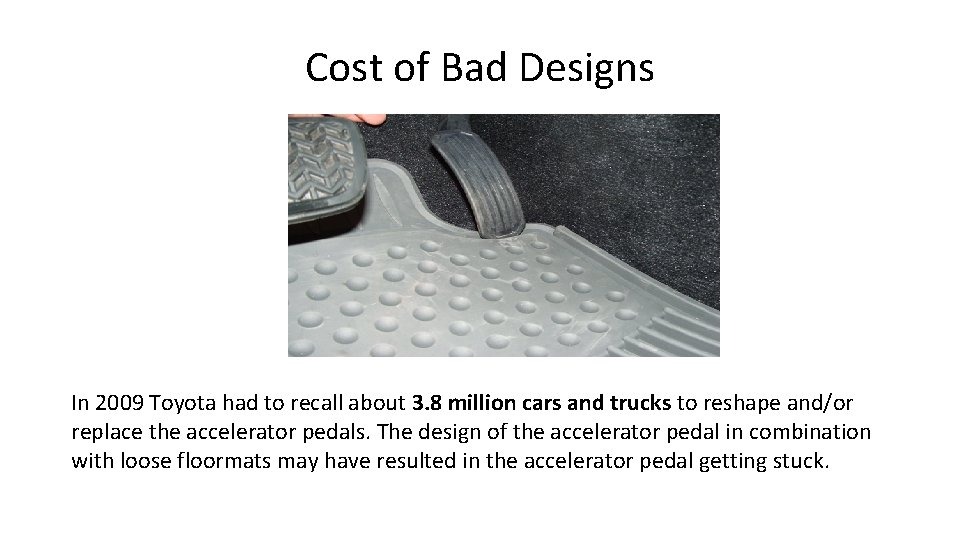
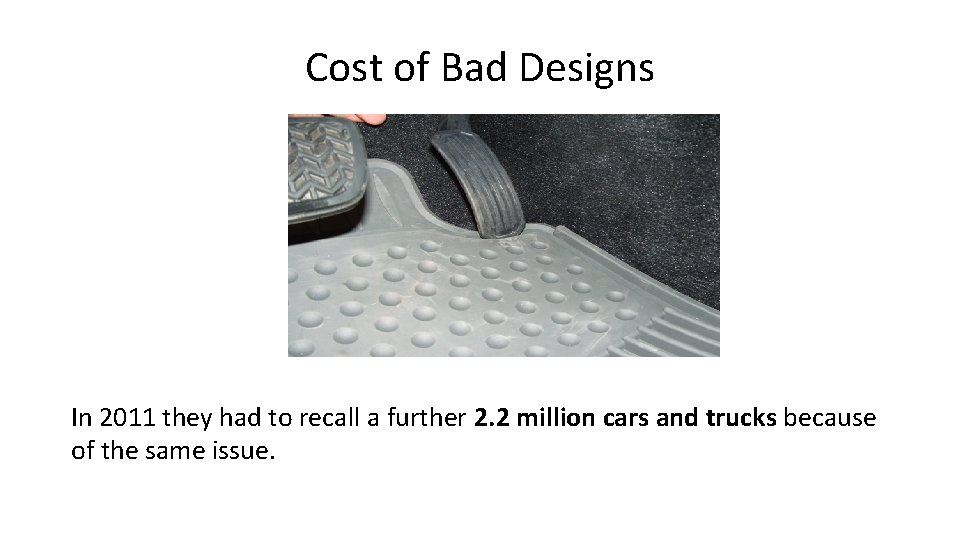
Cost of Bad Designs In 2009 Toyota had to recall about 3. 8 million cars and trucks to reshape and/or replace the accelerator pedals. The design of the accelerator pedal in combination with loose floormats may have resulted in the accelerator pedal getting stuck.
Cost of Bad Designs In 2011 they had to recall a further 2. 2 million cars and trucks because of the same issue.
Exercise • Get a single sheet of paper – Tear one out of your notebook/notepad • Design a paper aeroplane using this piece of paper. – I’d like you to do this in silence without asking any questions.
Exercise: Reflections • Did you design the paper aeroplane or did you build it? • If you did this exercise right, there should be a blueprint or plan for a paper aeroplane drawn on the piece of paper. • Too often people forget the vital step of designing before building, and as a consequence overlook vital steps that may missed.
Topic 1. 2 Understanding Diversity
Diversity • Dimensions of diversity: How do we differ from each other? Age, size, ability, gender, culture, language, literacy, education, technology. • Challenges for people: How do the ways we differ from each other impact on how we share use of environments, products, services?
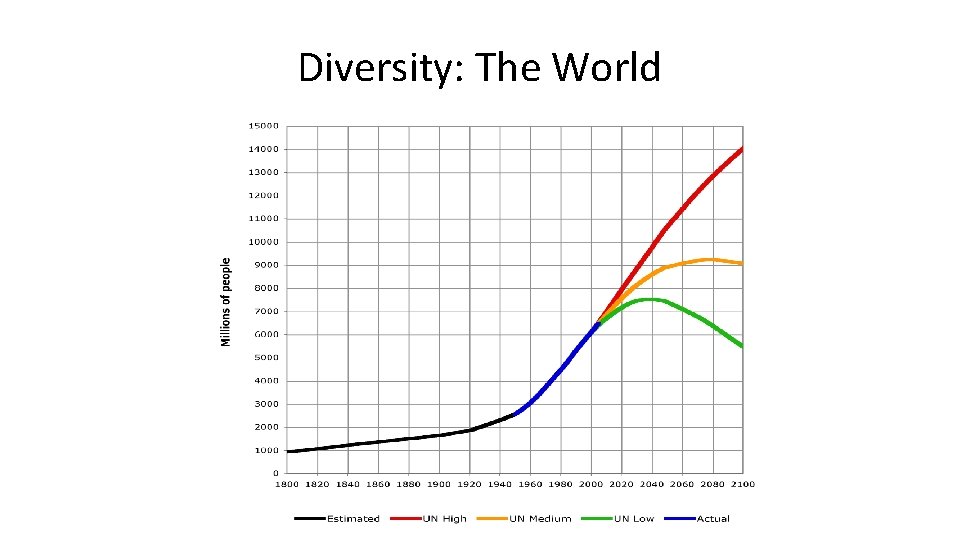
Diversity: The World
Diversity: The World
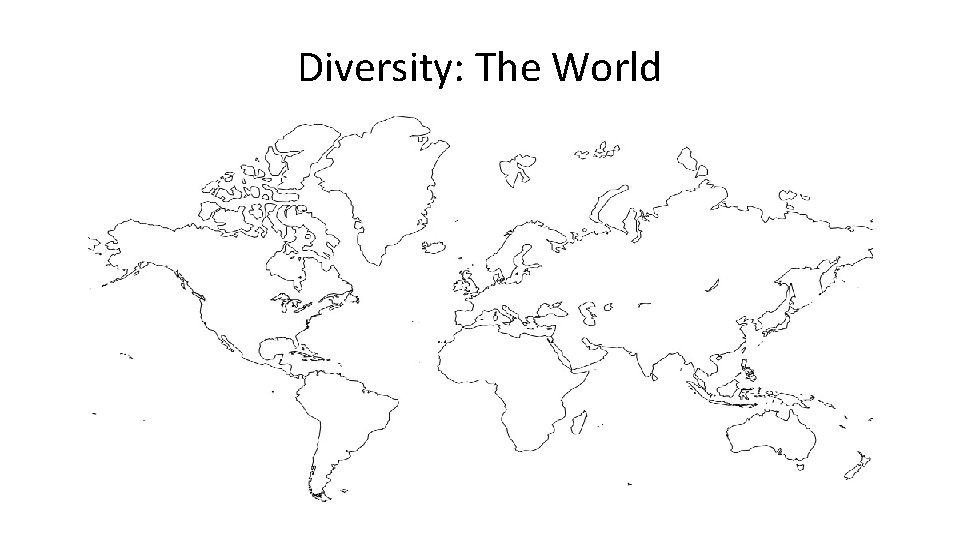
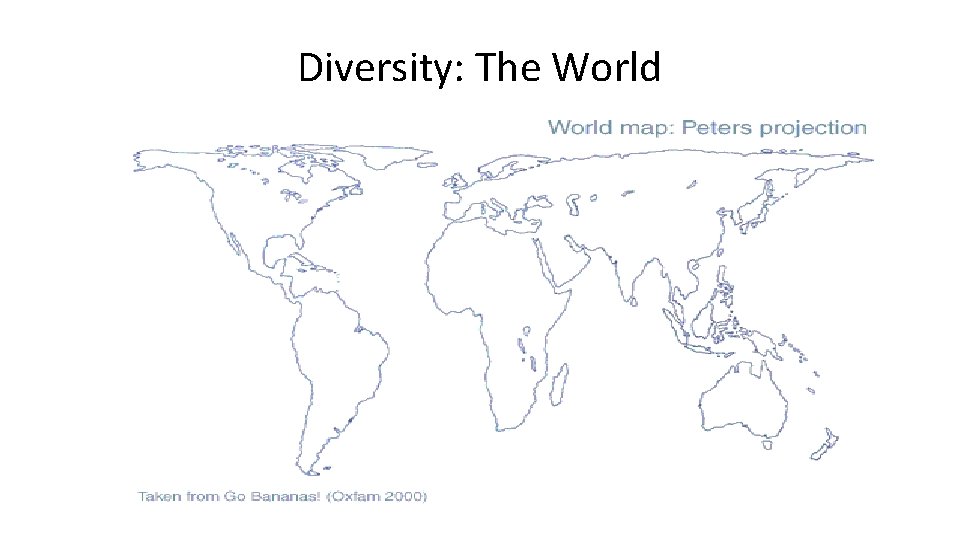
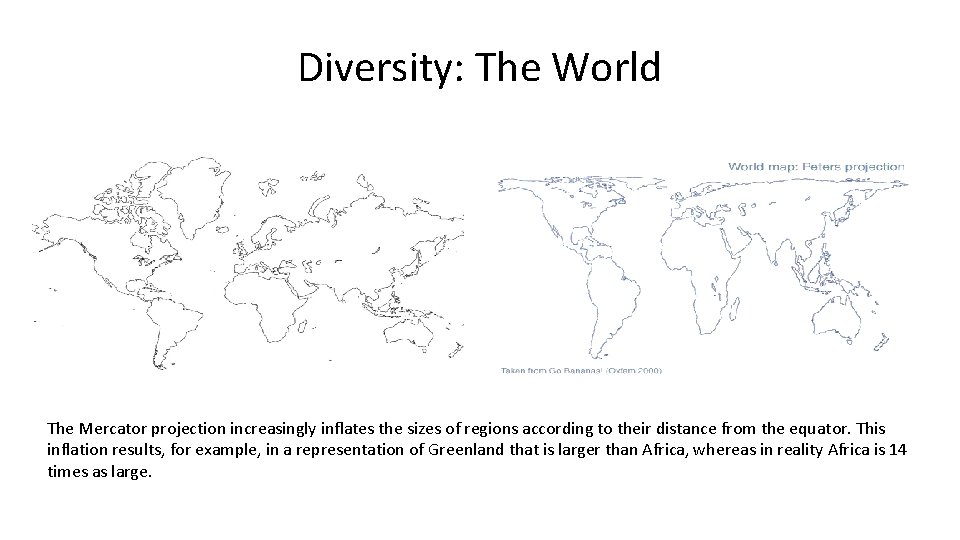
Diversity: The World The Mercator projection increasingly inflates the sizes of regions according to their distance from the equator. This inflation results, for example, in a representation of Greenland that is larger than Africa, whereas in reality Africa is 14 times as large.
Diversity: The World
Topic 1. 3 Good Business
Better Innovation • Ben Shneiderman says that “accommodating a broader spectrum of usage situations forces designers to consider a wider range of designs and often leads to innovations that benefit all users” – Shneiderman, B. , Universal Usability: A research agenda for humancomputer interaction research to empower every citizen. In Earnshaw, R. , Guedj, R. , Van Dam, A. , and Vince, J. (Editors), Human-Centred Computing, Online Communities, and Virtual Environments, Springer-Verlag London (2001), 179 -189.
Better Innovation • Gregg Vanderheiden is quoted in Gandy et al. (2003) as saying that Universal Design encourages more innovative and creative design and challenge the designer to create products that are a combination of "the best of today’s collective knowledge, technologies and materials”, this challenge can lead to radically new directions in design. – Gandy, M. , Ross, D. & Starner, T. E. , 2003. Universal design: Lessons for wearable computing. Pervasive Computing, IEEE, 2(3), pp. 19– 23.
Topic 2. 0. Introduction to Universal Design
Universal Design • Universal Design is the design and composition of an environment so that it can be accessed, understood and used to the greatest extent possible by all people regardless of their age, size or disability • Irish Disability Act, 2005
Universal Design • Universal Design means… – Design Once – Include All • It is not (just) about disability • It is about usability for all
Universal Design • • • Inclusive Design for All User Needs Design User-Centred Design Human-Centred Design Barrier-Free Design Accessible Design Adaptable Design Transgenerational design Design for a Broader Average
Universal Design • Universal Design is the design and composition of an environment so that it can be accessed, understood and used to the greatest extent possible by all people regardless of their age, size or disability – Irish Disability Act, 2005
Universal Design • Universal Design is the design and composition of an environment so that it can be accessed, understood and used to the greatest extent possible by all people regardless of their age, size or disability – Irish Disability Act, 2005
Universal Design • Universal design is an approach to design that honours human diversity. It addresses the right for everyone – from childhood into their oldest years – to use all spaces, products and information, in an independent, inclusive and equal way. It is a process that invites designers to go beyond compliance with access codes, to create excellent, people centred design. – Elaine Ostroff
The Principles of Universal Design 1. 2. 3. 4. 5. 6. 7. Equitable Use Flexibility in Use Simple and Intuitive Perceptible Information Tolerance for Error Low Physical Effort Size and Space for Approach and Use
Universal Design • In this lecture we are going to explore a new way to look at design to allow as many people as possible to benefit from the design. • This is Universal Design
Topic 2. 1. Equitable Use
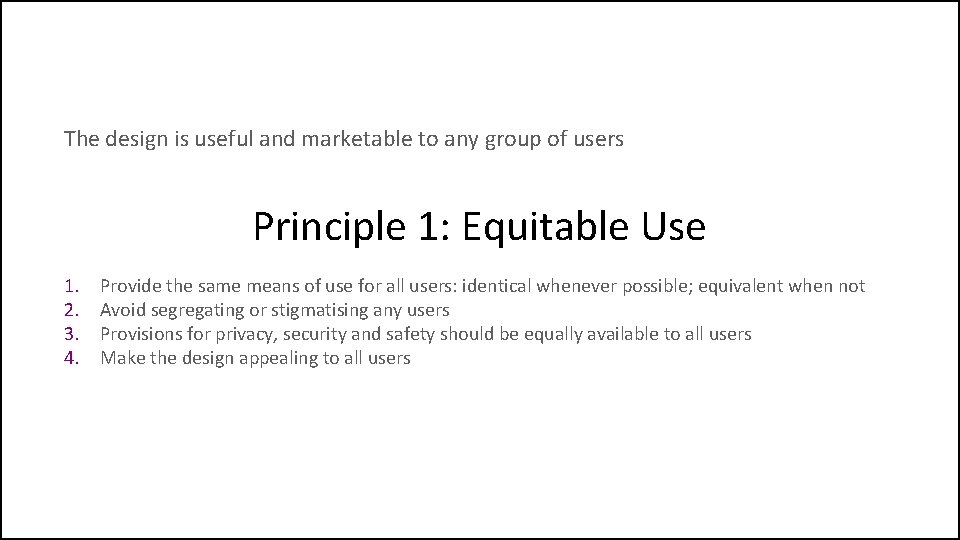
The design is useful and marketable to any group of users Principle 1: Equitable Use 1. 2. 3. 4. Provide the same means of use for all users: identical whenever possible; equivalent when not Avoid segregating or stigmatising any users Provisions for privacy, security and safety should be equally available to all users Make the design appealing to all users
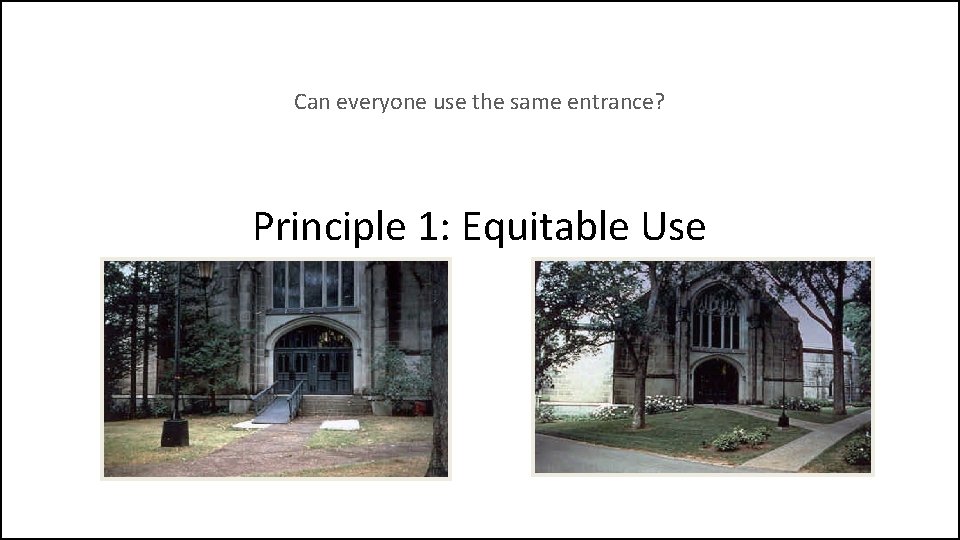
Can everyone use the same entrance? Principle 1: Equitable Use
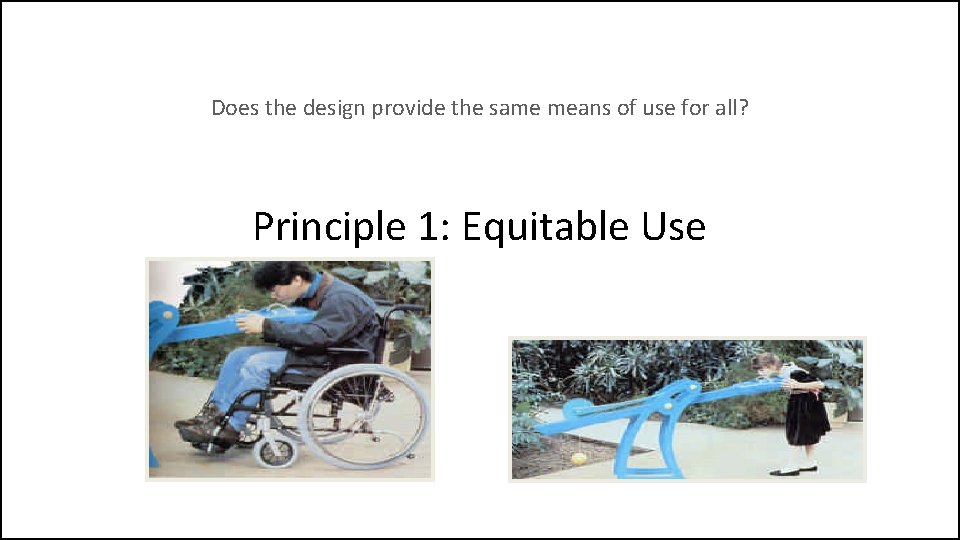
Does the design provide the same means of use for all? Principle 1: Equitable Use
Topic 2. 2. Flexibility in Use
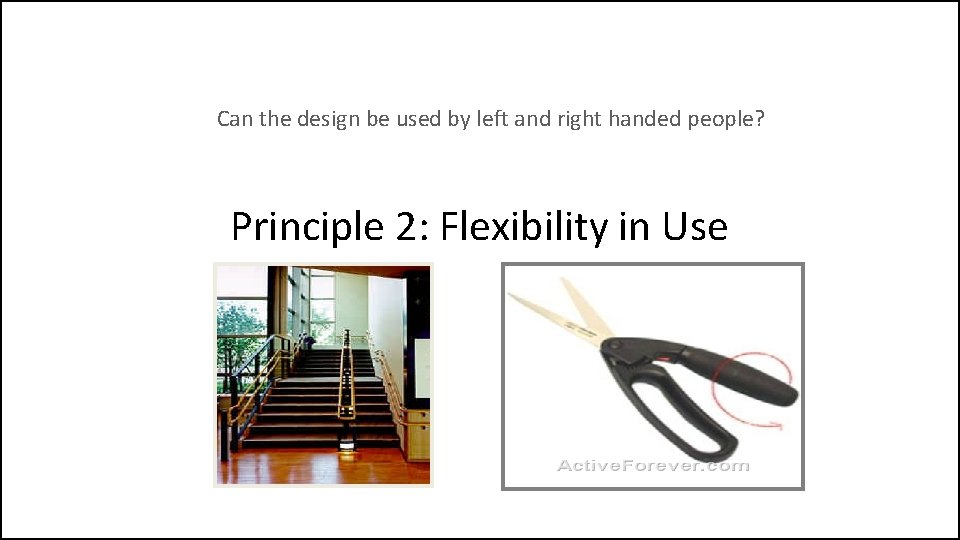
The design accommodates a range of individual preferences and abilities. Principle 2: Flexibility in Use 1. 2. 3. 4. Provide choice in method of use Accommodate right-handed or left-handed access and use Facilitate the user’s accuracy and precision Provide adaptability to the user’s pace
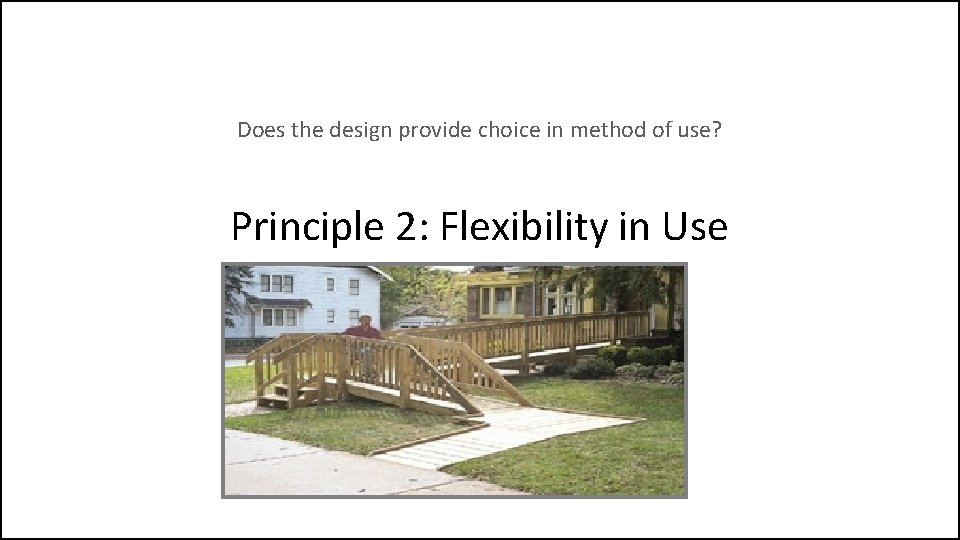
Does the design provide choice in method of use? Principle 2: Flexibility in Use
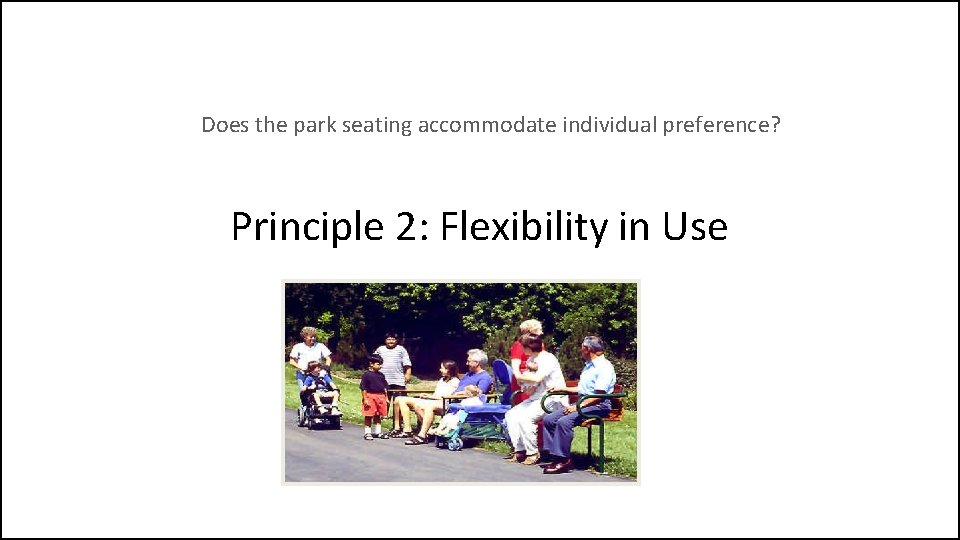
Does the park seating accommodate individual preference? Principle 2: Flexibility in Use
Can the design be used by left and right handed people? Principle 2: Flexibility in Use
Topic 2. 3. Simple and Intuitive
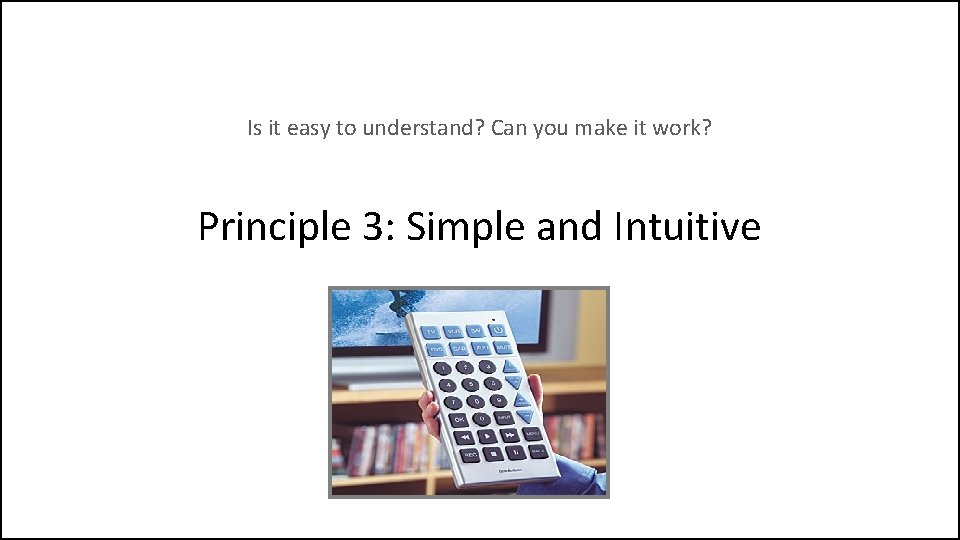
Use of the design is easy to understand regardless of the user’s experience, knowledge, language skills, or current concentration level. Principle 3: Simple and Intuitive 1. 2. 3. 4. 5. Eliminate unnecessary complexity Be consistent with user expectations and intuition Accommodate a wide range of literacy and language skills Arrange information consistent with its importance Provide effective prompting and feedback during and after task completion
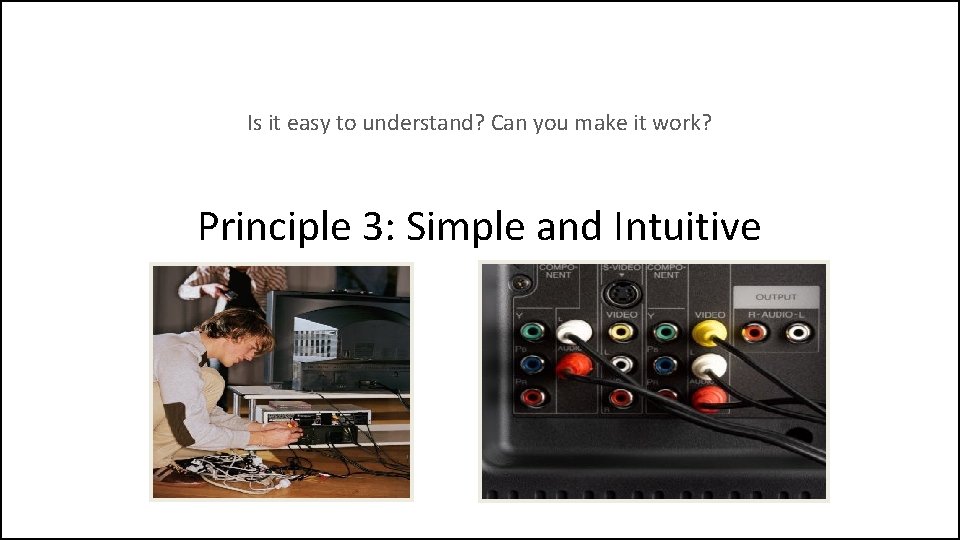
Is it easy to understand? Can you make it work? Principle 3: Simple and Intuitive
Is it easy to understand? Can you make it work? Principle 3: Simple and Intuitive
Topic 2. 4. Perceptible Information
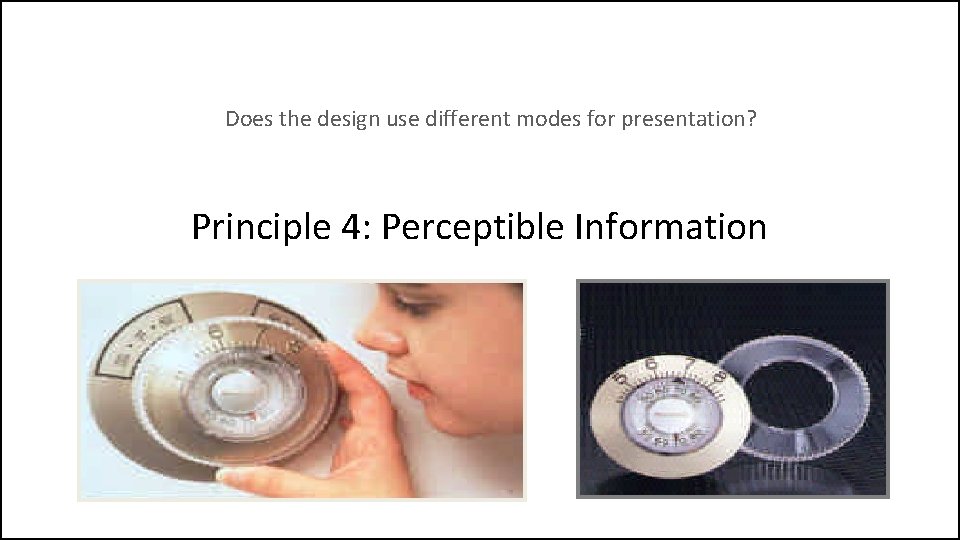
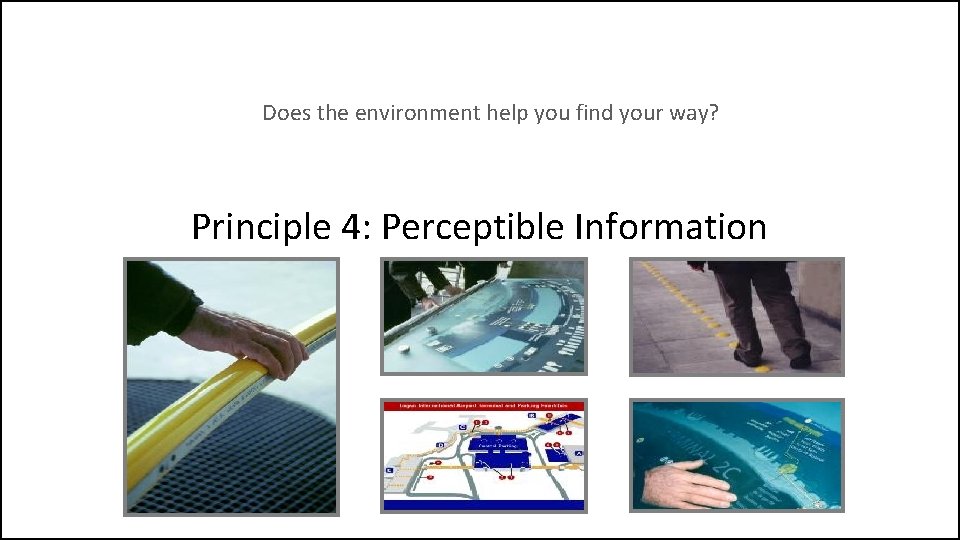
The design communicates necessary information effectively to the user, regardless of ambient conditions or the user’s sensory abilities. Principle 4: Perceptible Information 1. 2. 3. 4. 5. Use different modes (pictorial, verbal, tactile) for redundant presentation of essential information Provide adequate contrast between essential information and its surroundings Maximize ‘legibility’ of essential information and its surroundings Differentiate elements in ways that can be described (i. e. make it easy to give instructions or directions) Provide compatibility with a variety of techniques or devices used by people with sensory limitations
Does the design use different modes for presentation? Principle 4: Perceptible Information
Does the environment help you find your way? Principle 4: Perceptible Information
Topic 2. 5. Tolerance for Error
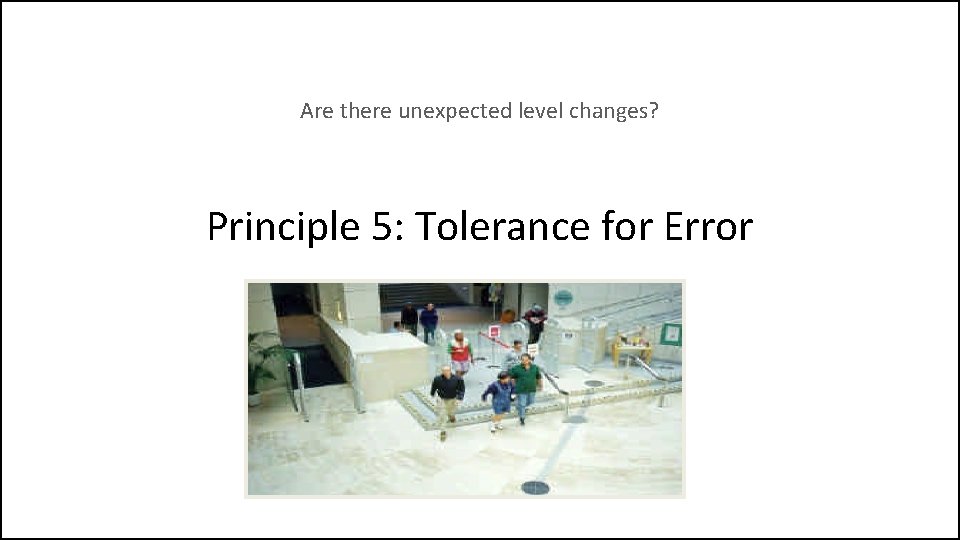
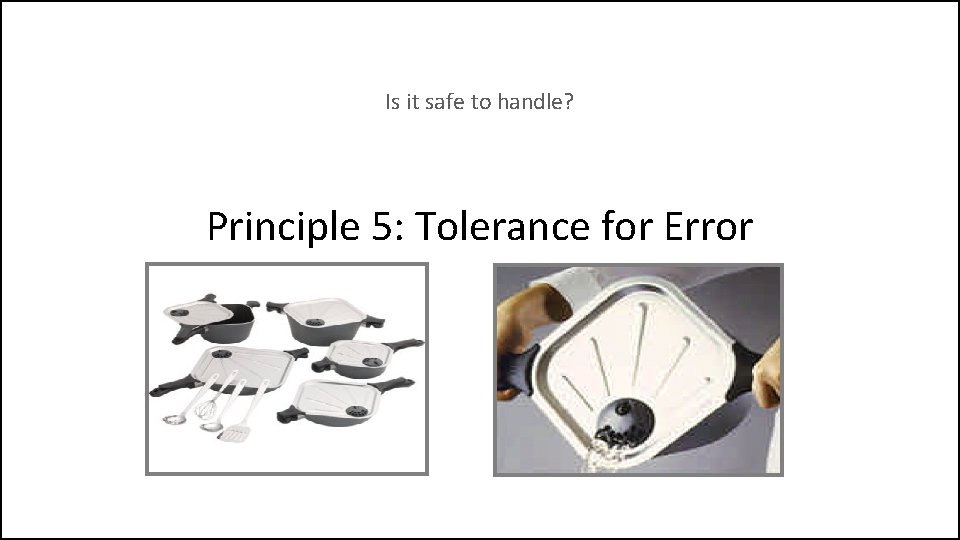
The design minimises hazards and the adverse consequences of accidental or unintended actions. Principle 5: Tolerance for Error 1. Arrange elements to minimise hazards and errors: most used elements, most accessible; hazardous elements eliminated, isolated or shielded 2. Provide warnings of hazards and errors 3. Provide fail safe features 4. Discourage unconscious action in tasks that require vigilance
Are there unexpected level changes? Principle 5: Tolerance for Error
How can you tell when the water is hot? Principle 5: Tolerance for Error
Is it safe to handle? Principle 5: Tolerance for Error
Topic 2. 6. Low Physical Effort
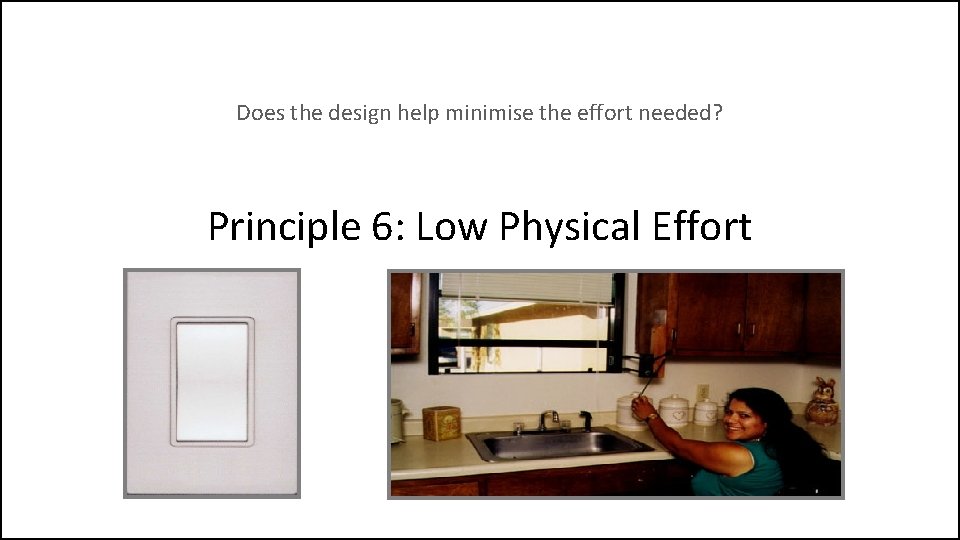
The design can be used efficiently and comfortably and with a minimum of fatigue Principle 6: Low Physical Effort 1. 2. 3. 4. Allow user to maintain a neutral body position Use reasonable operating forces Minimise repetitive actions Minimise sustained physical effort
Does the design help minimise the effort needed? Principle 6: Low Physical Effort
Topic 2. 7. Size and Space for Approach and Use
Appropriate size and space is provided for approach, reach, manipulation, and use regardless of user’s body size, posture, or mobility. Principle 7: Size and Space for Approach and Use 1. 2. 3. 4. Provide a clear line of sight to important elements for any seated or standing user Make reach to all components comfortable for any seated or standing user Accommodate variations in hand grip size Provide adequate space for the use of assistive devices or personal assistance
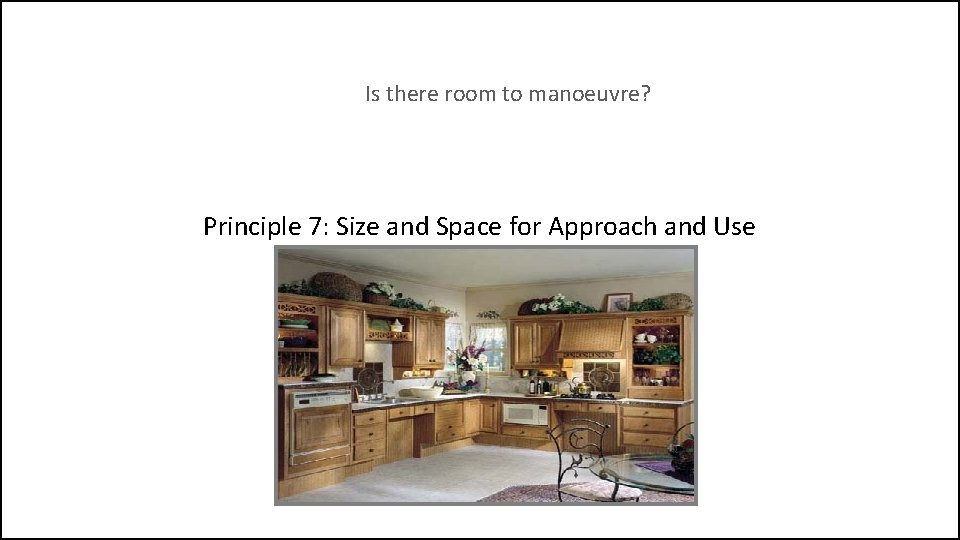
Is there room to manoeuvre? Principle 7: Size and Space for Approach and Use
Conclusions • • • Diversity is the norm Universal design celebrates human differences Universal design markets usability, not disability Ageing consumers have great economic power Universal design offers a blueprint for designing a world fit for all people Universal design recognises the interdependence of humanity, the natural world, and the products of human design