
Unity of Life Common Themes in All Organisms
- Slides: 21
Unity of Life Common Themes in All Organisms 1. Made of cells. 2. Biological molecules - lipids, proteins, carbohydrates, nucleic acids. DNA is a nucleic acid that codes for proteins. 3. Reproduce by passing along DNA guides development.
Unity of Life Common Themes in All Organisms cont. 4. Obtain and convert energy from their surroundings. Cells use energy for repair, growth, movement and reproduction. 5. Sense changes in their surroundings. They respond in controlled ways that compensate. This involves homeostasis –staying within tolerable limits. 6. Organisms evolve. Their genes change from generation to generation.
Natural Selection What is your definition? A theory explaining the observed fact that life on earth changes through time. A process by which organisms adaptations are selected for or against making an individual more or less likely to survive. Those that survive are more likely to pass on their genes to their offspring.
Diversity and Scientific Nomenclature In 1735, Carolus Linnaeus devised a classification system to organize the diversity of nature. Binomial nomenclature -Every organism has a two–part name • We can use the names we give each organism to indicate a degree of evolutionary relationship between organisms. We can group the names at higher and higher levels.
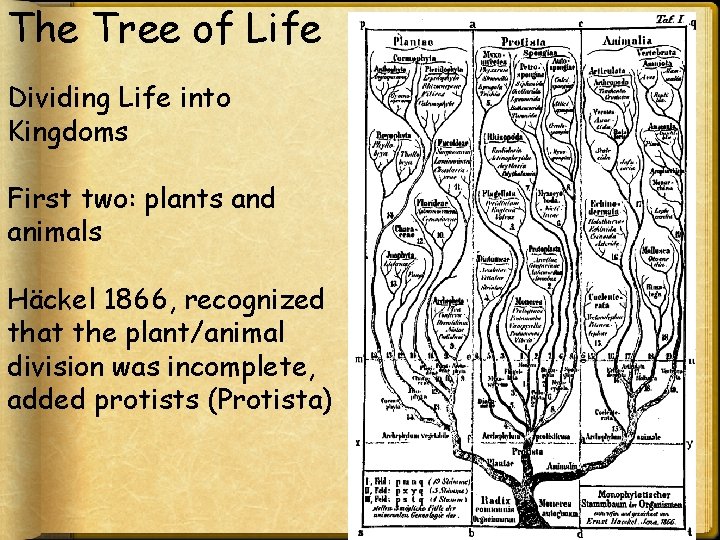
The Tree of Life Dividing Life into Kingdoms First two: plants and animals Häckel 1866, recognized that the plant/animal division was incomplete, added protists (Protista)
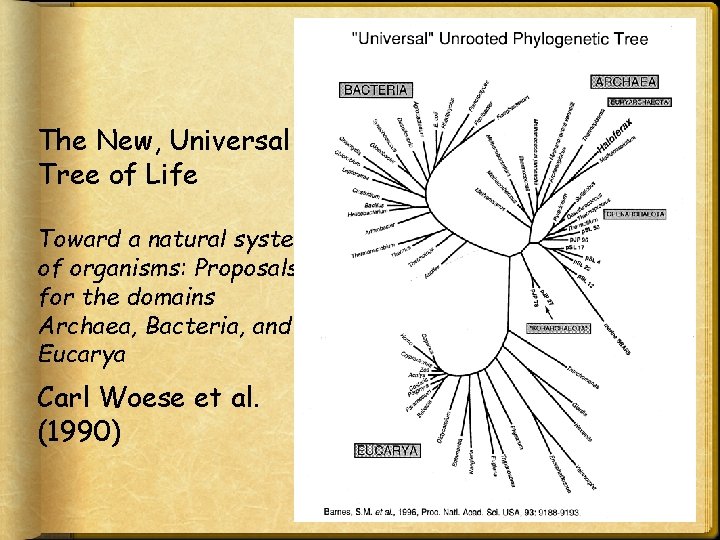
The New, Universal Tree of Life Toward a natural system of organisms: Proposals for the domains Archaea, Bacteria, and Eucarya Carl Woese et al. (1990)
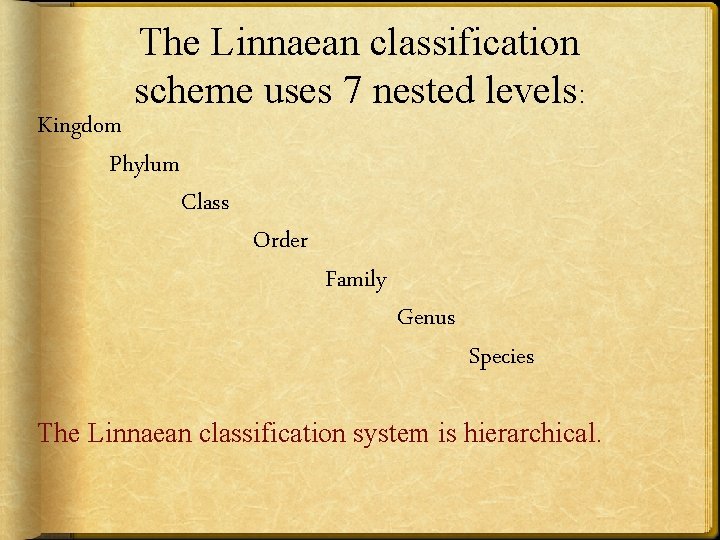
The Linnaean classification scheme uses 7 nested levels: Kingdom Phylum Class Order Family Genus Species The Linnaean classification system is hierarchical.
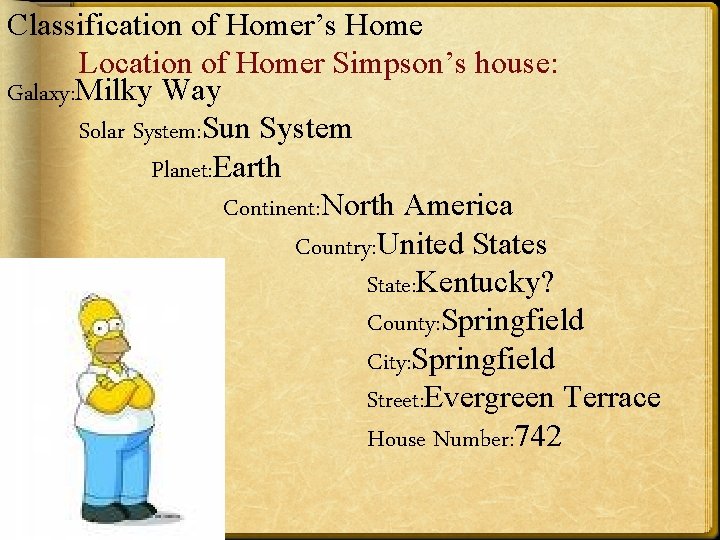
Classification of Homer’s Home Location of Homer Simpson’s house: Galaxy: Milky Way Solar System: Sun System Planet: Earth Continent: North America Country: United States State: Kentucky? County: Springfield City: Springfield Street: Evergreen Terrace House Number: 742
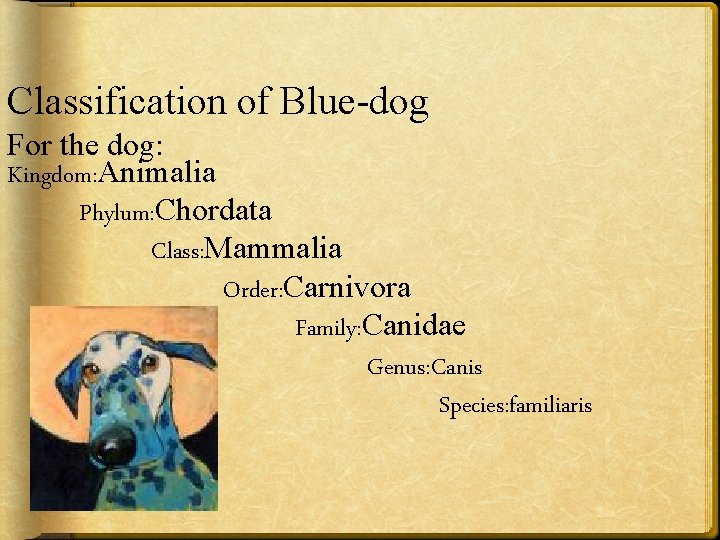
Classification of Blue-dog For the dog: Kingdom: Animalia Phylum: Chordata Class: Mammalia Order: Carnivora Family: Canidae Genus: Canis Species: familiaris
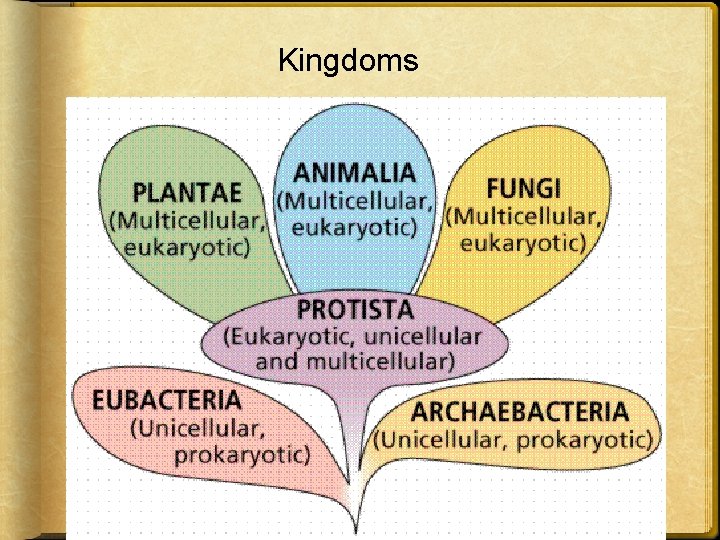
Kingdoms
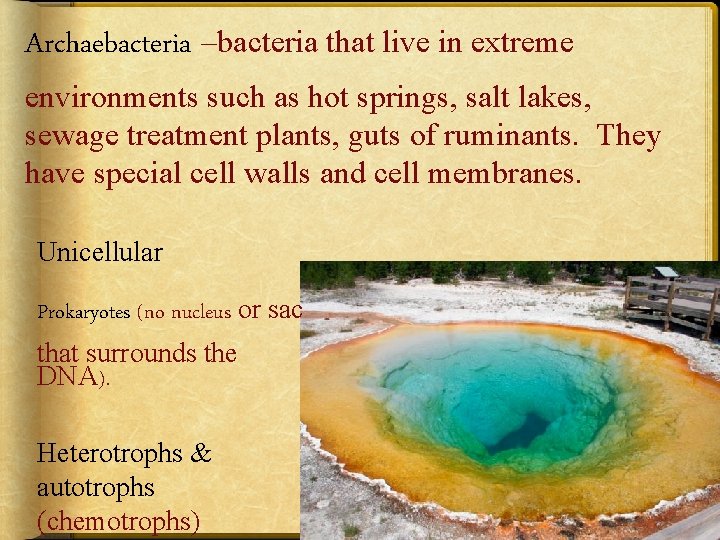
Archaebacteria –bacteria that live in extreme environments such as hot springs, salt lakes, sewage treatment plants, guts of ruminants. They have special cell walls and cell membranes. Unicellular Prokaryotes (no nucleus or sac that surrounds the DNA). Heterotrophs & autotrophs (chemotrophs)
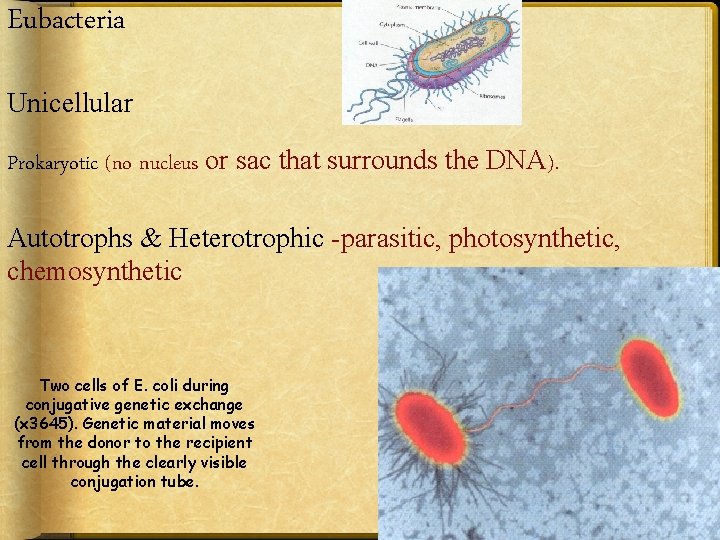
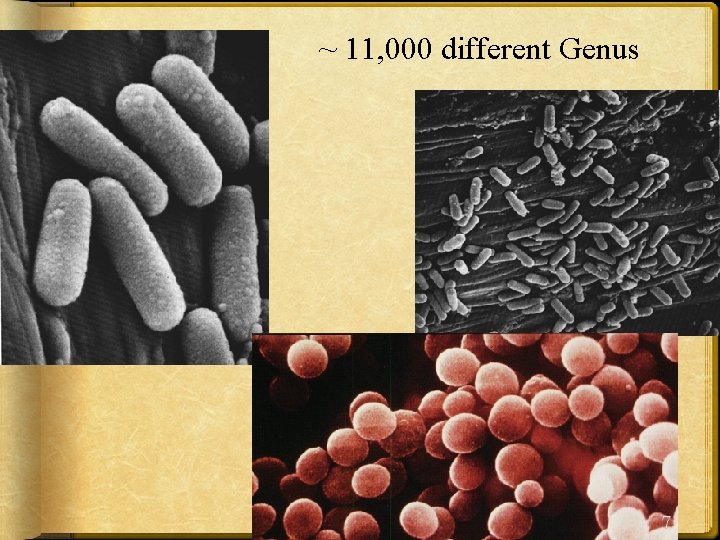
Eubacteria Unicellular Prokaryotic (no nucleus or sac that surrounds the DNA). Autotrophs & Heterotrophic -parasitic, photosynthetic, chemosynthetic Two cells of E. coli during conjugative genetic exchange (x 3645). Genetic material moves from the donor to the recipient cell through the clearly visible conjugation tube.
~ 11, 000 different Genus
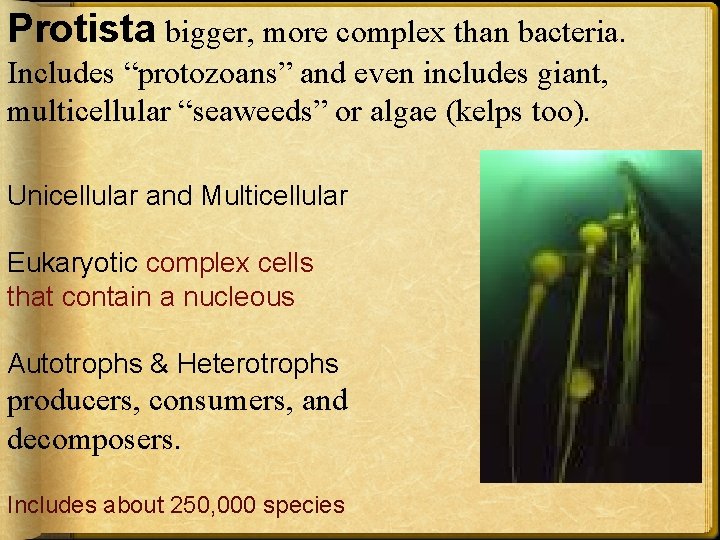
Protista bigger, more complex than bacteria. Includes “protozoans” and even includes giant, multicellular “seaweeds” or algae (kelps too). Unicellular and Multicellular Eukaryotic complex cells that contain a nucleous Autotrophs & Heterotrophs producers, consumers, and decomposers. Includes about 250, 000 species
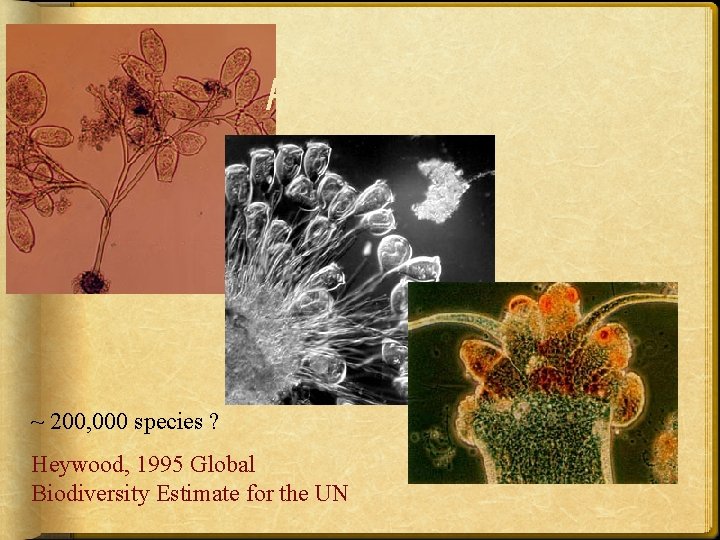
Protozoa ~ 200, 000 species ? Heywood, 1995 Global Biodiversity Estimate for the UN
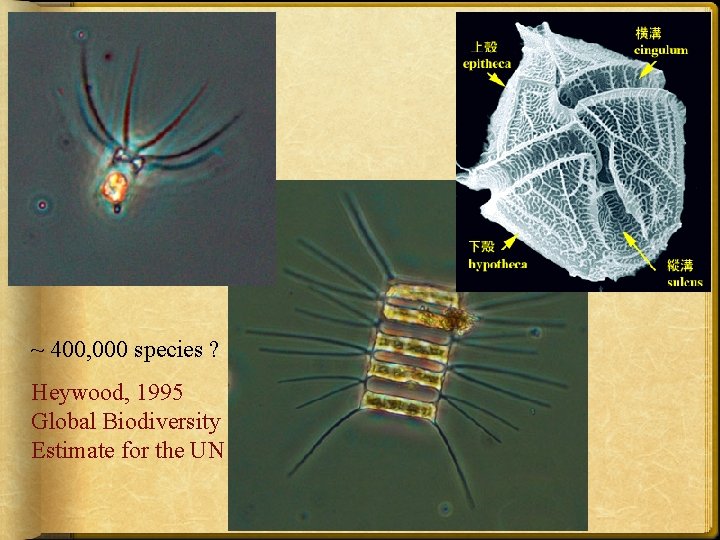
Algae ~ 400, 000 species ? Heywood, 1995 Global Biodiversity Estimate for the UN
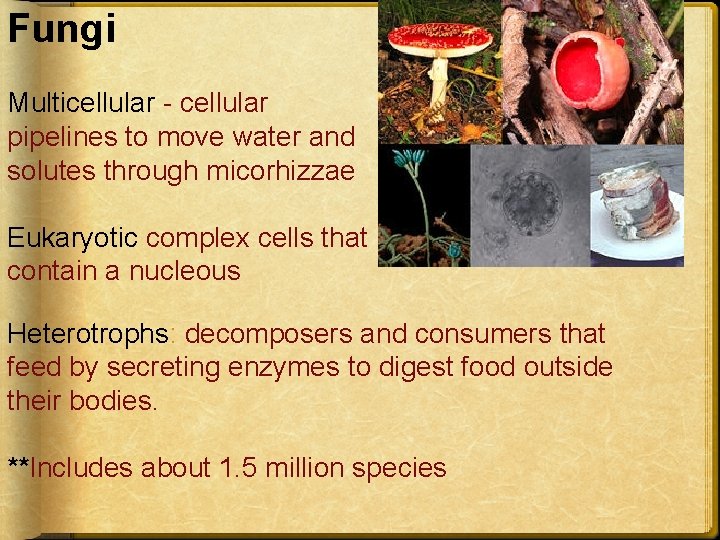
Fungi Multicellular - cellular pipelines to move water and solutes through micorhizzae Eukaryotic complex cells that contain a nucleous Heterotrophs: decomposers and consumers that feed by secreting enzymes to digest food outside their bodies. **Includes about 1. 5 million species
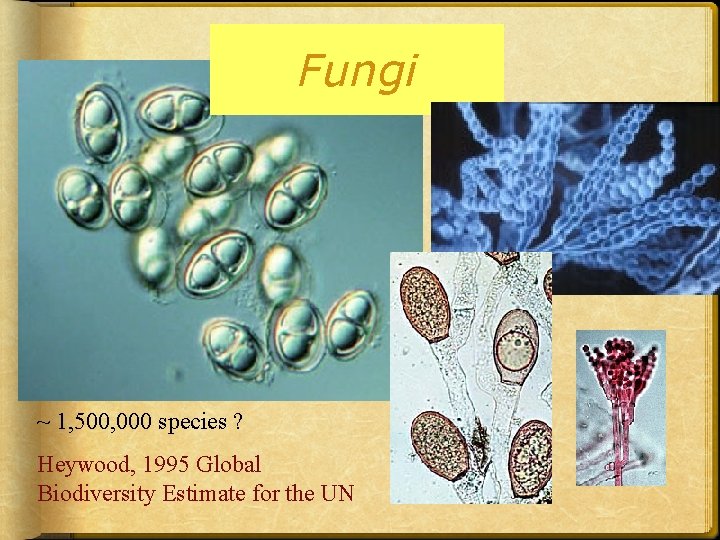
Fungi ~ 1, 500, 000 species ? Heywood, 1995 Global Biodiversity Estimate for the UN
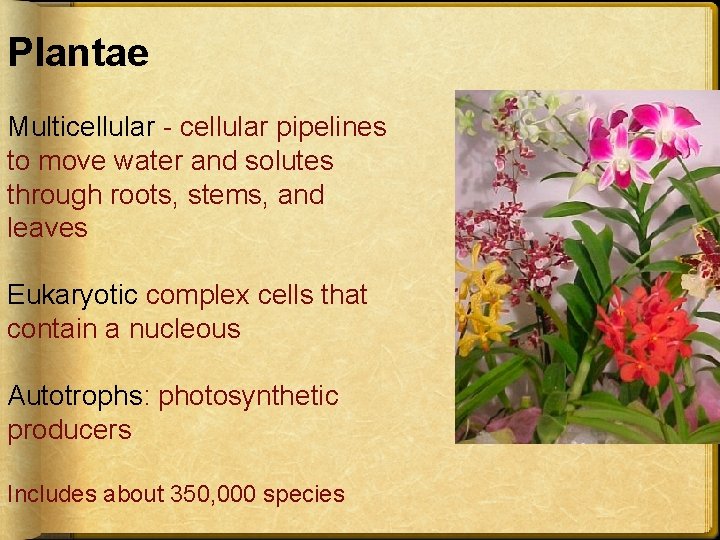
Plantae Multicellular - cellular pipelines to move water and solutes through roots, stems, and leaves Eukaryotic complex cells that contain a nucleous Autotrophs: photosynthetic producers Includes about 350, 000 species
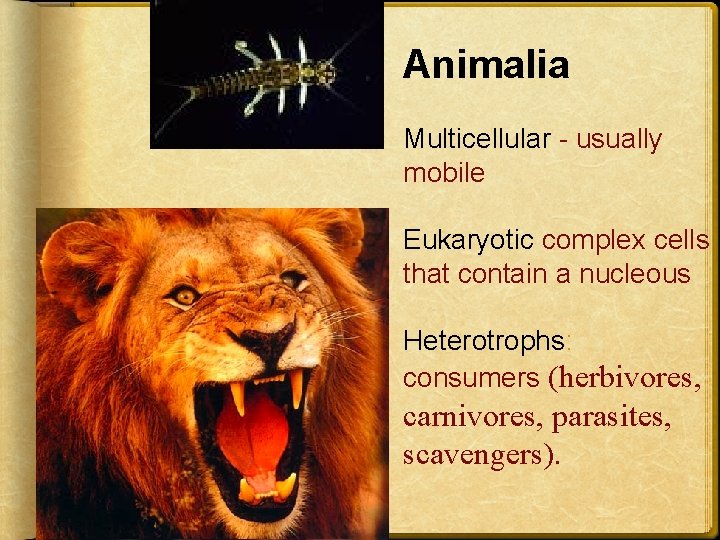
Animalia Multicellular - usually mobile Eukaryotic complex cells that contain a nucleous Heterotrophs: consumers (herbivores, carnivores, parasites, scavengers).
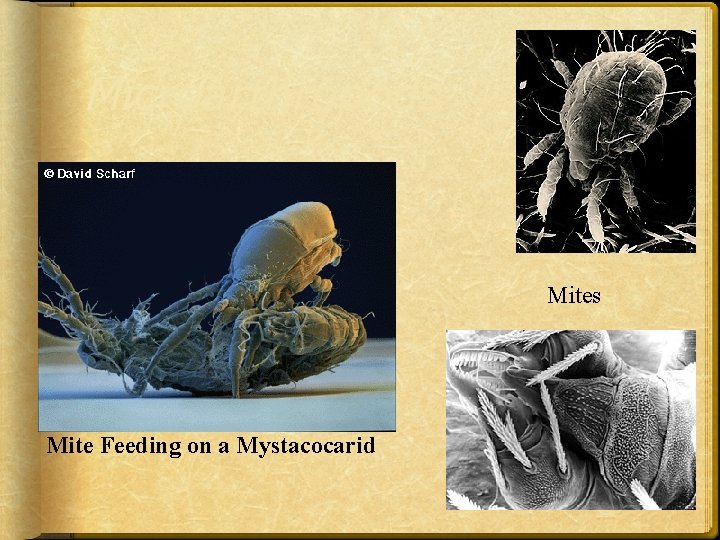
Microarthropods Mite Feeding on a Mystacocarid