
Units of Measure MiniMath Camp Scientists across the
- Slides: 20
Units of Measure Mini-Math Camp
Scientists across the world use the International System of Units (SI). All systems of weights and measures, metric and non -metric, are linked through a network of international agreements supporting the International System of Units.
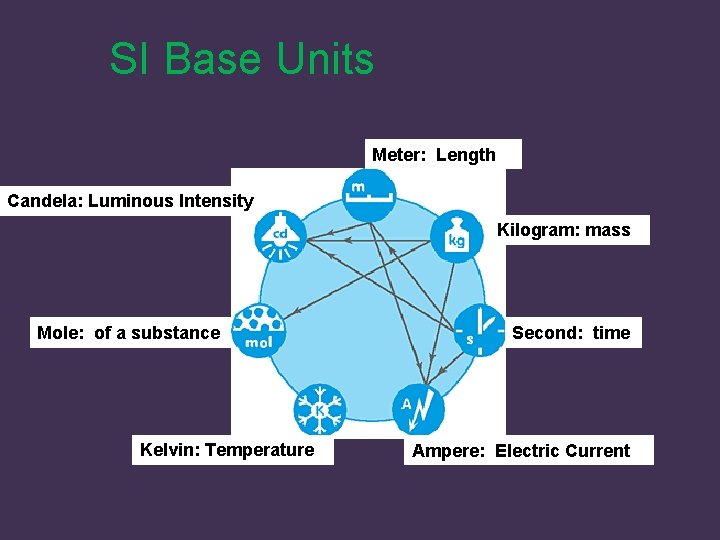
SI Base Units Meter: Length Candela: Luminous Intensity Kilogram: mass Mole: of a substance Kelvin: Temperature Second: time Ampere: Electric Current
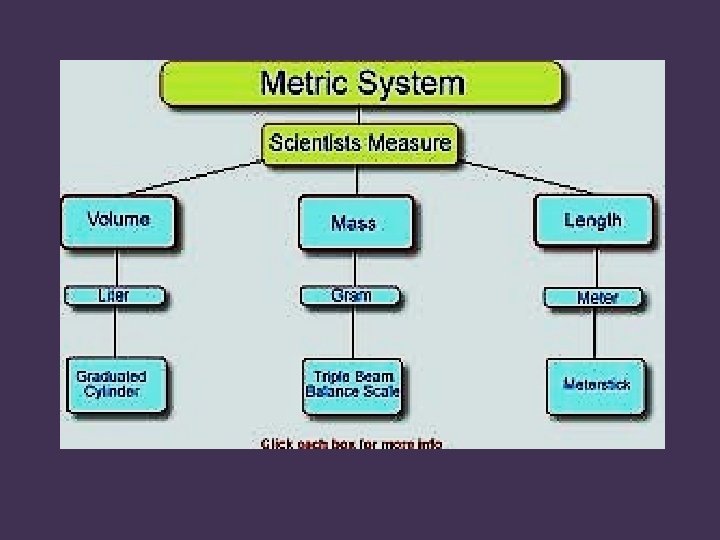
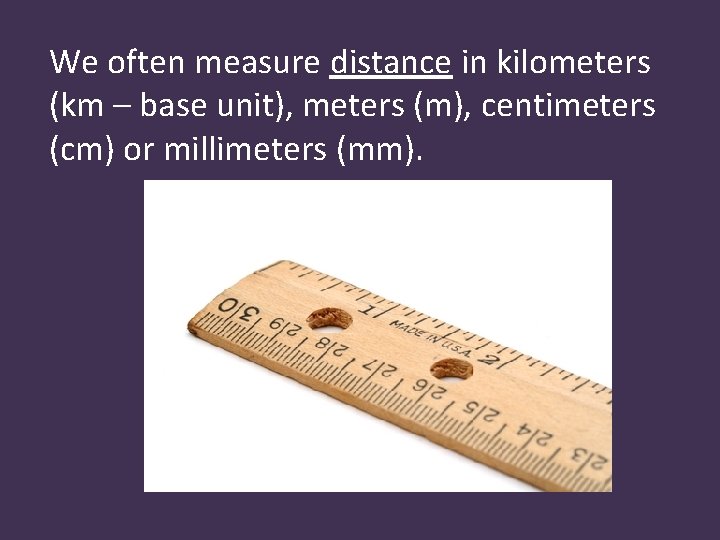
We often measure distance in kilometers (km – base unit), meters (m), centimeters (cm) or millimeters (mm).
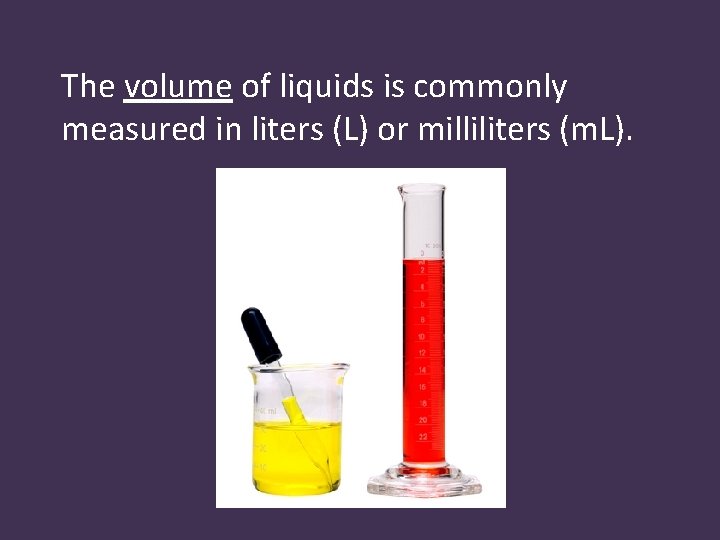
The volume of liquids is commonly measured in liters (L) or milliliters (m. L).
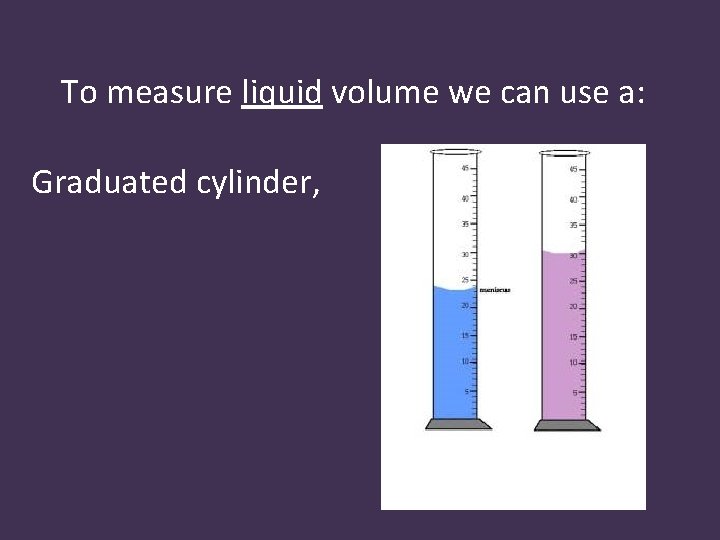
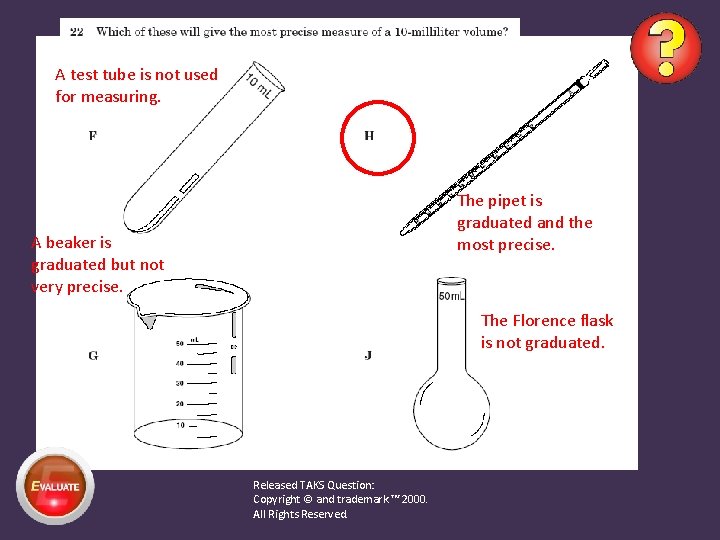
To measure liquid volume we can use a: Graduated cylinder,
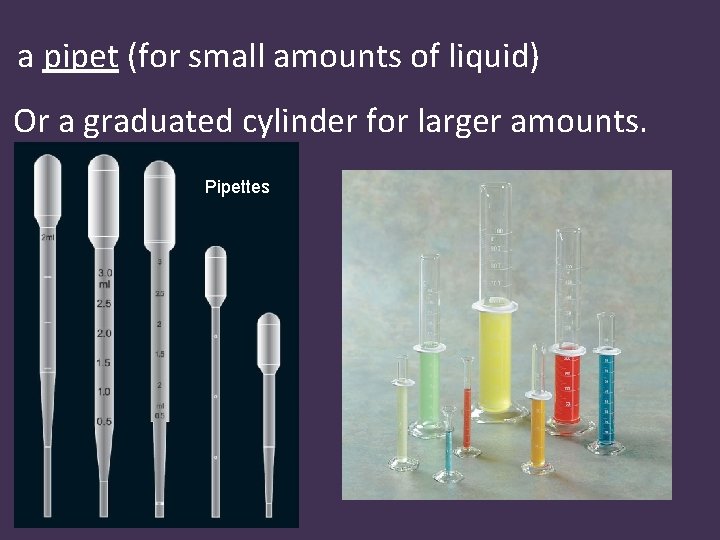
a pipet (for small amounts of liquid) Or a graduated cylinder for larger amounts. Pipettes
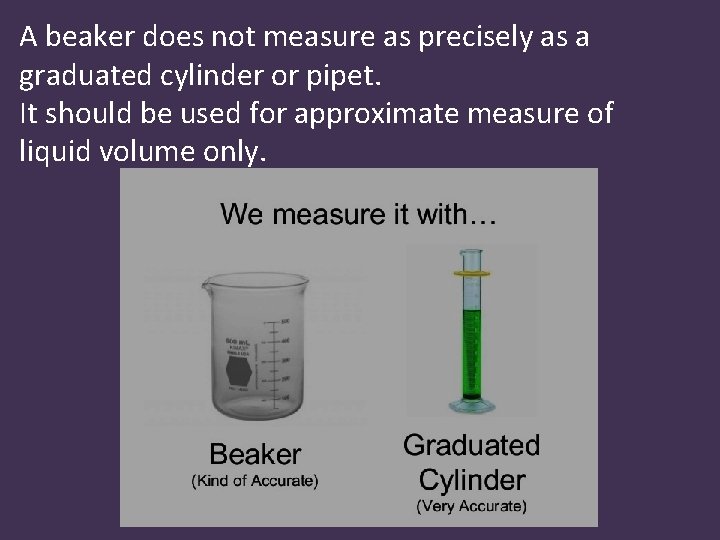
A beaker does not measure as precisely as a graduated cylinder or pipet. It should be used for approximate measure of liquid volume only.
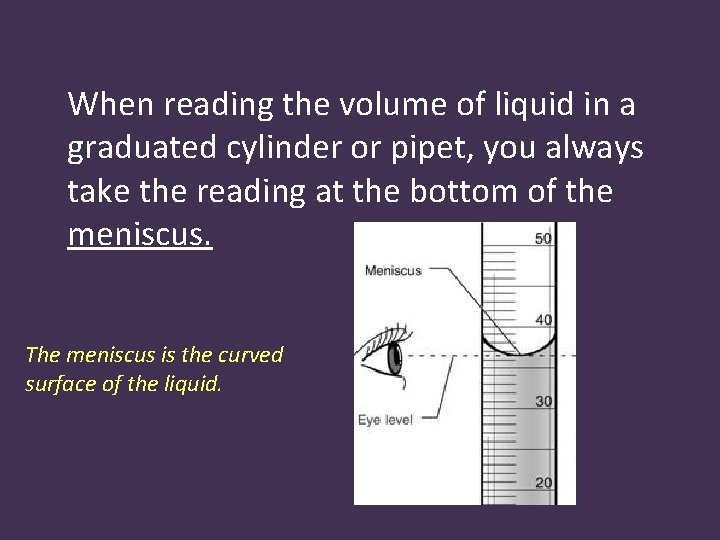
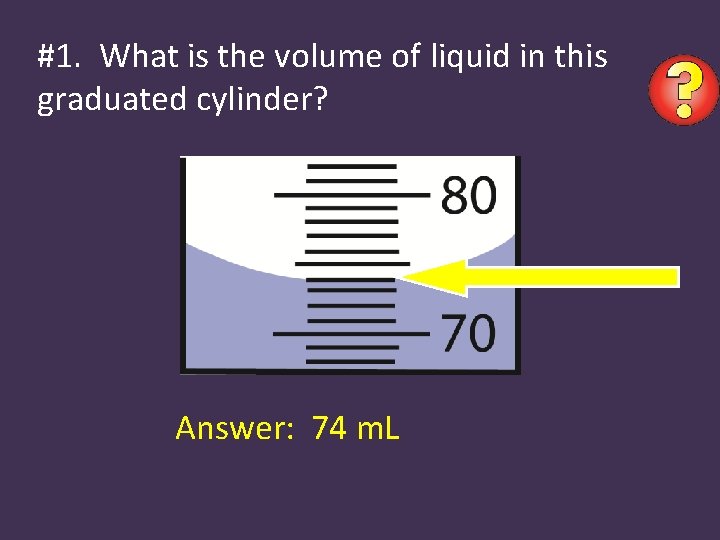
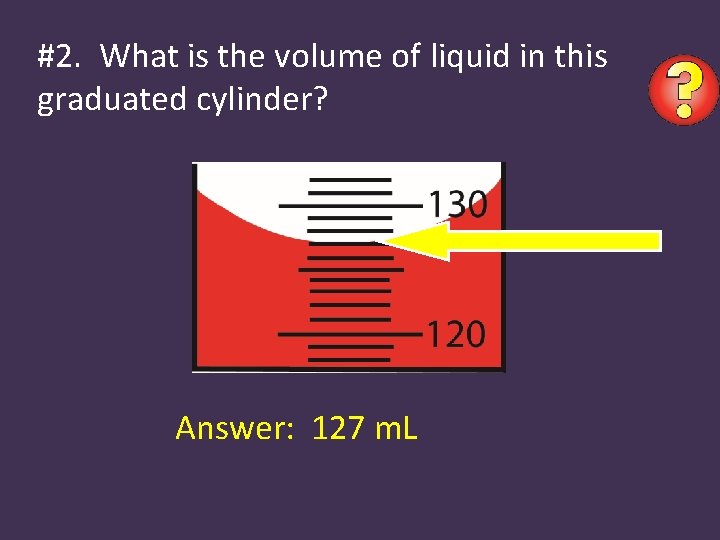
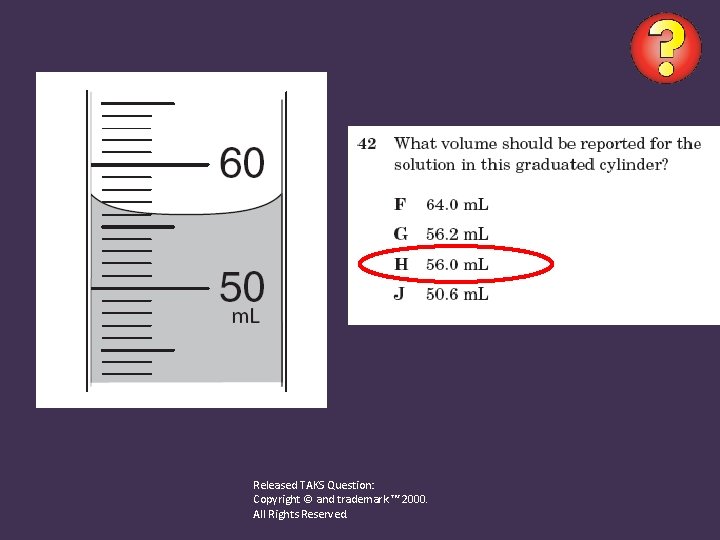
When reading the volume of liquid in a graduated cylinder or pipet, you always take the reading at the bottom of the meniscus. The meniscus is the curved surface of the liquid.
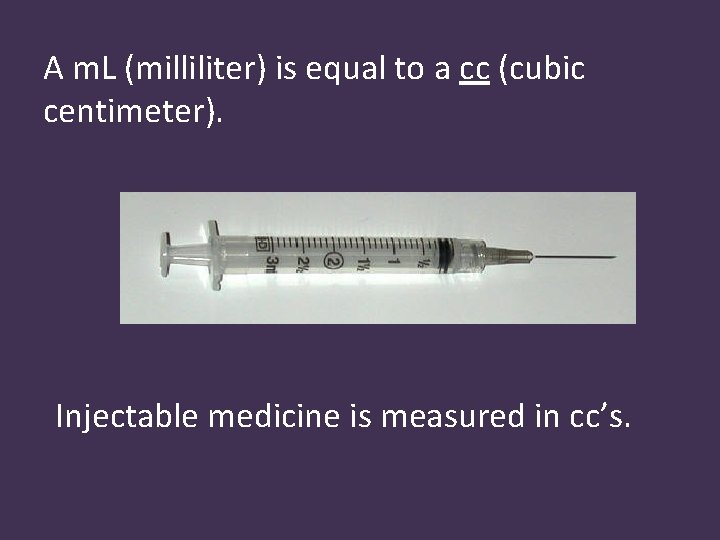
A m. L (milliliter) is equal to a cc (cubic centimeter). Injectable medicine is measured in cc’s.
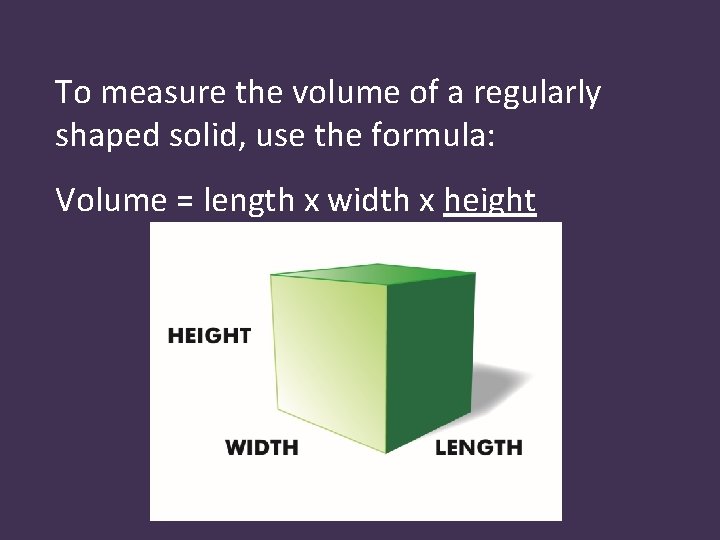
To measure the volume of a regularly shaped solid, use the formula: Volume = length x width x height
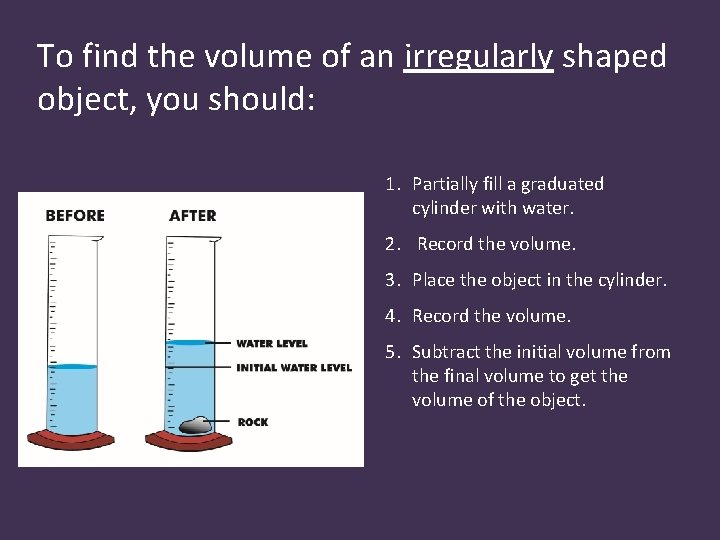
To find the volume of an irregularly shaped object, you should: 1. Partially fill a graduated cylinder with water. 2. Record the volume. 3. Place the object in the cylinder. 4. Record the volume. (initial level) 5. Subtract the initial volume from the final volume to get the volume of the object.
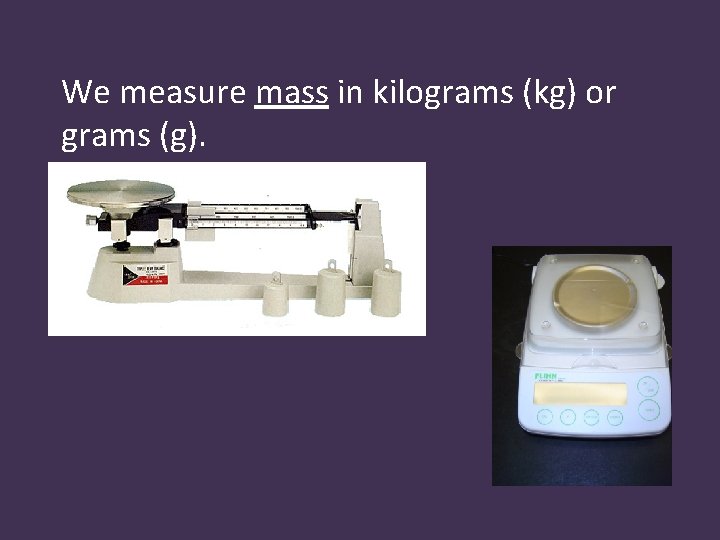
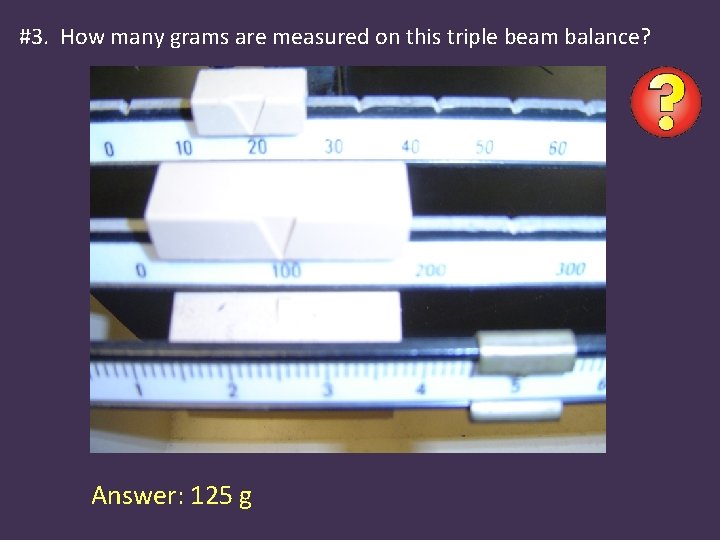
We measure mass in kilograms (kg) or grams (g).
#1. What is the volume of liquid in this graduated cylinder? Answer: 74 m. L
#2. What is the volume of liquid in this graduated cylinder? Answer: 127 m. L
#3. How many grams are measured on this triple beam balance? Answer: 125 g
Released TAKS Question: Copyright © and trademark ™ 2000. All Rights Reserved.
A test tube is not used for measuring. The pipet is graduated and the most precise. A beaker is graduated but not very precise. The Florence flask is not graduated. Released TAKS Question: Copyright © and trademark ™ 2000. All Rights Reserved.
Explain why it’s important for scientists around the world to use the same system of measurement.