
Units for temperature Fahrenheit Celsius Kelvins Kelvin unit



- Slides: 10
Units for temperature: Fahrenheit Celsius Kelvins
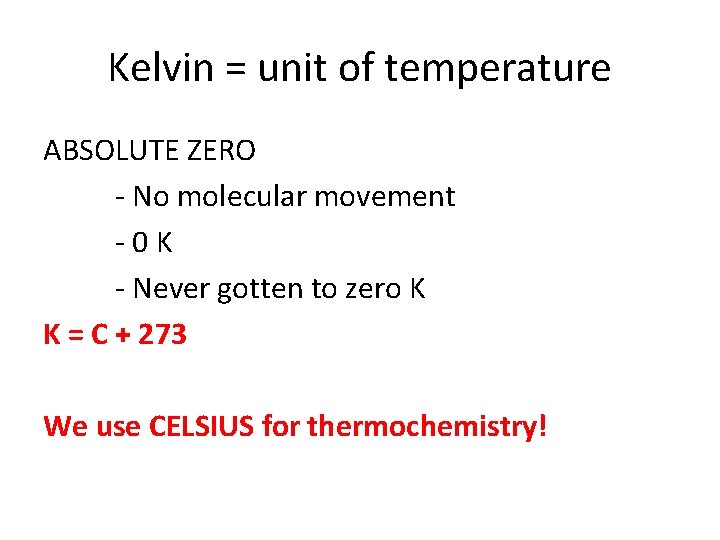
Kelvin = unit of temperature ABSOLUTE ZERO - No molecular movement -0 K - Never gotten to zero K K = C + 273 We use CELSIUS for thermochemistry!
Specific Heat How much heat can something absorb?
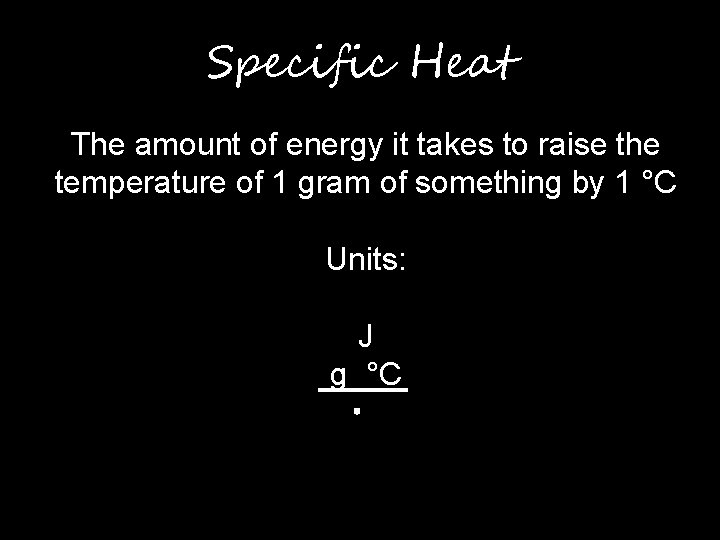
Specific Heat The amount of energy it takes to raise the temperature of 1 gram of something by 1 °C Units: J g °C
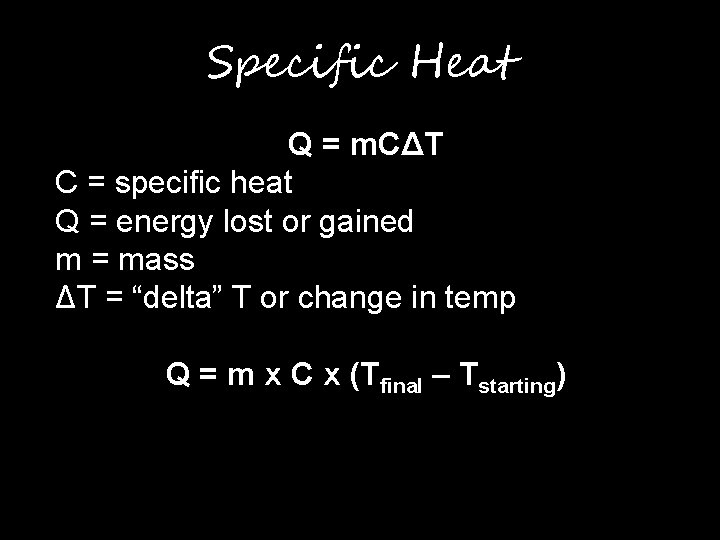
Specific Heat Q = m. CΔT C = specific heat Q = energy lost or gained m = mass ΔT = “delta” T or change in temp Q = m x C x (Tfinal – Tstarting)
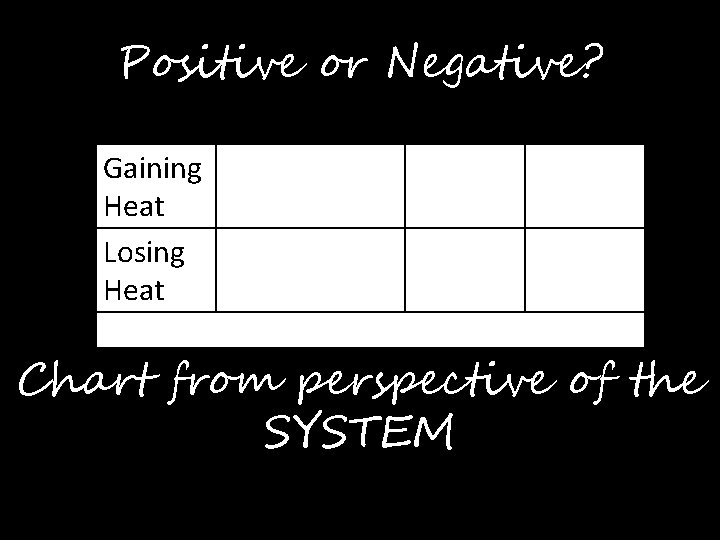
Positive or Negative? Gaining Endothermic T = + Q = + Heat Losing Exothermic T = - Q = Heat m and C are always positive Chart from perspective of the SYSTEM
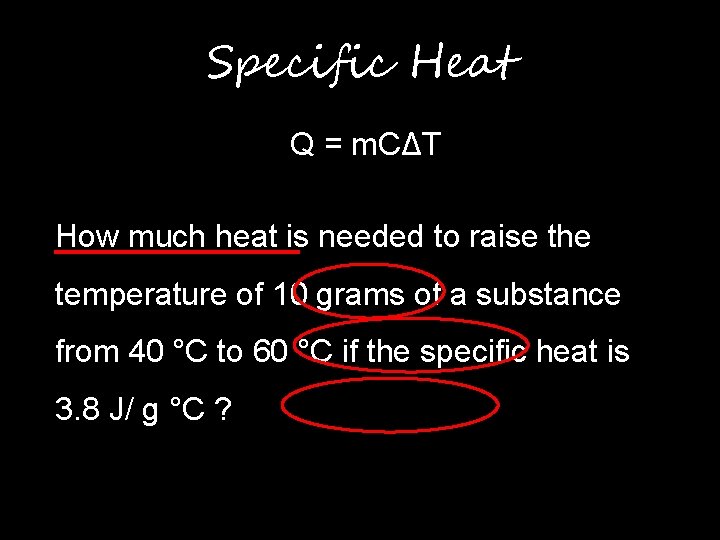
Specific Heat Q = m. CΔT How much heat is needed to raise the temperature of 10 grams of a substance from 40 °C to 60 °C if the specific heat is 3. 8 J/ g °C ?
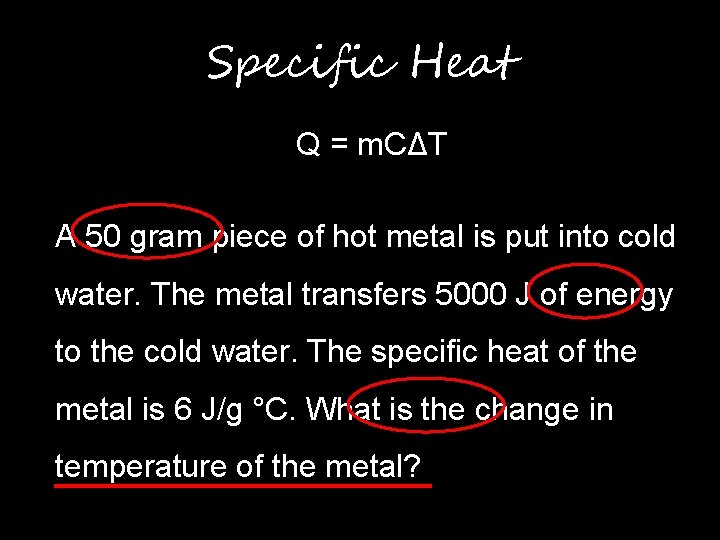
Specific Heat Q = m. CΔT A 50 gram piece of hot metal is put into cold water. The metal transfers 5000 J of energy to the cold water. The specific heat of the metal is 6 J/g °C. What is the change in temperature of the metal?
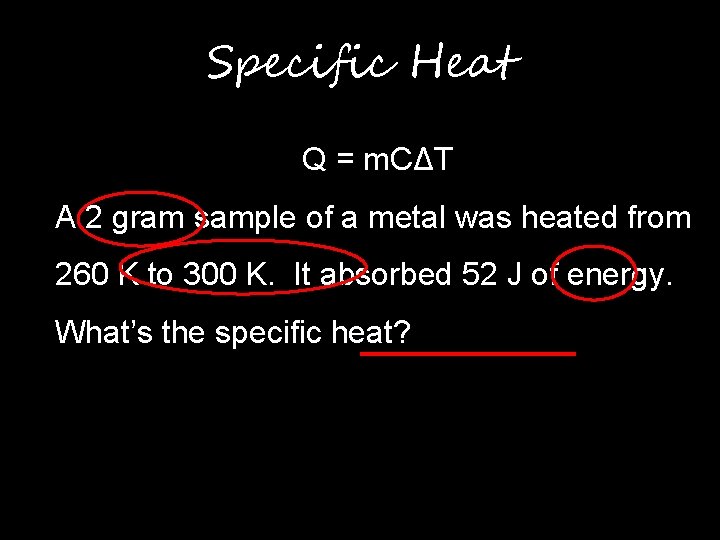
Specific Heat Q = m. CΔT A 2 gram sample of a metal was heated from 260 K to 300 K. It absorbed 52 J of energy. What’s the specific heat?
Homework Specific heat problems. SHOW YOUR WORK!!! For #1 -4 you MUST: • Circle the variables • Underline what you are solving for (or you may use two colors of highlighter )