
UNITED STATES HUMAN GEOGRAPHY ESPN A FRAMEWORK FOR
- Slides: 18
UNITED STATES HUMAN GEOGRAPHY
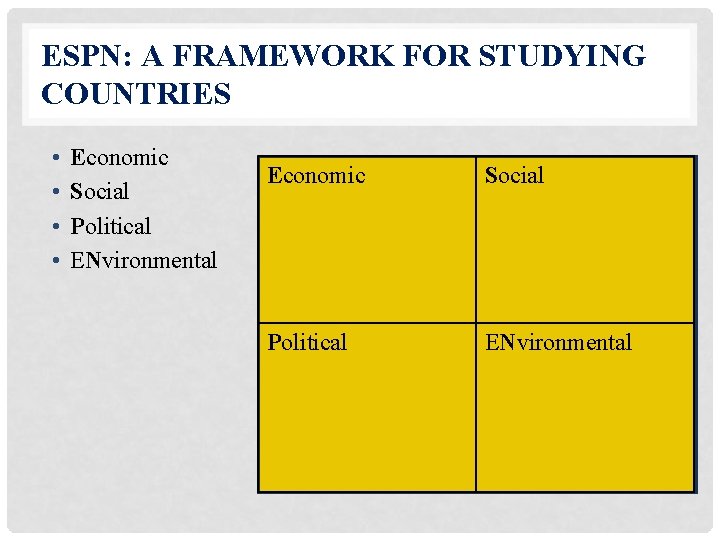
ESPN: A FRAMEWORK FOR STUDYING COUNTRIES • • Economic Social Political ENvironmental
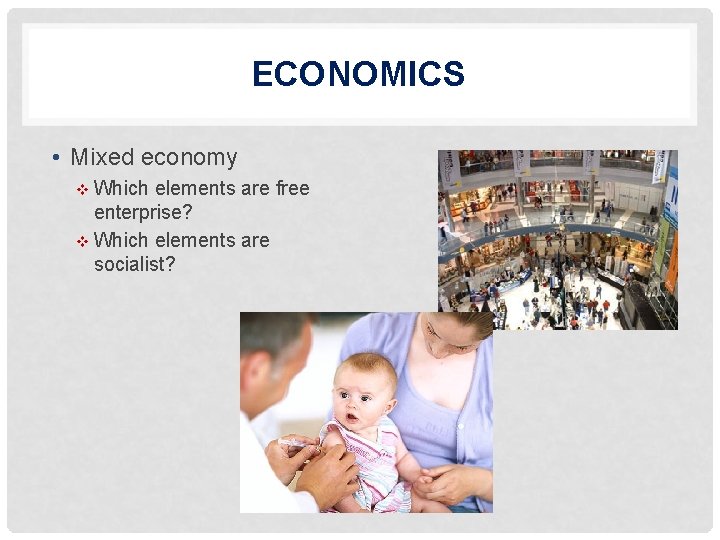
ECONOMICS • Mixed economy v Which elements are free enterprise? v Which elements are socialist?
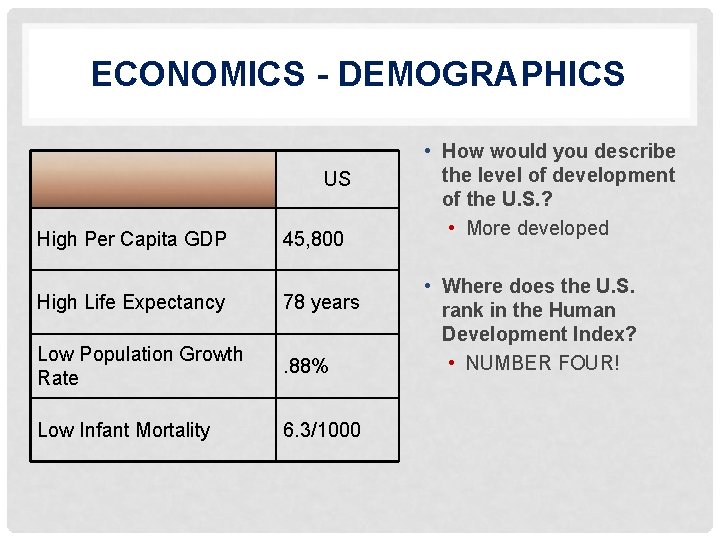
ECONOMICS - DEMOGRAPHICS US High Per Capita GDP 45, 800 High Life Expectancy 78 years Low Population Growth Rate . 88% Low Infant Mortality 6. 3/1000 • How would you describe the level of development of the U. S. ? • More developed • Where does the U. S. rank in the Human Development Index? • NUMBER FOUR!
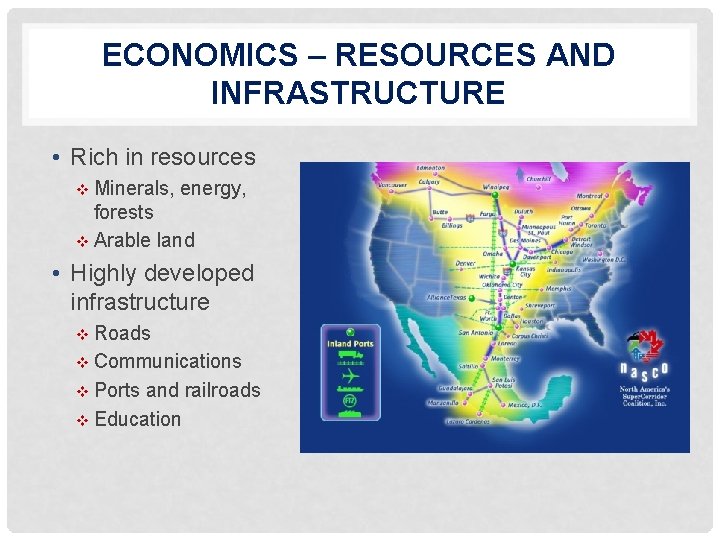
ECONOMICS – RESOURCES AND INFRASTRUCTURE • Rich in resources v Minerals, energy, forests v Arable land • Highly developed infrastructure v Roads v Communications v Ports and railroads v Education
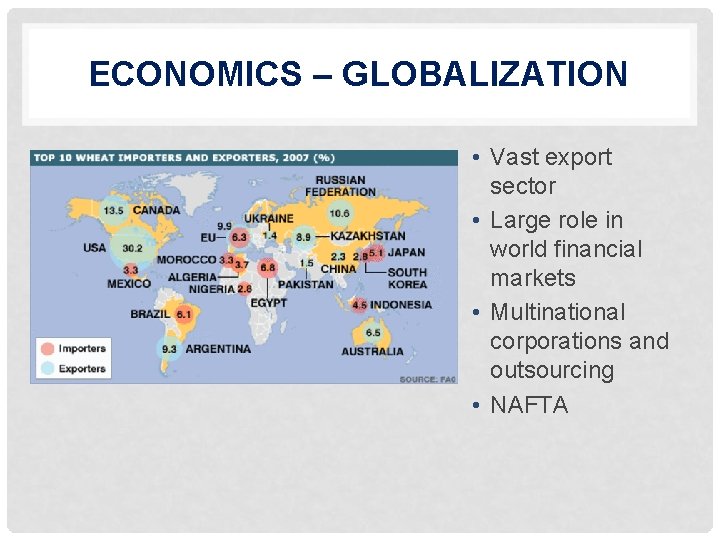
ECONOMICS – GLOBALIZATION • Vast export sector • Large role in world financial markets • Multinational corporations and outsourcing • NAFTA
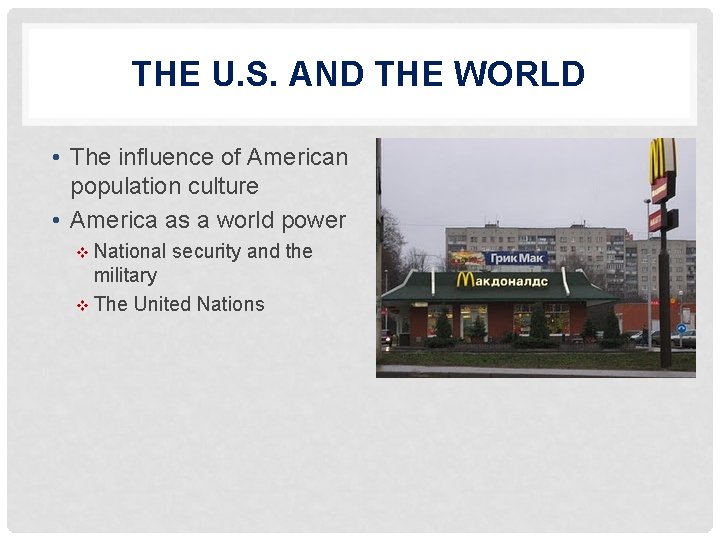
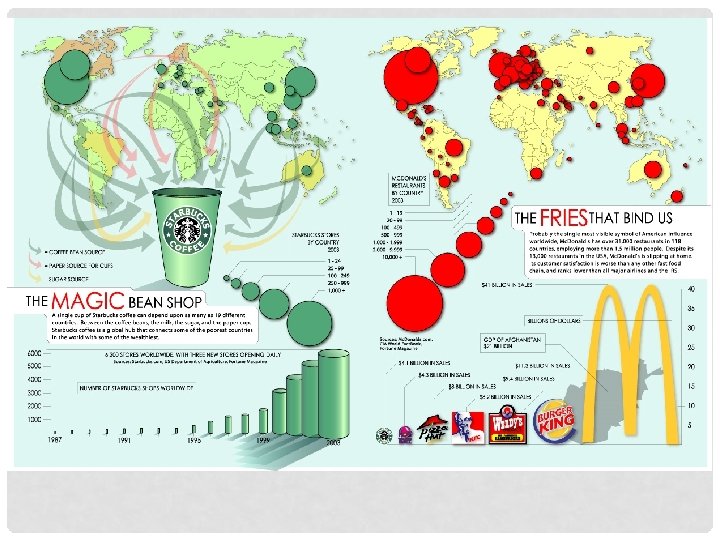
THE U. S. AND THE WORLD • The influence of American population culture • America as a world power v National security and the military v The United Nations
IMMIGRATION – WHY THE U. S. ? 17 th and 18 th century migration v v Religious persecution Economic gain/resources 19 th century migration v v v Religious persecution (again!) Famine in Europe Jobs in factories Railroad construction Available land 20 th and 21 st century migration v v Economic growth and opportunity War and revolution (with religious persecution!)
POPULATION PATTERNS • What are the major cities in the U. S. ? • Where has population shifted over time? • Human-Environment Interaction v Railroads and interstate highways opened/connected new areas v Rivers, dams, bridges, canals, and irrigation made water resources more useful v People live near key resources
REGIONS WITHIN THE U. S. • Perceptual regions – How would you describe… v The Northeast? v The Midwest? v The South? v The West?
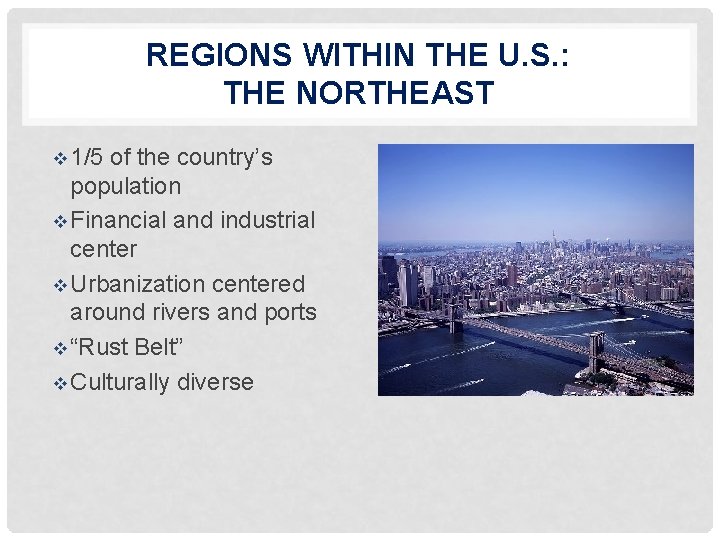
REGIONS WITHIN THE U. S. : THE NORTHEAST v 1/5 of the country’s population v Financial and industrial center v Urbanization centered around rivers and ports v “Rust Belt” v Culturally diverse
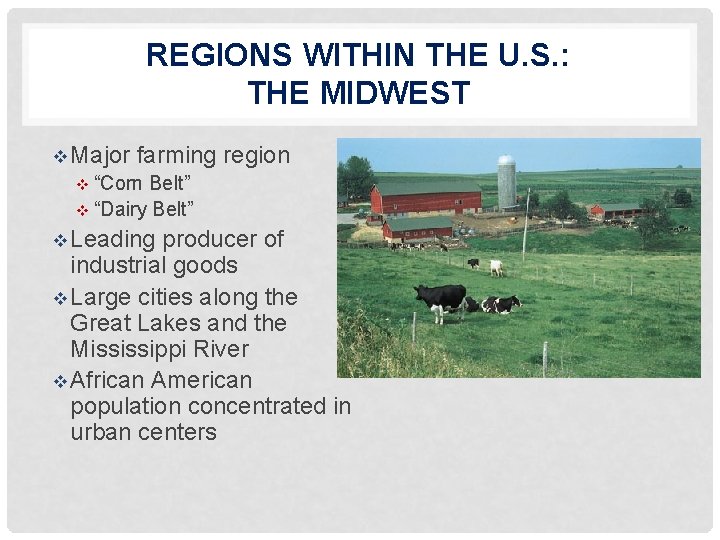
REGIONS WITHIN THE U. S. : THE MIDWEST v Major farming region v “Corn Belt” v “Dairy Belt” v Leading producer of industrial goods v Large cities along the Great Lakes and the Mississippi River v African American population concentrated in urban centers
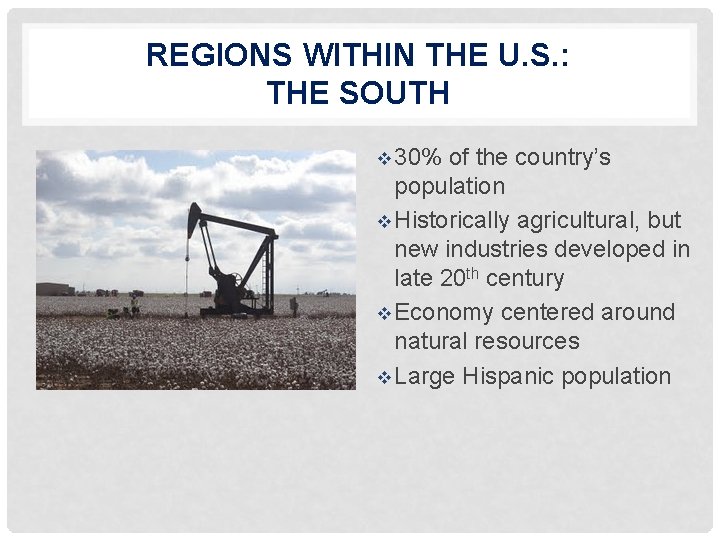
REGIONS WITHIN THE U. S. : THE SOUTH v 30% of the country’s population v Historically agricultural, but new industries developed in late 20 th century v Economy centered around natural resources v Large Hispanic population
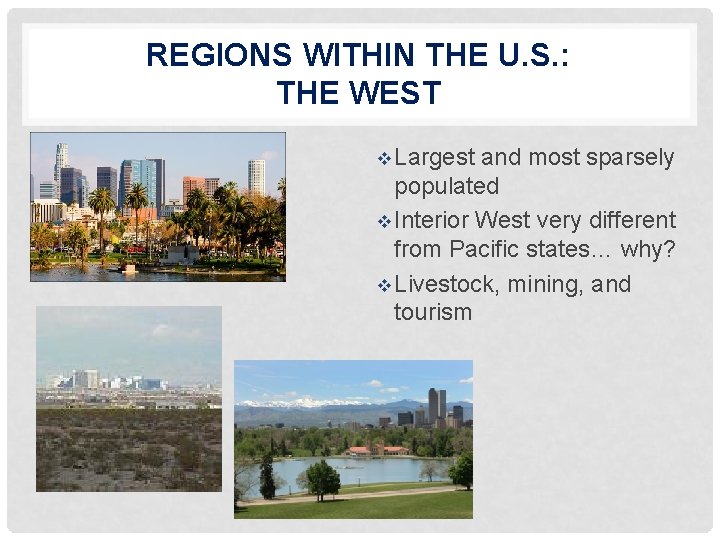
REGIONS WITHIN THE U. S. : THE WEST v Largest and most sparsely populated v Interior West very different from Pacific states… why? v Livestock, mining, and tourism
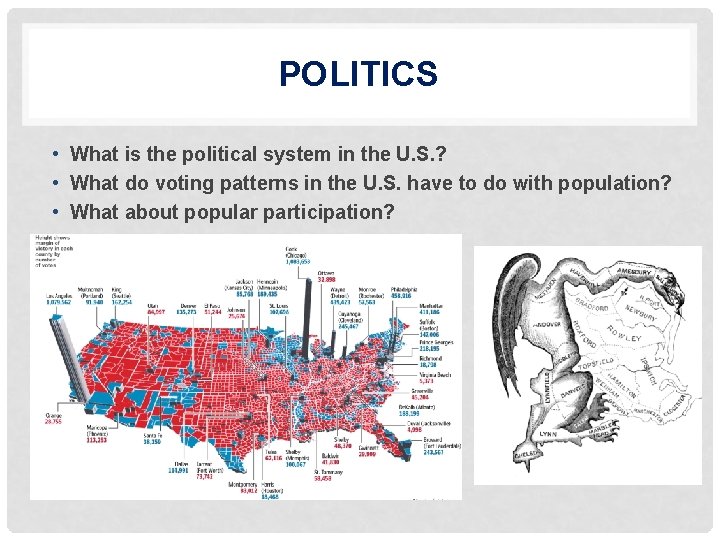
POLITICS • What is the political system in the U. S. ? • What do voting patterns in the U. S. have to do with population? • What about popular participation?
HUMAN-ENVIRONMENT INTERACTION v Railroads and interstate highways opened/connected new areas despite physical barriers v Rivers, dams, bridges, canals, and irrigation made water resources more useful – early “highways” for trade v Later technological advances made it possible to live comfortably in formerly marginal areas v People live near key resources
HUMAN-ENVIRONMENT INTERACTION v Rivers and canals for trade and energy v Mountains mined v Aquifers tapped for irrigation v Wind generates green energy