
United States History Module 4 The American Revolution
- Slides: 9
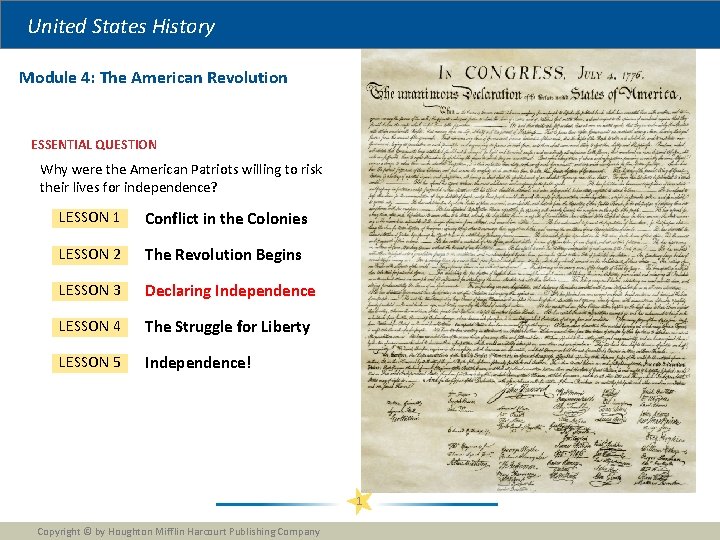
United States History Module 4: The American Revolution ESSENTIAL QUESTION Why were the American Patriots willing to risk their lives for independence? LESSON 1 Conflict in the Colonies LESSON 2 The Revolution Begins LESSON 3 Declaring Independence LESSON 4 The Struggle for Liberty LESSON 5 Independence! 1 Copyright © by Houghton Mifflin Harcourt Publishing Company
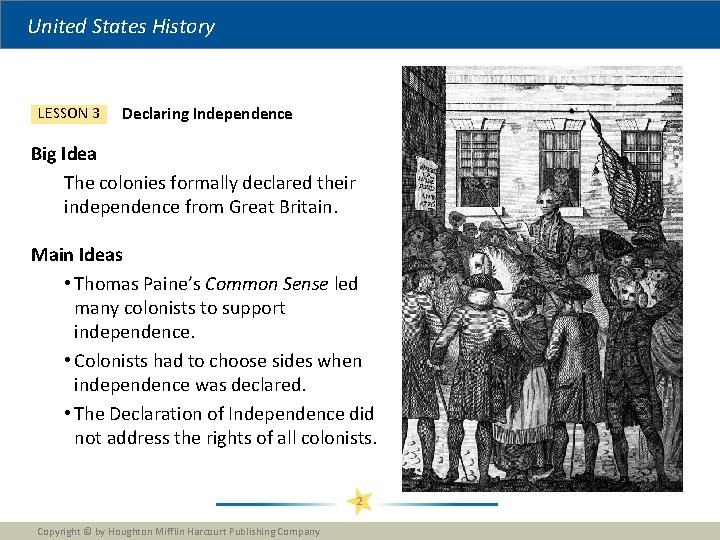
United States History LESSON 3 Declaring Independence Big Idea The colonies formally declared their independence from Great Britain. Main Ideas • Thomas Paine’s Common Sense led many colonists to support independence. • Colonists had to choose sides when independence was declared. • The Declaration of Independence did not address the rights of all colonists. 2 Copyright © by Houghton Mifflin Harcourt Publishing Company
United States History 3 Copyright © by Houghton Mifflin Harcourt Publishing Company
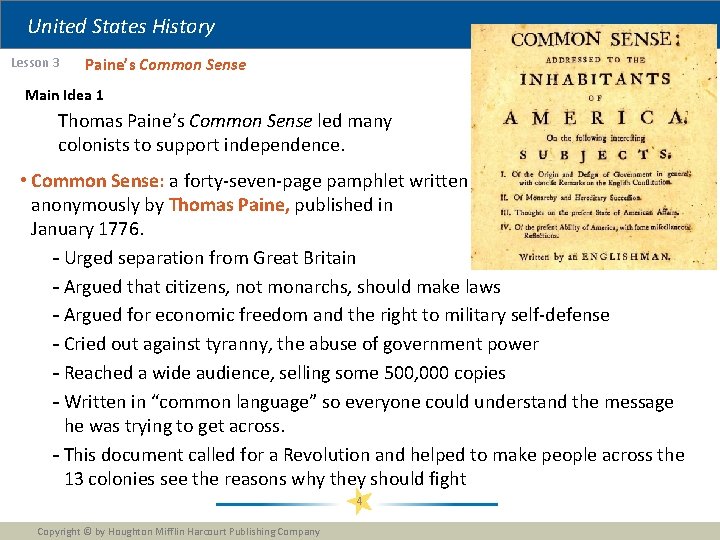
United States History Lesson 3 Paine’s Common Sense Main Idea 1 Thomas Paine’s Common Sense led many colonists to support independence. • Common Sense: a forty-seven-page pamphlet written anonymously by Thomas Paine, published in January 1776. - Urged separation from Great Britain - Argued that citizens, not monarchs, should make laws - Argued for economic freedom and the right to military self-defense - Cried out against tyranny, the abuse of government power - Reached a wide audience, selling some 500, 000 copies - Written in “common language” so everyone could understand the message he was trying to get across. - This document called for a Revolution and helped to make people across the 13 colonies see the reasons why they should fight 4 Copyright © by Houghton Mifflin Harcourt Publishing Company
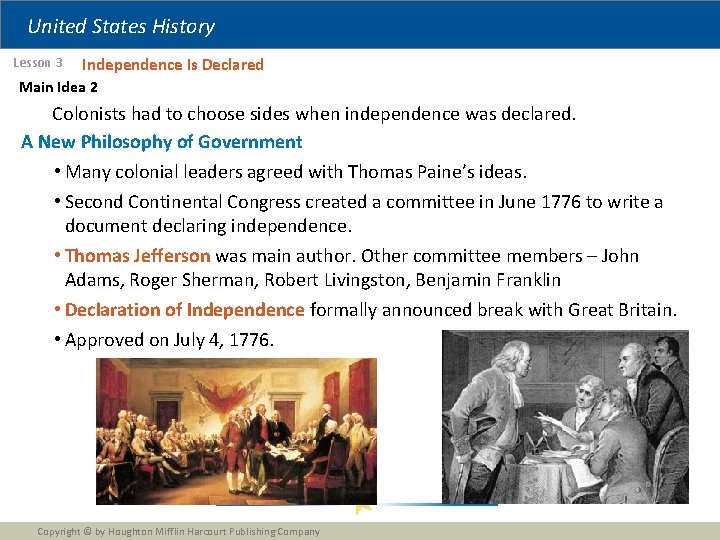
United States History Lesson 3 Independence Is Declared Main Idea 2 Colonists had to choose sides when independence was declared. A New Philosophy of Government • Many colonial leaders agreed with Thomas Paine’s ideas. • Second Continental Congress created a committee in June 1776 to write a document declaring independence. • Thomas Jefferson was main author. Other committee members – John Adams, Roger Sherman, Robert Livingston, Benjamin Franklin • Declaration of Independence formally announced break with Great Britain. • Approved on July 4, 1776. 5 Copyright © by Houghton Mifflin Harcourt Publishing Company continued…
United States History 6 Copyright © by Houghton Mifflin Harcourt Publishing Company
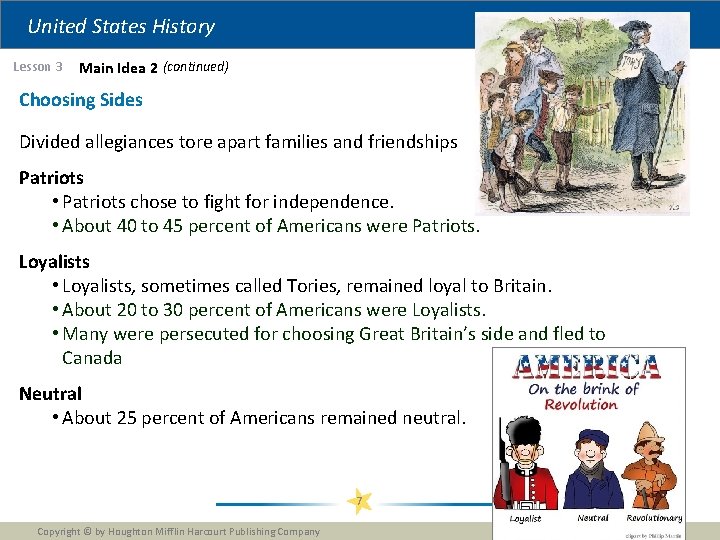
United States History Lesson 3 Main Idea 2 (continued) Choosing Sides Divided allegiances tore apart families and friendships Patriots • Patriots chose to fight for independence. • About 40 to 45 percent of Americans were Patriots. Loyalists • Loyalists, sometimes called Tories, remained loyal to Britain. • About 20 to 30 percent of Americans were Loyalists. • Many were persecuted for choosing Great Britain’s side and fled to Canada Neutral • About 25 percent of Americans remained neutral. 7 Copyright © by Houghton Mifflin Harcourt Publishing Company
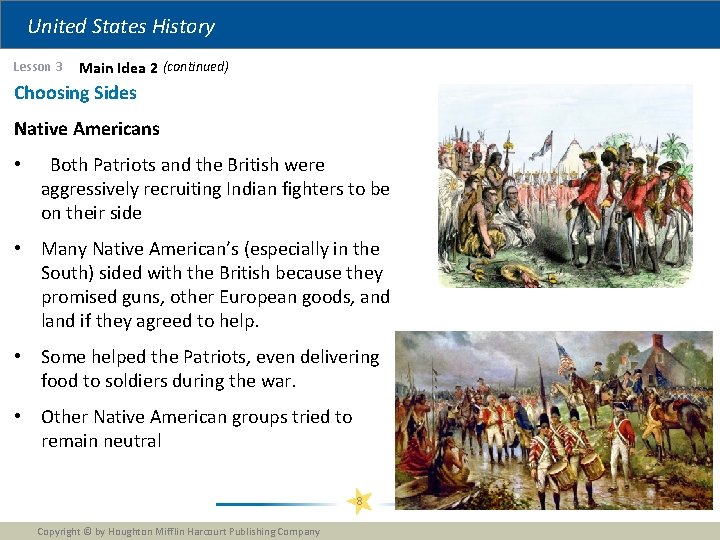
United States History Lesson 3 Main Idea 2 (continued) Choosing Sides Native Americans • Both Patriots and the British were aggressively recruiting Indian fighters to be on their side • Many Native American’s (especially in the South) sided with the British because they promised guns, other European goods, and land if they agreed to help. • Some helped the Patriots, even delivering food to soldiers during the war. • Other Native American groups tried to remain neutral 8 Copyright © by Houghton Mifflin Harcourt Publishing Company
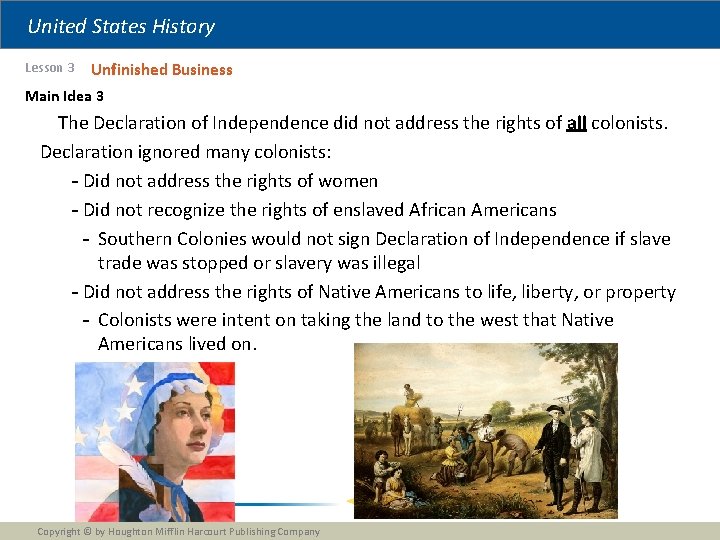
United States History Lesson 3 Unfinished Business Main Idea 3 The Declaration of Independence did not address the rights of all colonists. Declaration ignored many colonists: - Did not address the rights of women - Did not recognize the rights of enslaved African Americans - Southern Colonies would not sign Declaration of Independence if slave trade was stopped or slavery was illegal - Did not address the rights of Native Americans to life, liberty, or property - Colonists were intent on taking the land to the west that Native Americans lived on. 9 Copyright © by Houghton Mifflin Harcourt Publishing Company