
United Nations Emblem Of History of United Nations
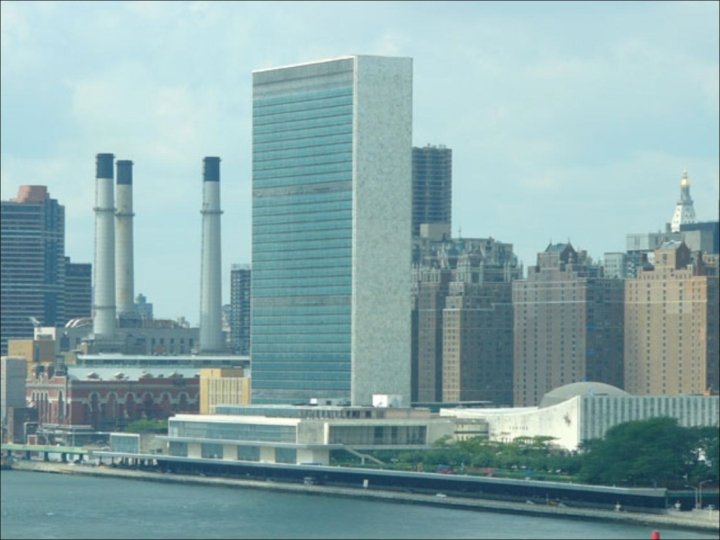
United Nations
Emblem Of
History of United Nations with Reference to League Of Nations The League of Nations was to be based in Geneva, Switzerland. This was formed after World War I. But, this was failed. After, the World war II an organisation named United Nations was formed. It has many organs and agencies. Some of its Agencies were taken from League Of Nations agencies and organs.
• To keep peace throughout the world. • To develop friendly relations between nations. • To work together to help the people to live better lives, to eliminate poverty, disease and illiteracy in the world, to stop environmental destruction and to encourage respect for each other's rights and freedoms. • To be a centre for helping nations achieve these aims.
The Principles of the United Nations: • All Member States should have sovereign equality. • All Member States must obey the Charter. • Countries must try to settle their differences by peaceful means. • Countries must avoid using force or threatening to use force. • The UN may not interfere in the domestic affairs of any country. • Countries should try to assist only the United Nations.
Organs of United Nations. There are 6 organs of United Nations. They are : 1. General Assembly 2. Security Council 3. Economic and Social Council 4. Trusteeship Council 5. International Court of Justice ( World Court) 6. Secretariat

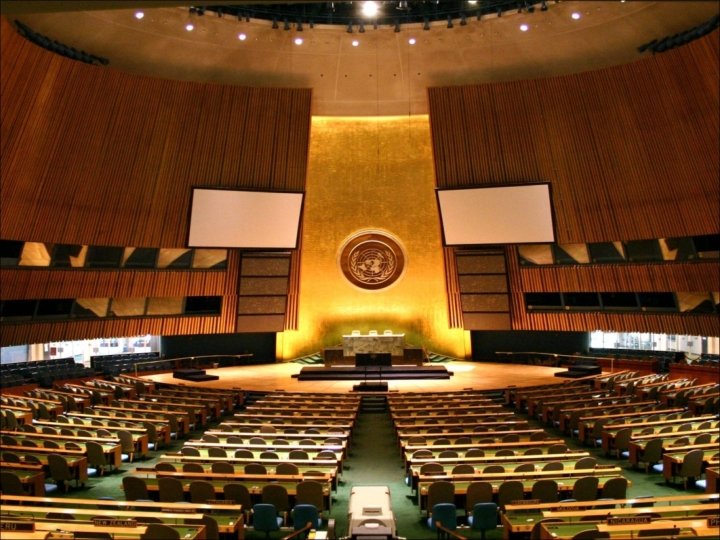
General Assembly It is the central body of the United Nations. It is a deliberative Organ. All members of UN are members of the General Assembly. Every member irrespective of its size or strength has one vote, but can send five representatives to the General Assembly session which is held in the month of September every year.
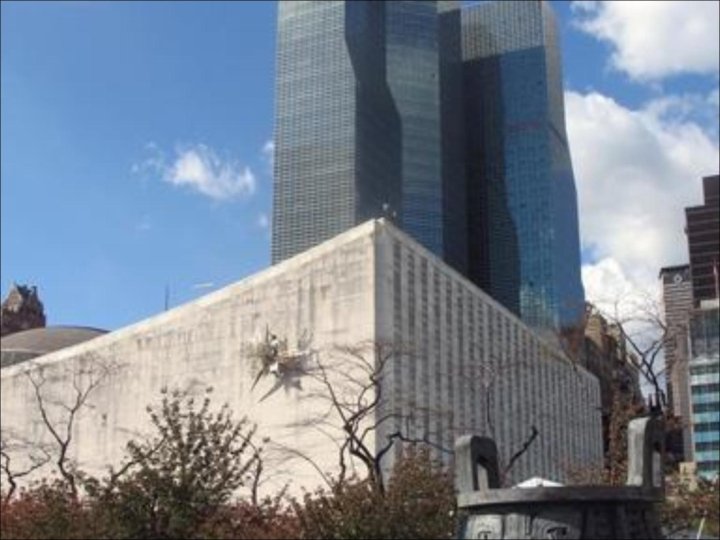
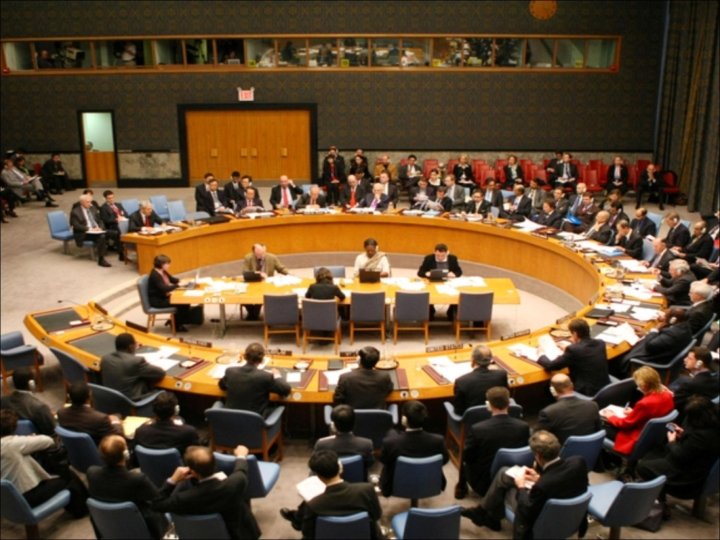
The Security is the most powerful organ of UN. It is responsible for maintaining peace and security in the world. It has a limited membership. It is comprised of 15 members out of which five members are the permanent members and the remaining ten which are elected by the general assembly are non permanent. The five permanent members are USA, UK, Russia , China and France.
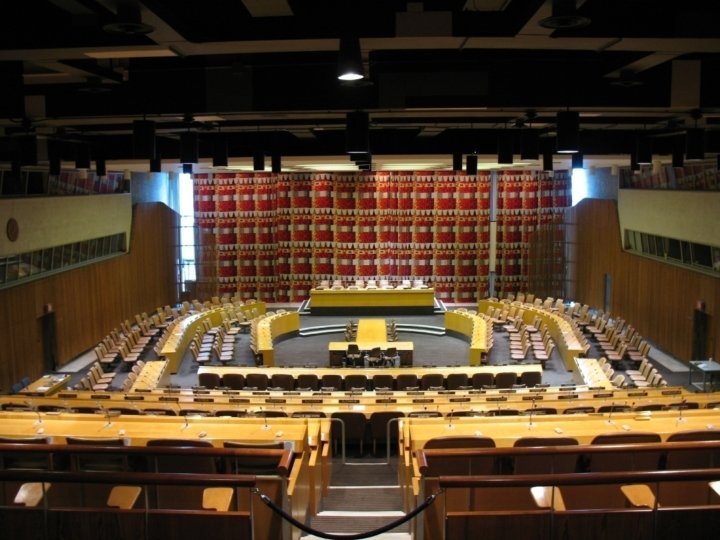
The Economic and Social Council The very name of the Council indicates its functional concern. It discusses and tries to solve the economic, social, cultural and humanitarian problems at international level. it also looks after the issue concerning women, children, food, housing, education and environment.
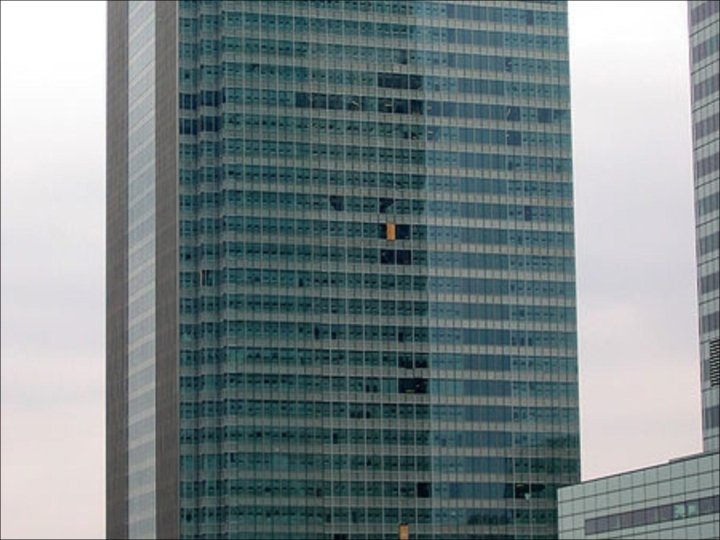
Secretariat It is headed by the Secretary General. It serves the needs of various organs of UN as well as the representatives of the member countries. It’s staff is from the various countries. There about 50, 000 employees from about 170 nations. The staff is accountable only to the United Nations and not to any particular member country. Since the inception of UN there have been eight secretary generals including the present one. Ban-ki-moon is the present Secretary General of the UN.
Agencies of United Nations. There approximately 60 agencies of United Nations. Some of them are given below : - 1. International Labour Organization (ILO) 2. United Nations Children’s Fund (UNICEF) 3. United Nations Development Programme (UNDP) 4. United Nations Educational, Scientific and Cultural Organization (UNESCO)
5. United Nations High Commissioner for Refuges (UNHCR) 6. United Nations Industrial Development Organization (UNIDO) 7. United Nations Joint Programme on HIV/AIDS (UN AIDS) 8. Office of the United Nations High Commissioner for Human Rights (OHCHR) 9. United Nations Office on Drugs and Crime (UNODC)
10. United Nations Population Fund (UNFPA) 11. United Nations Volunteers (UNV) 12. United Nations Women Fund (UNIFEM) 13. World Food Programme (WFP) 14. World Health Organization (WHO) 15. Food and Agricultural Organization (FAO)
16. International Atomic Energy Agency (IAEA) 17. International Civil Aviation Organization (ICAO) 18. International Fund for Agricultural Development (IFAD) 19. International Maritime Organization (IMO) 20. International Monetary Fund (IMF)
21. International Telecommunication Union (ITU) 22. Universal Postal Union (UPU) 23. World Bank (WB) 24. World Food Programme (WFP) 25. World Intellectual Property Organization (WIPO)
26. World Meteorological Organization (WMO) 27. World Tourism Organization (UNWTO) 28. Organisation for the Prohibition of Chemical Weapons (OPCW) 29. United Nations Democracy Fund (UNDEF) 30. United Nations Fund for International Partnerships (UNFIP)
31. United Nations Convention to Combat Desertification (UNCCD) 32. United Nations Framework Convention on Climate Change (UNFCCC) 33. Intergovernmental Panel on Climate Change (IPCC) 34. Special Court for Sierra Leone (SCSL)
35. United Nations Conference on Trade and Development (UNCTAD) 36. United Nations Commission on International Trade Law (UNCITRAL) 37. United Nations Office on Drugs and Crime (UNODC) 38. United Nations Environment Programme (UNEP)
39. United Nations Fund for International Partnerships (UNFIP) 40. United Nations High Commissioner for Refugees (UNHCR) 41. United Nations Human Settlements Programme (UN–HABITAT) 42. United Nations Institute for Training and Research (UNITAR)
43. Operational Satellite Applications Programme (UNOSAT) 44. United Nations Relief and Works Agency for Palestine Refugees in the Near East (UNRWA) 45. Universal Postal Union (UPU)
Seven Specialized Agencies There are seven specialized agencies 1. Food and Agriculture Organization (FAO) 2. International Labour Organization (ILO) 3. International Monetary Fund (IMF) 4. United Nations Educational, Scientific and Cultural Organization (UNESCO) 5. United Nations Children’s Fund (UNICEF) 6. World Bank (WB) 7. World Health Organization (WHO)
Economic and Social Council (ECOSOC) Economic and Social Council - ECOSOC - is one of the principal organs of the Assembly of the United Nations, which was created with the intention of providing support in the analysis, recommendation and proposal of policies and global actions against the economic and social realities. This Commission in addition to periodic summits through the different Nations, creates proposals for improvement to different areas of society. The annual meetings held by this Commission (normally in July in Geneva and New York) are used to create innovative alternatives to promote economic development in the world. The current President is Mr Martin Sajdik, Ambassador and Permanent Representative of Austria to the United Nations in New York, who was elected sixty tenth President of the economic and Social Council on January 14, 2014.
World Health Organization (WHO) The who (World Health Organization) is the authority in charge of directing and coordinating health action in the United Nations system. The who Constitution entered into force on 7 April 1948, date it is commemorated each year by the world health day. Plays a leadership role on the issues about global health, must establish the research agenda in health, constitute rules, enunciating policies based on current evidence, provide technical support to the affected countries, and monitor health trends worldwide. In the 21 st century, health is a shared responsibility, requiring the equitable access to health care and the collective defense against the different international and transnational threats
United Nations Office on Drugs and Crime (UNODC) The office of the United Nations on drugs and crime, better known as UNODC, it aims combat transnational organized crime and to fight against drugs. The office was created in 1997 when the program of the United Nations for Drug Control and Criminal Prevention Center were merged. Its main aim intends to meet through three primary functions: investigation, persuasion to Governments to adopt laws against crime and drugs as well as treaties, and technical assistance to those Governments.
United Nations Office on Drugs and Crime (UNODC) These three basic functions are explained by UNODC as: 1 technical cooperation projects based in the field to improve the capacity of Member States to take action against illicit drugs, crime and terrorism 2. Research and analysis to increase knowledge and understanding of drugs and crime issues and expand the evidence base for policy and operational decisions 3. The normative work to assist States in the ratification and implementation of the relevant international treaties, the development of national legislation on drugs, crime and terrorism, and the provision of secretariat services and substantive the Treaty and government bodies
United Nations Office on Drugs and Crime (UNODC) In addition to this, UNODC can also help in the following areas: 1. Organized crime and trafficking: helps Governments to react to the instability that may cause the traffic of arms, drugs, natural resources, counterfeit goods, and people, between countries and continents. In addition to combat new forms of crime such as the cyber and environmental. 2. Corruption: This being an impediment to the development economic UNODC tries to ally themselves with the public and private sectors, to fight corruption and end the control individuals on the Government, borders and route of marketing have. In addition to this, it tries to help Governments to recover assets stolen by corrupt officials. 3. Prevention of crime and the justice reform: UNODC helps Governments to take penal codes that are based on respect for human rights and justice, but that safety as citizens. 4 health and drug use prevention: through educational campaigns and the use of scientific campaigns are made to educate young people, as to invite those who already consume drugs to seek aid.
Disarmament and International security (DISEC) Understanding that the General Assembly of the United Nations is composed of by 6 main committees, the first of them being the Disarmament and International security Committee - DISEC -; This Commission has the responsibility to treat issues concerning global security and face and provide solutions to the other threats to this and its challenges. These threats and challenges are increasingly more and each time they are larger and come from various subversive groups or inclusive of Governments members of the United Nations. Thus, the disarmament and Security Committee considers all matters of security International within the context of the Charter of the United Nations is based within the rules laying down the Charter and its decisions are agreed the regulation that governs the Member States.
The UN Refugee Agency (UNHCR) As its name implies, UNHCR is the Committee responsible for ensuring the welfare of refugees around the world. UNHCR finds solutions to global problems that involve a large number of refugees, since they usually live not conducive and risky conditions due to their foreign condition. UNHCR was established December 14, 1950 by the General Assembly of the United Nations. This agency responsible for safeguarding and protecting the human rights of refugees and works to secure asylum in the country that address and enjoy it properly. In addition, UNHCR has a duty to assist stateless persons in the world. UNHCR, has the duty of finding durable solutions for refugees. Finally, UNHCR has helped many people in recent years to restart their lives, he has teams in more than 125 countries and at the same time helps approximately 34 million people.
The Sixth Committee (LEGAL) The Sixth Committee, known as the "Legal Affairs Committee", is the sixth and last Commission of the General Assembly of the United Nations. The Sixth Committee was created in order to promote and enhance the progressive development of international law. Focusing on areas where international law has not been regulated as a whole. All States members of the United Nations are entitled to representation in the Sixth Committee. As set out in article 13 of the Charter of the United Nations, its duty is to: "to) promote international cooperation in the political field and encouraging the progressive development of international law and its codification; (B) encourage international cooperation in matters of economic, social, cultural, educational and sanitary nature and help to enforce the human rights and fundamental freedoms for all, without distinction as to race, sex, language or religion. "
Social, Humanitarian and Cultural (SOCHUM) It is the Third Committee of the United Nations and therefore is part of the general Assembly. Exclusively deals with social, humanitarian and Cultural Affairs. It deals with humanitarian assistance disaster oriented to reconstruction and development in the long run as single key issue on the agenda of United Nations can address understanding the economic inequalities that exist among Nations. After the development of the Universal Declaration of human rights was established in 1948. The main task of the Committee is to fight for a better enforcement of human rights in all regions of this world and in this way, promote international peace and security. The Committee has the ability to discuss many issues that are presented to the UN. Most of the topics have a social or cultural aspect enabling this Committee to participate in the development of solutions. Previous topics include the protection of human rights, the global literacy, the advancement of women and indigenous peoples. It also addresses issues as the treatment of refugees and displaced persons, the rights of the child, the international drug prevention, crime prevention, and the Elimination of racism and racial discrimination, among others. SOCHUM examines the reports of the special procedures of the Human Rights Council, but can also carry out their own research. It is important to note that SOCHUM may not require action but only suggest what actions can and should be taken.
UN WOMEN • In July 2010, the General Assembly of the United Nations established UN women, the institution of the United Nations for gender equality and the empowerment of women. In doing so, Member States of the United Nations gave a historic step acceleration of the objectives of the Organization on women's empowerment and gender equality. This organism was part of the reform of the United Nations, bringing together resources and mandates for greater impact. Women from all regions of the world are victims of violence and discrimination and are poorly represented in decision-making processes. For several years, the UN has faced serious difficulties in their efforts to promote gender equality in the world, including inadequate funding and no recognized motor that directs the activities of the United Nations in the field of gender equality. UN women was created to address these difficulties. It will be a defender dynamic and strong women and girls, giving them a powerful voice at global, regional and local levels. Based on the vision of equality in the Charter of the United Nations, UN women will be devoted, among other things, to work toward: • The Elimination of discrimination against women and girls • The empowerment of women • The achievement of equality between women and men, as partners and beneficiaries of development, human rights, humanitarian action and peace and security.
Human Rights Council (HRC) As a vital body for the United Nations Organization, the Human Rights Council (HRC) is responsible for the promotion and protection of the human rights around the world and it is also responsible for addressing situations of human rights violations, and finding solutions to issues that involve these violations. This council is relatively new, since it was created by the United Nations General Assembly (UNGA) on March 15, 2006. The council is made of 47 member states of the United Nations, which are elected through direct and secret ballot by the General Assembly. The council’s membership is equitably distributed, and the seats are distributed as follows: • African States: 13 seats • Asia-Pacific States: 13 seats • Latin American and Caribbean States: 8 seats • Western European and other States: 7 seats • . Eastern European States: 6 seats The members of this council serve for three years and none can be eligible for re-election after serving two consecutive terms. One of the most important aspects of this council, is its heavy reliance on a very important document adopted by the UNGA on December 10 th 1948, as a result of the experience of the Second World War. This important document, known as The Universal Declaration of Human Rights states every right that a human being is entitled to. The Council strictly works with this base, and as the Chair of this council, we ask you to always have in mind this important document in your speeches, interventions and resolutions.
Committees for Junior high school 6 -8: • ECOSOC (Español): Financiación para el desarrollo. • ONU MUJERES (Español): Igualdad de genero y empoderamiento de la mujer. • LEGAL (English): Capital punishment and legalized executions. • WHO (English): Containing and preventing the spread of Ebola. • UNHCR (English): Xenophobia against refugees.
Committees for High School 9 -10: • DISEC (Español): apoyo de los gobiernos a grupos al margen de la ley. • ONU MUJERES (Español): Igualdad de genero y empoderamiento de la mujer. • SECURITY COUNCIL (English): Middle East diplomatic relations • SOCHUM (English): Religion Intolerance. • HUMAN RIGHTS (English): Discrimination against LGBT
- Slides: 53