
United Nations Economic Commission for Europe Statistical Division
- Slides: 27
United Nations Economic Commission for Europe Statistical Division United Nations Statistics Division - Technical Meeting on Use of Technology in Population and Housing Censuses 28 November - 1 December 2016, Amman, Jordan Overview of the use of technology for data collection in the UNECE Region - practices adopted in the 2010 round and plans for the 2020 round Paolo Valente, UNECE
Content of presentation: 1) Overview of census methods in UNECE region, 2000 -2020 census rounds 2) Internet response: Ø Ø Ø Adoption by UNECE countries Technical aspects Costs and benefits 3) Other technologies (laptops, tablets…) 4) Plans for use of technology in 2020 round 5) Conclusions December 19, 2021 Slide 2
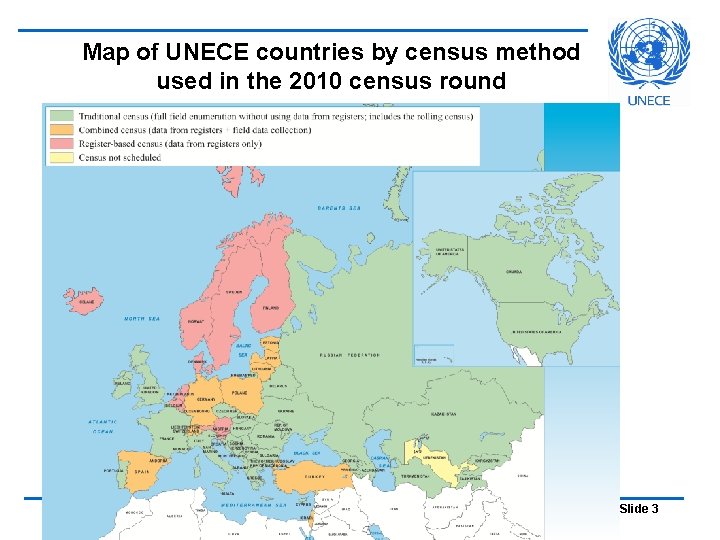
Map of UNECE countries by census method used in the 2010 census round Slide 3
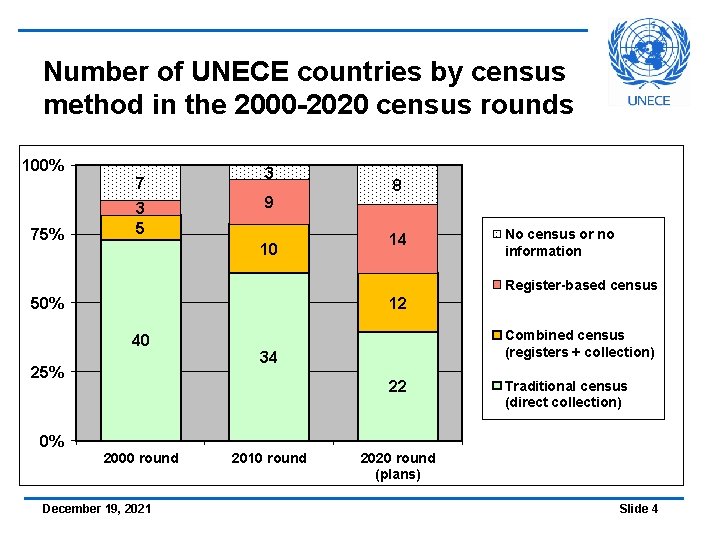
Number of UNECE countries by census method in the 2000 -2020 census rounds 100% 75% 7 3 5 3 9 10 8 14 No census or no information Register-based census 50% 12 40 25% Combined census (registers + collection) 34 22 Traditional census (direct collection) 0% 2000 round December 19, 2021 2010 round 2020 round (plans) Slide 4
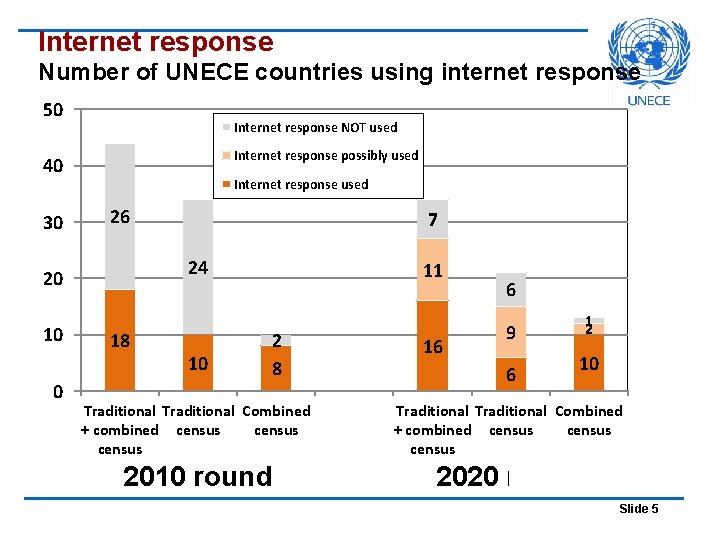
Internet response Number of UNECE countries using internet response 50 Internet response NOT used Internet response possibly used 40 30 Internet response used 26 24 20 10 0 7 18 10 11 2 8 Traditional Combined + combined census 2010 round 16 6 9 6 1 2 10 Traditional Combined + combined census 2020 round (plans) Slide 5
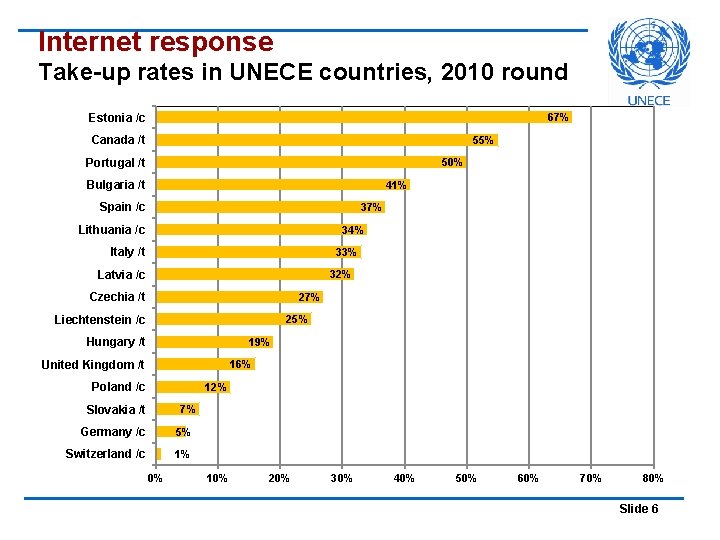
Internet response Take-up rates in UNECE countries, 2010 round Estonia /c 67% Canada /t 55% Portugal /t 50% Bulgaria /t 41% Spain /c 37% Lithuania /c 34% Italy /t 33% Latvia /c 32% Czechia /t 27% Liechtenstein /c 25% Hungary /t 19% United Kingdom /t 16% Poland /c 12% Slovakia /t 7% Germany /c 5% Switzerland /c 1% 0% 10% 20% 30% 40% 50% 60% 70% 80% Slide 6
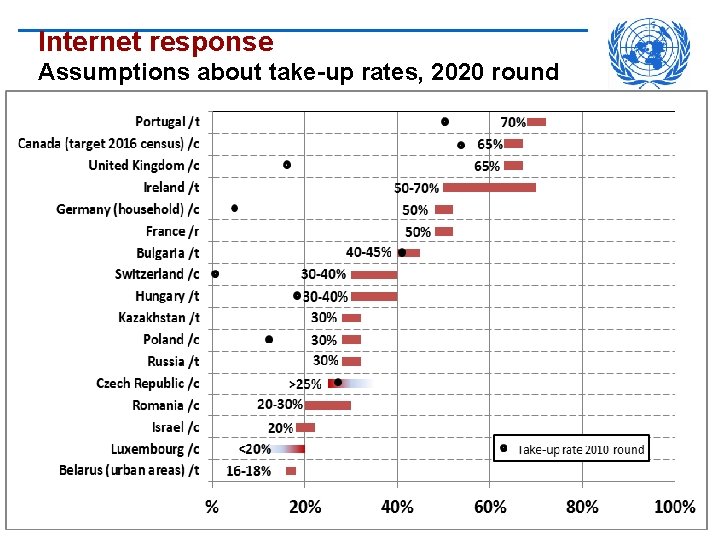
Internet response Assumptions about take-up rates, 2020 round Slide 7
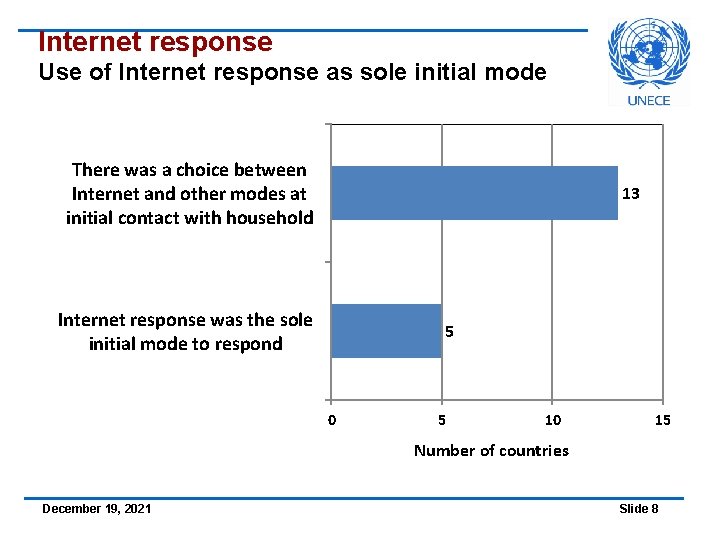
Internet response Use of Internet response as sole initial mode There was a choice between Internet and other modes at initial contact with household 13 Internet response was the sole initial mode to respond 5 0 5 10 15 Number of countries December 19, 2021 Slide 8
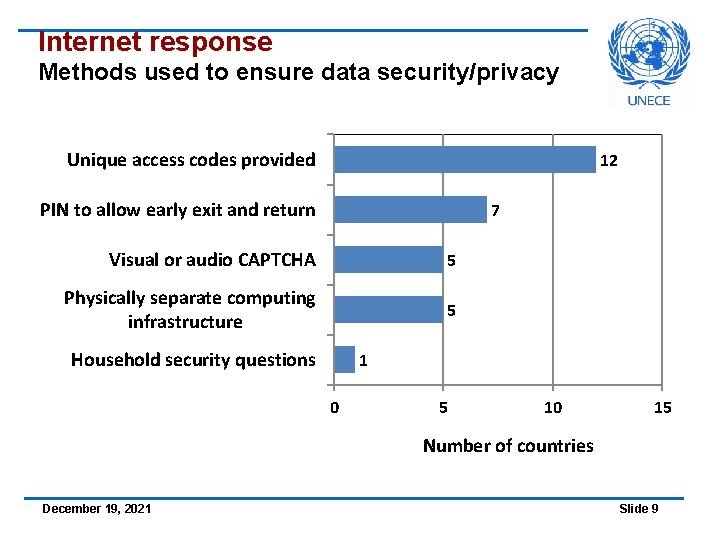
Internet response Methods used to ensure data security/privacy Unique access codes provided 12 PIN to allow early exit and return 7 Visual or audio CAPTCHA 5 Physically separate computing infrastructure 5 Household security questions 1 0 5 10 15 Number of countries December 19, 2021 Slide 9
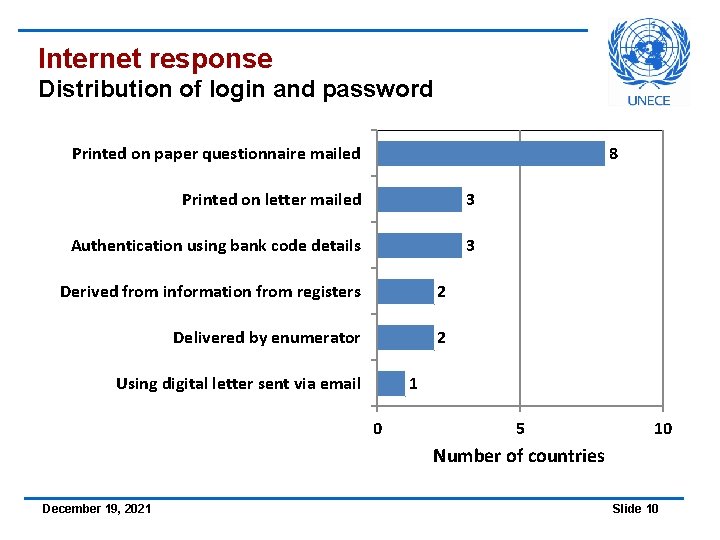
Internet response Distribution of login and password Printed on paper questionnaire mailed 8 Printed on letter mailed 3 Authentication using bank code details 3 Derived from information from registers 2 Delivered by enumerator 2 Using digital letter sent via email 1 0 5 10 Number of countries December 19, 2021 Slide 10
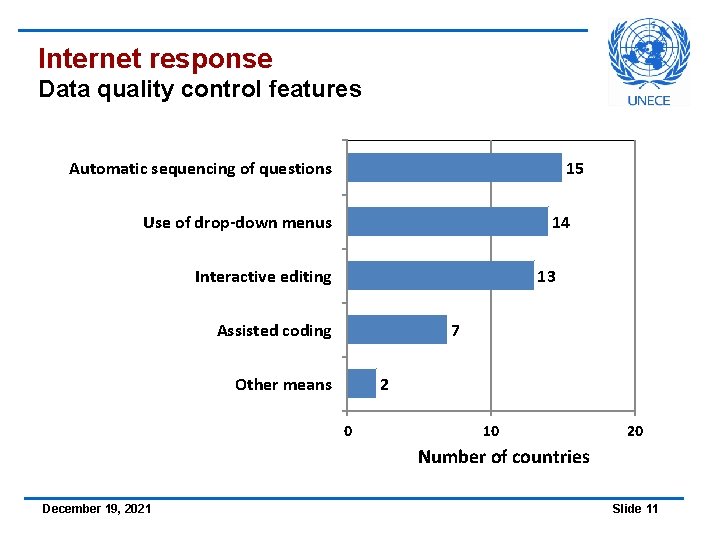
Internet response Data quality control features Automatic sequencing of questions 15 Use of drop-down menus 14 Interactive editing 13 Assisted coding 7 Other means 2 0 10 20 Number of countries December 19, 2021 Slide 11
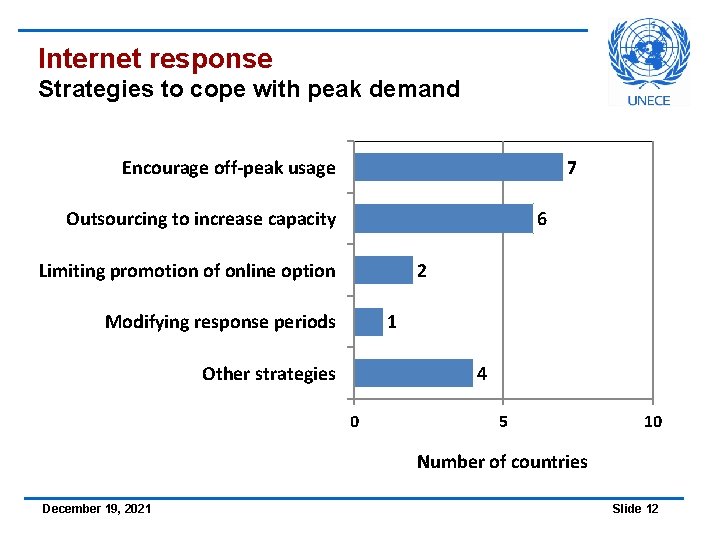
Internet response Strategies to cope with peak demand Encourage off-peak usage 7 Outsourcing to increase capacity 6 Limiting promotion of online option 2 Modifying response periods 1 Other strategies 4 0 5 10 Number of countries December 19, 2021 Slide 12
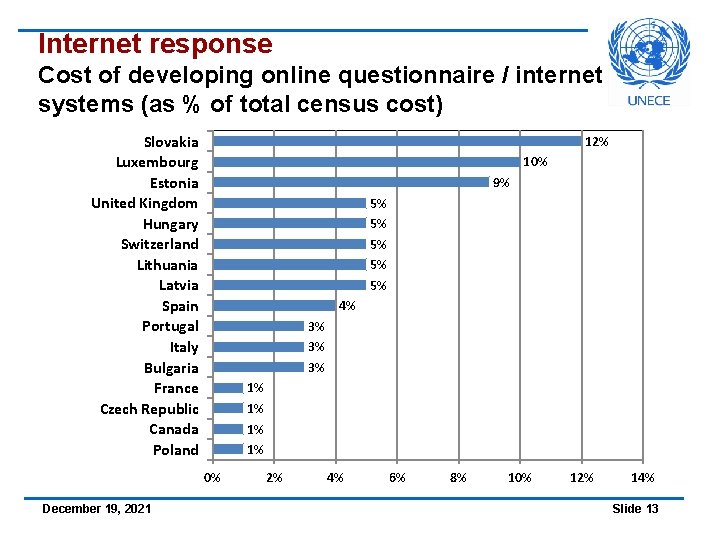
Internet response Cost of developing online questionnaire / internet systems (as % of total census cost) Slovakia Luxembourg Estonia United Kingdom Hungary Switzerland Lithuania Latvia Spain Portugal Italy Bulgaria France Czech Republic Canada Poland 12% 10% 9% 5% 5% 5% 4% 3% 3% 3% 1% 1% 0% December 19, 2021 2% 4% 6% 8% 10% 12% 14% Slide 13
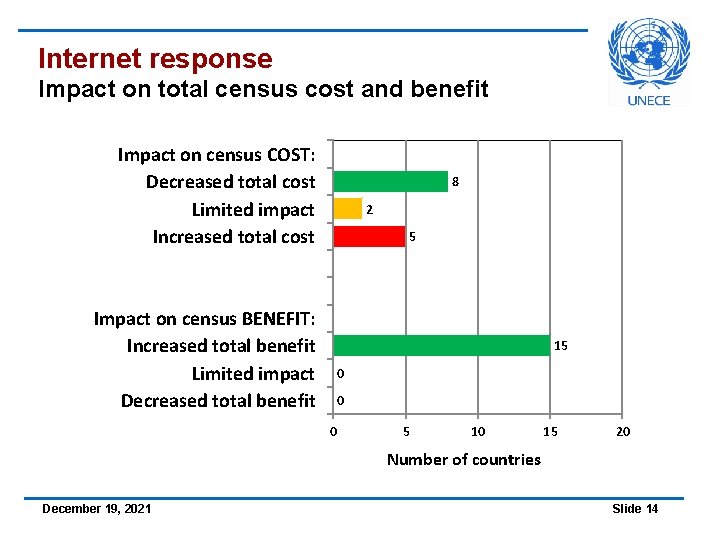
Internet response Impact on total census cost and benefit Impact on census COST: Decreased total cost Limited impact Increased total cost Impact on census BENEFIT: Increased total benefit Limited impact Decreased total benefit 8 2 5 15 0 0 0 5 10 15 20 Number of countries December 19, 2021 Slide 14
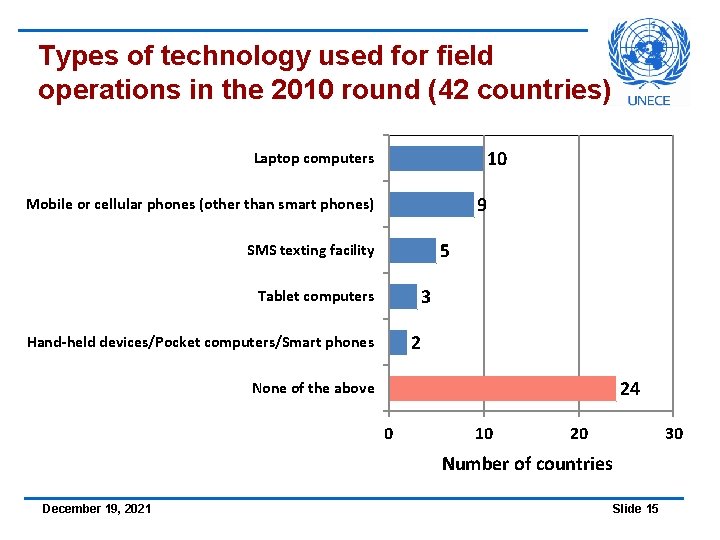
Types of technology used for field operations in the 2010 round (42 countries) 10 Laptop computers 9 Mobile or cellular phones (other than smart phones) 5 SMS texting facility 3 Tablet computers 2 Hand-held devices/Pocket computers/Smart phones 24 None of the above 0 10 20 30 Number of countries December 19, 2021 Slide 15
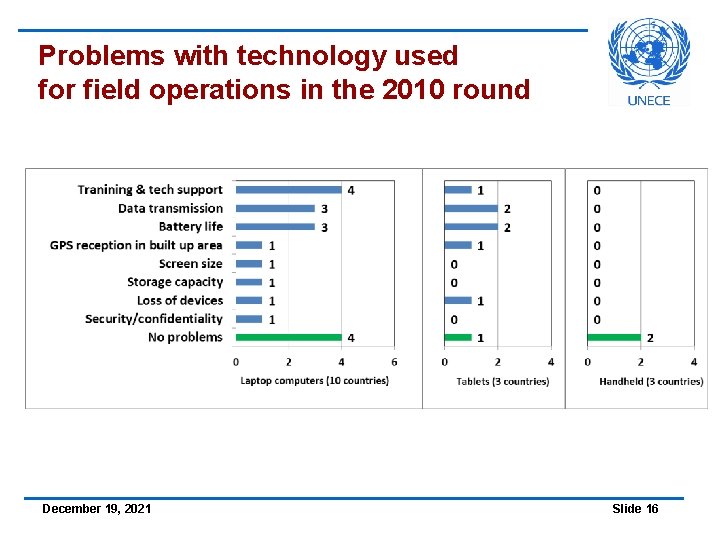
Problems with technology used for field operations in the 2010 round December 19, 2021 Slide 16
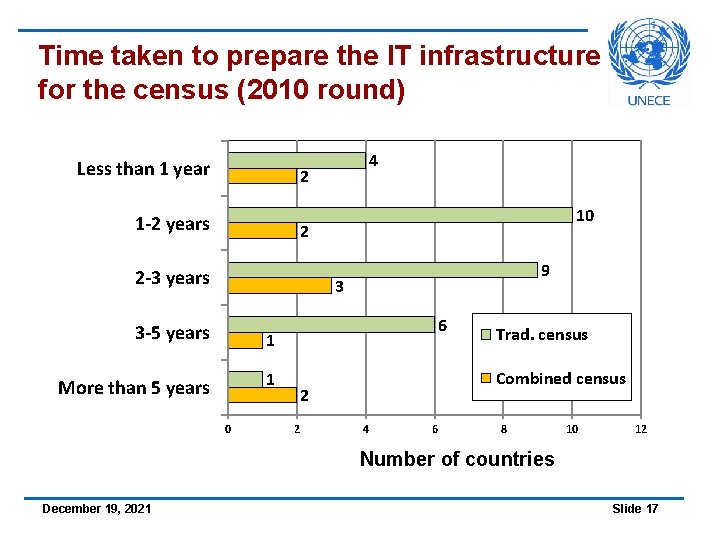
Time taken to prepare the IT infrastructure for the census (2010 round) Less than 1 year 4 2 1 -2 years 10 2 2 -3 years 9 3 3 -5 years 1 More than 5 years 1 0 6 Combined census 2 2 Trad. census 4 6 8 10 12 Number of countries December 19, 2021 Slide 17
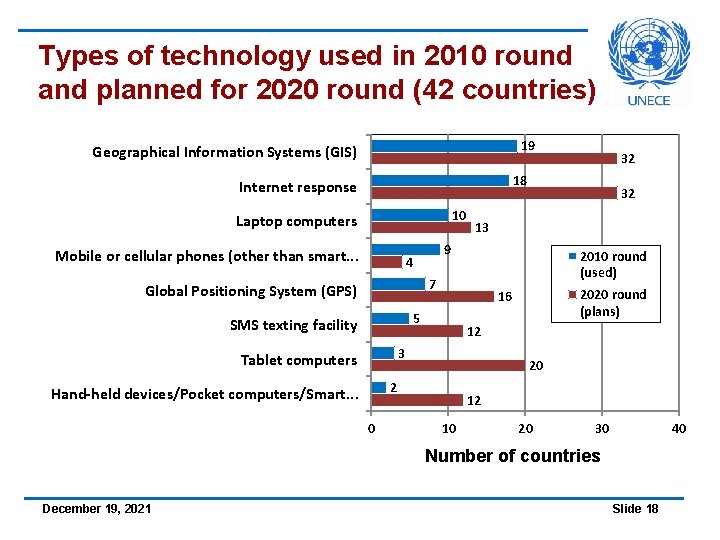
Types of technology used in 2010 round and planned for 2020 round (42 countries) 19 Geographical Information Systems (GIS) 32 18 Internet response 10 Laptop computers Mobile or cellular phones (other than smart. . . 13 9 4 2010 round (used) 7 Global Positioning System (GPS) 12 3 Tablet computers 20 2 Hand-held devices/Pocket computers/Smart. . . 0 2020 round (plans) 16 5 SMS texting facility 32 12 10 20 30 40 Number of countries December 19, 2021 Slide 18
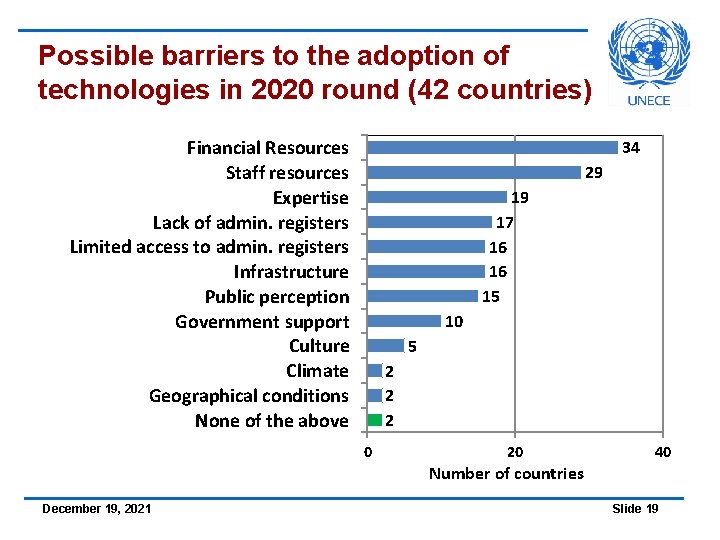
Possible barriers to the adoption of technologies in 2020 round (42 countries) Financial Resources Staff resources Expertise Lack of admin. registers Limited access to admin. registers Infrastructure Public perception Government support Culture Climate Geographical conditions None of the above 34 29 19 17 16 16 15 10 5 2 2 2 0 20 40 Number of countries December 19, 2021 Slide 19
Conclusions (1/6) Census methods Ø In UNECE region, clear trend towards alternative census methodologies, such as fully register-based censuses, or combined censuses Ø In the 2020 round, the traditional approach will be adopted by less than half of the UNECE countries December 19, 2021 Slide 20
Conclusions (2/6) Adoption of internet response option Ø Internet response increasingly popular for traditional and combined censuses Ø In the 2010 round, 18 UNECE countries (41%) adopted the internet response, sometimes with very high take up rates, over 50% Ø For the 2020 round, internet response to be adopted by almost all the countries with a combined census, and about half the countries with a traditional census December 19, 2021 Slide 21
Conclusions (3/6) Internet response – Technical aspects Ø In most countries, households have choice between internet and other modes Ø Most common method to ensure data security/privacy is to provide unique access codes, printed on paper forms or letters and mailed Ø Automatic sequencing of questions and other features allow controlling the quality of data collected Ø To cope with peak demand, countries encourage the usage during off-peak times, or outsource internet hosting to increase capacity This remains one of the challenges! December 19, 2021 Slide 22
Conclusions (4/6) Internet response – Costs and benefits Ø Countries spent as much as 12% of the total census cost (on average 4. 5%) to develop the online questionnaire and internet systems Ø In about half the countries, internet response decreased the total census cost, while in several countries the total cost increased No cost savings can be expected in the short term Ø In ALL countries, internet response increased the total census benefit December 19, 2021 Slide 23
Conclusions (5/6) Other technologies used in the 2010 round Ø Several countries used laptop PCs (10) and mobile phones (9) Ø Tablets and hand-held devices/smart phones only used by few countries Ø Over half the countries that used laptop PCs reported problems, mainly on training/tech support, data transmission and battery life Ø In most countries the time taken to prepare the IT infrastructure for the census is between 1 -5 years Test!!! And manage risks! December 19, 2021 Slide 24
Conclusions (6/6) Plans on technology for the 2020 round Ø Most popular technologies will include internet response (32 countries), GIS (32), and GPS (16) Ø Among electronic devices, tablets (20 countries) seem more popular than laptop PCs (13), hand-held devices/smart phones (12) and SMS texting facilities Ø Most serious barriers to the adoption of technology are financial and staff resources, and expertise December 19, 2021 Slide 25
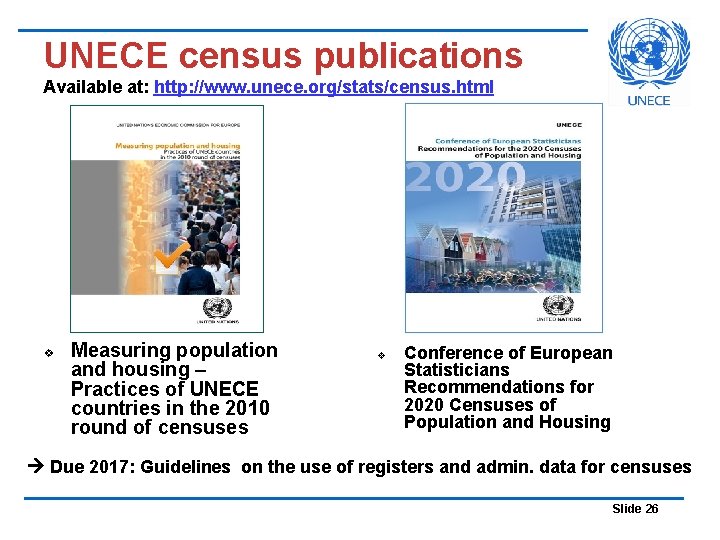
UNECE census publications Available at: http: //www. unece. org/stats/census. html v Measuring population and housing – Practices of UNECE countries in the 2010 round of censuses v Conference of European Statisticians Recommendations for 2020 Censuses of Population and Housing Due 2017: Guidelines on the use of registers and admin. data for censuses Slide 26
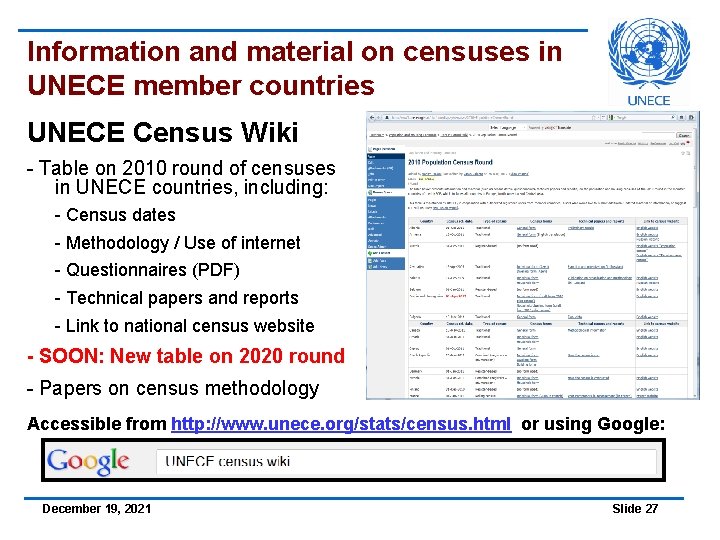
Information and material on censuses in UNECE member countries UNECE Census Wiki - Table on 2010 round of censuses in UNECE countries, including: - Census dates - Methodology / Use of internet - Questionnaires (PDF) - Technical papers and reports - Link to national census website - SOON: New table on 2020 round - Papers on census methodology Accessible from http: //www. unece. org/stats/census. html or using Google: December 19, 2021 Slide 27