
UNIT4 Table 6 5 Comparison of Map Reduce
UNIT-4

![Table 6. 5 Comparison of Map. Reduce Type Systems Google Map. Reduce [28] Apache](http://slidetodoc.com/presentation_image_h2/d10cce5fefda27b9d95bdb4afba37f91/image-6.jpg "Table 6. 5 Comparison of Map. Reduce Type Systems Google Map. Reduce [28] Apache")
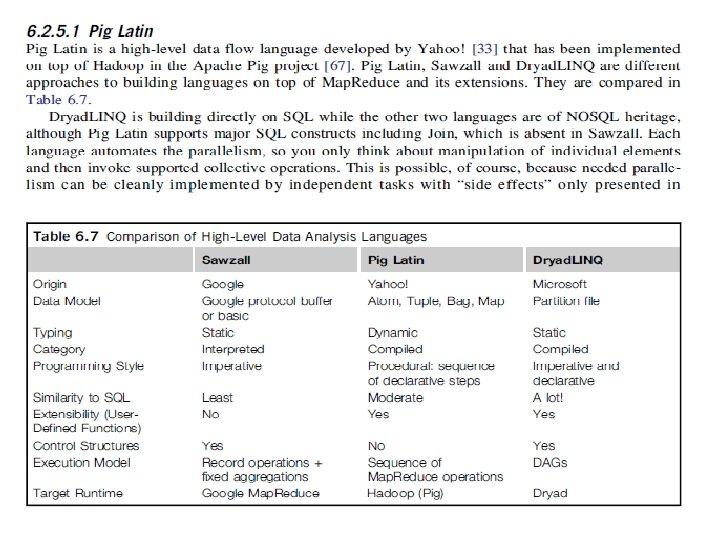
Table 6. 5 Comparison of Map. Reduce Type Systems Google Map. Reduce [28] Apache Hadoop [23] Map. Reduce Programming Model Data Handling Microsoft Dryad [26] DAG execution, extensible to Map. Reduce and other patterns GFS (Google File HDFS (Hadoop Shared directories System) Distributed File and local disks System) Scheduling Data locality Failure Handling Reexecution of failed tasks; duplicated execution of slow tasks HLL Support Sawzall [31] Environment Linux cluster Intermediate Data File Transfer Iterative Map. Reduce Azure Twister [30] Currently just Map. Reduce; will extend to Iterative Map. Reduce Local disks and data management tools Data locality; static task partitions Azure blob storage Reexecution of iterations Reexecution of failed tasks; duplicated execution of slow tasks N/A Windows HPCS cluster Pregel [34] has related features Linux cluster, EC 2 File, TCP pipes, shared- memory FIFOs Publishsubscribe messaging Data locality; rackaware, dynamic task scheduling using global queue Data locality; network topology optimized at runtime; static task partitions Reexecution of failed Reexecution of tasks; duplicated failed tasks; execution of slow tasks duplicated execution of slow tasks Pig Latin [32, 33] Dryad. LINQ [27] Linux clusters, Amazon Elastic Map. Reduce on EC 2 File, HTTP Twister [29] Dynamic task scheduling through global queue Windows Azure, Azure Local Development Fabric Files, TCP
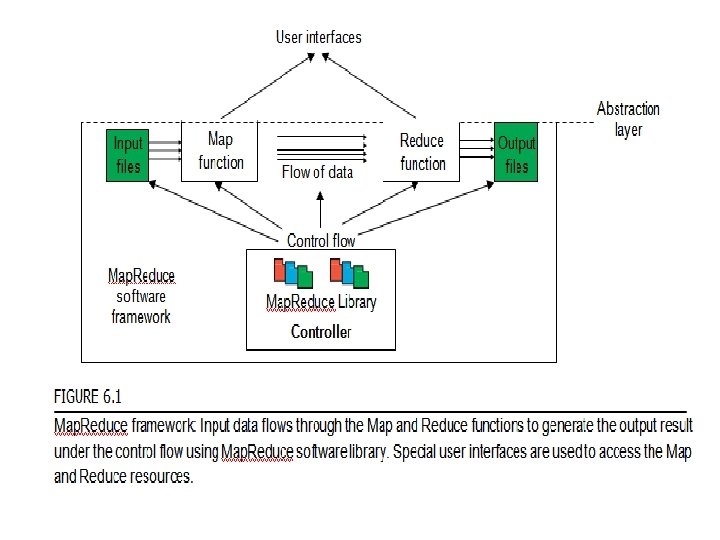
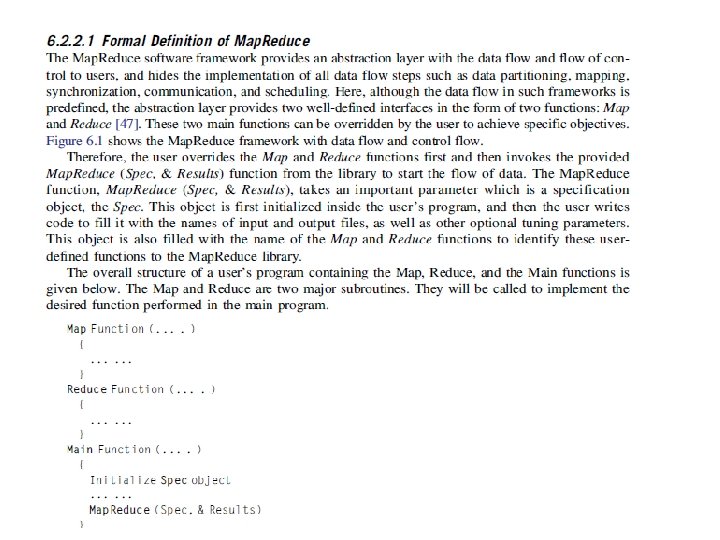
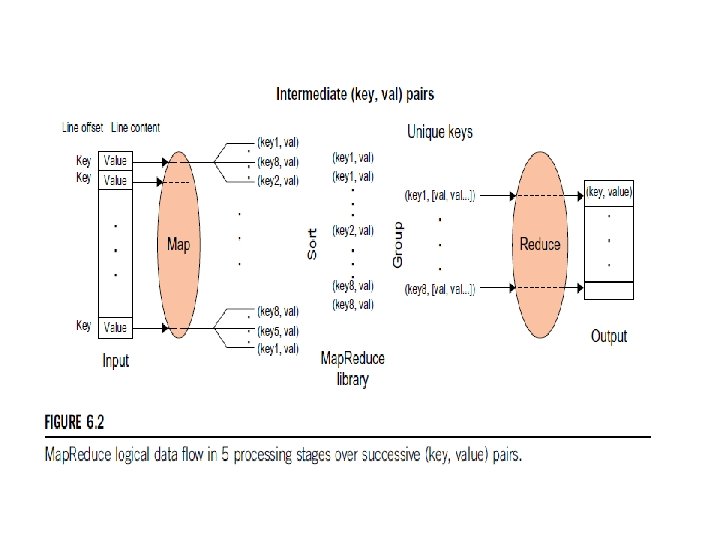
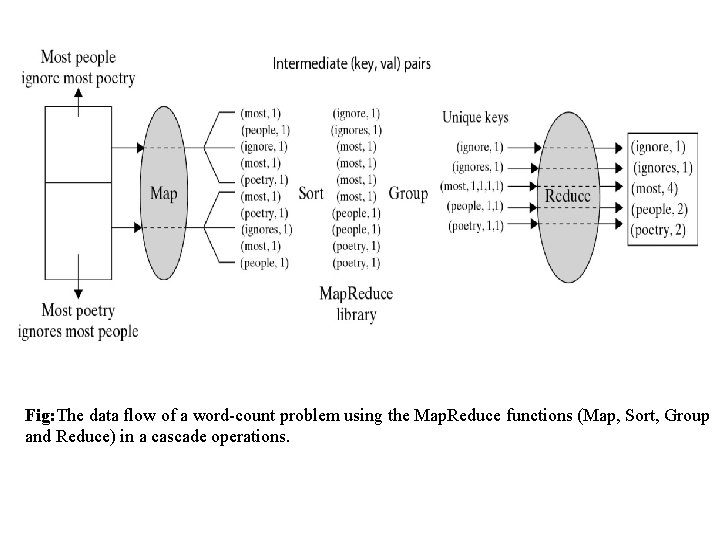
Fig: The data flow of a word-count problem using the Map. Reduce functions (Map, Sort, Group and Reduce) in a cascade operations.
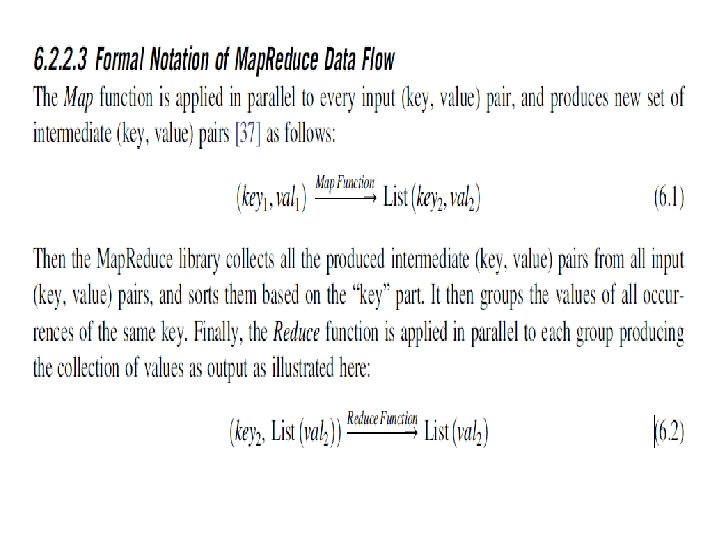
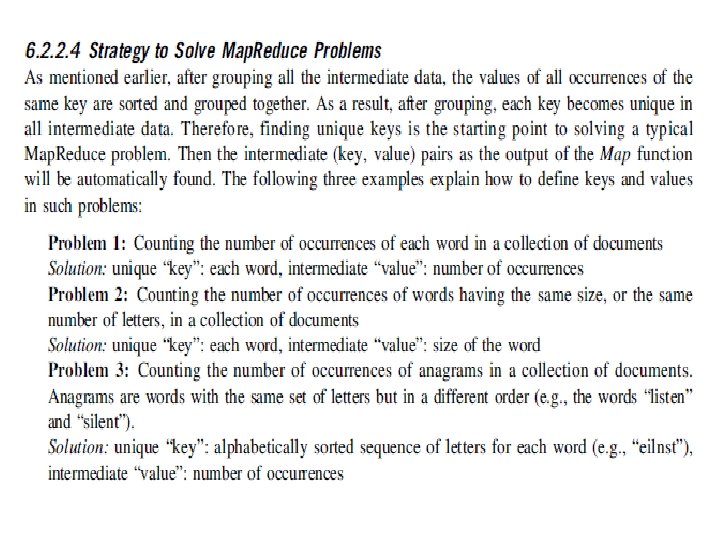
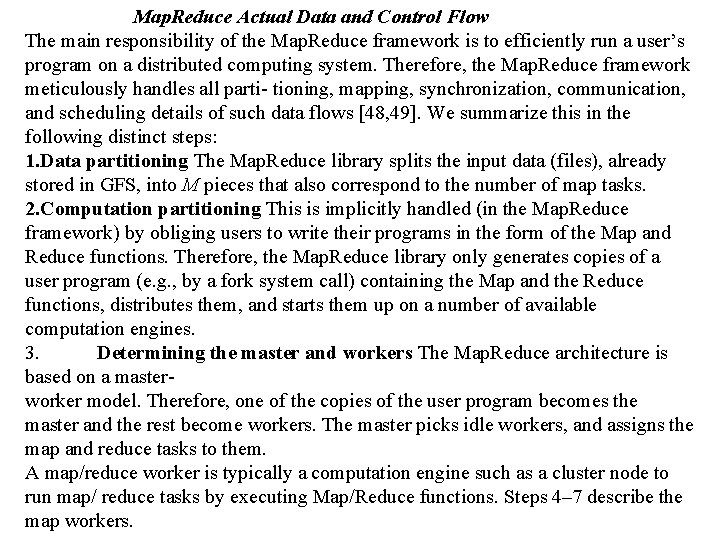
Map. Reduce Actual Data and Control Flow The main responsibility of the Map. Reduce framework is to efficiently run a user’s program on a distributed computing system. Therefore, the Map. Reduce framework meticulously handles all parti- tioning, mapping, synchronization, communication, and scheduling details of such data flows [48, 49]. We summarize this in the following distinct steps: 1. Data partitioning The Map. Reduce library splits the input data (files), already stored in GFS, into M pieces that also correspond to the number of map tasks. 2. Computation partitioning This is implicitly handled (in the Map. Reduce framework) by obliging users to write their programs in the form of the Map and Reduce functions. Therefore, the Map. Reduce library only generates copies of a user program (e. g. , by a fork system call) containing the Map and the Reduce functions, distributes them, and starts them up on a number of available computation engines. 3. Determining the master and workers The Map. Reduce architecture is based on a masterworker model. Therefore, one of the copies of the user program becomes the master and the rest become workers. The master picks idle workers, and assigns the map and reduce tasks to them. A map/reduce worker is typically a computation engine such as a cluster node to run map/ reduce tasks by executing Map/Reduce functions. Steps 4– 7 describe the map workers.
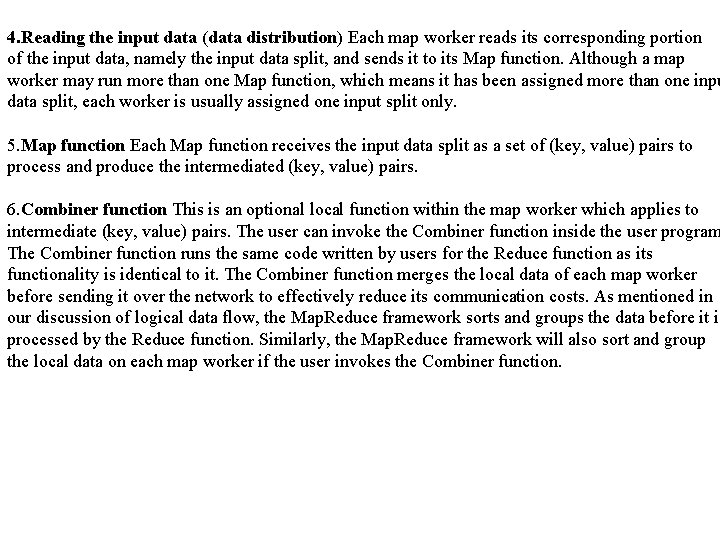
4. Reading the input data (data distribution) Each map worker reads its corresponding portion of the input data, namely the input data split, and sends it to its Map function. Although a map worker may run more than one Map function, which means it has been assigned more than one inpu data split, each worker is usually assigned one input split only. 5. Map function Each Map function receives the input data split as a set of (key, value) pairs to process and produce the intermediated (key, value) pairs. 6. Combiner function This is an optional local function within the map worker which applies to intermediate (key, value) pairs. The user can invoke the Combiner function inside the user program The Combiner function runs the same code written by users for the Reduce function as its functionality is identical to it. The Combiner function merges the local data of each map worker before sending it over the network to effectively reduce its communication costs. As mentioned in our discussion of logical data flow, the Map. Reduce framework sorts and groups the data before it is processed by the Reduce function. Similarly, the Map. Reduce framework will also sort and group the local data on each map worker if the user invokes the Combiner function.
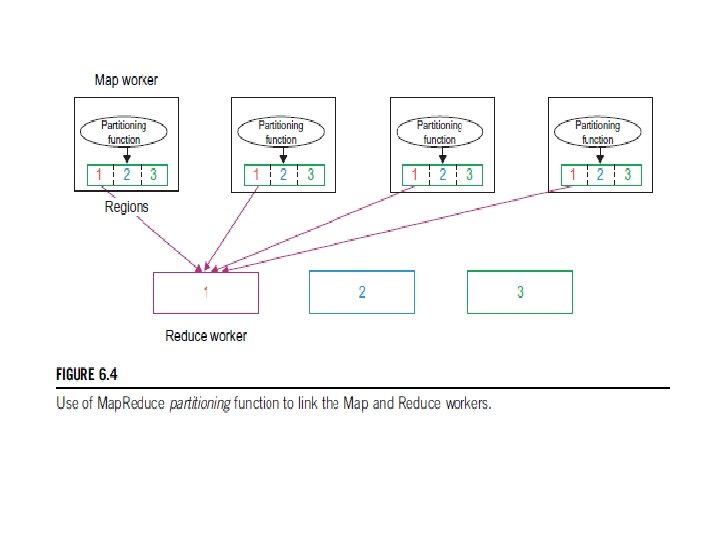
7. Partitioning function As mentioned in our discussion of the Map. Reduce data flow, the intermediate (key, value) pairs with identical keys are grouped together because all values inside each group should be processed by only one Reduce function to generate the final result. However, in real implementations, since there are M map and R reduce tasks, intermediate (key, value) pairs with the same key might be produced by different map tasks, although they should be grouped and processed together by one Reduce function only. Therefore, the intermediate (key, value) pairs produced by each map worker are partitioned into R regions, equal to the number of reduce tasks, by the Partitioning function to guarantee that all (key, value) pairs with identical keys are stored in the same region. As a result, since reduce worker i reads the data of region i of all map workers, all (key, value) pairs with the same key will be gathered by reduce worker i accordingly (see Figure 6. 4). To implement this technique, a Partitioning function could simply be a hash function (e. g. , Hash(key) mod R) that forwards the data into particular regions. It is also worth noting that the locations of the buffered data in these R partitions are sent to the master for later forwarding of data to the reduce workers. Figure 6. 5 shows the data flow implementation of all data flow steps. The following are two networking steps: 8. Synchronization Map. Reduce applies a simple synchronization policy to coordinate map workers with reduce workers, in which the communication between them starts when all map tasks finish.
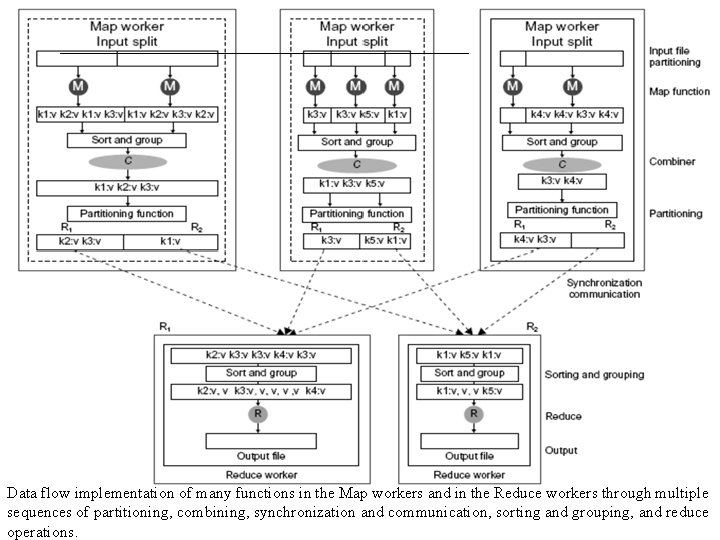
Data flow implementation of many functions in the Map workers and in the Reduce workers through multiple sequences of partitioning, combining, synchronization and communication, sorting and grouping, and reduce operations.
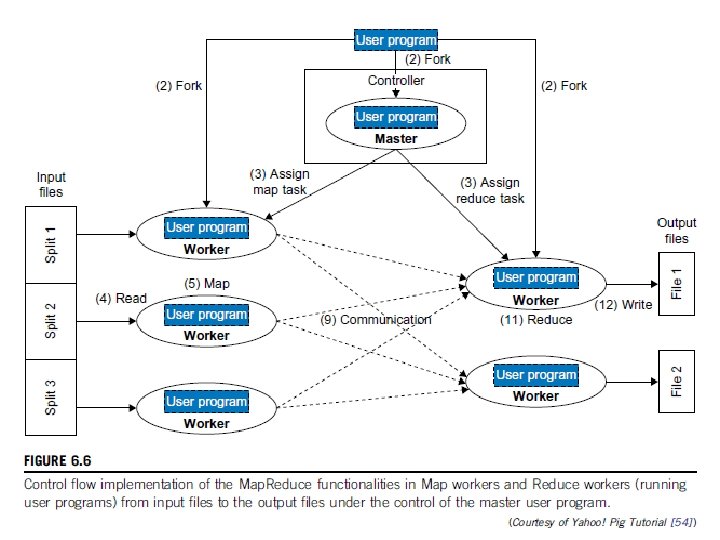
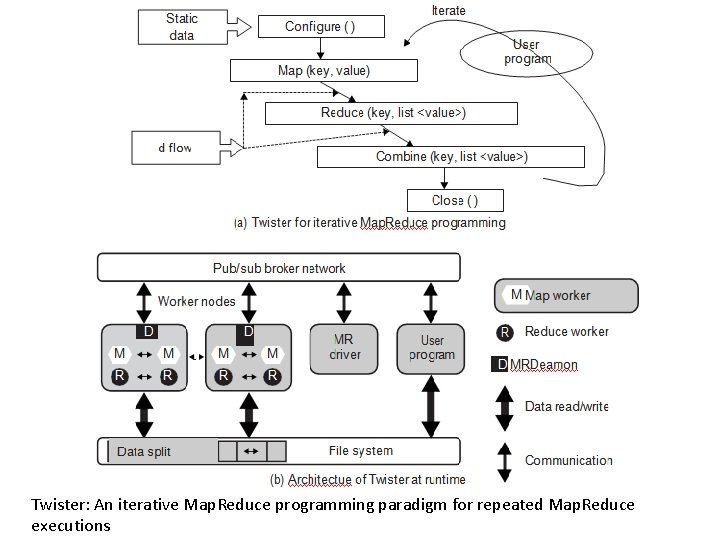
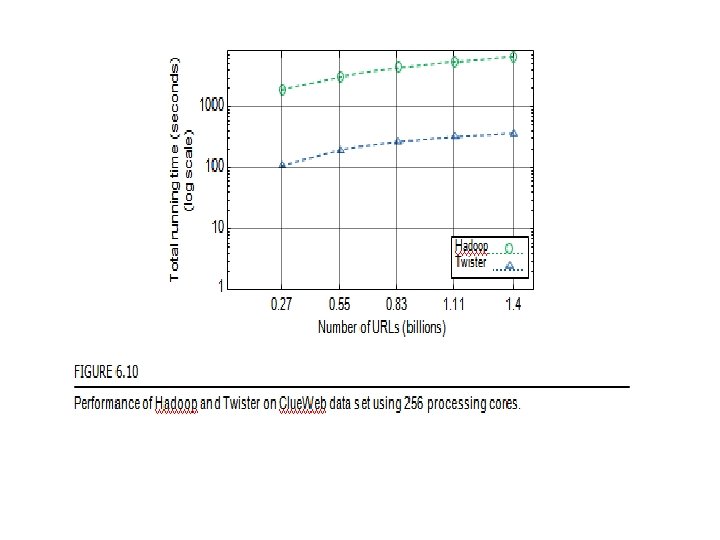
Twister: An iterative Map. Reduce programming paradigm for repeated Map. Reduce executions
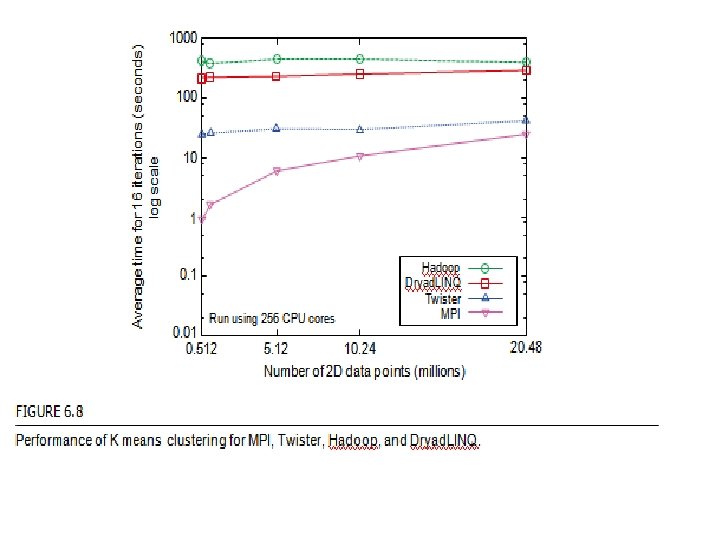
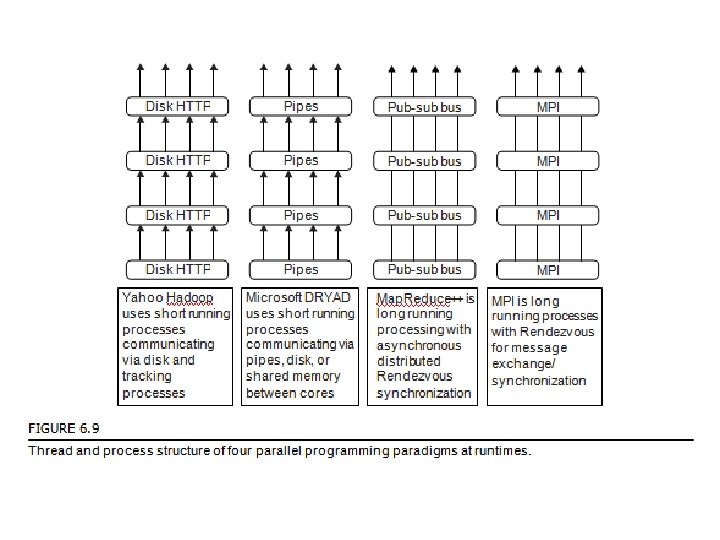
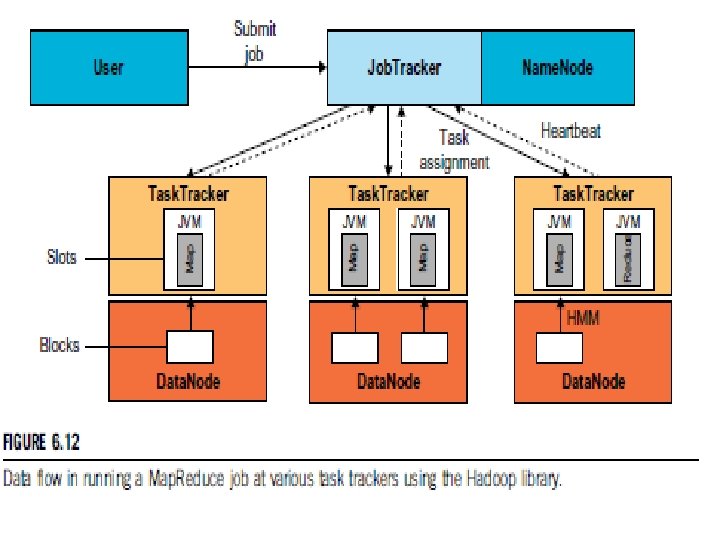
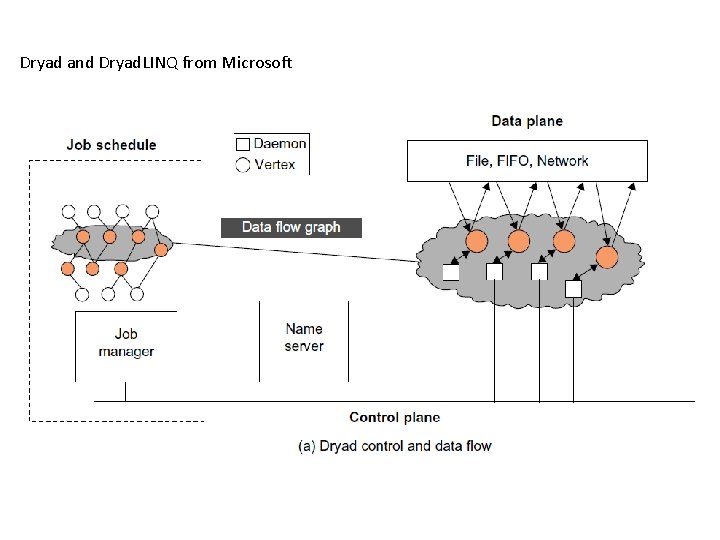
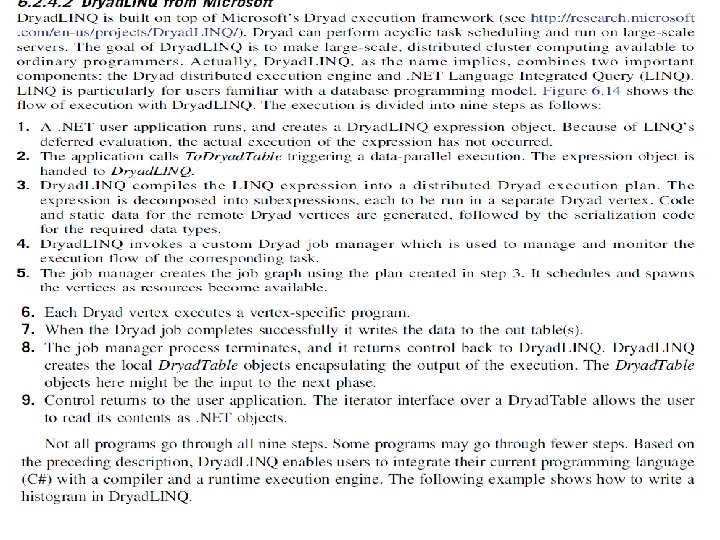
Dryad and Dryad. LINQ from Microsoft
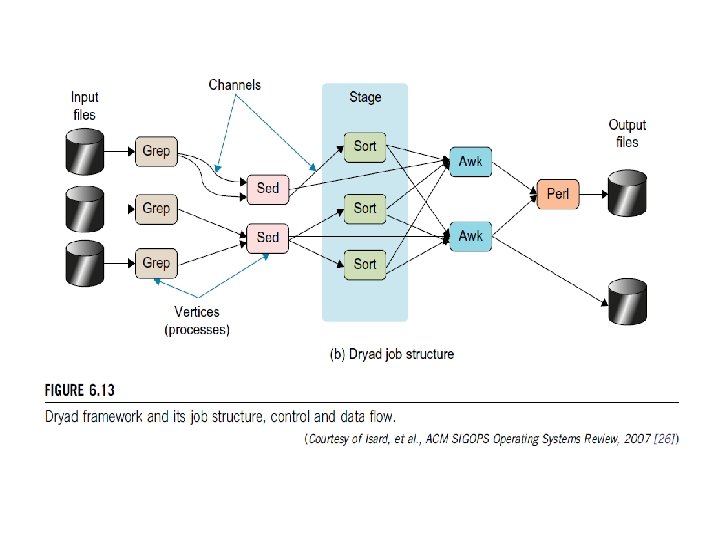
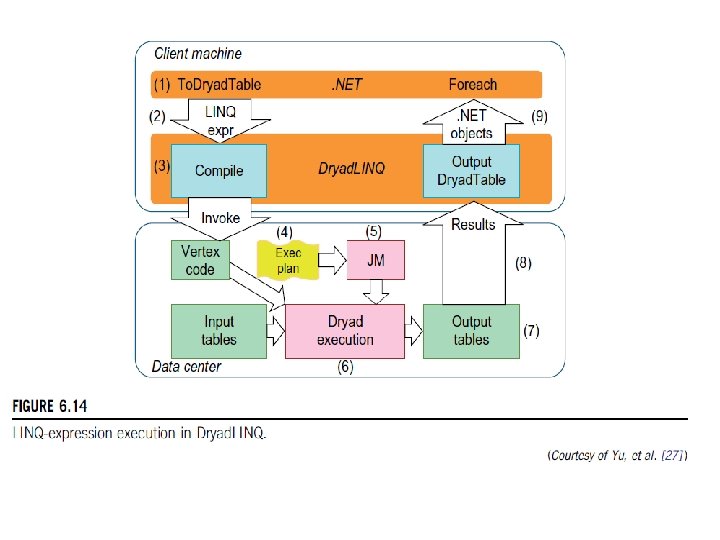
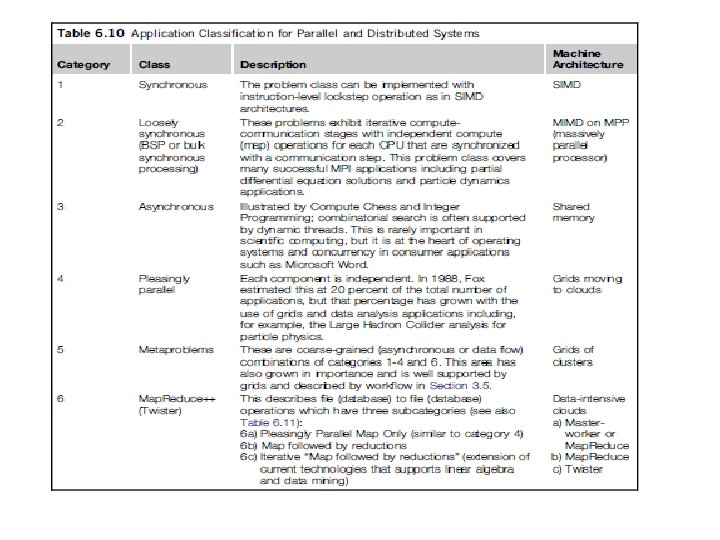
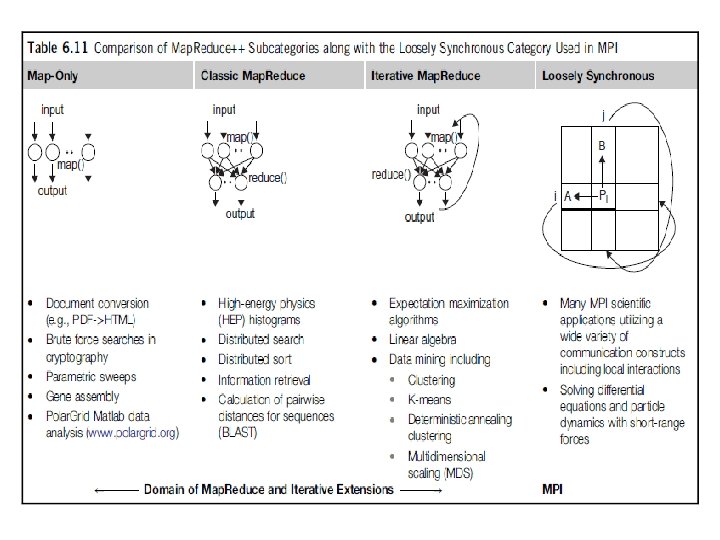
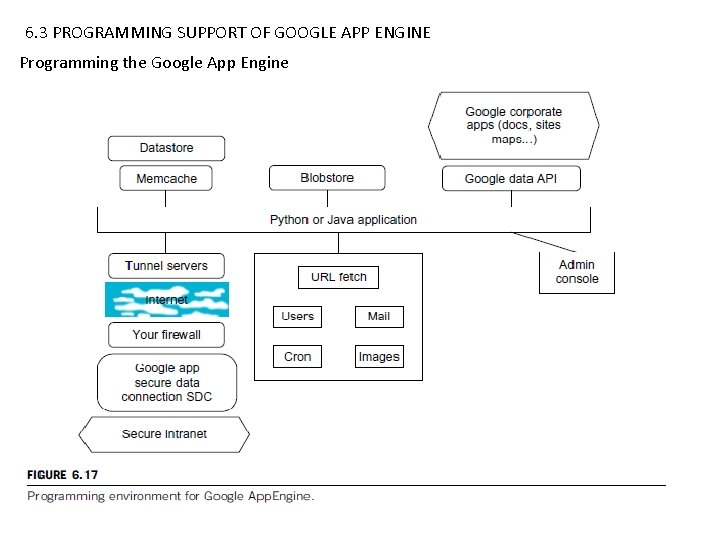
6. 3 PROGRAMMING SUPPORT OF GOOGLE APP ENGINE Programming the Google App Engine
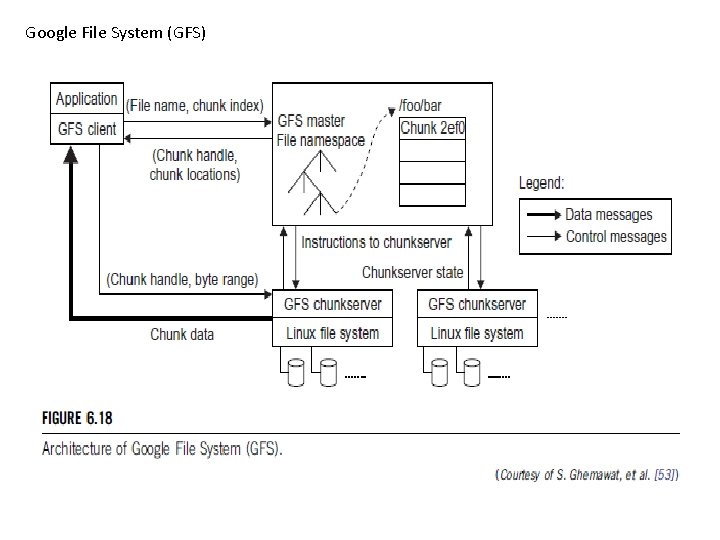
Google File System (GFS)
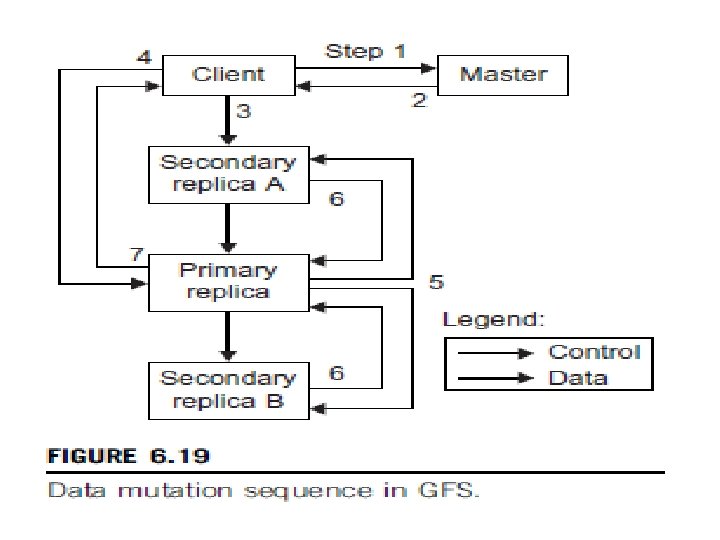
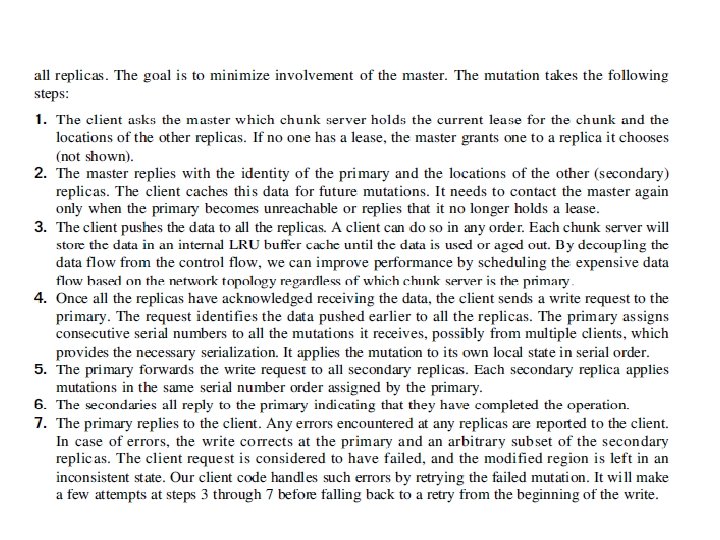
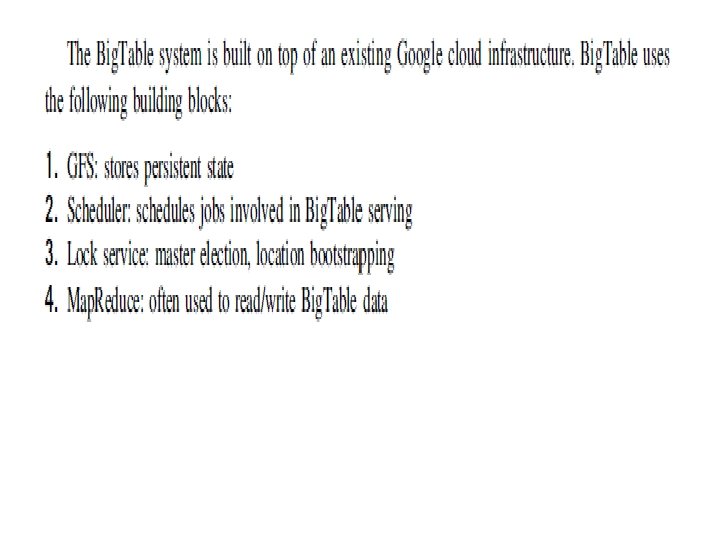
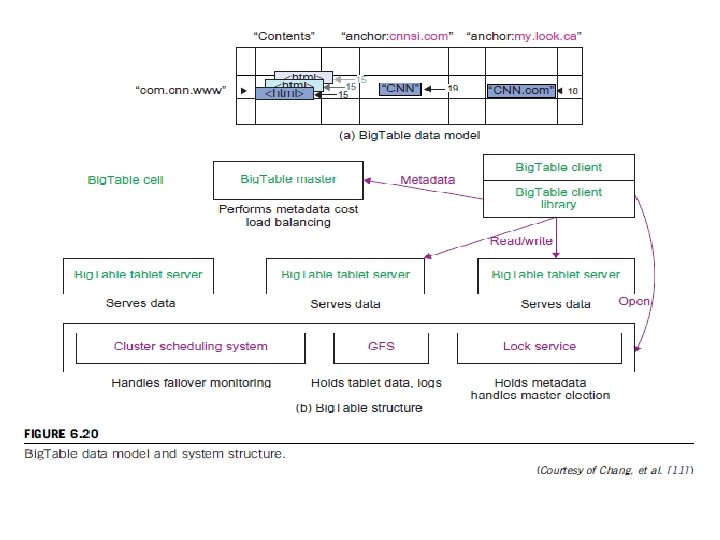
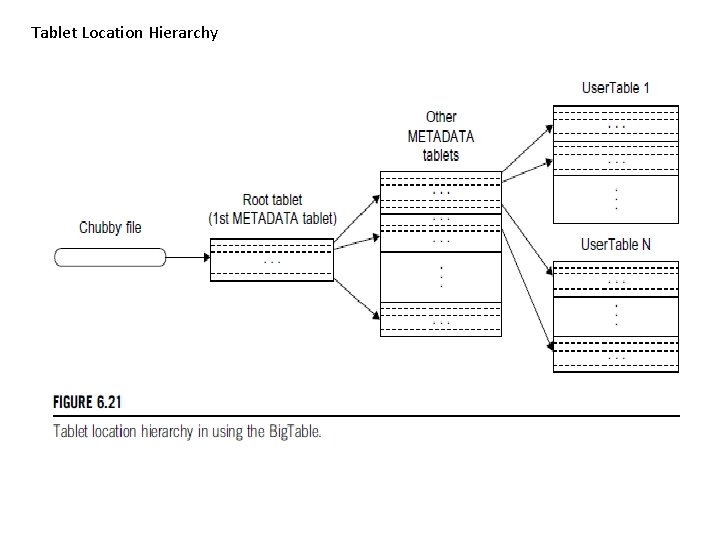
Tablet Location Hierarchy
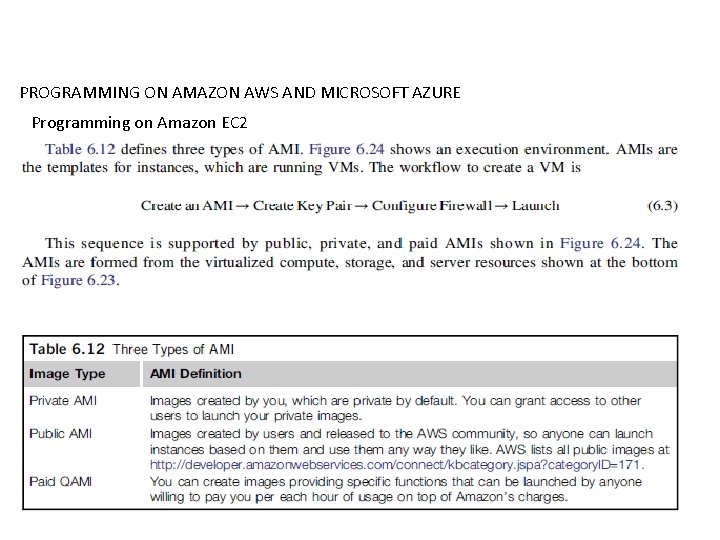
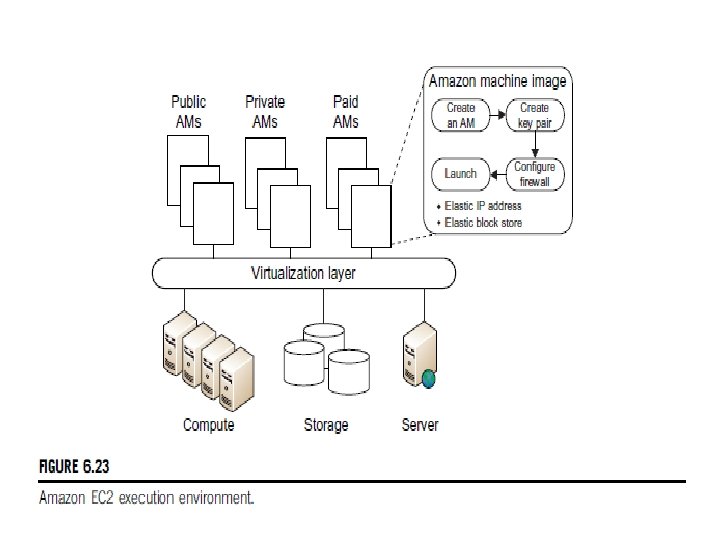
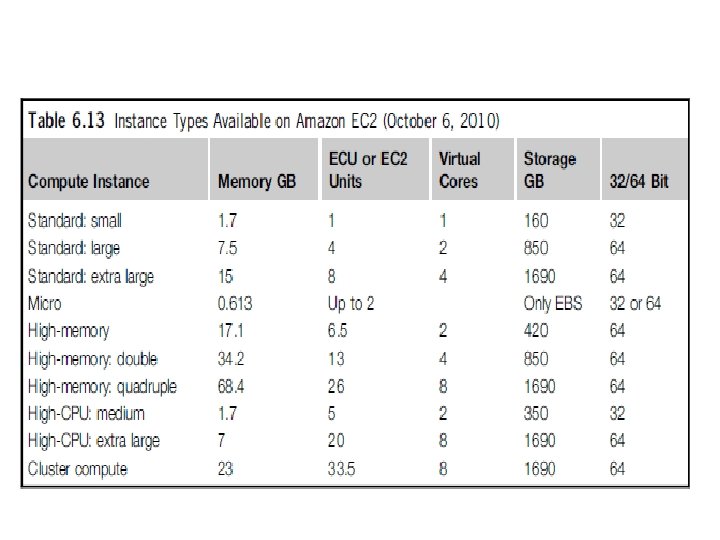
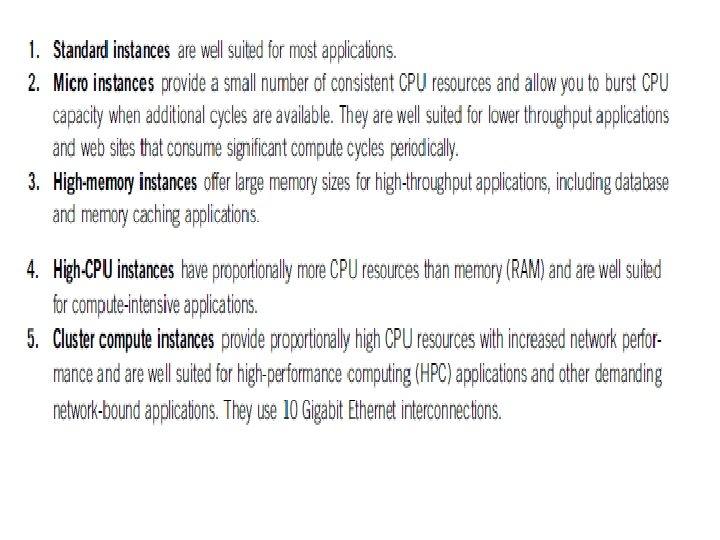
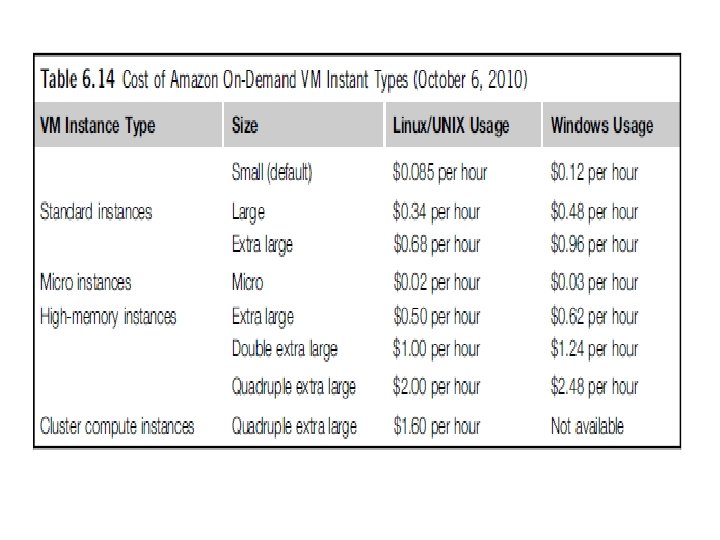
PROGRAMMING ON AMAZON AWS AND MICROSOFT AZURE Programming on Amazon EC 2
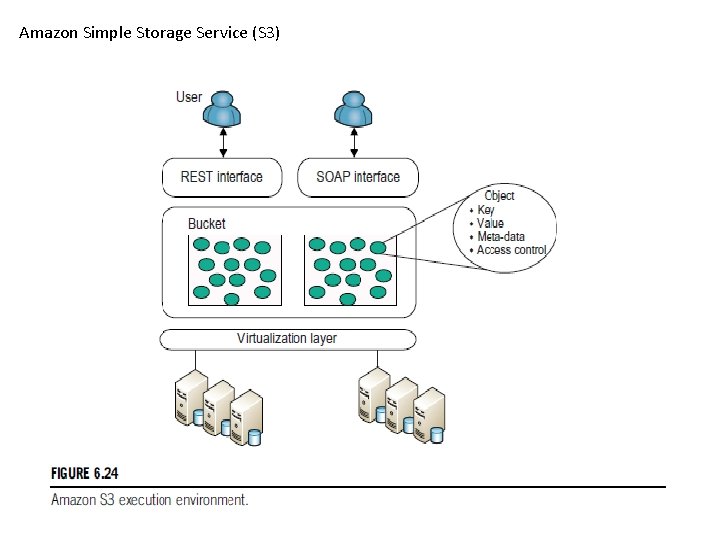
Amazon Simple Storage Service (S 3)
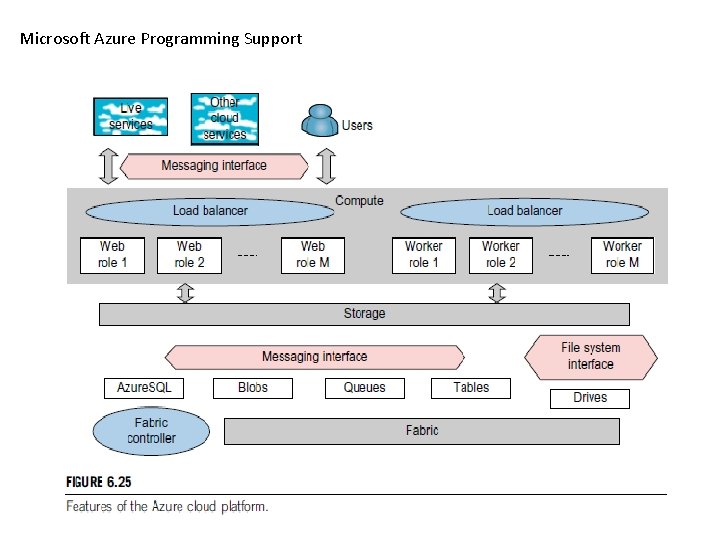
Microsoft Azure Programming Support
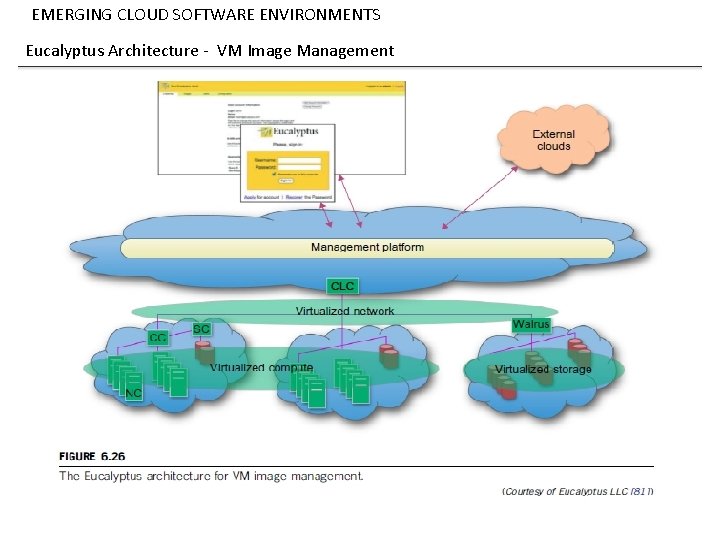
EMERGING CLOUD SOFTWARE ENVIRONMENTS Eucalyptus Architecture - VM Image Management
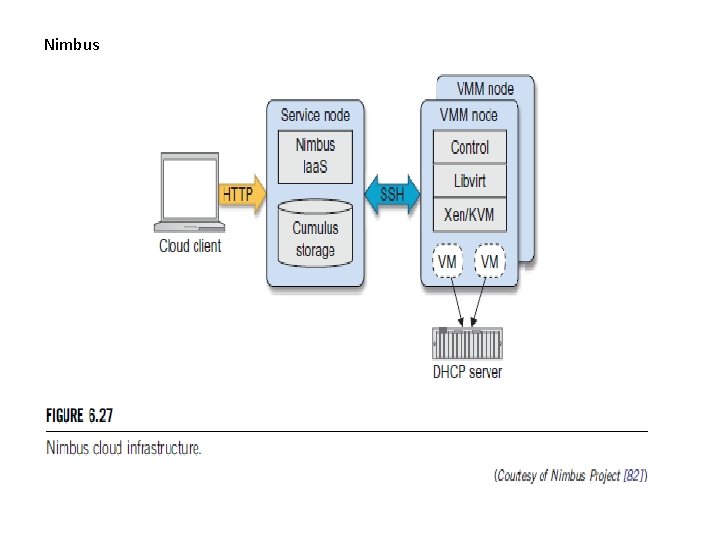
Nimbus
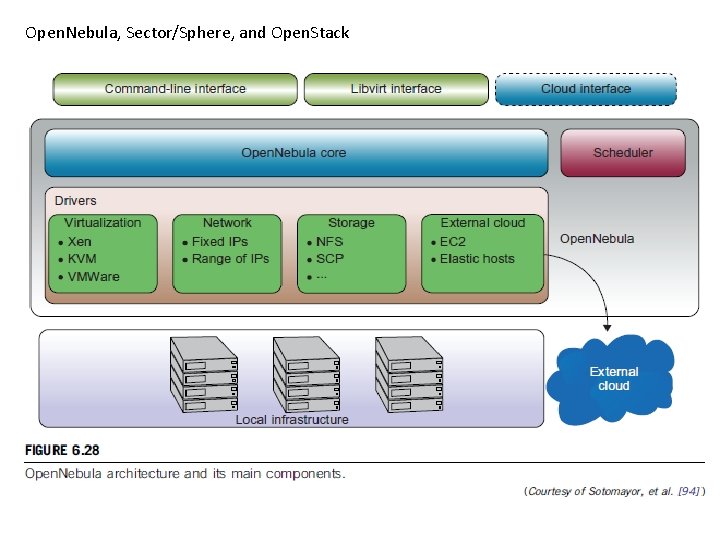
Open. Nebula, Sector/Sphere, and Open. Stack
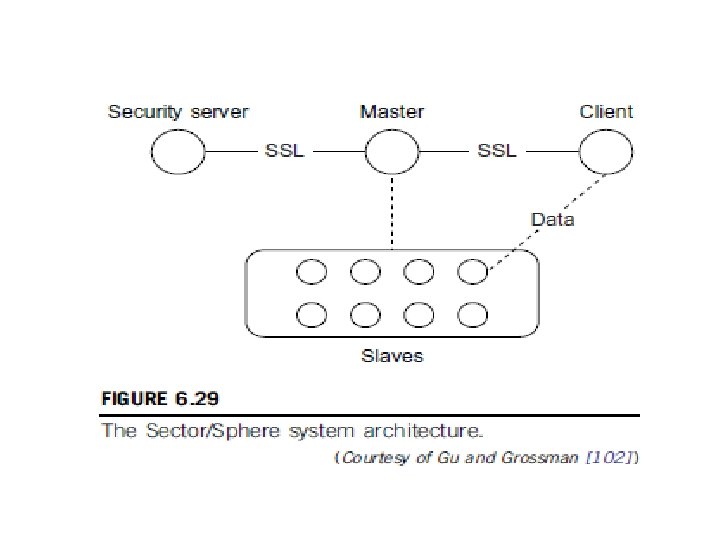
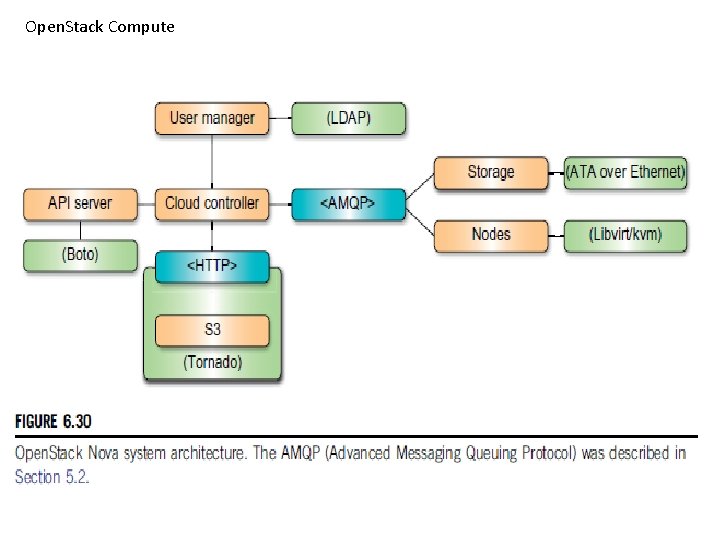
Open. Stack Compute
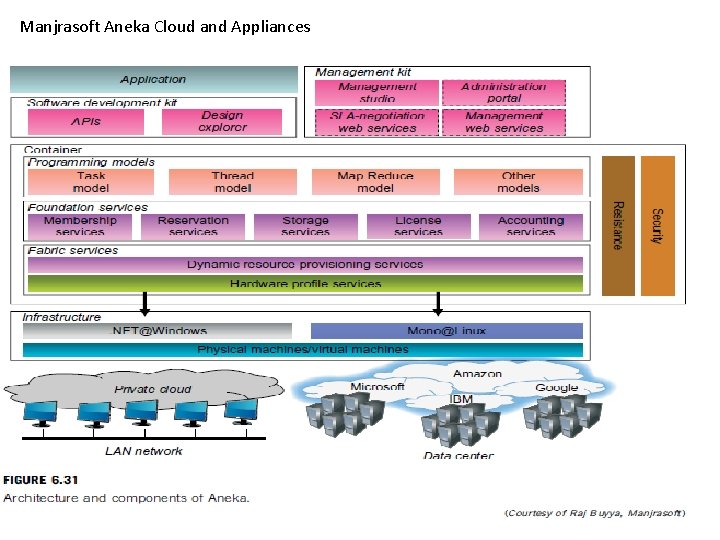
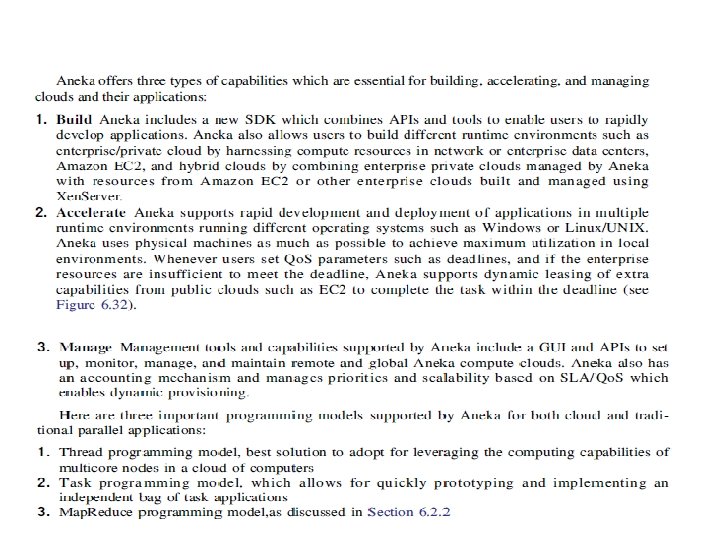
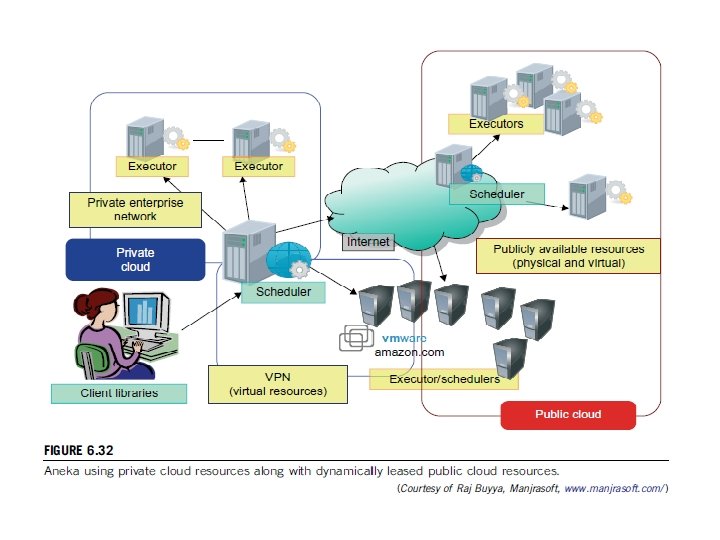
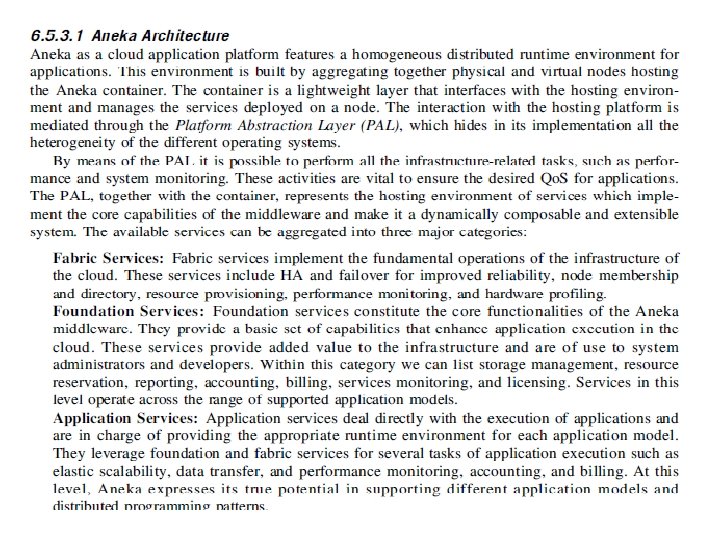
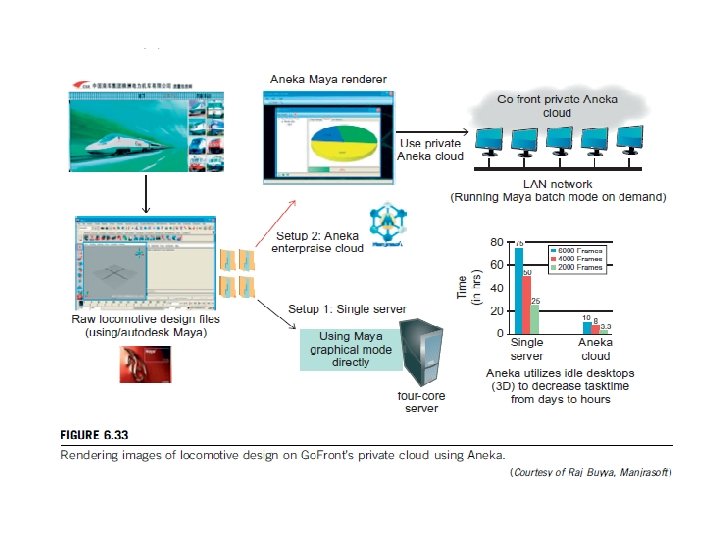
Manjrasoft Aneka Cloud and Appliances
- Slides: 61