
UNIT3 Zoonotic disease Credit Hours31 Superficial and Systemic
- Slides: 19
UNIT-3 ‘Zoonotic disease’ (Credit Hours-3+1)
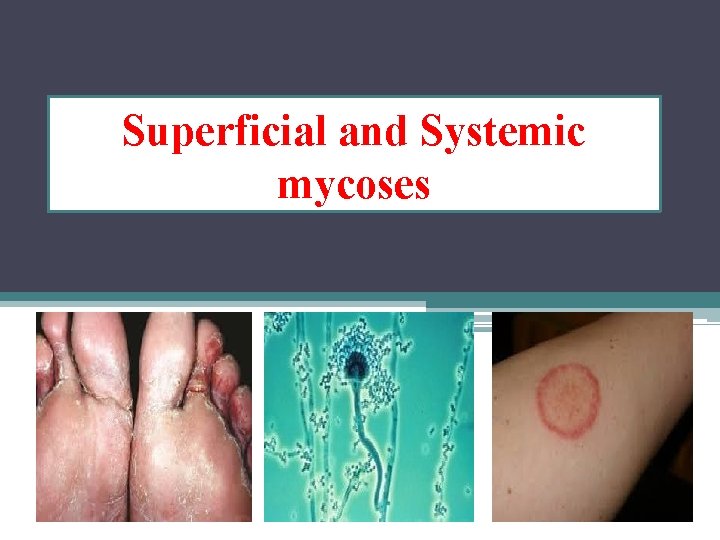
Superficial and Systemic mycoses
Features of Fungi • • • Eukaryotic cell/ Prokaryotic cells? Autophagy/hetrophagy ? Unicelluler/Multicelluler? Are they motile/non motile? They multiply by mitotic/meiotic division? Classification- Depending on cell morphology 1. 2. 3. 4. Yeasts eg. Yeast, Cryptococcus neoformans Yeast like fungi eg. Candida albicans Molds eg. Dermatophytes Dimorphic fungi eg. Histoplasma capsulatum Blastomyces dermatidis
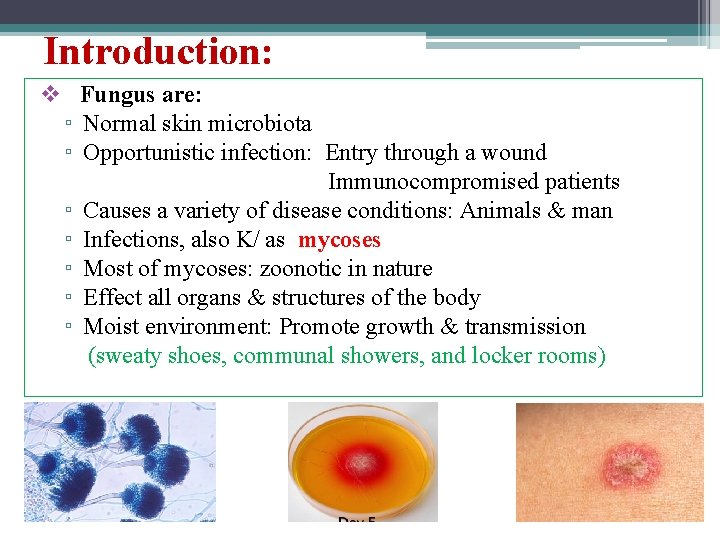
Introduction: v Fungus are: ▫ Normal skin microbiota ▫ Opportunistic infection: Entry through a wound Immunocompromised patients ▫ Causes a variety of disease conditions: Animals & man ▫ Infections, also K/ as mycoses ▫ Most of mycoses: zoonotic in nature ▫ Effect all organs & structures of the body ▫ Moist environment: Promote growth & transmission (sweaty shoes, communal showers, and locker rooms)
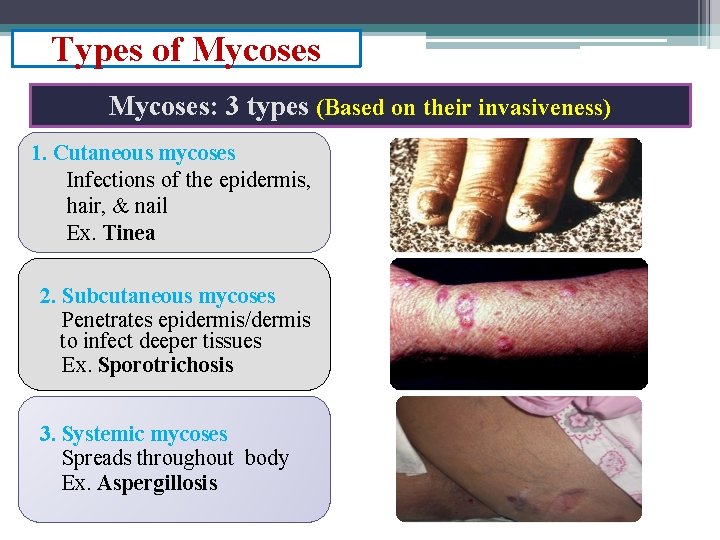
Types of Mycoses: 3 types (Based on their invasiveness) 1. Cutaneous mycoses Infections of the epidermis, hair, & nail Ex. Tinea 2. Subcutaneous mycoses Penetrates epidermis/dermis to infect deeper tissues Ex. Sporotrichosis 3. Systemic mycoses Spreads throughout body Ex. Aspergillosis
Cutaneous Mycoses
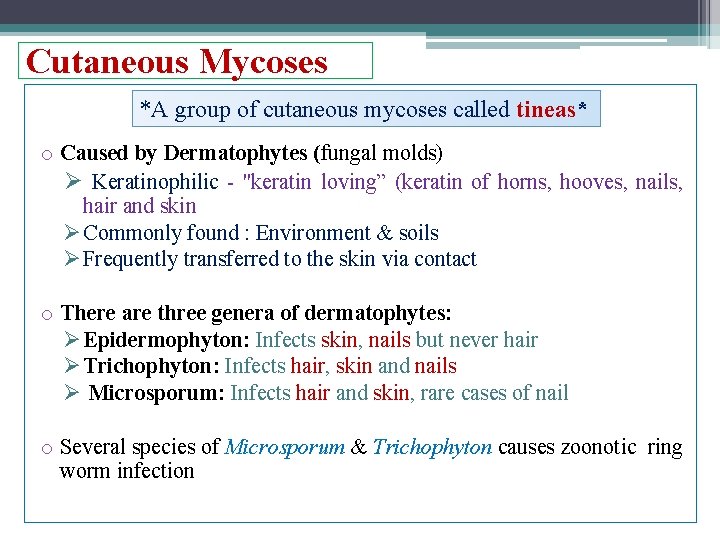
Cutaneous Mycoses *A group of cutaneous mycoses called tineas* o Caused by Dermatophytes (fungal molds) Ø Keratinophilic - "keratin loving” (keratin of horns, hooves, nails, hair and skin Ø Commonly found : Environment & soils Ø Frequently transferred to the skin via contact o There are three genera of dermatophytes: Ø Epidermophyton: Infects skin, nails but never hair Ø Trichophyton: Infects hair, skin and nails Ø Microsporum: Infects hair and skin, rare cases of nail o Several species of Microsporum & Trichophyton causes zoonotic ring worm infection
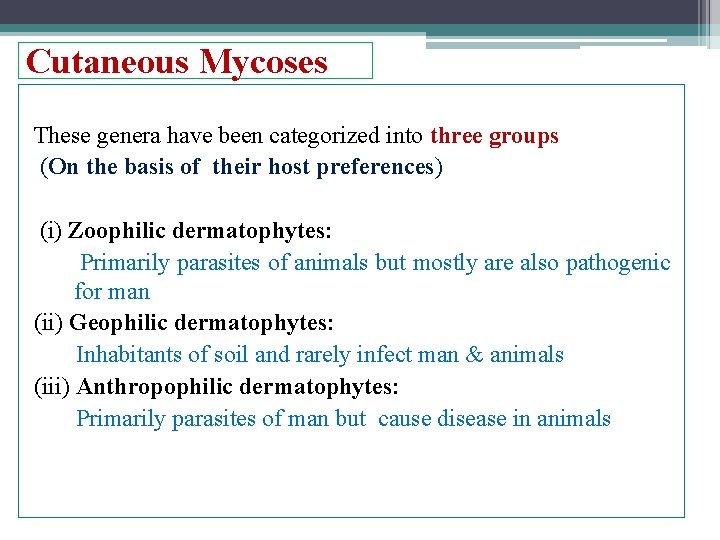
Cutaneous Mycoses These genera have been categorized into three groups (On the basis of their host preferences) (i) Zoophilic dermatophytes: Primarily parasites of animals but mostly are also pathogenic for man (ii) Geophilic dermatophytes: Inhabitants of soil and rarely infect man & animals (iii) Anthropophilic dermatophytes: Primarily parasites of man but cause disease in animals
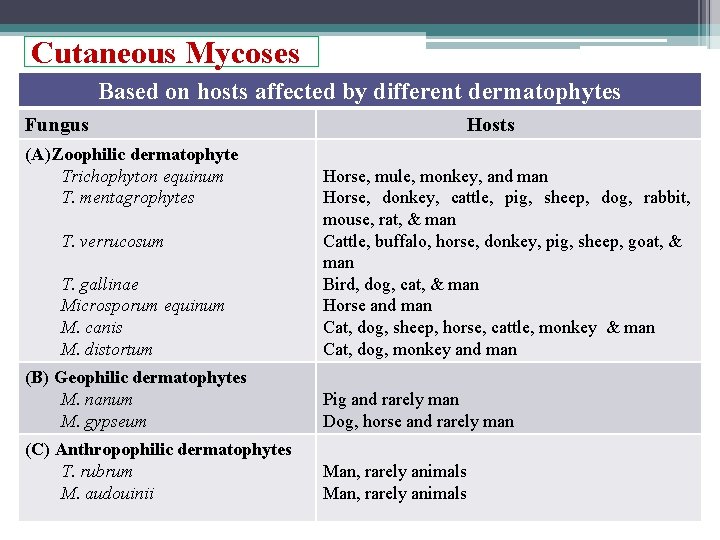
Cutaneous Mycoses Based on hosts affected by different dermatophytes Fungus (A) Zoophilic dermatophyte Trichophyton equinum T. mentagrophytes T. verrucosum T. gallinae Microsporum equinum M. canis M. distortum Hosts Horse, mule, monkey, and man Horse, donkey, cattle, pig, sheep, dog, rabbit, mouse, rat, & man Cattle, buffalo, horse, donkey, pig, sheep, goat, & man Bird, dog, cat, & man Horse and man Cat, dog, sheep, horse, cattle, monkey & man Cat, dog, monkey and man (B) Geophilic dermatophytes M. nanum M. gypseum Pig and rarely man Dog, horse and rarely man (C) Anthropophilic dermatophytes T. rubrum M. audouinii Man, rarely animals
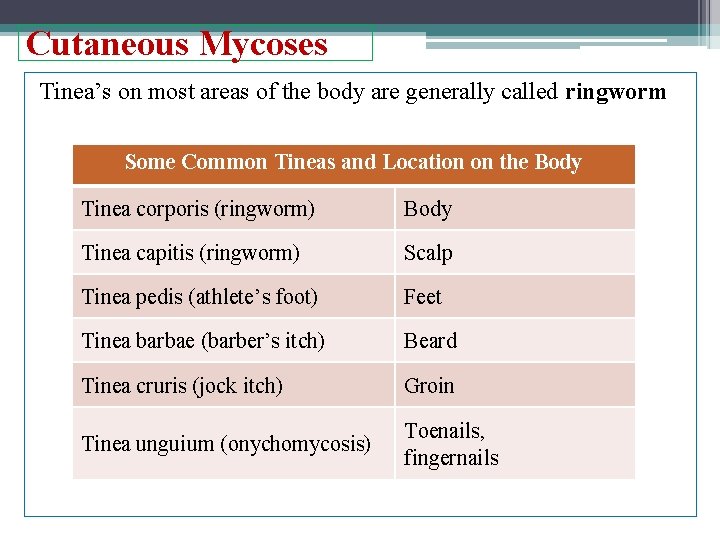
Cutaneous Mycoses Tinea’s on most areas of the body are generally called ringworm Some Common Tineas and Location on the Body Tinea corporis (ringworm) Body Tinea capitis (ringworm) Scalp Tinea pedis (athlete’s foot) Feet Tinea barbae (barber’s itch) Beard Tinea cruris (jock itch) Groin Tinea unguium (onychomycosis) Toenails, fingernails
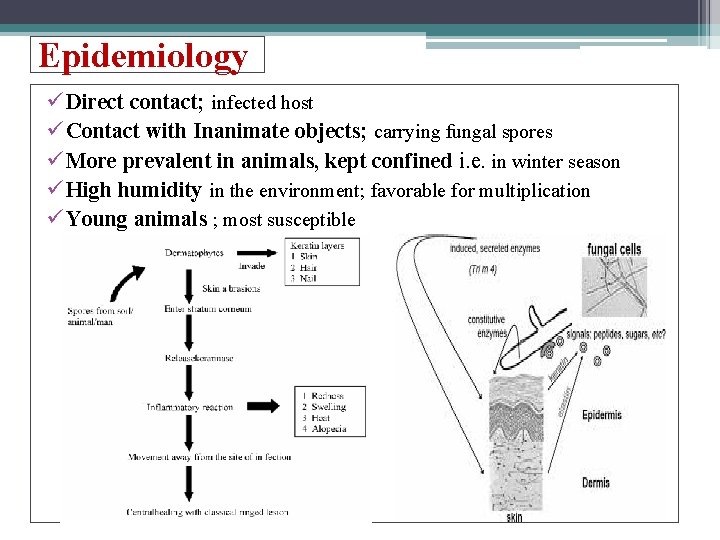
Epidemiology ü Direct contact; infected host ü Contact with Inanimate objects; carrying fungal spores ü More prevalent in animals, kept confined i. e. in winter season ü High humidity in the environment; favorable for multiplication ü Young animals ; most susceptible
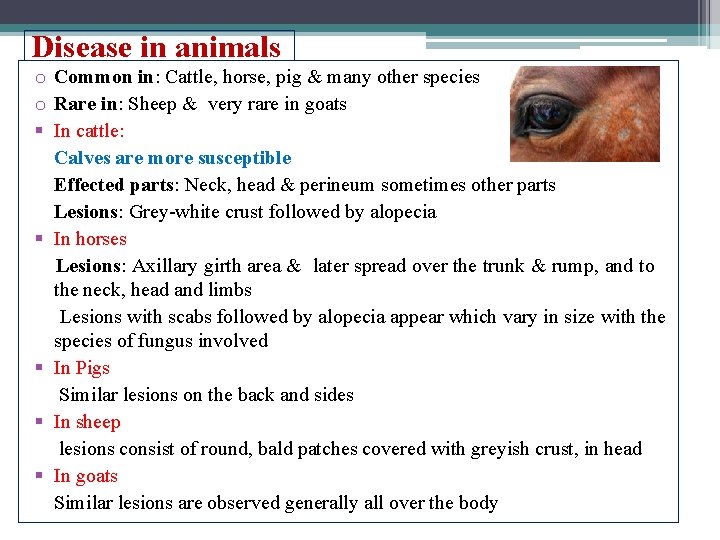
Disease in animals o Common in: Cattle, horse, pig & many other species o Rare in: Sheep & very rare in goats § In cattle: Calves are more susceptible Effected parts: Neck, head & perineum sometimes other parts Lesions: Grey-white crust followed by alopecia § In horses Lesions: Axillary girth area & later spread over the trunk & rump, and to the neck, head and limbs Lesions with scabs followed by alopecia appear which vary in size with the species of fungus involved § In Pigs Similar lesions on the back and sides § In sheep lesions consist of round, bald patches covered with greyish crust, in head § In goats Similar lesions are observed generally all over the body
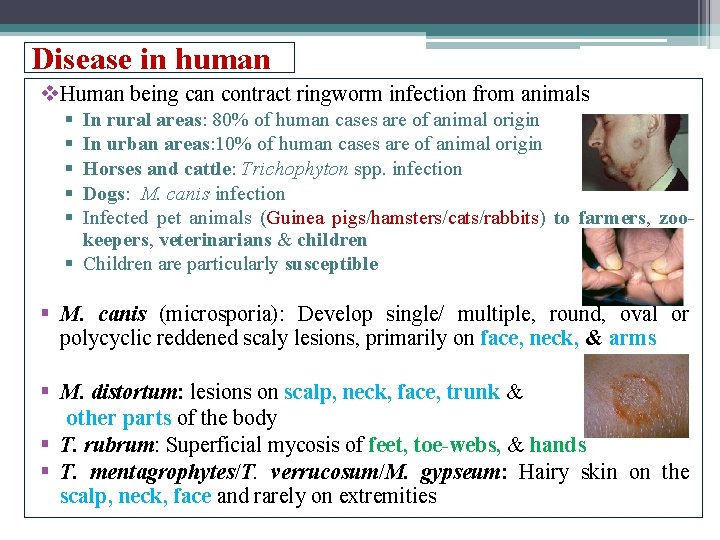
Disease in human v. Human being can contract ringworm infection from animals § § § In rural areas: 80% of human cases are of animal origin In urban areas: 10% of human cases are of animal origin Horses and cattle: Trichophyton spp. infection Dogs: M. canis infection Infected pet animals (Guinea pigs/hamsters/cats/rabbits) to farmers, zookeepers, veterinarians & children § Children are particularly susceptible § M. canis (microsporia): Develop single/ multiple, round, oval or polycyclic reddened scaly lesions, primarily on face, neck, & arms § M. distortum: lesions on scalp, neck, face, trunk & other parts of the body § T. rubrum: Superficial mycosis of feet, toe-webs, & hands § T. mentagrophytes/T. verrucosum/M. gypseum: Hairy skin on the scalp, neck, face and rarely on extremities
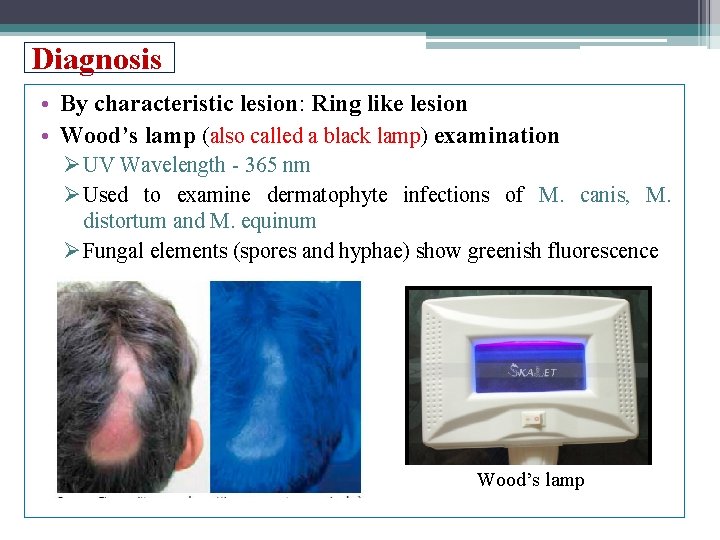
Diagnosis • By characteristic lesion: Ring like lesion • Wood’s lamp (also called a black lamp) examination Ø UV Wavelength - 365 nm Ø Used to examine dermatophyte infections of M. canis, M. distortum and M. equinum Ø Fungal elements (spores and hyphae) show greenish fluorescence Wood’s lamp
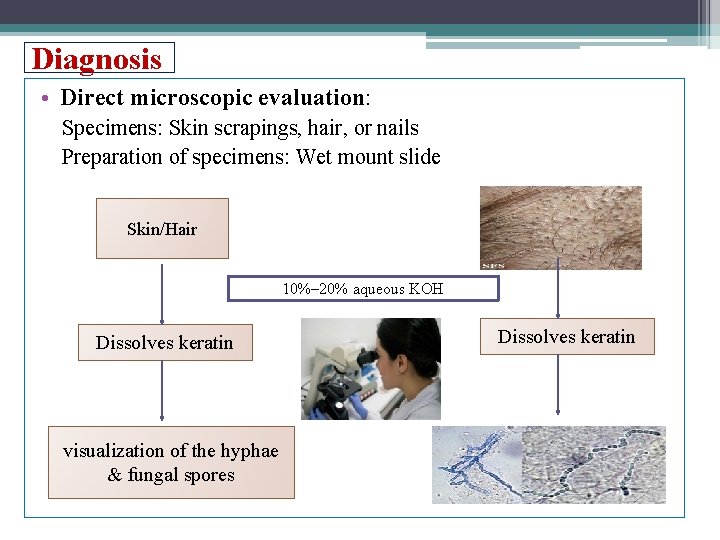
Diagnosis • Direct microscopic evaluation: Specimens: Skin scrapings, hair, or nails Preparation of specimens: Wet mount slide Skin/Hair 10%– 20% aqueous KOH Dissolves keratin visualization of the hyphae & fungal spores Dissolves keratin
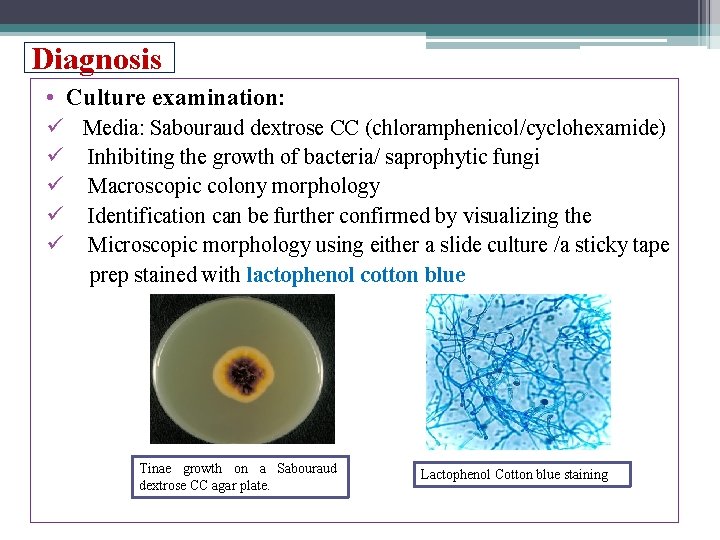
Diagnosis • Culture examination: ü Media: Sabouraud dextrose CC (chloramphenicol/cyclohexamide) ü Inhibiting the growth of bacteria/ saprophytic fungi ü Macroscopic colony morphology ü Identification can be further confirmed by visualizing the ü Microscopic morphology using either a slide culture /a sticky tape prep stained with lactophenol cotton blue Tinae growth on a Sabouraud dextrose CC agar plate. Lactophenol Cotton blue staining
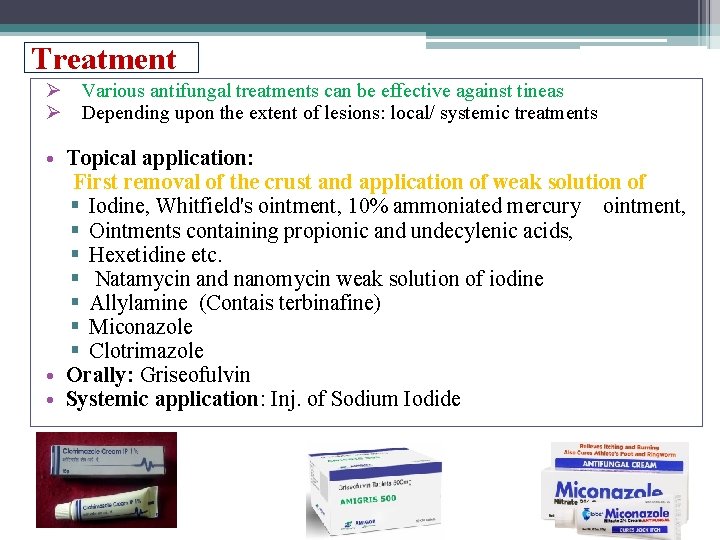
Treatment Ø Various antifungal treatments can be effective against tineas Ø Depending upon the extent of lesions: local/ systemic treatments • Topical application: First removal of the crust and application of weak solution of § Iodine, Whitfield's ointment, 10% ammoniated mercury ointment, § Ointments containing propionic and undecylenic acids, § Hexetidine etc. § Natamycin and nanomycin weak solution of iodine § Allylamine (Contais terbinafine) § Miconazole § Clotrimazole • Orally: Griseofulvin • Systemic application: Inj. of Sodium Iodide
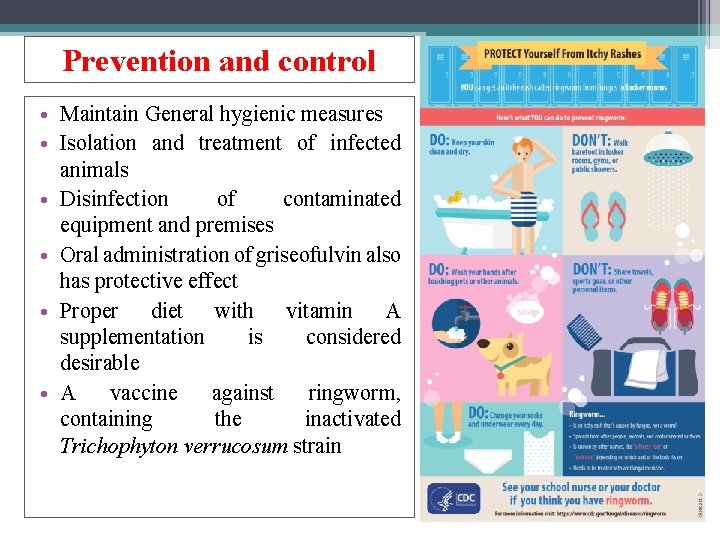
Prevention and control • Maintain General hygienic measures • Isolation and treatment of infected animals • Disinfection of contaminated equipment and premises • Oral administration of griseofulvin also has protective effect • Proper diet with vitamin A supplementation is considered desirable • A vaccine against ringworm, containing the inactivated Trichophyton verrucosum strain
Questions? 1. ____ is a superficial fungal infection found on the head. a) Tinea cruris b) Tinea capitis c) Tinea pedis d) Tinea corporis 2. Sabouraud dextrose agar CC is selective for ____. a) All fungi b) Non-saprophytic fungi c) Bacteria d) Viruses 3. ______Dermatophytes effect the skin, hair and nails a) Epidermaphyton b) Microsporum c) Trichophyton d) All