
Unit2 The Data Link Layer Data Link Layer
- Slides: 27
Unit-2 The Data Link Layer
Data Link Layer Design Issues • • Services Provided to the Network Layer Framing Error Control Flow Control Dept. of CSE, VFSTRU 2
Functions of the Data Link Layer • • • Provide service interface to the network layer Dealing with transmission errors Regulating data flow • Slow receivers not swamped by fast senders Dept. of CSE, VFSTRU 3
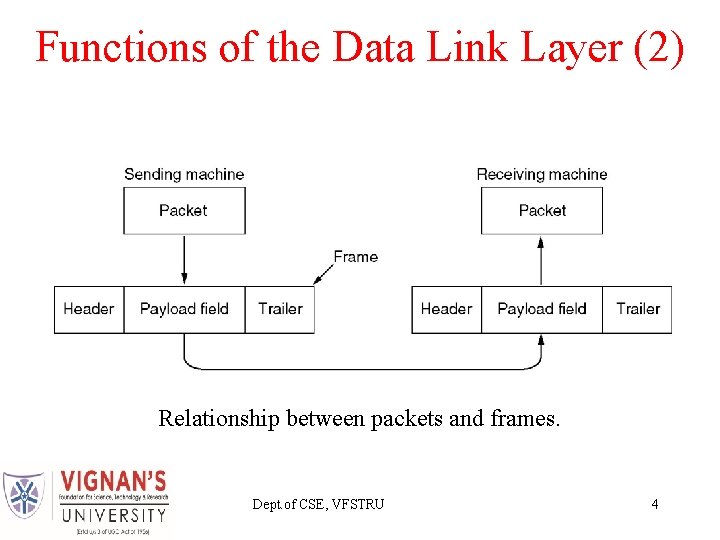
Functions of the Data Link Layer (2) Relationship between packets and frames. Dept. of CSE, VFSTRU 4
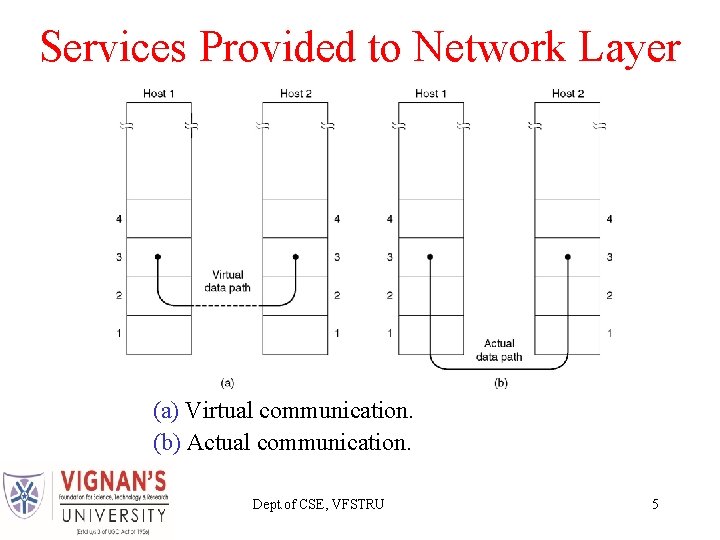
Services Provided to Network Layer (a) Virtual communication. (b) Actual communication. Dept. of CSE, VFSTRU 5
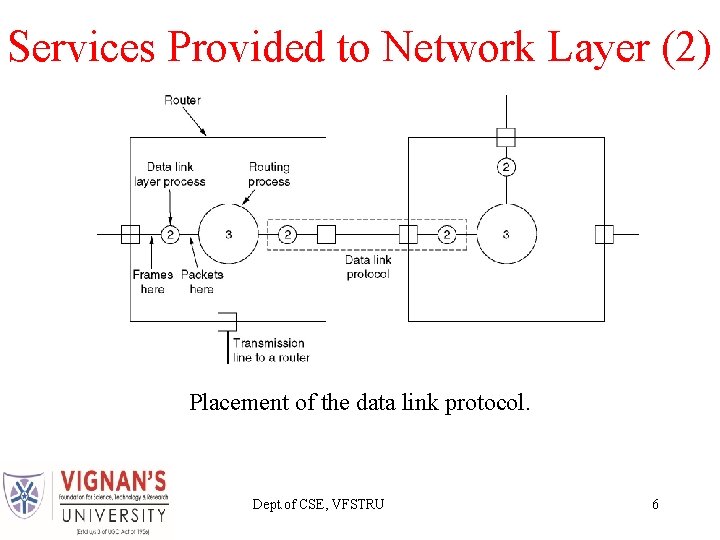
Services Provided to Network Layer (2) Placement of the data link protocol. Dept. of CSE, VFSTRU 6
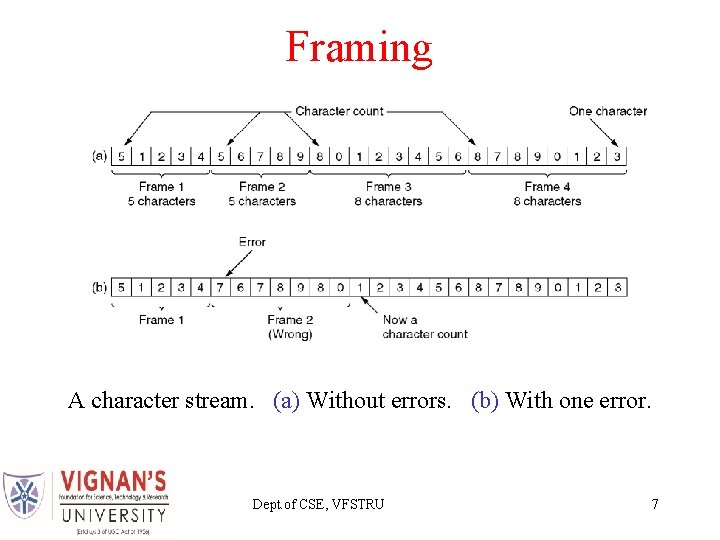
Framing A character stream. (a) Without errors. (b) With one error. Dept. of CSE, VFSTRU 7
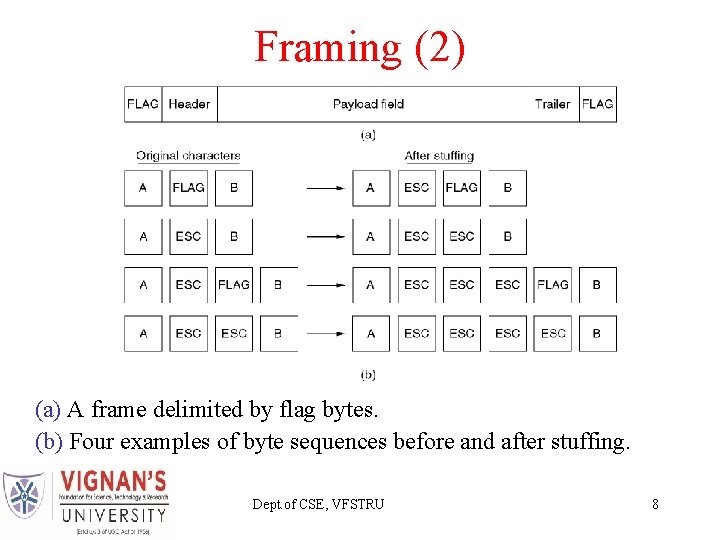
Framing (2) (a) A frame delimited by flag bytes. (b) Four examples of byte sequences before and after stuffing. Dept. of CSE, VFSTRU 8
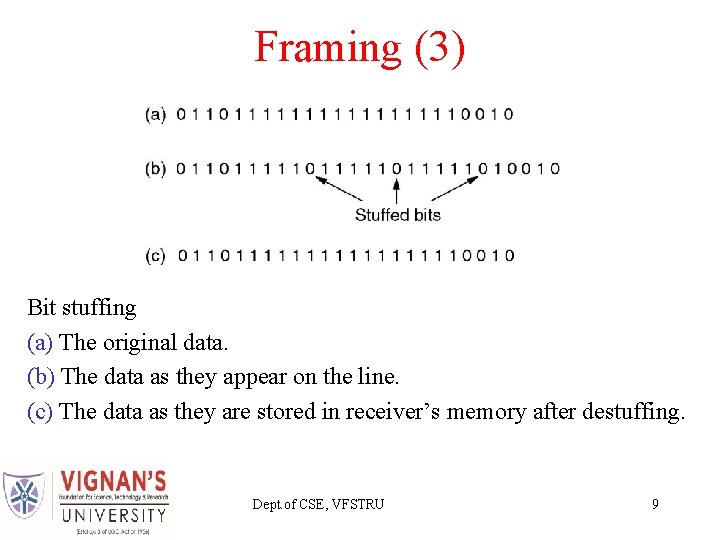
Framing (3) Bit stuffing (a) The original data. (b) The data as they appear on the line. (c) The data as they are stored in receiver’s memory after destuffing. Dept. of CSE, VFSTRU 9
Error Detection and Correction • Error-Correcting Codes • Error-Detecting Codes Dept. of CSE, VFSTRU 10
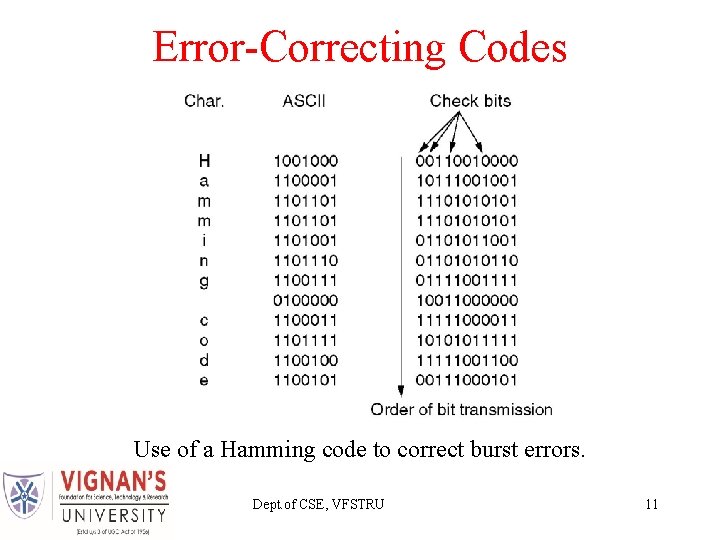
Error-Correcting Codes Use of a Hamming code to correct burst errors. Dept. of CSE, VFSTRU 11
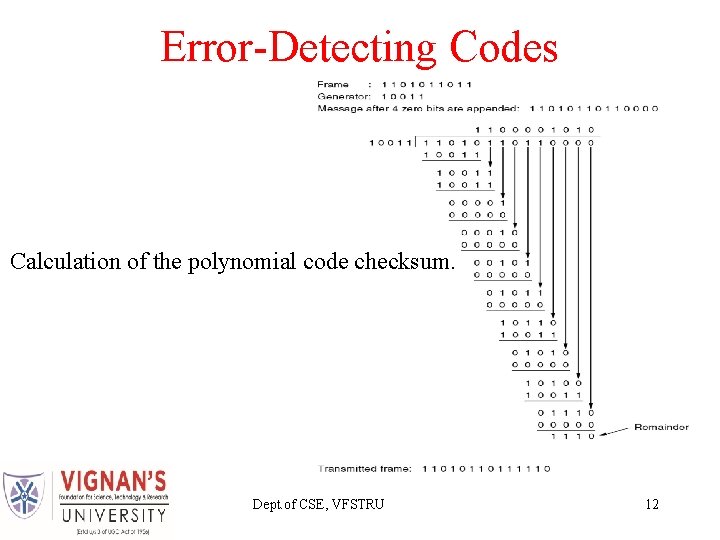
Error-Detecting Codes Calculation of the polynomial code checksum. Dept. of CSE, VFSTRU 12
Elementary Data Link Protocols • • • An Unrestricted Simplex Protocol A Simplex Stop-and-Wait Protocol A Simplex Protocol for a Noisy Channel Dept. of CSE, VFSTRU 13
Sliding Window Protocols • A One-Bit Sliding Window Protocol • A Protocol Using Go –Back - N • A Protocol Using Selective Repeat Dept. of CSE, VFSTRU 14
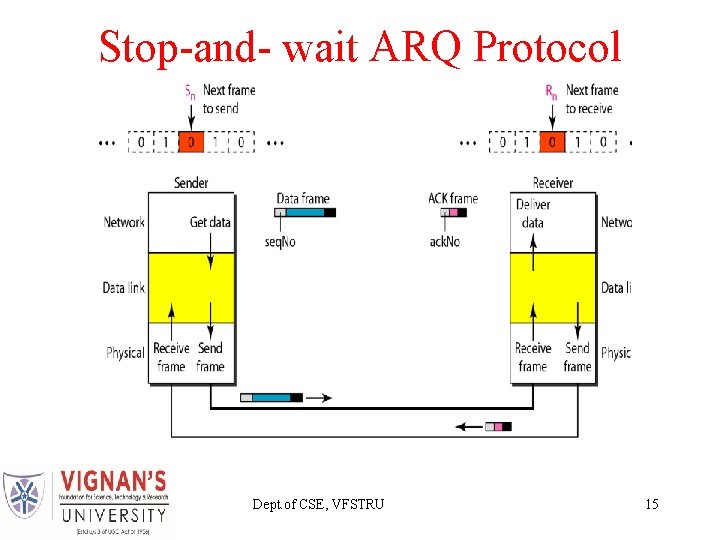
Stop-and- wait ARQ Protocol Dept. of CSE, VFSTRU 15
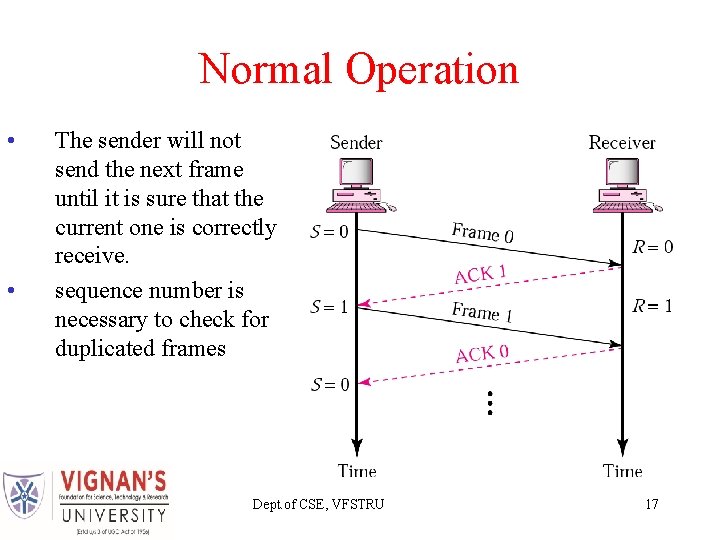
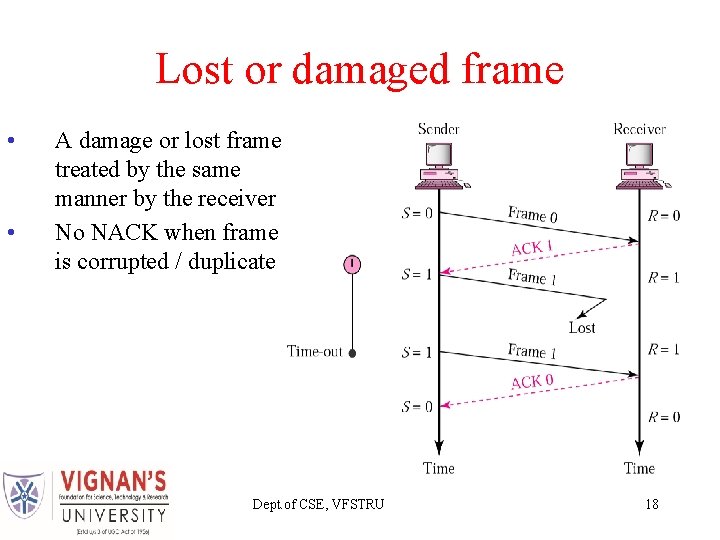
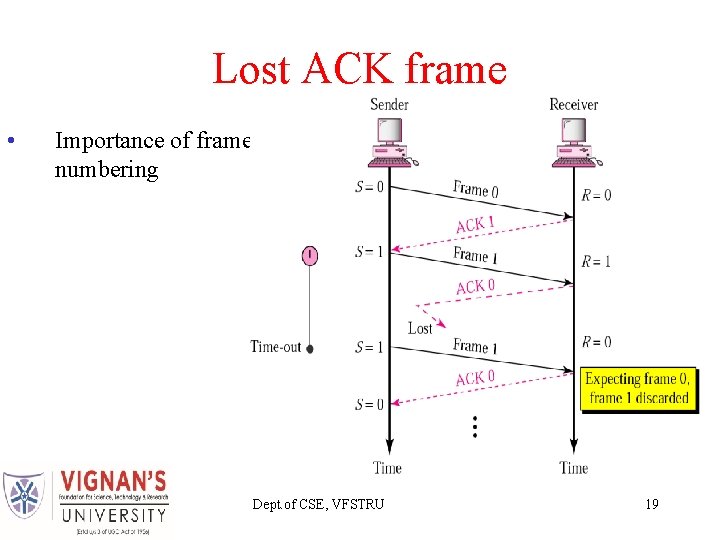
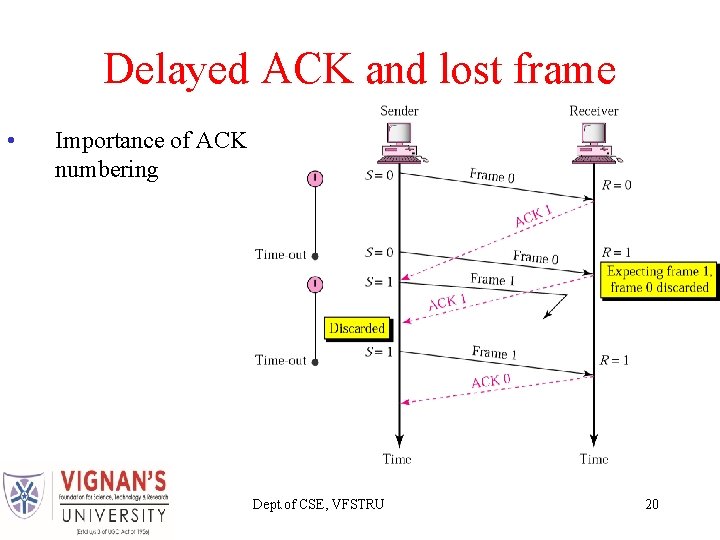
Stop-and- wait ARQ Protocol Cases of Operation: • Normal Operation • The Frame is lost • The Acknowledgment is lost • The ACK is delayed Dept. of CSE, VFSTRU 16
Normal Operation • • The sender will not send the next frame until it is sure that the current one is correctly receive. sequence number is necessary to check for duplicated frames Dept. of CSE, VFSTRU 17
Lost or damaged frame • • A damage or lost frame treated by the same manner by the receiver No NACK when frame is corrupted / duplicate Dept. of CSE, VFSTRU 18
Lost ACK frame • Importance of frame numbering Dept. of CSE, VFSTRU 19
Delayed ACK and lost frame • Importance of ACK numbering Dept. of CSE, VFSTRU 20
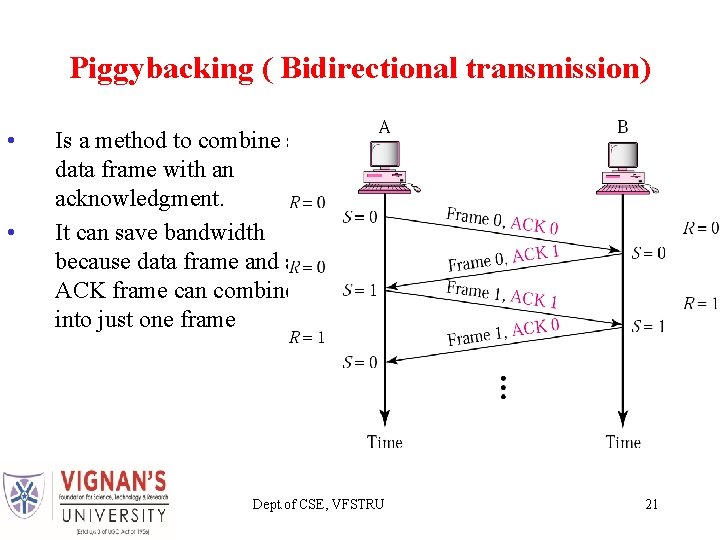
Piggybacking ( Bidirectional transmission) • • Is a method to combine a data frame with an acknowledgment. It can save bandwidth because data frame and an ACK frame can combined into just one frame Dept. of CSE, VFSTRU 21
Stop-and- wait ARQ Protocol • After each frame sent the host must wait for an ACK • • inefficient use of bandwidth To improve efficiency ACK should be sent after multiple frames Alternatives: Sliding Window protocol • • • Go-back-N ARQ Selective Repeat ARQ Dept. of CSE, VFSTRU 22
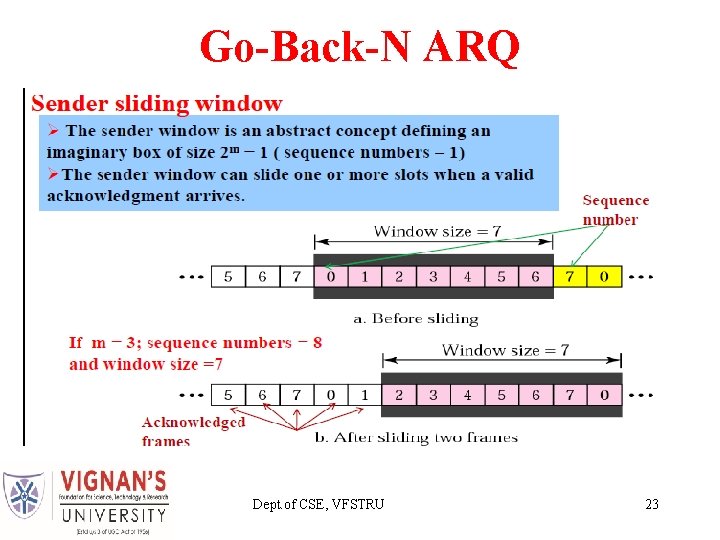
Go-Back-N ARQ Dept. of CSE, VFSTRU 23
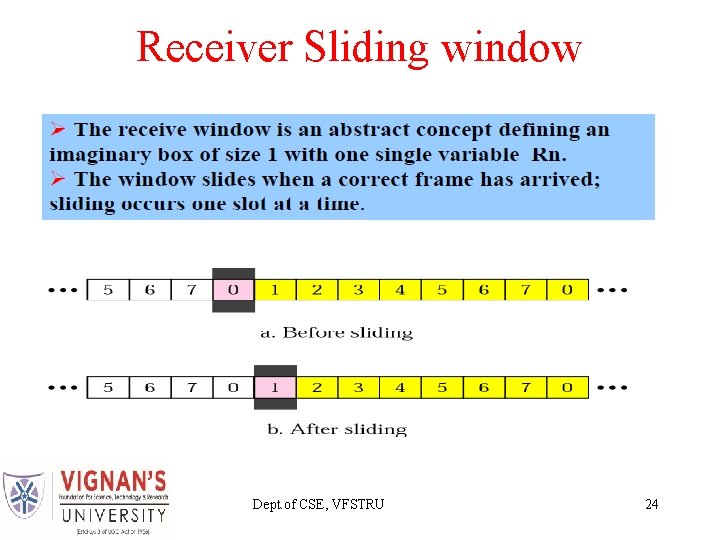
Receiver Sliding window Dept. of CSE, VFSTRU 24
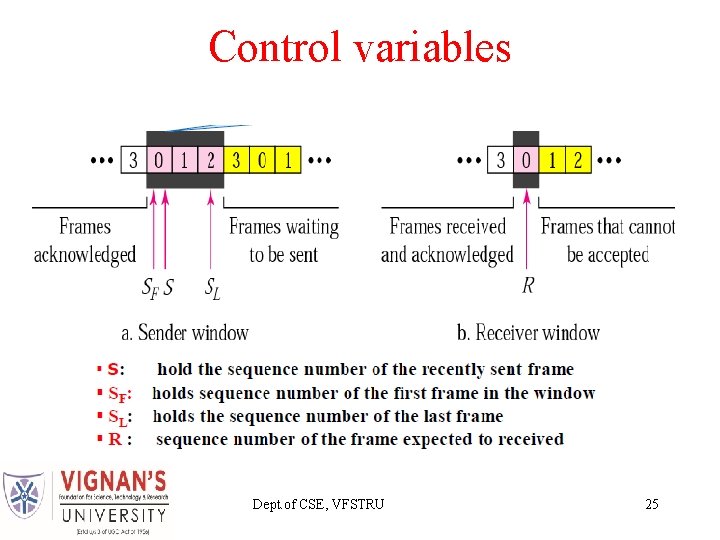
Control variables Dept. of CSE, VFSTRU 25
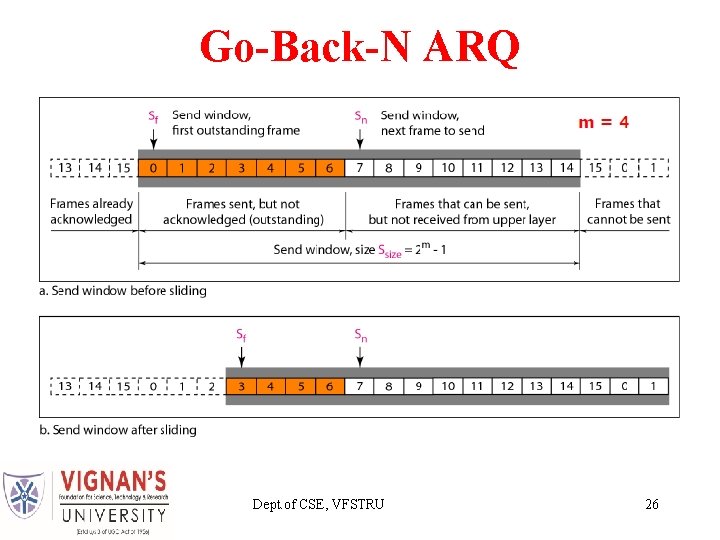
Go-Back-N ARQ Dept. of CSE, VFSTRU 26
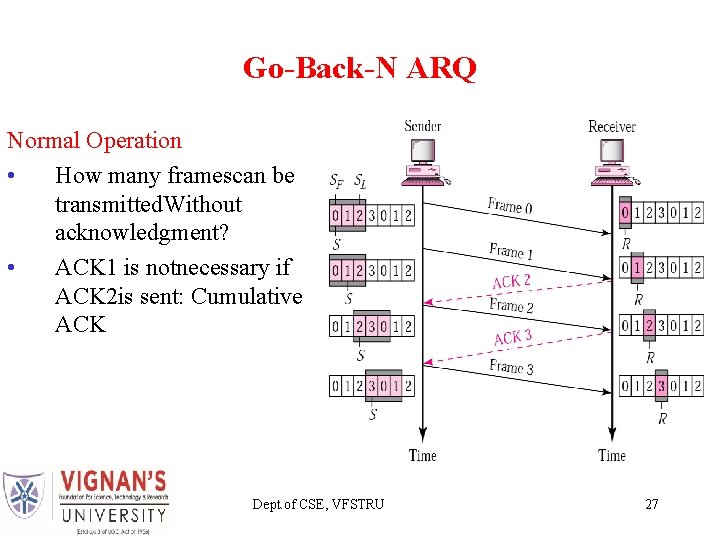
Go-Back-N ARQ Normal Operation • How many framescan be transmitted. Without acknowledgment? • ACK 1 is notnecessary if ACK 2 is sent: Cumulative ACK Dept. of CSE, VFSTRU 27