
Unit XII Communicable disease CHICKENPOX REVIEWED BY PRESENTED

Unit XII Communicable disease CHICKENPOX REVIEWED BY PRESENTED BY Mr. SHASHIKUMAR JAWADAGI Ms. NEETHA HOD , DEPARTMENT OF MEDICAL SURGICAL NURSING
objectives • Define leprosy • Understand the classification of leprosy • Enumerate the pathophysiology of leprosy • Understand the symptoms of leprosy • Describe the management of leprosy
Introduction Leprosy is also called as “Hansen’s disease”It is chronic curable infectious disease caused by mycobacterium leprae
Definition • Leprosy, also known as Hansen’s disease, is a chronic infectious disease caused by Mycobacterium leprae.
Causes and riskfactor � Cause : 1) Microbactrium laprae 2) Genetics : several genes have been associated with a susceptibility to leprosy. � Risk factors : 1)Living in areas with polluted water and poor diet. 2) Immunocompromised people. 3) Travel to an area that has experienced a leprosy attack. 4) People who handle certain animal that are known to carry the bacteria ( african chimpanzee , armadillos ) are at high risk. 5) Those who live in the areas where leprosy is endemic.
TRANSMISSION � Droplet infection : leprosy is believed to transmit through nasal discharge. � Contact infection : studies indicate that leprosy is transmitted through direct skin contact. � Vector –born infection. � Through placenta and milk.
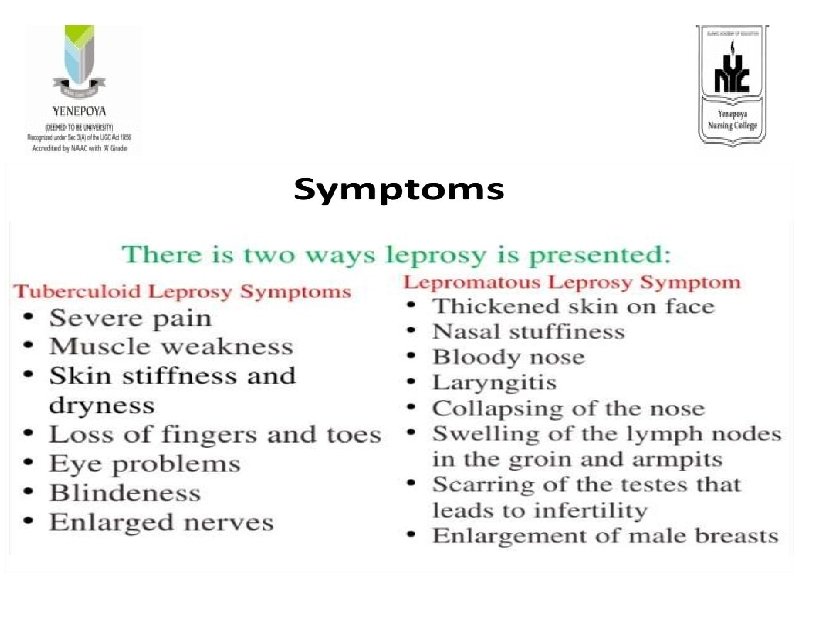
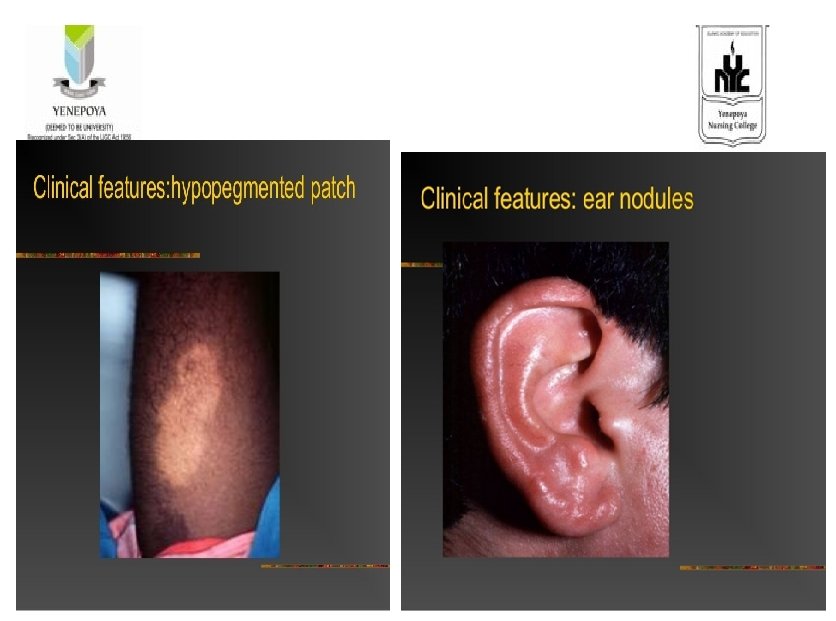
Classification of leprosy v Tuberculoid leprosy � the tuberculoid is a localized form, so its effects less widespread across the body. � Skin tests with lepromin elicit a strong positive response � tuberculoid leprosy symptom usually consist of a few well-defined skin lesions that are numb. � peripheral nerves damaged by host’s immune response.

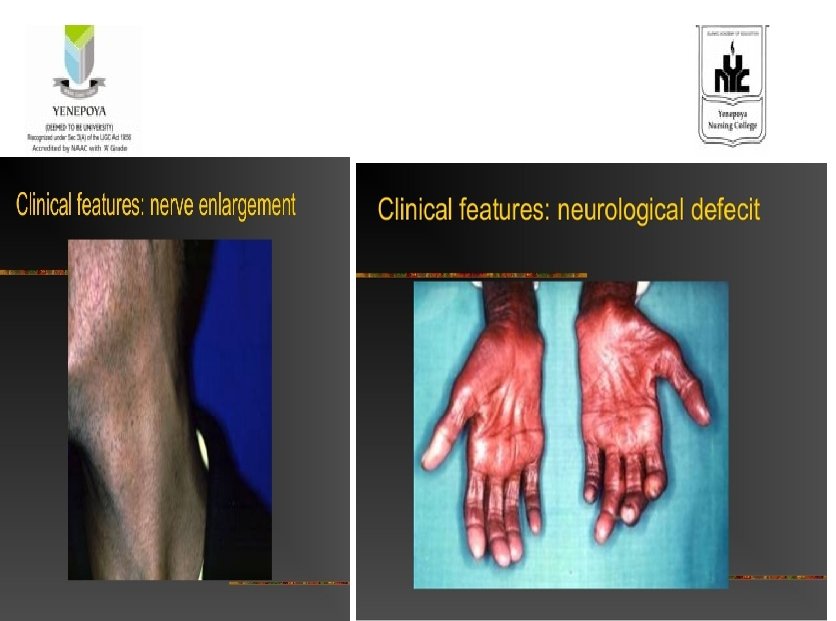
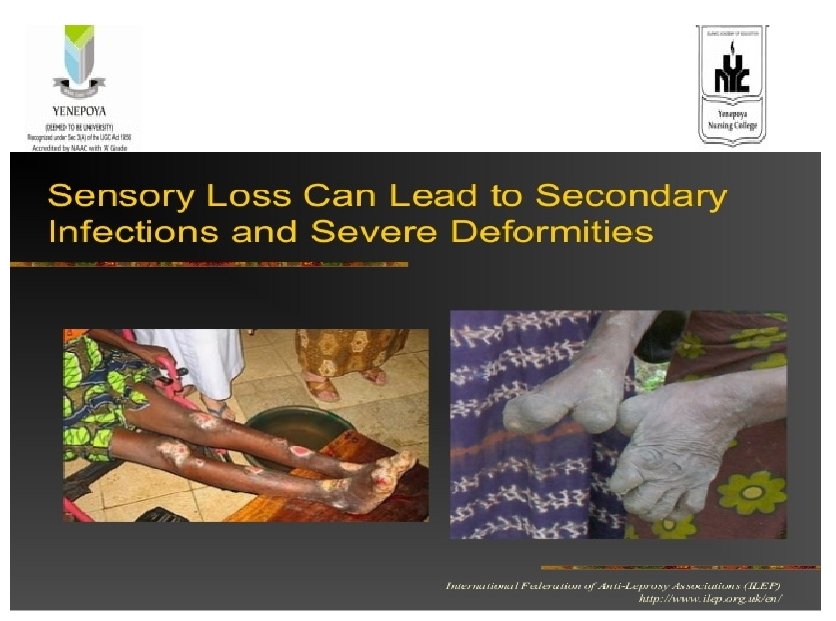
v. Lepromatous leprosy � The generalized form –the lepromatous form – attacks peripheral nerves, skin, thehands and feet , the mucous membranes and the eyes � Symotoms are chronically stuffy nose and skin lesions and nodules on the front and back of the body � Sensation loss starts at the fingers and toes and may only affect a small patch of skin to begin with. the loss of sensation can lead to unnoticed injuries, which may in turn become infected
v Borderline leprosy: � Also known as dimorphous leprosy. � It has a characteristic of both other forms.
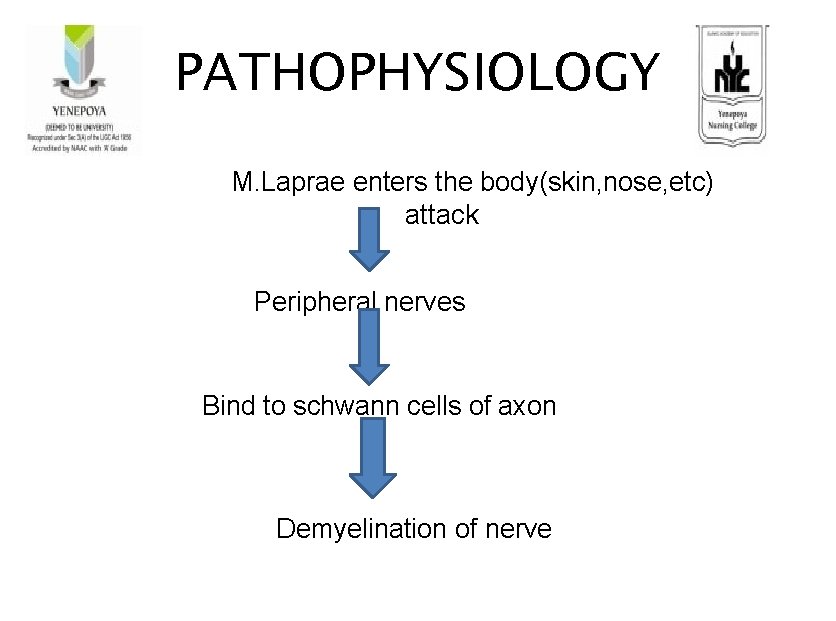
PATHOPHYSIOLOGY M. Laprae enters the body(skin, nose, etc) attack Peripheral nerves Bind to schwann cells of axon Demyelination of nerve
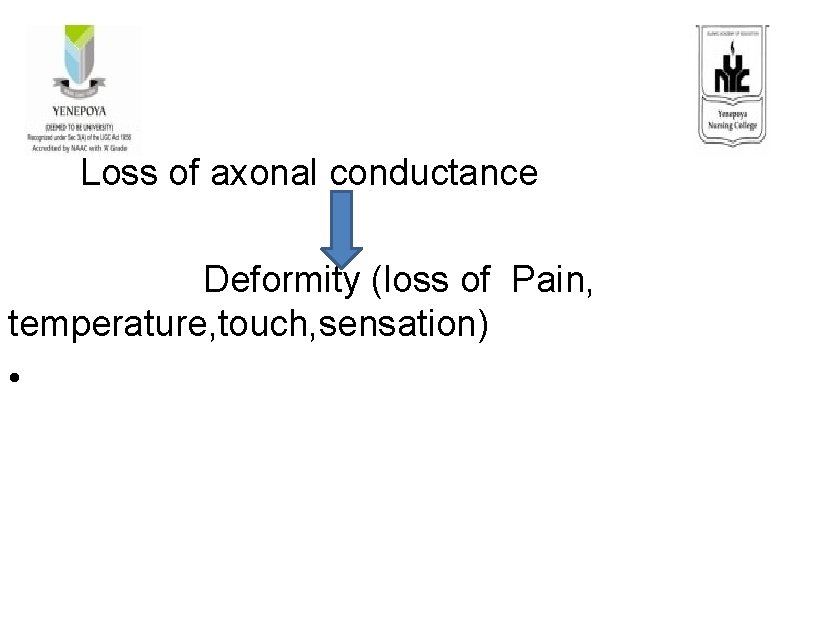
Loss of axonal conductance Deformity (loss of Pain, temperature, touch, sensation) •
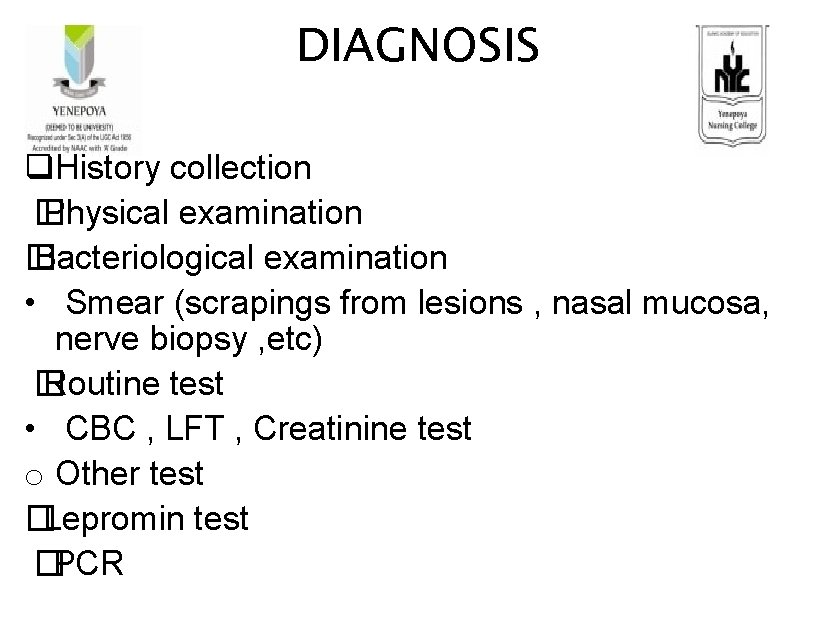
DIAGNOSIS q. History collection � Physical examination � Bacteriological examination • Smear (scrapings from lesions , nasal mucosa, nerve biopsy , etc) � Routine test • CBC , LFT , Creatinine test o Other test � Lepromin test � PCR
Management MEDICAL MANAGEMENT : � Multidrug therapy : rifampicin , dapsone , clofazimine , ethionamide , quinolones , minocycline , etc are used. � Corticosteroids : these are used to treat nerve damage associated with leprosy � Aspirin and thalidomide are used to control inflammation.
Surgical management: � Neural surgery � Amputation � Cosmetics surgery : • nasal reconstruction • Removal of excess skin • Replacement of eyebrows
PREVENTION � Isolation of bacteriologically positive cases in endemic areas. � Avoid close physical contact with untreated patient. � Keep away from the animal which are suspe cted to the bacteria. � Use of mask and gloves while handling the patient � vaccination – BCG vaccine (at birth, intramuscular, 0. o 5 ml )
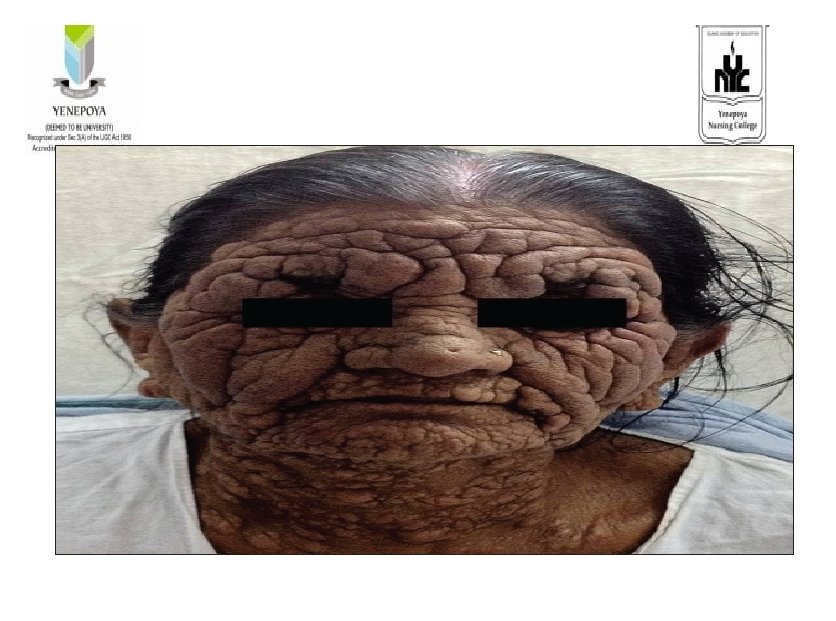
complication ◊ Partial or complete deformity / handicap. ◊ Complete isolation from the society. ◊ Social and mental tension. ◊ Sensory loss. ◊ Paralysis. ◊ Muscle weakness. ◊ Progressive disfigurment ( eyebrow lost , disfigurement of the toes , fingers and nose ) ◊ Loss of manpower.
Nursing management � Detect the disease in the initial stage and keep watch over other susceptible patients. � Take care of localized wound. � Rehabilitation of cured persons. � Provide health education. � Provide shelter and social support, moral support. � Provide follow- up service.
Conclusion Leprosy is curable and treatment provided in the early stages averts disability if multidrug therapy provided. Control of leprosy has improved significantly as a result of national and subnational campaigns in most endemic countries
Evaluation • What is leprosy • What is the pathophysiology of leprosy • What are the symptoms of leprosy • what is the management for leprosy

- Slides: 26