
UNIT VII Imperfect Tense UNIT VII VOCABULARY Nouns
UNIT VII Imperfect Tense
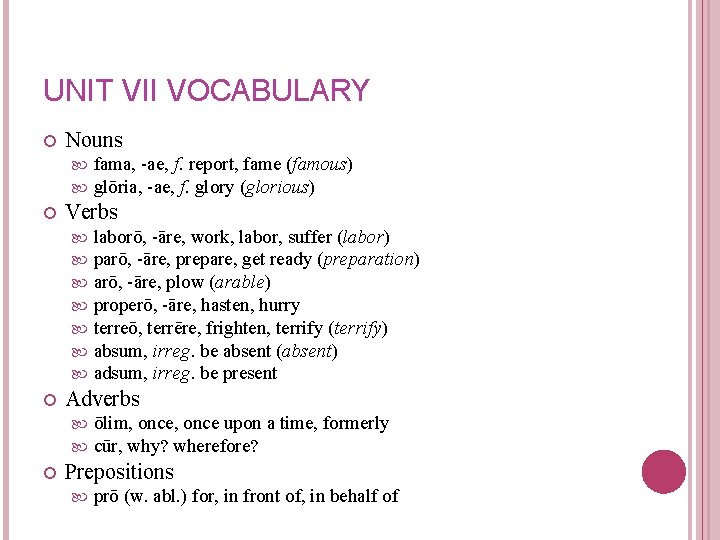
UNIT VII VOCABULARY Nouns Verbs laborō, -āre, work, labor, suffer (labor) parō, -āre, prepare, get ready (preparation) arō, -āre, plow (arable) properō, -āre, hasten, hurry terreō, terrēre, frighten, terrify (terrify) absum, irreg. be absent (absent) adsum, irreg. be present Adverbs fama, -ae, f. report, fame (famous) glōria, -ae, f. glory (glorious) ōlim, once upon a time, formerly cūr, why? wherefore? Prepositions prō (w. abl. ) for, in front of, in behalf of
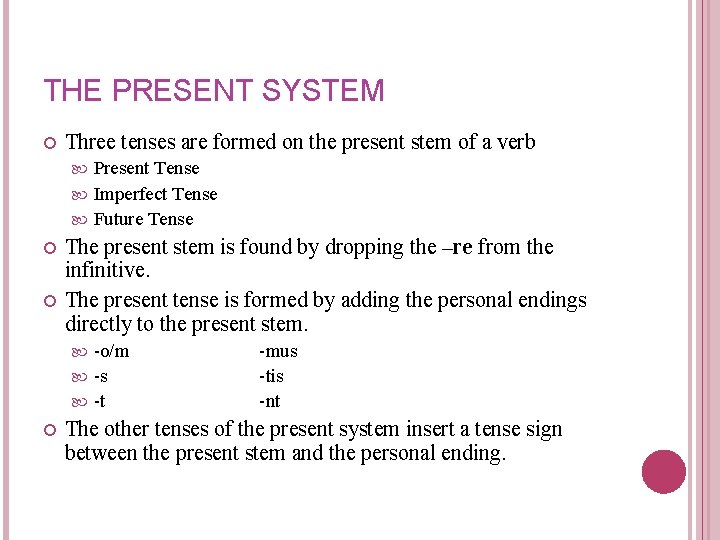
THE PRESENT SYSTEM Three tenses are formed on the present stem of a verb Present Tense Imperfect Tense Future Tense The present stem is found by dropping the –re from the infinitive. The present tense is formed by adding the personal endings directly to the present stem. -o/m -s -t -mus -tis -nt The other tenses of the present system insert a tense sign between the present stem and the personal ending.
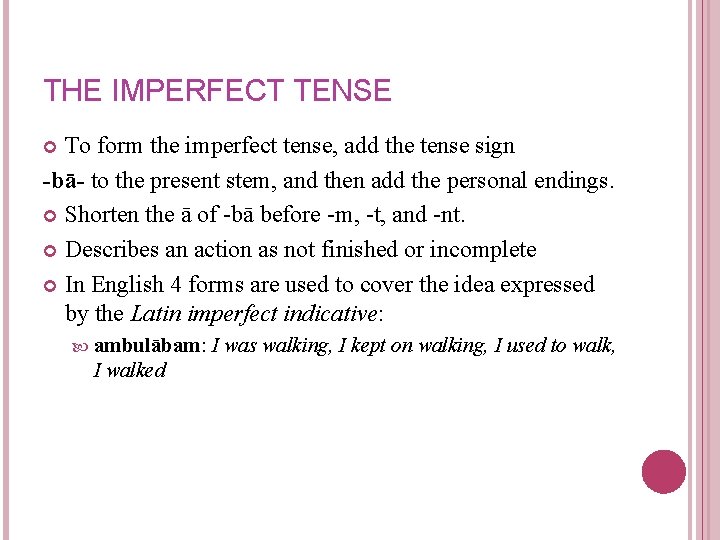
THE IMPERFECT TENSE To form the imperfect tense, add the tense sign -bā- to the present stem, and then add the personal endings. Shorten the ā of -bā before -m, -t, and -nt. Describes an action as not finished or incomplete In English 4 forms are used to cover the idea expressed by the Latin imperfect indicative: ambulābam: I walked I was walking, I kept on walking, I used to walk,

CONJUGATION OF AMŌ, IMPERFECT TENSE Step 1: Take the –re from the infinitive to find the root. Step 2: Add the -bā- tense marker between the root and personal endings. Singular 1 2 3 amābam Plural amābāmus “I was loving. ” “We were loving. ” “I used to love. ” “We used to love. ” amābās amābātis “You (s. ) were loving. ” “You (pl. ) were loving. ” “You (s. ) used to love. ” “You (pl. ) used to love. ” amābat amābant “He was loving. ” “They were loving. ” “He used to love. ” “They used to love. ”
PRACTICE Conjugate in the imperfect tense: nāvigō, -āre respondeō, -ēre sum absum adsum
WHAT DO WE ALREADY KNOW ABOUT ROMAN RELIGION? Answer the following questions in your journals. What type of religion did the ancient Romans follow? Do you think they developed this themselves? i. e. , no other influences? How does Roman Religion compare to our own? Share information about your own religion. How were the gods and goddesses different from regular people? What did the eat and drink? Where did they live?
ABOUT ROMAN RELIGION Polytheistic (belief in more than one god) The Romans were highly influenced by Greek religion and gave different names to them The gods and goddesses were immortal (didn’t die) They ate ambrosia and drank nectar for sustenance Gods dwelled on Mount Olympus https: //www. youtube. com/watch? v=e. JCm 8 W 5 RZes
- Slides: 8